Day 16: Mermaid time!

Blog by: Maxene, Olivia, Silas, Kashi

We started our day at American Camp! It was a pleasure being shown around by Emilio Santiago, who works for the National Park Service and was one of our dinner guests last week. At a seemingly uninteresting expanse of grass, we were flabbergasted to learn that we were standing at the remains of an old graveyard!

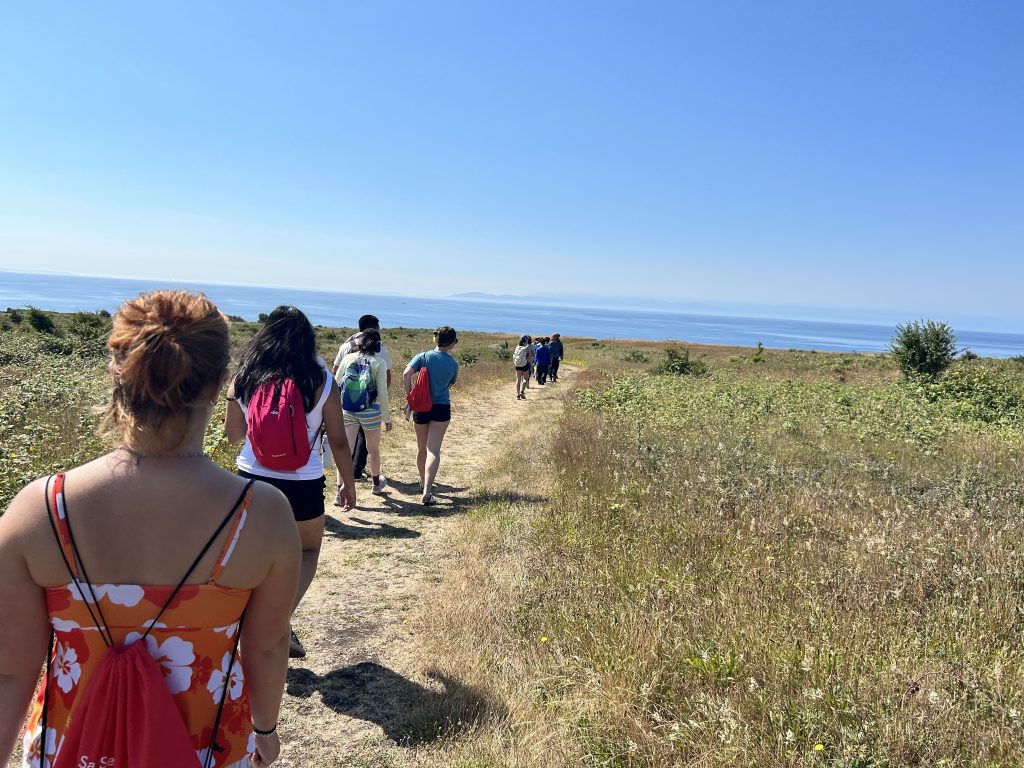
Students following our fearless leader, Emilio Santiago, to the graveyard & Granny’s Cove – Photo Credits: Olivia

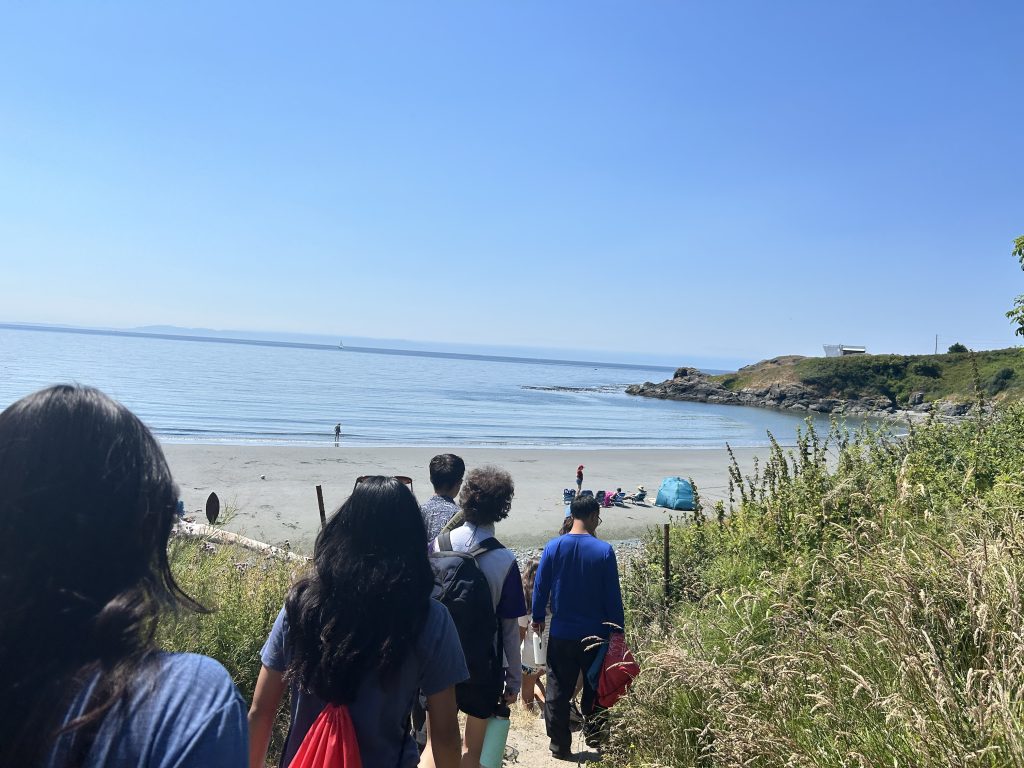
After American Camp, we headed off to Eagle Cove for lunch and swimming in the freezing, salty water. We reconnected with our inner mermaids as we explored the sandy beach and tested our cold-water tolerance.

Our first view of Eagle Cove! – Photo Credits: Olivia

We headed back to the dorms for a quick rinse and to begin project time. However, some of us were quickly derailed as we learned the devastating news that half of our precious aquarium water had mysteriously emptied overnight! Only one inch of lukewarm water remained. A couple of us went to the rescue by laboriously filling buckets with water to rejuvenate the tank. Others were lured to the heating kettle and enjoyed hot chocolate, ice cream, and iced coffee.

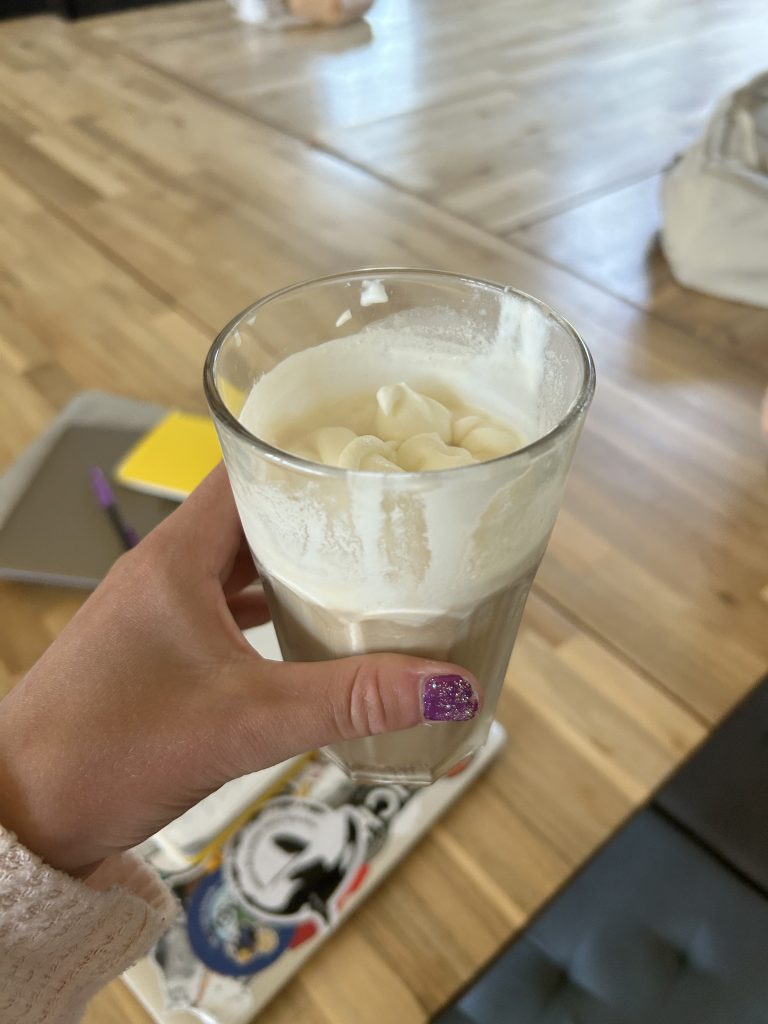
One of many iced coffees that fueled us through the day! – Photo credits: Olivia

Recovering from the tank fiasco, we quickly settled in to finalize our research questions and hypotheses. Later tonight, we will attend the “Keystone molecules and kleptoplasty: new insights from sea slugs” lecture at Friday Harbor Labs by Dr. Patrick Krug. We are overjoyed and intrigued to hear this talk that turned our evening schedule upside down!

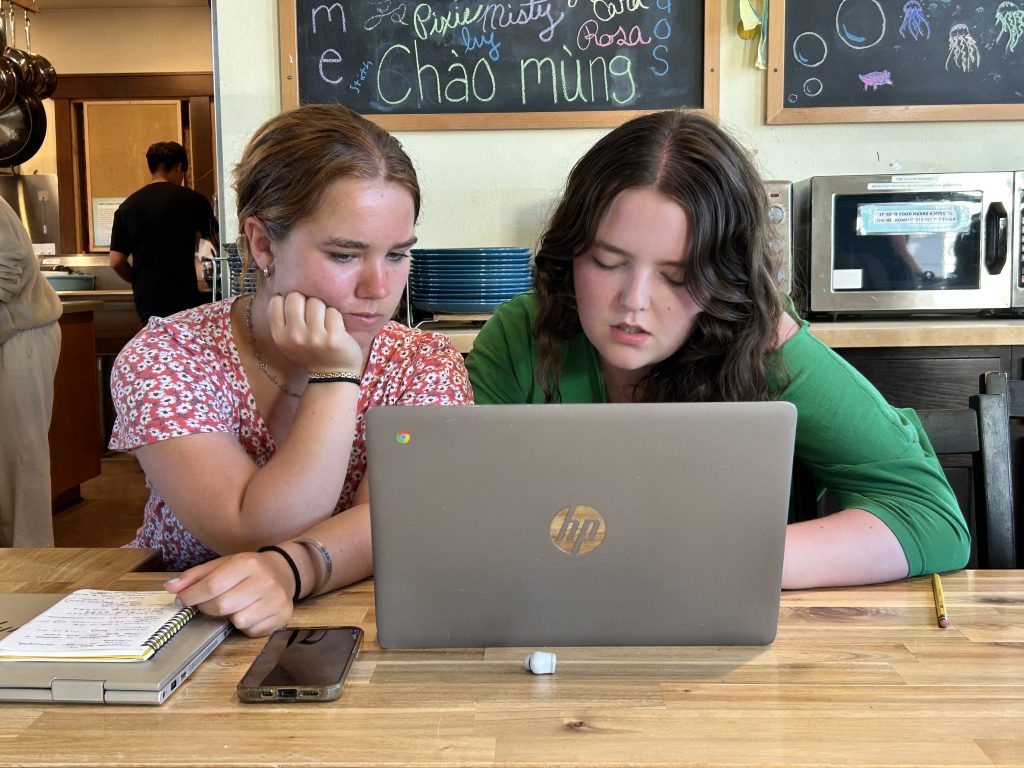
Eva and Una locking in! – Photo Credits: Olivia

Day 15: Prints and Project

Blog credits: Cynthia and Matthew

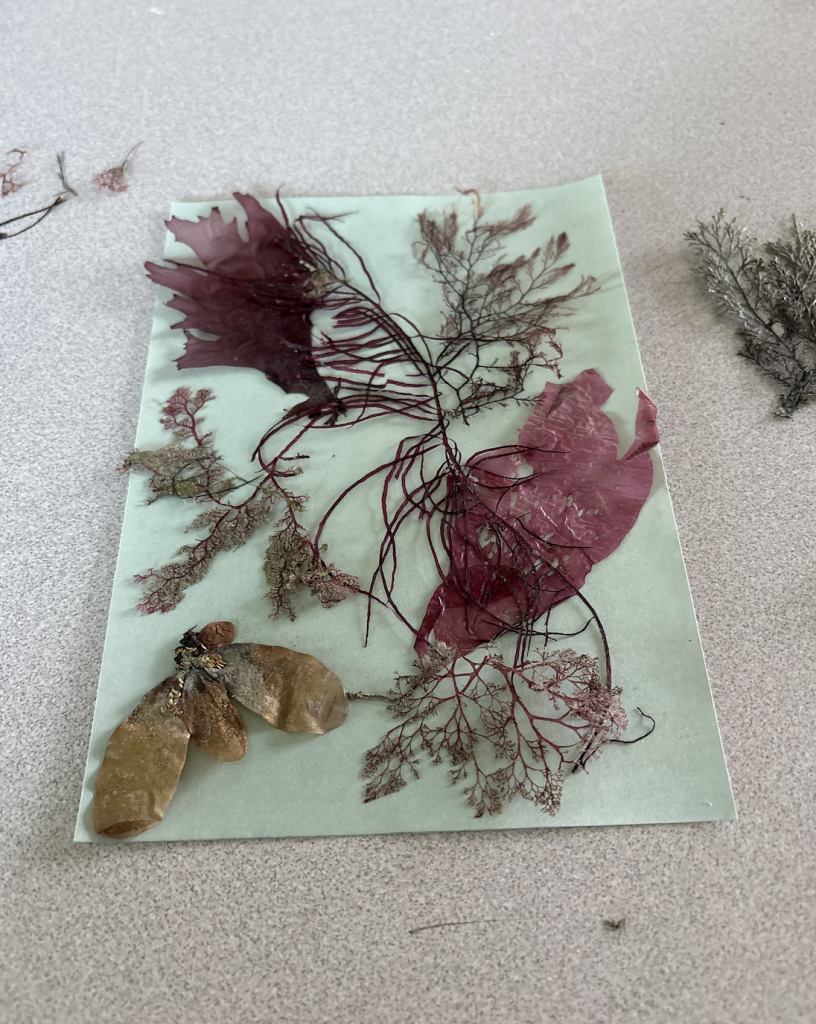
Our day started with a 7:30 wake-up and a make-your-own breakfast. At 9:30, we went to the art room and had a fascinating lesson about different kinds of algae with Dr. Becca Guenther. Dr. Guenther currently works in the Sea Star Lab at FHL. She did her PhD on calcified coralline algae. After the lesson, we used cyanotype paper and laid different types of algae to make art.

Arranging plants on cyanotype paper (taken by Cynthia)
Letting cyanotype paper dry in the sun (taken by Olivia)

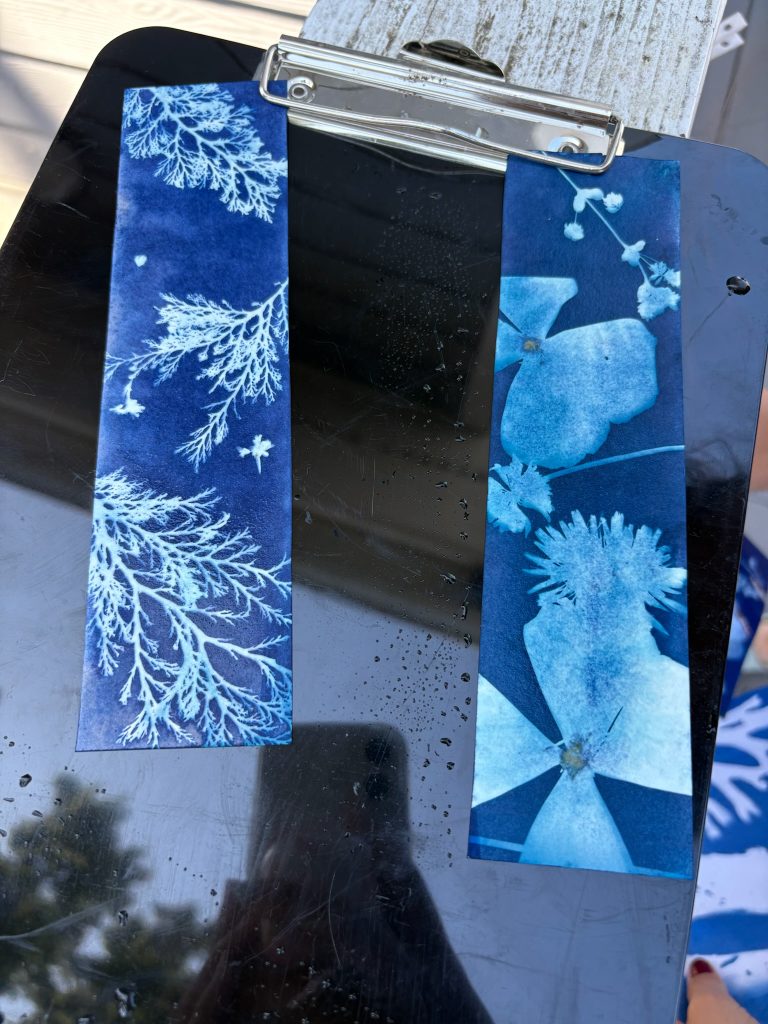
After you layer the algae to your heart’s desire, you put a glass over the paper and leave it to soak in the sun for 5-10 minutes! In the image, you can see different colors of paper; this is because over time the paper goes from a light blue to a beige color.

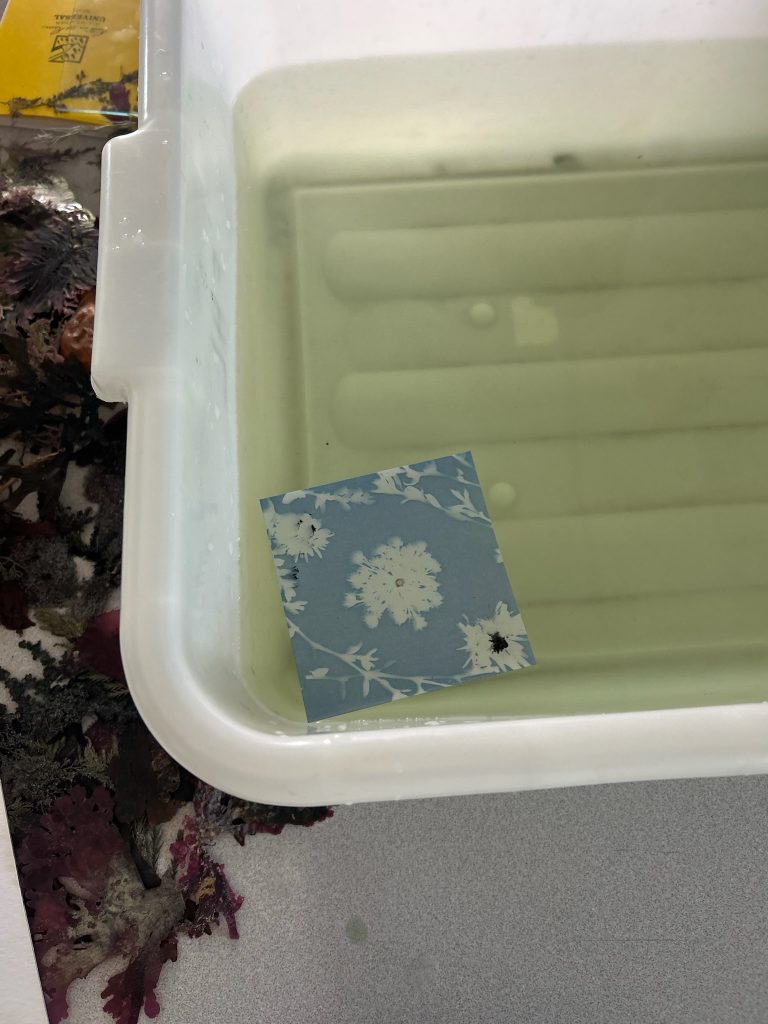
Letting cyanotype paper soak in water (taken by Addie)

Once your paper is done soaking in the sun, you then bring it to a bucket of water to dip in. We had two different buckets of water, one without hydrogen peroxide and one with hydrogen peroxide. The bucket with hydrogen peroxide will make your paper a darker color, and the one without will make your paper lighter. In this image, you can see one of the papers that was dipped in plain water.

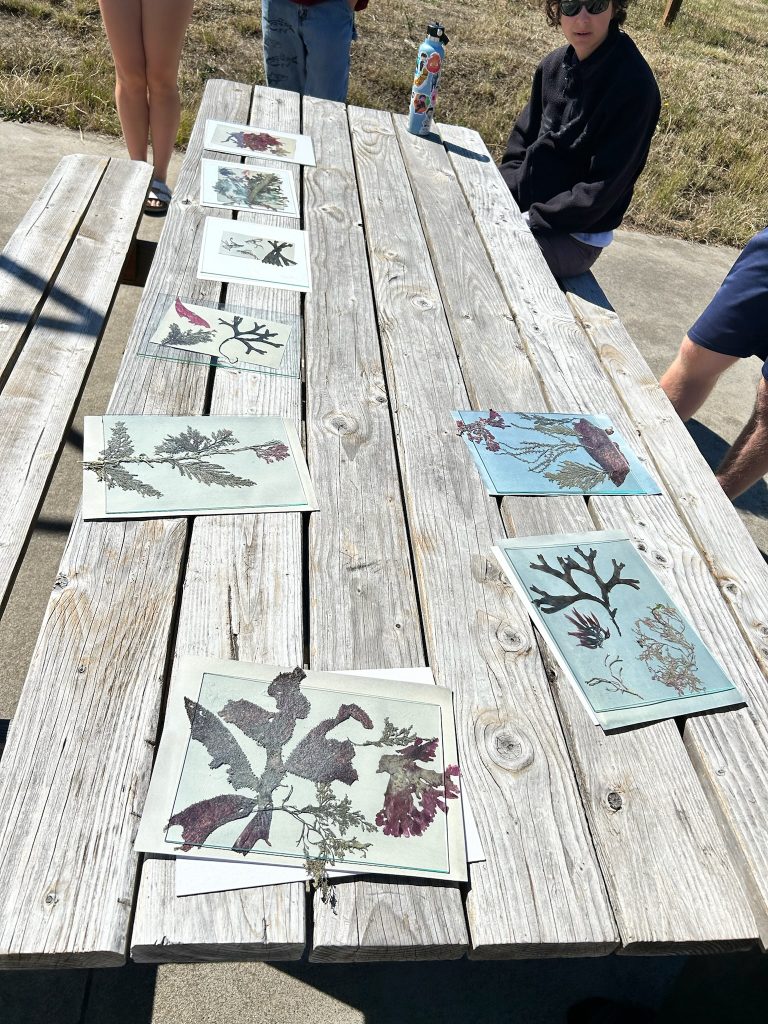
Final result of cyanotype paper prints (taken by Cynthia)

Here you can see the final result of the art project. These papers were dipped in hydrogen peroxide, which is why this paper is much darker than the paper above.

Lunch at Mount Grant (taken by Violet)

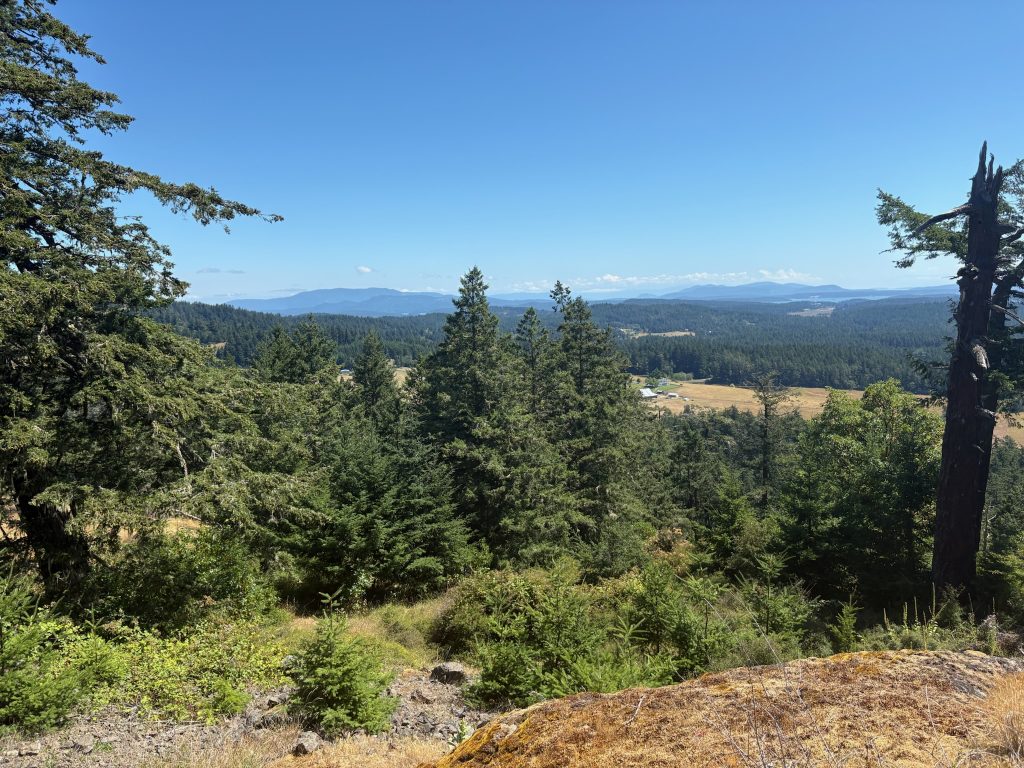
After our art project, we hopped in the vans and went to Mount. Grant, where we met Shauna Barrows, who explained the freshwater reserve of Trout Lake and how it provided water for the town of Friday Harbor. We learned that Mount. Grant is the highest accessible point for the public! She also explained how important land conservation is to this island, as runoff of fresh water can deplete the supply for the town immensely, which will deeply impact the people living on the island. That is why the land bank is so important, and the conservation work they do. After this interesting lesson, we went back to the art room for project time, where we could ask Ami and Adam any questions we had. Today we finalized ideas for our projects, and now we are starting the work on our individual projects! That’s it for now, see you tomorrow!

Day 13: Happy as a Clam

Blog Credits: Aoife, Violet, Ripley, Wesley

Do you know how many species of clams there are around Argyle Beach? Today we learned about the little neck clam, the butter clam, and the invasive varnish clam, among many other organisms by the beach. The start to today, however, was a little more laid-back.

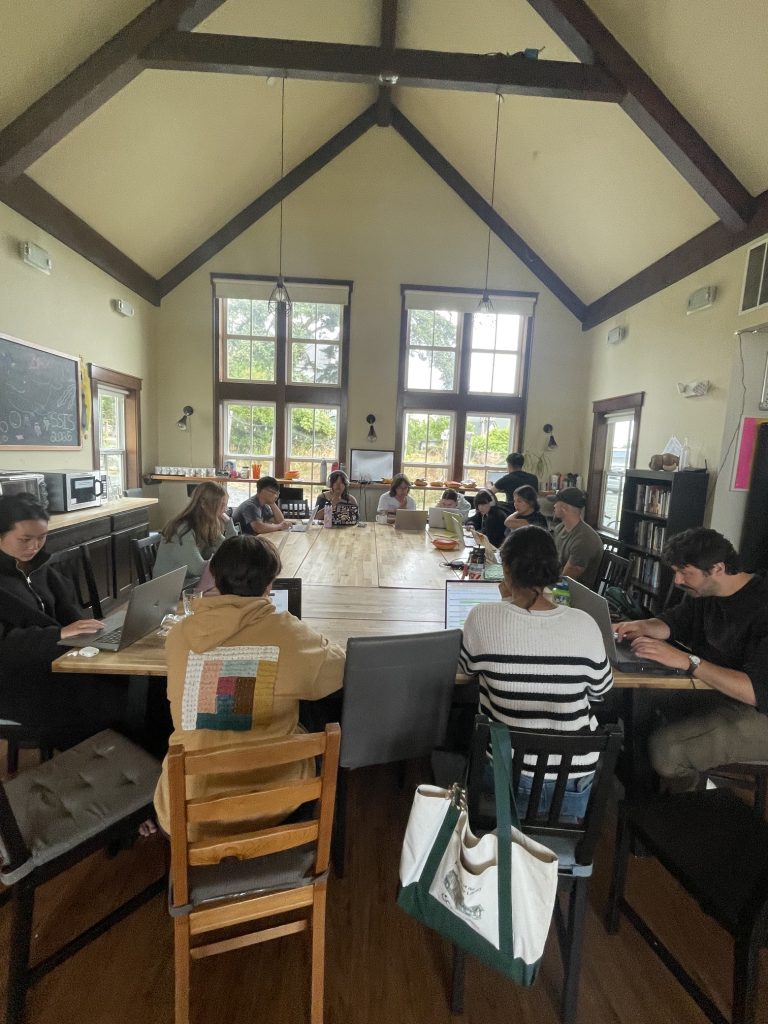
Today we switched it up with a relaxing, project-focused morning in preparation for Monday, when our topic selection is due. This mainly included background research, hypothesis development, methodology, and much support from our wonderful science team!

Everyone is working super hard on their projects! Photo Credit: Aoife

For a nice mid-day break, we packed lunch and headed out to Jackson Beach, where we explored the bay and adjacent Argyle Lagoon. While we were there, we dug for clams and waded in the natural saltwater stream flowing from the lagoon to the sea.

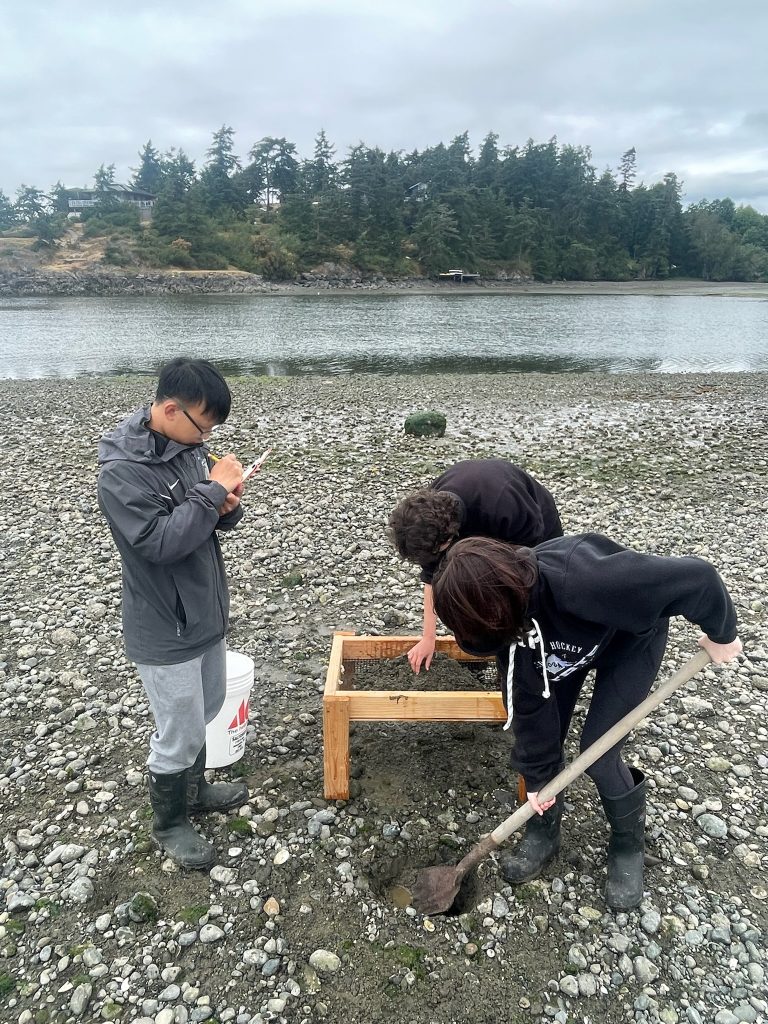
Wesley, Violet, and Ripley working hard to find clams at Argyle Beach. – Photo Credit: Aoife

Today’s clam dig was both fun and informative, as any good scientific field work should be! Each group of students dug four 1×1” holes, two further up the beach (high intertidal) and two near the water (low intertidal). The extracted sediment was placed into large sieves, where clams were sorted from rocks and other invertebrates. Additionally, invasive Varnish Clams were separated from native clams–such as butter clams–which were reburied.

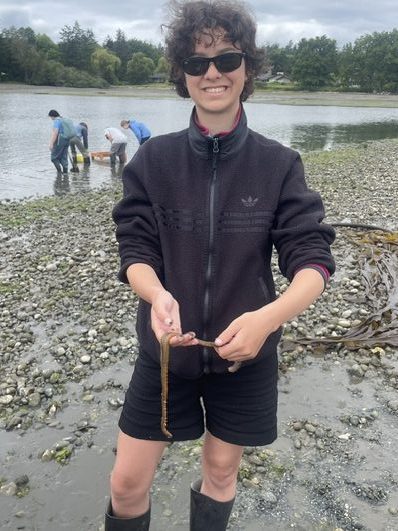
Ripley holding a massive polychaete worm that we found digging up! – Photo Credit: Violet
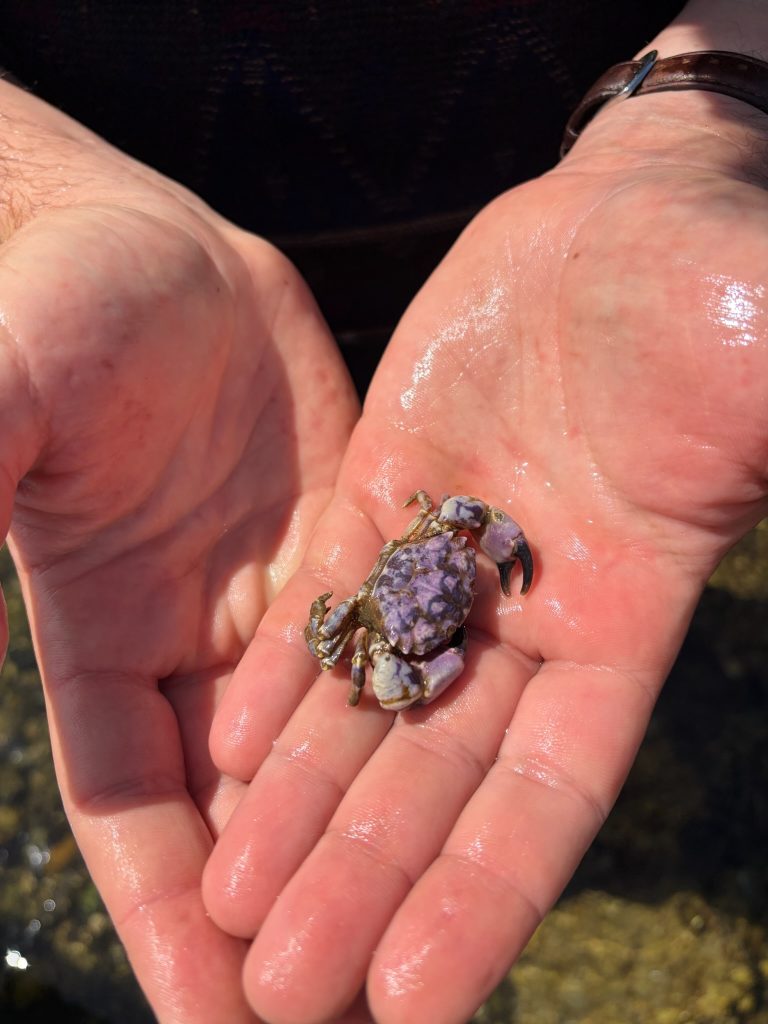
A super cool porcelain crab we found while wading in the stream between Argyle Lagoon and Beach! – Photo Credit: Alice
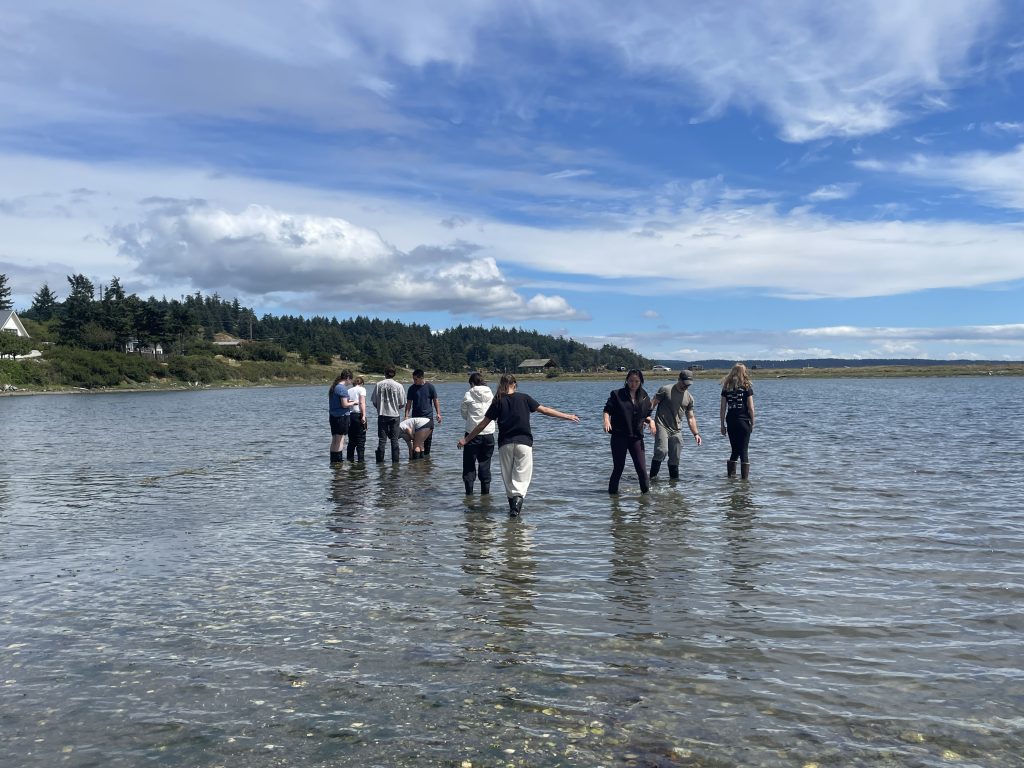
Having fun wading around in Argyle Lagoon! – Photo Credit: Aoife

We are excited to welcome our guest for dinner tonight: Joe Heras, a scientist currently doing work with genomics and environmental DNA, or eDNA for short, at the FHL labs. Dr. Heras and his team are able to analyze water samples to determine what fish have been in the water. His experience in the field, as well as the lab, makes him a valuable mentor going forward as students continue to develop their experiments and become immersed in the world of science.

Day 12: It’s Raining, It’s Pouring

We woke up to the cozy breakfast we have every morning and got ready for the day ahead. Friday Harbor Labs greeted us bright and early, working on collecting plankton for our lab later that day.

Some of us went with Uma, a scientist currently working on crab larvae populations, specifically the dungeness crab.

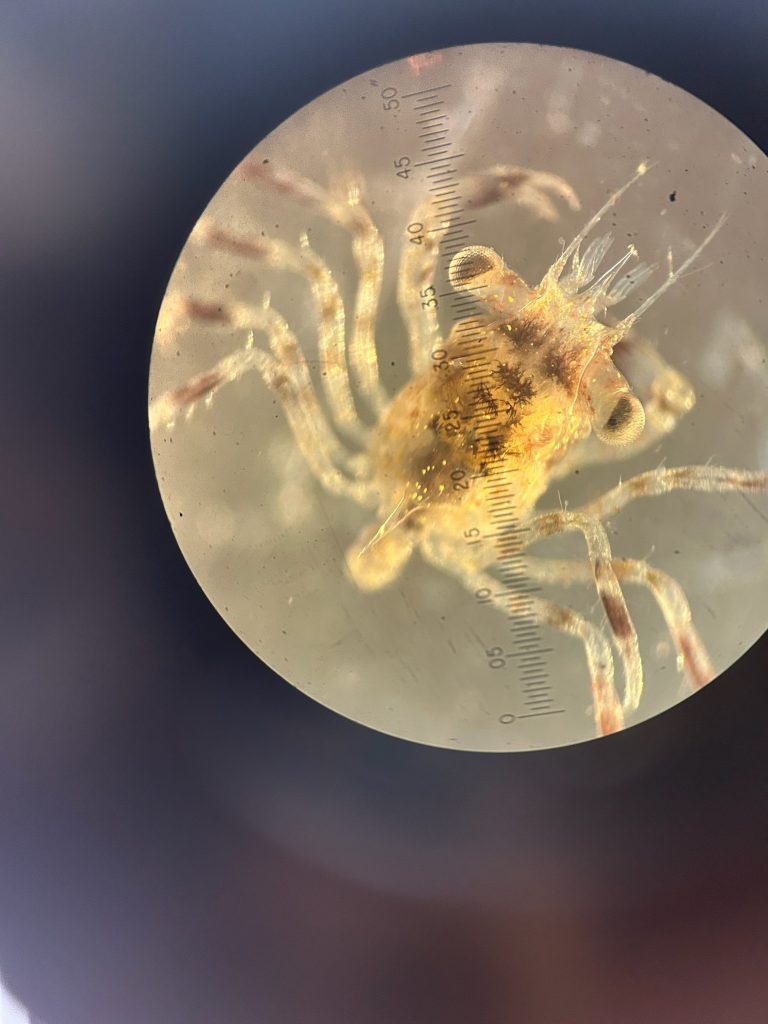
Crab larvae collected by Uma from under the microscope (Credit: Addie)

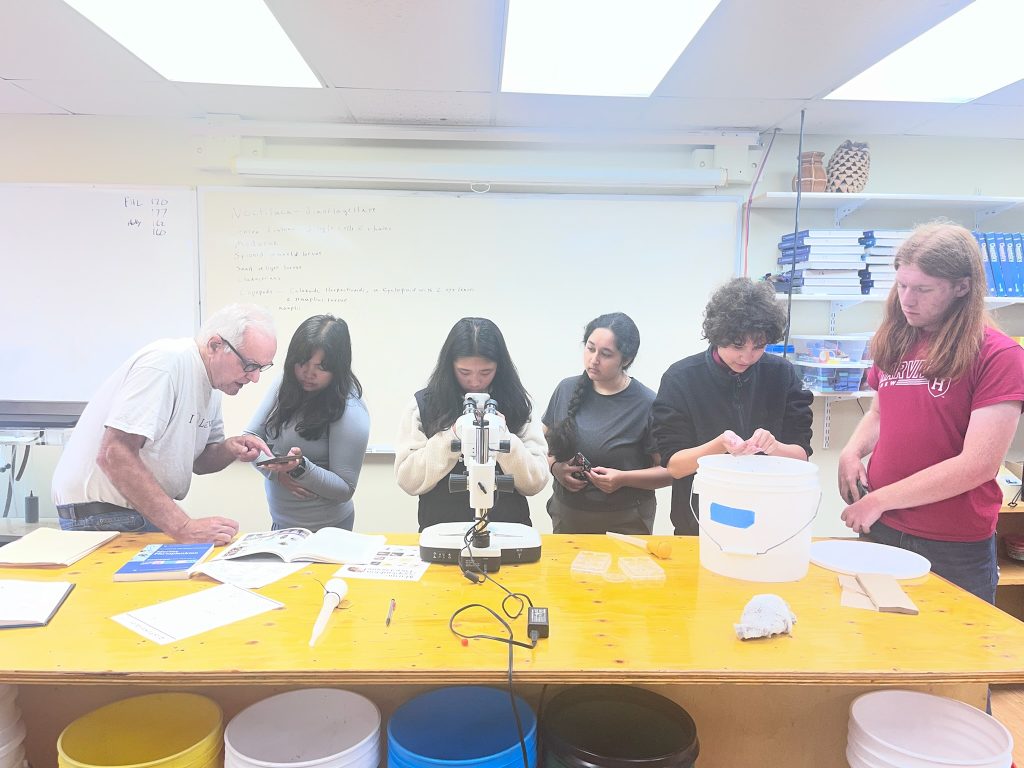
We came back to the dorms to see the plankton and crab larvae under microscopes, identifying the organisms and tallying the crab larvae count. We had a quick snack and power nap before going down to the marina to collect organisms for our projects.

Down at the docks, we retrieved a pistaster sea star and several feather duster worms for the lab aquarium.

Alice carrying plankton for us to take a look at under microscopes (taken by Violet)
Dr Strathmann and some students observing the plankton under microscopes (Credit: Sam)

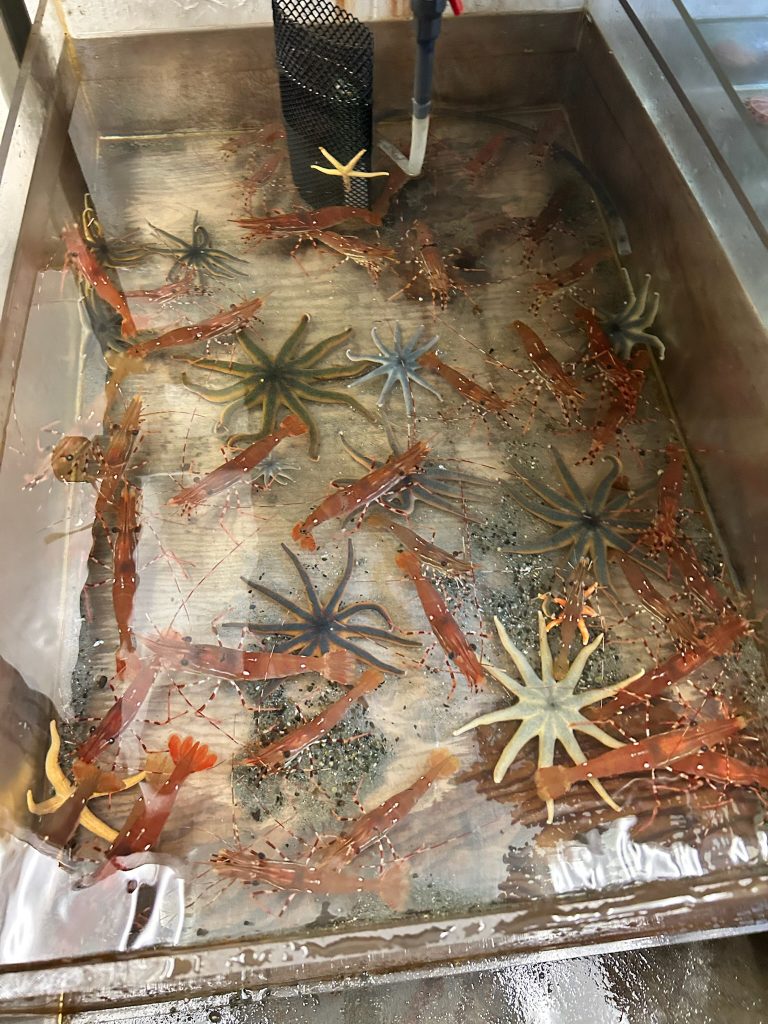
Next, we returned to Friday Harbor Labs to document organisms found on the docks, visit the molecular biology lab, and see the spot prawns at the sensory testing lab. We’re excited for tonight’s dinner with Dr. Ken Sebens of the UW Department of Biology and his presentation about marine benthic ecology, coral reef ecology, and theoretical ecology. This is a link of Dr. Sebens page at University of Washington.

https://biology.washington.edu/people/kenneth-sebens

Spot prawns and sea stars in Dr Havens’ lab at Friday Harbor Labs (taken by Alice)

Blog Credits: Owen, Addie, Sam, Eva

Day 11: Wiggin’ it out at False Bay

Written by Una, Addy, Kate and Gabe

Today we woke up well rested, we started our day with breakfast and packing lunch. We then headed to False Bay to meet with Dr. Vik Iyengar who studies the sexual reproduction of insects specifically the marine earwigs on the island. We helped him collect over 100 earwigs to use in his lab. They were very easy to find by just flipping over logs.

A earwig that just molted! Credit: Addy
Scientist Adam searching for something… Credit: Addy

After helping out Dr. Iyengar, we surveyed for Lugworms. A couple students dug them up and others used quadrats to record how many were in certain areas. Some students just threw the quadrats and recorded data like that, while others were deliberately looking for signs of the worms. The signs of the worms look like skinny piles of sand, since the worms basically eat the sand and poop it back out! They do this to digest the bacteria in the sand for food, but they don’t want the sand so it has to go somewhere.

Students surveying for Lugworms. Credit: Addy
An amazing Cockel shell. Credit: Una

After wrapping up our earwigs and Lugworms, we ate lunch at False Bay before heading back to the dorms. We quickly ran down to the marina and collected buckets of water for our aquarium to hold our testing creatures. Finally, we sat down and continued to develop our ideas for projects. Some students are still searching for the perfect idea, some are meeting with scientists, and others are digging deep. We are so excited to build these projects and share with our family, friends, peers and the locals of Friday Harbor.

Students hard at work on the final project… more to come! Credit: Addy

We have no guest tonight, so many of us are exploring town before we have dinner and some fun group activities tonight!