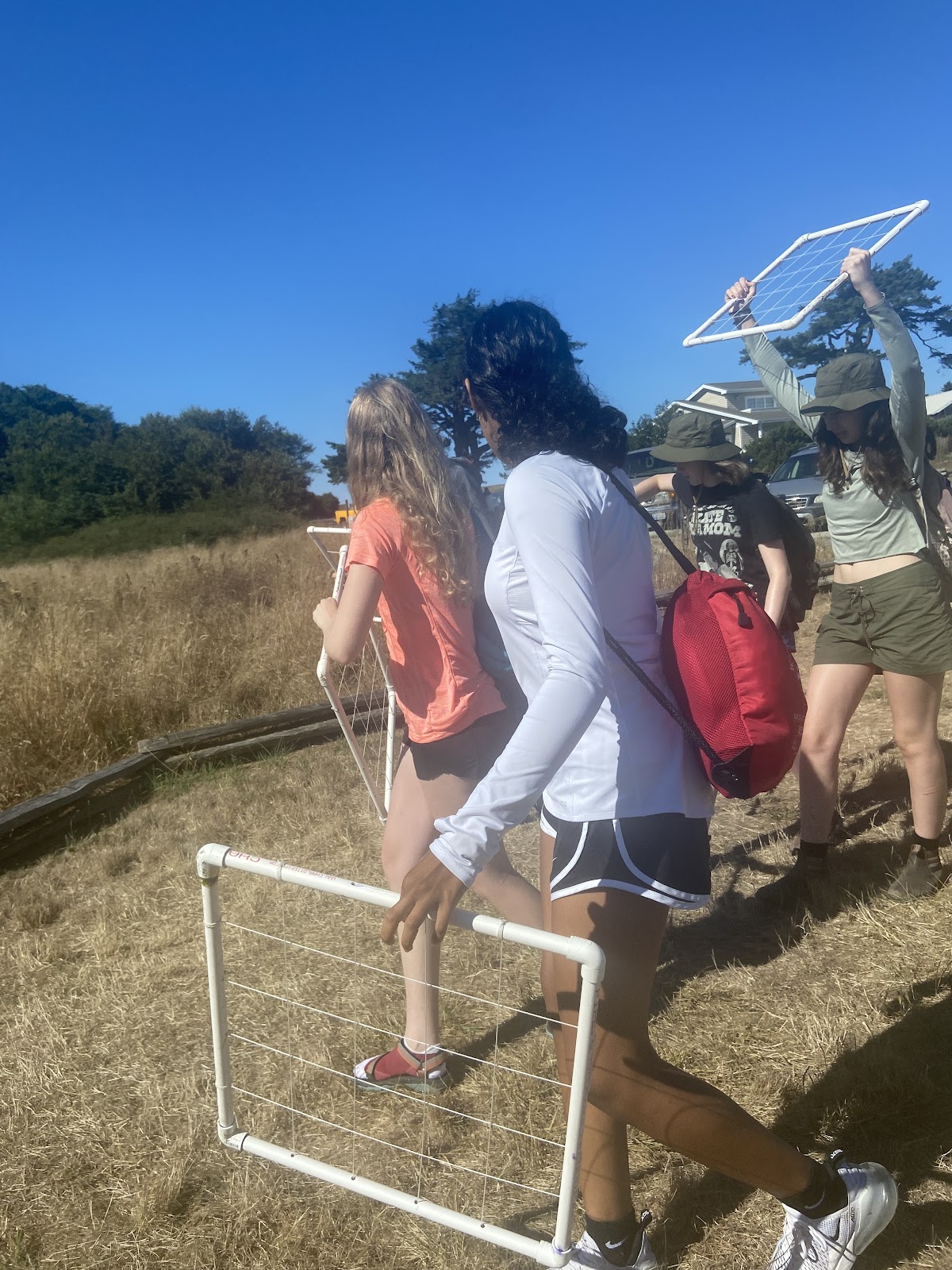
Since the last time we chatted, we have acquired the names of many seaweed species. Cattle Point, where we traveled today with Dr. Katie Dobkowski, is home to various species, and the Salish Sea Scientists are now fit to identify them all! After an 8:30 wakeup (more of these please!), we armed ourselves with quadrats, measuring tape, chalk, and ID cards, and set out to survey the seaweeds.
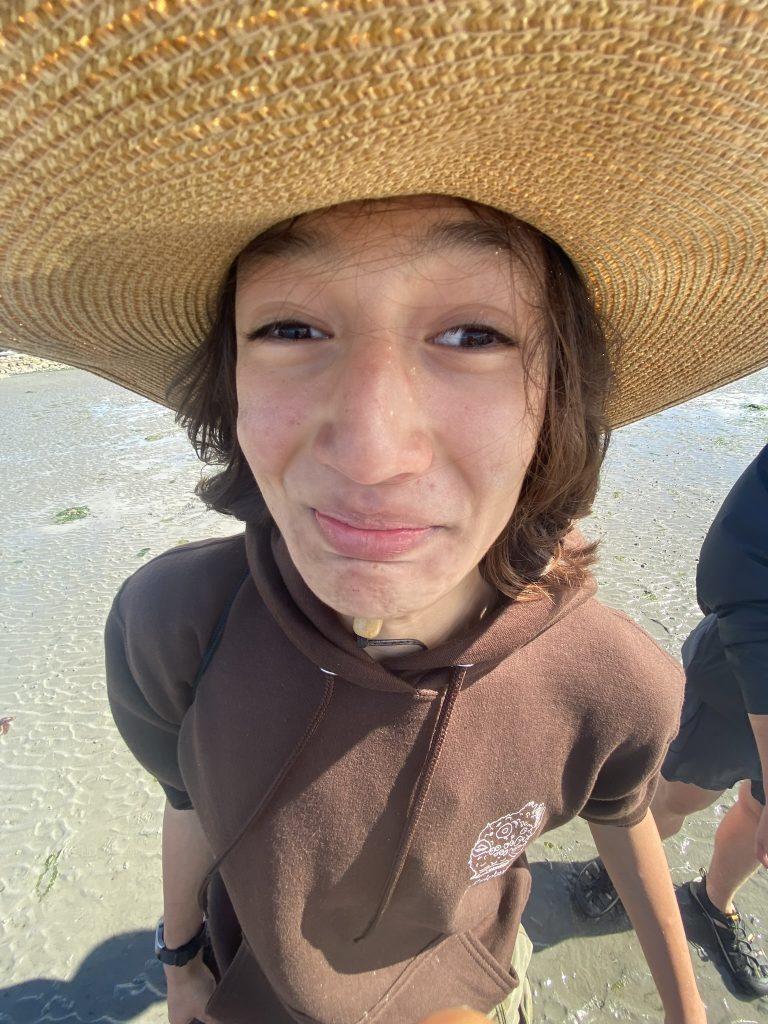
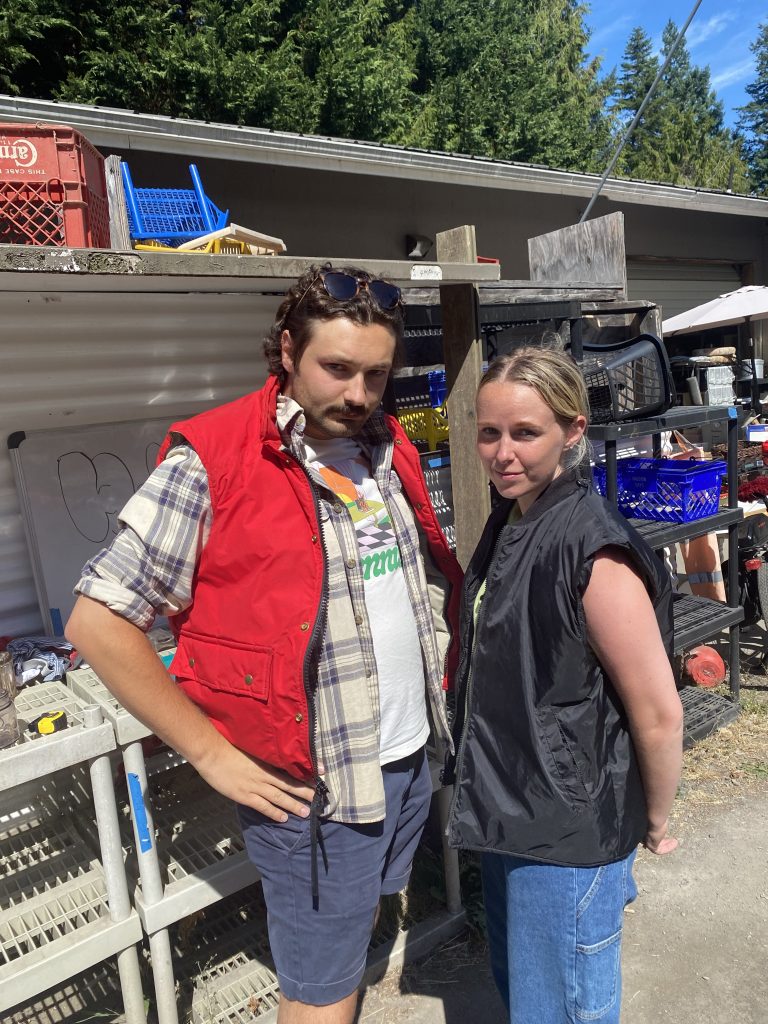
Riya, Cleo, Stella, and Una feeling powerful with their quadrats. Photo creds–Millie
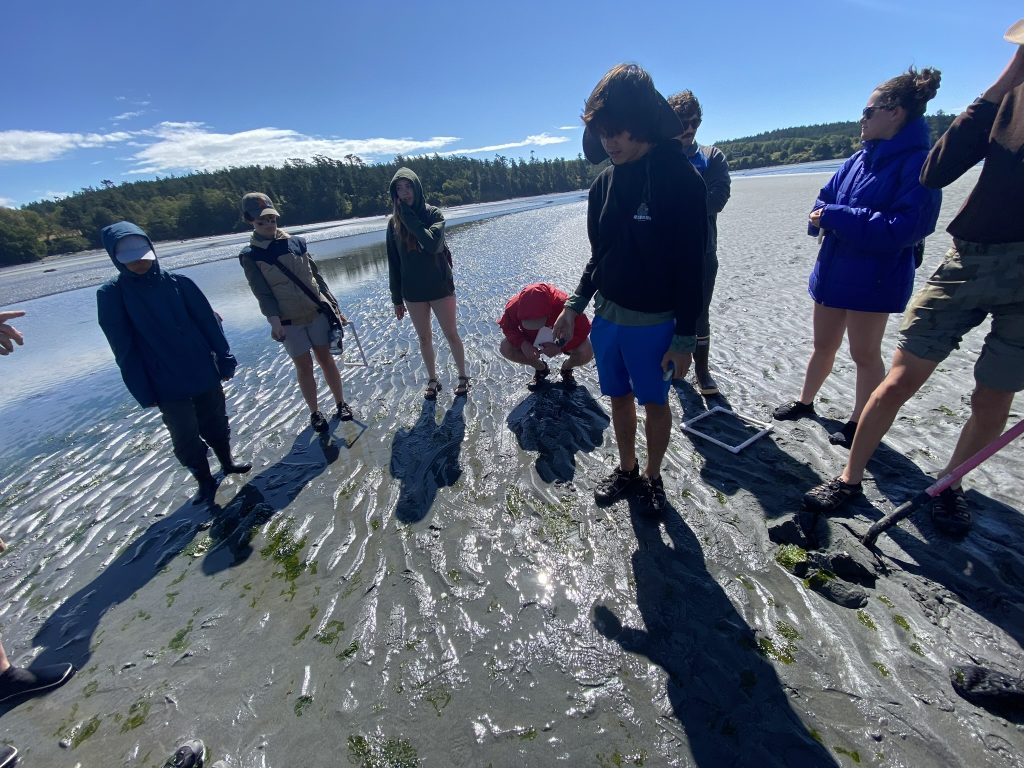
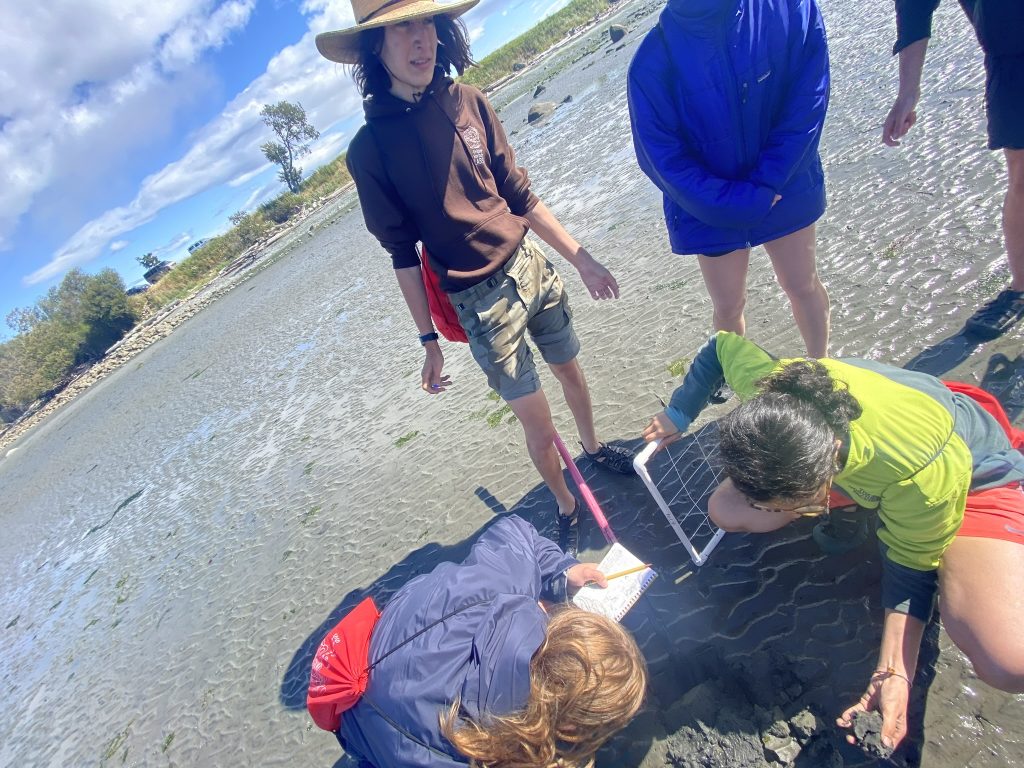
After some tripping and slipping we located the transect D marker. Our brave soldier Caleb ran out the measuring tape, staying impressively upright the whole journey. Shocking! He fell later though. We laid out the quadrats and poked around in each square, determining the approximate percent coverage of each species on the rocks. We saw lots of sea lettuce (ulva!) and rockweed (fucus distichus!).
Lots of sea lettuce marked in this quadrat! Photo creds-Caleb
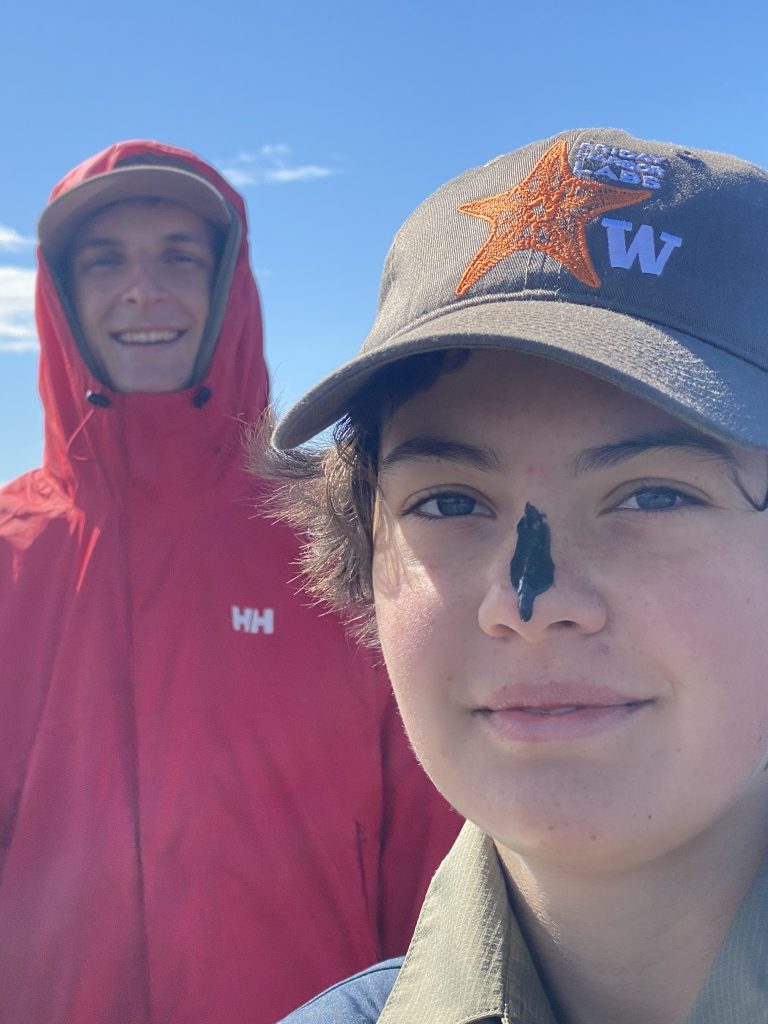
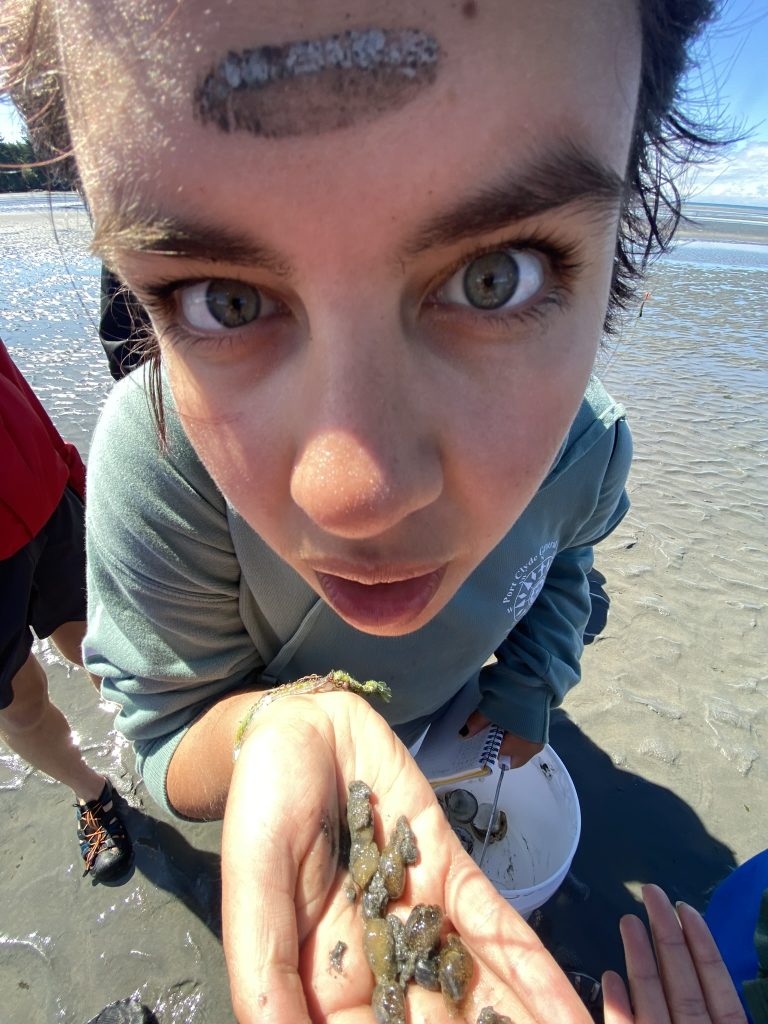
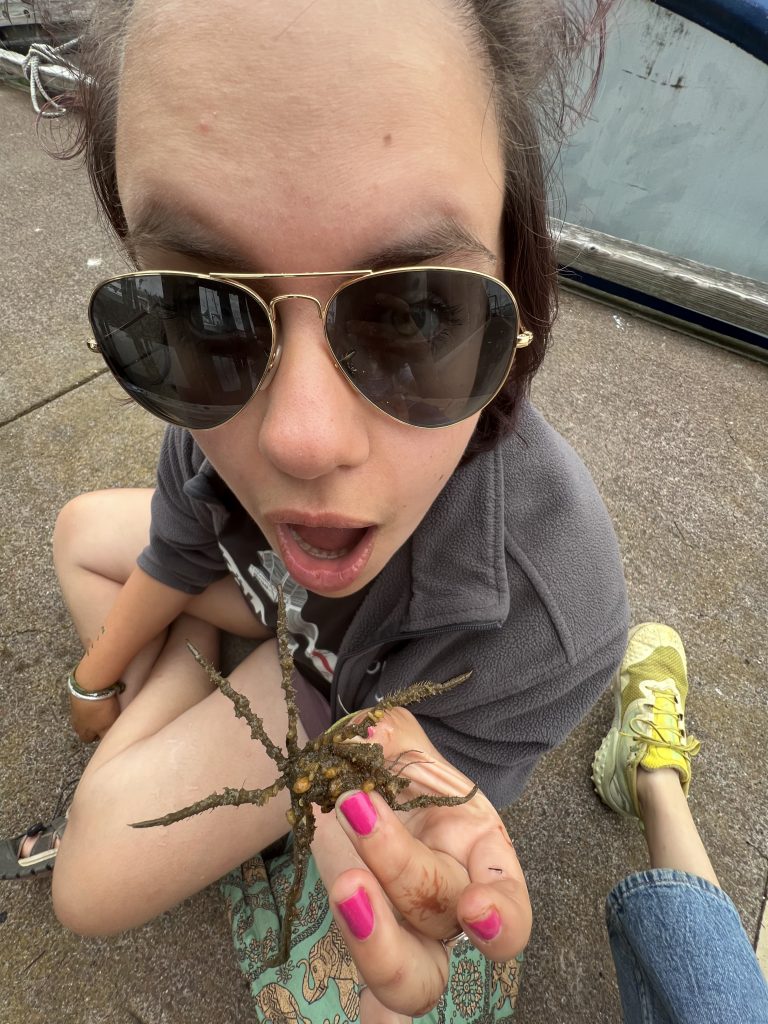
We also found some more exciting specimens such as tasty sea grapes and petrocelis, which, while looking like spots of tar (or, in my opinion, old sidewalk gum), is actually the encrusting stage of mastocarpus. The data we collected would be used to further a 10-year-long study investigating the changing populations of seaweed on Cattle Point.
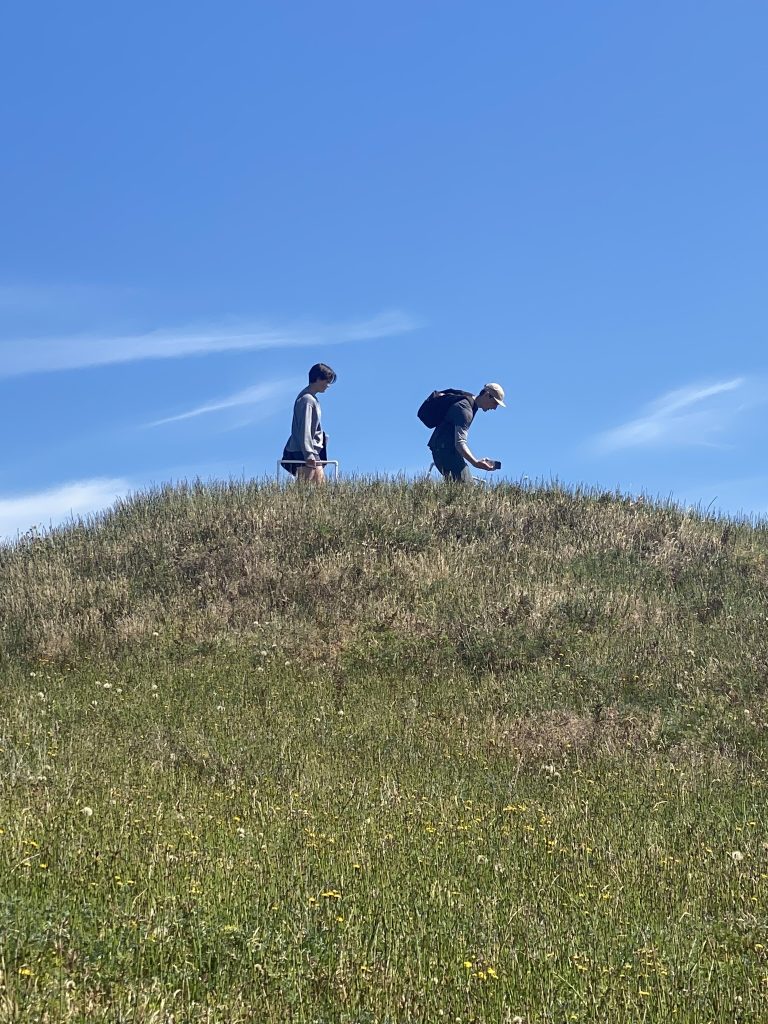
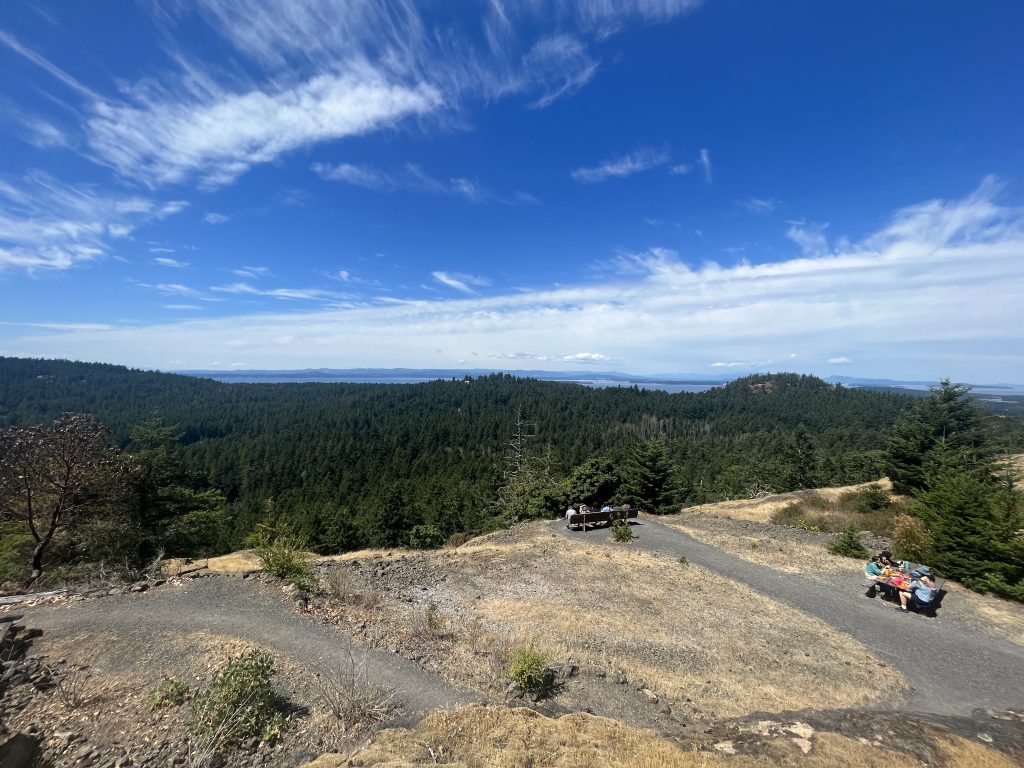
Caleb with Babsy (left) and Bubsy (right). Photo creds–MillieUna, Sonja, and Matthew (and others!) eating lunch on a hill by the lighthouse. Photo creds-Cleo
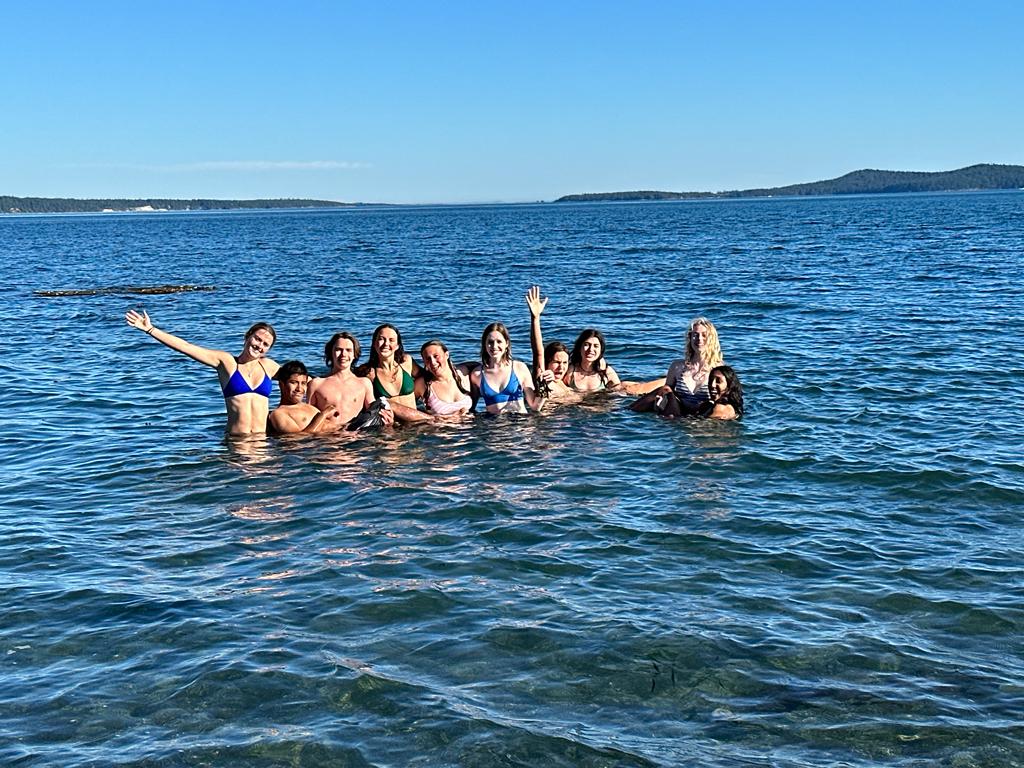
When we returned home, we were met with a cruel reality: PROJECTS! Just kidding, they don’t sound too bad. After a bit of research on those, we rewarded ourselves with a cold swim at Jackson Beach, which feels really good after the initial blast of agonizing, aching, tingling, stabbing, crippling, paralyzing pain. We warmed back up really quickly on our barefoot run back though! We were still 10 minutes late.
After a slightly later wake up than yesterday, we took a trip to the Friday Harbor Labs to watch a necropsy. The Washington Stranded Network found a newly dead seal pup which was luckily able to be preserved enough to have a successful necropsy in order to figure out the cause of death. The workers found strange bumps on the seal neck which could have been from a dog bite and put many pieces of the seals into containers to be shipped to other facilities for research on the animal.
We watched as the team removed the tongue, trachea, lungs, and heart from the seal pup. Picture creds to Keelin.
After an eventful necropsy we made our way to a hiking trail and walked for around 30 minutes to find a sea star surveying location with Dr. Derek Smith. Unfortunately, we didn’t find our pathway down to the beach so we had to venture out into the forest and hurdle over large ferns to get there. A few of us had an interesting conversation about what we would do in the event of a zombie apocalypse.
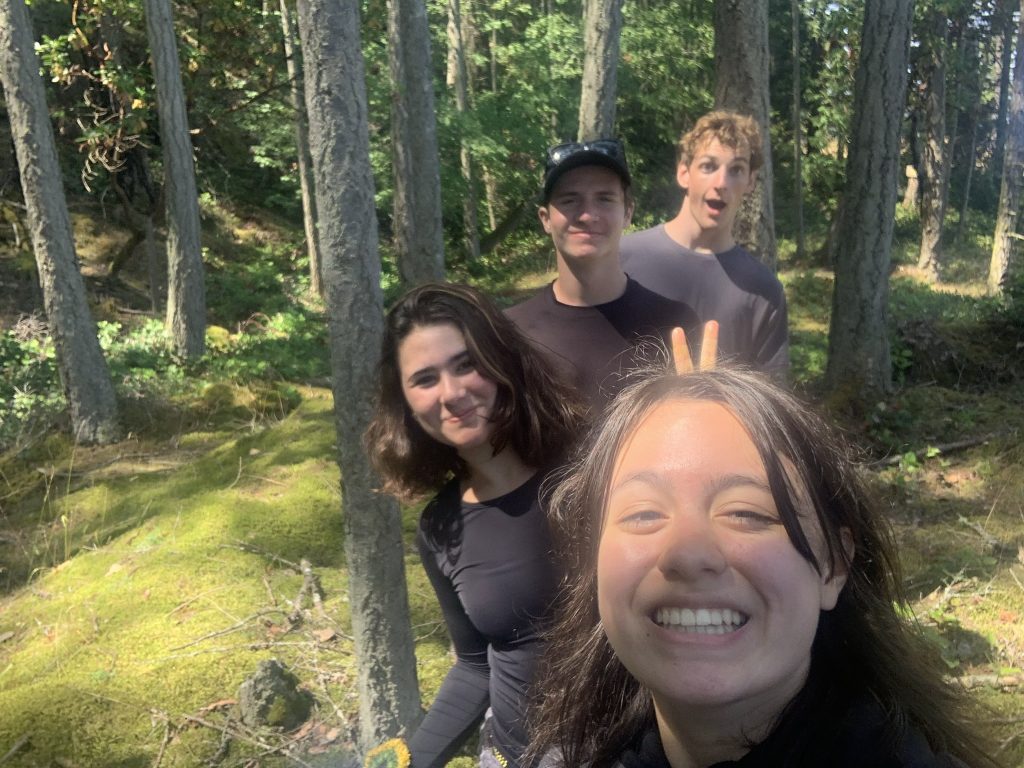
Our trek through the woods to Point Caution (Riya photo creds)
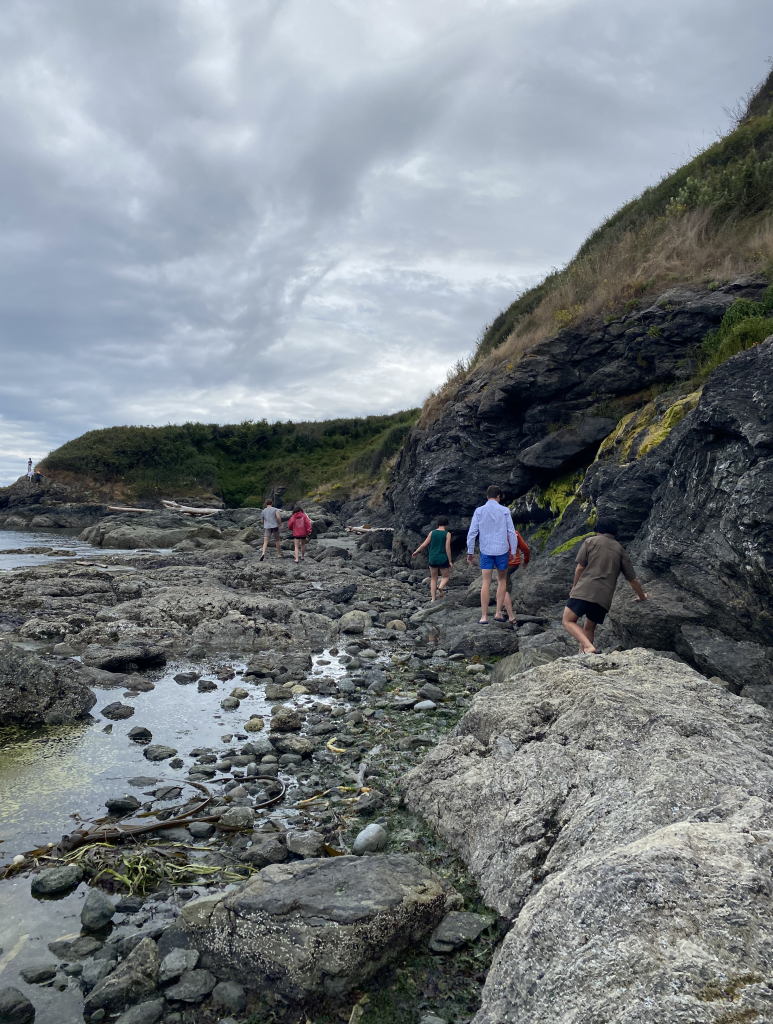
When we got to our site, we started trekking over the intertidal area, counting and measuring several types of sea stars. These populations had been severely decimated by the sea star wasting disease, so we were counting them to see if their numbers had increased or decreased since the past few years. Everyone did an amazing job helping the scientists find the sea stars, even though it was a little slippery (poor Caleb!).
Looking for sea stars in the intertidal area. Photo creds to Millie.Purple pisaster sea stars hidden underneath a rock. Photo creds to Millie.
After hiking back from the beach, we took a tour of the Friday Harbor Labs. We were able to explore many of the different labs spaces and hear lots about the projects going on. The lab experiments used water pumped directly from the Salish Sea so that all of the subjects are in their natural environment. We also learned about different kinds of microscopes like TEM and Confocal laser microscopes that can show us 3D images of organisms. For all the science nerds out there, GFP, an incredibly important protein in monitoring gene expression in organisms, was first discovered at Friday Harbor Labs!
Millie and Riya inspecting the contents of the invertebrate tank inside the Friday Harbor Labs. Photo creds to Cleo.
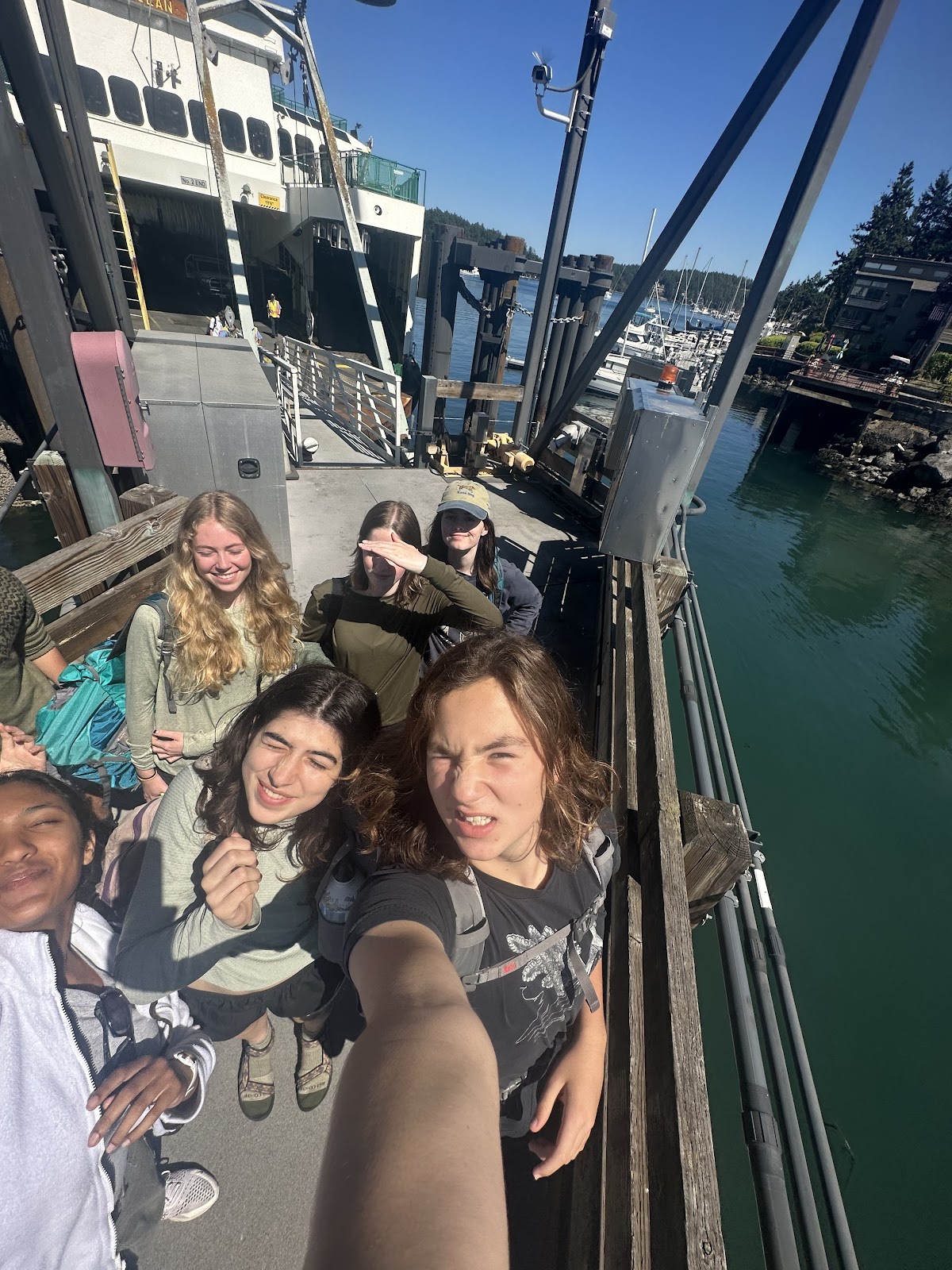
Today’s destination was Shaw Island, the smallest of the four San Juan islands. At 6:30 am, we were awoken by Barry’s quiet knock (or by our roommates if the knocking wasn’t enough). We ate breakfast, packed lunch, and debated whether cheddar cheese and strawberry jam were a good combination. We loaded up the van and rushed to the ferry terminal, only to find our ferry was delayed a little over an hour. After some aimless wandering and stopping at the Salty Fox for drinks, we boarded the ferry and proceeded to reenact the Titanic (a rite of passage for ferry rides).
[Photo credit goes to Riya and depicts Una, Stella, Caleb, William, and Cleo flawlessly recreating the iconic Titanic scene]
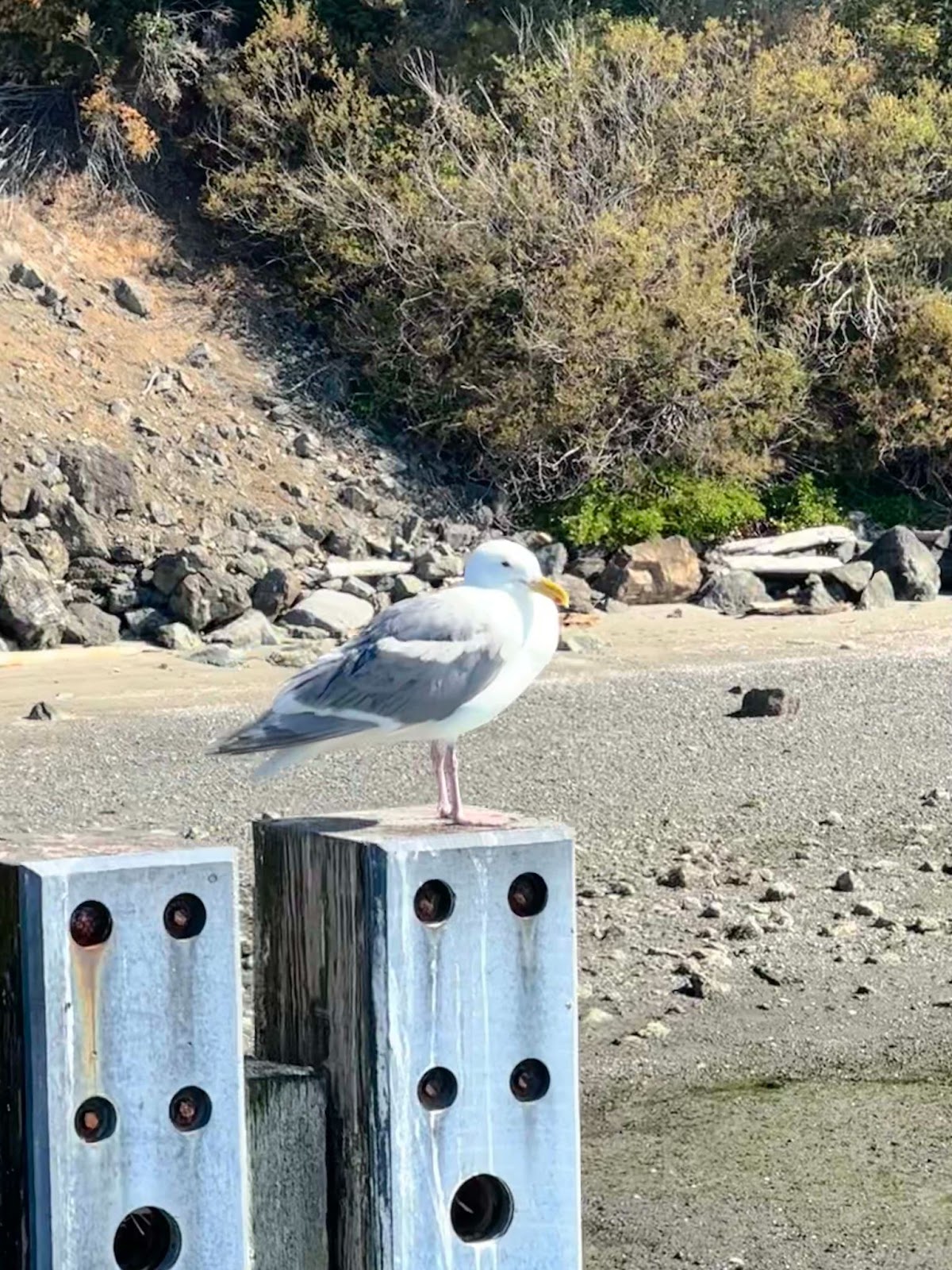
While the ferry was parked at one of the stops before Shaw, we observed a few seagulls and passionately discussed lesbian seagulls. You had to be there. Sorry blog readers (not sorry).
[Photo by Stella – Seagull contemplating her sexuality]
When we arrived at Shaw, we made a quick stop at the best (and only) store on the entire island, the Shaw General Store. We picked up snacks (we were already hungry) and admired the Dr. Bronner’s soap selection (more on this a little later). Once back on the road, we made our way to the beach, excited to collect Eelgrass seeds to assist Dr. Sandy Wyllie-Echeverria, Dr. Cinde Donoghue, and DNR in their conservation efforts.
Half of us suited up in waders, and the other half were left with rubber boots (I’m still salty I didn’t get waders)
[Photo credit goes to Stella and depicts Lizzy, Caleb, Sonja, Riya, Keelin, and Cleo in their waders]
We were given a brief on how to identify the flowering shoots and the phases of the seeds to ensure successful collection, and then we were off to work!
[Photo credit goes to Stella and depicts Cleo, Una, and Maya looking awesome in their gear]
Some of us were more successful than others, and some simply provided moral support, like our BBBBBBB (beloved beautiful bashful best bag boy Brian). If you can’t tell from the name, he held the net for the seeds we collected. We lost some steam as we went on, but we were pretty successful (expected as we are such a hardworking, amazing, and cool group).
[Photo credit goes to Stella and Brian and the aforementioned boot is depicted in the photo.]
After collecting eelgrass seeds, we stripped off our boots and waders. Our gear managed to keep most of us relatively dry, with the exception of Brain, who fully imposed the fact that his boots were filled to the brim with water. As he walked up the path to the parking lot, his boot squelched loudly, and water poured out the sides.
We ate lunch in a grassy field. It was a much-needed break after the hard work of eelgrass seed collection. Sadly our break was not long because, after about fifteen minutes, we were informed that the tide was too high to go out again and that we had two options: 1) Race across the island to the ferry that left in ten minutes 2) Spend the next five hours on Shaw doing who knows was and get back late. Needless to say, we chose the former. So in the blink of an eye, we packed up our lunches, put our boots in the back of the van, and were off.
Little did we know that when we arrived at the ferry terminal, the ferry still had not reached the terminal. So the group decided to go to The General Store again to see what Shaw’s only store had to offer.
[Photo credit gose to Riya. The picture depicts Caleb and Willam proudly displaying Dr. Bronner.]
Once again, Caleb was enamored by the bottles of Dr. Bronner’s Soap. He loudly touted the many amazing uses of the bottle of eighteen-in-one of soap. When asked for a comment about the Dr. Bronners for the blog, Caleb said he would be keeping all of his Dr. Bronner opinions to himself for now so that he would be able to later share them on his own. I encourage you, dear reader, to keep a lookout for Caleb’s Dr. Bronner opinions which hopefully will grace the internet soon.
On the way back from Shaw Island (a very fun but tiring outing), the ferry which we ran to catch ended up getting delayed by an hour. We were “sooo disappointed” that the cars couldn’t get out of the ferry because that meant we wouldn’t have to – oh I mean GET to! – go to the Friday Harbor Labs and instead got a chance to explore town.
[Yeah, needless to say, it was pretty sunny out. I swear we’re usually better-looking than this – photo creds to Caleb]
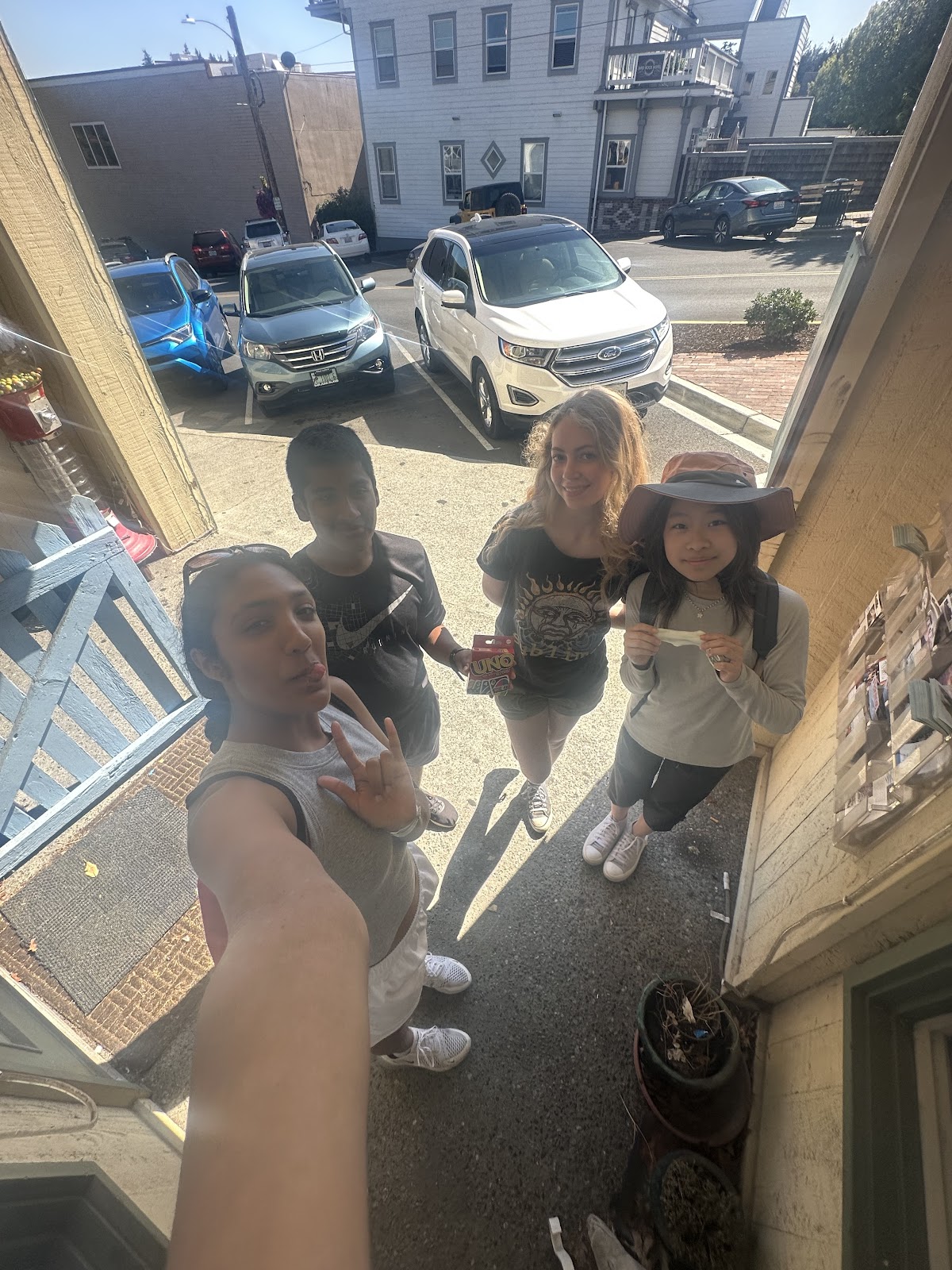
Me and my gals (and Brian!) decided to check out the various nail-bitingly-expensive goods of San Juan. First, we headed to a toy store appropriately named Toy Box to get some fun games for us to play.
[Brian got UNO! – a much-needed classic – and Millie found some fun GLOW IN THE DARK putty (which Dr. Bronner’s could have obviously substituted for, duhhh). – photo creds to Riya]
After that, Cleo joined us and Brian DITCHED US when we went to some boutique shops (wait that makes sense: I don’t know why he’d wanna go to a boutique) that were WAYYYY out of our budget…
[Millie bought a toy that reminded me of a certain Doctor Octavius… Cleo loved him!! :)]
But besides that, we were too broke to afford any clothes or good stuff, even though we found some gems: toddler sunglasses and an overpriced fedora (it was $50)!!
[Cleo was ready for Oppenheimer!!! photo cred to Millie]
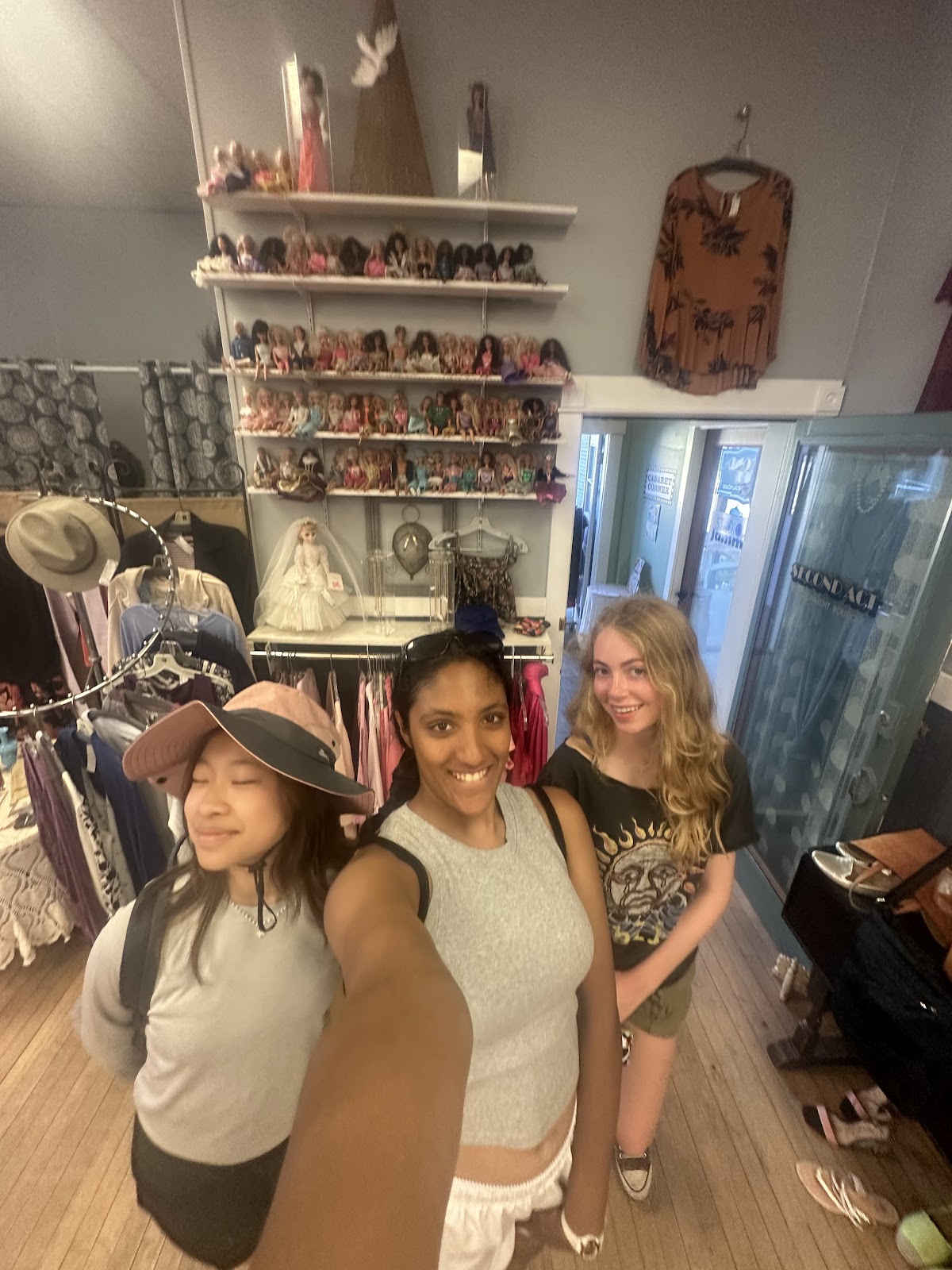
It’s all good though – we visited a thrift shop right after where Cleo got suchhh a good deal on brand new Levi’s. Like $30 dollars – for a brand new pair! The thrift store was definitely more in our budget. Oh yeah – and the thrift store also had so many Barbie dolls…
[WE. ARE. KENOUGH. – photo creds to Riya]
After our shopping, we strolled back to the school and met up with the hardworking essay writers Keelin and Maya and walked home. Super exhausting day, but so much fun!!
Hello Blog! What’s your favorite Cnidarian species? Ours may just be the stubby sea anemone we saw at Deadman’s Bay. In order to reach the fantastically biodiverse tide pools of Deadman’s Bay, we all hopped into the van after an 8 am wake-up. Then, we had to traverse the pebble beach, which proved treacherous for our Keene-wearing comrades. FOOLS! But the tidepools were worth every pebble-in-shoe situation. Highlights include a massive sea cucumber and a gumboot chiton (“surprisingly fleshy!” remarked Isabella. Indeed it was.). We learned some important new vocab via Intertidal Bingo. Did you know that segmented worms are Annelid Species? Caleb didn’t. I didn’t either, actually.
Sea Cucumber goes disturbingly limp in Riya’s handsKeelin and Lizzy attempt an ID
We then indulged in our packed lunches. My bagel was vastly improved by the sea cucumber residue lingering on my fingers. Yummy! Then we killed some time: those experiencing Ultimate Frisbee withdrawal tossed around sandwich containers, and others searched for excellent rocks (pictured below). After a discussion about the biotic and abiotic factors (spoiler alert: everything is a factor and everything affects everything!), we headed home because our disoriented minds needed orienting!!
Rocks (and sea glass)
After orientation followed by 15 minutes of rest, our counselors Adam and Bea called us down for a scavenger hunt. We would have an hour and a half to explore the entire town! We were paired up in our assigned groups and off we went! There were crazy tasks. Crazy? I was crazy once. They locked me in a room, a rubber room. A rubber room with rats. And rats make me crazy. Crazy? I was crazy once.
Some of the tasks included taking photos next to an ATM, a photo of us petting a dog, and even attempting a handstand. They were worth different amounts of points, and points would be counted up at the end. The team with the most points would win a prize!!! Unfortunately, my team, “Team Won”, did not in fact win. But team “Popeye” won with an all-time record of 480 points.
Una and Millie attempting a handstandStella, Riya, and Isabella also attempting handstands
We will see you soon! Hopefully tomorrow we will not get the insides of our boots wet when we go find eelgrass seeds. Bye!
Hello everyone, Leo here. I have directed this for the eyes of my fellow Salish Sea Sailors, but it should work just fine for anyone reading.
I do not think words can describe the new experiences that this camp has given me. To say you all are amazing is the understatement of the year, because you are all truly unique and unforgettabel individuals, and I love every single one of you, and miss you guys already.
Being able to laugh, bond, and eventually cry with you all, has made me feel more like you are family than friends. I will try my best to keep in touch with al of you, and hang out with those that are near.
It is 6:15 pm, so you know what that means!
My rose for this trip was being with you all. EG: When some of us found a place to sit and relax, talking or in silence, until the sun set and Adam and Bea were questioning what we might have been getting ourselves into. Camping and Kayaking: We had little access to our phones, some more than others ;), and it really forced us to bond together, and really demonstrated Philip’s philosophical prowess at the dinner table. Cards against humanity, and realizing that a 14 year old knows a few more terms than some of us could have imagined, while others read the cards confused while we all cackled. Our science directors, and getting to know them more like friends and other siblings than like people who made our amazing schedule. Thanksgiving dinner: We all shuttled out in our most dapper, spiffy fits to show our appreciation for eachother, and how we were nothing but absolutely busting with excitement. Night lighting with all of you: Seeing the defense mechanism for a segmented worm first hand, at the hands of James The Mountain himself. I loved how much I laughed, talked, smiled, explored, wondered, and discovered with all of you at my side, and my side at yours.
Hypothetically I would stay up for hours with you, talking about the most random ideas that comes across my mind. This trip was a first time for many things. I saw the milky way, and many shooting stars, in which I would wish for more time with us together. If there was any hopoe that a dream could work out like that, it is all I would ever wish for.
I will be posting the soundtrack on Spotify soon! I just need to polish a few thhings, but the video will stay as it is. I hope you remember these memories along to the sweet sway of the guitar. What I like to do is usually listen to one, or a few songs with every new lasting experience in my life, so that if I listen to it enough, it will become the feeling of those memories. Feel free to try it with that as you repeat the video.
My thorn, was this morning. It seems I can’t get a certain weight out of my chest, as if with each hug you all gave me a piece of yourself that I will carry with me for the rest of my life. Seeing you all go made me very emotional, as is this writing. With so little thorns over the course of the trip, I feel like this was the biggest.
My bud, is keeping in touch with you all. I cannot wait to keep in touch with you guys, telling you all abuot my roses, thorns, and buds in the future when I feel down, or reflective.
Below I have attached photos, chronological to the best of my ability. Scroll through! Take yourself back to the beginning of July 2nd.
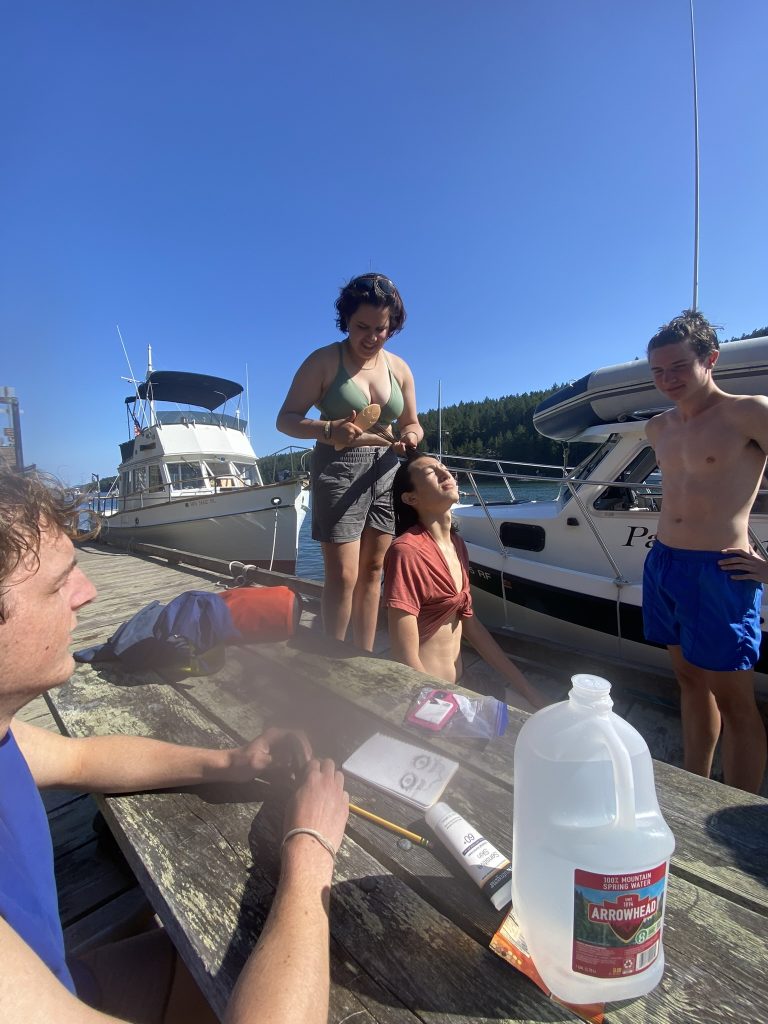
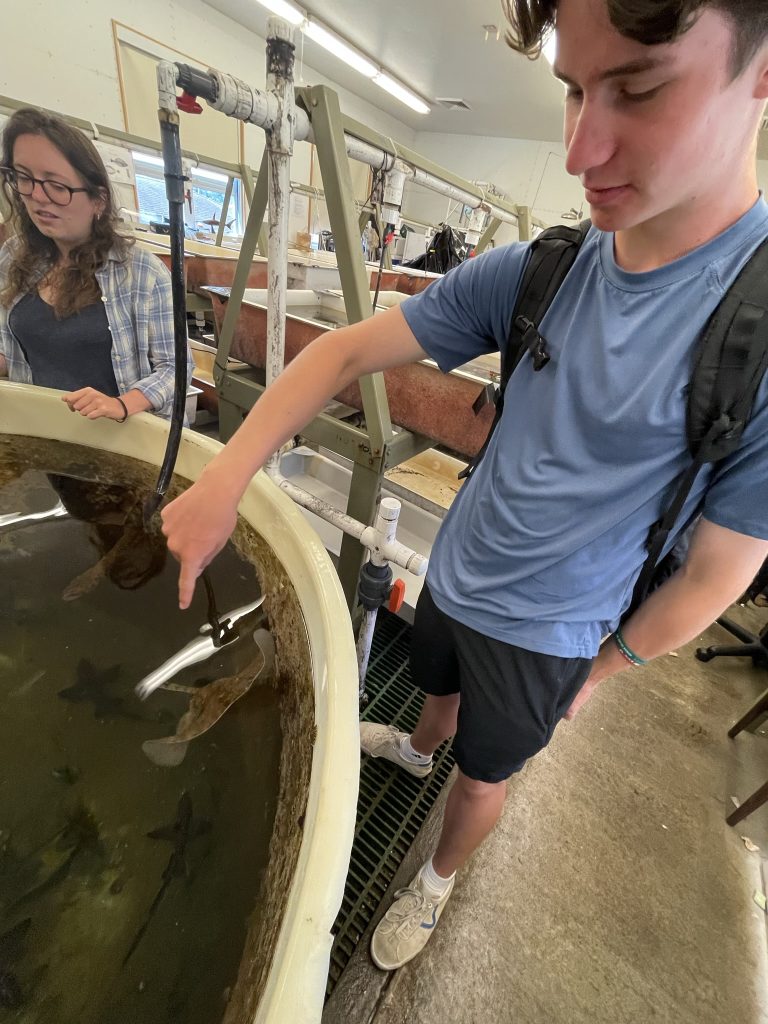
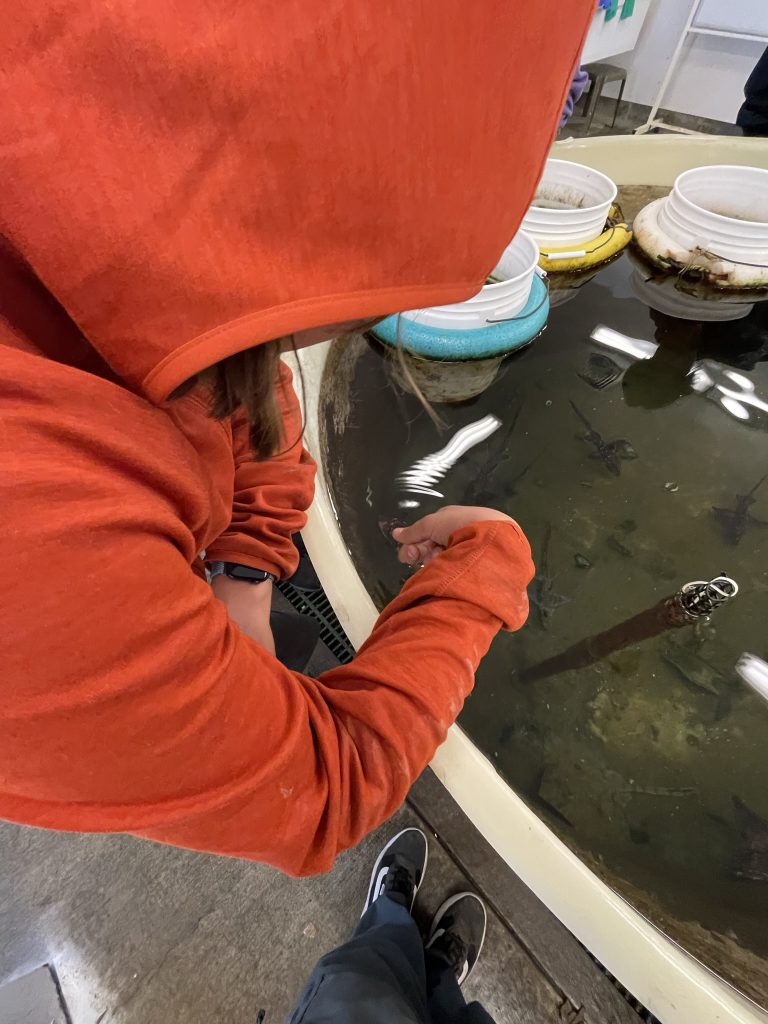
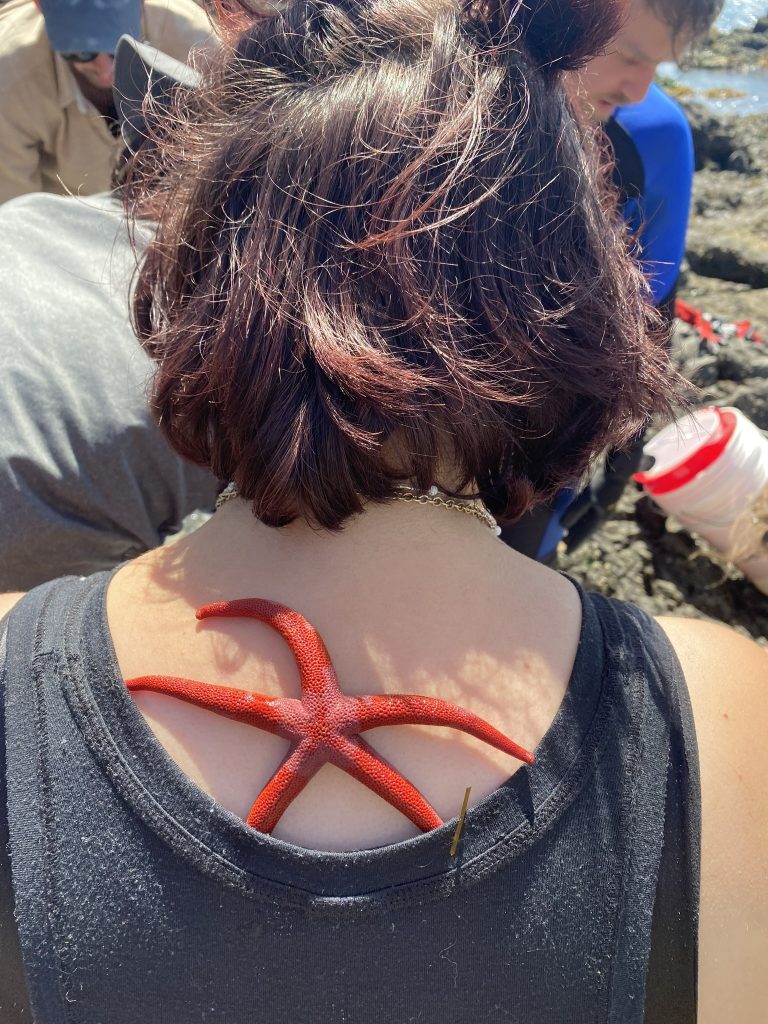
On the ferry, none of you knew I was thinking ahead to this momentMade it off the ferry, now we at Salish Sea Sciences!Camping view, after sunset, many shenanigans You wouldn’t have been able to guess we hadn’t showered for 3 days up to this pointHair braiding session was underway. Philip, the model that he is, demonstrates perfect formTommy getting touchy in the tank. You could call him a skate charmer, perchance Max discorvering his next business venture, dropshipping RatfishScience Director Adam’s reaction to discovering that L pod is the biggest collection of Southern Residents Pacific blood star on Hannah’s back, hitching on for the ride. One of you guys caught me recording one of the videos that actually went in the final film!
We out here at False Bay fellas
Science kids meet science glovesThe squad post sea urchin dissections Photo creds to Hannah for getting an absholutely shmashing shot( innit)
The squad discovering Washington water is, in fact, pretty chilly if you’re waiting for 10 other people to get out of the water first
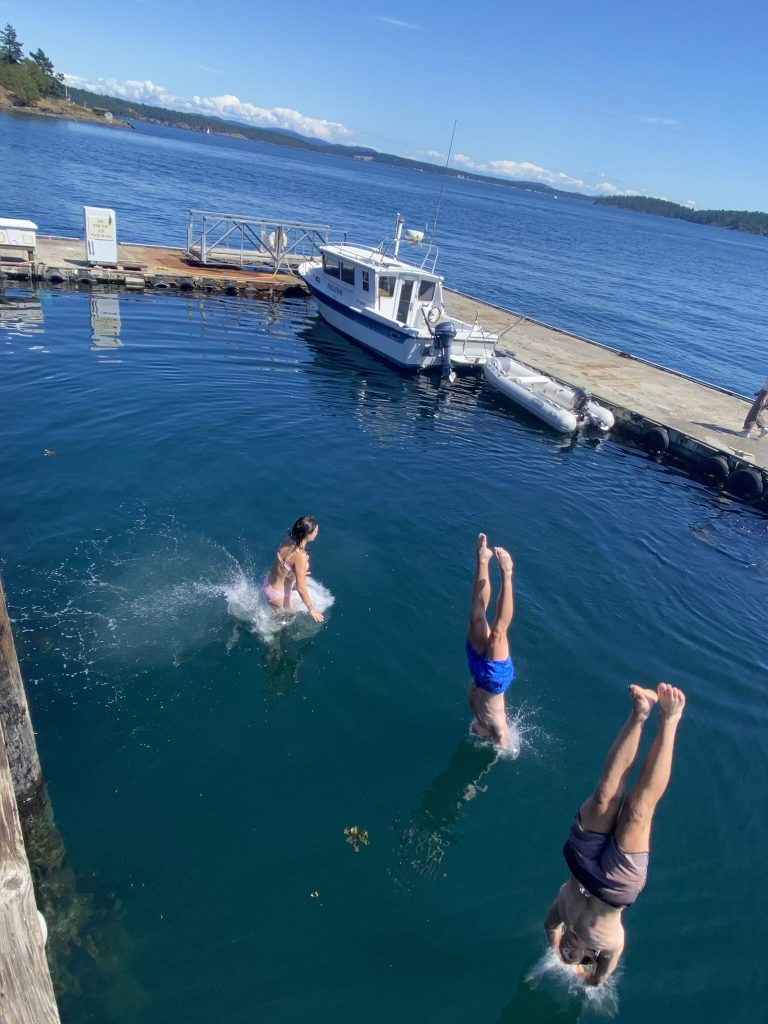
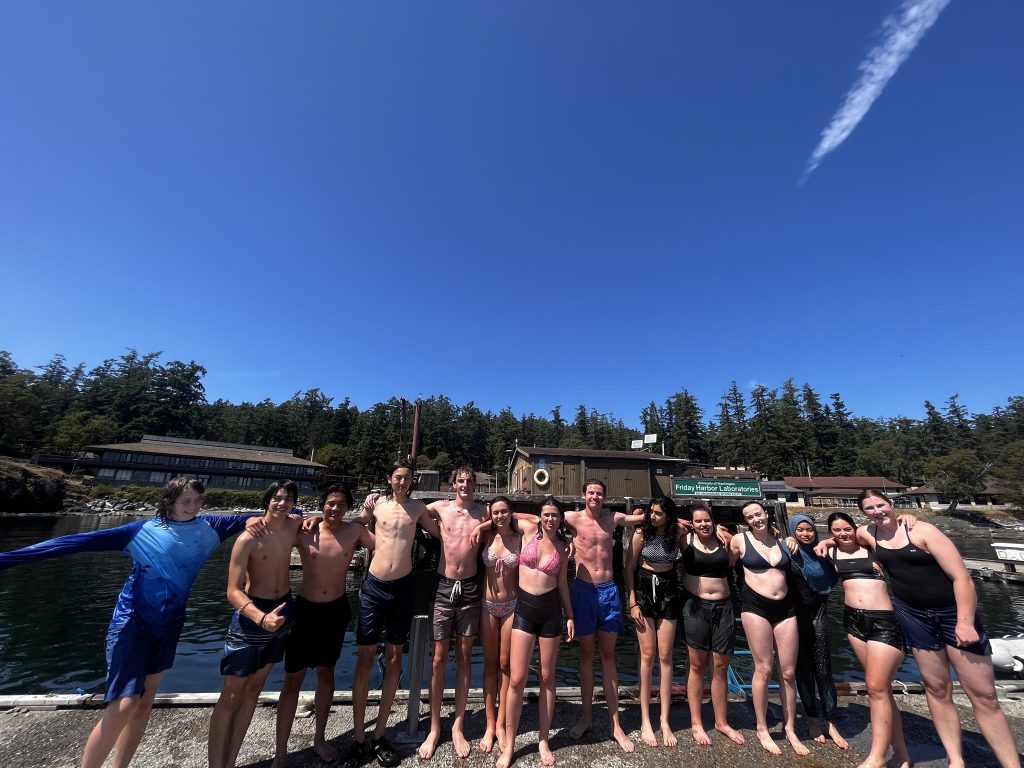
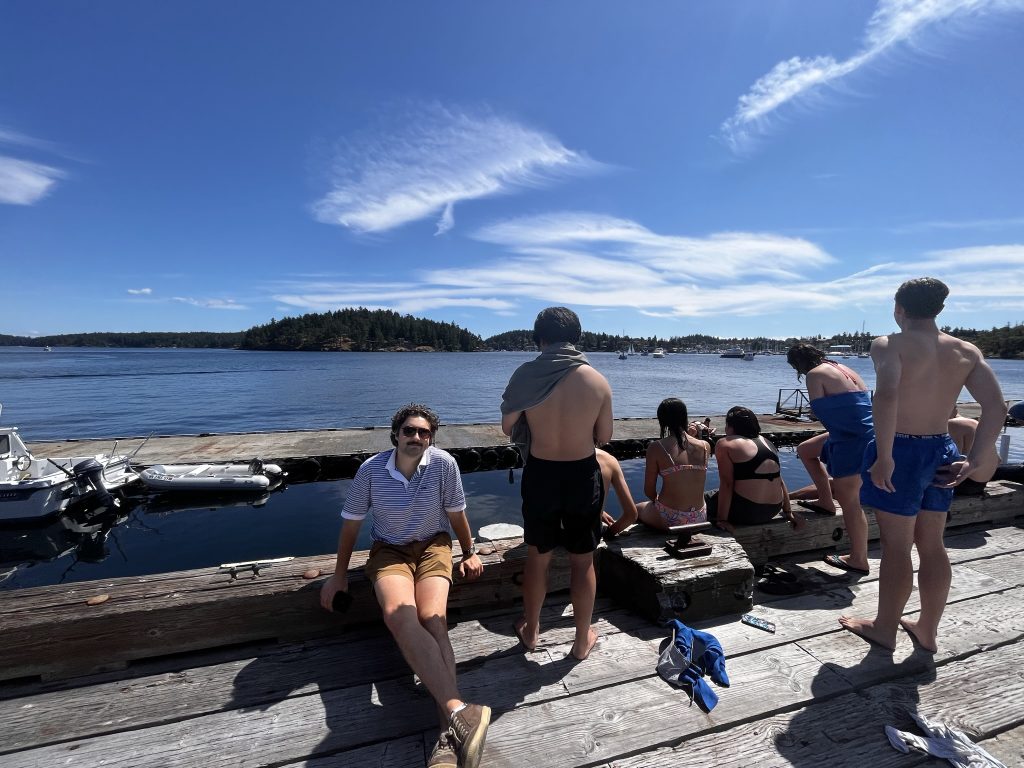
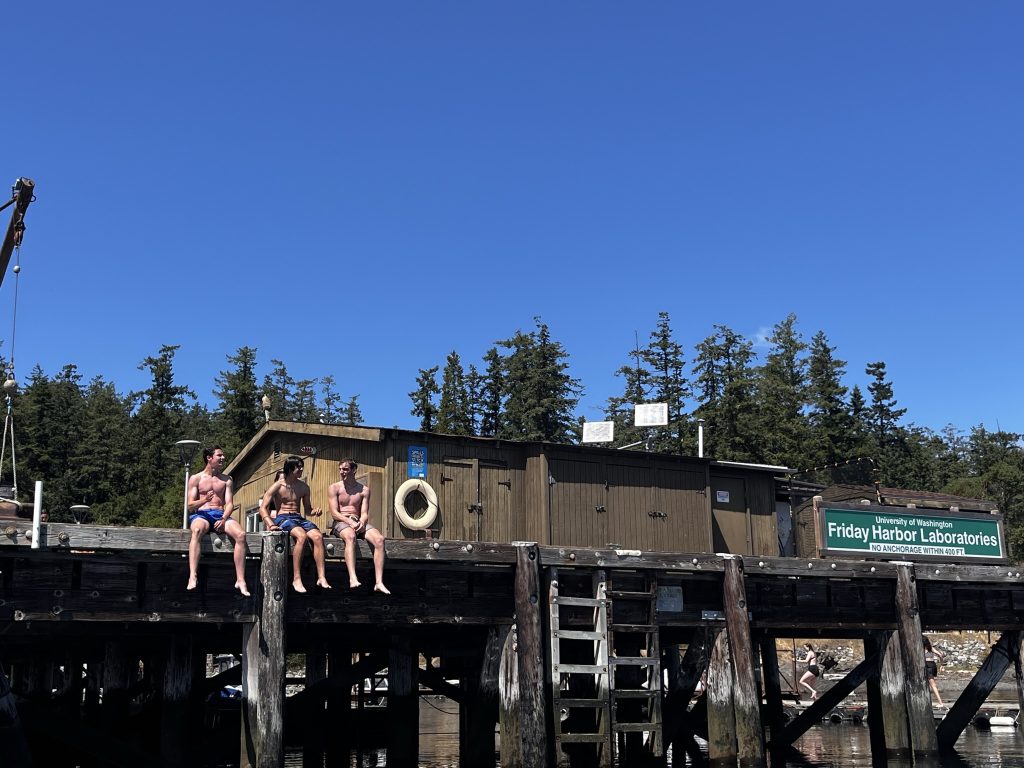
The Sailors at FHL when we, finally, got to dock jump. James, Tommy, Leo, reflecting on the meaning of life. It is in fact like a sandwich. The bread always comes first. This is one of my favorite photos right here.
Night lighting with the squad
Leo (Me) with Soundwatch, taking photos of the Transint Killer whales in Haro Strait.
Awfully spiffy fellas right here. Drip and drop, flip and flip, slip and slop. Tommy and Ollie, the perfect pair Emma demonstrating proper mermaid form, with similar singing Hannah and Ollie, taking in the moment
A proper sunet, not many seen but all be it appreciated Last volleyball endeavor. We swore up and down that we wouldn’t get in the water. We always make our way there one way or another.
Hey yall, thank you again. Is there much more to be said? You all know the drill. We got wet for science.
Signing off, Leo Wall (AKA California Gurl, AKA The Wall, AKA Ryan G)
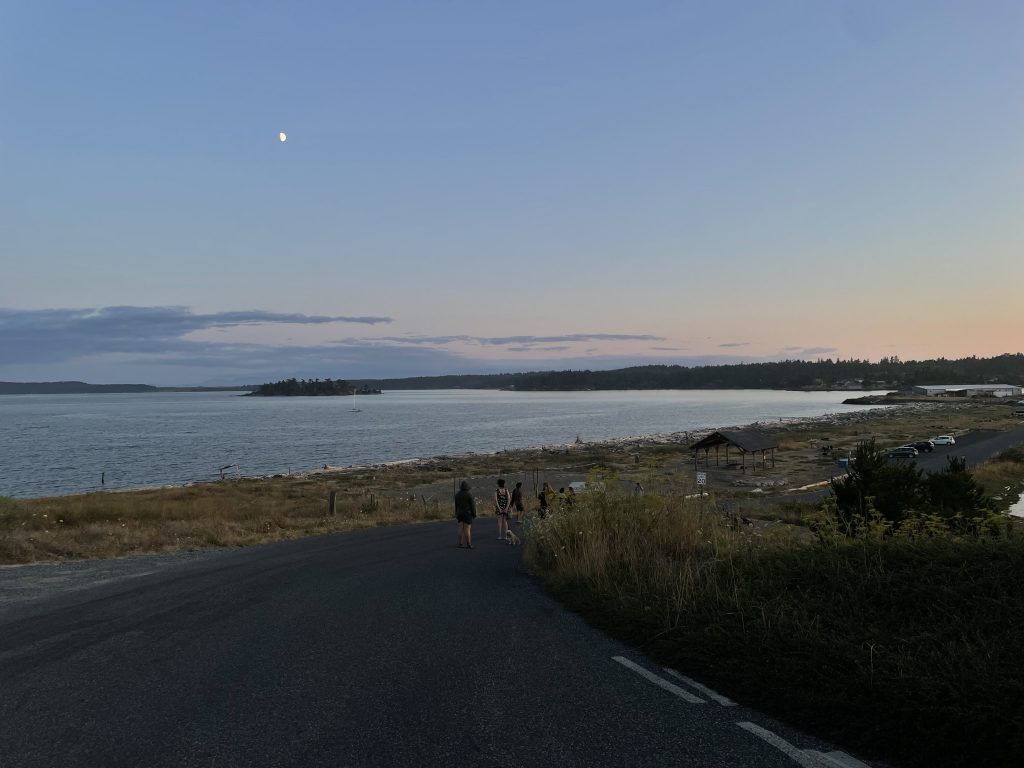
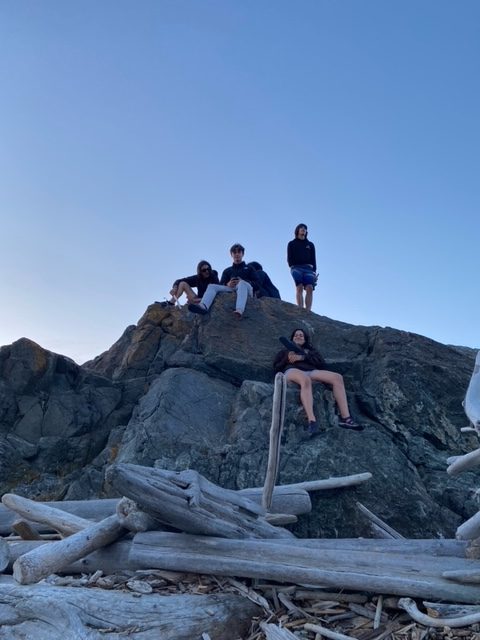
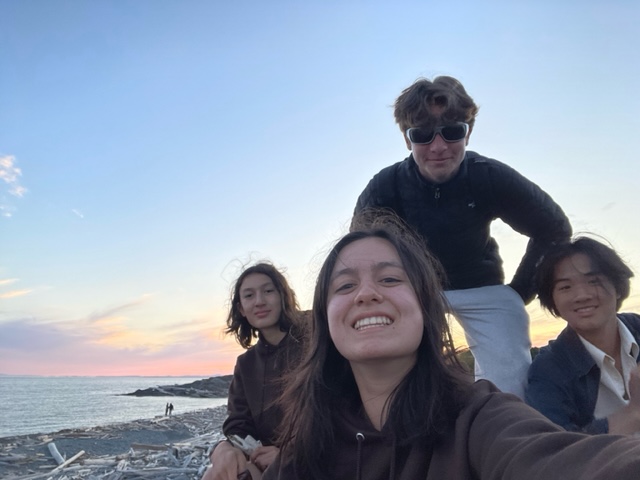
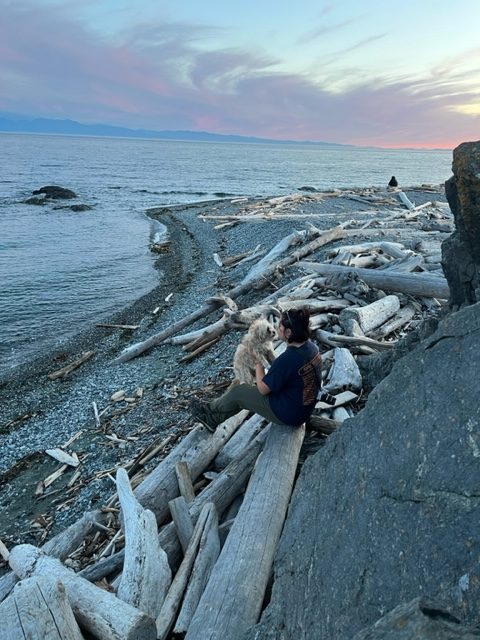
Hey Blog! Welcome back to another post. We started off the day with a 7 am wake up followed by project work. As we finish up our projects, I can’t help but feel like it’s the end of a journey. We’ve all learned so much in this camp and have made so many good friends along the way. As Philip likes to say, “Perhaps the real journey is the friends we made along the way”. Anyways, after a period of work time we decided to go out on this fine afternoon for lunch to enjoy our last few days as a group. Soon after we ate lunch it was time to head to the Friday Harbor Labs to go dock jumping. A couple of jumps and dives later we were all tired and ready to head back. As we were walking back to the van we decided to head to the stock room on last time to buy some apparel. When we got back, we had a chill and relaxed couple of hours before we headed out to south beach for dessert. Instead of the dessert, people were more interested in exploring and watching the sunset go down. Collectively, lots of us thought that this was the best part of the program due to it being one of the last times we would all be together.
Pictured here are Tommy, Maddie, Philip, and James enjoying the view on a large rock.Pictured here are Tommy, Maddie, Philip, and Ethan taking a selfie at one of our last group hangouts. Pictured here is Hannah with Bea’s adorable dog Ollie also enjoying the lovely ocean view.
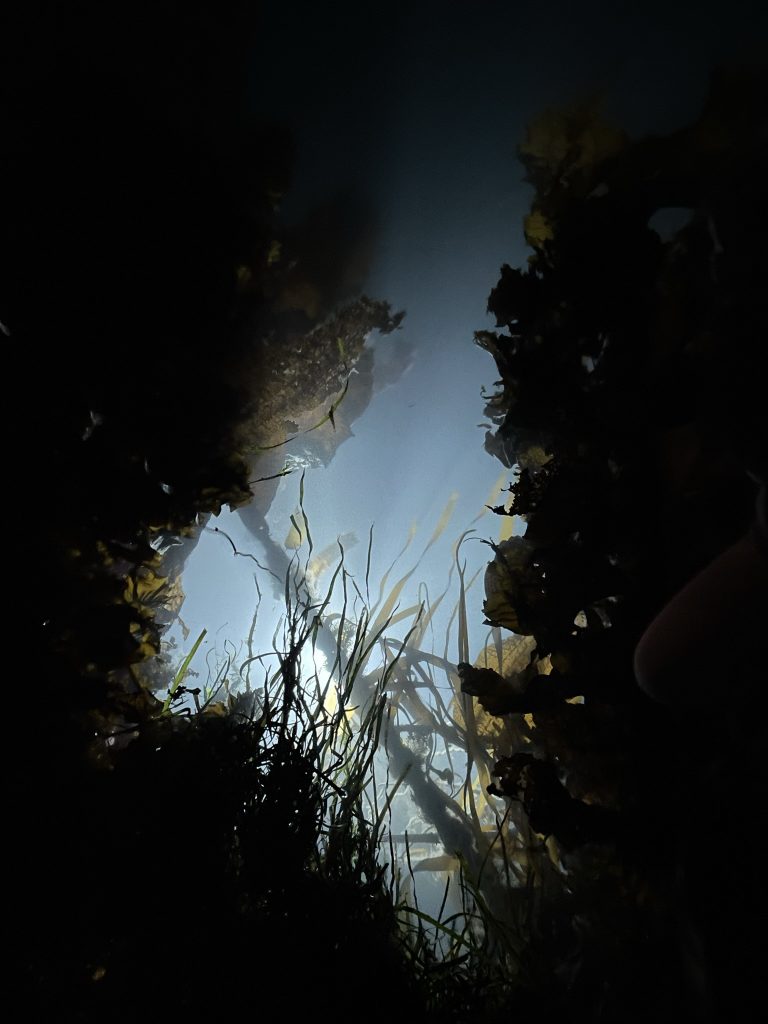
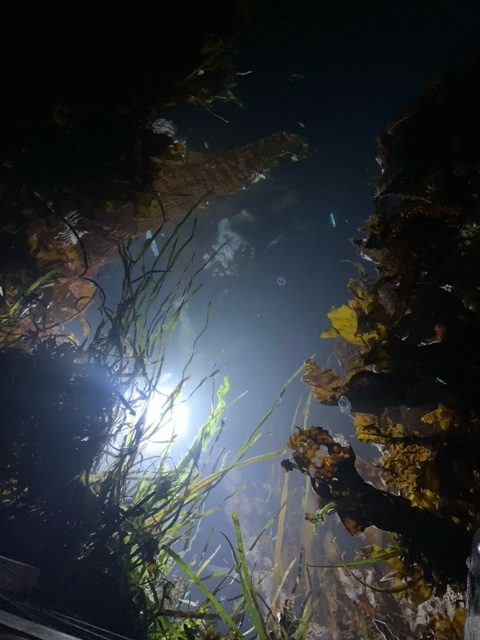
After the sunset we all decided it was time to head back to go night lighting at the FHL docks. We saw a lot of jellyfish, polychaetes, and other fish swimming around in the night. Something else that a lot of people got to see was the bioluminescence in the water due to the plankton.
Pictured here is the diverse underwater water at the docks during nightlighting.
Finally it was time go back to the dorms and head to bed for a late wake up.
Today we woke up early at 7 to get a productive start on the day and our projects; as Bea said, today was our Project Marathon Day. We quickly ate breakfast before getting started on our projects. We started to feel the pressure, but we had help and suggestions from Bea and Adam, which greatly helped reduce our worries. After Tom Grauman, one of the founders of Salish Sea Sciences and an acclaimed photographer, gave us a talk on fish, art, and technology, we began a fierce fish quiz, which ended with all three teams tying.
Bea adding to the score board after an intense round of guess that fish
After that, we went to Eagle Cove for a dip in the ocean.
The crew at Eagle cove scaling the rocks
We will soon have an oyster and spaghetti dinner, followed by more work devoted to projects with the goal of getting them done by tomorrow. Wish us luck and we hope to see some of you at our pilot presentations!
Today was a pretty chill day for the students of Salish Sea Sciences. The day began with a leisurely wakeup after an action-packed weekend. The only exception to this being Hannah and Olivia who both woke up at 6:30 to head to Friday Harbor Laboratories. Those of us who slept in went to depart for a tour of the oyster farm over in Westcott Bay.
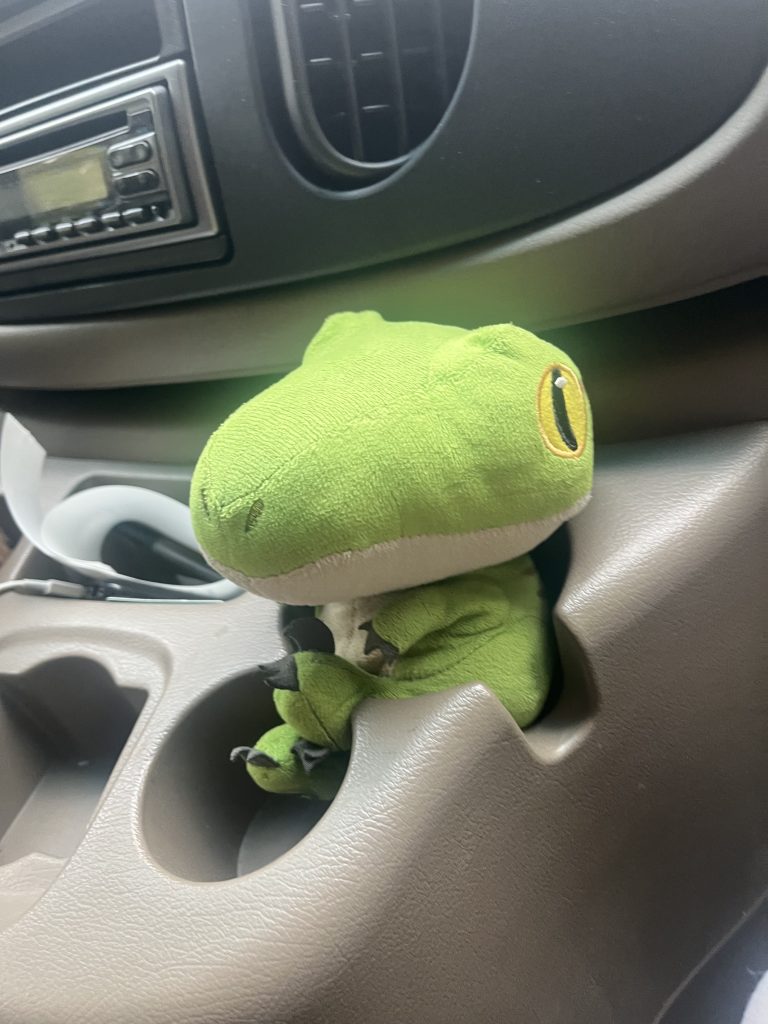
These guys are definitely worth waking up at the crack of dawn for – the spots are not in fact eyes, but brain sensory organs 😀Releasing Ingrid’s nudibranchs (and their eggs !!) back into the wild (FHL docks)One dinosaur super hella hyped to tour the Oyster farm !!
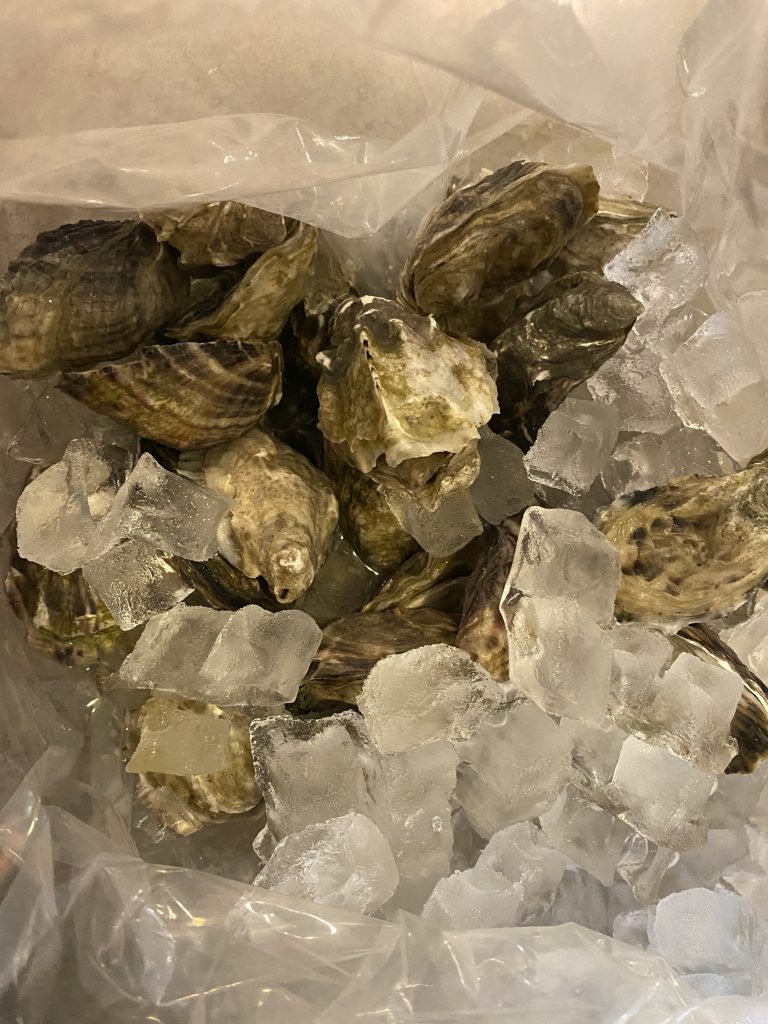
The tour proved to be very informative as we learned about the methods of growing oysters up in the Salish Sea. Two main varieties are grown in the Salish Sea, the native Olympia Oyster, and the Pacific Oyster (introduced from Japan). A fascinating aspect of oyster growing is the number of ecological factors which must be monitored and considered for the best growth. Oyster harvests can easily be ruined by heat waves, chemicals in the water, and bacterial outbreaks. Since oysters filter the water, it’s very easy for them to accumulate toxins and bacteria from the water within their bodies. While it may not harm them, it can be very bad for human consumption. As such the Westcott Bay company works hard to communicate with scientists and conservationists as they grow their oysters. As a special bonus one Max Mittleman managed to bargain for 2 dozen free oysters which we enjoyed tonight.
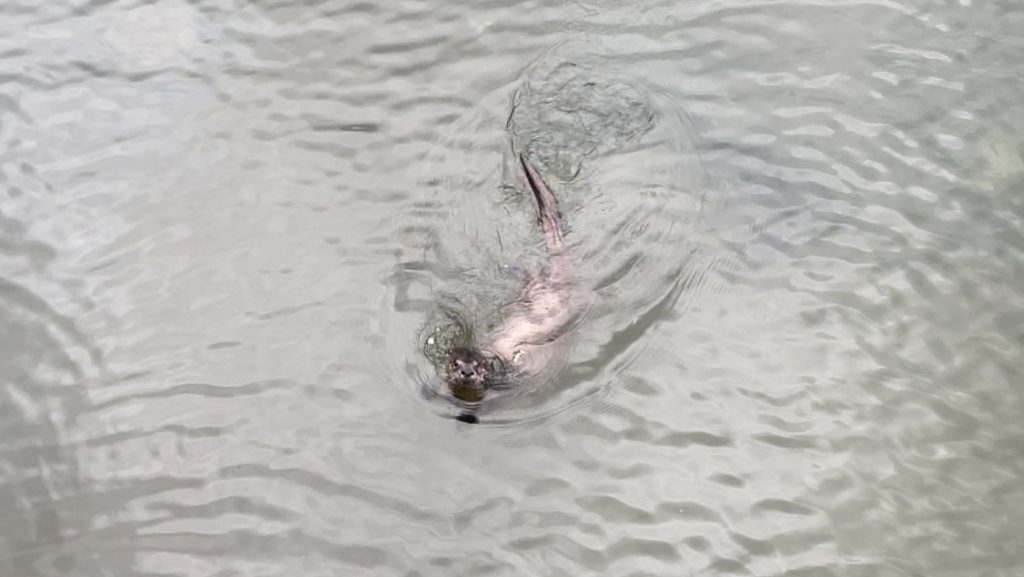
Tonight we eat like kings, all thanks to the hustling skills of our very own MaxI tried really hard to find a good otter joke, but they were all otterly horrible
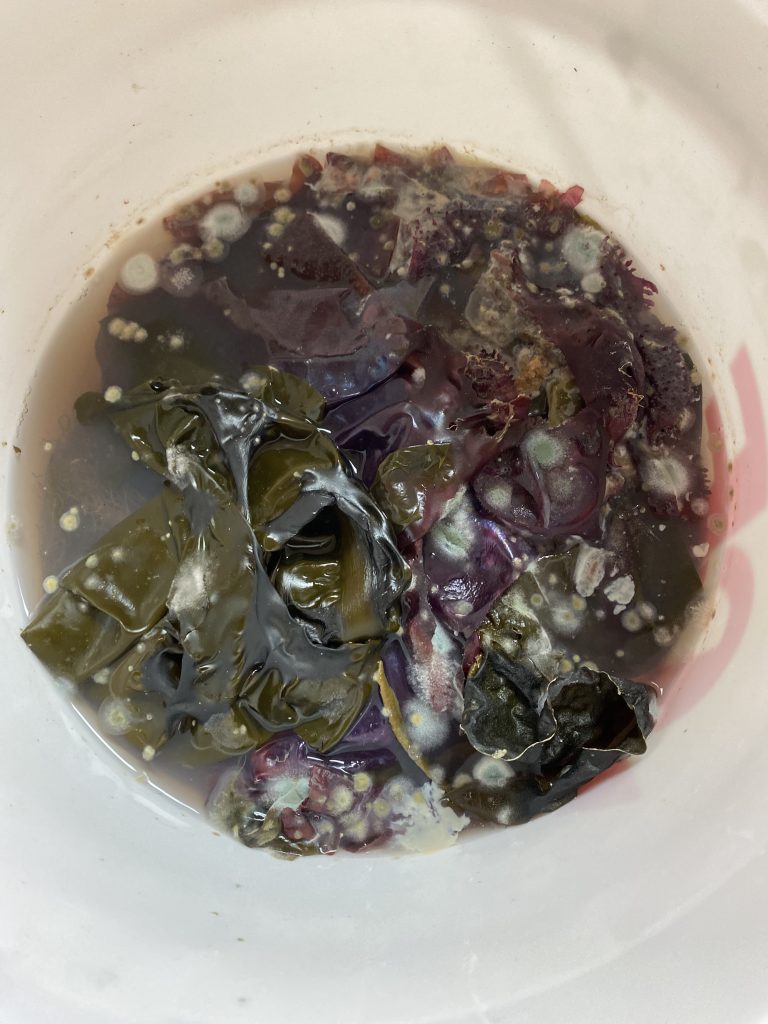
Apart from the oyster dock, the day was more or less just more project grinding as most of us finished our data collection. A bunch of us went on a fun walk along the marina despite the drizzly weather, no doubt annoying countless locals as we hung over the side of the docks and yelled about all the cool critters that were everywhere. Tommy’s jellyfish refused to bioluminescence, most of my sand dollar larvae died, and Ethan’s bubble snails died by the dozen. Algae are rotting, and the science room on the property is becoming more like a morgue than a lab. It’s crunch time here at Salish Sea Sciences as we all ready ourselves for some excellent presentations. Perhaps the real work was not the projects we are making, but the friends we made along the way.
Very very dead algae, me with my new bestie Miranda the decorator crab, and the squad taking a strollMenaces in the lab, menaces in the kitchen
Signing off for now,
The Supremely Scientific Students of Salish Sea Sciences
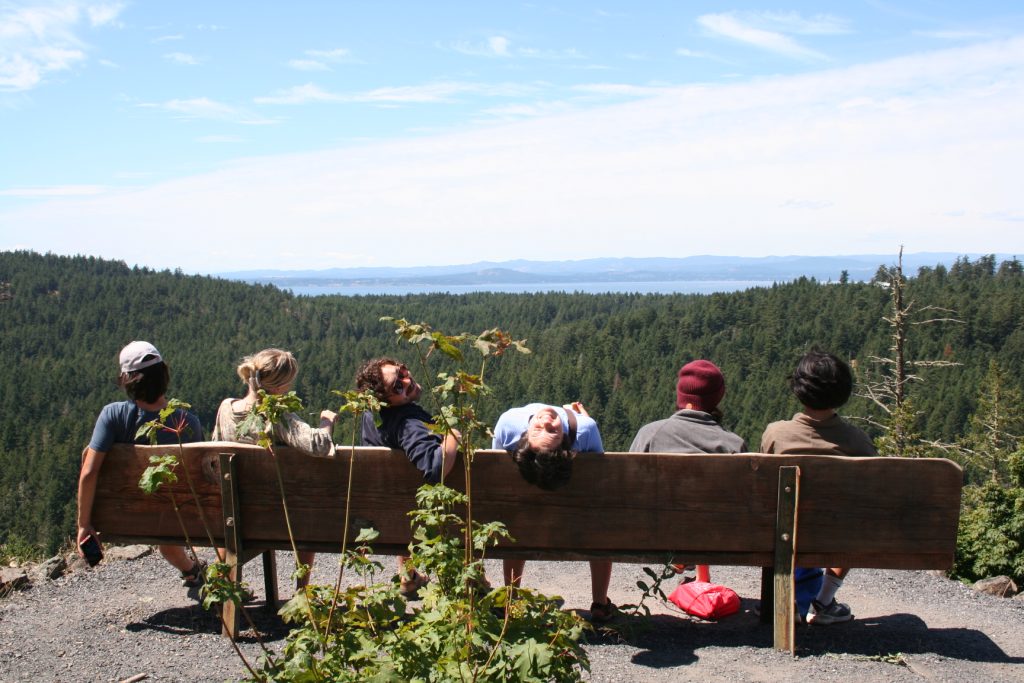
This morning, we started off the day slow and steady with a cheeky 9:00 AM wakeup, followed by lots of time to work on our rapidly approaching projects. Most people made solid progress on their projects, and by the time our project time was over, we had to pack our lunch as we were off to Mount Grant. Mount Grant is a beautiful mountain owned by the Land Bank Trust, filled with stunning scenery looking over San Juan Island and Vancouver Island. We had around an hour at Mount Grant, before we decided to split up. Some of us decided to head down to various spots across the island for more data collection, while the rest of us headed on down to Jackson’s Beach for a quick dip and a joyous round of beach volleyball. Today’s round of volleyball was chock full of ups and downs; incredible rallies, missed serves, and crazy hits from our star player Philip Yohan “6’2” Miller. Nonetheless, it was a fun time for all who attended. We decided to have an early and casual dinner, consisting of no name tags, brilliant pizza cooked by our very own Barrie, and Tommy being judged by Emma for eating ranch with his pizza. Because we finished dinner early, we were able to make it 30 minutes early to an outdoor viewing of Shakespeare’s “Twelfth Night.” Since we were so early, we decided to frolic in the nearby garden for a little while. While the garden was beautiful, the main attraction was truly the play itself. The play was filled with laughs, fun, tragedy, romance, and even deep wisdom. Though we will depart back to our homes soon, we will leave you all with this insight. As Malvolio once said, “some are born with greatness, some achieve it, and others have greatness thrust upon them.”
A beautiful picture of the gang eating lunch at Mount Grant
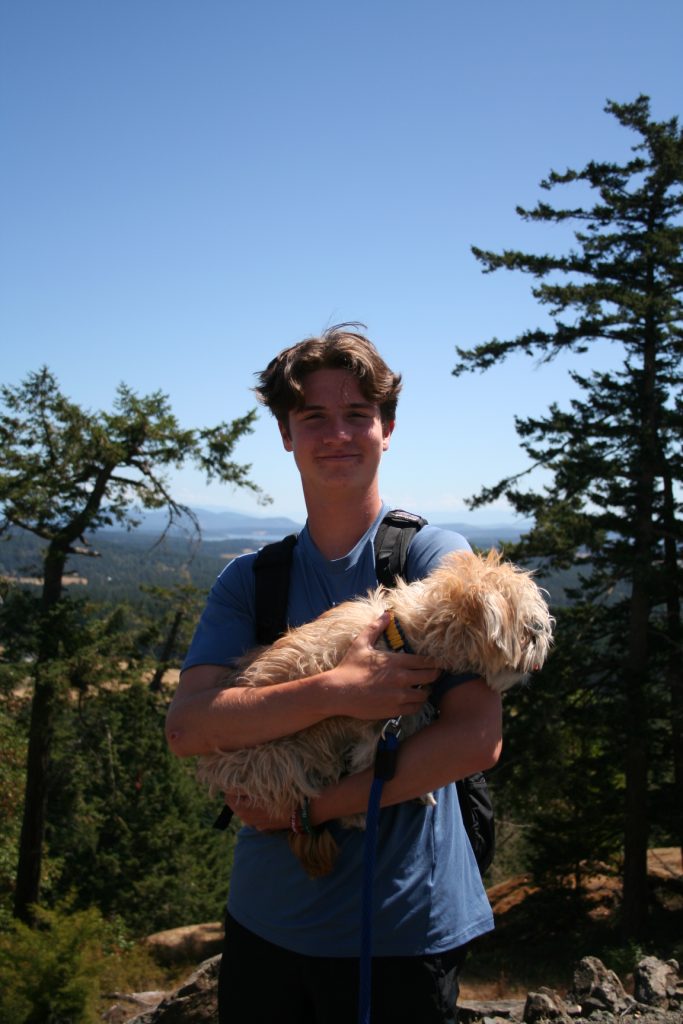
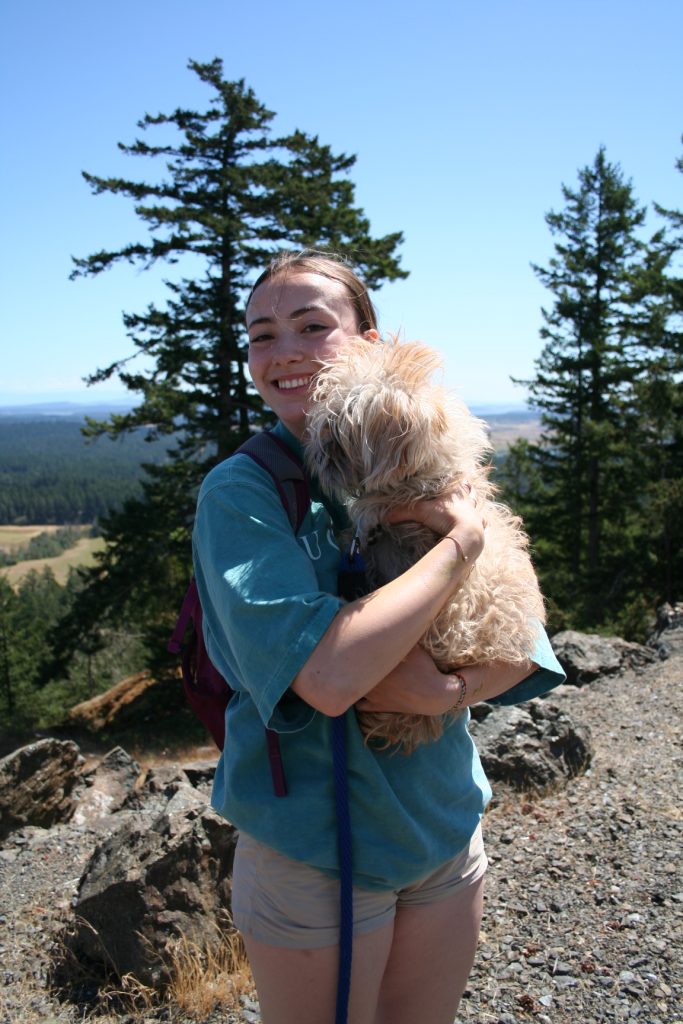
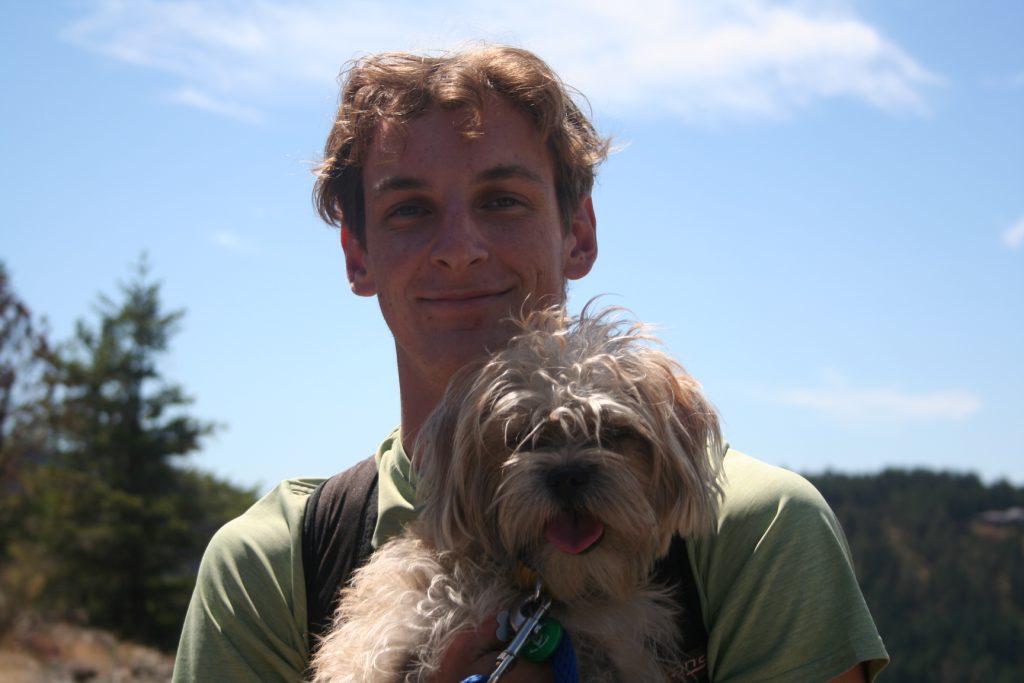
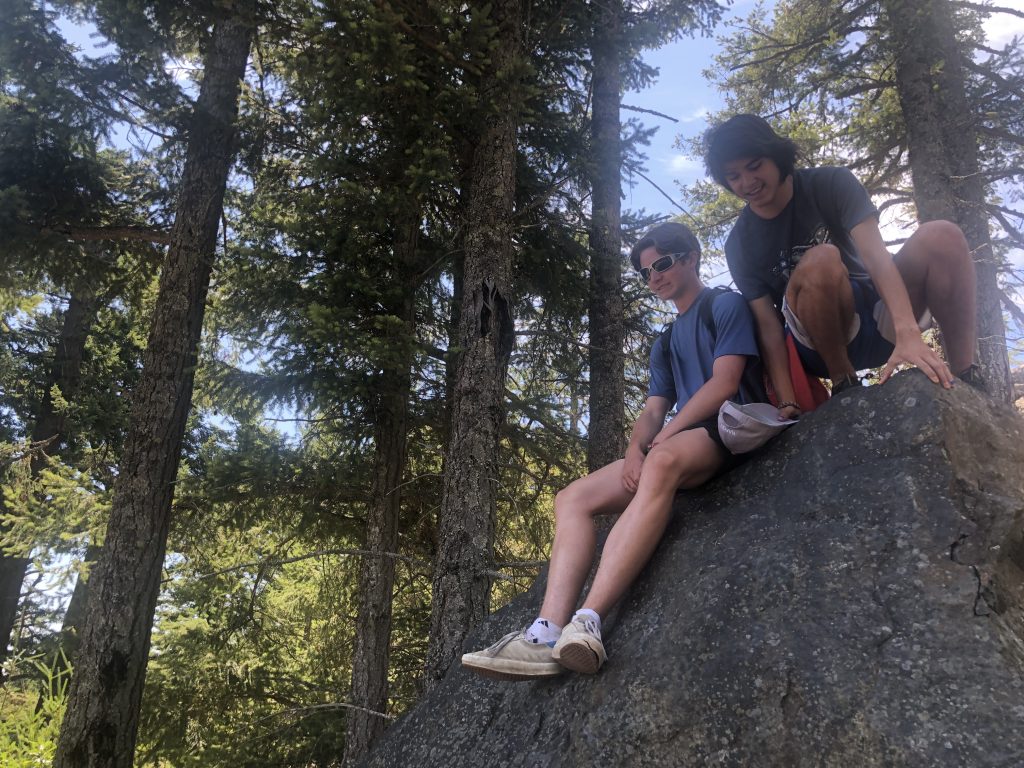
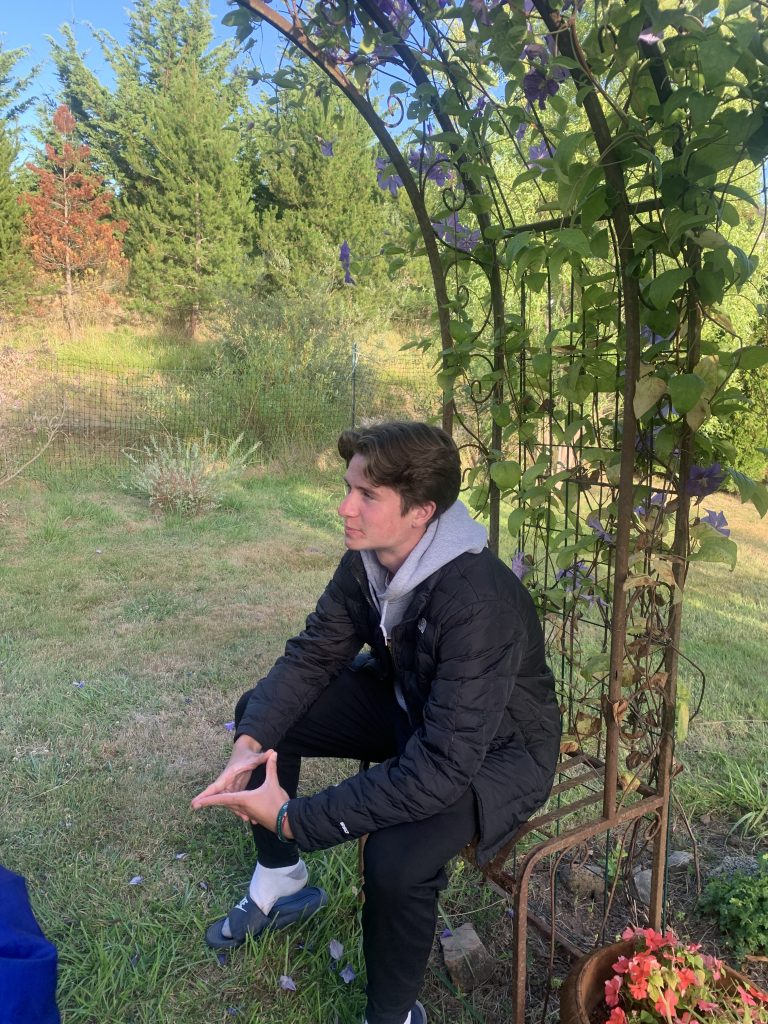
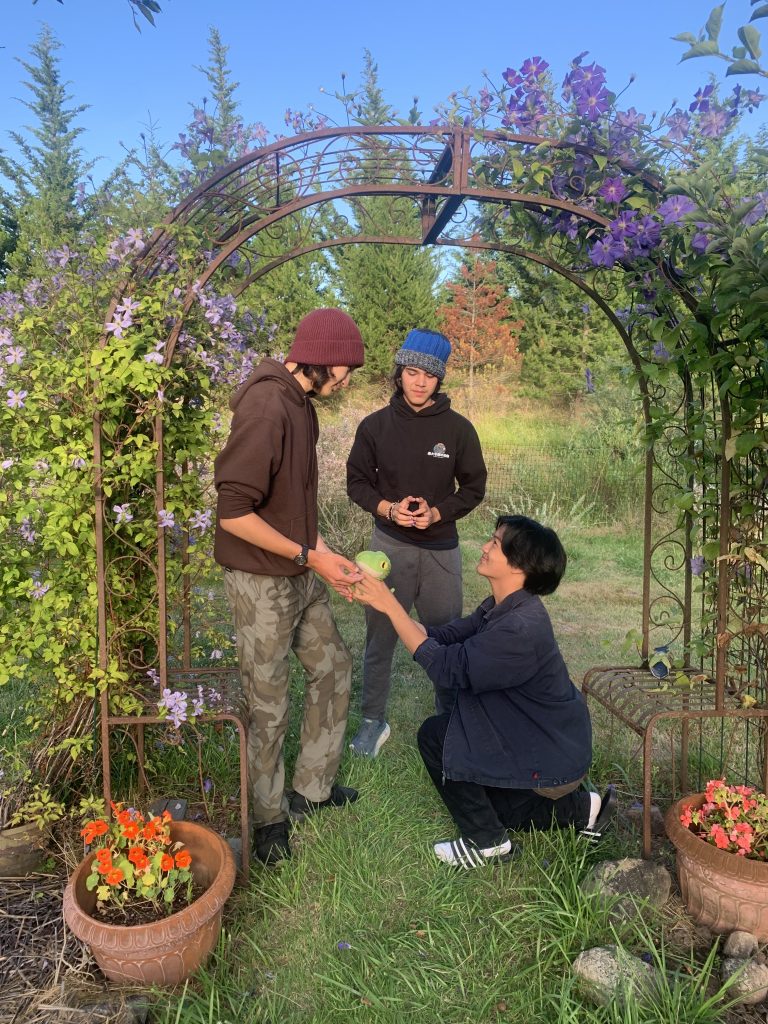
This dog is man’s best friend (photo creds to Hannah)Tommy and James conquering a rock at Mount GrantYou can tell who the real serious scientists are here (photo cred: Hannah)Handsome man Tommy Becker sitting down under the Wedding arch in the beautiful botanical gardenThis random Ethan guy on the right proposing to Philip “6’2” Yohan Miller on the left with James officiating everything
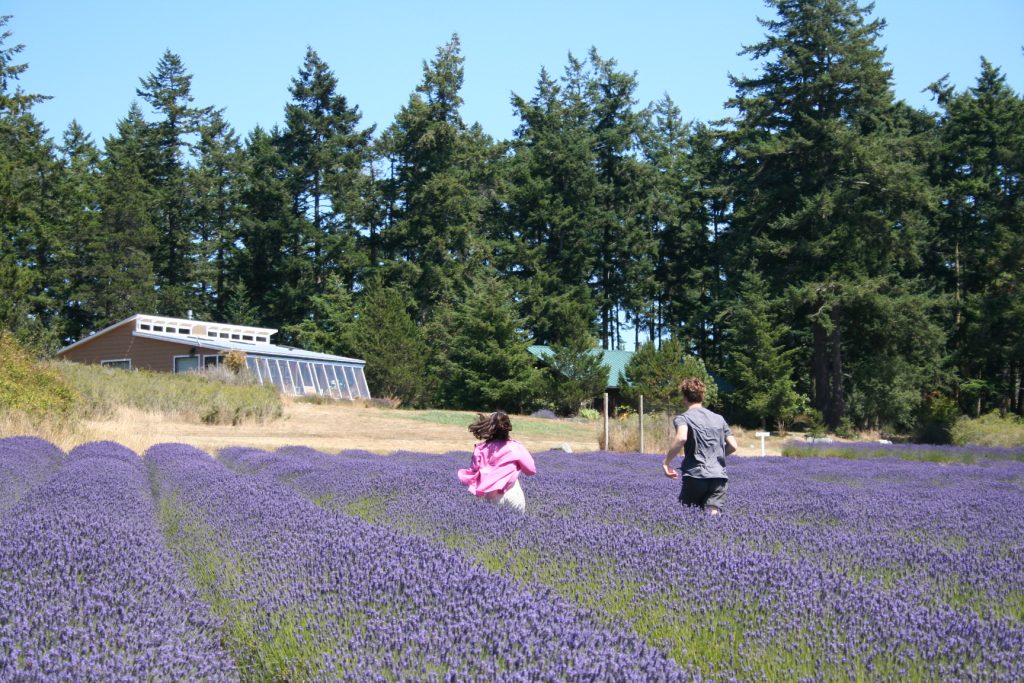
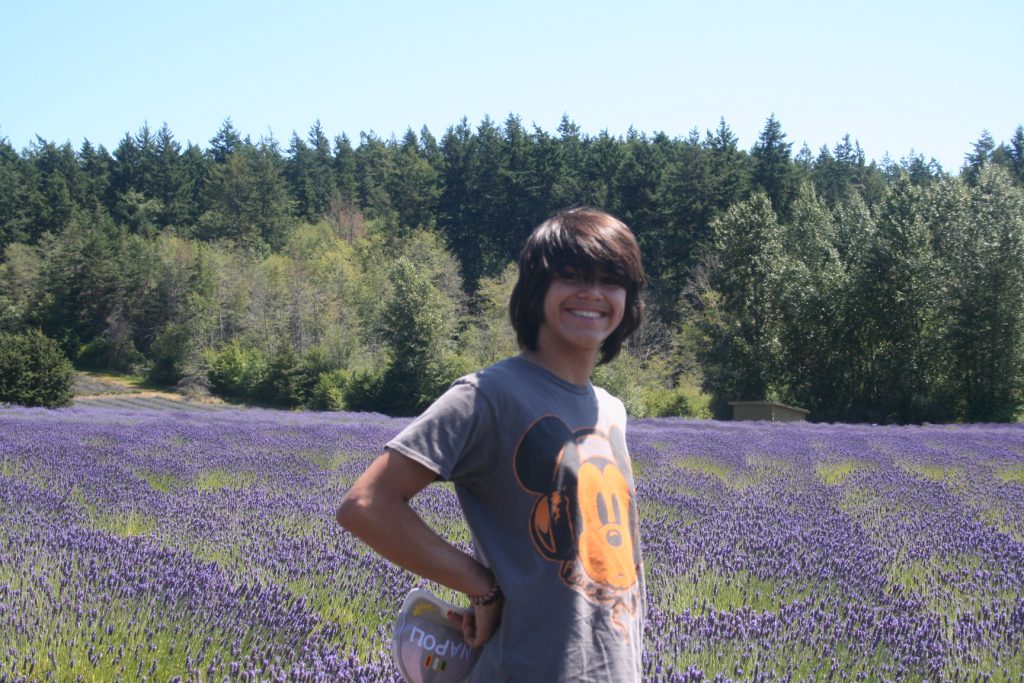
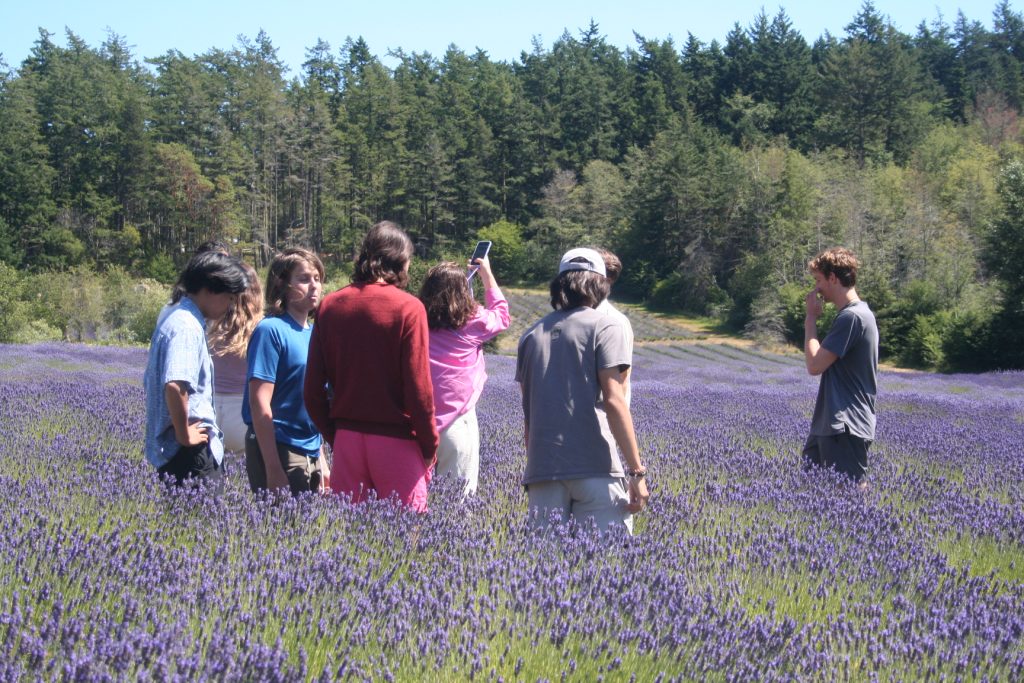
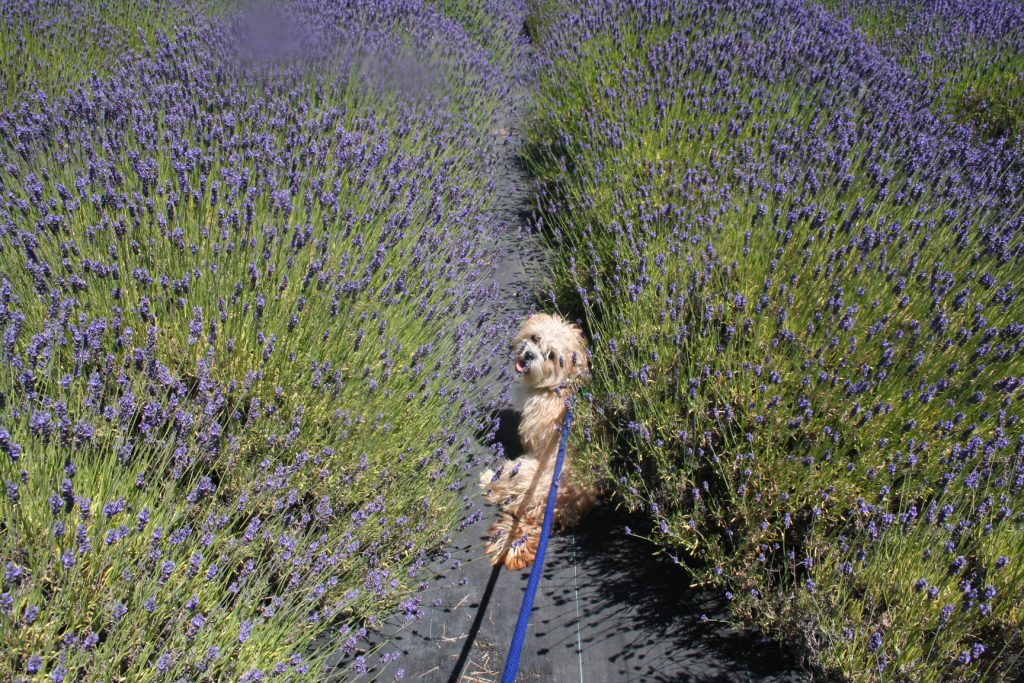
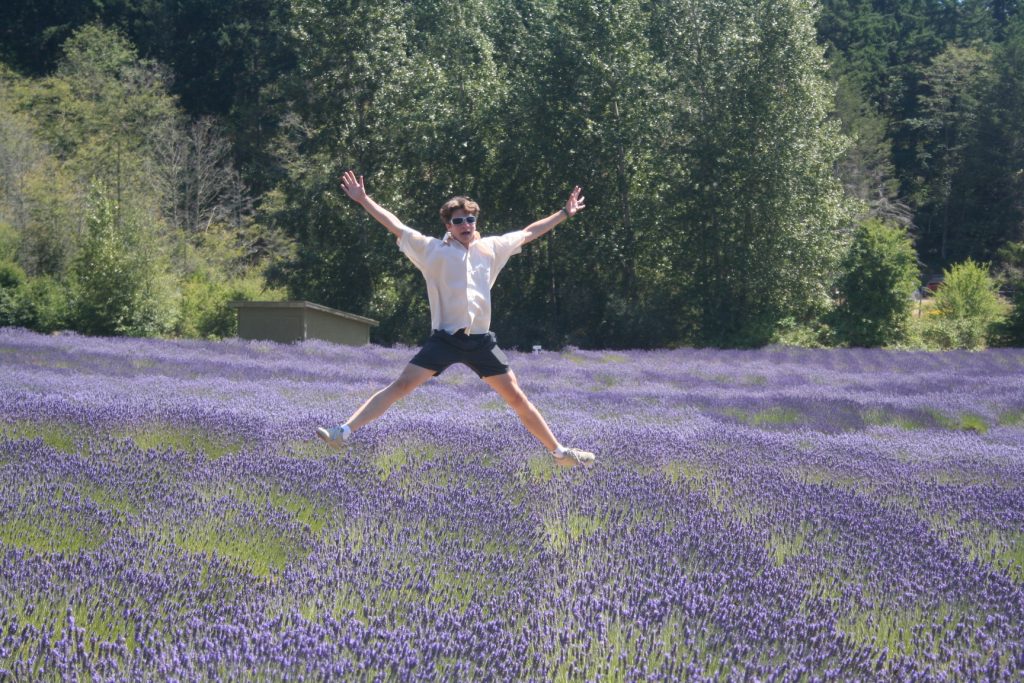
The holidays have arrived! Today the Salish Sea Sailors embarked on a scenic adventure to the San Juan Island lavendar farm. At location, there was quite a bit of frolicking, jaunting, and strolling about the flowers and the bees. Many sights were to be had. Finlee got stung by a bee.
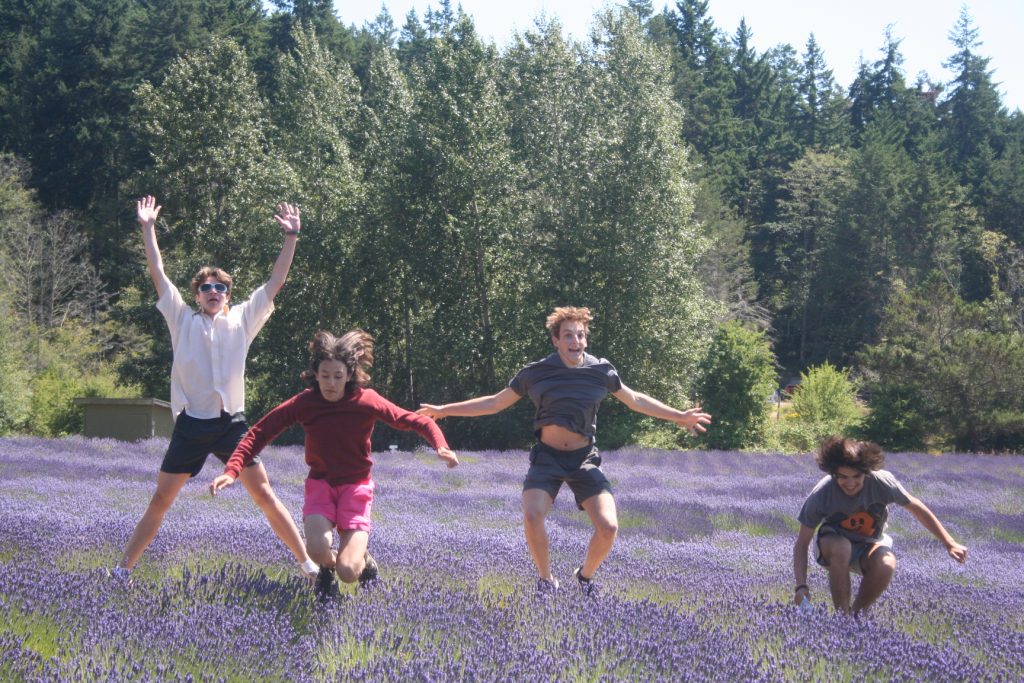
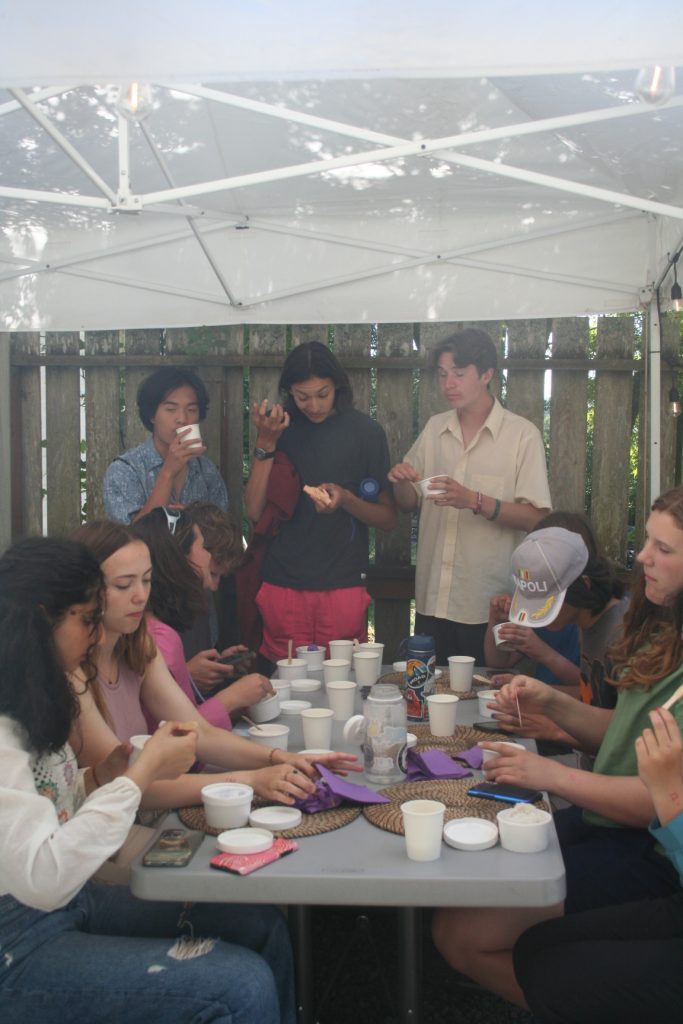
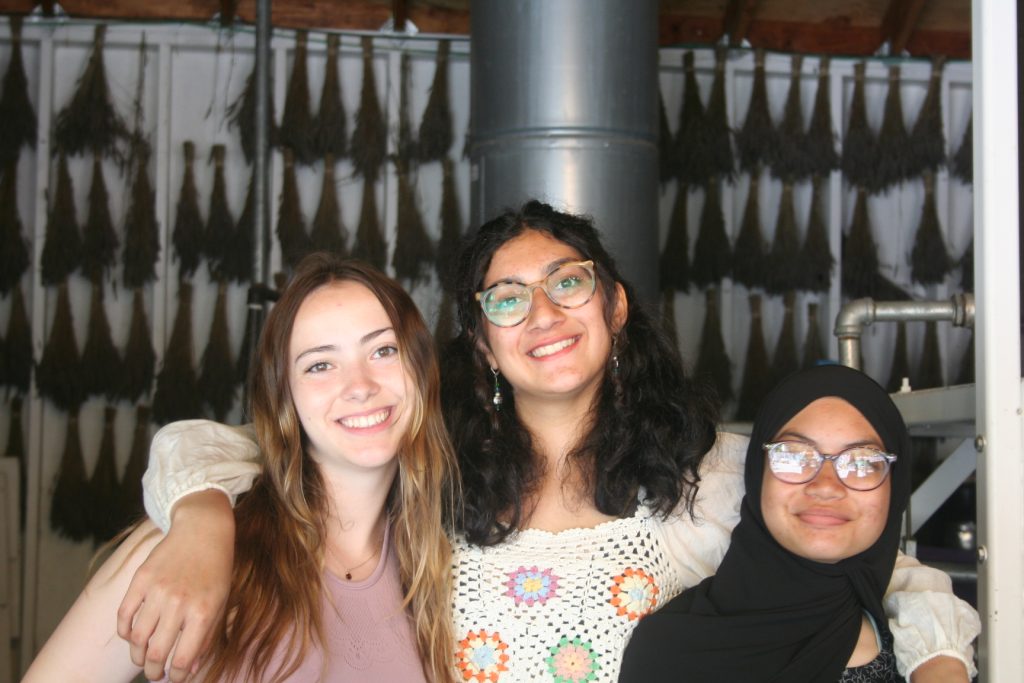
In this family, we frolic and look fire in fields of any type of flower, we aren’t pickyOllie is also perfecting her model poseTommy demonstrating perfect starfish formThe lads jumping with all the grace of I don’t even know whatLavender everything, even lemonade and sorbet, thoroughly enjoyed by us allOlivia, Vedha, and Khadija doing what they do best; smiling and thriving
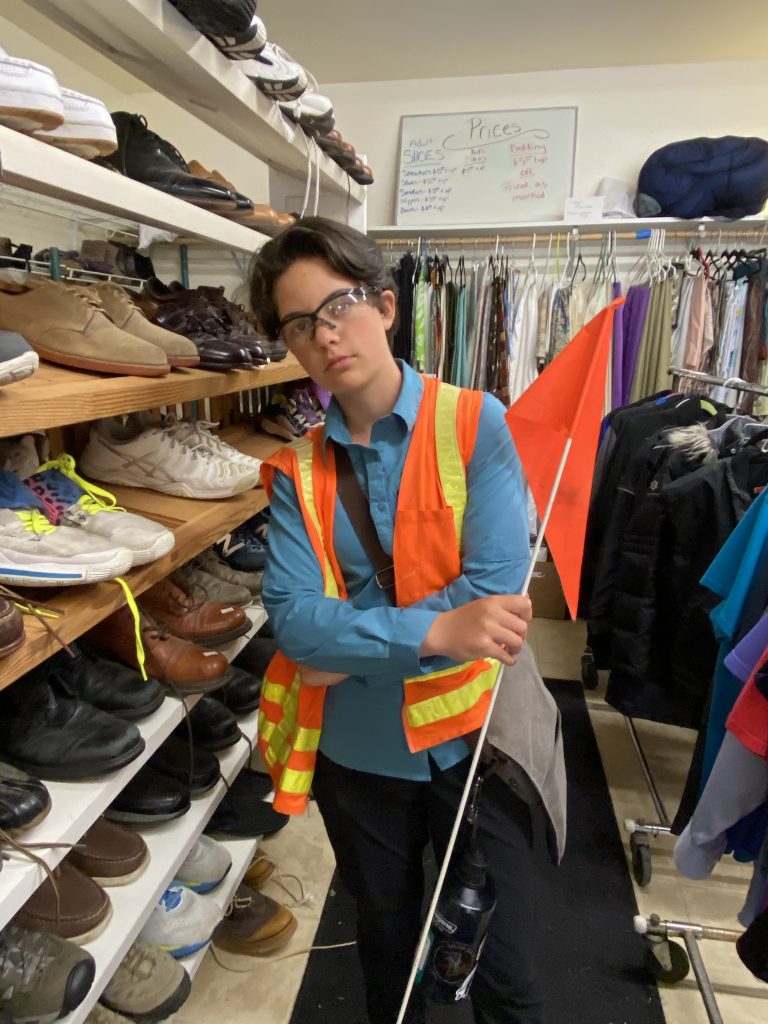
Aside from the farm, the Sailors also visited Community Treasures, a second hand store near Roche Harbor. At said thrift, many interesting pieces of clothing, accesorries, and undergarments were found, and some bought! (not the underwear though, that’s gross). The thrifting was in preparation for our own joy and tonight’s dinner theme: Barbie. With the new Barbie movie out, starring Margot Robbie and Ryan Gosling, we decided that the best way to show our appreciation was to have the selected dinner theme. This is the second best option to watching the movie because, as it turns out, the local movie theatre is under construction.
What can I say, the squad knows how to work the camera
A lot of project time was put to good use today. Many went to Friday Harbor labs, local beaches, or stayed home. Emma patch tested her Fucus (Rockweed) gel samples on various “volunteers” and also used aloe vera as a comparison.
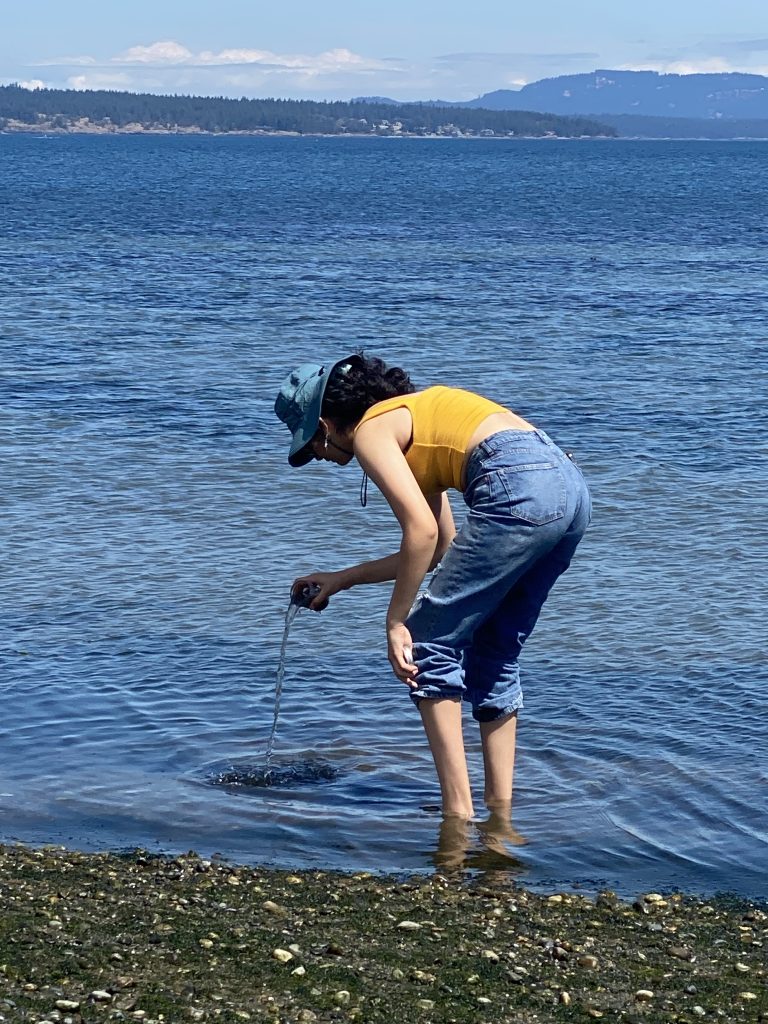
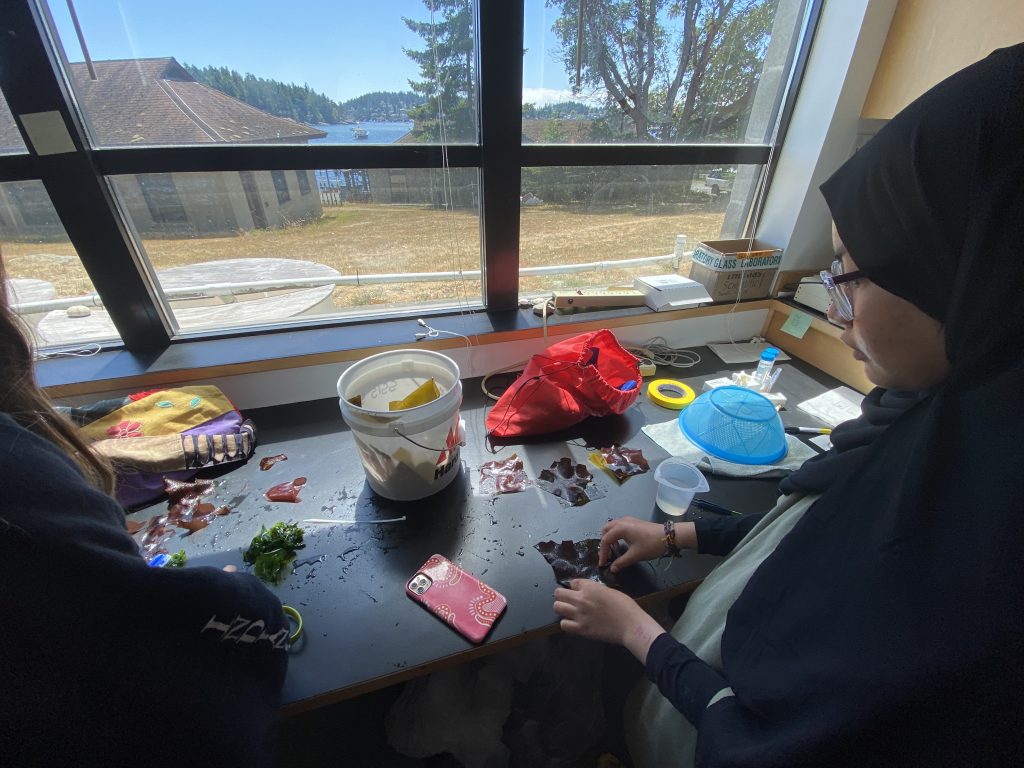
The squad slays both fieldwork AND labwork, featuring Vedha harvesting, you guessed it, water, and Khadija helping Olivia strip the decorator crabs of even the clothes off their back (literally)
To add on, tonight we had our second presentation night! Some highlights included: The migratory patterns and living habitat of bagels native to North America, our campers as clash royale characters, soaps, fish, and why uncle Iroh from Avatar: The Last Airbender, is the best anime character to exist.
Another great day with the gang. – Salish Sea Sailors OUT (peace)