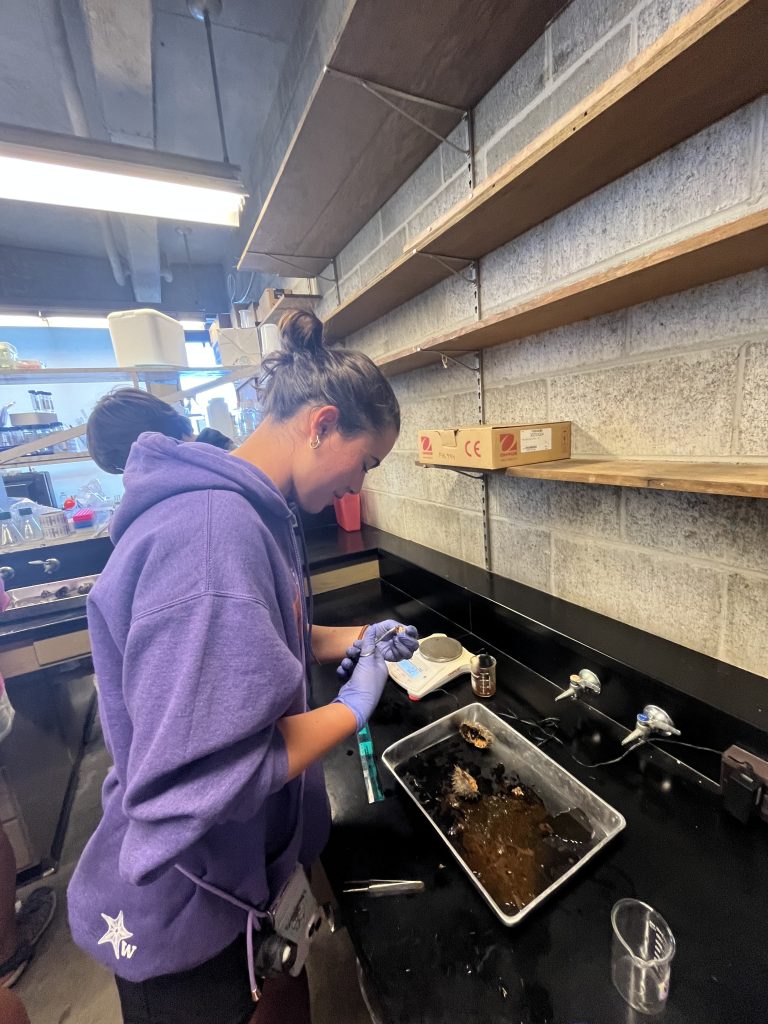
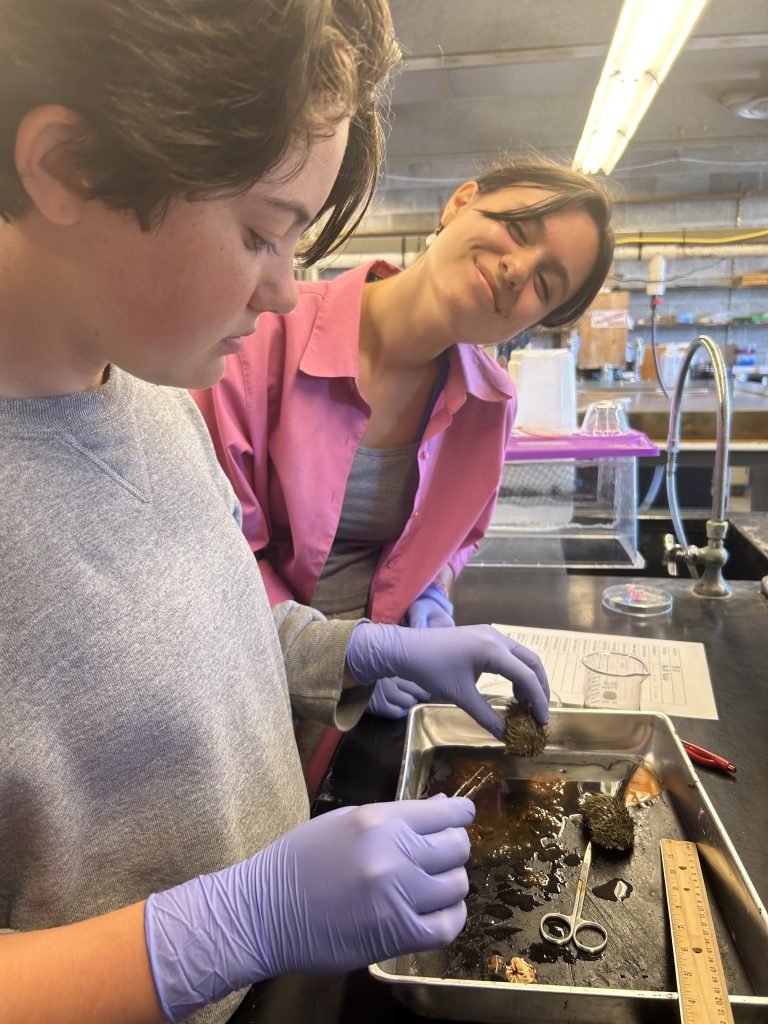
Hey blog, welcome back to another post. Starting off today we had SoundWatch come in and talk about their goal of the program. The goal that they have in mind is to protect and conserve the marine mammal population around the Salish Sea. After some project work time we all headed to the Friday Harbor Labs to watch and perform a urchin dissection. After Rachel, a undergrad working at the FHL gave us a quick demonstration we started the dissection process.
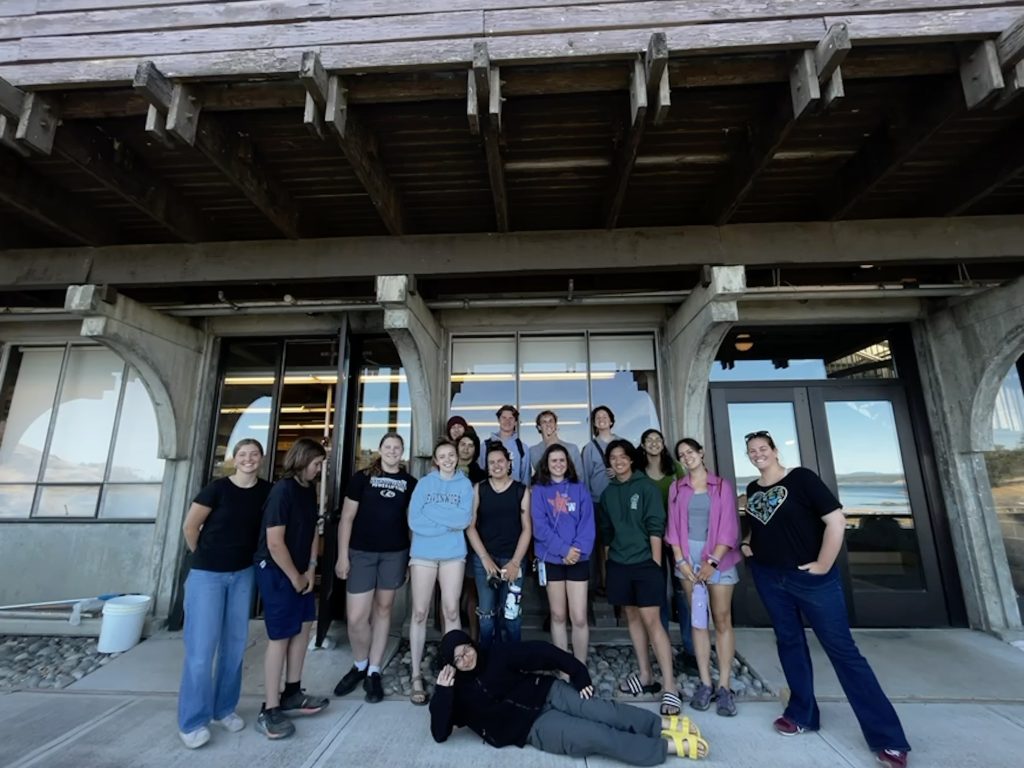
Emma dissecting a green urchin. Pictured by TommyFinlee dissecting. a green urchin and Maddie happily watching. Pictured by Emma.The urchin squad ! (Hannah snuck in after spending the day working with Dr. Swalla) (taken by Bea !!)
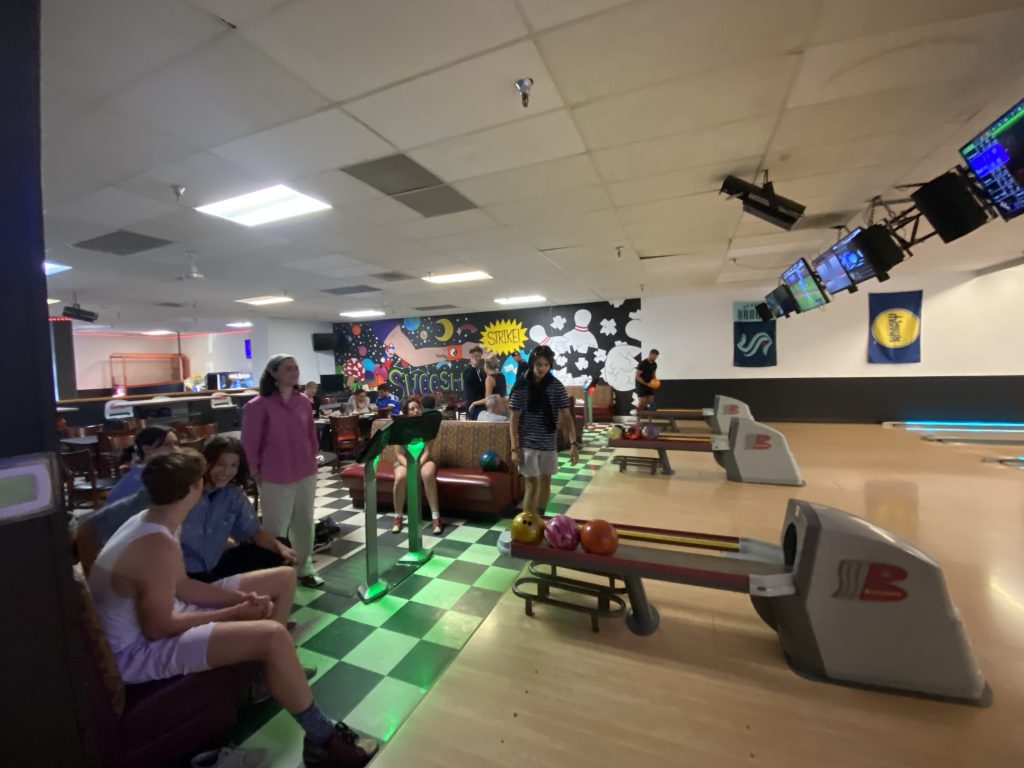
Following a messy and long process we collected the lantern (mouth) and the spines for further research. Next we headed back to the dorms for lots of free time. With Christmas coming early everyone did their secret Santa shopping through out the town of Friday Harbor. Later in the evening the whole group collectively decided that we wanted to spend the rest of the night bowling.With Leo coming in first overall and Tommy’s crazy trick shot we all had a delightful bowling experience. With the bowling alley so close to us, we all walked back to the dorms to indulge in ice cream and some TV. That’s all for now! Till next time. Signing off for now Salish Sailors.
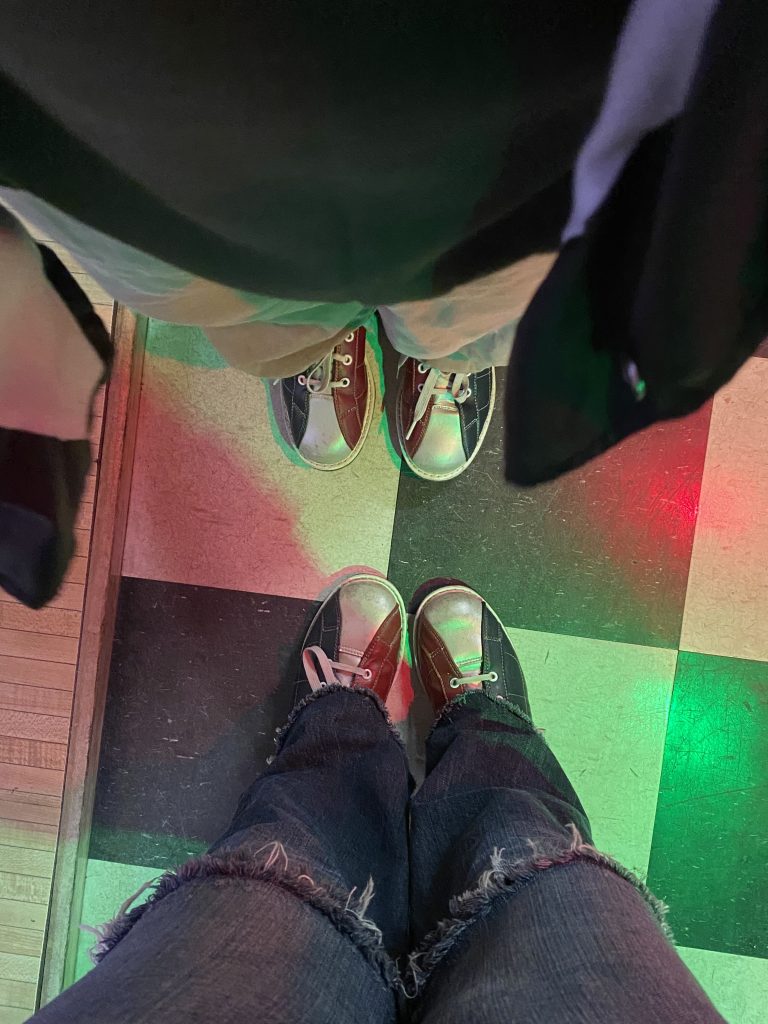
Getting hyped for bowling, absolutely slaying bowling, and some cute bowling shoes in fantastic lighting (taken by Hannah)
Today was our first day in a while not focused solely on projects. We got to sleep in a bit (very refreshing) after which we had a discussion on colleges with Caroline, who has taught at Columbia and Princeton and got her graduate degree at London School of Economics (We had a certified college counselor working alongside us all along and we had no clue!), before being taught about scientific statistics by Dr. Lundquist, a scientist who recieved her PHD from SIO and studies the patterns of weather and fog as well as how they affect organisms in the intertidal. She is currently an associate professor at University of Washington. We learned about the application of the Normal Distribution with some helpful graphs to clarify. She taught us about the importance of understanding statistics for yourself, and not relying solely on programs like R to help analyse your data.
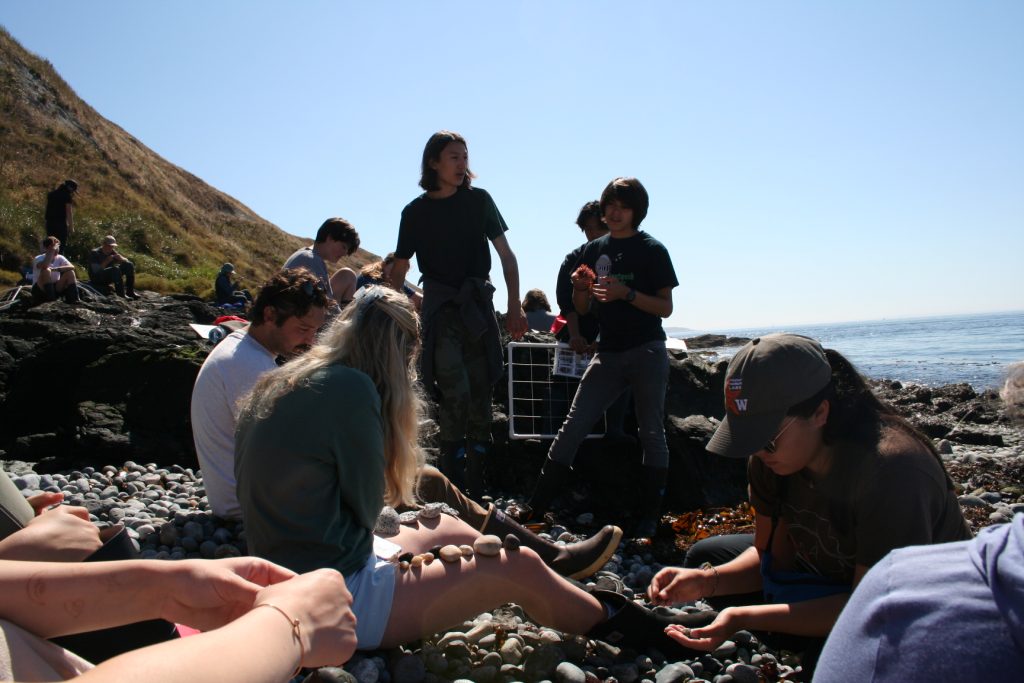
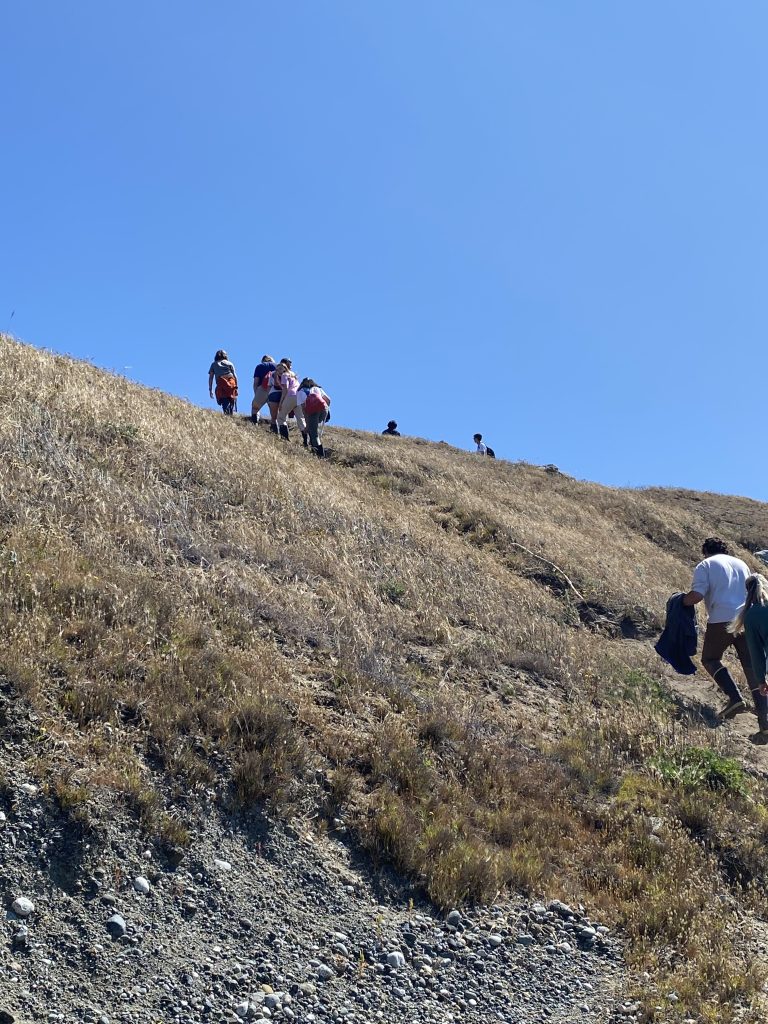
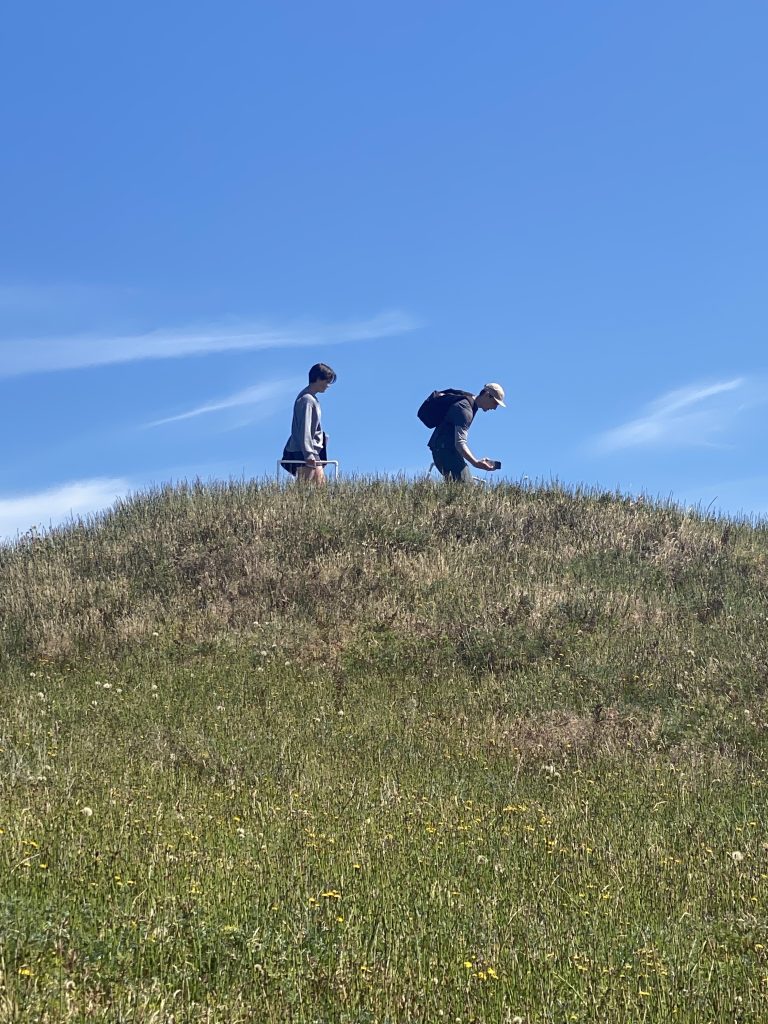
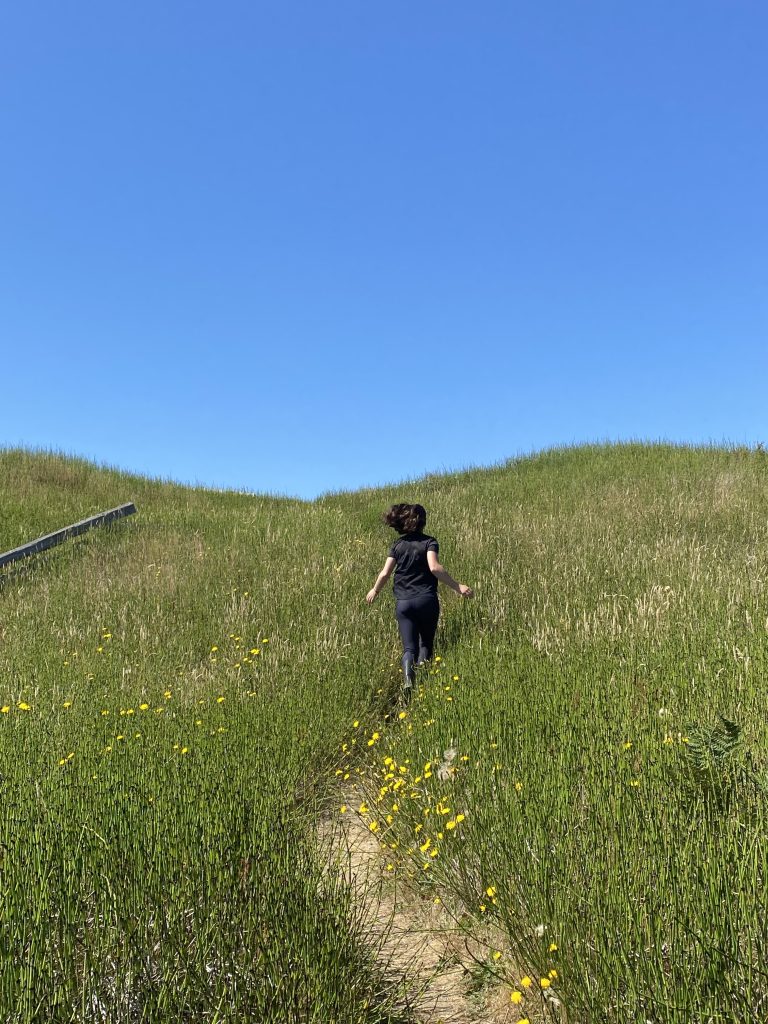
The hike at the land bank!
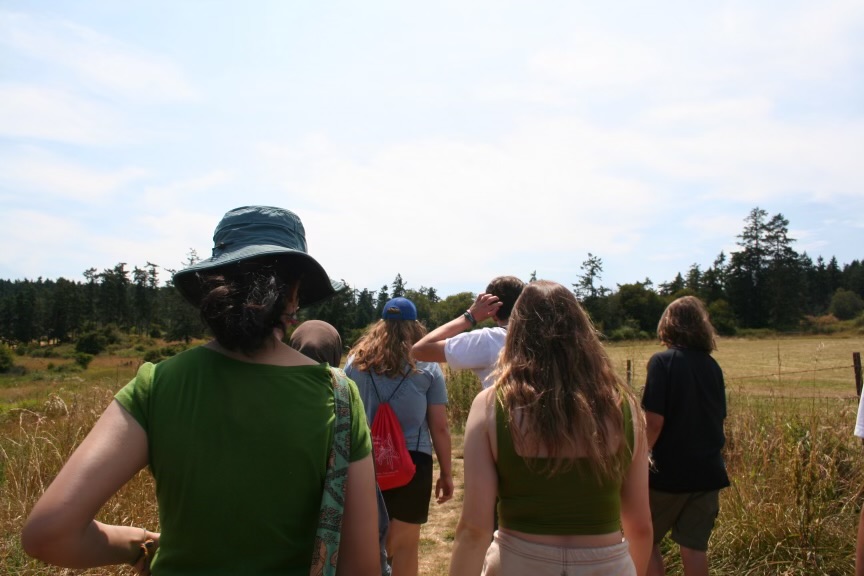
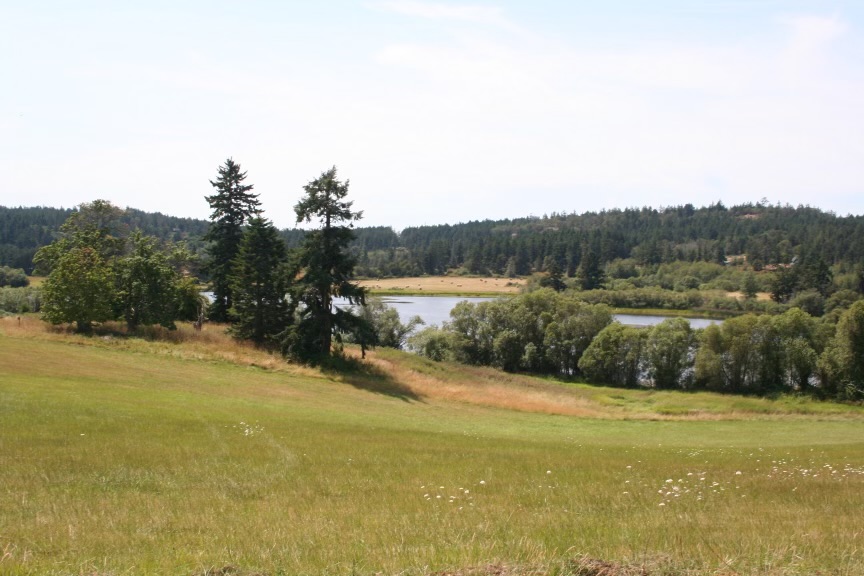
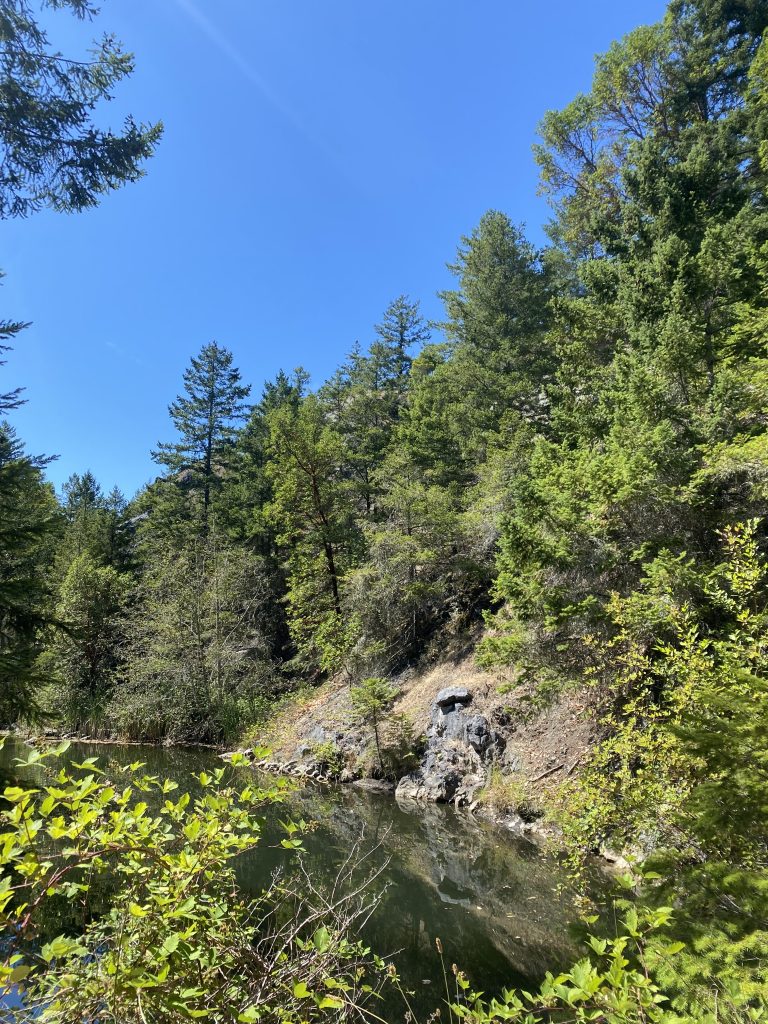
After that we went on a fun (and highly educational) hike at the Land Bank with Shauna Barrows, who is a field assistant who works on conservation and ecology with the Land Bank. We learned about the origin of the Zylstra lake as well as its important characteristics such as toxic algae, being a home for eagles as well for the marble butterflies.
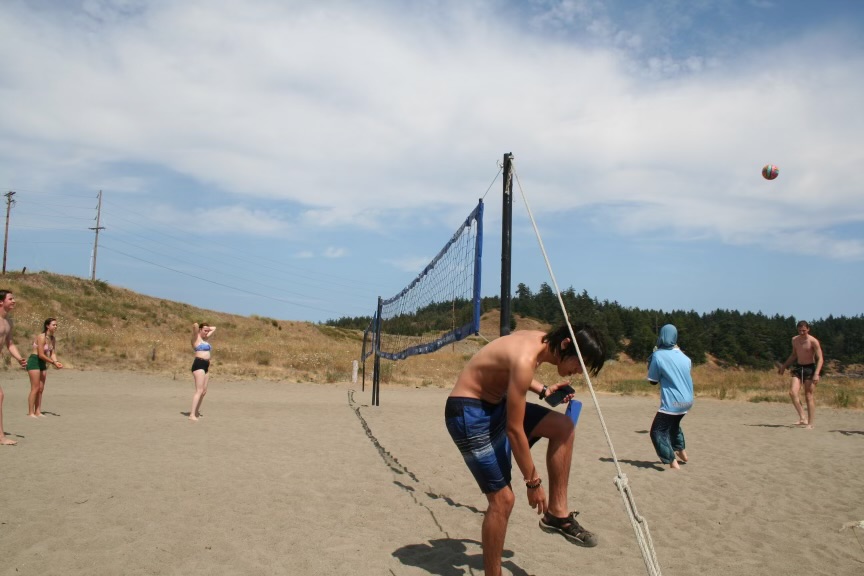
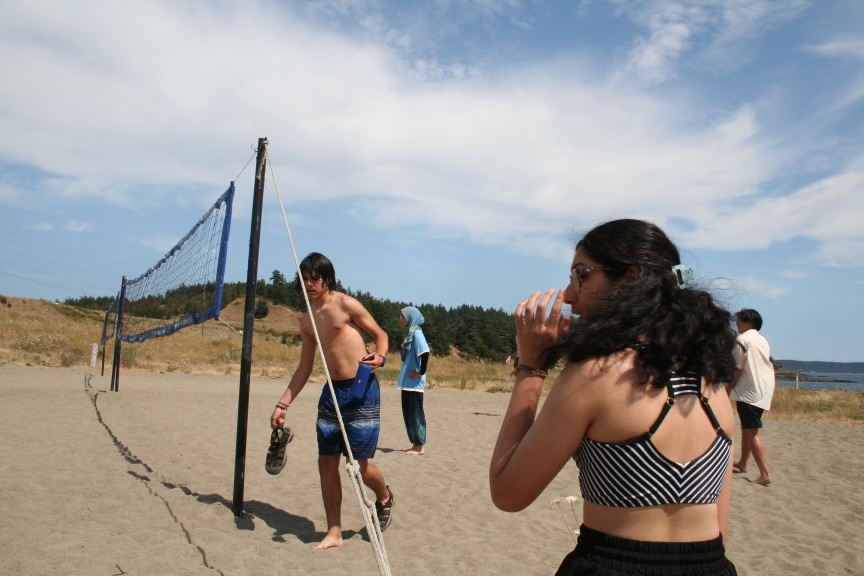
Us playing volleyball at Jackson’s beach
After all that we took a refreshing dip in the ocean, and played volleyball at the beach. Adam even joined in!
Tonight, Dr. Crofts (who received her PHD at University of Washington, and is at FHL studying biomechanics as well as the evolution and function of specialized morphologies for the summer, but is an associate professor at Holy Cross College) gave a talk on Comparative Biomechanics, and we will be doing urchin dissection with her and Rachel Haughton to determine the effects of an incredibly acidic seaweed on the internal structures of green urchins.
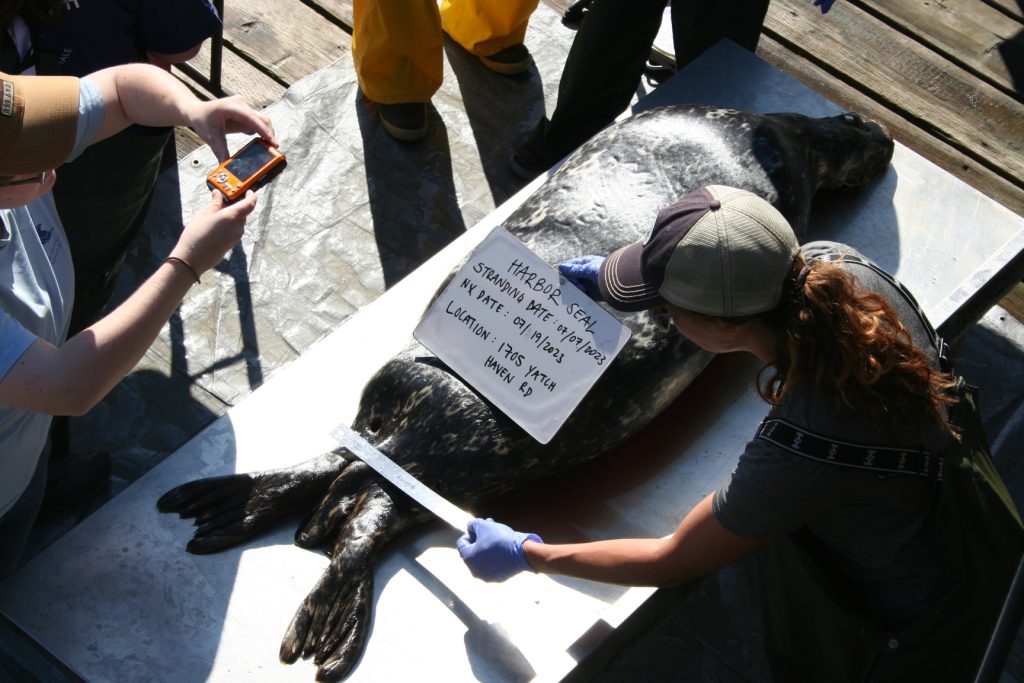
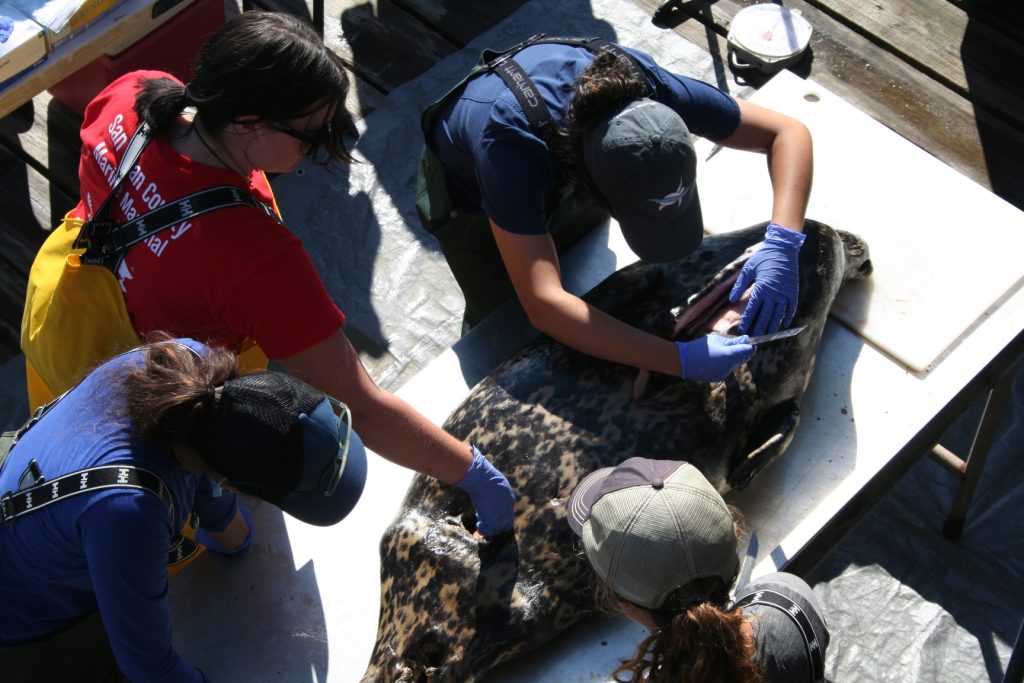
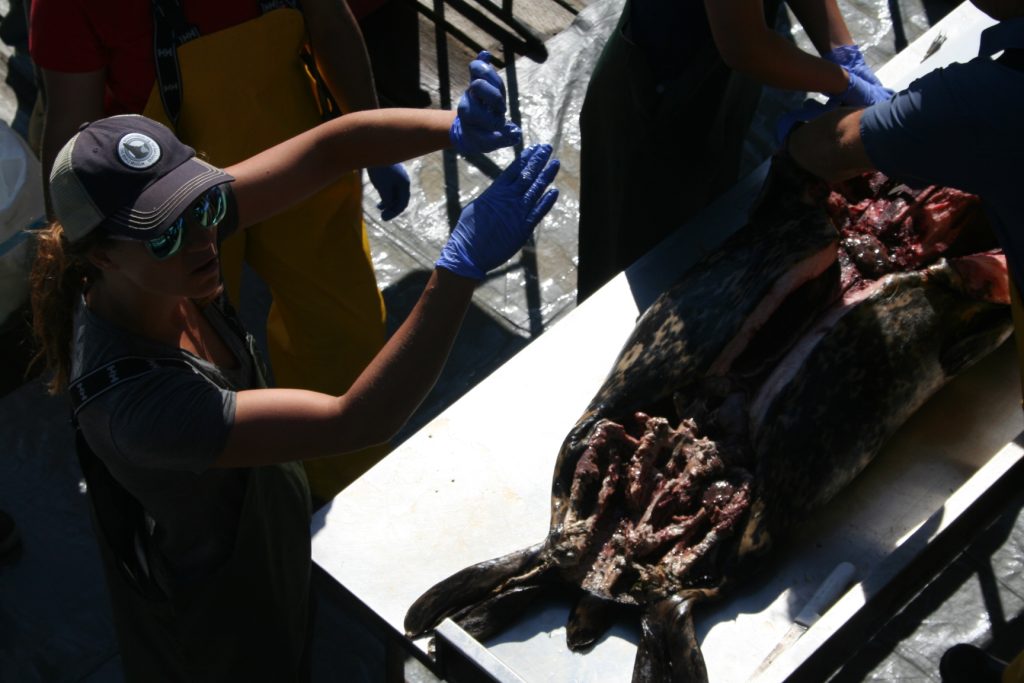
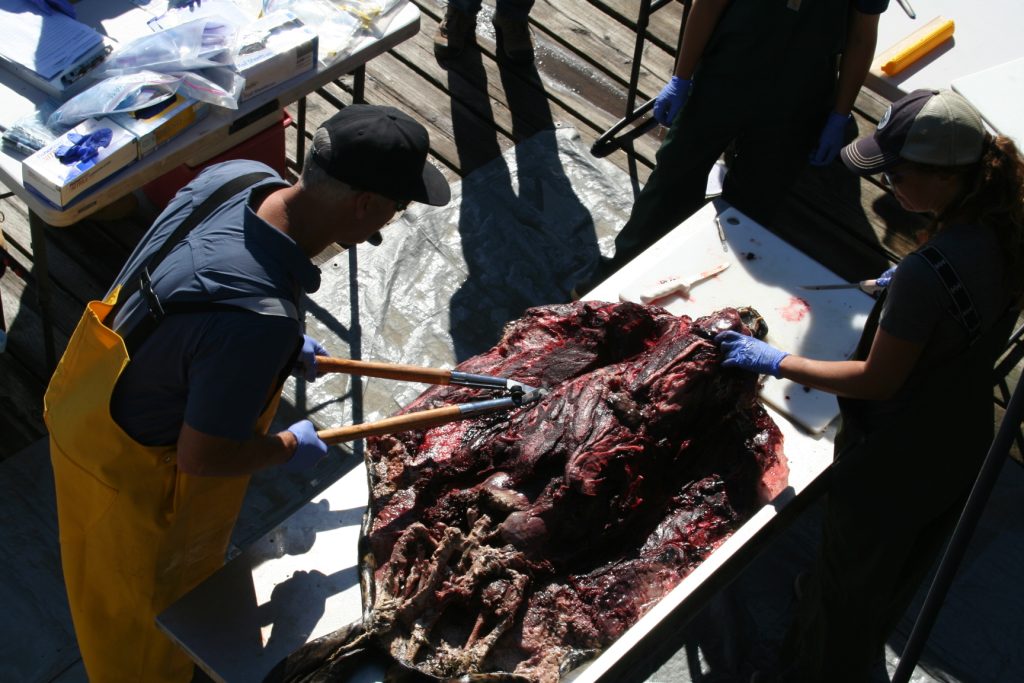
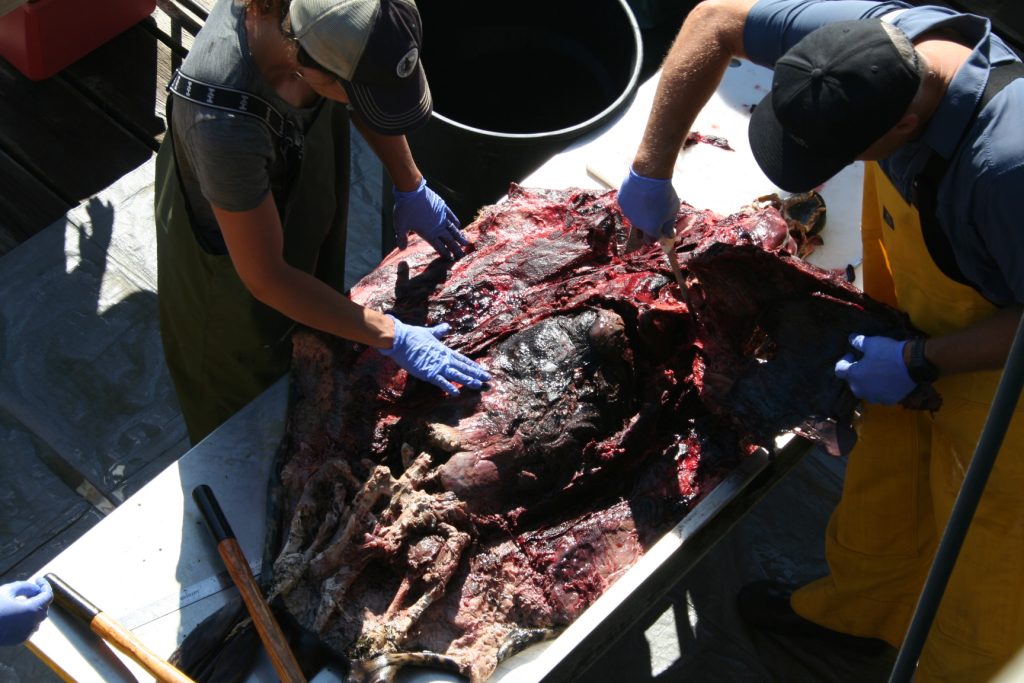
Warning !! The harbor seal photos are, as the last necropsy was, relatively gory, and not for the fainthearted !!
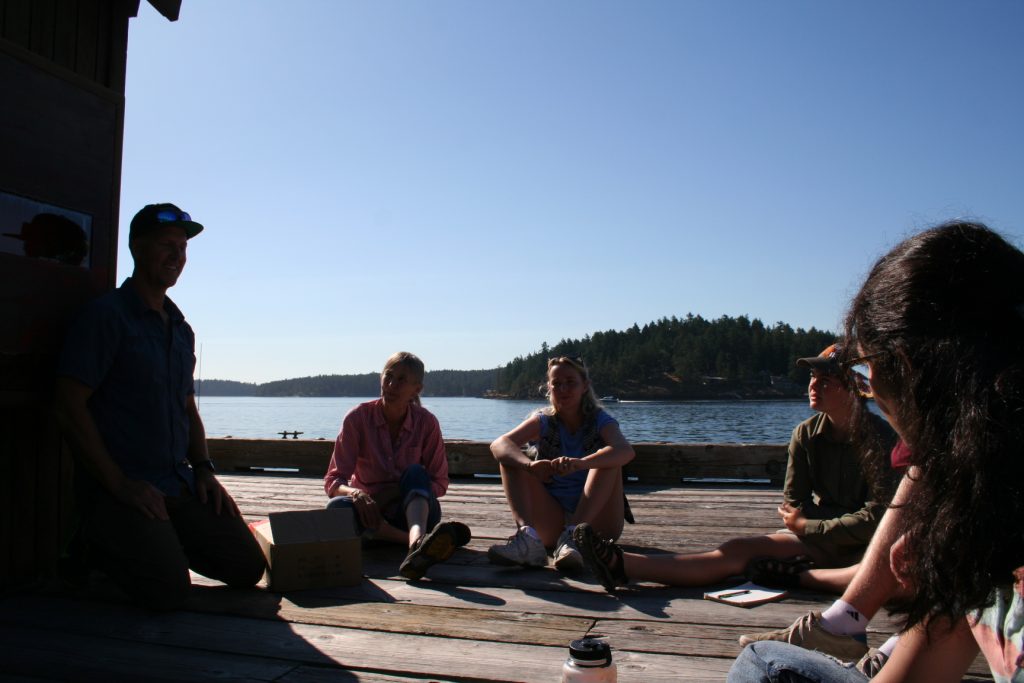
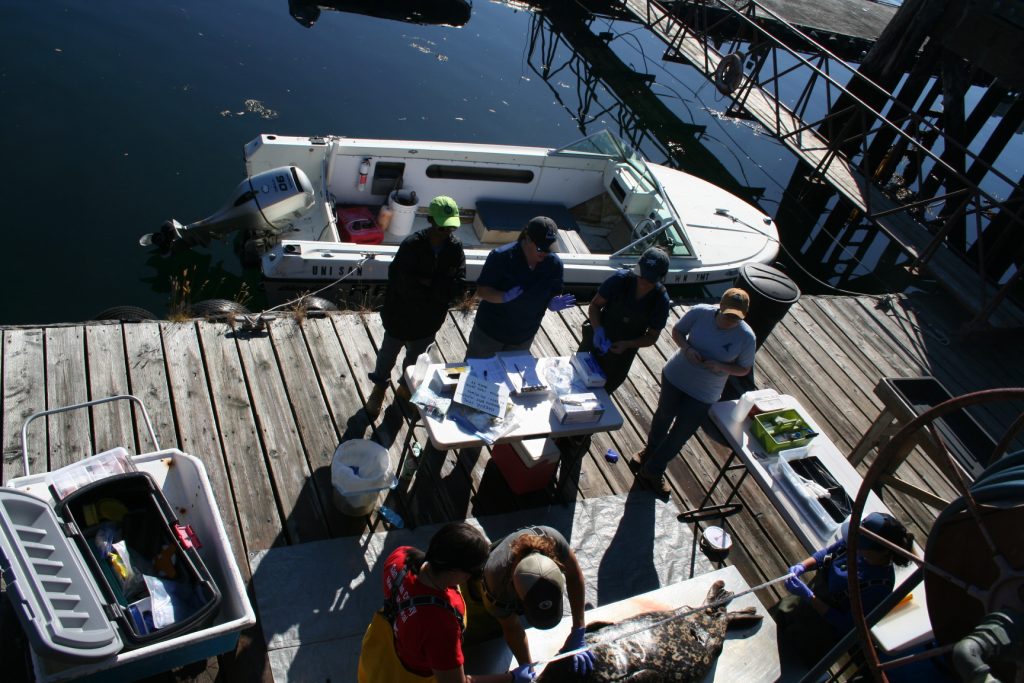
Hello again everyone, It’s the Students of Salish Sea Sciences returning with a brand new blog post! Today we once again partook in a wide variety of somewhat random activities. As usual, our day began with waking up (recommended at least once a day). After waking up and munching on a nice breakfast, we all departed for Friday Harbor Labs to watch a necropsy. As some of our faithful readers may recall we already observed a harbor porpoise necropsy. Today we watched another marine mammal get cut open. Instead of observing a harbor porpoise this time, we watched a harbor seal. While it was undoubtedly cool, most of us concluded that it was kind of underwhelming compared to the porpoise.
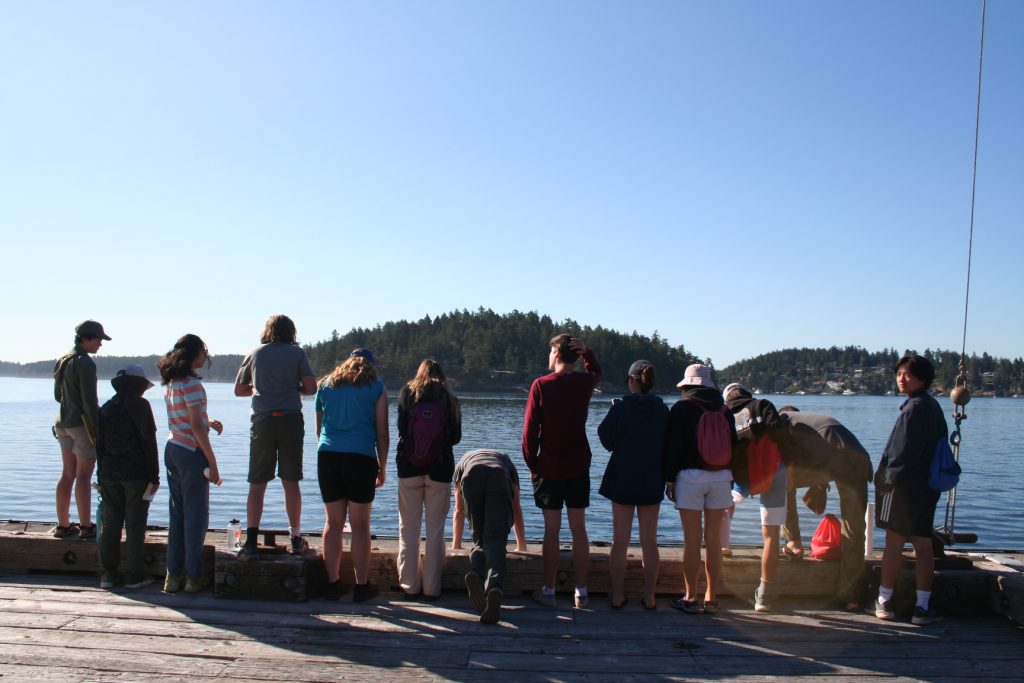
The squad looking at the super interesting thing in the water below them (can confirm there was nothing actually there)Dockside interview with the dissector himself, pictured later with garden shears
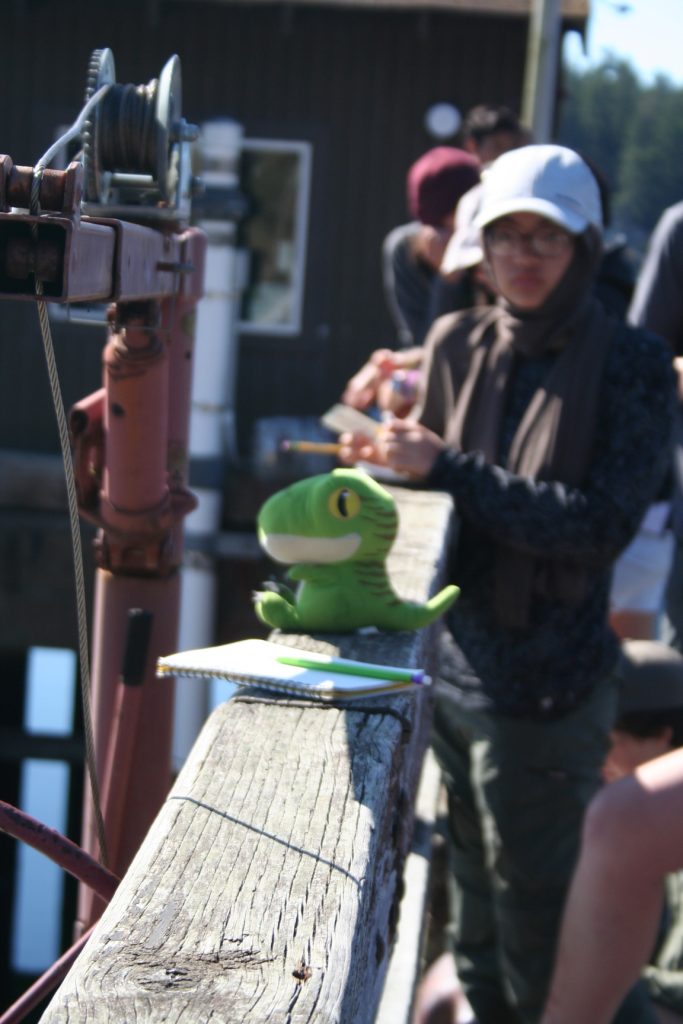
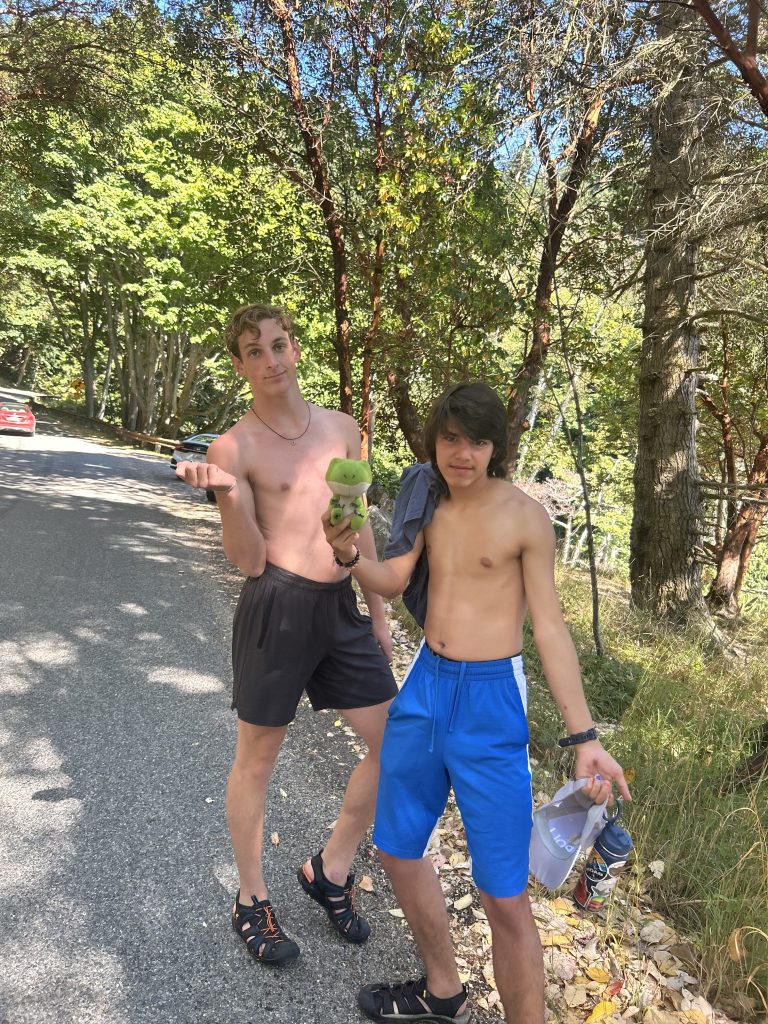
Kind of self-explanatory here. Unfortunately, not a lot of info came out of this guy because although they looked pretty good on the outside, the internal cavity was rotting and had been scavenged for the most part.gorgeous gorgeous girls stare pensively at a necropsy and contemplate the meaning of lifegorgeous gorgeous dinosaurs try to blend into their surroundings and curse their owner for bringing them here
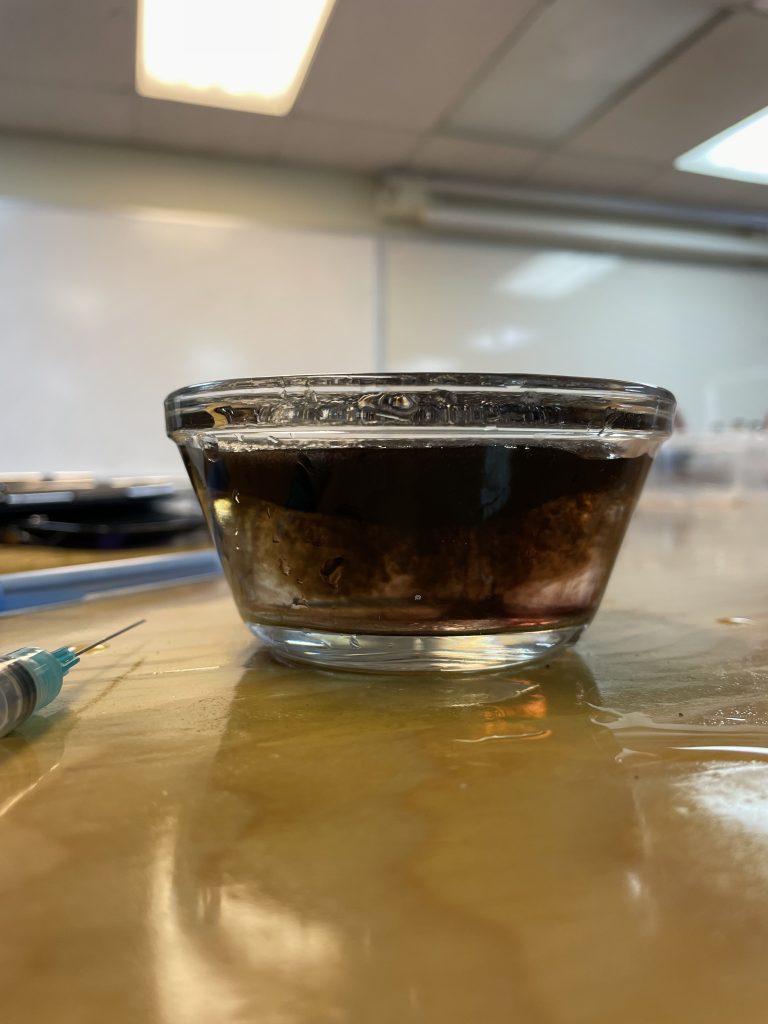
Most of our day thereafter was devoted to collecting project samples and developing our own research. Cassandra from the fish lab came by for an hour to try (and mostly fail) to teach us how to use data software, which left most of us exhausted, close to tears, and overwhelmingly confident we weren’t going to major in computer sciences. Hannah spent her day fertilizing and observing more Ascidian embryos, Maddie collected water samples, Ethan set up snail habitats and Emma cooked seaweed into a delectable concoction. Many other project activities occurred as everyone was hard at work.
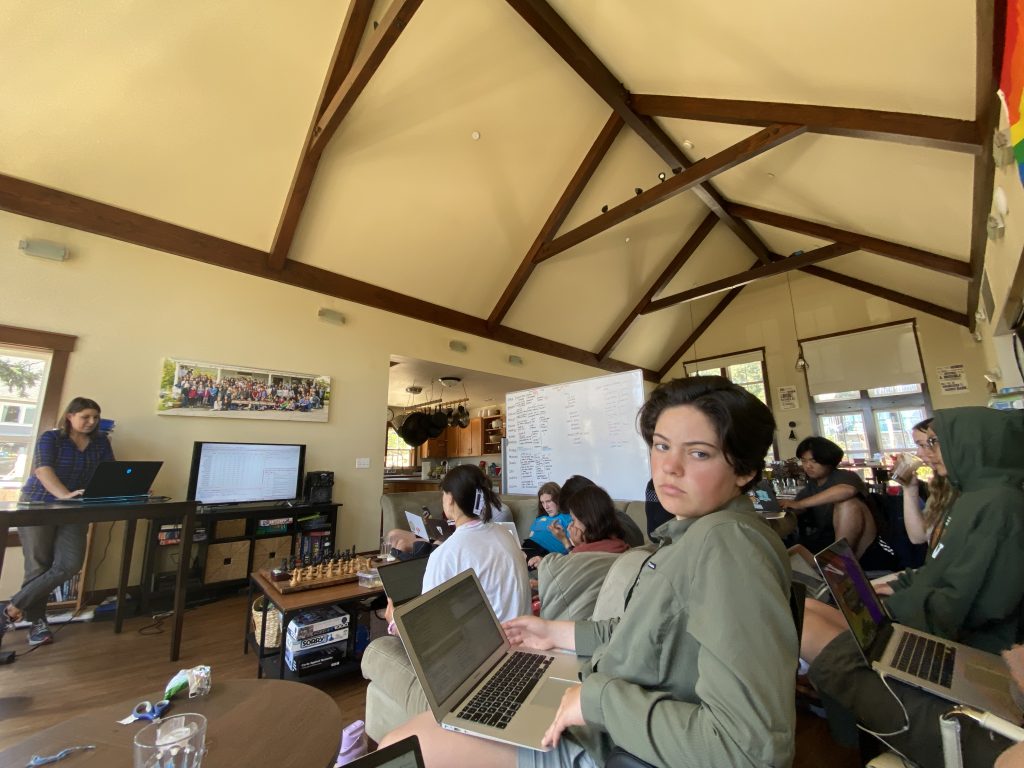
We tried to understand the software, I promise we tried so hard, but …
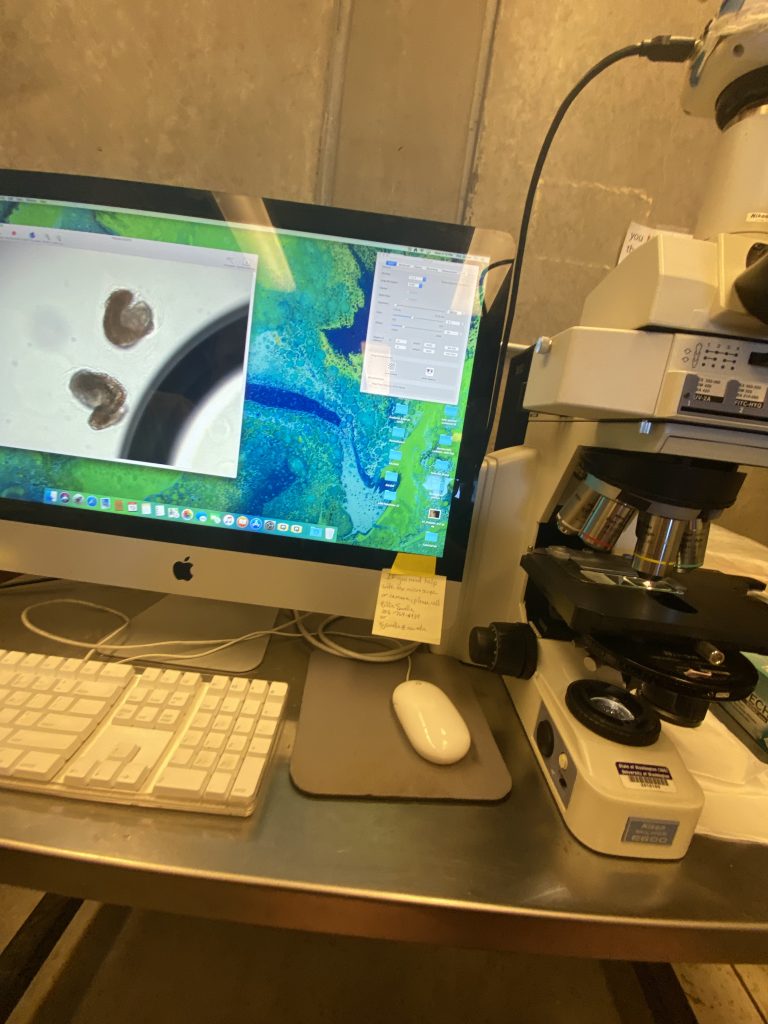
The lads swimming helping Emma with her rockweed collection, and my ascidians that developed abnormally because of the LiCl I treated them with (don’t worry, it was on purpose)
Tommy at FHL for reasons still unknown, and Philip’s spawning sand dollars !!
Nothing terribly noteworthy happened (other than a brief thrifting expedition) until dinner time rolled around. We were joined by Ms. Shauna Barrows, a field assistant for San Juan County Land Bank, an organization devoted to protecting vast swaths of land for conservation and various ecological purposes. It was a very interesting talk that took a more political perspective and diverged from our usual scientific talks.
In summary, today was another stellar day in which we engaged in very fun activities and greatly furthered our projects. Moreover, we had a fantastic speaker and even got to thrift some clothes to wear to the Barbie movie. Welp, signing off for now,
We are now in the full swing of our projects. Today, we spread out across San Juan Island and had a slow and steady day, some of us collecting data and resources, while others stayed back at the dorm and did more research.
One of our beloved peers, Hannah, had a full day at Friday Harbor Labs researching her Tunicate embryos under the guidance of Dr. Billie J Swalla. Olivia and Khadija were also at Friday Harbor Labs, searching for decorator crabs. Unfortunately for them, their search proved fruitless and yielded no crabs whatsoever. On the other hand, many people were out in the fields, scrounging San Juan Island’s many beaches for data and materials for their projects and busting with excitement. Maddie and Philip went venturing out into the harsh lands of False Bay, where they encountered trials and tribulations in the form of nasty spikes and heavy water buckets. Tommy and Ethan were also on the great plains of False Bay, scavenging for an assortment of bubble snails. On the other side of the island, Finlee went to the joyous Fourth of July beach, to collect eelgrass specimens and photograph them. Vedha was also with Finlee, and, with the help of Emma, took soil samples and identified different species of seaweed within quadrats.
We ended the day with a presentation from Dr. Tom Mumford, who is an active voice in the kelp community where he stresses the importance of protecting kelp and the species that rely on kelp. His current projects are “Kelp Recovery Plan for Puget Sound, Washington” and the development of the Ocean NOMAD (Nautical Off-shore Macroalgal Autonomous Device) for low-cost production of biomass of food, fuel and feed. We urge anyone who is interested in kelp to check him out.
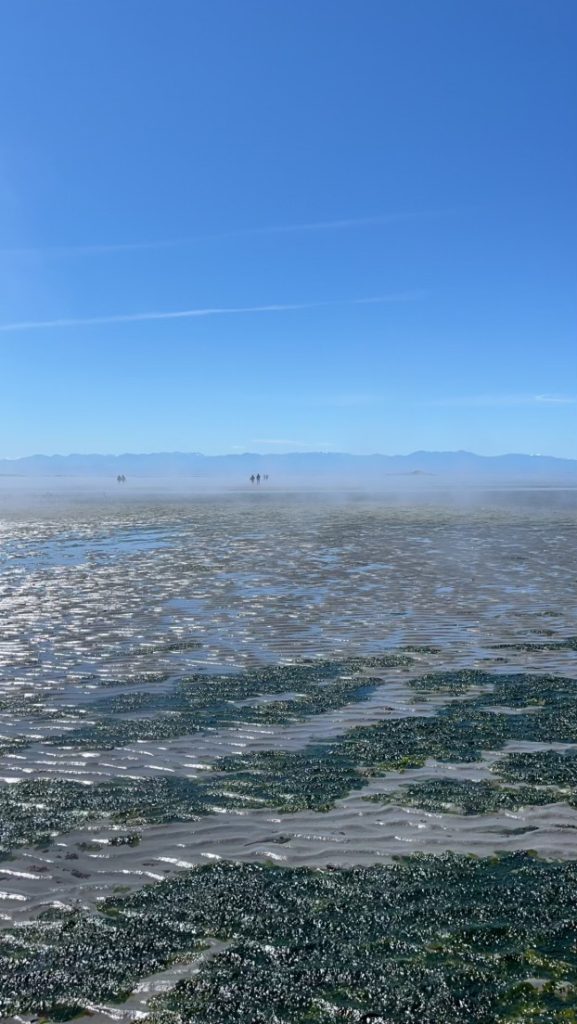
A beautiful picture of False Bay by our very own James Thomas Jerome Becker while him and Ethan were on the hunt for Bubble SnailsHere we see a very real photo of Philip “6’2” Yohan Miller
Today was a truly action packed day, but maybe the real action was the friends we made along the way.
Today the Salish Sea Sailors (unofficial official team name (even though we don’t sail)) got up to some worm hunting at False Bay with our previous dinner guest, and renowned scientist Tim Dwyer.
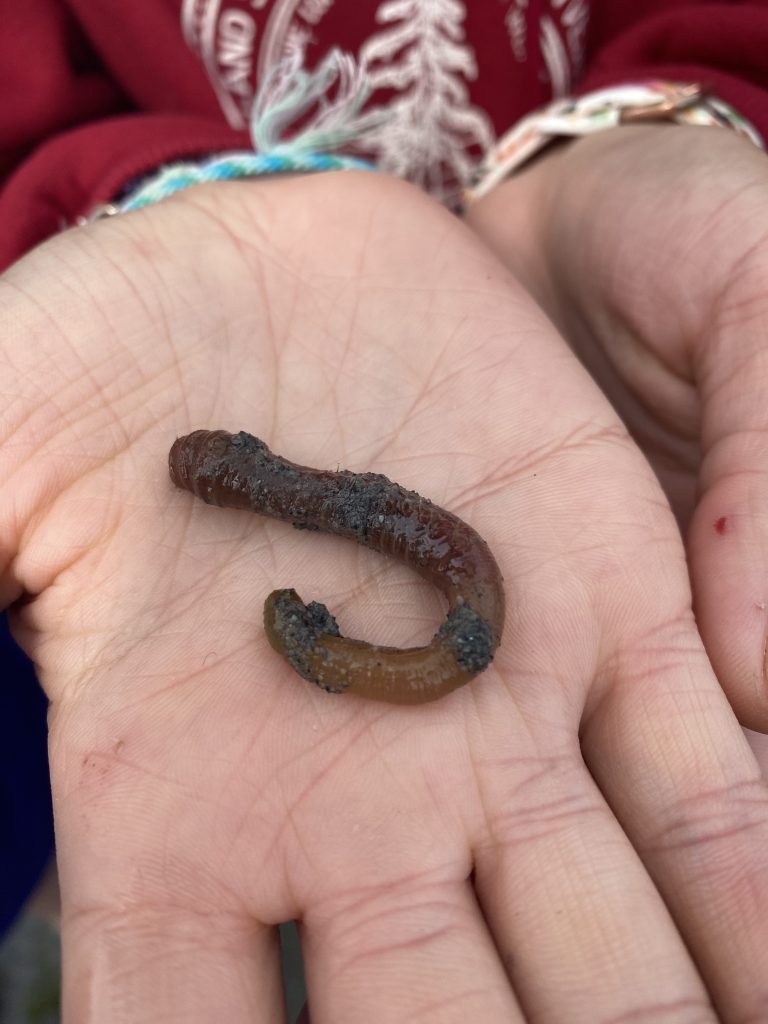
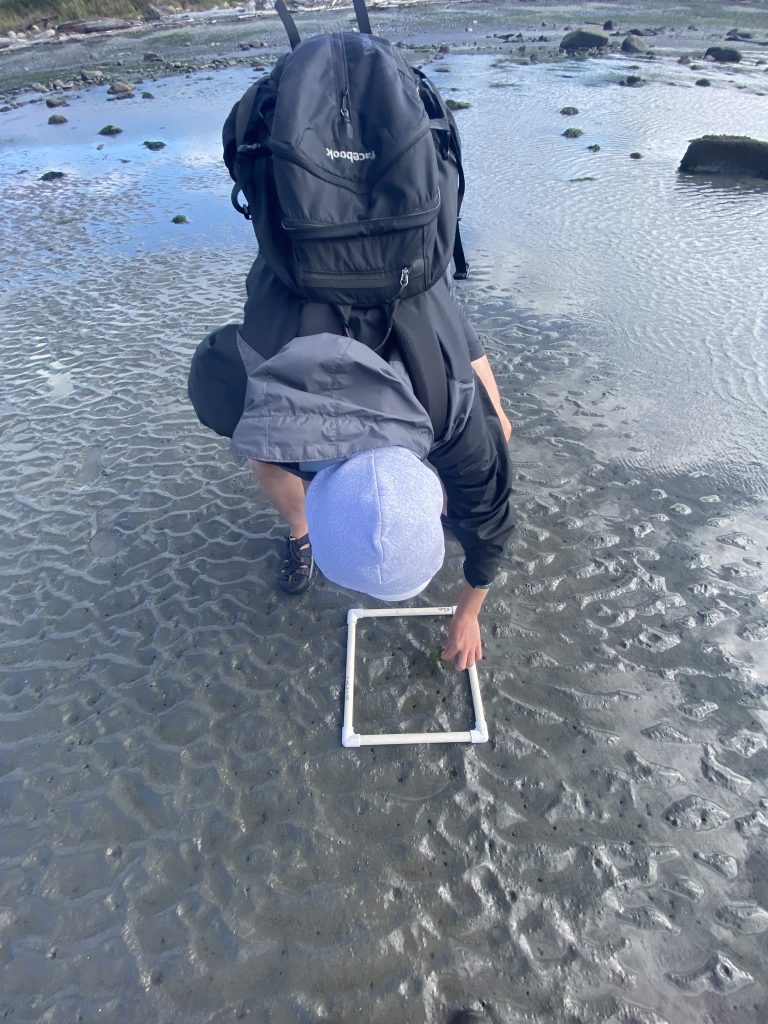
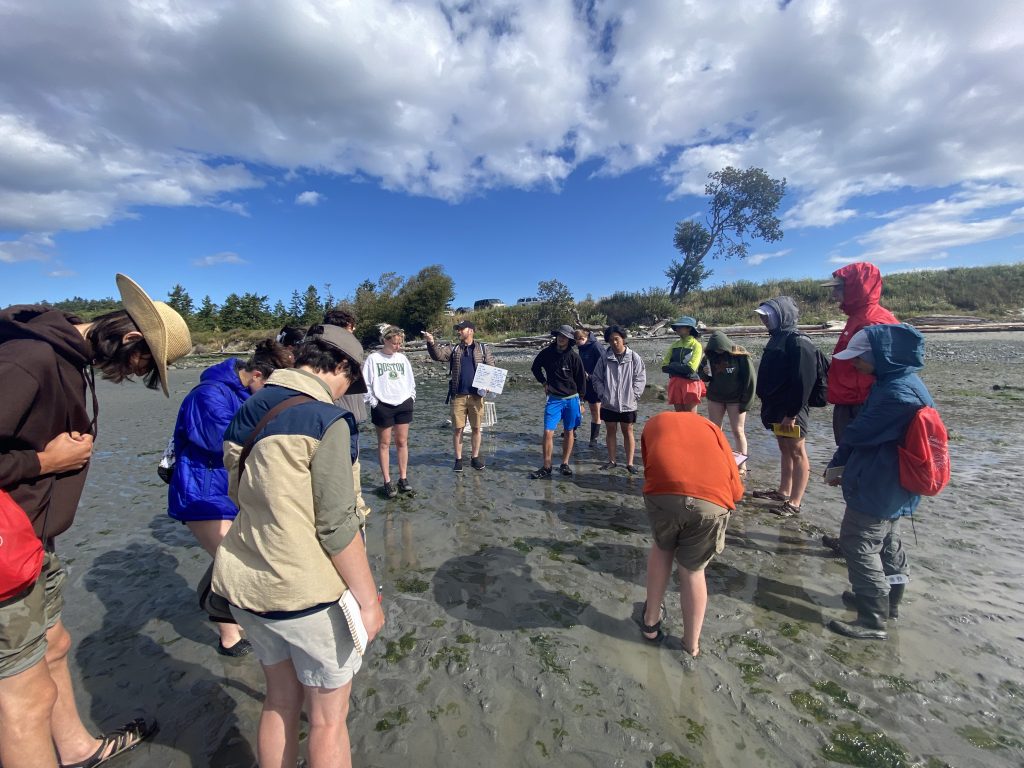
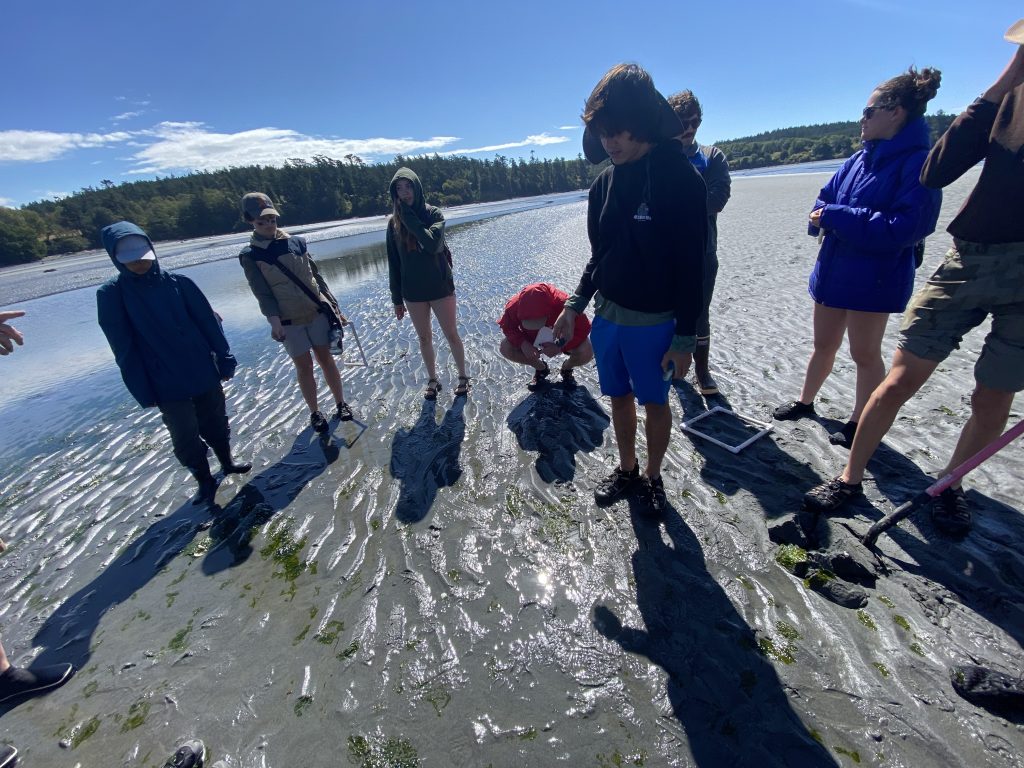
At False Bay, we ran an experiment tofind the preferred habitats of lugworms, a type of polychaete worm. By haphazardly throwing quadrats around the beach, we got a good idea of the average population statistics in the near-shore area and the area closer to the land. We also had a team digging for worms to gain an understanding of the actual number of worms relative to the number of burrows. We discovered that there was a vast difference in the number of worms further inland vs. further out in the tide.
This is a lugworm. Head is to the top left and anus is the lower right. Since these worms clean the sand they ingest of bacteria and nutrients, their “fecal casts” contain cleaner sand then what is around them!
After checking on Adam’s (one of our two science directors) ongoing eelgrass restoration project, we had a little bit of exploring time. Many bubble snails made it to our hands, and under our feet. Don’t worry everyone, there is certainly not a lack of them there.
Tommy effortlessly demonstrating the scientific technique of this delicate process: Scientifically throw quadrat, count amount of fecal casts next to a burrow. Repeat x50.
Birds of feather flock through mudflats together (photo creds to Hannah+Emma)
When we got back to the dorms, we had lunch and a poster workshop for our future presentations. Next was project work time, and we split up, with some students going to Friday Habor labs to further gather information for their studies, and some staying back at the dorms to do more research.
There will be no guest tonight, as it is Thanksgiving. (That is not the actual reason, we just don’t have a guest. However we have still decided that today is Thanksgiving.) We wish you happy holidays! Christmas is only 4 days away. (Can you believe it??)
Thanksgiving:
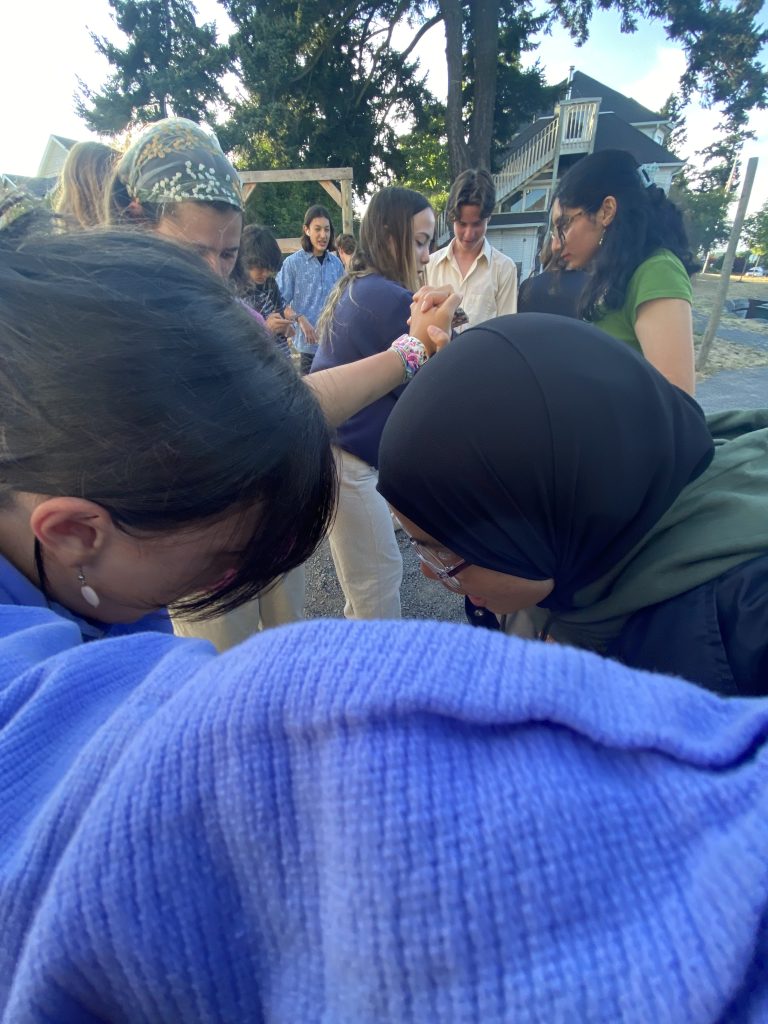
Our dinner tonight consisted of a traditional Thanksgiving dinner, consisting of mached potatoes, beans, salad, stuffing, and of course, turkey. Before we dug in, we had to grab some photos outside of our amazing dinner fits, and giving thanks at the table before we continued the feasting.
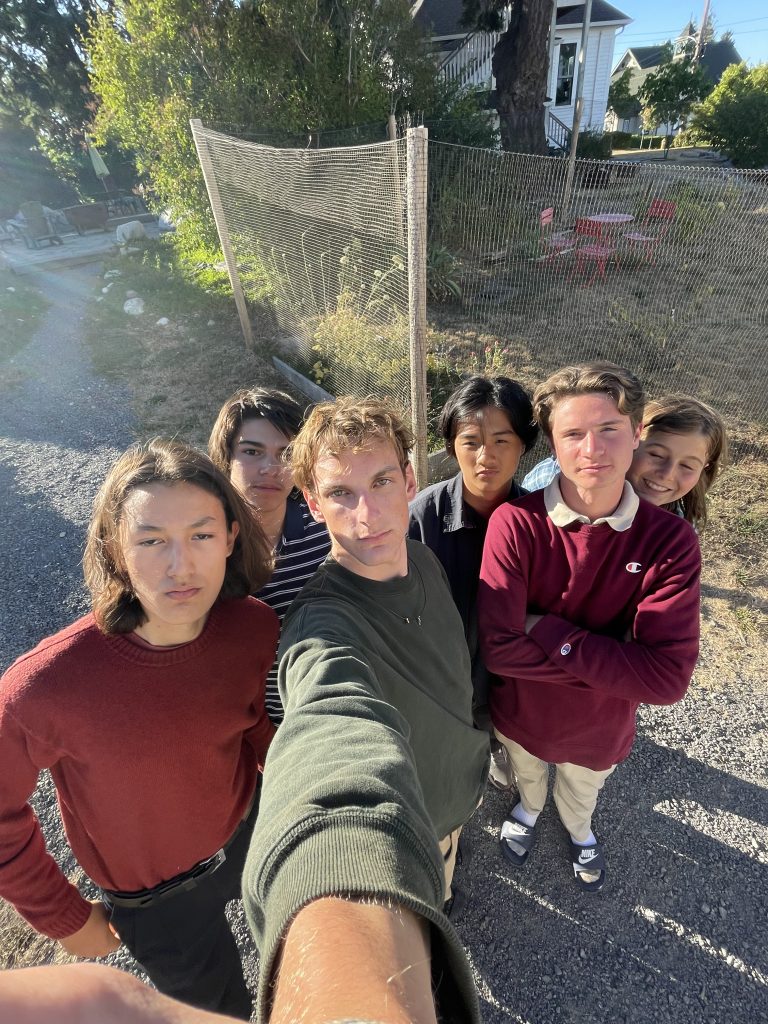
All of the Salish Sailors posing for a photo. Someone(Leo) decided it would be a good idea to look straight into the sun, hence the various faces!We’re actually the coolest people around, and totally not a whole bunch of nerds (photo cred to Barrie !)Quick flick with the CCCCC (Crazy Cwuirky Cool Crab Club), nothing but dapper for the commencing Thanksgiving feast.
Signing off – Leo (AKA The Wall AKA California gurl AKA Ryan G), Finlee (AKA Finland), and James (AKA The Mountain)
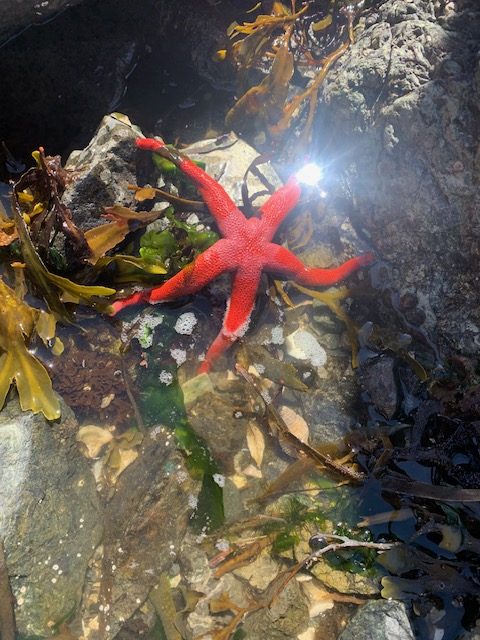
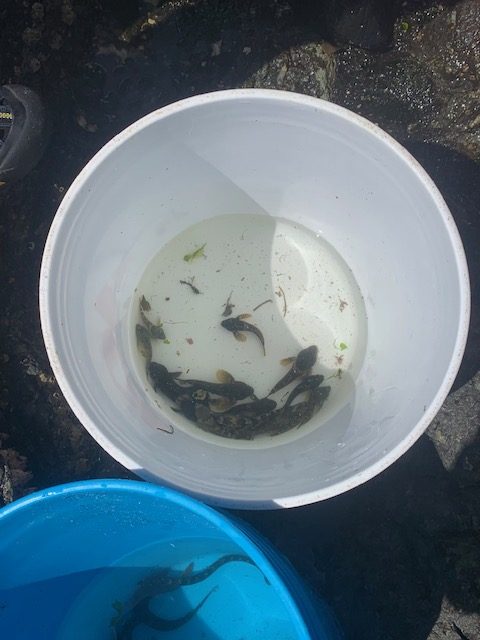
Welcome back to the blog! Today we started the day off early in an attempt to locate the Rockhead Poacher at Deadmans Bay’s intertidal zone. We assisted ichthyologist, Daniel Geldof in finding his research project about this specific type of Poacher and their oddly shaped head. The first step of this process was emptying the water out of two specific tidal pools. To achieve this, we used numerous buckets by passing up and down the intertidal zone. After this long process we were left with the different types of creatures that inhabited these pools, making it easier to catch them with nets. After many scrapes and falls we finally finished the grueling task with absolutely no poachers, but we did find other species of marine creatures. Even though we didn’t succeed, we still had a great time exploring the intertidal zone.
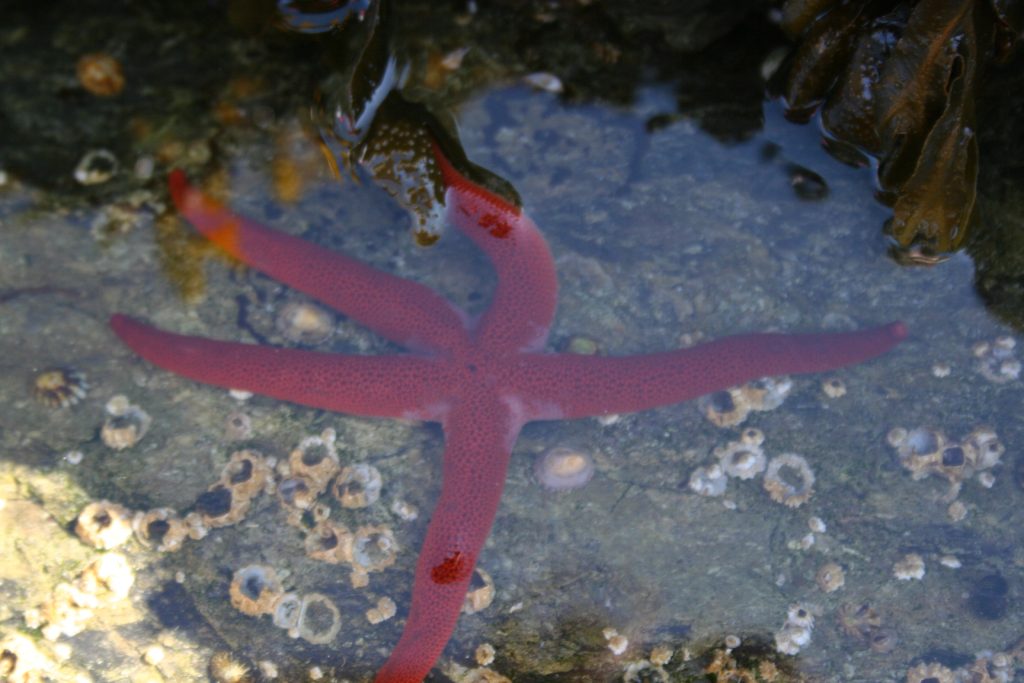
Pictured is a pacific blood star in one of the tidal pools. Picture taken by MaddiePictured are the fish we caught in our nets from the tidal pools. Most were released back while some were kept for furth research back at the labs. Picture taken by Maddie.
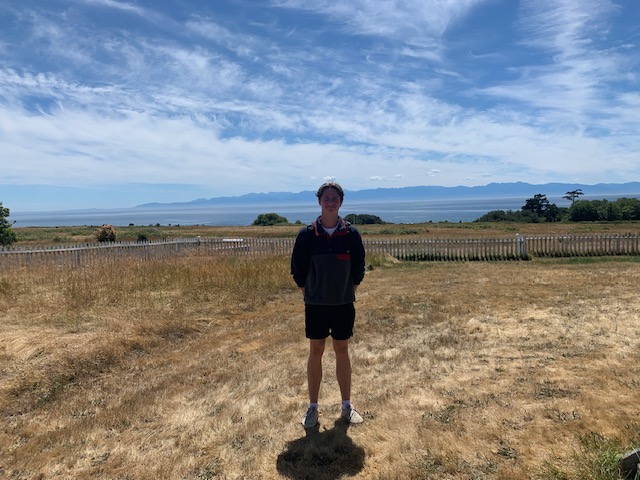
After a good lunch it was time to go for a little hike at the well known historical park, American Camp. With the help of multiple signs and our personal tour guide Ms. Bea, we were able to grasp the captivating history. The American Camp was inhabited by US soldiers back in 1850s in order to stake out the land and sea from above. With little interaction from others they ultimately decided to abandon the camp, leaving it’s ruins for curious tourists to observe centuries later.
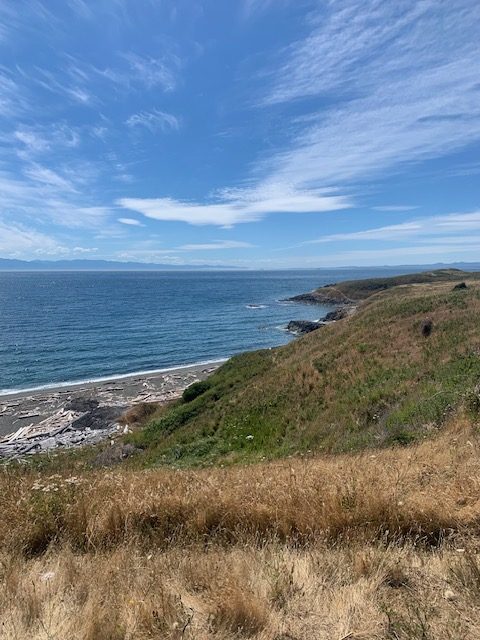
Pictured here is Tommy, and behind him the gorgeous panoramic view of the mountains across the water. Picture taken by Maddie.
Our first stop of the journey was the town, where only two of the houses remained. After little history talk we ventured more into the settlement being able to view the water from all sides.
Pictured is the view from the ruins of the houses left from the American camp. Picture taken by Maddie
We made our way to the rocky cliffs where we were able to climb and explore the terrain before heading down the the beach. We played in the sand and water along with climbing the near by rocks.
Soon it was time to depart dragging ourselves back up the hill towards the van. Finally we got back to the dorms preparing for the night ahead with our special guest, Mr.Tim Dwyer who was the previous director of Salish Sea Science Program. Tim gave us a an in depth lecture on his experiences in Antarctica specifically on gigantism in marine arthropods. Some of his amazing work has been published in National Geographic. He is also a science teacher at the local high school here. We thoroughly enjoyed his talk due to how interesting the diversity of the marine environment in Antarctica can be. After he left, everyone was convinced that they wanted to live there. Later we all decided to go play volleyball to finish off the day. Signing off for now!
The Salish Sailors (written by Maddie, Ingrid, and Tommy)
Today most of us got to sleep in till 9, with a select few getting an early morning at the Friday Harbor Labs. We quickly ate breakfast, excited to make our way to the farmers market and feast our eyes on the array of hand made crafts, sweet smelling pastries, and locally grown berries. After a few hours of shopping and enjoying the local island life we made our way back to Spring Street for lunch before heading out to the secret lake spot with an awesome rope swing. Everyone chose a unique way to enter the water, some with a better form with others, luckily there were no concussions. While we were enjoying our time out in nature, Hannah and Phillip were having a blast in lab 10 where they got to inject embryos with B. J. Swalla. We are soon going to be having dinner with Dr. Daniel Geldof.
The lake where we swam today
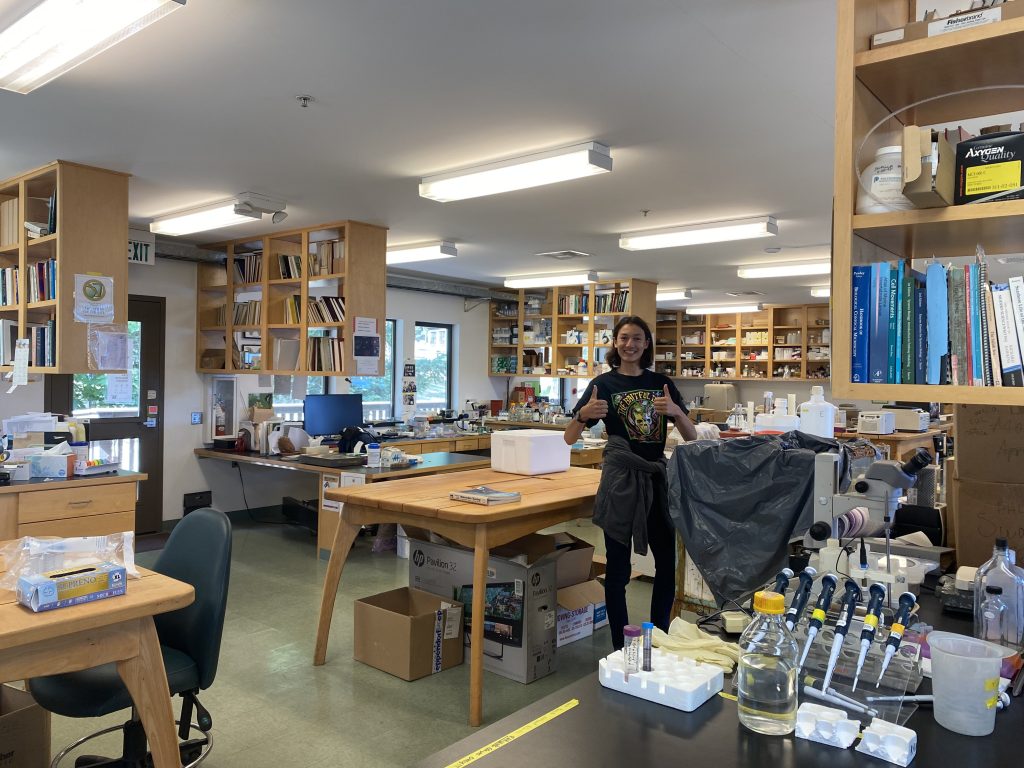
Philip, at Friday Harbor Labs
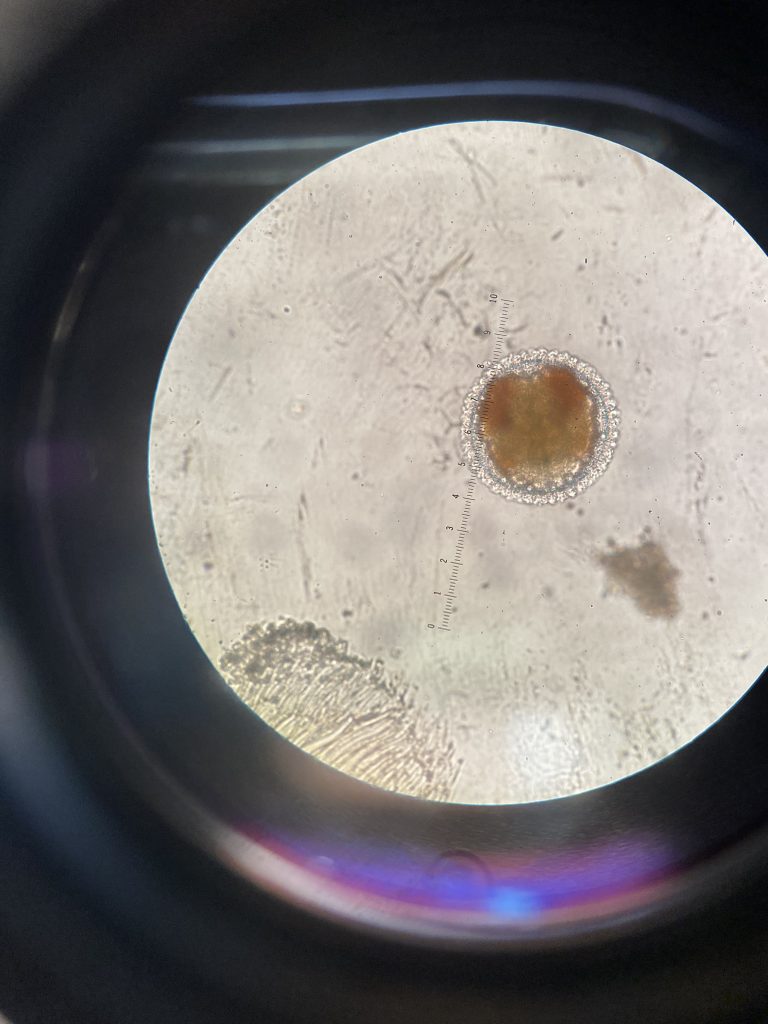
An embryo I guess?, Hannah said to add it
(Hannah here, it’s an ascidian embryo Philip and I fertilized today with Dr. B.J Swalla !!)
Salutations fellow citizens of our green world, it’s the students of Salish Sea Sciences writing yet another blog. Today was yet another eventful and action-packed day for us. The day started off a little early with a 6:30 wake-up call that I could only describe as harrowing for many of us tired teenagers. Despite this momentary challenge, we were all able to push through and commence our first activity of the day. We drove over to Cattle Point where we rendezvoused with Dr. Dobkowski, the scientist who spoke to us the night prior.
The wonderful Katie, decked out in her FHL swag as many of us are now too !A beautiful view of the start of Cattle Point at a nice and early 8 am
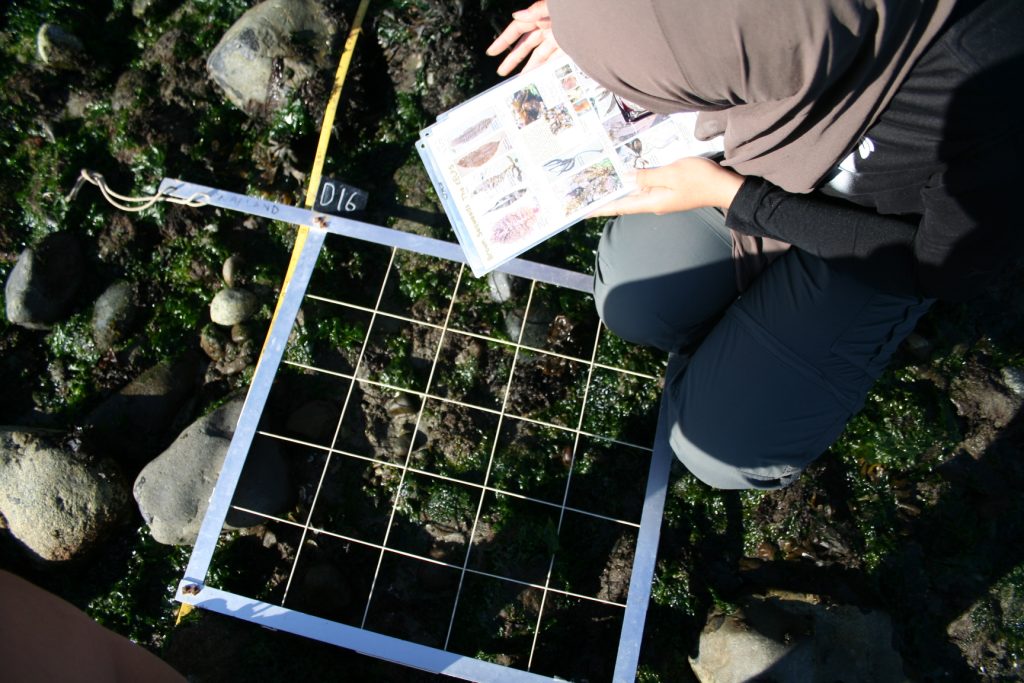
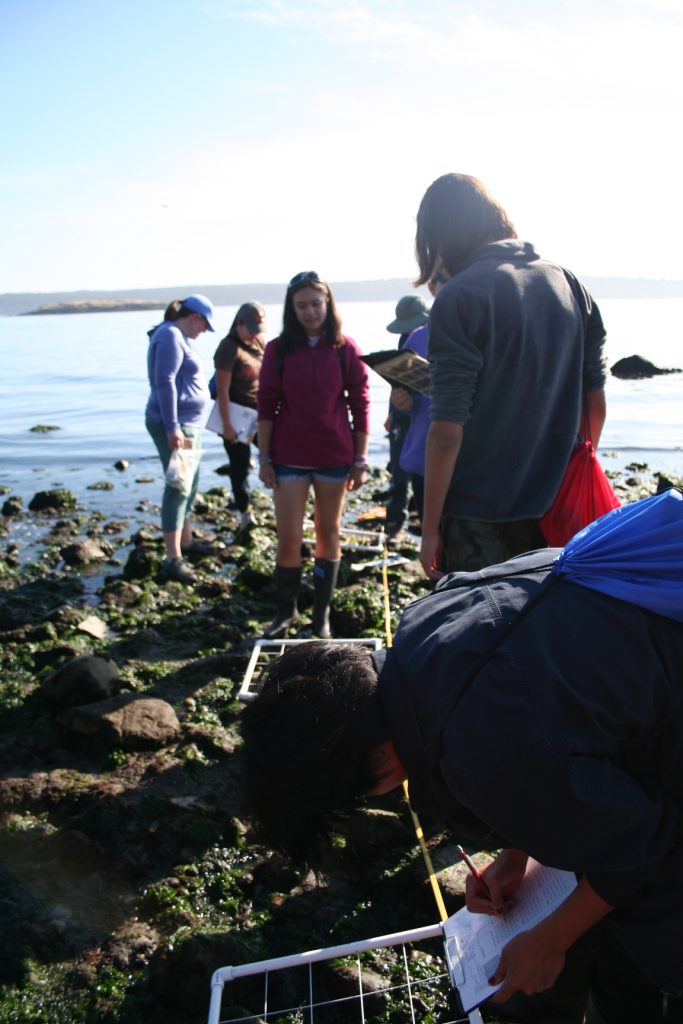
The primary goal of our Cattle Point expedition was to survey different squares filled with algae within a medium-sized grid called a transect. We used data sheets to record which species of algae we could identify and the general percentage of each square they covered along 4 different sections of the beach. The explanation I’m writing probably doesn’t do an adequate job of explaining the process, but the general idea was simply that we were helping Dr. Dobkowski collect data on species diversity in different locations.
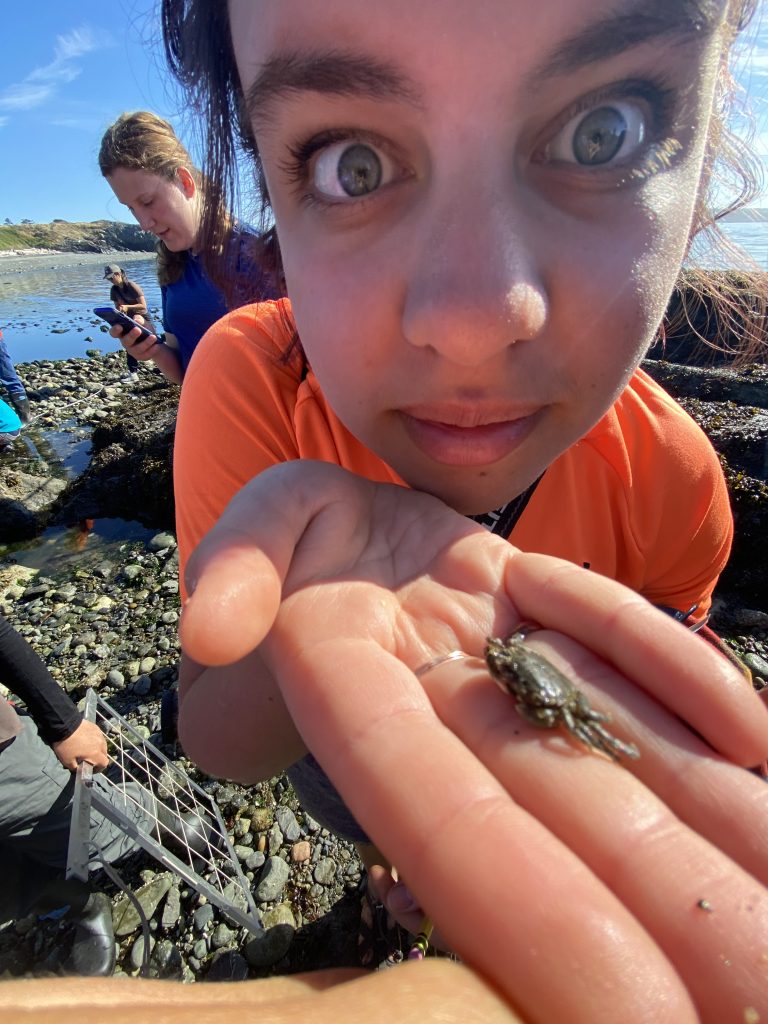
Finlee proving to everyone just how qualified (and excited !!) we were to be doing research with professionalsMy wonderful and experienced research partner Khadija demonstrated extreme professionalism in the fieldMe reallyyyyyyyy excited over a tiny crab kelp I found !! photo creds to Maddie 🙂The squad doing as the squad does: absolutely crushing it out in the field
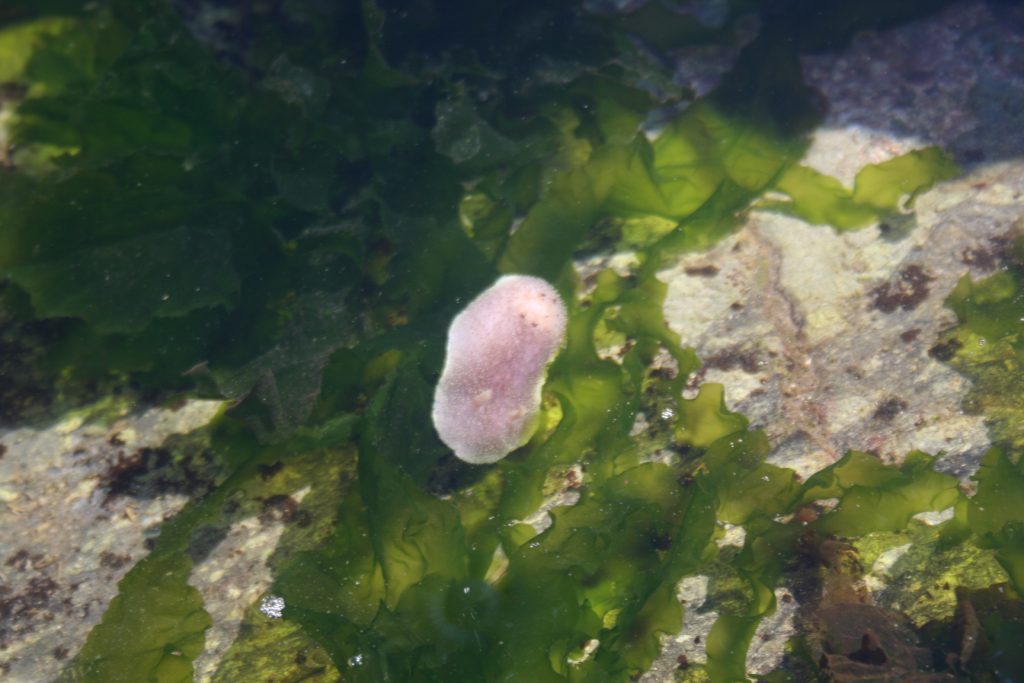
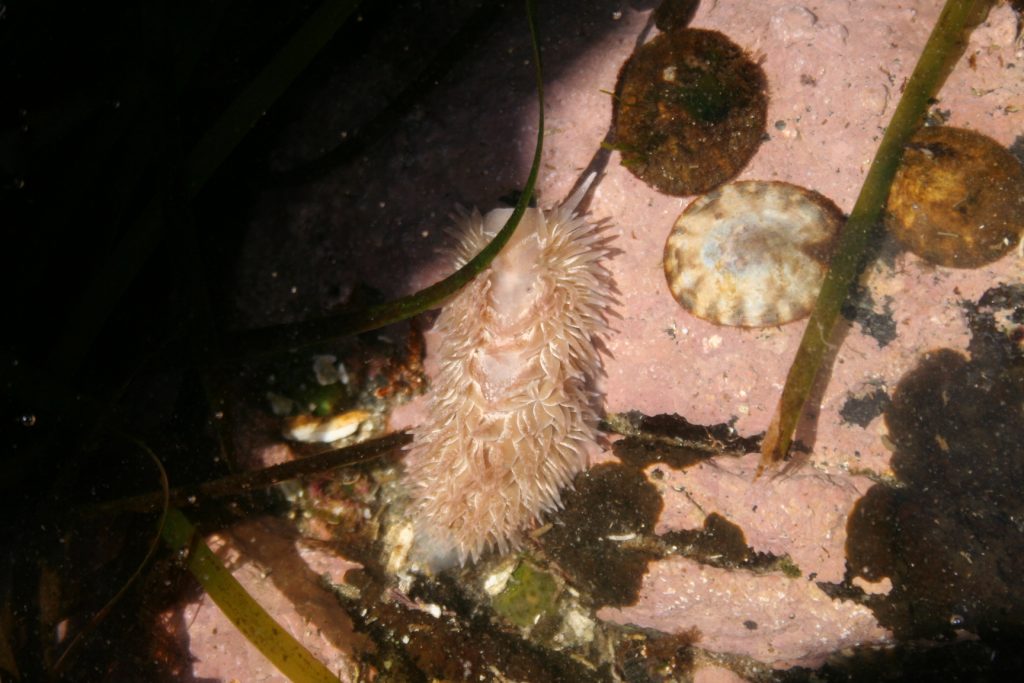
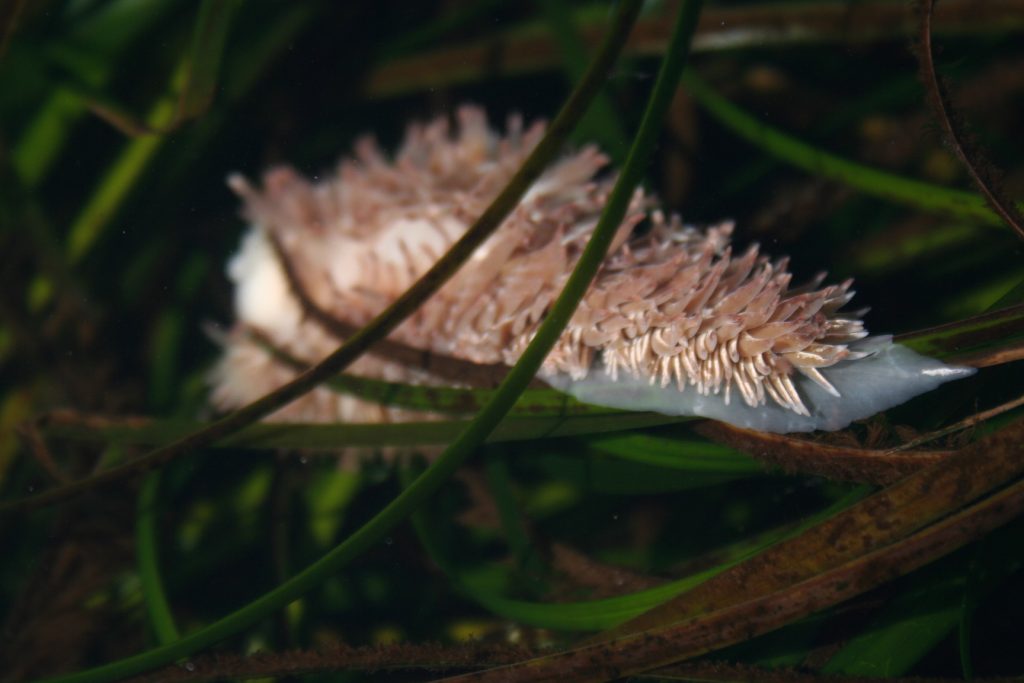
On our walks along the shore from site to site we also encountered some pretty cool creatures in the tidepools. Some of us even saw a fuzzy-looking nudibranch chilling in some grass. Overall, it was a pretty busy morning but it was also a good introduction to the kind of field work that marine biologists do to determine the health of an ecosystem.
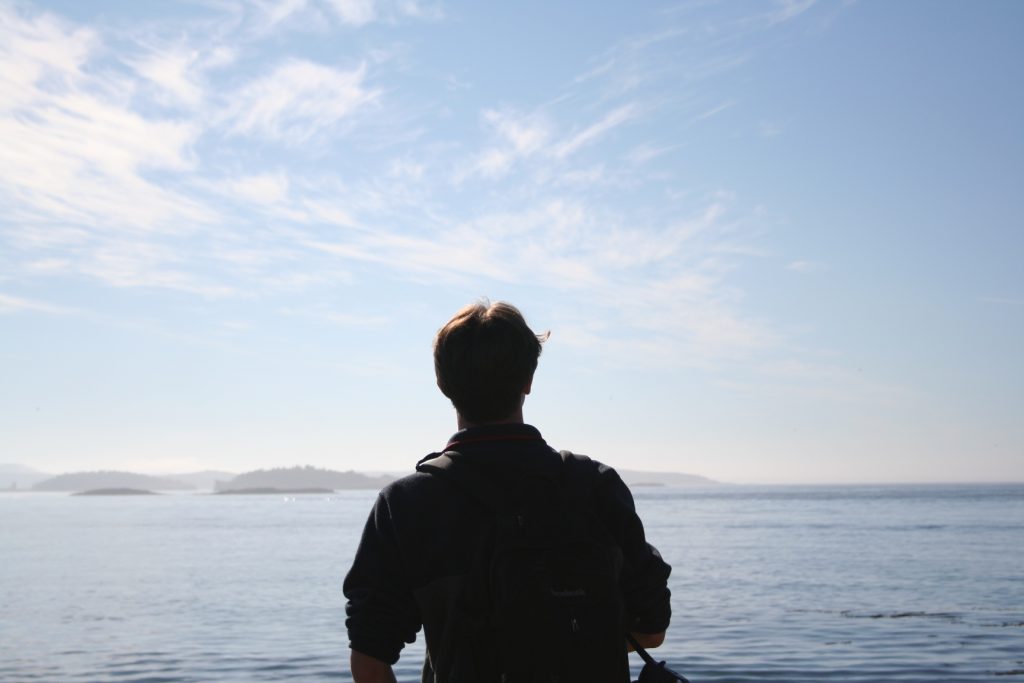
One of the creatures: Tommy getting in his daily hours of staring off into the distance longingly
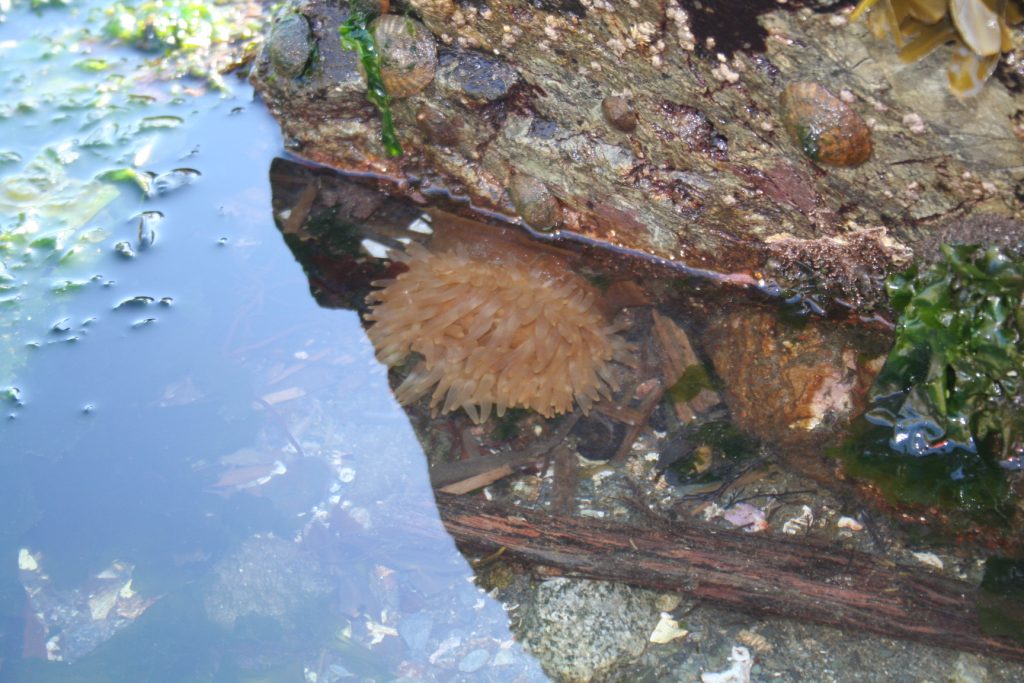
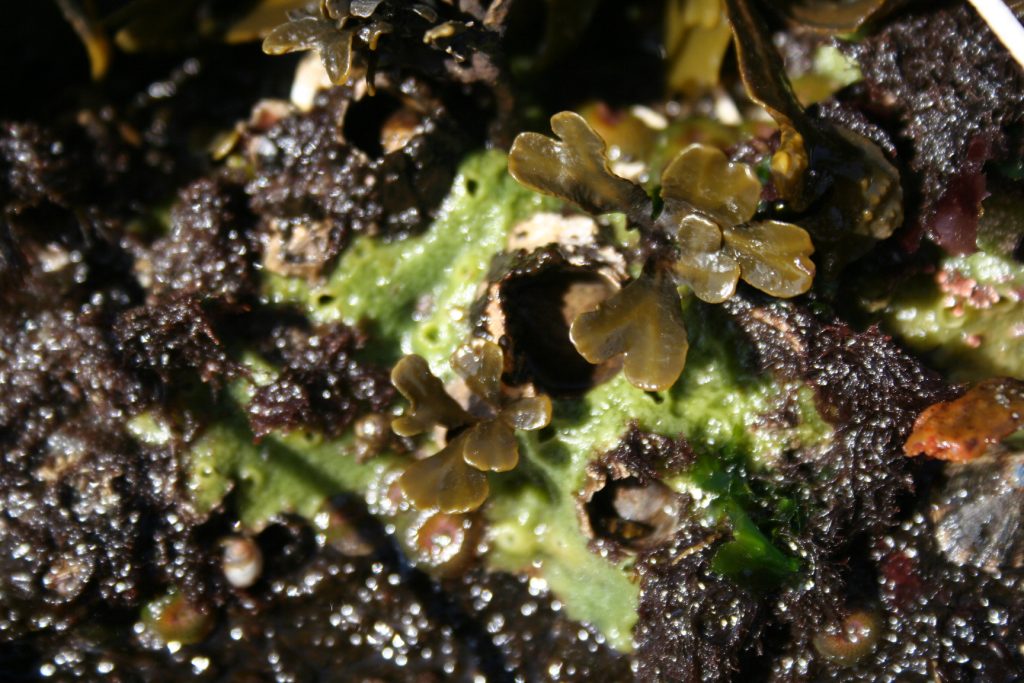
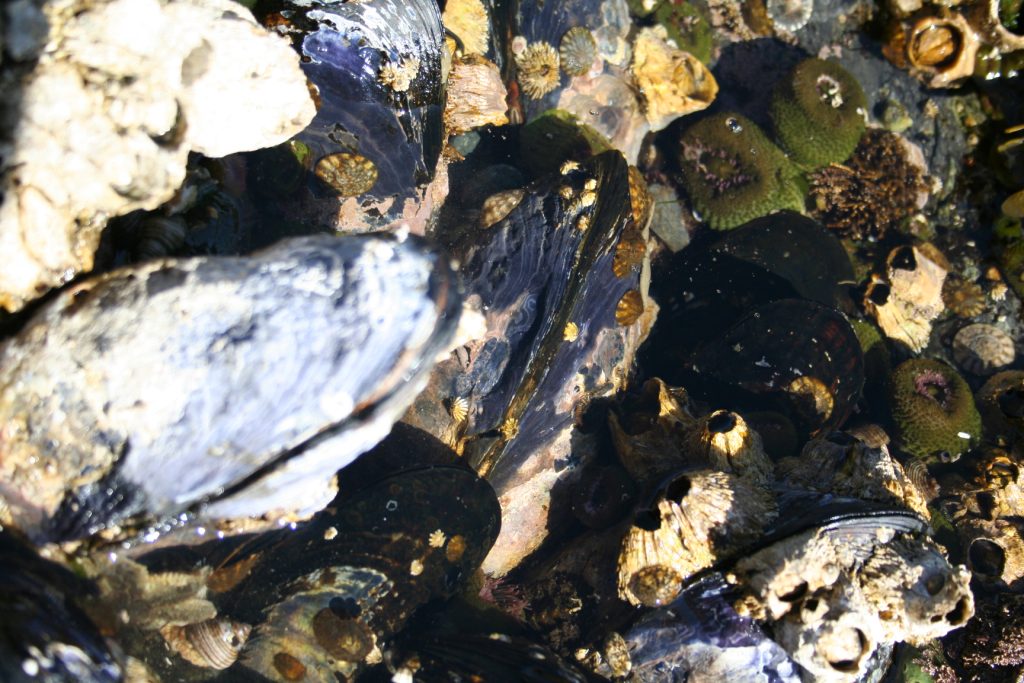
Only some of the super mega awesome critters and things we found today; a nudibranch yet to be identified, a huge anemone, a blood star, neon green ascidians+sponges, huge mussels, and more anenomes, an amphipod, 2 !! shaggy mouse nudibranchs, and a really cool and wacky textured alga called turkish towel !!The squad taking a well-earned break after 3 hours of hardcore fieldwork ft. Adam and Bea (don’t be fooled, they just watched us struggle across all kinds of horribly slippery surfaces for the entirety of the morning)Hiking back the steep and sandy trail back to the parking lot via lighthouse
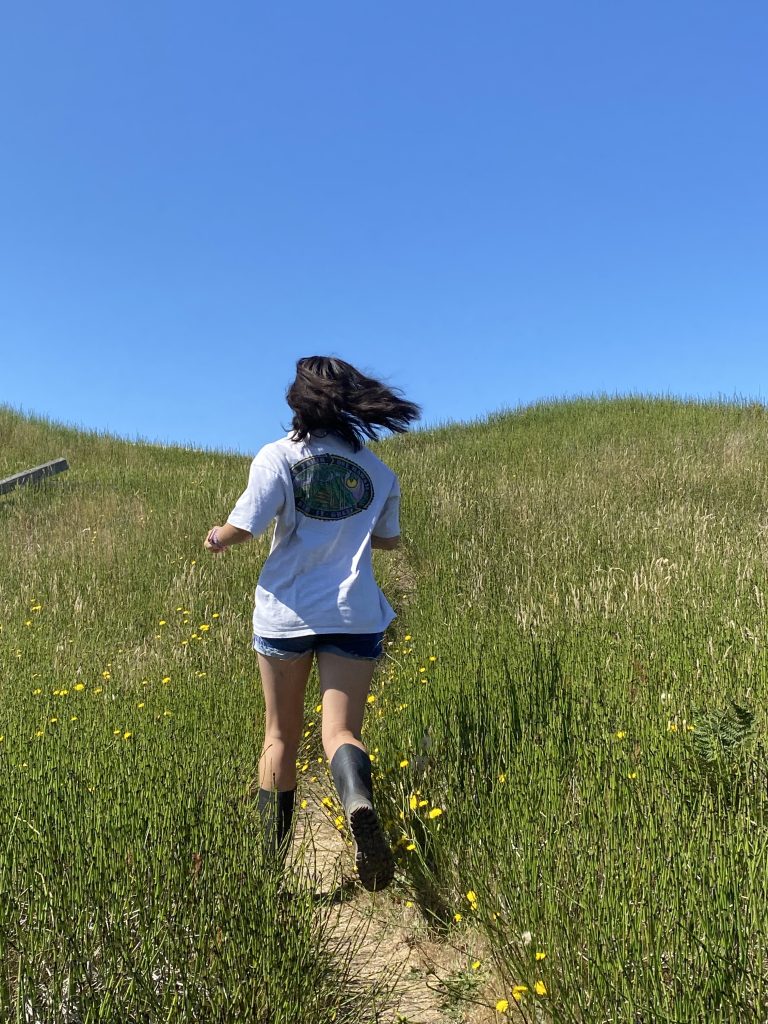
Everyone continues to be terribly photogenic in flower fields, and I continue to take aesthetic photos of them
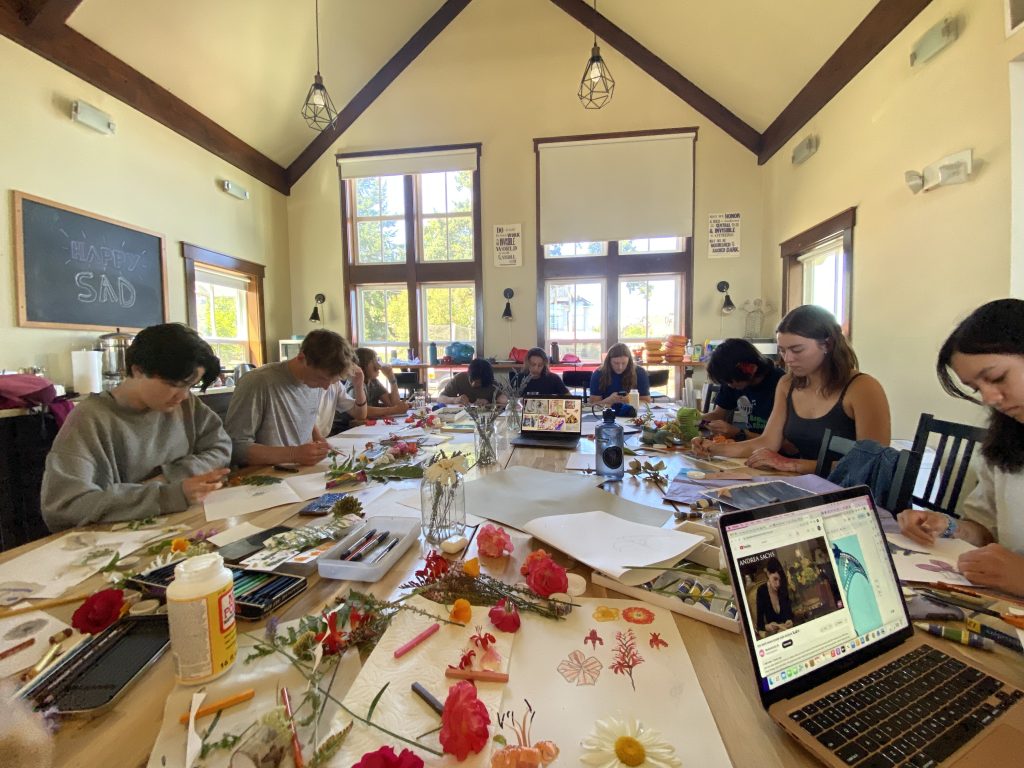
After our morning of walking and collecting data, we retreated back to the comfort of the house for a few hours. After an uneventful lunch and some time spent further developing project ideas, we were met with a welcome surprise as Islay, a former Salish Sea Sciences student came in to help us work on art and scientific drawings. While some of us certainly made more scientific drawings than others, at the end of our art time, we created some pretty awesome art pieces.
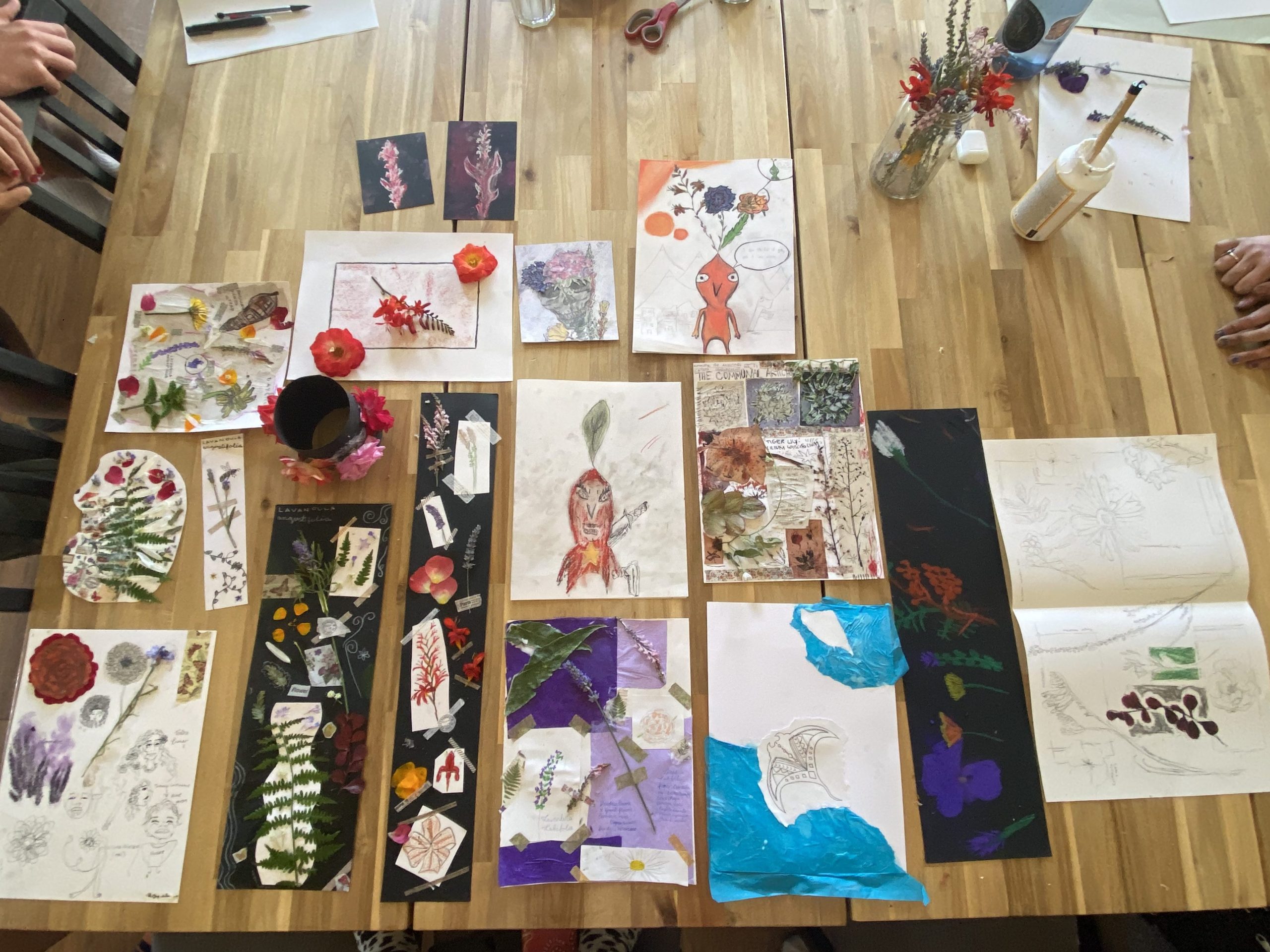
The scientists turned artists hard at work (yes, those are real flowers, no, we definitely did not just take them from the school’s garden)Our masterpieces spawned across multiple mediums, inspirations, and styles, some more avant-garde than others but museum-worthy nonetheless
I think almost all of us enjoyed our little art venture as it was not only an excellent way to unwind but also a good practice for creating art in multiple mediums. Some of us even created collages and 3D art pieces which was super cool!
All in all, today was another good day for the students of Salish Sea Sciences. A busy morning contrasted a very relaxing afternoon quite well! As projects continue to develop there will be plenty of opportunities to individualize our research and apply the skills we have been learning steadily over the past two weeks. Hopefully, tomorrow will offer something just as awesome as today!
We had a quiet and peaceful start to the day with a cheeky 7:30 AM wake-up, however, we were quickly rushed to the van in order to make our 9:00 AM appointment at Friday Harbor Labs. At Friday Harbor Labs, we split into groups and rotated amongst many stations to learn about various student projects. These projects had an emphasis on the ideology of how future generations will maintain their place within the ocean. Shortly after our visit to the labs, we attended a Marine Botany lecture on the diversity of non-articulate Crustose Coralline algae. Then, with our busting excitement, we made our way back to Spring Street International School while blasting Lady Gaga in the van. Once we made it, we settled into the afternoon finalizing our research project ideas and what we want to work on for the next two weeks. Nearing the end of the day, we got to unveil the kelp presses we made a week prior. These works were simply astonishing. The pieces were incredibly versatile, varying from intentionally organized seaweed kelp to abstract pieces of art that would rival even the works of Pablo Picasso. Finally, to end our night, we were all busting with anticipation to have dinner with Doctor Katie Dobkowski, who works in the Department of Biology at Bates College. Her studies also includes ecology, biomechanics, and physiology. After she left, we had so may questions to ask her, luckily we were able to see her the next day for field work at Cattle Point.
Signing off for now, The Salish Sailors
Pictured here is Tommy before the lecturePictured here is Leo taking extra precautions in the lab.
TRIGGER WARNING: Today’s blog post includes pictures of a porpoise necropsy. While the procedure was done respectfully and carefully, the images include blood and/or other exposed innards of the specimen. Thank you for reading!
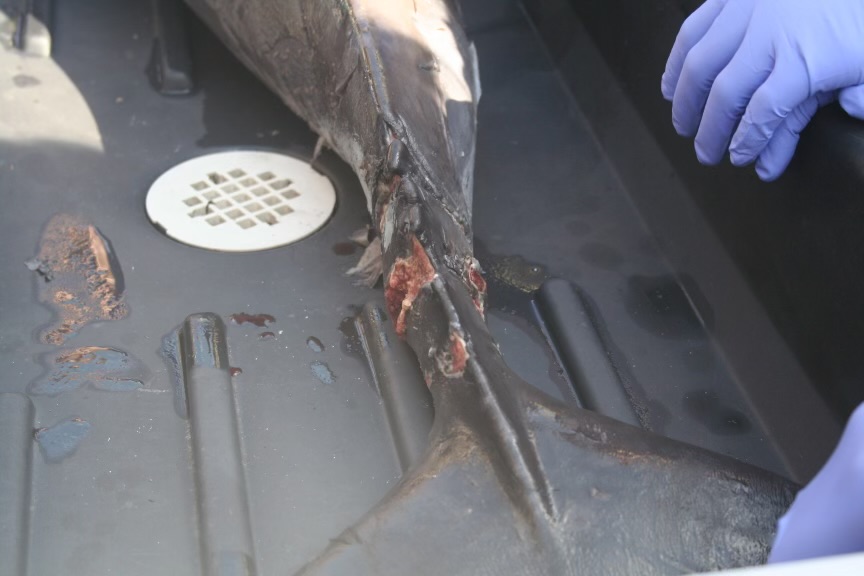
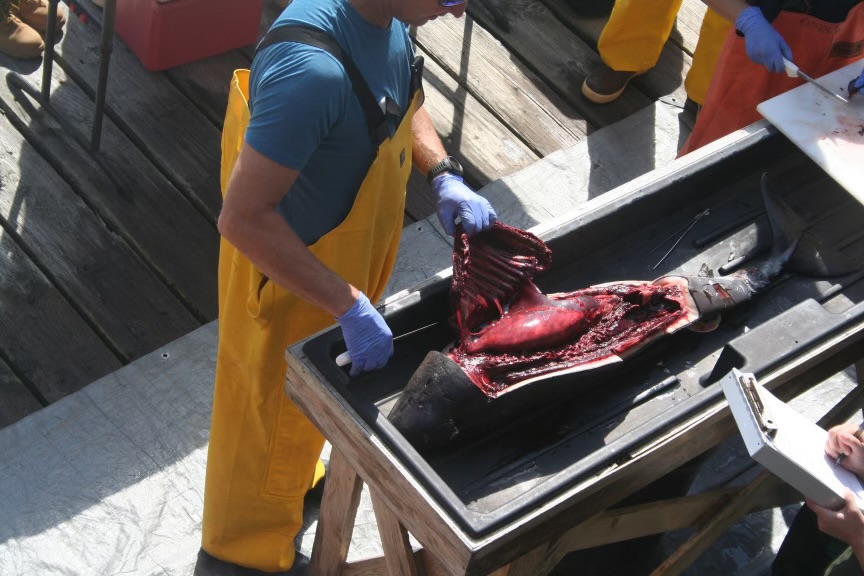
Today’s adventures were quite a treat. Recently, a Harbor Porpoise was found floating off of Lopez island, so Friday Harbor Lab’s necropsy of the week was examining this unique creature. It exhibited severe scavenger damage around it’s left eye, and large, evenly spaced lesions on it’s tail stock (the area that connects the body to the tail) likely caused by a boat strike. Without further microscopic investigation or testing, the most clear and probable cause of death was some kind of infection (meningitis or bacteremia of some sort) that entered through the cuts caused by a boat strike and travelled through the blood.
Lesions pictured above were presumed to be an inficted injury caused by a propeller, the infection spreading to the rest of the body (Picture Cred. Hannah)
Vetrinarian Dr. Joe Gaydos shows that the lungs of a 7 month old porpoise, an interesting part of the body to see!(Picture Cred. Hannah)
After we went back to the dorms for lunch, and some project developement time, we went with our science director Adam Rogowski to examine Fecal coliforms in the Friday Harbor Marina. This bacteria is found, as you might have guessed, in feces or other waste materials from all warm blooded animals, including humans. We came to start the procedure for measuring the concentration of this bacteria in different areas of the marina in order to understand the water’s safety to other animals, where it might be coming from in the case of a high concentration, and how it could affect the local ecosystem.
Todays guests are… US! Tonight Salish Sea Sciences is having Presentation Night. Half of our students will be giving a presentation about a topic of their choice. The other half of our students will be presenting next week, and this week, their job is to introduce a person that is presenting as if they were a scientist joining us for dinner. This will include a brief introduction, and a summary of that students studies.
Some highlights of the presentation included: How breeding 54,000 lobsters can make you a quadrillion dollars, what a sandwhich ACTUALLY is, and the rising of Mario and Luigi, telling us about how our society works in the rising age of the softboys.