Day Two: An Ast-sounding Discovery

by Eliza with Samuel, Oscar and, Henry

Today we explored the sounds of the Salish Sea. During our second day at Salish Sea Sciences, students learned how to record acoustics using a new program called Audacity. We began by going around the dorm recording different sounds in order to get used to the software. After that we made our way over to Jason and Sam at the Sea Mammal Research Unit’s Engineering team where they explained their work which focuses on the development and deployment of hydrophone equipped buoys. The goal with these hydrophones(a kind of e special underwater microphone) is to see how different noise levels from boats affect the way marine mammals hear and communicate with each other. They then told us how the sound itself is measured, in a unit known as decibels. This is how they determine the volume of different sounds made by things such as marine mammals and boats. Then equipped with this new knowledge all of the students went out to different spots to see who could record a spot in town with the most noise. When we returned to the lab we all worked in groups to convert our data into decibels. From that we determined that the intersection at spring street and pine was the loudest spot during our minute long recording although it could have easily been the airport if a plane was landing during the time which just goes to show the variability in one area’s soundscape. After that we shared delicious meal of spanakopita and salad prepared by Elsbeth, Jonathan, William and, Denny and then listened to Ayla’s presentation about her experiences at Salish Sea Sciences and as a Stanford student.
Whale or wood? Controversy shocks Salish Sea Sciences students

By Elspeth with Denny, William, and Jonathan

It’s a bird! It’s a plane! No, it’s…driftwood? Today, our second day at Salish Sea Sciences, students went on a scavenger hunt in Friday Harbor, explored the whale museum, and went on a hike in Lime Kiln Point State Park.

Our initial foray into Friday Harbor was a scavenger hunt. We raced across town taking pictures of strangely specific buildings and objects, earning points along the way. When we tallied up the points, our team was very close to the others, with only 250 points less.

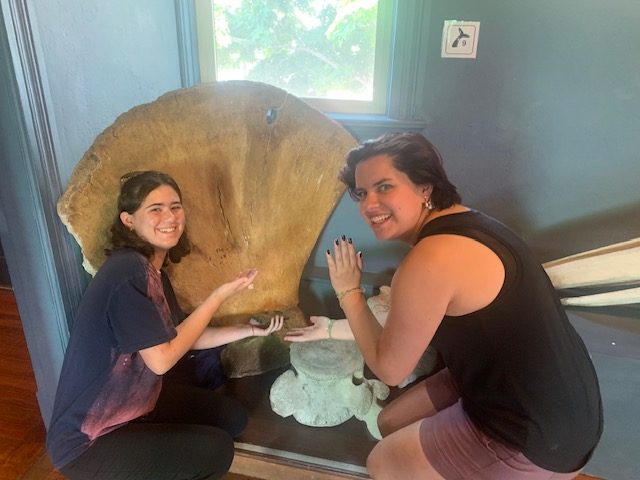
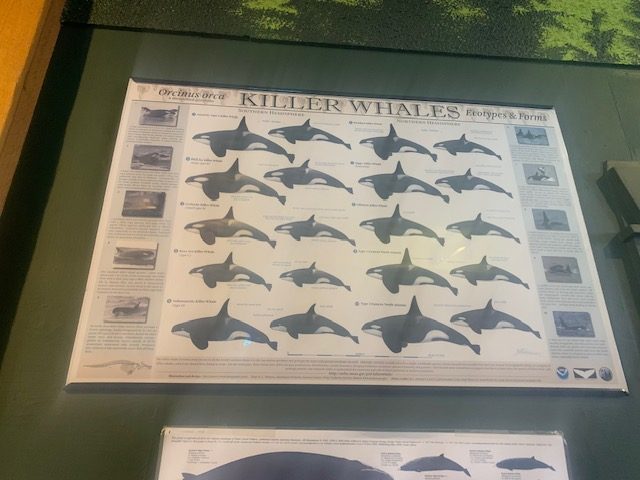
Later in the day, we visited the Whale Museum. It was a whale of a time, and the tour pod-sitively blowhole-d our minds. We strode through the museum with porpoise, dol-finding interesting things along the way, such as this cool harbor seal skeleton. We’ve made it
a-pun-dantly clear how much we love puns, but, don’t worry, we’ll stop now.

The skeleton of conjoined Harbor Seal twins. Photo by Denny

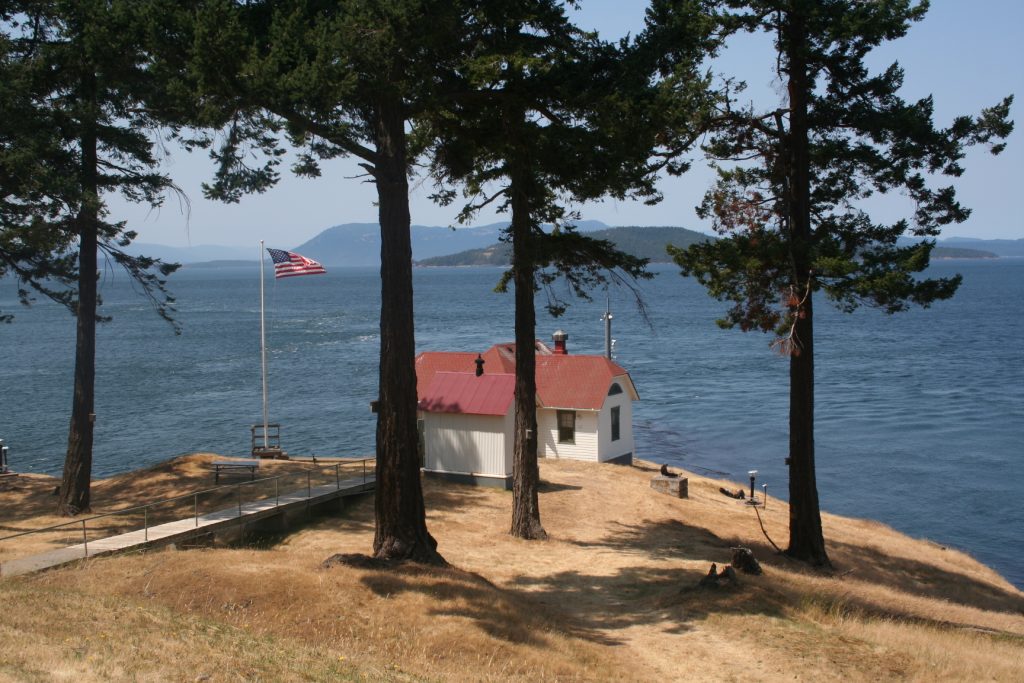
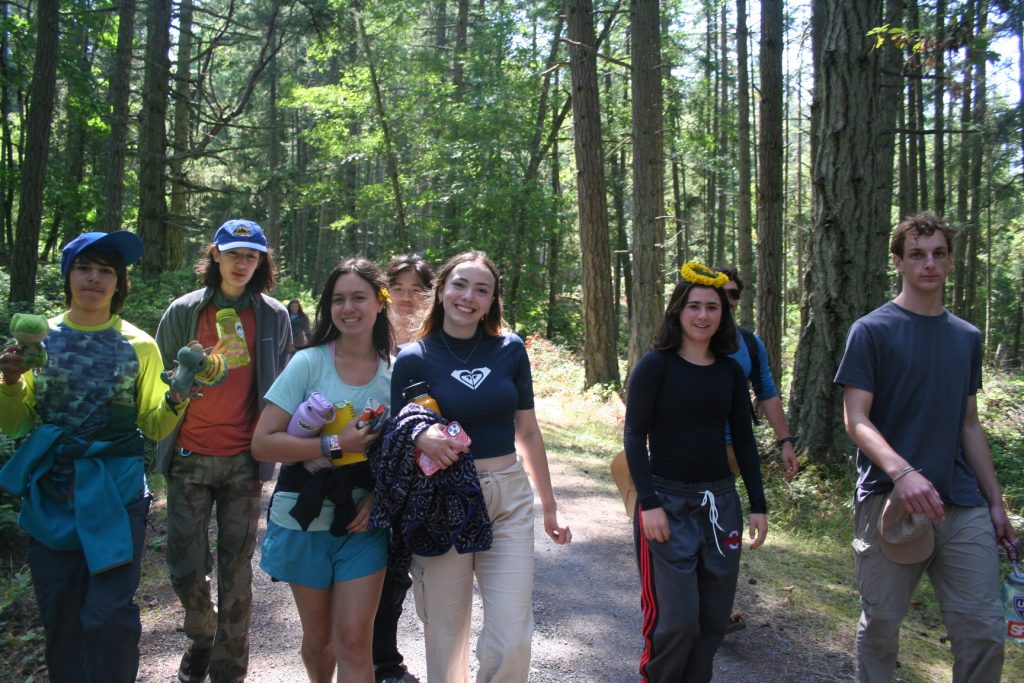
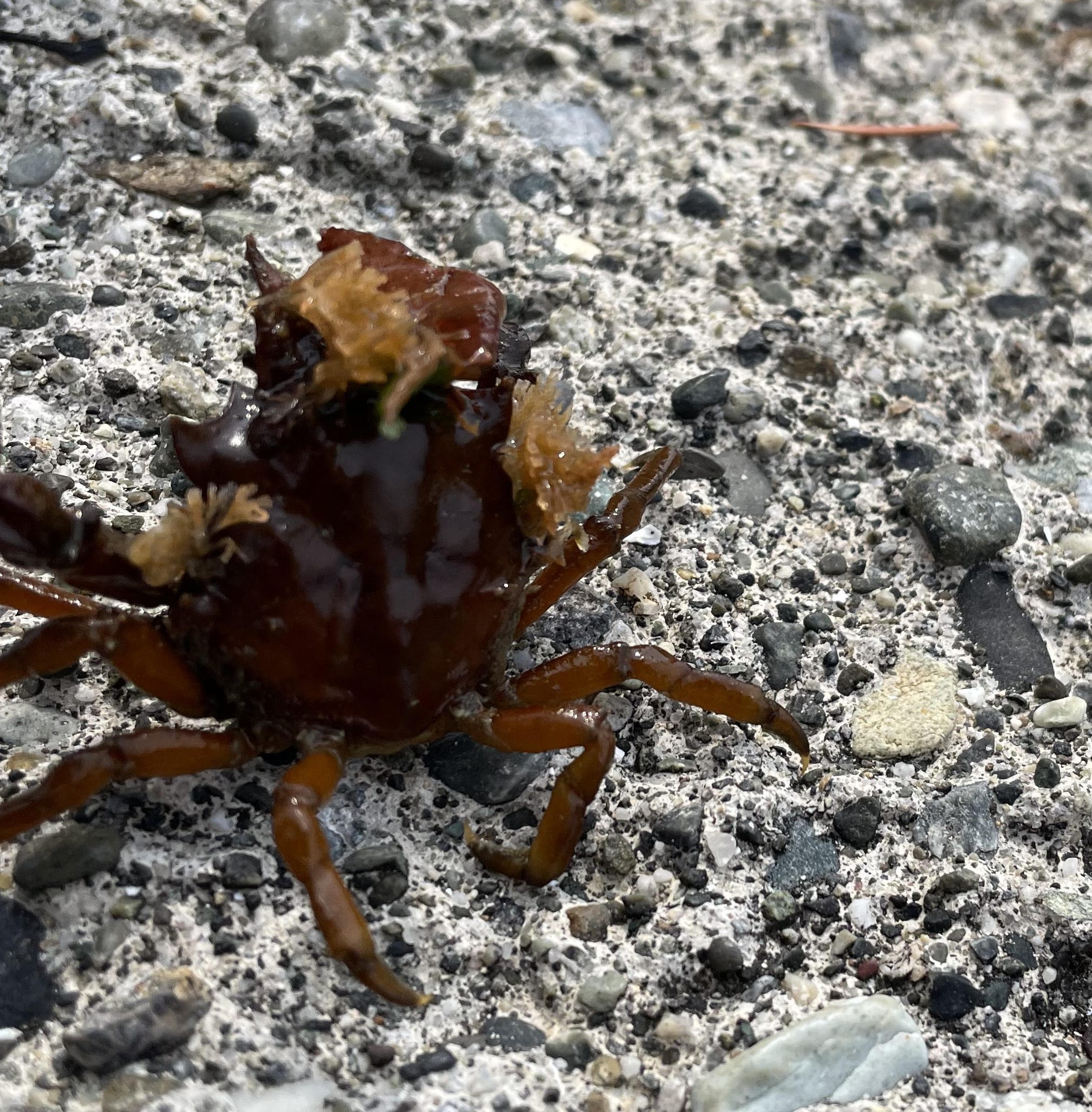
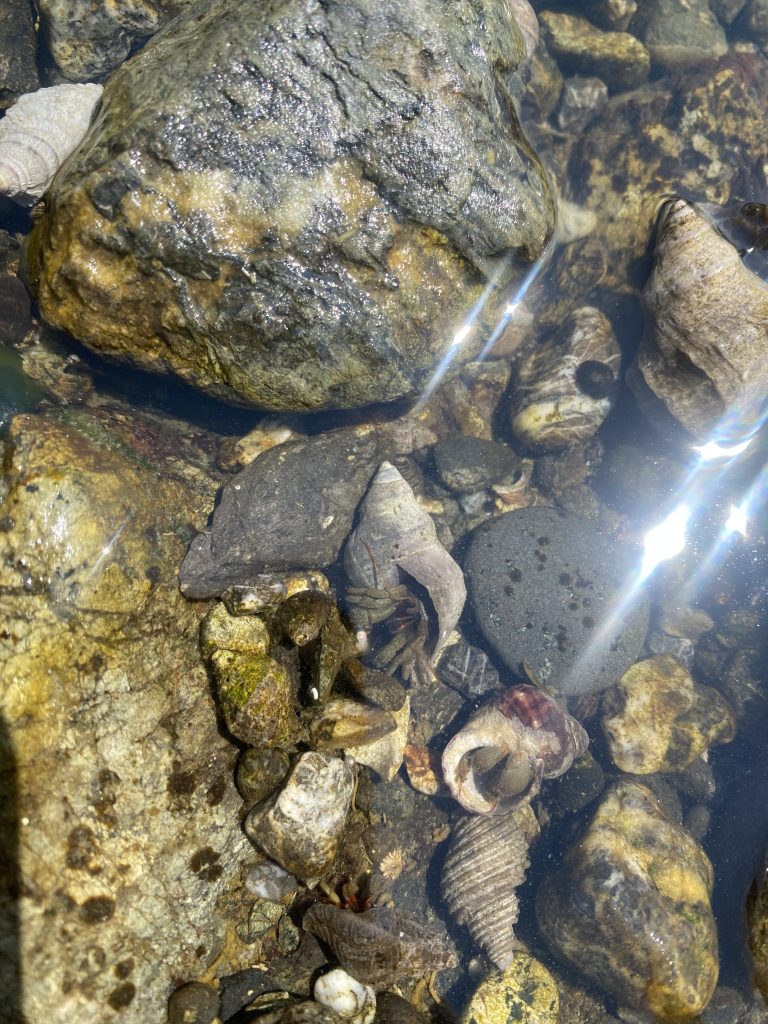
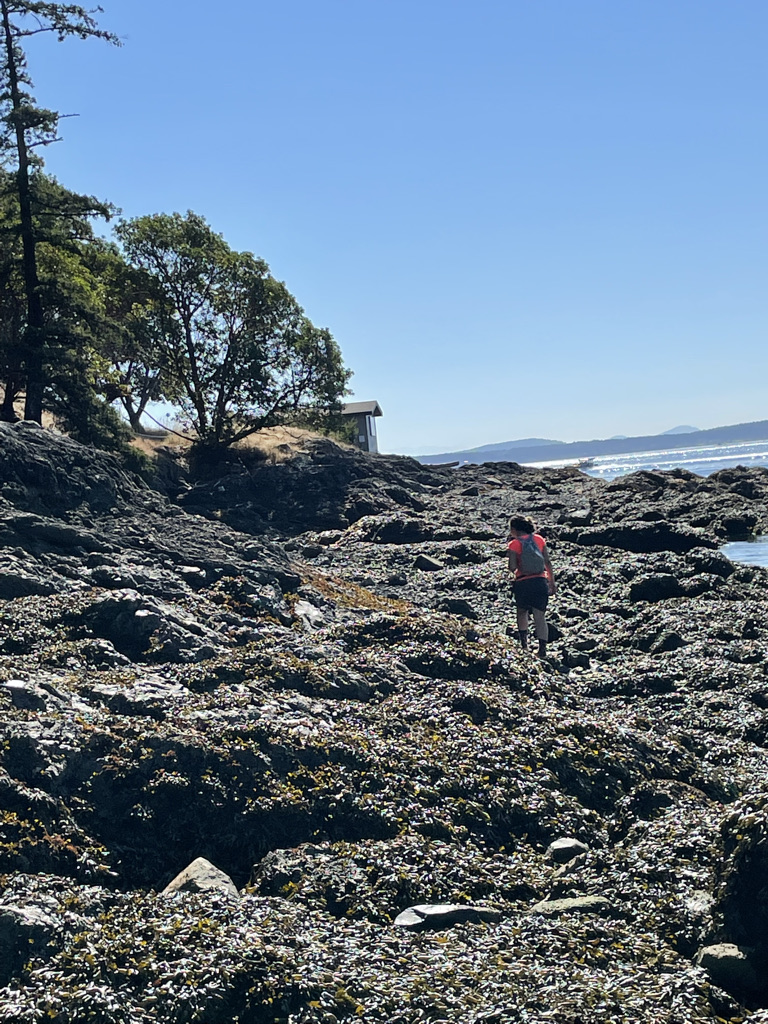
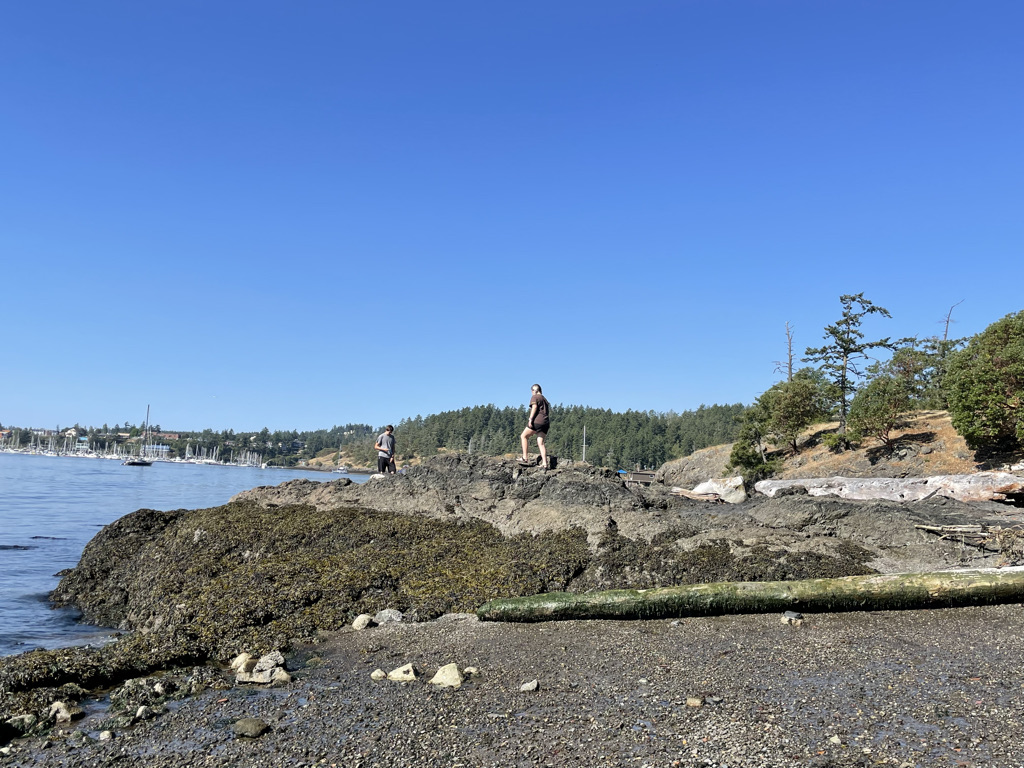
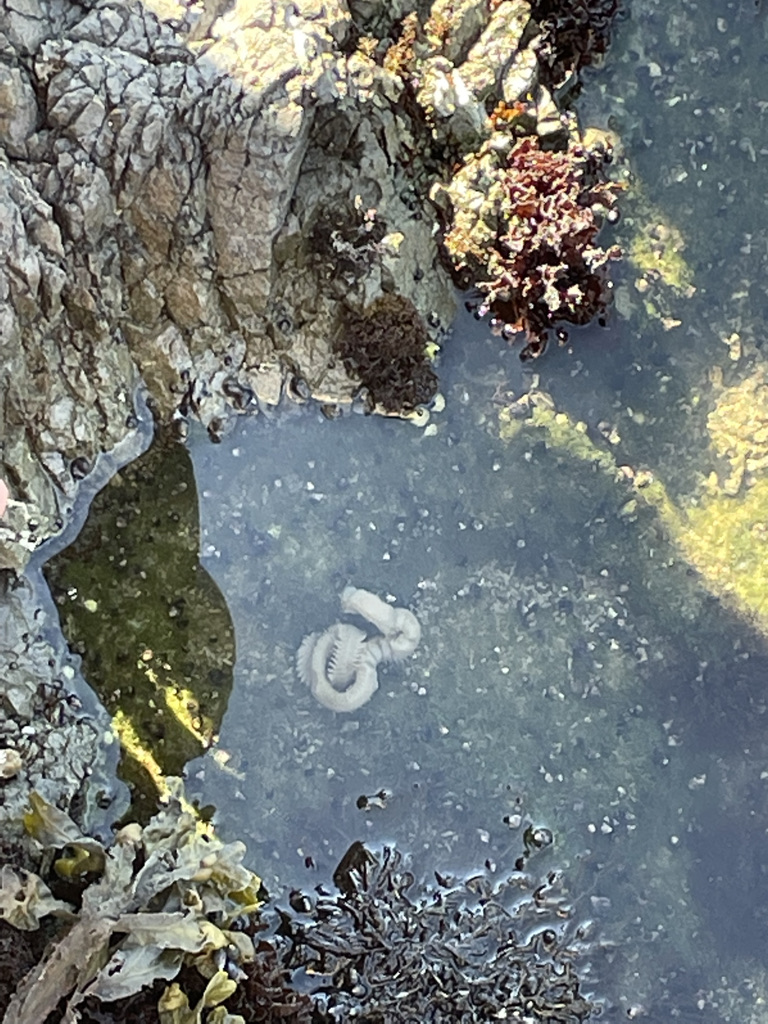
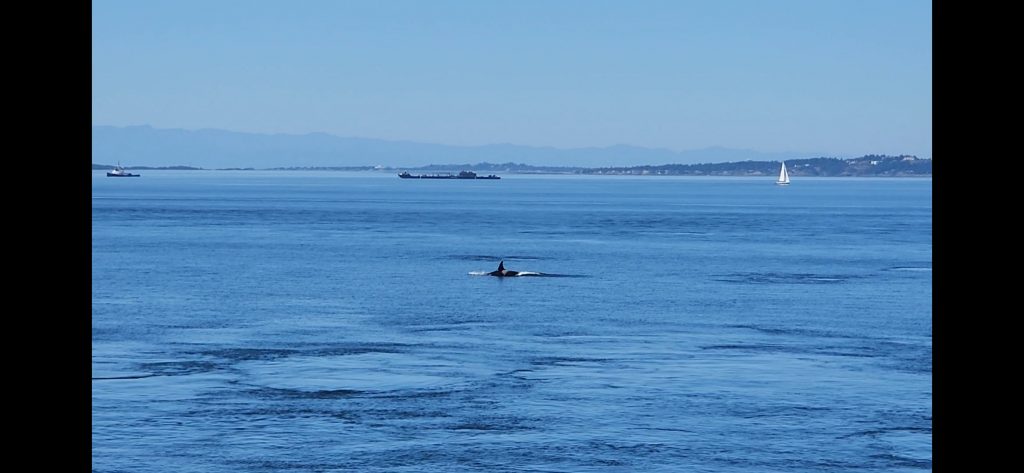
After we returned, we headed to the Lime Kiln Interpretive Center, where we were shown around by Erin Corra, Founder and Director of FOLKS (Friends of Lime Kiln Society). She showed us many types of native trees and rocks, and the sea view was gorgeous. On the way, we toured the newest lighthouse in Washington State, built in 1919. We spotted a pod of orcas from the top, which ended up being a bunch of driftwood…we were all very disappointed. She then led us to a restored lime kiln – the park’s namesake – and we got a short history lesson on the lime industry in the San Juan Islands. Some of us went down to the beach below the kiln, where we found many hermit crabs and anemones. We headed back to the dorm soon after that, and began to prepare dinner and write this very blog post!

All of us at the lighthouse, featuring Random Hiker Dude’s finger. Photo by Random Hiker Dude.

Before dinner, we recognized the history of Juneteenth, particularly as a federal holiday. After dinner, we got a very interesting presentation by Kyra and Henry, who currently work for the whale museum. We then ate ice cream and watermelon.

Selfie at the lighthouse. Photo by Derrick.
A cool sign being enveloped by a tree. Photo by Derrick.

Day 11: Whale, Whale, Whale. What do we have here?

By Maddy, Joey, and Gray

Gray, Maddy, and Joey (left to right) riding a wild orca awesomely in the ocean. (Totally accurate graphic by Gray)
We planned on making pancakes last night, so we got right into making the batter as soon as we woke up. However, upon cataloging our ingredients, we found that we were missing eggs, which is pretty important for pancake batter. After Jacob and Miranda went on a super fast shopping run, Jacob and Joey began mixing up the batter, now with all of the necessary ingredients. Soon, the pancakes were coming off the griddle. Even though we didn’t have that much time to eat, they were delicious.

We rushed out the door (leaving Maddy behind on accident) in order to get to the Whale Museum, a place dedicated to educating and advocating for whales. Once Maddy caught up with us, we went inside and were transported into a world of whales. Our tour guide, Tracie, led us around the museum, showing us massive whale skeletons and preserved skulls of all types of marine mammals. A particularly interesting exhibit showed a conjoined seal pup, which unfortunately killed both the mother and pups during birth. After the tour was over, we spent some time walking around on our own accord, exploring the various games and exhibits.

The gang investigates a marine murder (photo by Miranda)

After the whale museum, we walked two blocks down to the Whale Conservancy, where we watched an informational video about orca conservation. We decided to have a quick stop at the market to get food before going back to the dorm. On the way to King’s Market, some people did parkour on a stairwell and might have looked really stupid (it was fun though). After a bit of decision making, we collected some non-gluten-free bread and fruit, and then checked out. Once we got back, we made lunch with the new food we bought.

A majestic orca. (Photo: Miranda)

We took a little break, and then Derek gave us an important task. He wanted us to go into town and collect information about the various whale watching agencies. By doing this, we were able to get a better understanding to what degree the industry is harming the whales, and get to know what happens on the tours themselves. After visiting all the whale watching agencies and having conversations with various staff members, we headed to the ice cream shop on the dock. We returned to the dorms to explain the information we found to Derek.

Then, we worked on our website and had a small break time to relax. We were able to upload employee biographies and also plan other aspects of pisaster.org ! Kika decided to make bombay potatoes for dinner. With some minor assistance from Joey and Maddy, dinner was ready by 6:30 with no delay. The potatoes and rice were especially delicious and went well with the assorted fruit. 

After cleanup, we headed outside to do some tie-dye. Equipped with many colors, we made some beautiful t-shirts and set them out to dry. We came back inside to watch a movie, this time choosing without any deliberation, as we had chosen a movie earlier in the day. Everyone was tired from a long day of fun, and we were all excited to get to bed.

Day 10: Shellfish Shenanigans

By: Joey Giordano and Maddy Glaser

This morning’s adventure started on the beautiful docks of the Westcott Bay Shellfish Company, where we were surrounded by clear water and birds of all kinds. Eric and Sam, shellfish farmers at Westcott Bay, greeted us on the dock of the Westcott Bay Shellfish Company after a bit of a drive across the island. Although we all brought our water gear, we spent our time at the oyster farm dry on the sunny dock.

Eric and Sam pointed out the hundreds of oyster bags laid out on racks under the water. It looked similar to the oyster farm we saw in Judd Cove, but bigger. They informed us that each bag contained anywhere from five hundred to two thousand oysters depending on their age, but they only expect 50% to actually survive. To reach full maturity, the oysters take about two years.

Madelyn, Joey, Gray, Maddy, and Jacob intently watch Sam handle the oysters at the sorting table. Photo: Sara Sarmiento Ruiz

They showed us their sorting table and demonstrated sorting out the dead oysters. While they sorted, we asked them questions which led to interesting discussions. Apparently, their farm uses one of the most sustainable models possible to maintain their 6 million oysters. Finally, they took us to a lower part of the dock, where they kept the baby oysters. Eric pulled a couple out for us to touch; they were no bigger than a dime and very shiny. After admiring them for a while, we said goodbye and headed back down the dock.

Kika shows a baby oyster to the camera as Maddy peeks over to take a look. Photo: Sara Sarmiento Ruiz

Next, we walked to English Camp National Historical Park for a short and steep hike up Young Hill. Although we worried that the hike might be exhausting, it was not nearly as long as we thought, and after our hike up Mount Constitution the other day, we were prepared for anything. We took some fun panorama photos at the top.

Panorama at the top of Young Hill. The shimmering waters of Spieden Channel are visible in the background. Photo: Sara Sarmiento Ruiz

Once we were back at the dorms, we prepared to meet our next guest, Katie Flemming​​. Katie is the Education Outreach Director for Friends of the San Juans and her job is to inform, educate, and engage members and the community in what the Friends are doing. She talked about relieving the stress that comes with working on climate change and answered our questions about running an organization. While we were discussing, Maddy pointed out Islay, who was a resident at the previous Salish Sea Sciences camp, walking by the campus. After we all waved aggressively, we went back to our discussion.

Next, we took a quick couch nap while Tom prepared his presentation about salmon fisheries! When he was a teenager, he worked at the salmon cannery on Jackson’s beach (a long time ago in a land not so far away at all). He showed us some amazing photos he took while working there, both of his coworkers and the cannery itself when it was still running. One of his photos was of Kirk Johnson (!!!), who is now the Director of the Smithsonian. He said that the hours were long and the equipment was dangerous, but that it was a good way to make money in the summers. He also described the fall of the canned salmon industry as refrigeration became more accessible; people switched to fresh filets and other canned fishes filled in the gap.

After Tom’s presentation, we shifted to dinner mode. While we were waiting for everyone to get back to the house, Joey introduced 3 5 7, a simple stick game. Despite their best efforts, Jacob and Gray could not win a single game against him. For dinner, we had well seasoned baked potatoes, delicious chili, sweet corn and steamed broccoli. After dinner, we lit a fire and made s’mores, a great ending to a great day.

Day 7: Sunday Adventures

By Gray, Kika, Madelyn, Maddy, Jacob, and Joey

A lazy morning start was enjoyed by most on Sunday. Jacob, Joey, & Gray woke up early to make french toast for everyone, it was spectacular and loved by all. Promptly after breakfast we sat down with Derek and saw photos of his scuba diving adventures, and encounters on the Albanian coastline. Then we ate lunch together, and placed our sandwich order for dinner, before splitting up to enjoy our Sunday plans.

French toast made by Gray, Jacob, and Joey (photo by Madelyn).

Gray: For my Sunday I walked into town to visit shops, try fresh pastries, and explore Friday Harbor. Upon my return, Joey and I did a chocolate tasting (Chocolate truffle with cream was the best) and then went on a bike ride to the top of the Missing mountain.

Gray and Joey on top of Missing Mt. (helmets were worn while on bikes per Washington state law, photo by Gray).

Joey: In the afternoon I spent some time relaxing and then headed into town. I was going to get a souvenir, but all of the stores close at 4 on Sunday. When I came back, Gray and I went on a bike ride past Jackson Beach. We did some exploring: we biked up on a ridge, sat in a tree and ate an apple.

Maddy: I spent the morning with everyone at the dorms, and then I headed to Friday Harbor Labs to work on my eelgrass experiment. I transferred the eelgrass wasting disease cultures into new petri dishes so that they wouldn’t run out of food to eat. Then, I sorted and cleaned a bunch of eelgrass shoots that we all collected the other day at Padilla Bay, prepping them for the next step of my experiment.

Jacob: I thought about ideas for the website. Then, I read a bit about the Salish Sea and its original discovery. The “Salish Sea” book by Dr. Joe Gaydos explained why places were named what they are and who they’re named after. Mostly I just rested. I also went for a short walk to the skate park and back.

Madelyn: After breakfast, I didn’t do much before deciding to go on a jog. It was really nice to just zone out and take in the steel blue sky and warm sun, brightening all the towering trees overhead as I ran by. Later in the day, I found myself under a tree outside reading a book, feeling the crisp air on my skin and creating fantasies in my head. So I really just relaxed today.

Kika: I went for an invigorating jog down to Jackson’s Beach before lunch, taking numerous detours to collect ebony blackberries and getting shredded by bramble thorns on the way. I ate a quick meal and then lounged in the liquid sunshine to read the news and drink a cup of mint tea. After my relaxing afternoon, I spent the evening. browsing local shops on Spring Street before settling on a lovely leafy mug as a souvenir.

We ended the day by attending the Island Stage Left adaptation of Much ado about Nothing, starring Paulina’s riveting performance as Hero. We picnicked in the garden before bundling up to protect ourselves against the swarms of mosquitos. The play was amazing, and our critics are giving it a rare 10/10. We would recommend seeing an Island Stage Left performance or donating if you saw a show and really liked it.

Day 9: Pretty Pisaster

 We headed down to the University of Washington Friday Harbor Laboratories’ docks to watch a necropsy. A necropsy is a surgical procedure that consists of a thorough examination of a corpse by dissection to determine the cause, mode, and manner of death or to evaluate any disease or injury that may be present for research or educational purposes. We watch 11/2 seals being dissected and sent to labs. It made most of us a little squeamish. While being dissected, we learned about how they relocate baby seals that have been orphaned and rehabilitate them to give them a better chance of survival. The one that we watched had climbed onto the beach where several eagles scavenged it alive, after being relocated. 

When the Marine Mammal Stranding Network and the Seadoc Society found him, they made the tough decision to euthanize him, since he had undergone immense suffering. They let us go down and look at the pup, it was quite bloody. We could see the teeth that had just started to grow in and the crevice where the pup’s eye should’ve been, but all that was left was an empty shell, carved out by the eagles. Then it was cut open and the liver, kidneys, lungs, and heart were removed. I learned about how the skull doesn’t get damaged even when the eye is eaten. They then showed us the brain. A few of us stayed behind to watch the start of the second seal pup’s dissection and ask questions. Afterwards, those that stayed behind left to catch up with the rest of the group who wanted to go up to the library.

 (Gray and Joey looking through books in the library, photo by Madelyn Crist)

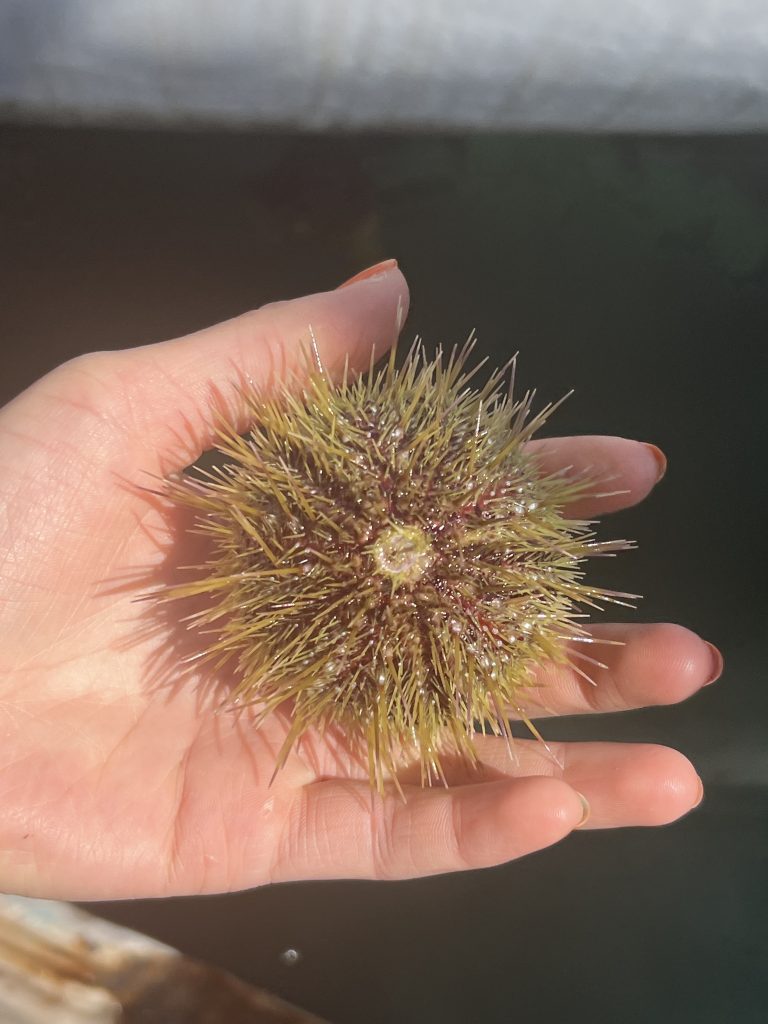
( Gray touching a sea urchin in the tidal pool, photo by Gray Rager )

After the dissection fun, we were able to look around the Friday Harbor Laboratories. Walking in, we each picked up a postcard with a creature on it, varying from a sea anemone to a nudibranch. With colorful postcards in hand, we sauntered into the lab’s library. The room was flooded with warm sunlight coming in from the skylights carved into the ceiling overhead. Bookcases full of science discoveries and lab reports, bound by bright blues and soft yellows and cardinal reds lay out in front of the group. Books dating all the way back from the early nineteen hundreds, carrying evidence found by renowned scientists, sat in the rickety brown shelves before us as we perused between the tall structures.                                   

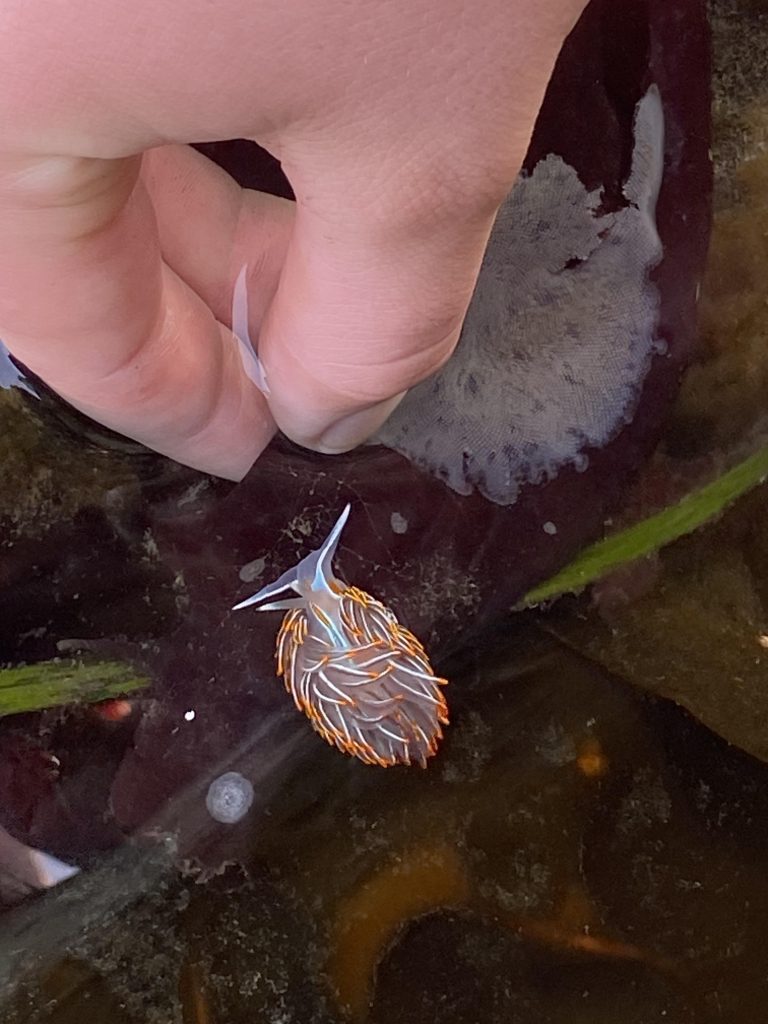
Not too long after admiring the old and new science pages, we carried on down the steps of the labs to find a small tide pool. We were each able to stick our hand in the cold, Pacific waters and touch a sea slug and a sea urchin or sea anemone. The sea urchins and anemones moved about our fingers when we plunged them into the water, as Derek gave us some quick interesting facts about the creatures.

Once we came back to the house, some of us found it more difficult than others to choke down lunch, while others were completely unphased after the dissection. Following the leftover pasta salad lunch, we began working on pisaster.org again, designing a logo, fixing the website structure, and writing blurbs for different sections of our lovely webpage. Working for a while, we made a lot of progress in layout and content, which is great and soon we took a break to play volleyball before dinner.


(the group working on our website, photo by Sara Sarmiento Ruiz)

Day 6: Island Inspecting

Written by Jacob and Madelyn

Today we got to sleep in, which was amazing! Then we all got up and had breakfast. After breakfast we headed over to the couch and the surrounding chairs where we recapped the week and thought back to what we had done in the first couple of days. After this reminisce we packed our bags and headed down to the dock to embark on a journey towards Yellow Island. On the boat ride we kept changing positions from sitting on the back, then going up to the front of the boat, and finally finding a comfortable spot on the roof. It seemed to pass very quickly.

Once we (From left to right) Jacob, Joey, Gray, and Madelyn on the boat to Yellow Island  arrived near the island we had to anchor and row boats to shore as there was no dock. Photo by Kika.

It took a bit of rowing back and forth but eventually we all made it ashore. We were introduced to the islands’ steward, Matt Axling. Then, we continued on through a trail onto a rocky outcropping on the other side of Yellow Island. There, we searched for Pisaster (sea stars). We found eleven of them. 

Instead of walking through the lovely terrain and extremely friendly thorns we had before, we trekked back the long way. On the trails, we wandered through the twelve acre island, seeing the bright orange and green madronas stand out amongst the rather unvarying land, pale yellow prairie flowing in the breeze, and Joey even saw a bald eagle swoop down from a tall tree where the land met the sea. Once we made it to the small cabin where we had originally left all of our things, we carried our cooler to a picnic table that looked out over the channel. Some of us sat in the grass, leaning on the old rickety fence that directed trail walkers, while others talked at the picnic table, admiring the view. 

Yellow Island cabin and view, Photo by Madelyn Crist.

Slowly, but surely we loaded all of our things and ourselves into the two dinghies. It took several trips back and forth to get everyone to the boat and some of them may or may not have struggled getting in and out of the boats and rowing them across the blue, green waters from the shore. We rocked back and forth as the waves battered the boat’s sides; the sun warmed the seats and the roof, making for a really nice place to take a break and watch the various islands pass by from the top of the boat, where we all were sitting and talking.
When we got back to San Juan Island, we docked the boat and grabbed our things to stroll up to Spring Street. Derek met us in the living room and we all gathered on the couch to learn about website building and owning domains. We were all helping Miranda own a sea star domain and were figuring out the undertaking ourselves in the process. After a while we ended up with the perfect domain: www.pisaster.org. Gray and Kika then started making our delicious pasta, broccoli, “chicken,” and vegan sausage dinner, while the rest of us took a break.

Day 8: The Questionable Quagmire

By Kika Dunayevich, and Gray Rager

We had a leisurely morning today, waking up to a breakfast of cereal, oatmeal, and locally picked wild Himalayan blackberries that were the product of much pain and sacrificial flesh donated to the brambles. We listened to a tragic but riveting lecture by Miranda, who detailed the havoc seastar wasting disease (SWD) is wreaking on the Salish Sea’s localized ecosystem. Subsequently, we were motivated to take action to protect the lovely echinoderms and proceeded to work on our new website, pisaster.org! We analyzed several potential templates for the website and tentatively began to assign titles to our organization’s members. Miranda talked about a localized outbreak of seastar wasting disease she observed on Rosario beach, located on Orcas Island. The intertidal was littered with sea stars dappled with white, oozing lesions – there were piles of goo littered about the beach where their unfortunate cousins had dissolved into white mush.

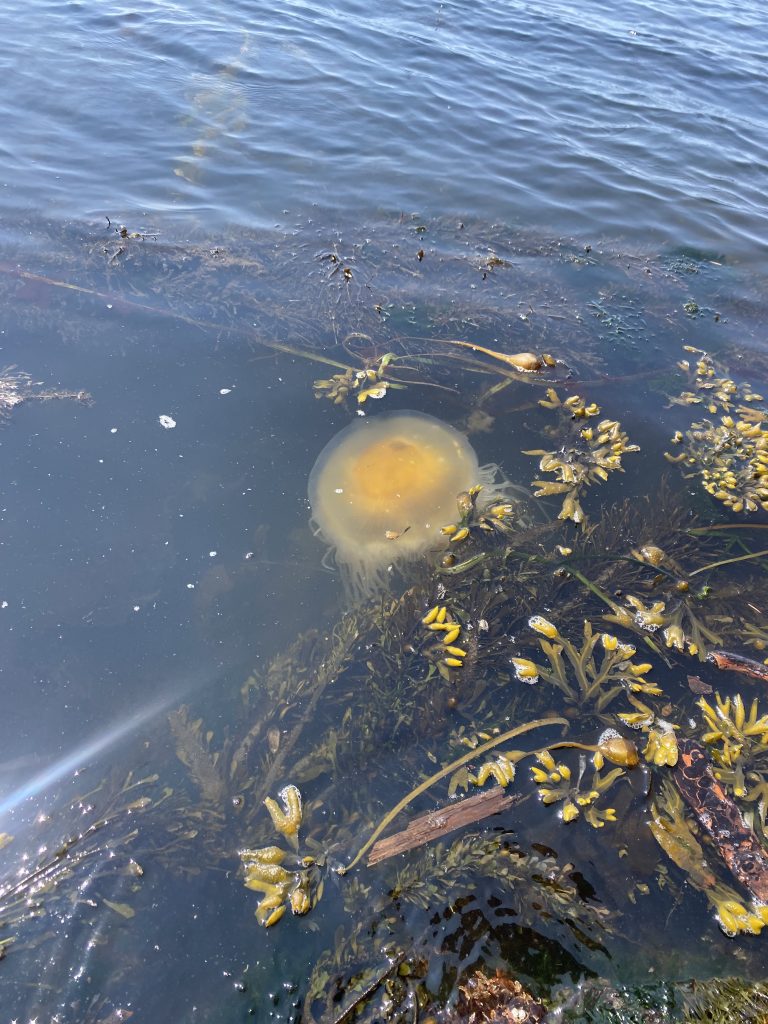
After finishing our discussion and project work for Pisaster.org we had a rag-tag lunch made up of grilled cheese, quesadilla, nutella sandwiches, and many salads. After lunch, we prepared for our trip to False Bay Creek; our objective was to try and get photographic evidence of salmon and trout populations that had yet to be documented. We departed for False Bay Creek targeting low tide, only to realize that the lack of water had unearthed sulfuric fumes and black muck that reeked of raw sewage. We noted some interesting wildlife (Kika discovered a Lionsmane jellyfish), and continued up the creek. After several attempts that inevitably coated us in fermenting mulch, we gave up our endeavor and departed for Zylstra lake. We walked leisurely around the preserve, debating the merits of a logic-puzzling riddle proposed by Joey. Madelyn discovered a dead juvenile fish, which Kika gleefully seized, delighting in poking and prodding its bloated dead body.

Kika takes her new pet on a walk (photo by Miranda).

Meanwhile, Madelyn was having her own adventure in the murky waters of the algae-riddled lake. Attempting to film local salmon populations and assisted by Joey, who was equipped with a waterproof Gopro camera, Madelyn waded up to her waist into the muck and sacrificed a three-day-old shirt to the escapade. Alas, it was all for naught, as we failed to catch any footage of larval fish. Miranda, who was suffering from a terrible bout of carsickness, didn’t participate in our shenanigans.

Joey prepares to do ritual combat with a fish (photo by Miranda).

Our return to Spring Street was met with the announcement of our first guest: Timothy Dwyer, a marine biologist, avid SCUBA diver, and professor at Friday Harbor High School. We sat down to a meal consisting of flavorful minestrone soup and pasta salad. Tim proceeded to give a fascinating presentation detailing his expedition to Antarctica, punctuated with stunning photos of pristine arctic waters.

Maddy encourages Tom and Joey to maintain focus (photo by Sara).

Day 5: Constitution Conundrum

By Kika Dunayevich, and Gray Rager

 This morning, we woke up bright and early in preparation to leave for Orcas island. Everyone was thrilled at the opportunity to explore more of the Salish Sea archipelago, but our departure was hectic as we scrambled to eat breakfast and pack for the day. Last night’s volleyball game had left some among our group a little weary and worn-out, resulting in our sluggish start to the day. We meandered into town and boarded the ferry, arriving in the bohemian port town perched upon Orcas Island. We needed to wait for the low tide so to bide time we toured the surrounding area. Exploring a grocery co-op, a quaint bookstore populated with gentle village seniors, a local print shop, and an Italian-style bakery serving freshly baked loaves of bread and an assortment of pastries.

From the Darvill’s bookstore we headed to Crescent Beach to start our sea star survey. We moved along the beach together looking for sea stars, measuring all Pisasters we could find. After about an hour of measuring sea stars we started our walk back and met a man working an oyster farm. We had a lengthy conversation about oyster farming, and the heat wave and its effects on the oyster crop. We headed back to the van knowing a little more about oysters (try Judd Cove oysters).

A Pisaster sea star at Crescent beach (photo by Maddy Glaser).

Before departing for Mount Constitution, we had a lovely discussion with Dr. Joe Gaydos, the author of The Salish Sea: Jewel of the Pacific Northwest and a Senior Wildlife Veterinarian and the Science Director of the Seadoc society. He explained the importance of outreach, activism, and communication in the field of ecology and conservation, and prompted us to think critically about our strategies for influencing politicians and corporate leaders to protect this critical ecosystem. He proceeded to sign our copies of his book, and we thanked him for his contribution to the Salish Sea ecosystem and its diverse and magnificent flora and fauna.

Kika and Jacob explore a squid egg sack on the beach (photo by Sara Sarmiento Ruiz).

We proceeded to hike up Mount Constitution, trekking around the aquamarine mountain lake glimmering with sunbeams and teeming with toddlers. We marched up the dust-strewn trail, wandering into the dense woods populated with young Douglas fir and nitrogen-fixing blankets of moss. Brimming with energy and naïve self-confidence, we hiked for a total of two hours and ascended over 2,000 feet of craggy mountain trails, gradually wearing out our strained muscles. We rapidly became separated, panting heavily and coated with sweat – Gray, Joey, and Jacob had the GALL to race up the mountaintop, leaving the stragglers in the dust. Thankfully, after the many winding detours of the trail, we crested the mountain and were rewarded with a staggering view of the San Juan Islands. Crystal clear waters stretched out for kilometers in all directions, emerald forested islands perched on the plane of azure like the toes of an immense giant. 

Jacob and Joey in the old wood box at the top of mount Constitution (photo by Gray Rager).

We returned, exhausted and sweaty, to the dorm room after a brief respite from activity following lunch. We relaxed in our dorms and concluded the day with a meal of tex-mex tacos, guacamole (salad?), salsa, and assorted toppings.

That concludes our fifth day in the Salish Sea Sciences program!

Day 4: Searching for Sea Stars

Today’s blog by Joey and Maddy 🙂

Today’s search for Sea stars at Lonesome Cove was a huge and exciting success! Today tide times were much more agreeable with our sleep schedules, and we were able to start the day a bit later than usual. Some of us used the extra time to go get breakfast and coffee in town at the Bean, a local coffee shop. Those that went agreed that the poppyseed muffin was average, but said that the ham and cheese breakfast sandwich was very good. 

Once everyone had eaten and packed lunch, we headed straight to Lonesome Cove. In the intertidal zone, we were greeted with the salty smell of the sea and many seaweed covered rocks. After quickly changing into our water shoes, Miranda, who studies Sea Star Wasting Disease (SSWD) as a science co-instructor at SSS, showed us how to conduct a sea star survey. For the next two hours, we scoured the rocks for hidden creatures, carefully traversing the slippery seaweed patches and trying to avoid cutting ourselves on the sharp barnacles.

Everybody working together to spot stars on the beach! (Photo: Derek Smith)

We were amazed by the many bright red sea cucumbers and slimy anemones, but the most stunning animals were the bright purple Ochre sea stars. Unfortunately, due to SSWD, the population of sea stars of all species are greatly reduced; according to Miranda there used to be hundreds of orange and purple stars lining the rocks. But even despite the large declines, we were able to find 56 total stars, 22 of which were Ochre stars! Hopefully this data will help scientists around the world further understand SSWD and save the sea stars!

Kika and a sea star that she found! (Photo: Derek Smith)

When we were done, we had lunch on the beach; all of us enjoyed the perfect view of the ocean, with Canada in the distance. After a little down time at the dorms, (during which Joey beat Gray in a game of Xiangqi) Morgan gave a presentation about eelgrass wasting disease (EGWD) and explained how it related to our survey excursion. In her presentation, she honed in on different experiments that people have conducted to understand how EGWD spreads. Specifically, she told us about an experiment she ran to test whether EGWD transfers through the water column. Her team placed healthy eelgrass samples around different distances from a natural bed of eelgrass. Two weeks later they retrieved the eelgrass and tested it for EGWD. Her results showed that EGWD can spread through the water column, and that a concentration of only 6 cells/mL of the pathogen is needed to infect eelgrass. This presentation was extremely interesting and helped us gain an insight into how a real scientific experiment is run.

After that, Derek gave us an excellent and engaging presentation, full of colorful photos of various marine organisms. For his Ph.D, Derek studied marine ecology in various parts of the world, and the goal of his presentation was to help us understand what it’s like to work in his field. After pulling us in with beautiful data displays and interesting facts, he gave us an activity that would allow us to truly understand what it feels like to be a marine biologist.

For dinner we had vegan patties or chicken with delicious turmeric rice with a side of Israeli salad, prepared by Tom (Caroline’s Husband and excellent chef), Jacob, and Madelyn. We thoroughly enjoyed our dinner as we joked and conversed about the events of the day, happy with our sea star searching success.

We challenge you to figure out how to solve his puzzle – it’s not that hard and we put the puzzle and the answer below.

Derek’s Puzzle

Derek has analyzed tens of thousands of photos of different parts of the Salish Sea seafloor. With his accumulated wisdom, he has come up with three simple rules to determine the characteristics of where a certain photo was taken.

  1. Pink is shallow
  2. Orange is deep.
  3. Horizontal areas have less organisms than vertical areas. 

Using the rules, determine which characteristics each of the following 6 photos have. One has each combination (i.e. only one photo is deep and vertical). (Making a table is a useful thought organizer). Good luck! The answers are below the photos.

Image 1:

Image 2:

Image 3:Image 4:Image 5:

Image 6:

(Photos by Dr. Derek Smith)

ANSWER BELOW. SCROLL AT YOUR OWN RISK.

Answer: Soooo…. We don’t know the answers either. Now you know what it feels like to be a marine ecologist!! (This is what Derek did to us, unfortunately)