Day 21: I Hope We Can All Algae, Today Was Pretty Fun

By Ezra Bergson-Michelson, Orly Lindner

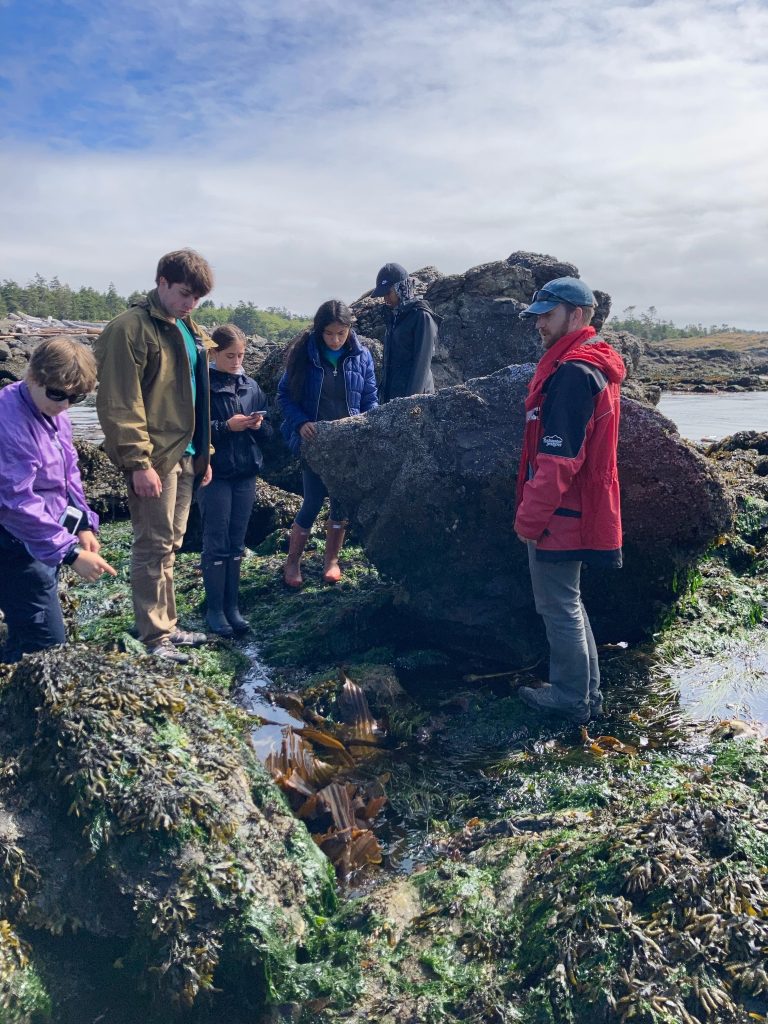
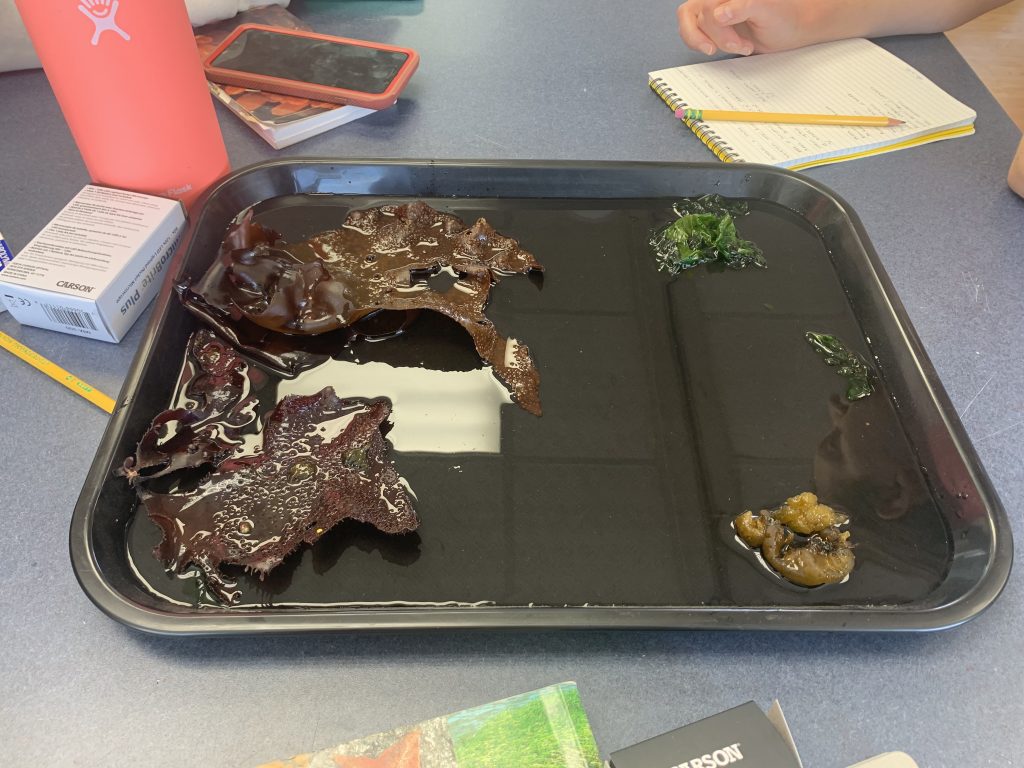
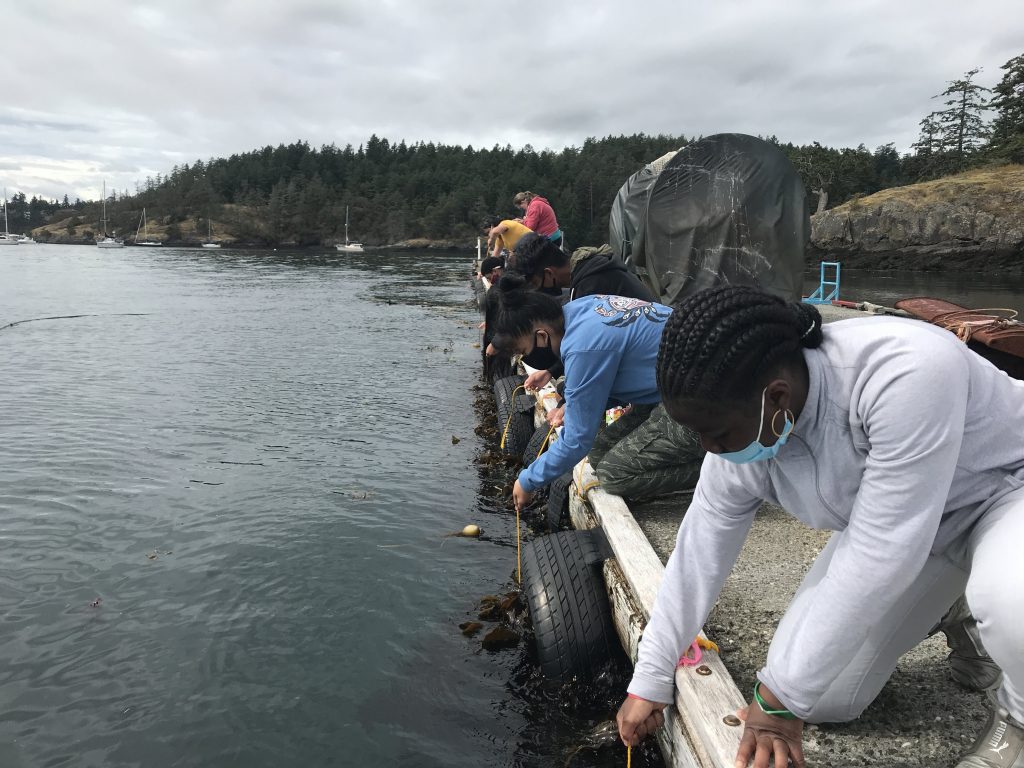
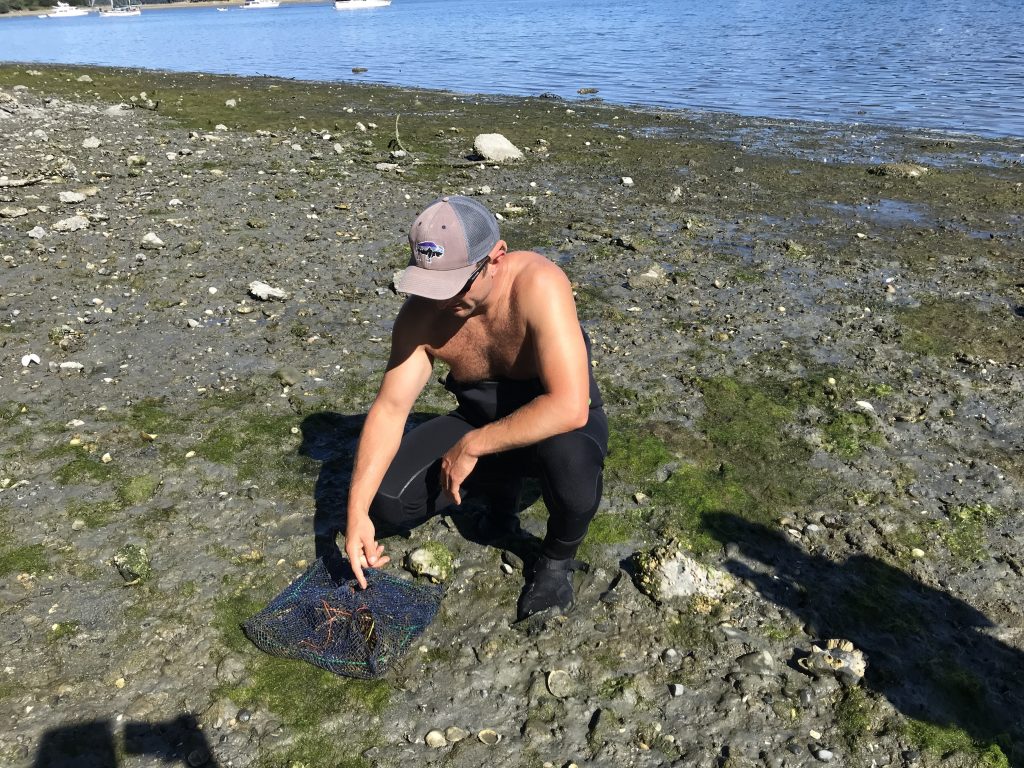
At 6:00 AM, the tap-tap on every door aroused us and alerted us to the start of our busy day. After dragging ourselves out of bed, we soon embarked on our journey. While a few people journeyed with our always electrifying leader, Dr. Derek Smith, to the tidepools, the bulk of us drove to Cattle Point to begin our kelp and algae identifying quest.

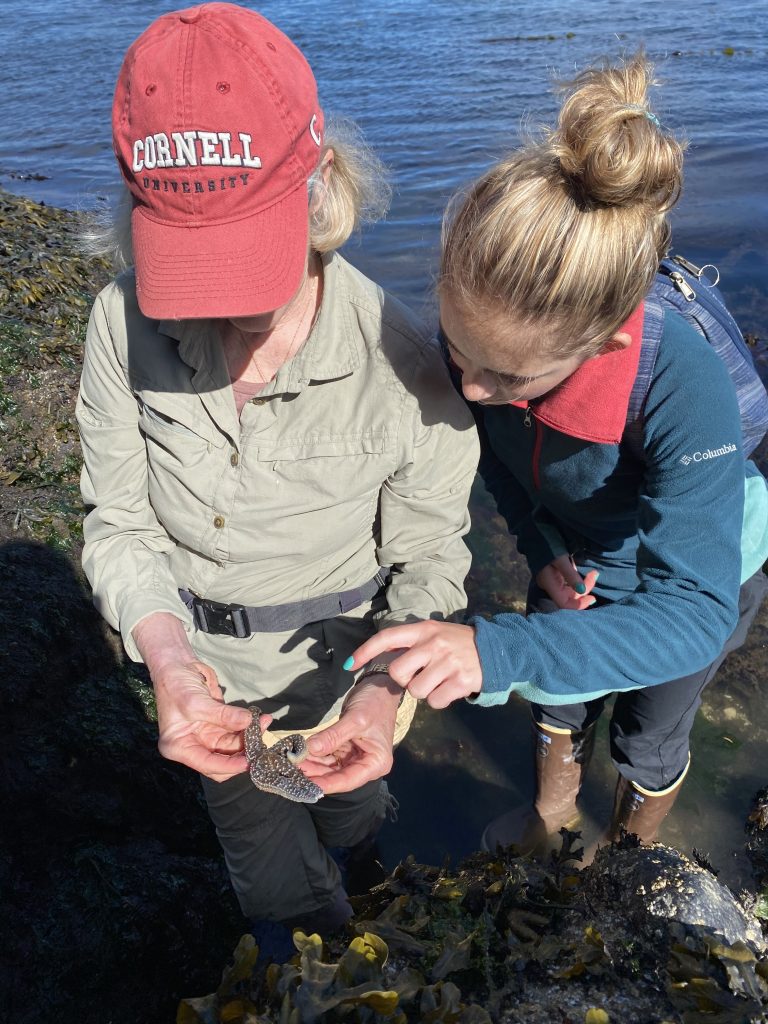
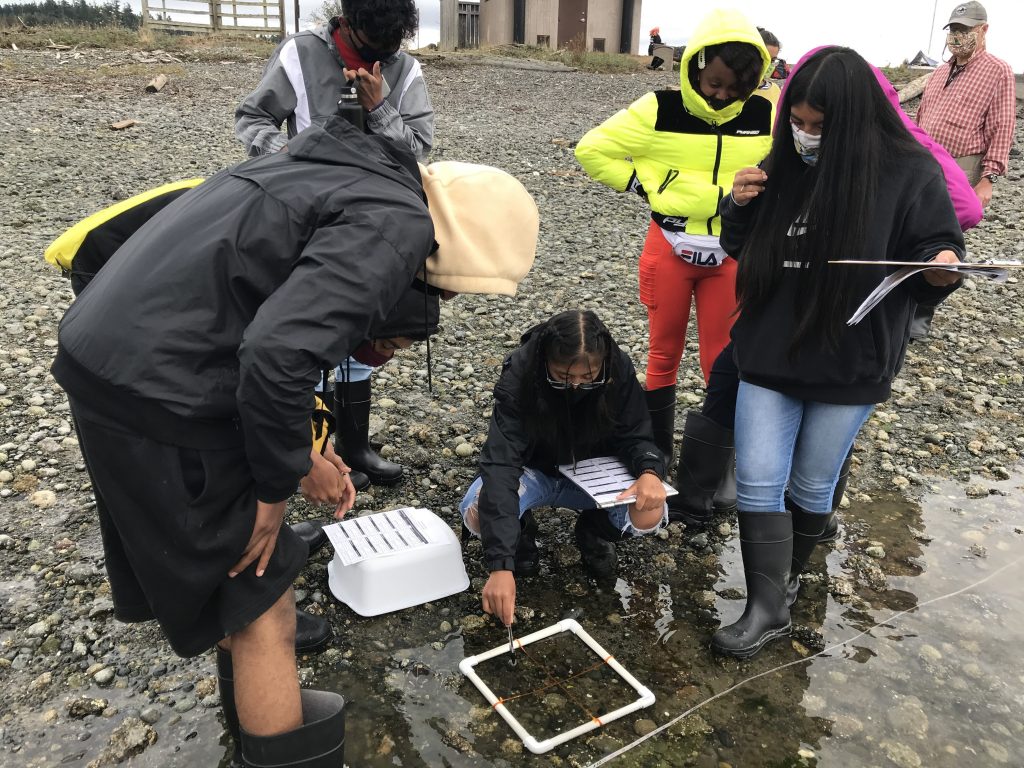
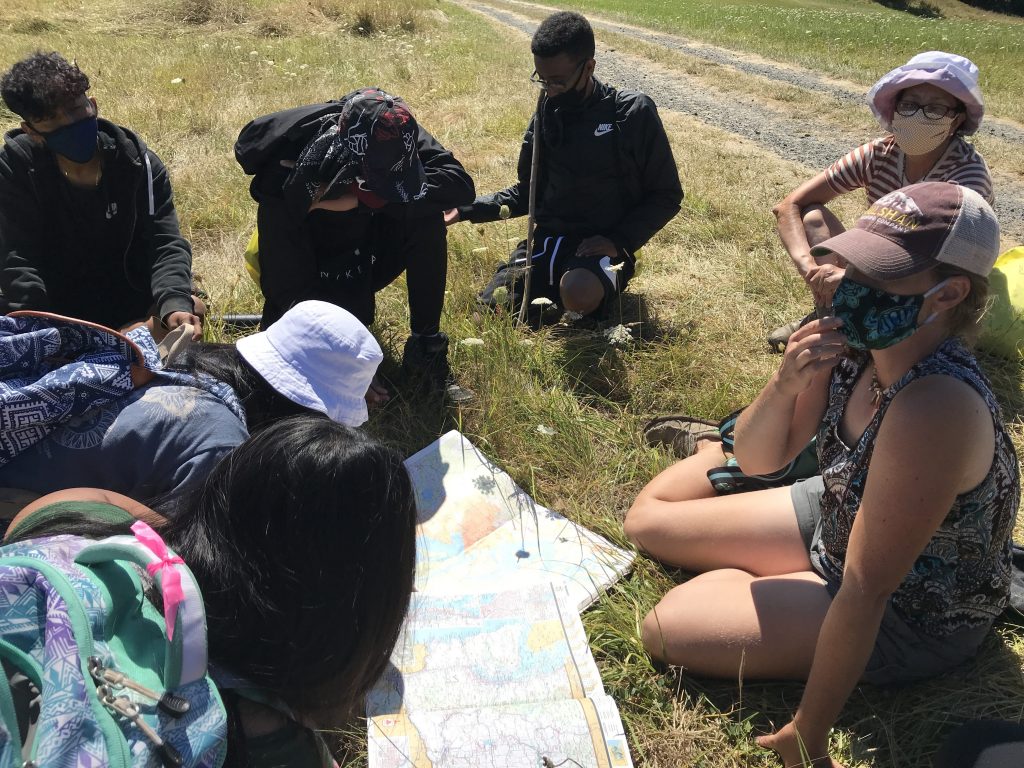
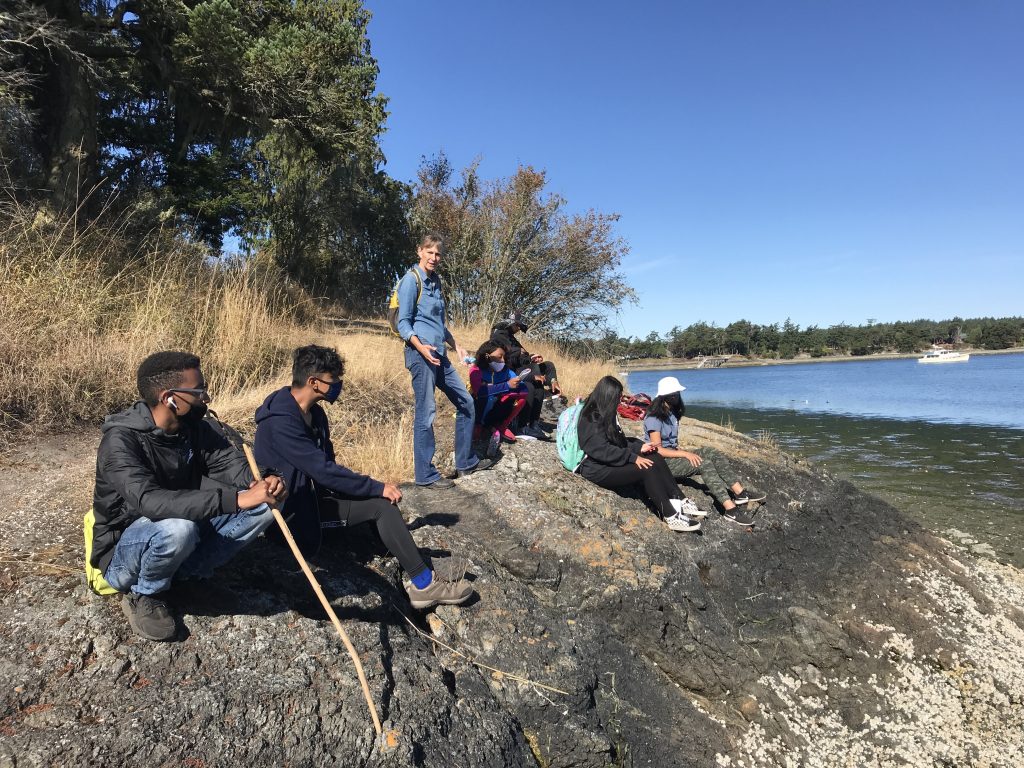
We worked with Dr. Katie Dobkowski, a specialist in bull kelp and professor at Bates College, to identify algae along transects that graduate students have been analyzing for over 40 years. We split into two groups, each group taking two transects, and began the long process of identifying algae along it. Each group worked on identifying algae in different quadrats along the transect, moving down the beach, identifying every scrap of algae in the square. Every two meters, the pairs would photograph their quadrat, count percent cover of each species of algae, and log the data to be added to the database.

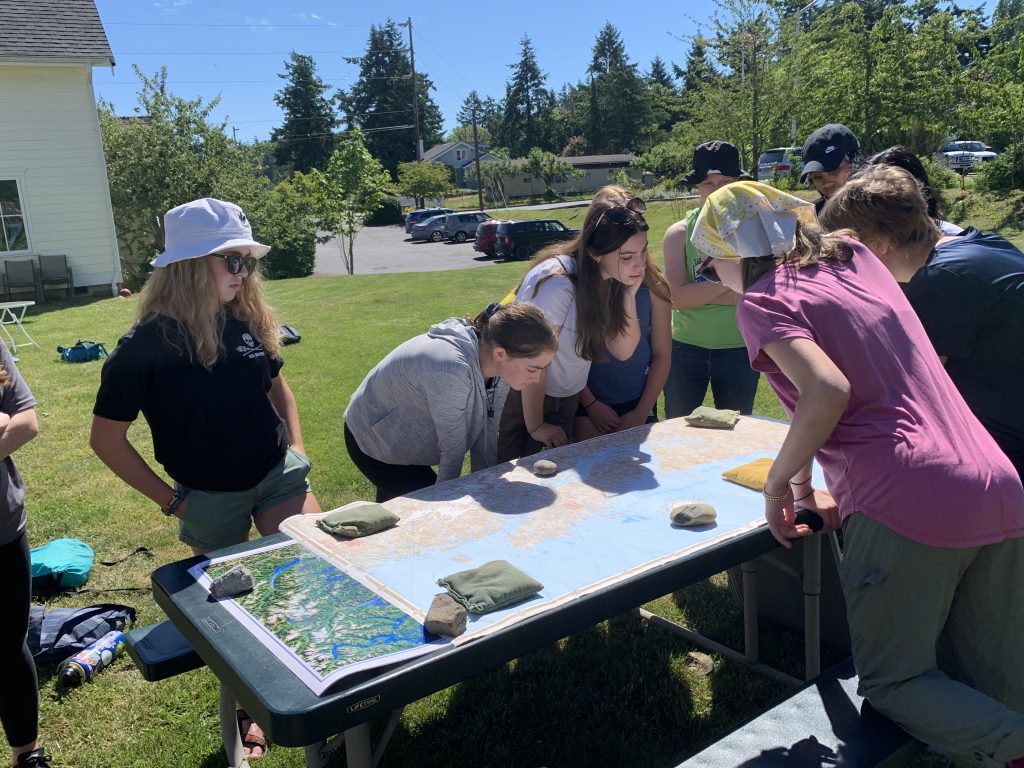
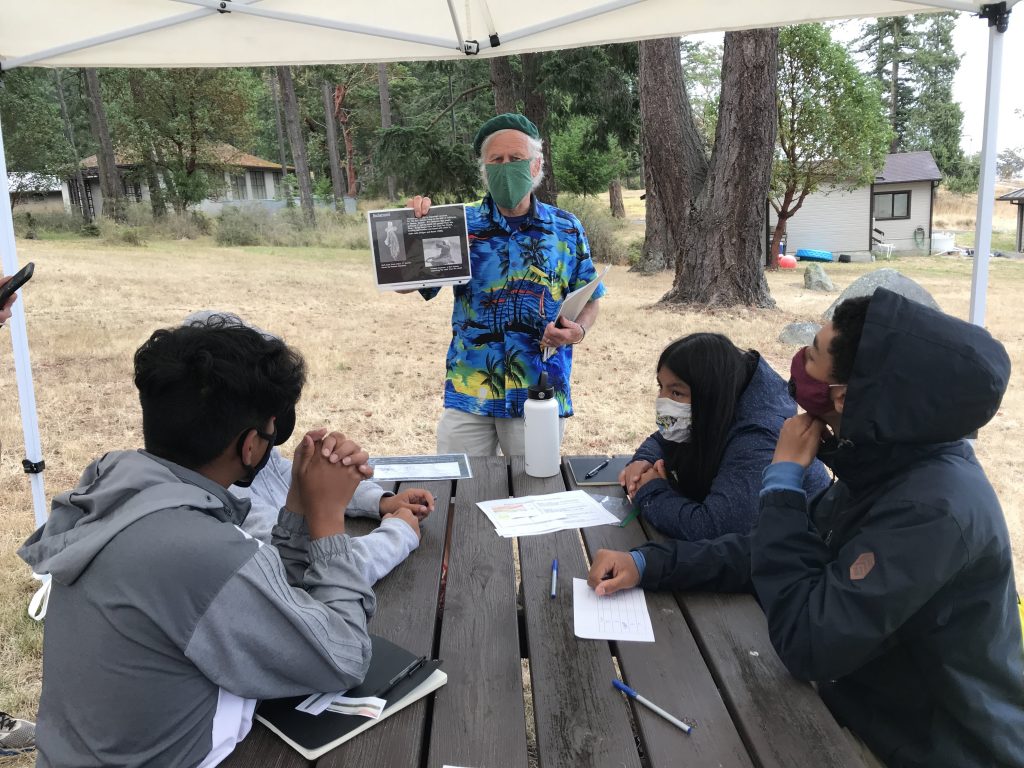
Dr. Katie Dobkowski assists Leighna and Ella in identifying algae
Photo Credit: Caroline Grauman-Boss

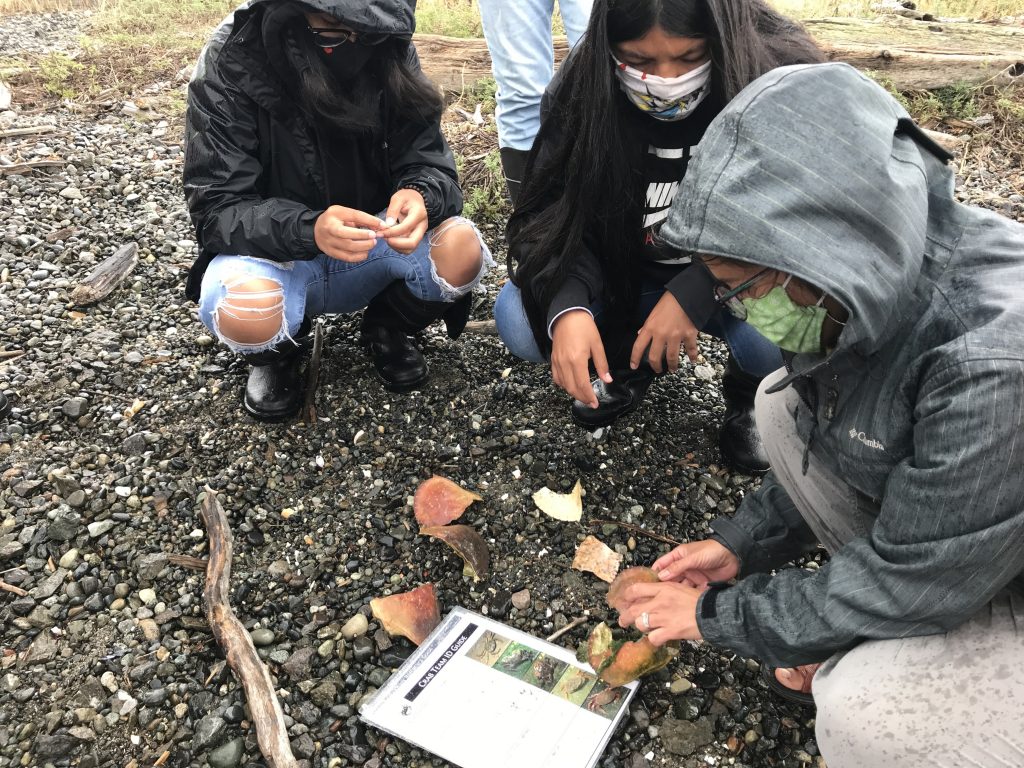
While we counted algae at four sites, each corresponding to a different substrate, we also collected kelp and decorator crabs. We mainly found kelp crabs, eventually finding a total of 19 crabs through the two groups. The crabs, lurking among the eelgrass, pinched and prodded before being collected for Dr. Katie Dobkowski’s future projects.

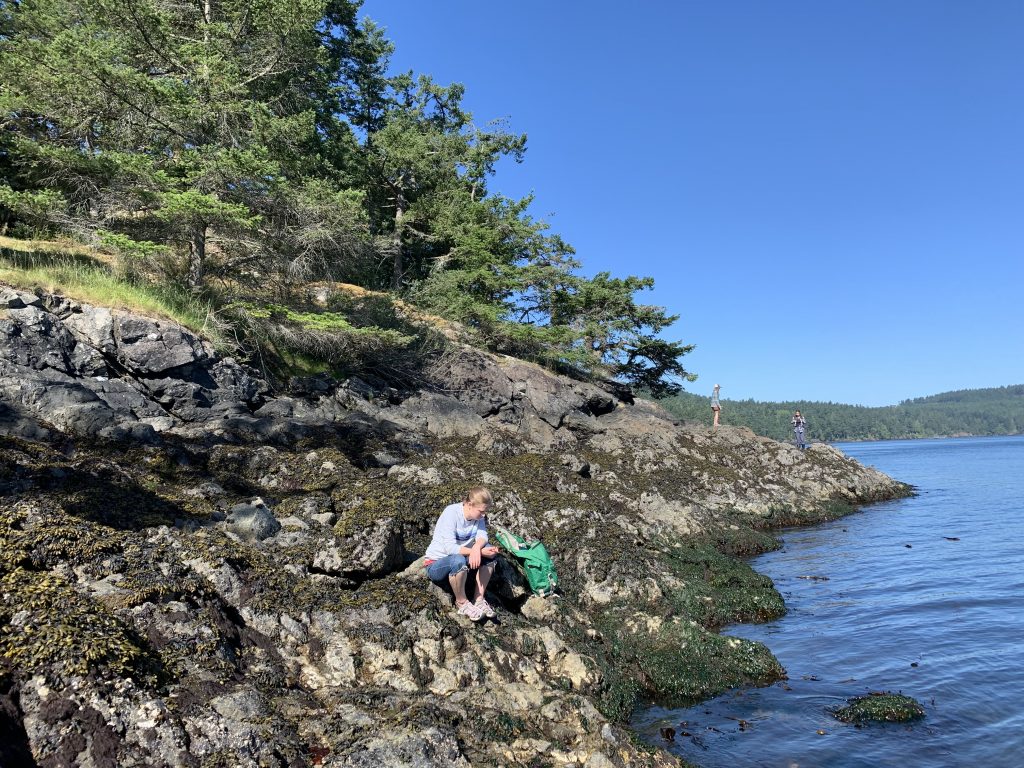
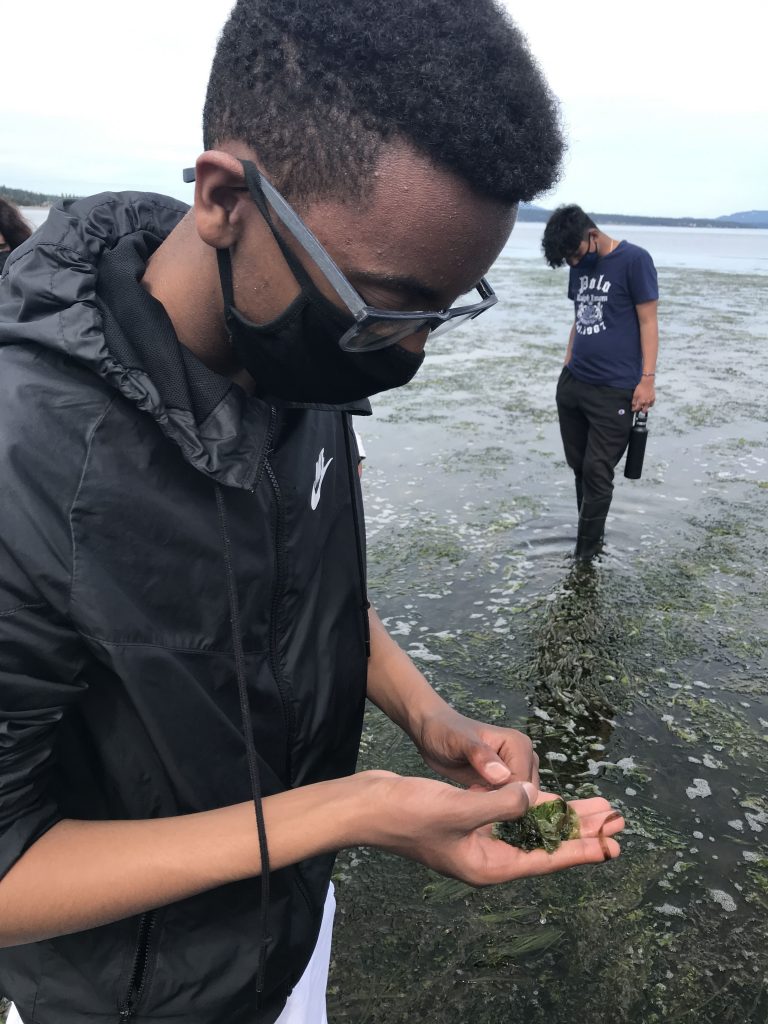
Leighna and Ella identify algae, while Camden and Ben hunt for kelp crabs in the background
Photo Credit: Caroline Grauman-Boss

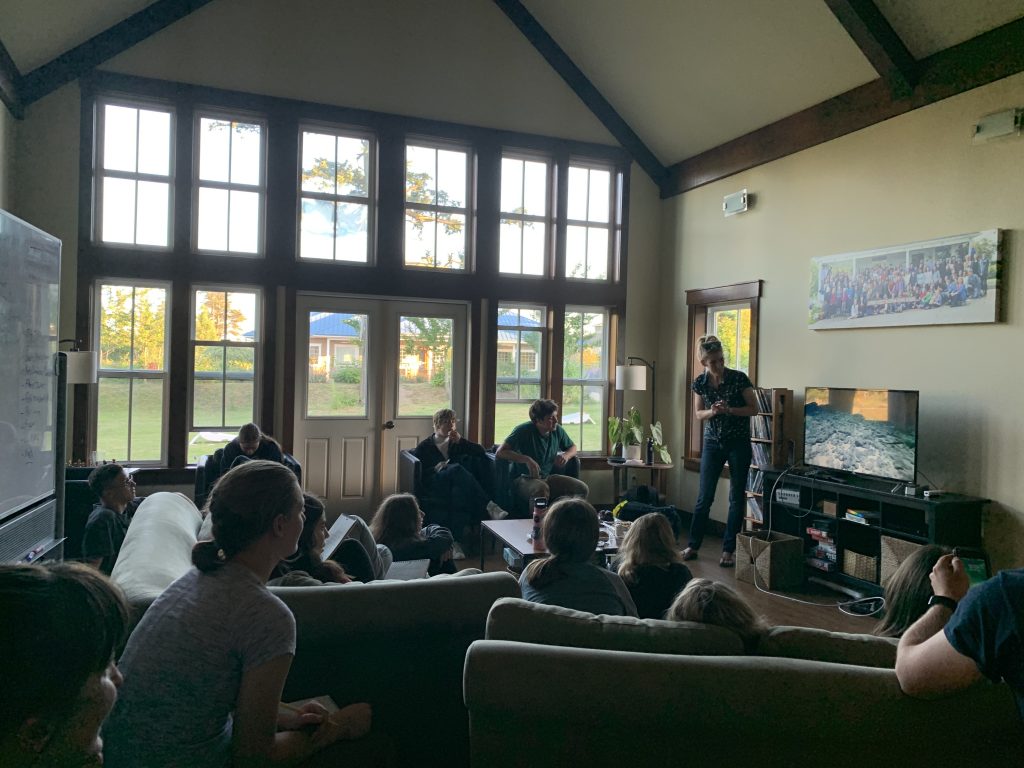
Afterward, we followed up on our earlier learning from the renowned musician, Alex Shapiro, by attending an exhibition of her music in an Orca-awareness event. Her nature music paired with her breathtaking photos were filled with the true spirit of the event.

Throughout the rest of the day, we all worked on our projects, from spreadsheets to nudibranchs, at the dorm or Friday Harbor Laboratories. We ended the night with a wonderful bonfire on the beach, after a hearty burrito dinner.
Day 20: The Salish Dip

Today, a few peers started their day at 0700 and headed to Deadman’s Bay, as well as Reuben Tarte (differing intertidal zones) to collect data for their differing science projects. While out at Deadman’s Bay, Miles found a piece of what seems to be a very old metal piece, possibly from a ship. Derek mentioned sending it to the museum to see how old the piece of metal is.

While some people were in the intertidal zones this morning, others were with Morgan Eisenlord, a PhD candidate at Cornell university in the Harvell lab, talking about strategies for how we will collect eel grass on Sunday (7/14) with Morgan to do further research on the pathogen that is harming eel grass.

After lunch, almost everyone went back up to the classroom with Morgan Eisenlord to do more planning and preparing for the mission on Sunday. I, Zoey, decided to go to the Friday Harbor Marina docks after lunch to work on my science project where I saw 21 Aequorea jellyfish, 2 Beroe and 1 fairly large jellyfish that is called Aurelia Aurita, a moon jelly. When I got back to the dorms I learned that everyone else had gone swimming in what I know as very cold waters.

When getting back from swimming and other activities everyone enjoyed a little free time and then headed to dinner where we met our guest for the night, Katie Dobkowski, a professor at Bates College in Maine, who specializes in many things but mainly the biotic and abiotic factors of organisms and also specializes in bull kelp.

Day 19: An Inkredible Day!

By Kalena, Devika, Nick and Miles

Today was a laid-back day. We lazily rolled out of bed at eight, starting our morning with a few hours of individual research. After days of emailing and planning with Derek and Anna, most of us had began or were ready to begin our projects. Leighna, Ella, Jeremy, Ezra and Orly headed to FHL around nine. The group of five met with researchers that specialized in fields related to their projects and even began setting up their experiments.

In the afternoon, we met with Sasha Seroy, a UW PhD candidate studying snails at the lab. She explained scientific communication, methods of sharing information with the public in a way that’s engaging and easy to understand. This can be through writing, art, social media, photography, outreach and games. Scientific communication is not only important because you need to get your point out to the public, it’s also a way that you can bring in sponsors and funding. With Sasha, we focused on communicating through art and drew cartoons about our projects. Our ideas included puns, interesting facts or pressing issues. Some of us went up and presented are comics to the whole group while others were reluctant to share their ideas. Sasha’s talk helped us better prepare for how to present our posters next Sunday.

While the most of the group did scientific cartooning, Devika, Nick, and Ella worked on their research projects at Friday Harbor Labs. Devika and Nick spent a couple hours in the octopus lab to observe and record the behavior of the octopuses. Unfortunately, there wasn’t much to to observe since one of the octopus was hidden under a towel and the other was camouflaged in a corner. Still, it was entertaining to see one of the crabs wander into the tentacles of the octopus.

Ella worked in a nearby lab on her project about sea slugs and currents. She had been working hard for many hours to get her tank ready and when she was finally finished, her GoPro stopped working. Still she has persevered with a happy attitude and is hoping to start testing with the slugs tomorrow!

Day 18: Diving Deep

By Leighna, Ayla, and Camden

This morning, there were two groups of people: students who woke up early to hit three low-tide beaches and those who elected to sleep in until breakfast. The early risers went to Dead Man’s Bay, Reuben Tarte, and another beach on the north end of the island to collect data. Little did they know that they would see the rare and glorious Fin Whale off of Dead Man’s Bay that day, an elusive mammal that has not been sighted around the area since 2015.

On the other hand, those of us who stayed at the dorms woke up to a rude, loud fire alarm (there was no fire, fortunately). Although no one knows who or what or why the fire alarm went off, but nothing was on fire and nobody was hurt. Some students took that as a sign to wake up and get started on the day, while others fell right back to sleep. We had a lazy breakfast and had until noon to work on our research projects. Derek came back with a tired but happy group of the explorer students, and we immediately went to the classroom to learn about scanning eelgrass with Morgan Eisenlord.

With the guide of the eelgrass specialist, we learned how to properly dispose of and rinse eelgrass scans, as well as how to create new slides and labels for the next scans. These scans are used to measure the prevalence and severity of eelgrass wasting disease. After around an hour, we left for Friday Harbor Labs to watch Tim Dwyer and our very own Derek Smith dive under the docks.

Photo Credit: Leighna Sugimoto

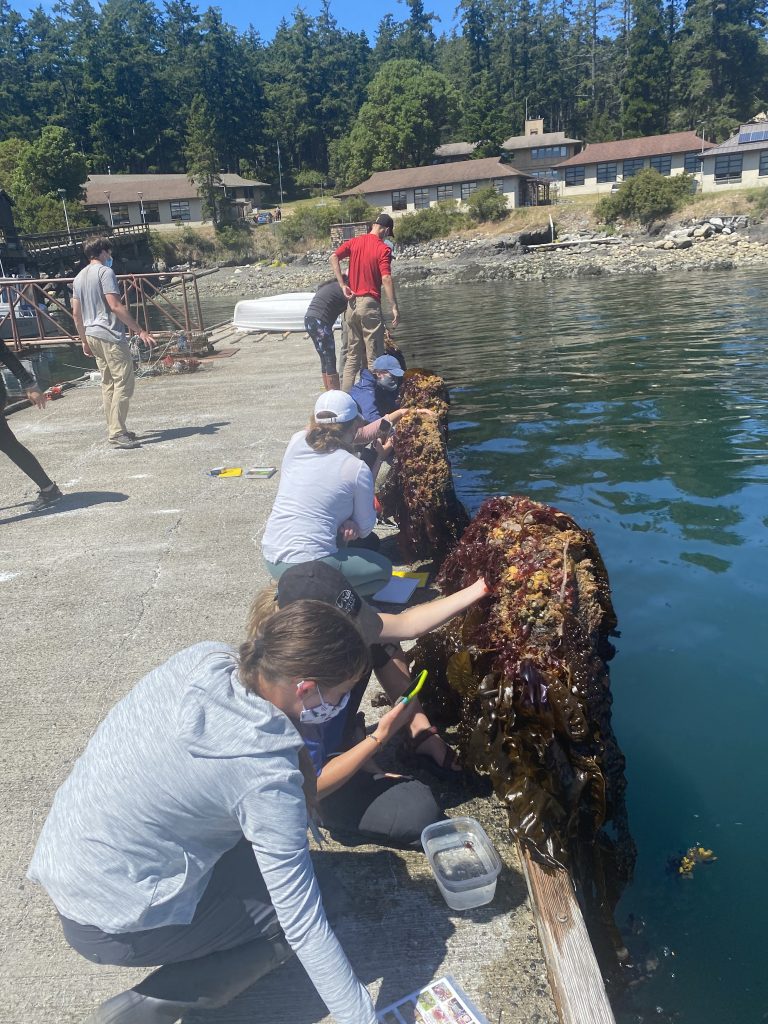
The divers began their presentations by walking us through the gear and how to properly prepare for a cold water dive. They have to wear many layers and weights as well as air tanks to prep for the cold waters and crushing water pressure. When the time for the divers to jump into the water came, all of the students crowded around the one and only diver elevator at FHL. Derek and Tim then began their dive, starting a beautiful underwater show for the rest of us on land watch through the lens of an underwater camera. The duo found many anemones, barnacles, a disregarded iPhone 6, two clown nudibranch, two sea lemons, two blood stars, and even a sunflower sea star! They dove under the FHL research vessel Centennial, showed us around the large sea anemone garden, and taught us about the organisms that thrive under the docks.

Photo Credit: Leighna Sugimoto

After the dive was over, we looked at the organisms the divers caught (the nudibranch, sea lemons, blood stars, sunflower star, and a couple anemones) closer. We learned about where nudibranch’s gills are, the sensitivity and surprising power of sea stars, and the evolution of the number of sea star arms. Those 2-3 hours flew by in the blink of an eye, and we unfortunately had to leave to get back to the dorms for a break and an early dinner at 5:30. (We are writing this blog in this break time.)

The accreditor readiness review team from AdvancEd, Joanne and Nancy, are joining us for the dinner of Israeli salad and barbecue chicken. After the meal, we will head toward to the San Juan Island Library presentation at 7:00 by Thor Hanson, lecturing us about berries for 2 hours.

Day 17: Bioacoustics

By Grace Davis, Jeremy Davis, Faith Jayaram, and Tony Yuan To

Today we had the oppurtunity to work with composer Alex Shapiro in bioacoustics. While traveling around San Juan Island, we took field recordings and wrote about the myriad of noises that were present. The roar of a ferry, the soothing crash of waves, the sweet melody of birdsong–we were surrounded by the sound of our environment, slowing down from our usual routine. During our travels, we stopped in Friday Harbor, South Beach, and the San Juan National Forest. In each location, we made a point to individually spend some time with just the sounds of our surroundings.


When we visited a prairie, we heard crickets singing and birds chirping. However, there was one significant noise that kept appearing: planes. Derek told us that planes were constantly creating noise over the field, so the island was never left in complete silence.

Day 16: Research, relaxation, and examination

By Olivia, Orly, Kalena, and Miles

“What are we doing today?”

“Is there a plan for after lunch?”

The morning began in a blur of uncertainty as no one had yet put the schedule on the board. In fact, it wasn’t until after breakfast when wake up time was written out. No matter, most students went up to bed for a quick nap before our first activity: Scientific sketching.

Taken by Olivia

The classroom was filled with self deprecating jokes and uncomfortable laughter as our inner critics came at us full force. Task one: Look at the animal in the picture and draw what you see without looking at what your pencil is doing. The exercise was intended to improve the way we look at detail, not hone our artistic talents. Nevertheless, it was the state of quality that made its way into side conversations. Task two: vectors. In order to draw scientifically, the measurements need to be correct enough in order to classify the organism. Artistic skill is unimportant as long as details and measurements are as exact as they can be. Our wonderful teacher Anna taught us about that.

Our morning sketch sesh eventually deteriorated a half hour before lunch, giving us time to work on personal research. Many students used their time wisely; studying in the common room or in their dorms. Others used this opportunity for self care: a quick nap, taking time to read their favorite book, and catch up with friends and family back home.

After weeks of go go go, many students here at Salish Seas needed a day to themselves. Therefore, after much confusion over plans, we broke up into groups: students who wanted to stay in the dorms/around town were permitted to, while others who wished to explore, experiment and/or record data for personal projects went with Derek to Deadman’s bay. (look up the meaning of the name if you dare, I personally don’t recommend it)

The few people the ended up going to Deadman’s bay did all kinds of different things. Some of us ran our experiments for our projects and others explored the tidepools. For their projects, Jeremy looked for oyster catchers and Camden and Ayla attempted to begin taking water samples. Sadly, the birds were nowhere to be found and the batteries to a YSI (a machine used to find dissolved oxygen, pH, etc.) didn’t work. Though our group faced a few shortcomings, we were still able to find interesting organisms. Harris caught a small sculpin on his fishing rod and while hiking, Leighna and Jeremy found a seal (it was sadly dead, but still interesting). We also found a sea lemon, which is a yellow nudibranch with spots. The eight of us were glad we could get out of Spring Street and enjoy the nice weather.

Everyone who stayed ‘home’ (in the dorms) got free range of the town if they chose to, and hours of time to relax however they needed to. I know of a few who took naps during this time (we’re all obviously very tired) and others who decided to go into town mostly gravitated to a coffee shop for a fresh studying environment.

Everyone regrouped before dinner to welcome our guest, Morgan Eisenlord, and her research helpers Maya and Liv. Eisenlord is currently focusing on wasting disease in eelgrass, and gave us a fascinating lecture afterwords on it. She explained that the Wasting Disease pathogen had an average of 80% prevalence between all 16 sites sampled. This particular pathogen eats the chloroplasts in eelgrass, making it hard for the eelgrass to photosynthesize properly. We are all very excited for our upcoming work in the field with Eisenlord!

It felt wonderful to crawl into our comfy beds after the first sunny day, all dreaming of our exciting research projects to come.

Day 15: Beginning of the future

By Harris Yu

It’s another cold and rainy day in the pacific northwest. Fogs and clouds block every single trace of warmth from the sun. To be honest, I did not dislike rainy, the feeling when being alone, sheltered by the sturdy wooden rooftop, surrounded by the paddling sound of drops, the only thing that could make this even cozier is a mug full of hot chocolate in hands. Not long after, the rain stopped. The fresh smell of earth and grass slowly begin to emerge, as if it was suppressed by the rain this whole time, smell particles burst out from the ground and filled every inch of space around you. “There’s no better way to begin a day with such scenery,” I said to my self.

We are about to start our study projects, each and every single one of us is going to do research on specific topics that we are interested in. Derek is very kindly to be our advisor. He has a tremendous amount of knowledge about the people around here, by talking to us individually, we manage to device a research topic and plan for every student here. Personally, I’m interested in shellfish and worms, and Derek managed to hock me up with a local shellfish farm and conduct my research there. I am very joyful that there’s finally a project that I can devote myself completely.

After lunch, we head towards the lab. On our way there, Derek gave us a tour in the STEM building at the local public high school. I was astounded by the amount of resource and support for student to develop their talent here. We saw 3d printers, VR headsets, and unnamable machine we have never seen before. However, what holds the treasure is behind a wooden door. There was a workshop that looks like a hanger, computer hardware, and tools scattered around the room, but at the center of it, there was a futuristic looking car. After a closer look, we found it was powered by batteries. This vehicle itself is a masterpiece of pragmatism and aesthetic at the same time, I was amazed by the complexity and overall built of this beauty, It must have taken a lot of effort to make this come to life. It was even more shocking after we learn that it was built by a group of 8th graders, it was hard to believe the talent and creativity of those students who have made it.

Then we arrived at the Friday Harbor Lab, it wasn’t the most comfortable walk I’ve had in my life because of the rain, but the beauty of the forest on our way there made it a quite enjoyable experience. We split into different groups after the arrival, some dedicated themselves into the collection the lab have in the library, some went to the fish lab with Derek, and some went to explore the tide pools. In the lab, there was that hideous looking fish we found two days ago from the beach. There were also other fascinating fishes in the lab like flounder and rockfish.

Overall, it was a lovely day. we were glad to have a specific study subject for the next couple of weeks, and we had plenty of fun in the lab.

By Harris Yu
By Harris Yu
By Harris Yu
By Harris Yu

Day 14: Have an Invertegreat Birthday Camden!!

By – Nicholas, Kalena, and Devika

Today, Derek taught us about Ecology. Ecology may seem to be a simple word. In reality, it means: the study of the distribution and abundance of organisms and the processes that shape patterns. Whew, that’s a mouthful. Ecology uses measures of Biodiversity to determine how diverse an ecosystem is. Two of theses measures are Species Richness and Species Abundance, or Shannon Diversity. After a few hours explaining how ecologists determined, interpreted and presented their data, we headed over to the Friday Harbor Farmers’ Market.

The market was filled with people. Numerous shops were already open and the small square was packed with shoppers. The shops ranged from hand-made jewelry to baked goods to shaved ice. Camden and Jeremy were very excited about their loaf of bread they had bought after seeing other Salish Sea students chowing down on their own loaves. Although the Farmers’ Market was small, there was still a lot to explore and observe.

Soon, we had to return to the dormitory for lunch and wished Camden happy birthday. We got Camden a cake and a few presents. Soon we started to prepare for our costumes. You might be asking yourself, “why on earth would you need costumes? You are up-and-coming scientists what would a costume do for you?” The answer is: quite a lot. Around this time of year, many graduate students from Friday Harbor Labs will come together for an Invertebrate Ball. They dress up as different invertebrates, ranging from lobsters to jellyfish. This year, Salish Seas had the honer of being invited to this ball, and we spent the entire afternoon preparing our costumes.

To get the materials we needed in our costumes, all the students traveled to two thrift stores allowing us to reuse materials. Our first stop, Community Treasures, was filled with used barbecues, lamps, sports equipment, clothes, toys, books, etc. Most of which was bought by use for our “shells” and as a frame for our costumes. For us, lampshades were a la mode, and the majority of our class ended up purchasing some. Once everyone had chosen their preferred items, we traveled to Friday Harbor Fire Department Thrift House. There, we had a larger selection of clothes. After a fun time attempting to convince Ezra should wear ridiculously colorful clothing to complete his mantis shrimp costume, we left and returned to the dorms to assemble our costumes.

Devika and Kalena both decided to go as anemones and their costumes were very well designed. Miles and I, on the other hand, opted for a more simple, yet reliable approach. Since Derek mentioned how many species of invertebrates are undiscovered, I decided to go as a species that hasn’t been discovered yet. I taped a question mark on a black shirt. Bingo! Costume! Miles decided to be a bacteria, so he taped green paper cutouts on one of his green coat to create the costume. Faith, Olivia, Zoe, Ella, Ayla, and Orly decided to go as jellyfish, while Grace and Leighna dressed up as mossy chitons. Jeremy was coral, while Camden went as a barnacle. Ben and Ezra stuck with a crustacean theme and went as a crab and a mantis shrimp while Anna, Derek and Tony created costumes for nudibranchs. Finally, Harris was an urchin. With our costumes prepared we sat down for dinner.

The Invertebrate Ball was a new and interesting experience for all of us. We played pool and danced to the horrible music. After eating all of the available gummy worms, many of us entered the costume contest. Towards the end of the night we eagerly awaited the results. None. Of. Us. Won. OUTRAGEOUS!!!!!!!!!!!!!!!!!!!!!!!!!!!!!!!!!!!!!!!!

Day 13: King Phillip Came Over For Good Spaghetti

By Leighna, Camden, and Ayla

Using Derek’s convenient acronym, we now know how scientists classify the marine species that we love. Today, the group focused on taxonomy (Kingdom, Phylum, Class, Order, Family, Genus, Species).

Photo Credit: Ayla Ridwan

After a fun and eventful Fourth of July, breakfast began at 9:00 AM, allowing everyone to sleep in and prepare for a whole day of even more exciting activities! After a quick breakfast, all of us loaded onto the vans to head to Reuben Tarte. Once we got to our destination, Derek announced a friendly competition between the house groups (Seals, Orcas – obviously the best of the groups, Salmon, Octopodi, Sharks) that challenged each of the groups to classify as many organisms on the beach as possible.

Photo Credit: Leighna Sugimoto

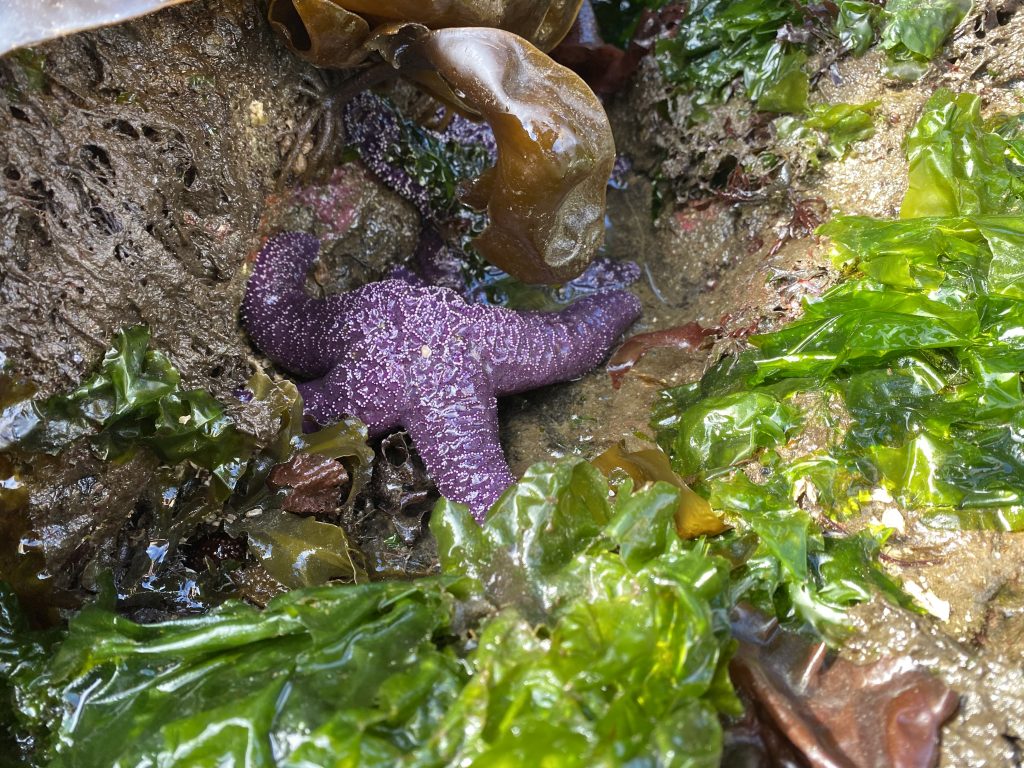
We walked among the slippery sea lettuce frantically turning over rocks to uncover many crabs, ocher sea stars, and gunnels. A true miracle of biology was witnessed by some of the group members when they saw two crabs reproducing. Four hours were spent at Reuben Tarte exploring the beach, allowing everyone to discover and identify marine species they had never seen before.

Even though a student suffered a sprained ankle from slipping on the cold rocks, we did find a dead 1.5 meter-long fish lying in an obscure corner of a tide pool. Dr. Adam Summers, the head ichthyologist at Friday Harbor Labs, was contacted about the fish. He texted Derek to “leave the fish in a tank if he wasn’t there to shriek with excitement”. After the disgustingly smelly carcass was loaded into a van, Ben and Camden accompanied the fish to Friday Harbor Labs. The rest of the students went to visit the pleasant-smelling Pelindaba Lavender Farm.

Photo Credit: Devika Dwivedi

At Friday Harbor labs, Camden and Ben carried the log into Dr. Adam Summer’s lab. The log was carefully placed onto a tank while the rest of the group searched for an empty tank to put the fish into. Camden and Nicholas put gloves on to lift the fish into the empty tank. Dr. Summers was there quietly shrieking with joy! The fish head was squeezed to remove the eye lens. Scissors were then used to remove the eye of the fish. The log was then removed from the lab and tossed onto the beach.

The Lavender Farm, on the other hand, smelled very pleasant. Some students opted to take a peaceful and relaxed walk through the abundant fields of purple, while others went straight to the gift shop to taste test and try out lavender products. After a short 20 minutes at the farm, the students arrived back to the dorms to spend some personal time until dinner.

Photo Credit: Leighna Sugimoto, Model: Grace Davis

To end the day, we watched the new Spider-Man movie, Spider-Man: Far From Home as a whole group! It was quite unexpected, but it was a pleasant surprise and a fun movie to watch together.

Day 12: 4th of July

By Grace Davis, Faith Jayaram, Jeremy Davis, and Tony Yuan To

Sleeping in was a luxury meant solely for the Fourth of July. With a good night’s rest, the members of Salish Sea Sciences were excited for San Juan Island’s annual parade held in honor of the independence of the United States. Many cars, people, horses, and dogs were involved in the celebration. It was great to be a part of the island community and participate in Friday Harbor’s events.

After the parade, some people went to the Pigs War barbecue. At the picnic, food and drink were provided, along with live music and games. While this was one option for the students of Salish Sea Sciences, others went souvenir shopping, got ice cream, or simply enjoyed the Fourth of July fun and nice weather of the island.

To further the festivities, a trip to Roche Harbor added to the holiday cheer. With the hundreds of tourists walking around the north side of the San Juan island, it was difficult to keep our large group of twenty people together (scrambling ensued). Even though parking also proved to be a major issue, we had a great time anyway.

We ended our trip to Roche Harbor by visiting a peaceful sculpture garden– a large contrast to the loud crowds of the harbor. It was interesting to see the talent of so many artists on display. There was also many interesting quotes scattered around the garden which we found hilarious.

Returning to the dorms that night, we ate burgers, a classic Fourth of July dinner. Thank you Tom for your amazing cooking!

To continue, we drove to the University of Washington Friday Harbor Laboratories to get a front row seat for the fireworks. After some exploring at the UW library, we sat on the pier to watch the fireworks. The fireworks were unlike anything we had ever seen before. These flashed bright across the night sky, making a thunderous sound which reverberated for what seemed like miles. It was quite the experience.

To finish off the night, we placed a light under the water near the dock. We watched with awe as animals swam curiously towards the light. We saw many fish, worms, and crab larva. On our way back up the dock, we saw large worms swimming in the water. Excitedly we placed the light near the worms and studied the interesting creature.

While Fourth of July is fun in our hometowns, experiencing the holiday on San Juan was unforgettable.