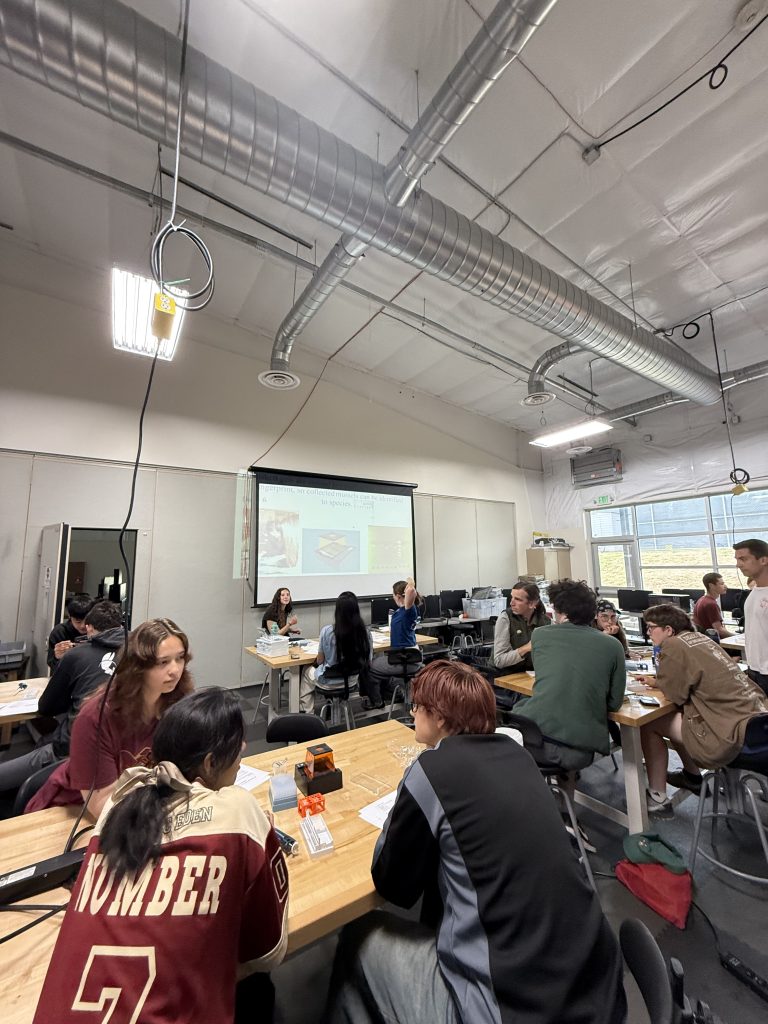
This morning we all locked in after breakfast for the last stretch of project time! Some were done while others were making final touches and getting peer checked. Everyone dreaded getting checked by Maya as we all know she’s the master of poster making and will make a thousand small corrections to our posters. Despite the corrections, her wise words payed off in the end and we can’t wait to show off our amazing work tomorrow evening!
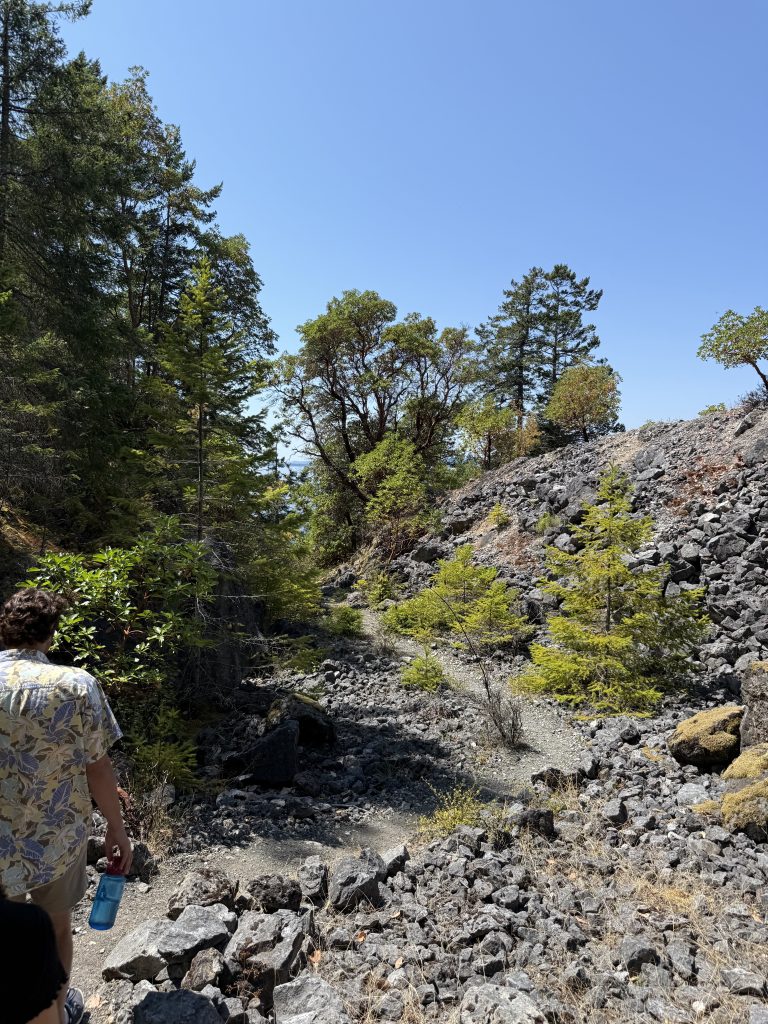
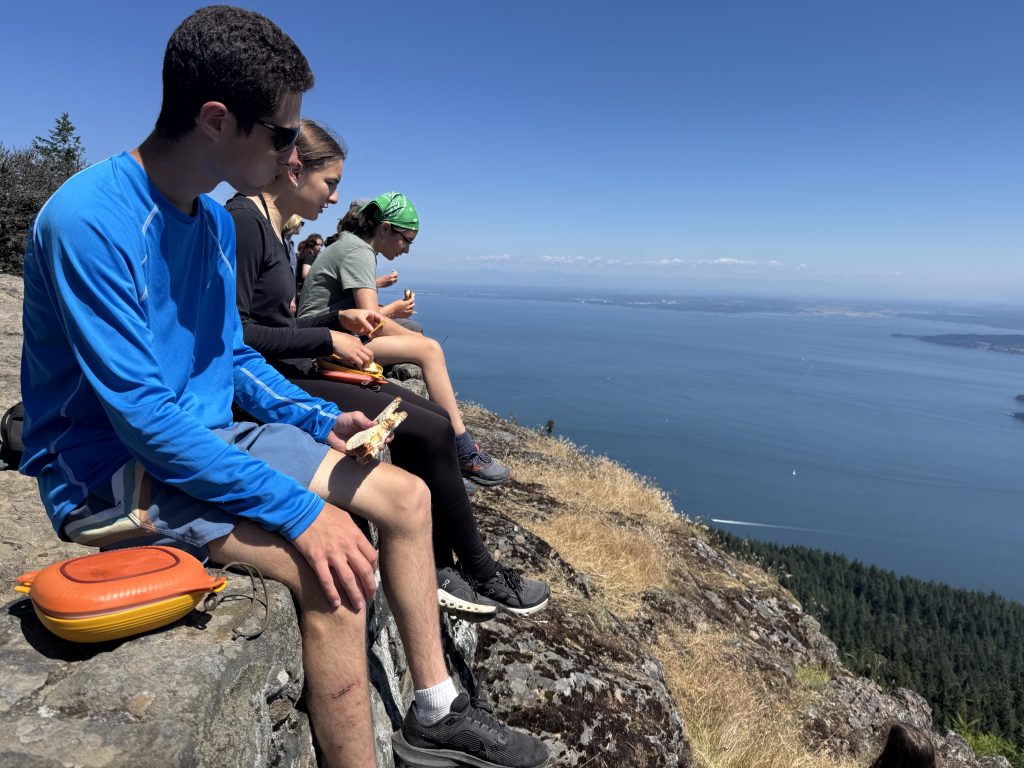
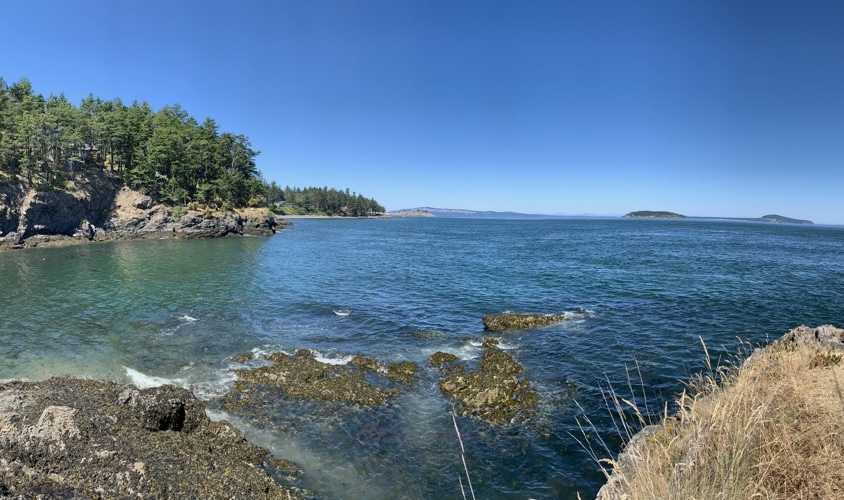
Limekiln hike (photo by Hitomi)
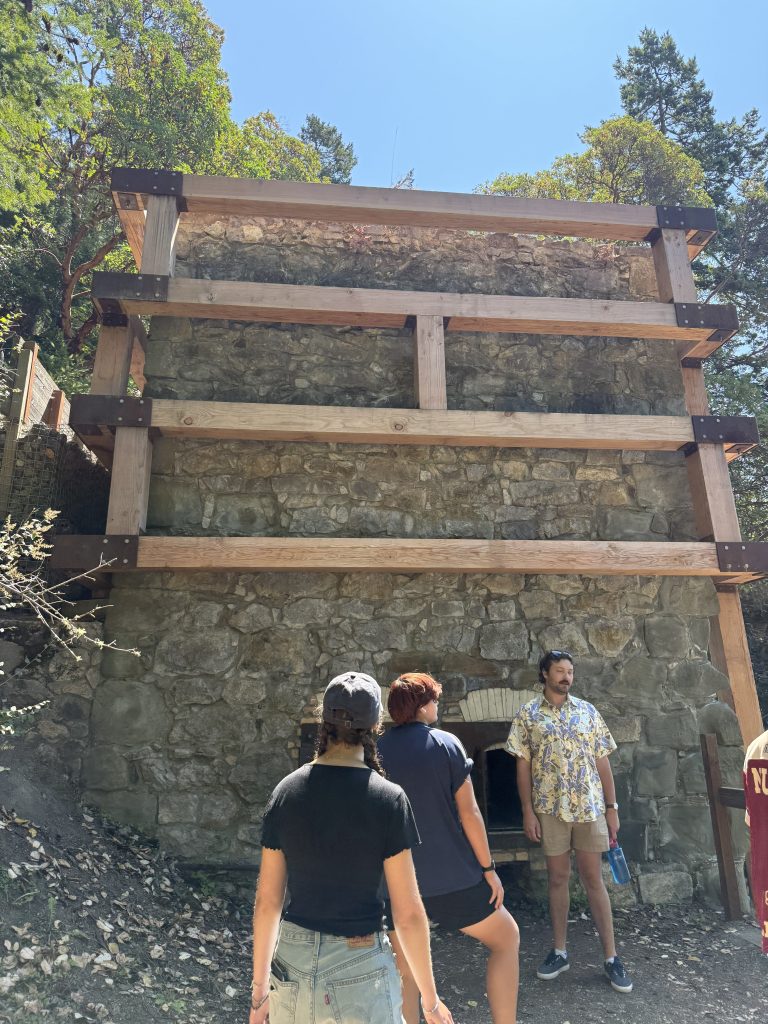
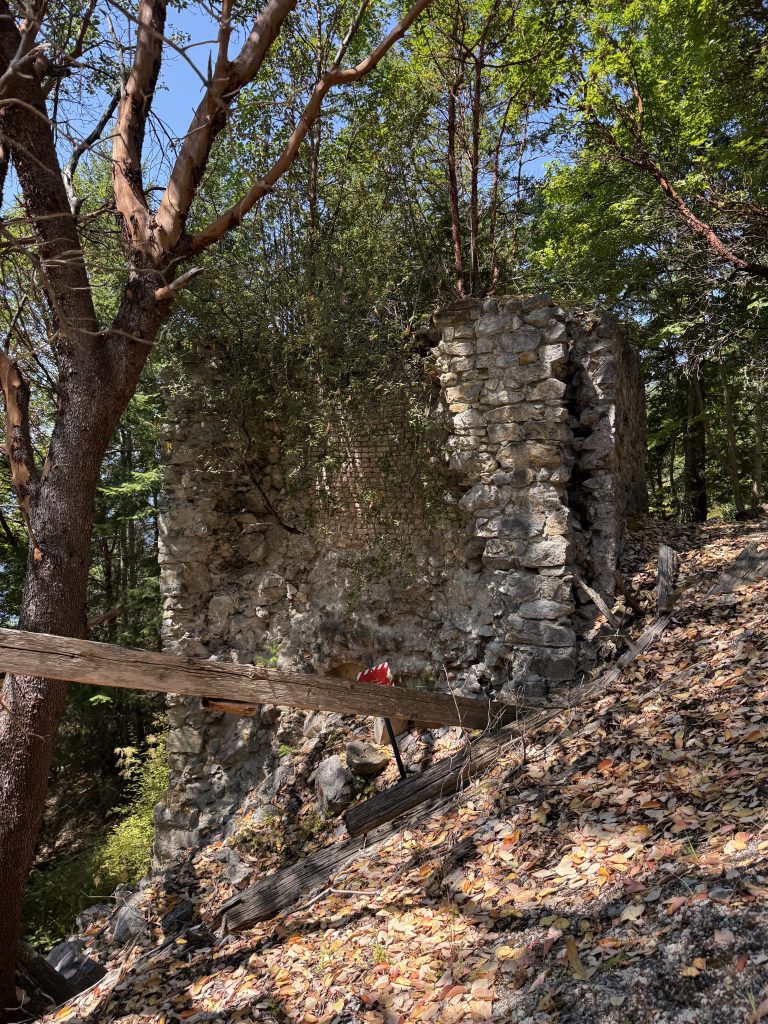
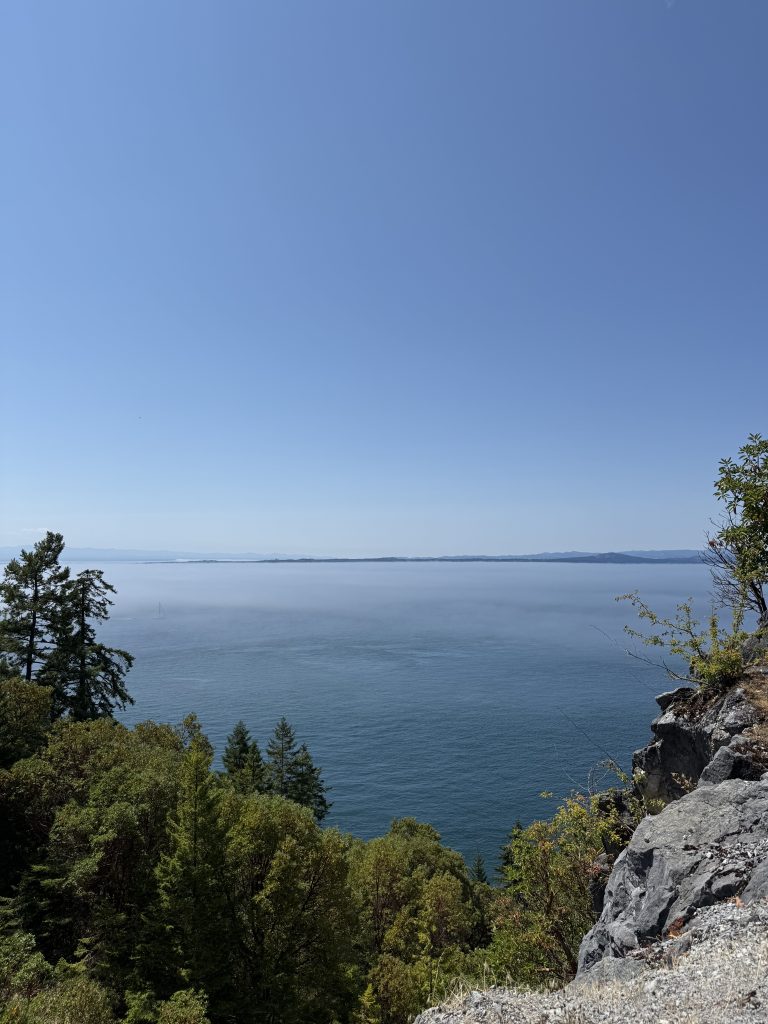
To get a refresher from sitting, and to celebrate being done with projects, we went out for a peaceful hike at Limekiln State Park. Adam talked us through the unique landscape and interesting artifacts that still lay in the park. We hiked to a few view points and got to see a few Limekilns of course!
Limekiln (photo by Hitomi)Inside a Limekiln (photo by Hitomi)
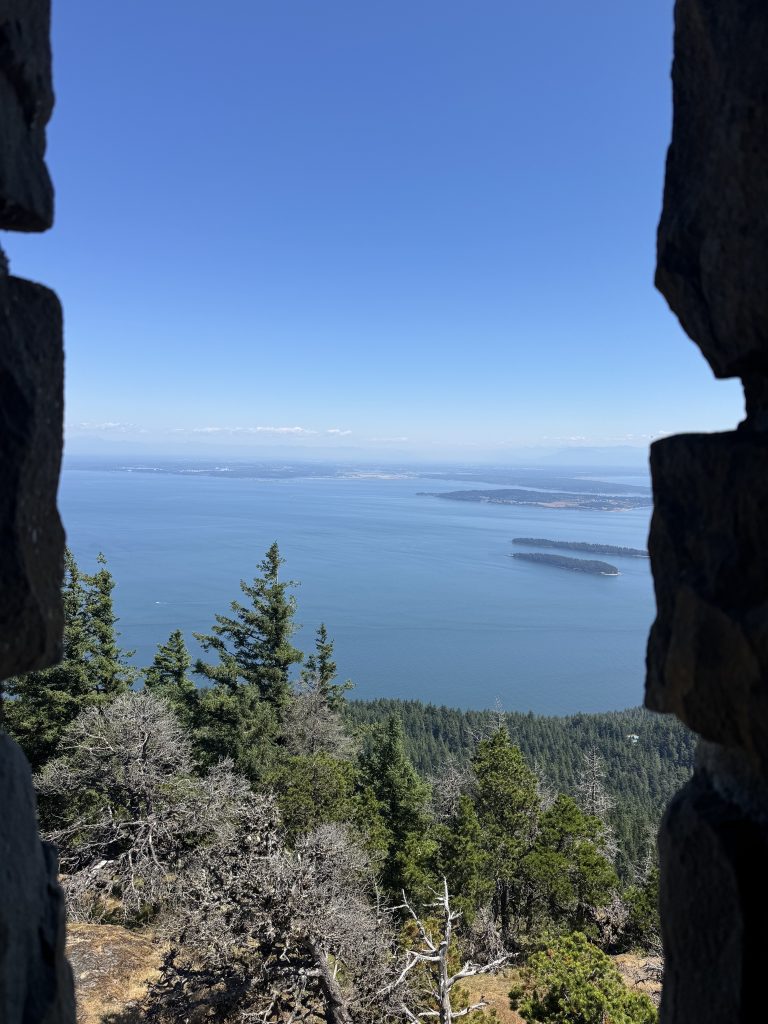
The first view point we made it to was absolutely stunning, but slightly scary! We saw some super cool marine fog, blocking any chance we had of seeing orcas (tragic).
Marine fog at Limekiln (photo by Hitomi)
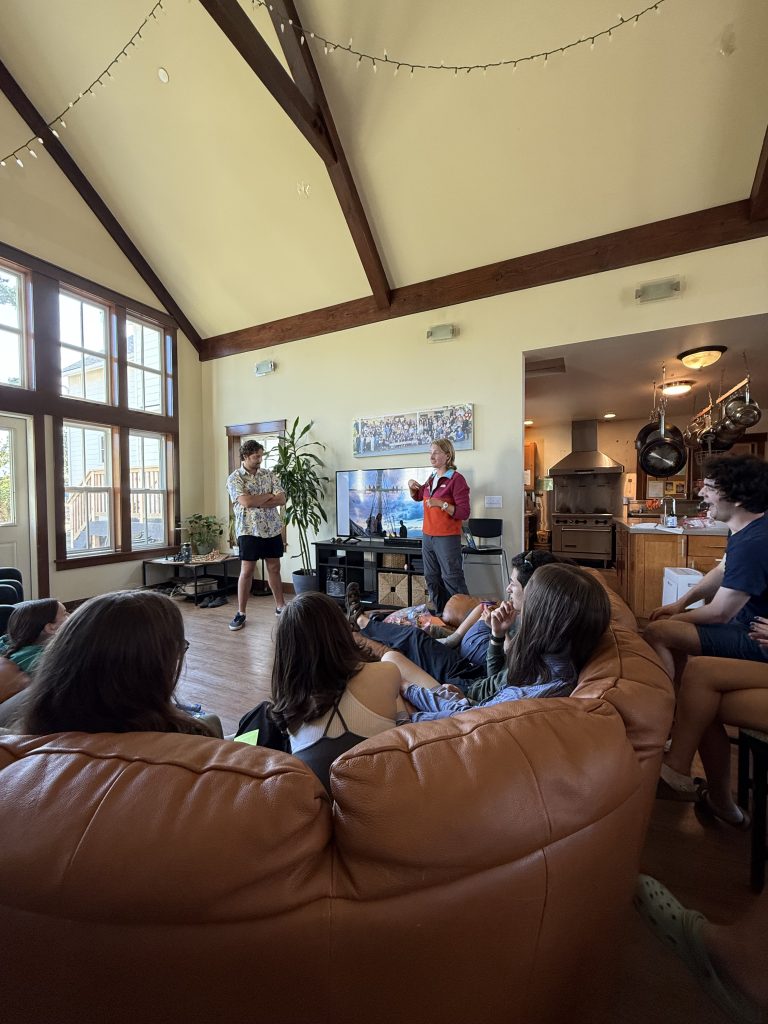
After the walk we helped ourselves to a mid-day snack while listening to Maya and Adam talk about their experience with SEA (Sea Education Association). We got the inside scoop on what it’s like to do the SEA program as a study abroad option which sounded pretty cool!
Maya and Adam’s SEA talk (photo by Hitomi)
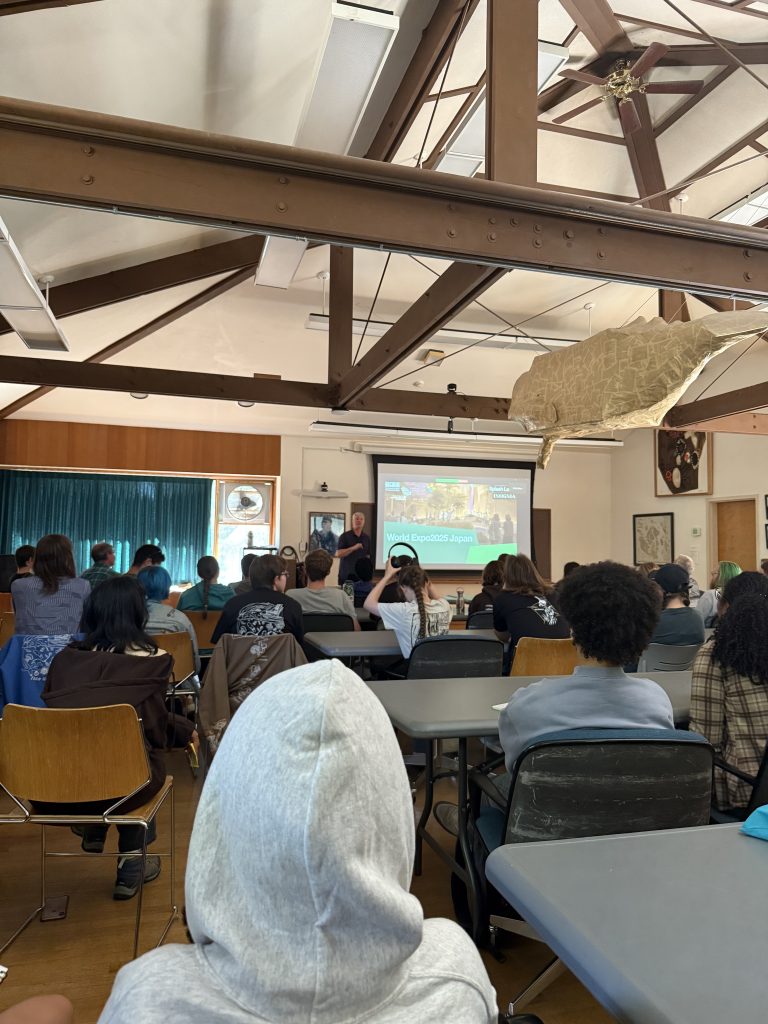
After the amazing talk we made our way over to Friday Harbor Labs for the last time during this program. We got some time to look at the stockroom (merch) before going to a talk about Thermodynamics of Coral with Dr. Truscott. The talk brought some interesting discussion to dinner where we enjoyed some delicious mac n cheese and lasagna!
FHL “Thermodynamics of Coral” talk (photo by Hitomi)
The 8am breakfast slowly transitioned into project worktime, and soon we were deep into it—three hours of focus with varying degrees of confidence and success. We kept moving forward, cutting down or building up our data, depending on where we were in our projects. Many of us ran into struggles: some trying to make graphs, others trying to fittoo many into their presentations. Nonetheless, we persisted. The time flew by, with Adam, Maya, and Riley offering support and helpful feedback on what to adjust and what to keep. Before we knew it, lunch had snuck up on us, and people began eating and frantically plugging in their inevitably dying laptops.
After lunch came our “brain break,” which was announced as the English camp hike—something we had missed earlier in the week due to fatigue. It was advertised as a short, one-mile walk up a small hill. But I don’t know what mountain-loving giant considered that hill “small,”. By the time we reached the top, everyone was drenched in sweat and gasping for air. A few unfortunate souls hadn’t changed out of their pajama pants and deeply regretted that decision. The misinformation led many astray, and legs were on fire long before the top. But once we made it, we were greeted with an incredible view—and for at least some of us, it was definitely worth the struggle.
After a short downhill walk, we loaded back into the vans and returned to the dorms. Once there, it was time to jump back into our projects—crunch time had officially begun, and many people were in the final stretch. About an hour and a half later, we shifted gears to start our jobs and prepare for our evening guest: Khrista Nicholas, a RED student from the University of Miami who is now an incoming master’s student at the University of Alaska Fairbanks.
After a delicious dinner of fried rice, we all enjoyed hearing about Khrista’s path thought college and her current topic of study. She had a beautiful presentation with photos detailing her fascinating and incredible journey. Following our guest we all gathered to have a joint movie night, relaxing while watching Finding Nemo with ice cream.
Sunday, July 20. By: Mira, Vidita, Asher, and Noam
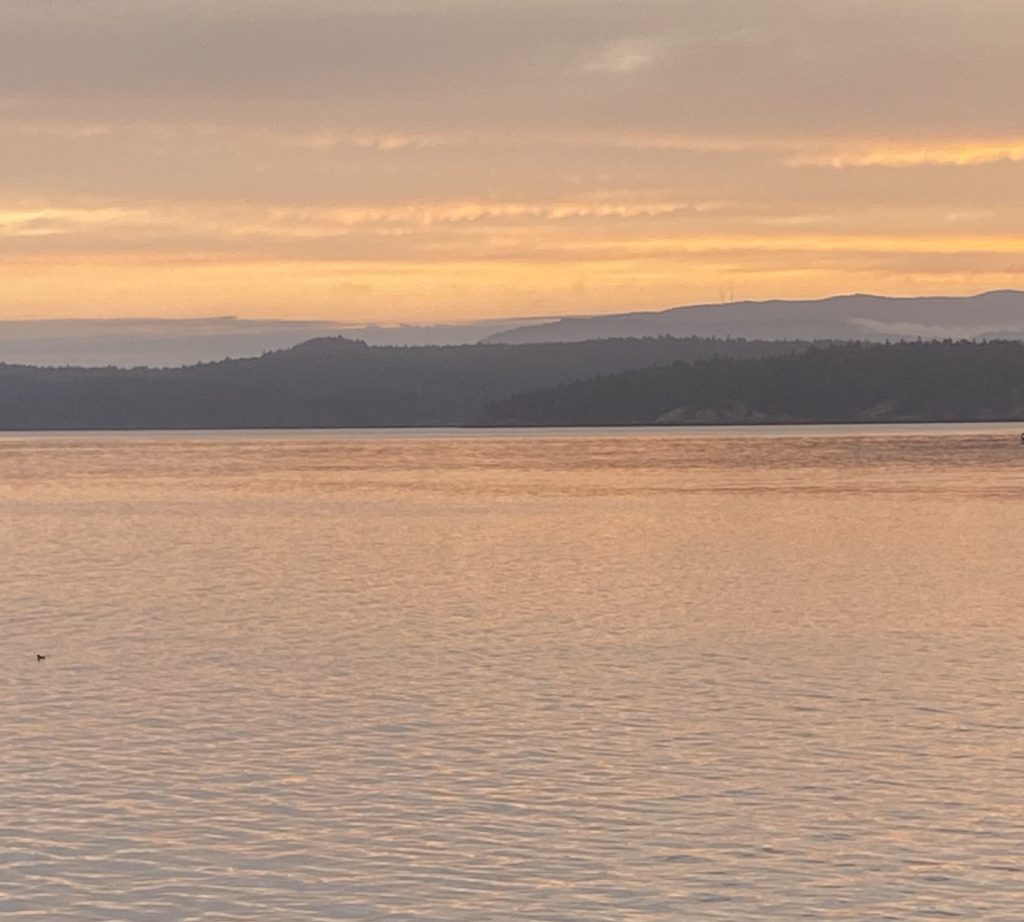
This morning’s sunrise (photo by Eden)
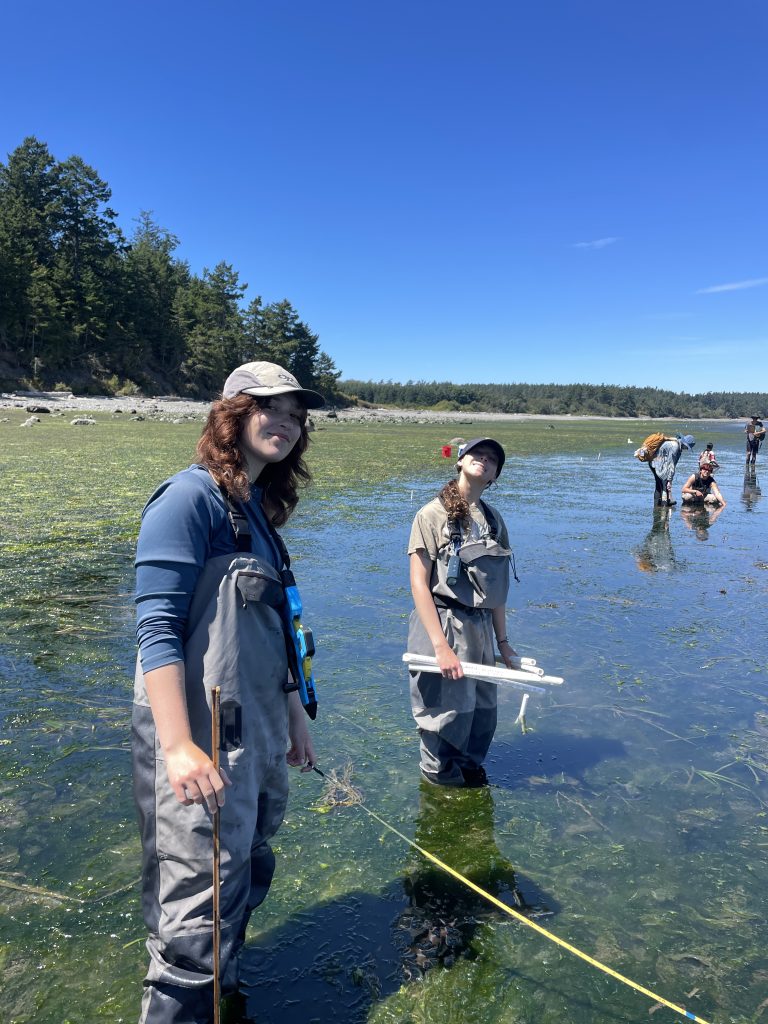
This morning, many of us woke up at 6 am to get ready to go out into the field. A group of eight, six people doing research, along with two helpers, went down to Fourth of July Beach to collect data on eelgrass. One person was looking at plots set by San Juan Island Conservation District, one was looking at environmental effects on eelgrass wasting disease, another was seed coring and plotting flowering eelgrass heads, one was looking at trampling and harvesting effects on eelgrass wasting disease, another at percentages of ulva versus percentages of eelgrass, while a last student looked at distance from the shore in relation to eelgrass density. We had a good time, but it was very,very cold. Despite the cold, however, we all managed to collect data, and headed back home.
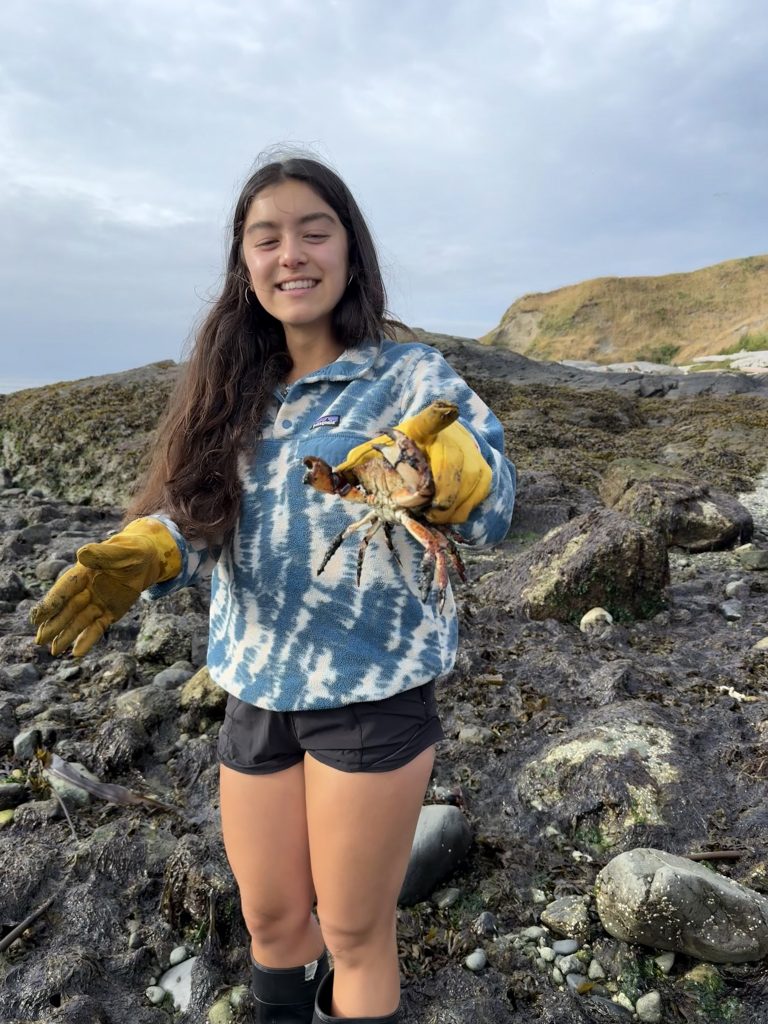
Hitomi posing with a red rock crab (photo by Lars)
Four students headed off to Cattle Point to collect further research. One student was collecting phytoplankton, the second was randomly sampling biodiversity, a third collecting and measuring crabs along a transect, and the last conducting experiments on anemones,
While most were freezing out in the field, a few lucky students who were working nearby got to sleep in. After a nice, relaxing breakfast, we set out for a busy day of working on projects. Many students spent the morning working at the dorms or in the lab. Others headed down to gather data at the Marina or Jackson Beach. From observing fly species to looking at sculpins, everyone was trying to make the most of these final days before our presentations.
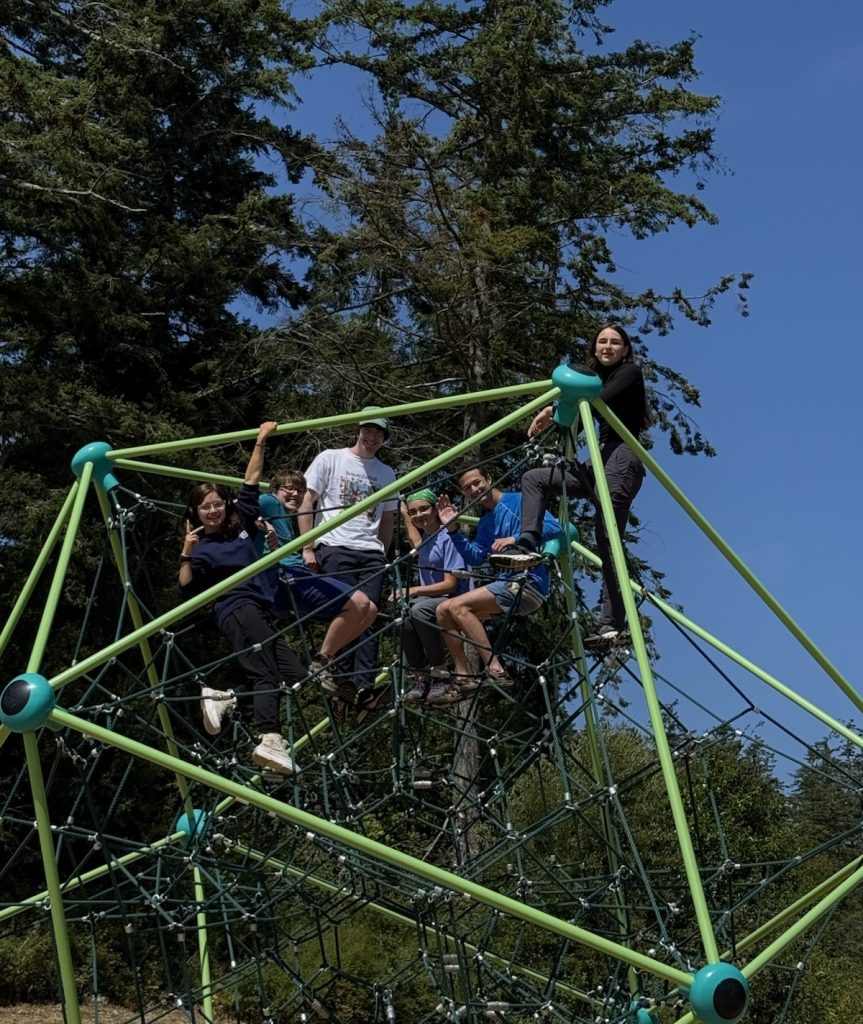
Fun at the playground (photo by Hitomi)
After everyone regrouped (and showered, for those that had been in the water), there was an option to go on a walk through Linde Park, where the San Juan Land Bank keeps native species abundant, including delicious thimble berries, and a playground. We then returned home for project work time, to create our posters.
Caroline and Tom’s daughter, Bea Grauman-Boss took the time to have a call over zoom to talk about her science journey. She spoke about beginning her research in irregular growth in echinoderms based on the presence of predators and availability of resources. From that, she transitioned to capsid presence in cells after virus treatment, specifically yellow fever and dengue. She ended with her most recent ventures in cancer research and general advice on prioritizing one’s own interests and seeking out mentors that also center your endeavors.
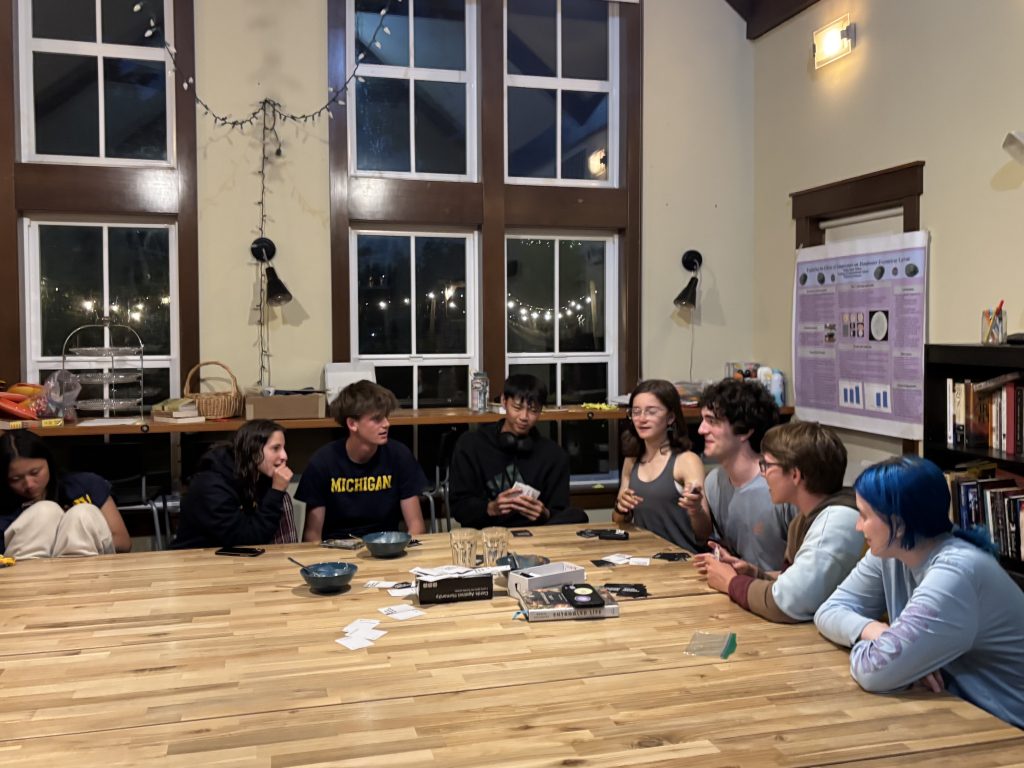
Playing Cards Against Humanity (photo by Mira)
For our delicious dinner of vegan chili, we were accompanied by Katherine Dietzman, a shoreline and mapping specialist working with Friends of the San Juans (a non-profit organization dedicated to protecting the San Juan Islands). She talked about the work she does with Friends of the San Juans, including shoreline restoration and looking at forage fish. Our evening ended with ice cream, The Lord of the Rings, Cards Against Humanity, and other fun activities.
Salish Sea Sciences Blog, Saturday, July 19th, 2025. By: Lars, Leah, and Miles
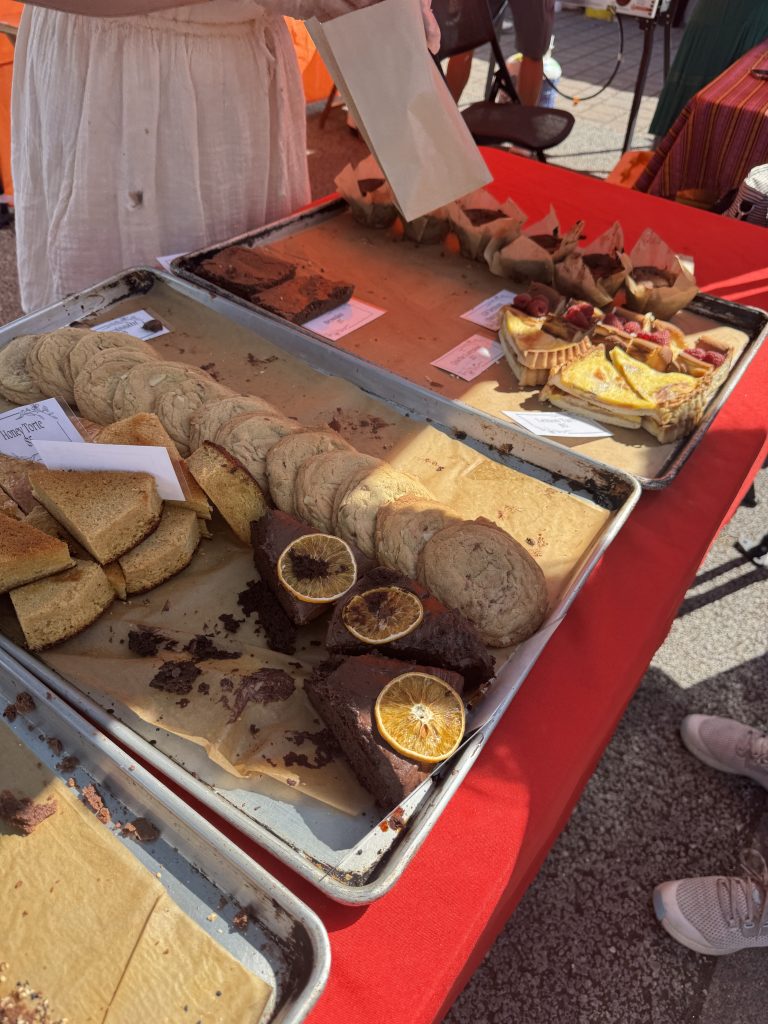
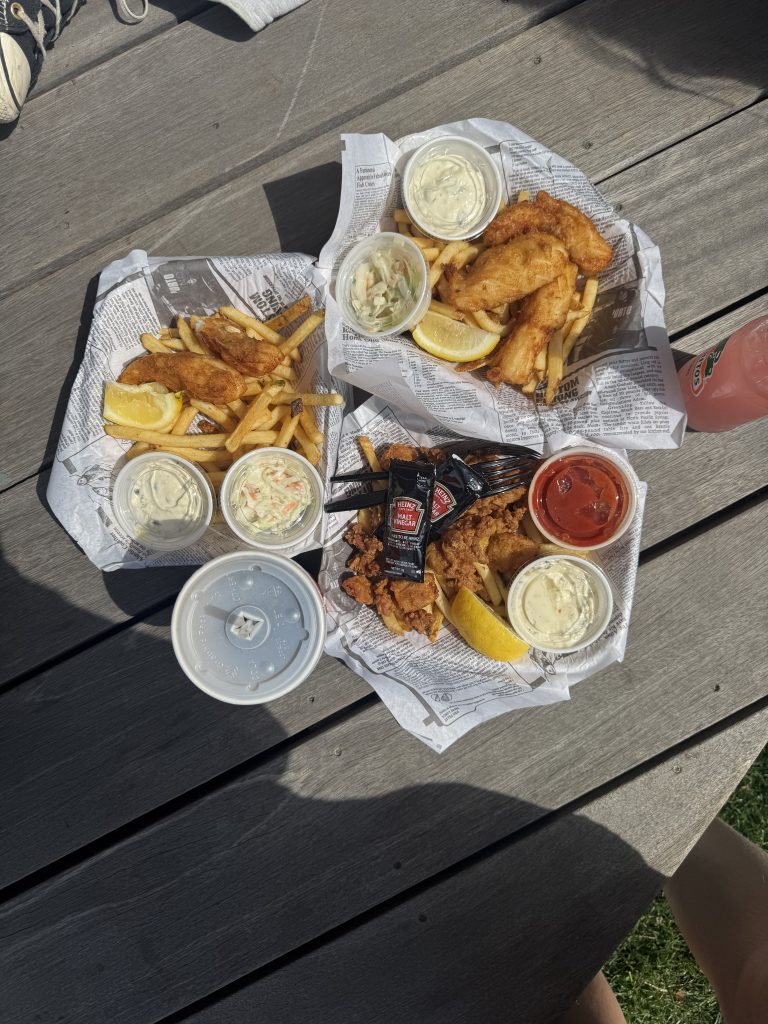
Welcome back to another day in the life of a Salish Sea Science student! Your hosts, Miles, Leah, and Lars are going to take you through the final Saturday with the Field Science cohort. After a super late night night lighting at the dock, with an inspiring appearance by a local Harbor Seal, everyone got at least an extra hour of sleep. At 10 am, we all sprinted towards Brickworks, excited to frolic in the town as Caroline locked the doors to the dorm behind us. Our science directors gave us the second gift of the day – an opportunity to hit up the Friday Harbor Farmers Market with a bit of cash in our pockets! Miles packed his lunch beforehand to save some money, Leah had a bagel when the dorms were unlocked after, and Lars tried some yummy local fish and chips with a side of calamari! Sooo yummy!
Assortment of pastries at Friday Harbor Farmers Market (photo by Lars)Fish and Chips, and Calamari from The Bait Shop (photo by Lars)
At 12:30, the crew, full and content with any purchases made, headed back to the dorms to cool off and get ready for a conversation about college with Caroline. She helped us better understand what aspects of a college decision may be important to consider, some less obvious to us than others! She also strongly encouraged us to further look into liberal arts colleges. She stressed understanding whether you prefer a degree focused on getting you job ready right after college, or well rounded life learning, and possibly a further degree from a professional or graduate school.
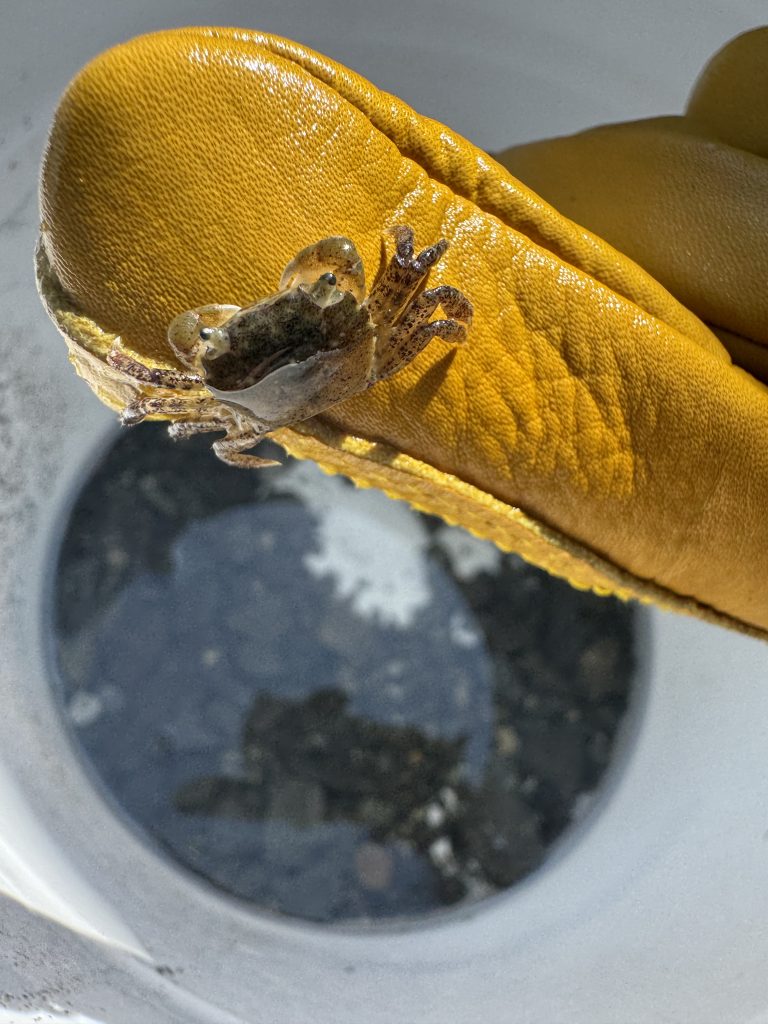
2 to 4pm was our project work time! Miles found a new species of seaweed fly only identified in Canada before! Leah polished her data collections and progressed steadily on her poster. Lars studied crabs righting response times with the boat noise treatment.
Hairy Shore Crab clinging to Lars’s glove (photo by Lars)
Finally, to wrap up our day, we are welcoming Shauna Barrows from The Land Bank for a mac and cheese dinner! Shauna, raised amid California’s droughts and wildfires, followed her passion for water, wild places, and poetic inquiry to the Pacific Northwest—earning degrees in Environmental Education and English, working in conservation, and ultimately returning to the San Juan Islands with deep gratitude and love for nature.
Shauna Barrows defines restoration as fixing the relationship between people and land. People who are connected to the land—and therefore to the nature around them—develop a deeper sense of care and responsibility for its protection. She began by sharing her own story, reminding us that it’s okay (and often necessary) to change paths—she herself started out in computer science before finding her passion in environmental work. Shauna now works with the San Juan County Land Bank, one of only two land banks in the U.S., funded entirely by a 1% tax on property sales in Washington. She described her role in reducing wildfire risk on the island through controlled burns, and how restoration isn’t just ecological—it’s deeply cultural. She encouraged us to question the Western idea of nature as something separate from humans, and instead consider how Indigenous communities have long maintained reciprocal relationships with the land through traditional knowledge and practices—many of which were disrupted or erased by colonization. We also explored the complex politics that often accompany restoration efforts.
One example Shauna shared that brought these ideas to life was the story of camas flowers, a striking purple bloom native to the Pacific Northwest. Coast Salish peoples once cultivated extensive camas prairies, using controlled burning and seasonal harvesting to manage the landscape and sustain this vital food source. These were not untouched wild spaces—they were shaped by generations of stewardship. What truly surprised us was learning that camas prefer disturbed soil and actually rely on being harvested by hand in order to pollinate and reproduce. Without that human relationship, camas populations can decline. Today, Shauna and her team are working to reintroduce camas as part of larger efforts to restore not only ecosystems, but cultural memory and interdependence. Her story helped us see that restoration isn’t about returning land to a “natural” state, but about remembering and reactivating the connections between people and place.
As the sun sets on another incredible day with the Salish Sea Sciences cohort, we’re left with a deeper appreciation for the land, the sea, and the dynamic relationships between people and nature. From the joy of local flavors at the Farmers Market to eye-opening conversations about college choices and career paths, today was packed with learning and connection. Shauna Barrows’ visit reminded us that restoration begins with relationship—an idea that resonated deeply as we reflected on our own paths and roles in environmental stewardship. Whether it’s discovering a new fly species or questioning societal narratives around land, our journey as young scientists continues to evolve with each experience. Here’s to waking up early and staying curious.
EV car built by Friday Harbor High School students (photo by Hitomi)
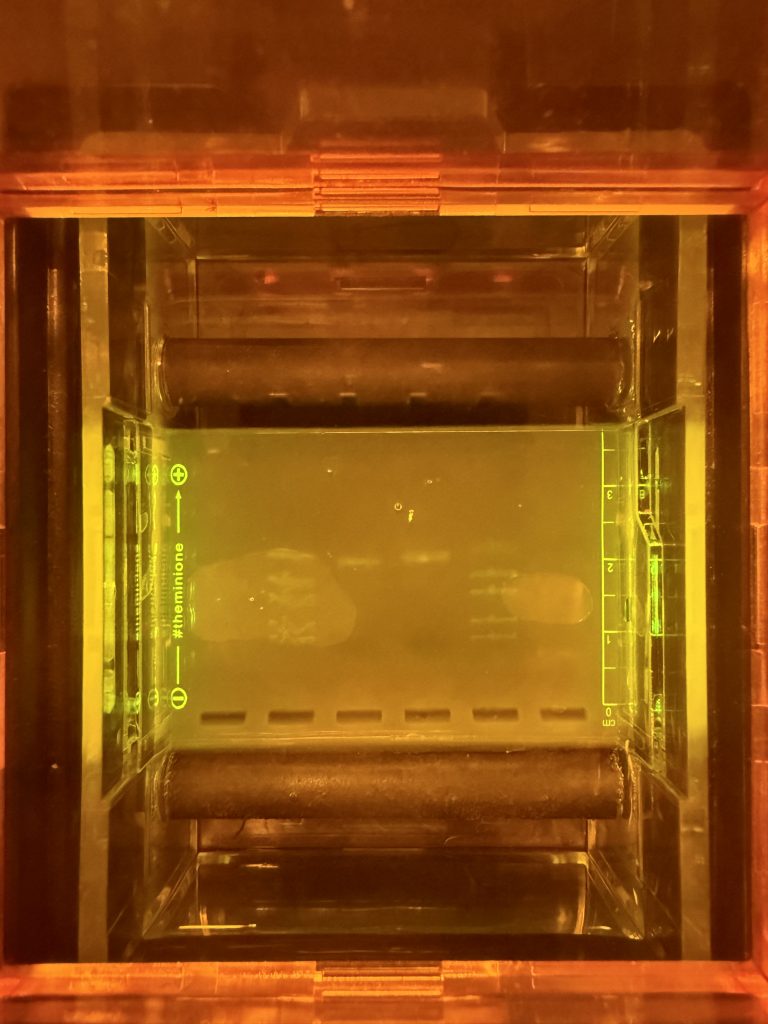
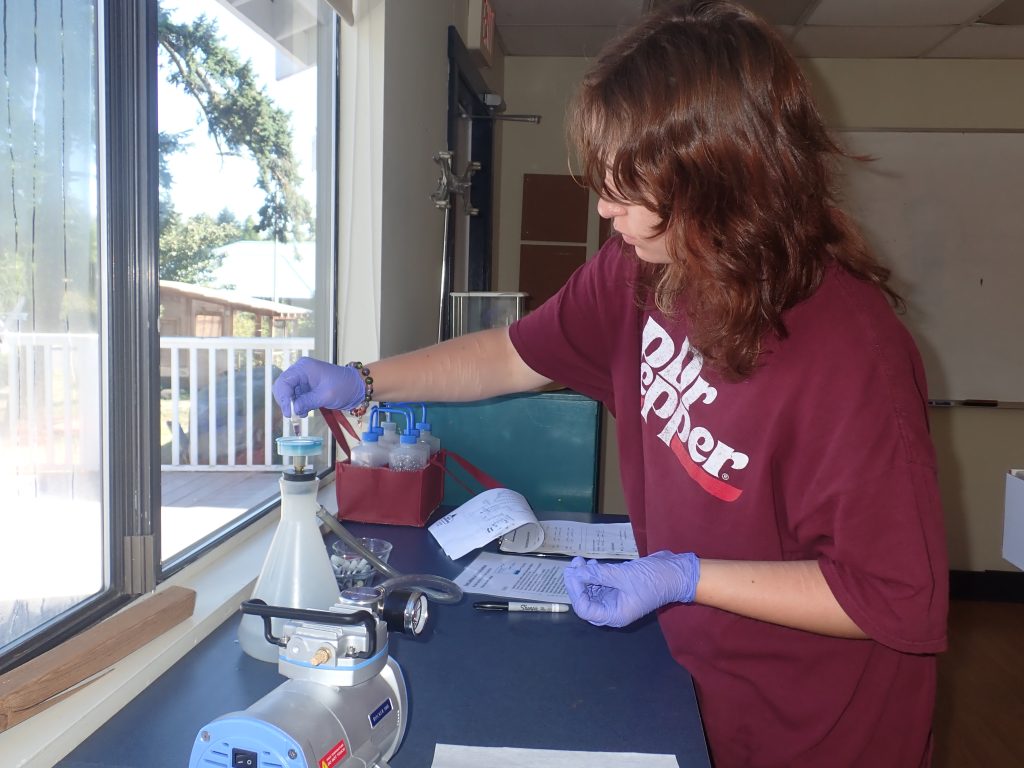
This morning, we enjoyed a short walk a few blocks to Friday Harbor High School where we helped Sam Garson with his Invasive Mussel Project. In groups we were given mussels collected from the local area (native) and a mussel bought from the grocery store (invasive – Mediterranean mussels). Using PCR and electrophoresis, we identified if the mussels we had were invasive, native or hybrid. The data we collected will be used to further Mr. Garson’s study which is cool! We also tested a new and faster method for data collection, shortening the data collecting process from multiple days to 90 minutes!
PCR lab (photo by Hitomi)
While we were waiting for our DNA ladders to appear, we were given the opportunity to take the high school’s makeshift electric car for a spin in the parking lot! Only licensed students were allowed to drive, but those of us without licenses took turns riding in the back. The car itself has some impressive capabilities, being able to drive for 80 miles on a charge, and having a top speed of over 90 mph. However, when we asked Mr. Garson about driving it on the road, he said that his last attempt led to an encounter with a sheriff, which is why he only keeps it in the parking lot. Even though we were confined to the parking lot, driving the car was still fun (and scary at times), and we were still able to go quite fast. Once we were done with the car, we ended up analyzing our DNA ladders and walking back to the dorms for lunch.
Electrophoresis! (Photo by Hitomi)
Following lunch, we were joined by Dr. Donatelli. She walked us through a workshop on using the coding language R. R is a statistical coding language that many scientists use to analyze large data sets. We downloaded software onto our computers and began our coding class. We learned how to insert, look at, calculate, and even plot different sets of data. Overall, we all were happy to gain new knowledge and hopefully now we will be able to put our skills to good use in the future.
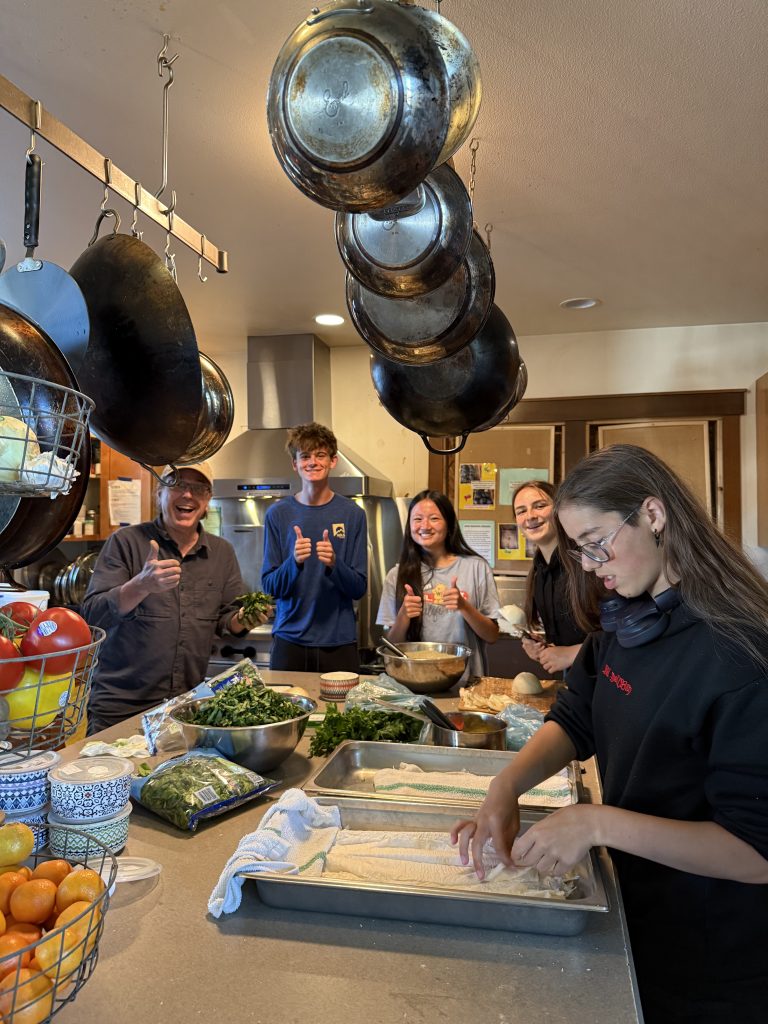
Dinner Crew making spanakopita! (Photo by Hitomi)
After working on our research projects for a while, some of us went to prepare dinner as we set up the dining room for tonight’s guest: Mr. Tim Dwyer. Tim is a science teacher at Friday Harbor High School who specializes in Chemistry, Physics, Oceanography, and Environmental Science (and who was the science director of our very own Salish Sea Sciences for 8 years!) He graduated from Bowdoin College with a degree in biology and from Central Washington University with a degree in education before earning a master’s degree in biology at Northeastern University. In his long career, Tim has worked as a marine science instructor for the Catalina Island Marine Institute, as a teaching fellow at Harvard Medical School, and even as a science communicator on the PolarTREC program based in Antarctica! During Tim’s after-dinner lecture, he discussed the subject of polar gigantism as well as his time spent at Antarctica’s McMurdo Station where he studied the physiology of sea spiders (which are more related to ticks than spiders.) According to Tim, there are lots of theories on the cause of polar gigantism, with the most likely theory being that larger bodies result in greater speed, allowing for organisms to scavenge for prey more effectively in the sub-freezing waters beneath the Antarctic ice. After Tim left with his adorable research assistant Wookie, some of us prepared to head off to bed while the rest of us made ready to head down to the marina with Maya to go night lighting.
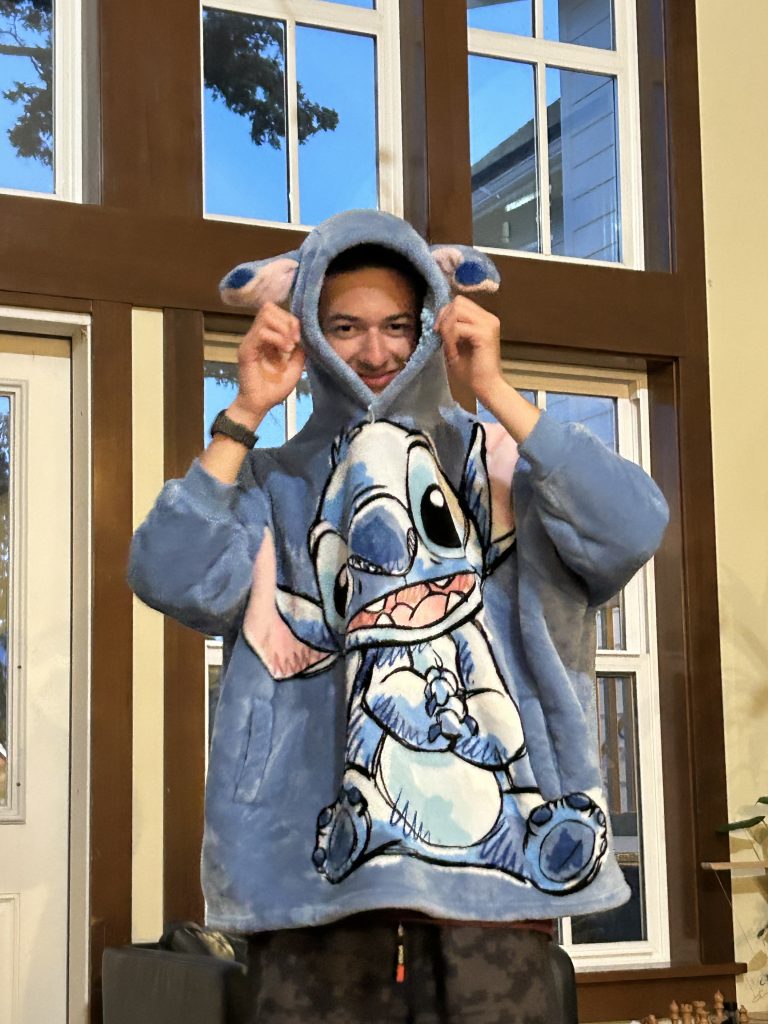
Noam looking so kawaii in Cara’s Stitch hoodie (Photo by Harper)
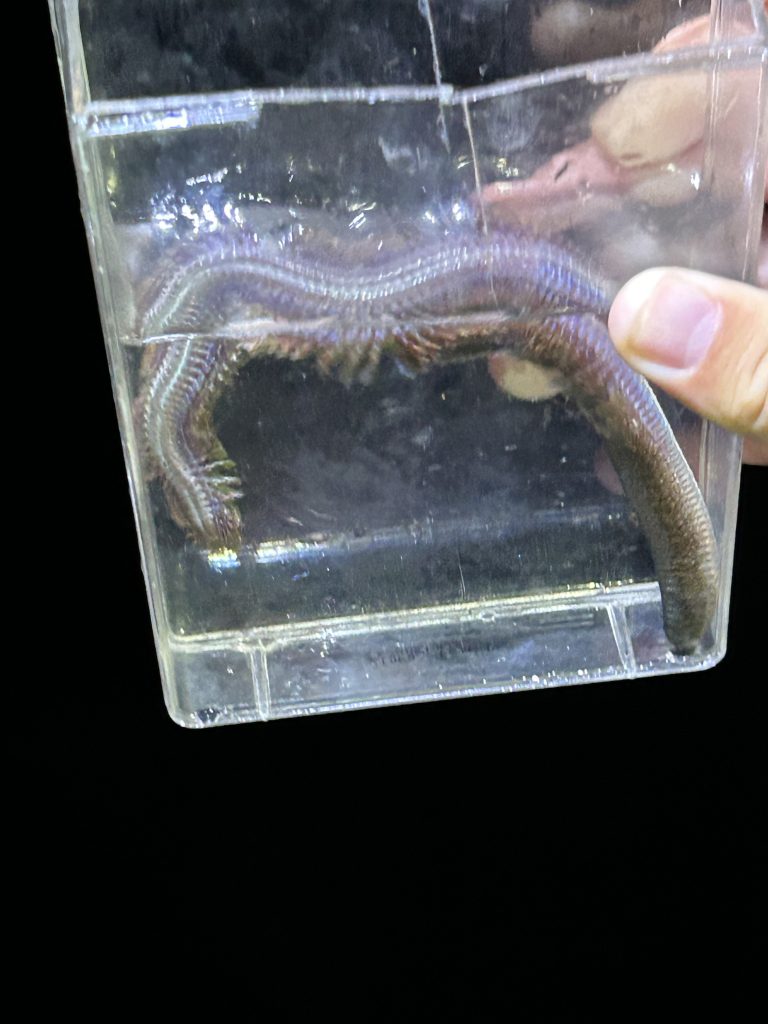
Tonight, we are going to go night lighting with Maya. Night lighting is when you take lights down to the dock and lookout for marine organisms. We are all excited so see what we will find, but we are going to have a late night. Good night, see you tomorrow!
Huge marine worm captured on the dock (Photo by Harper)
Ringing met us as we awoke to start a new day. Many alarms and sleepy faces rose from bed covers as everyone headed down for a horribly early 7am breakfast with 30 minutes until the vans needed to be loaded. Today, we headed to Orcas Island via the ferry for some much-needed R&R after many hours of project work time (some having more fun than others). It was an interesting morning that led into an amazing day hiking, eating, and swimming.
First, we loaded into the vans to drive onto the ferry; this was followed by around an hour in the van and then even more time in the ferry, where 3 stops were made. Although that might sound unfortunate, the time was spent quite peacefully; some people worked on puzzles while others chatted, looking at the view. We even saw some baby seagulls and a harbor seal!
After taking a tour of the islands, we arrived at our destination for the day: Orcas Island. A wonderful small town with major beach vibes greeted us while we drove through town for our next activity. This activity consisted of a short hike around the only known salmon spawning location in the San Juan Islands. The water looked gorgeous and the hike was very pleasant with the forest surrounding us and nothing but lunch and swimming to look forward to.
Eating lunch atop Mount Constitution (photo by Orrin)
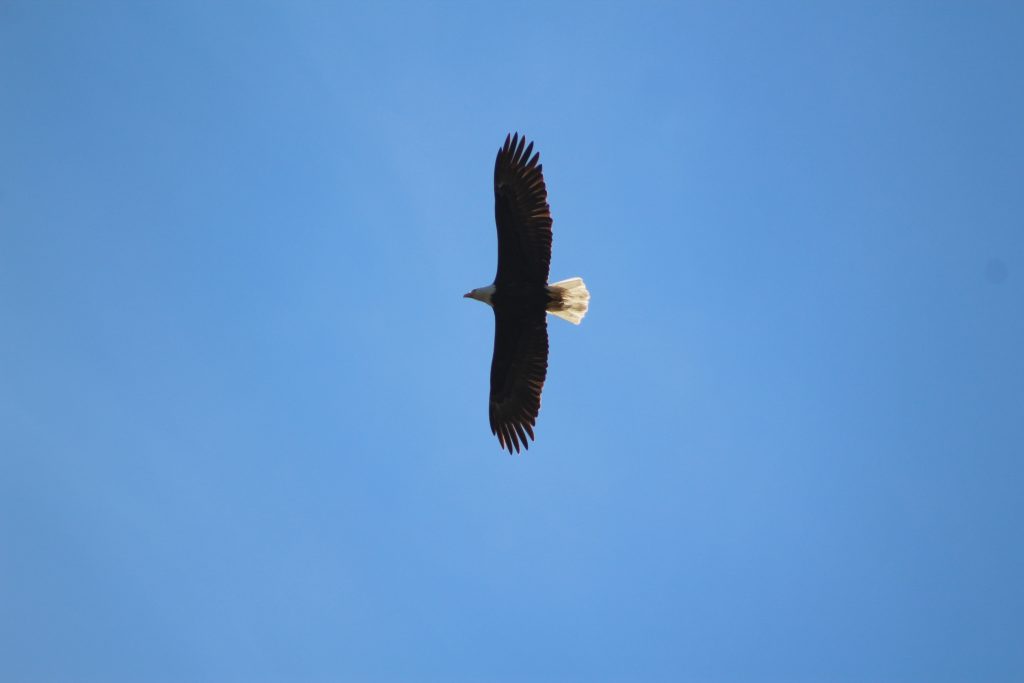
Speaking of lunch, after the hike, we made our way back to the vans and made our way to one of the most beautiful views on the island: Mount Constitution. A windy road later, we were at the mountains’ summit and the highest point in all of the islands. We ate lunch quickly while bald eagles and hawks flew around and above us. Then, we prepared for the highlight of the whole day. It was time to swim.
Another view from the watchtower on Mount Constitution (photo by Orrin)
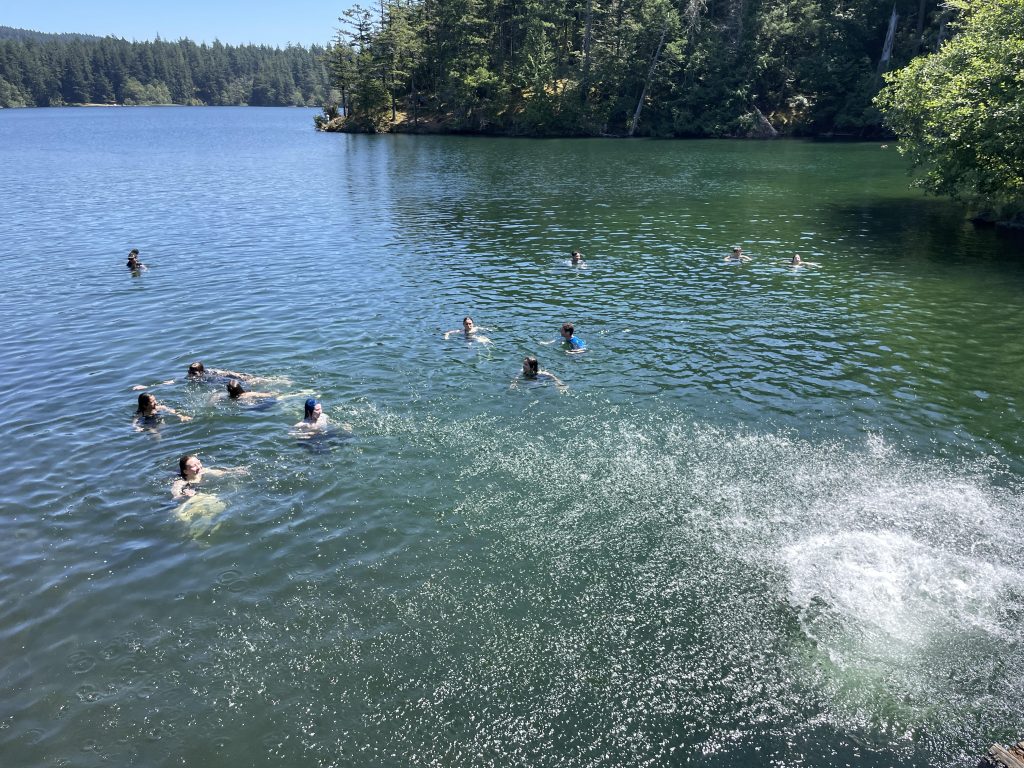
We arrived at one of Orcas Islands many lakes. After some inflating of paddle boards, complaining about cold water and splashing around in the water we headed to our final location. Some of us headed around the lake on foot (with some having better visibility than others) while others paddled to the location. No matter how we got there we all arrived at a bridge which spanned the lake. We wasted no time, we put our stuff down, ran to the bridge, climbed to the edge and JUMPED!. Laughter and the splash of water could be heard from all of us. We spent the time exploring the area, swimming and jumping from the bridge. The travel back to the vans was no less chaotic. How do four people on one paddleboard get across a lake is a question that has now been answered: slowly but surely, with a lot of flailing about.
Cooling off in Paradise Lake (photo by Maya)
After a long, fun day we were all ready to head back the Friday Harbor. The ferry ride back was entertaining as the first one with plenty of puzzles and gorgeous views to admire. The day ended with a great dinner and relaxing free time.
Tuesday, July 15. By: Mira, Vidita, Asher, and Noam
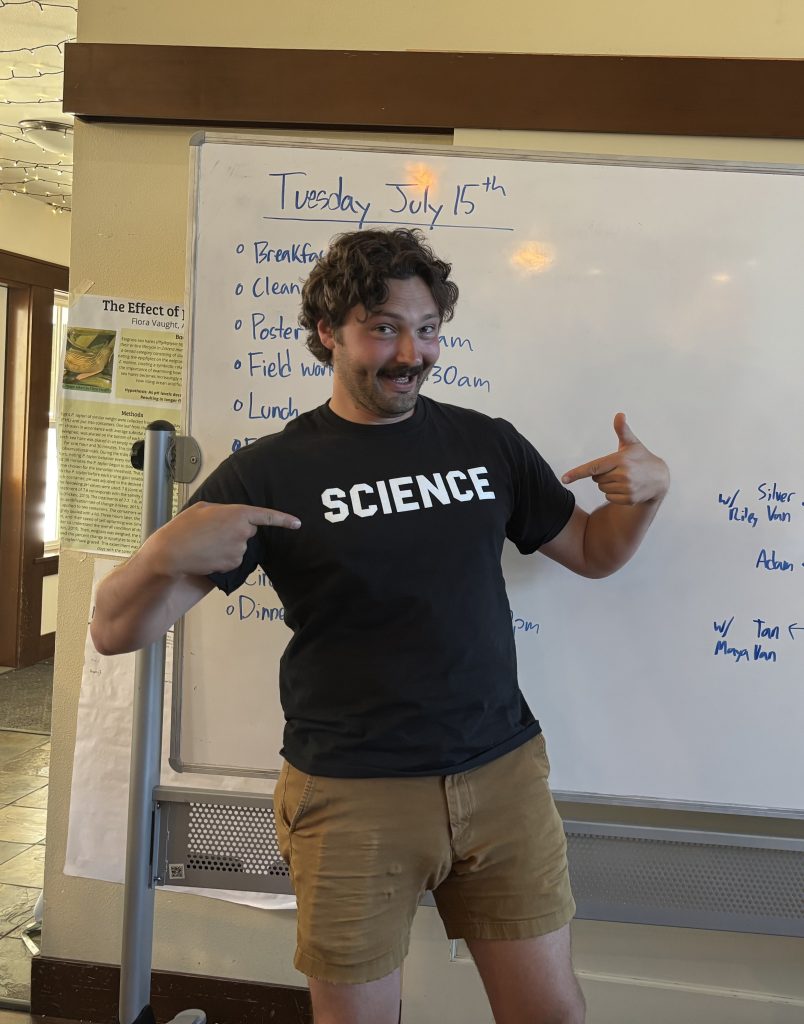
Adam wearing an amazing shirt (photo by Mira)
The morning began–and remained–particularily sunny, setting the mood for a bright day of learning and field work. It was a smooth transition from breakfast into a workshop on the ideal scientific poster. After a session of analyzing student posters and a sporadic seminar of student discussion, the group came up with a list of do’s and dont’s–which we plan to keep in mind for the poster presentation in 9 days.
Reuben Tarte (photo by Noam)
After lunch and a bit of project worktime, the cohort split into several groups to head out to different points on San Juan Island in order to collect data for their research projects. One group of four arrived to Reuben Tarte, a rocky beach with large amounts of seaweed covering the rocks, hills surrounding the water, and a bald eagle perched on an evergreen tree overhead. Two students set out a transect and collected crabs to determine the sex ratio among the population. Another student collected zooplankton from the water and measured the pH to determine pH’s effect on zooplankton. The last student randomly set down quadrats and measured the pH and biodiversity to determine their correlation to each other. Once each exhausted student finished collecting data it was a peaceful ride with Riley back to the dorms.
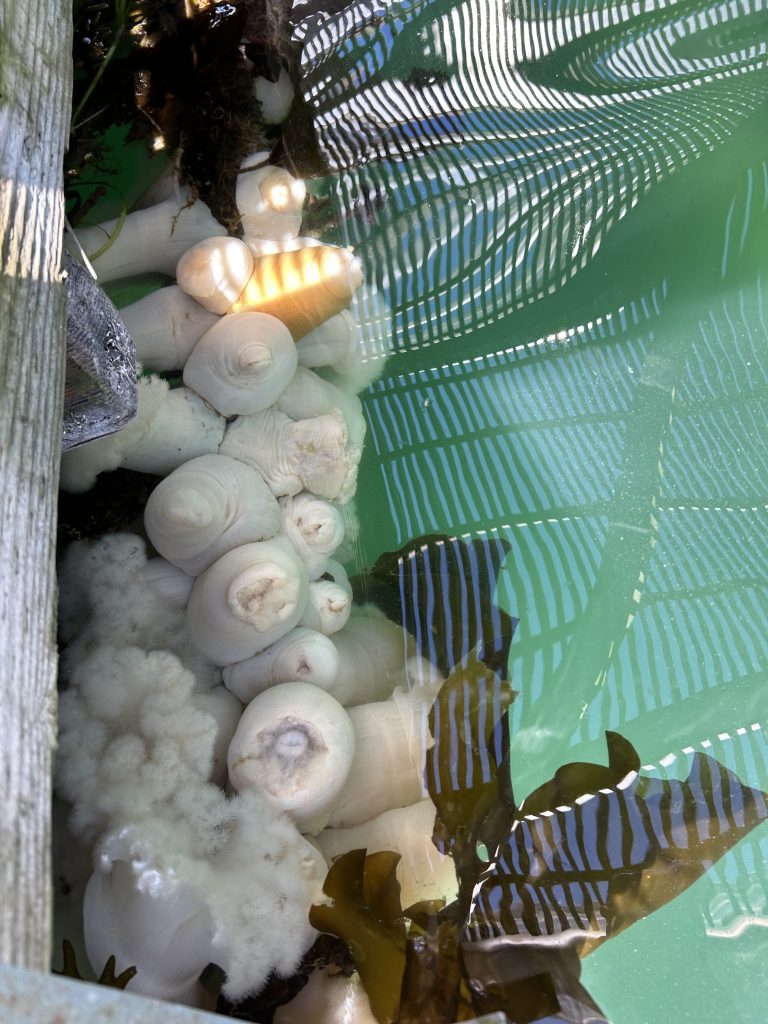
Giant plumose anemones at the Friday Harbor Marina (photo by Harper)
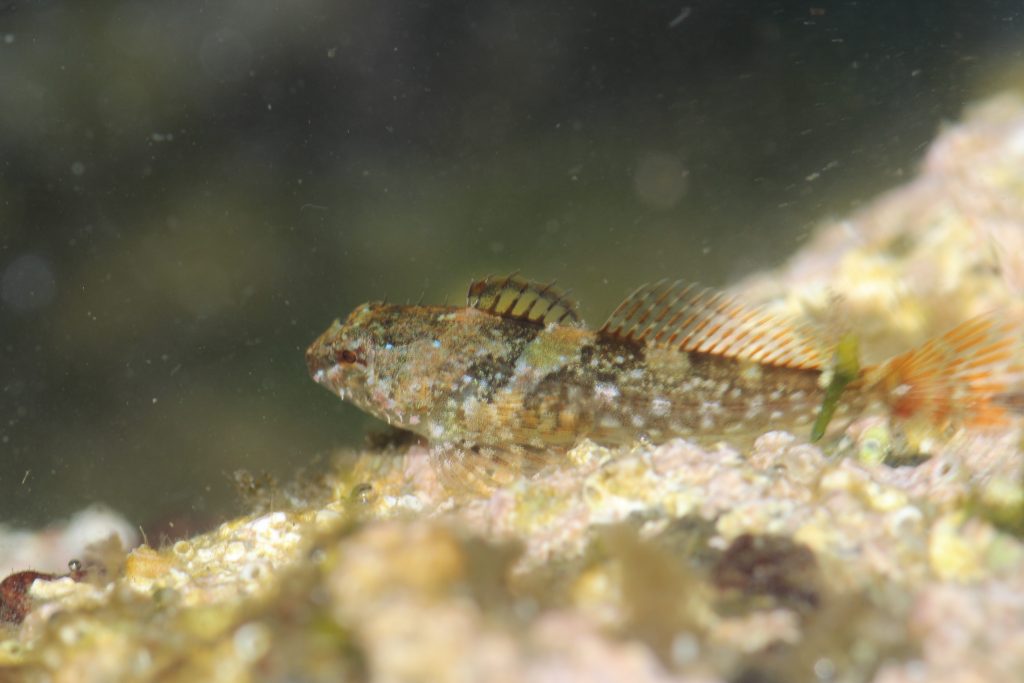
A different group headed down to the Friday Harbor Marina and some nearby beaches. Many projects began to take shape, from examining biodiversity in high vs. low tide areas to sculpin species surveys. One student did a plankton tow for a project on the relationship between plankton present and dissolved oxygen levels in the water, while another student collected water samples to observe how fecal coliform affects fouling communities. Another student was working on a project on how removing algae affects the fowling communities around it. Two students worked with Dr. Amy Cook on observing how Pigeon Guillemot behavior is affected by boat traffic. Eventually, several students headed back to the lab where many fascinating projects were occurring, such as examining species of intertidal flies and seeing how noise pollution affects shore crabs’ ability to right themselves after being flipped over.
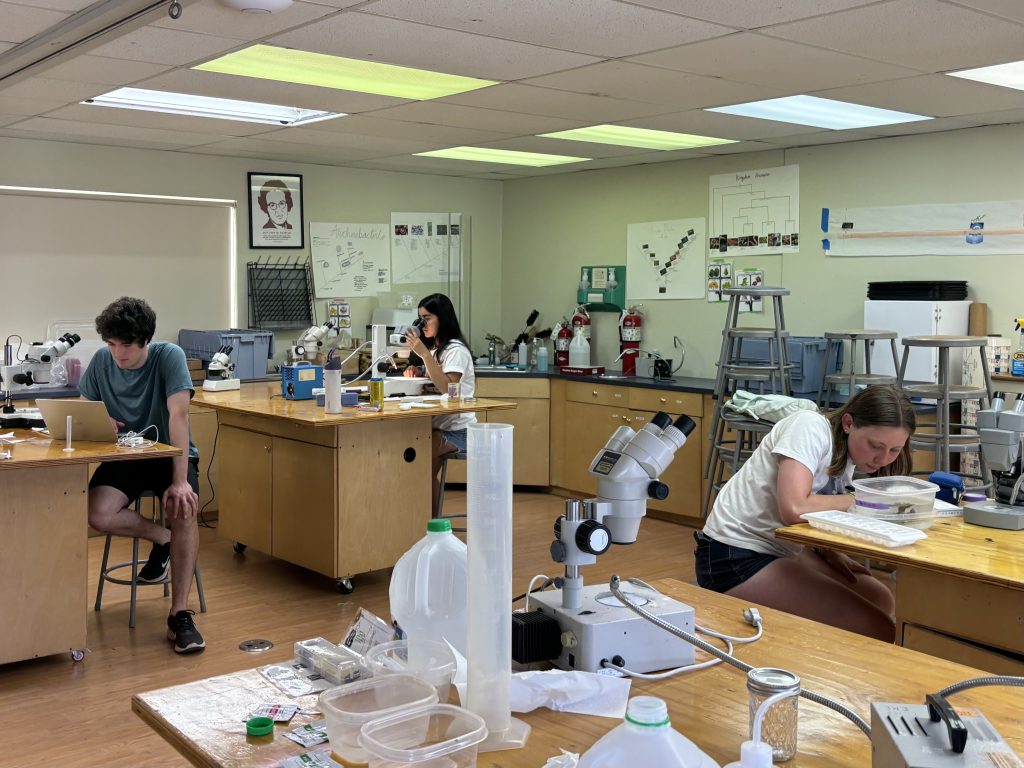
Miles, Hitomi, and Lars working in the lab (photo by Mira)Mira extracting fecal coliform from water samples (photo by Lars)
The last group headed down to 4th of July Beach to collect data on eelgrass, a type of marine plant that only grows in soft sediment. They were joined by an additional student who hasn’t received his necessary data from the Whale Museum yet, and was working as a research assistant. One student was working on measuring how the density of eelgrass relates to the distance to the shore. Another student was looking at how harvesting impacts eelgrass, from plots set by San Juan Conservation District. One other student looked at how the amount of flowering heads in an area affects the amount of seeds that appear in a seed core in the same area. Another student was looking into how a variety of climate related conditions relates to the presence and severity of Eelgrass Wasting Disease, while a last student researched how trampling and harvesting eelgrass affects the amount of eelgrass wasting disease. After an exhausting day, that thankfully was more successful than the day before, that group packed up and drove with Maya back to the dorms
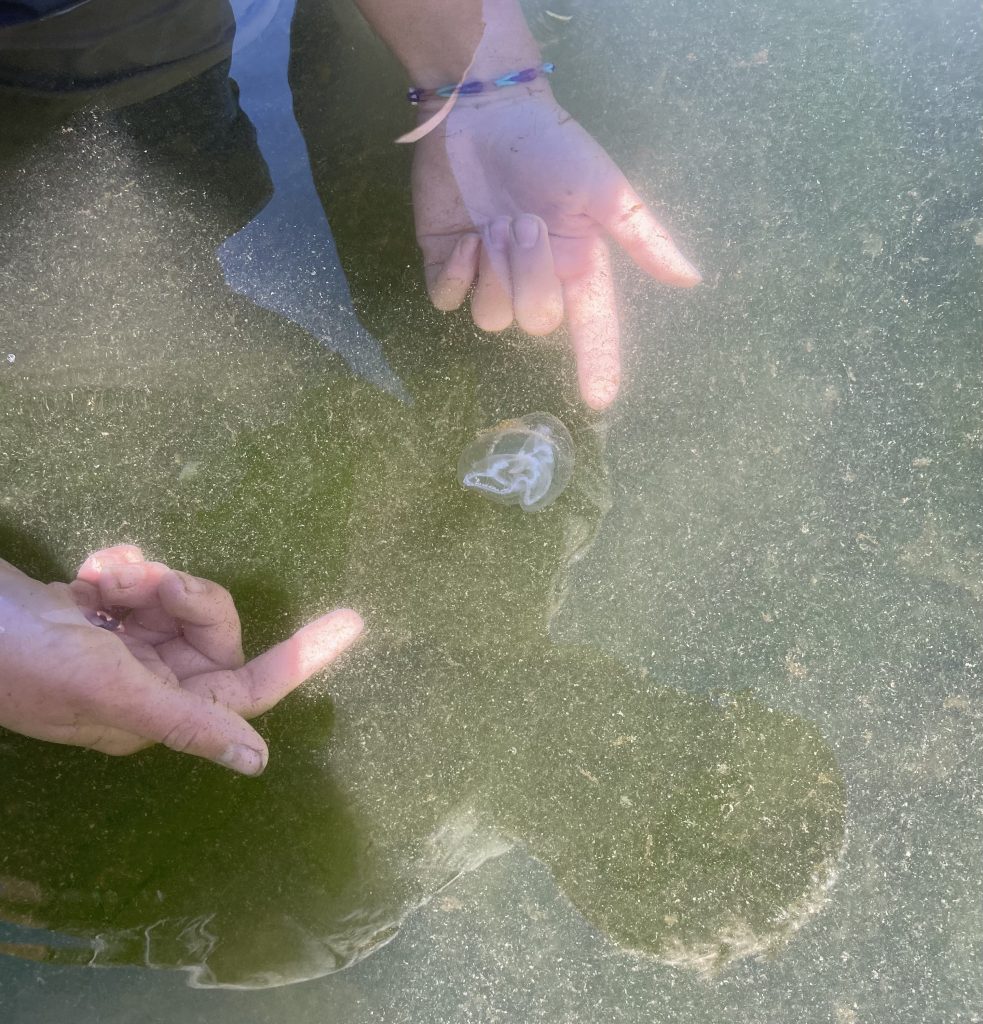
Observing a cross jellyfish at 4th of July Beach (photo by Violet)
At dinner, which was baked potatoes, we were joined by Dr Emily Kane, as well as two of her students, who were with us to talk about sculpin fins and how they remain anchored even through strong tides. After the talk, we then had several hours of free time, to read, watch something, play games, and relax until bedtime.
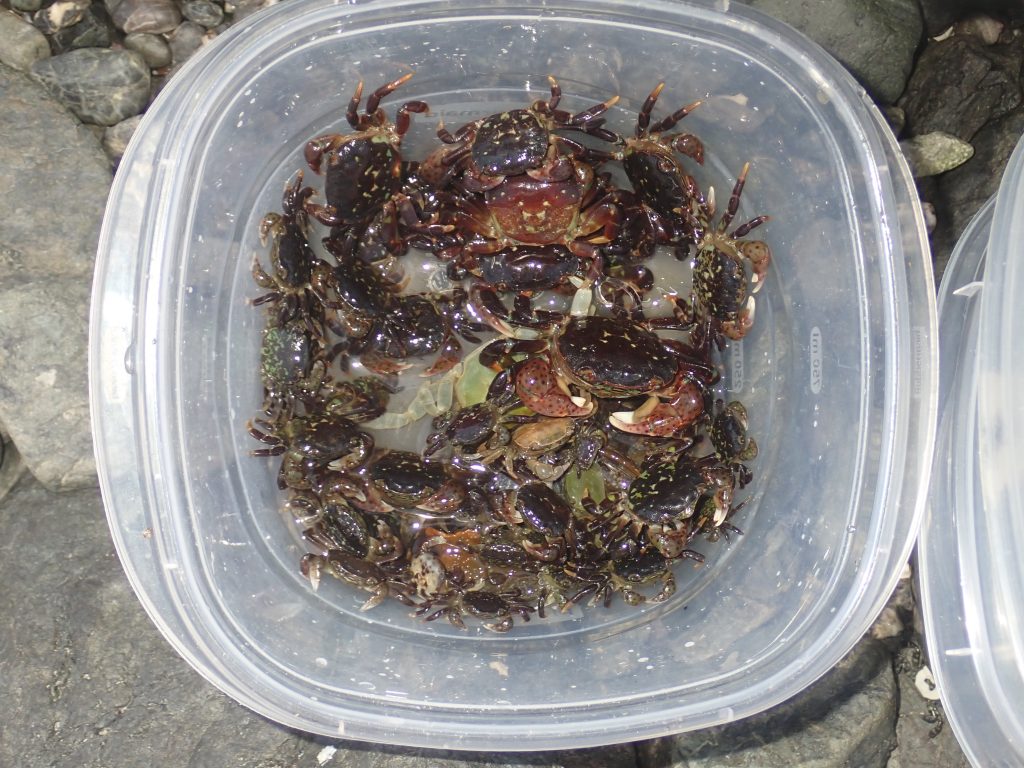
A collection of purple and hairy shore crabs for Anissa’s Research Project (Photo by Lars)
We woke up this morning so excited for a day full of data collection. Today was the first day for most people to collect data for their research projects. But before anyone could get to their destinations, spent an hour and a half doing a deep clean of the dorms, the kitchen, the bathrooms, the floors, the carpets. Basically everything. Cassandra was super proud of the effort we all put into to keep our spaces clean and tidy. It felt satisfying to make our dorm parent proud.
After a serious clean, we each gathered equipment for our data collection: quadrats, transects, calipers, notebooks and pencils, turbidimeters, fly paper, meter sticks, buckets, and hammers. We had a relaxing lunch of leftover fried rice, fruit, and sandwiches. Then we kicked off expiditions! For these past two weeks, we had been working on research, and chores in teams, together. Today marked the first time we were responsible for our own project work to be completed for the sake of our own. The three groups set out; the gold van took people to 4th of July Beach and Cattle Point. The silver van took people to Deadman’s Cove. A third group walked to Friday Harbor Marina and Argyle (a biological preserve next to Jackson’s Beach).
The gold van set out first to Cattle Point, where it dropped off some people before heading to 4th of July Beach. Data collection at Cattle Point focused on plankton and seaweed diversity.
At 4th of July Beach, we revisited our eelgrass plots to collect data on different aspects of the meadow—pH, amount of Labyrinthula zostera, etc.—and how it compared to our past data.
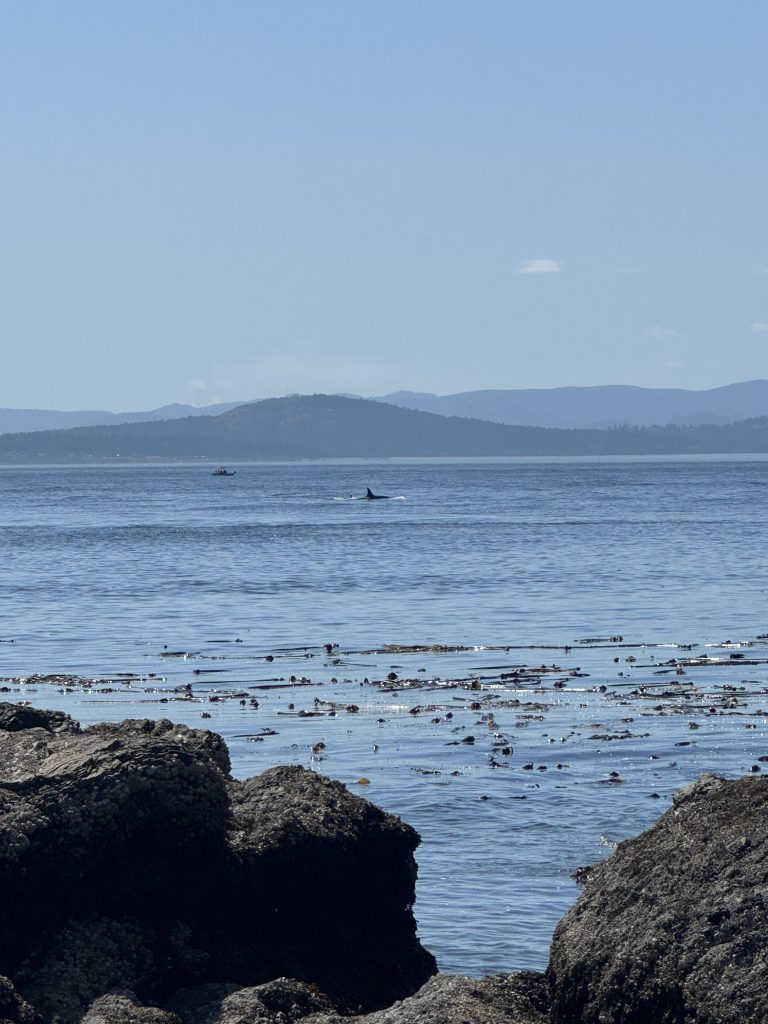
At Deadman’s, we collected data on the correlation of pH to marine invertebrate diversity, studies on sex ratios of crabs, and the diversity of flies in the intertidal. Towards the end of our data collection, we were visited by a beautiful pod of orcas. Over the course of 20 minutes, we witnessed at least 20 orcas including many females, a mother with her calf, and a massive male with a dorsal fin at least 5 feet tall.
When we got back to the dorms, there was a fair amount of jealousy and anger from many over missing orcas. Despite some of us having the opportunity to celebrate World Orca Day in more fortunate ways, we all reflected on the impact these beautiful creatures have on the world and cultures around us. They have played a critical role in countless lives for centuries and will continue to do so. The calf we spotted is the next generation of hope for the species many cherish dearly.
Theres a chance we may have seen the J pod of the salmon eating Southern Resident Killer Whales. If your interested in learning more about how you can make an impact on our endangered Southern Resident Orcas, we recommend looking into this thought provoking website by NOAA: https://noaa.maps.arcgis.com/apps/Cascade/index.html?appid=3405e6637bf74e998d4ebe992c54f613
Mother Orca and her calf (photo by Lars)
While we were watching orcas, the group at 4th of July Beach was busy rummaging through turbid water, trying to count eelgrass stems and dealing with the frustration of every pH detector failing due to corroded batteries. When challenges hit, we adapt quickly—getting smarter and working harder to push through.
Meanwhile, at Friday Harbor Marina, others were monitoring pigeon guillemots and observing their reactions to heavy boat traffic. By mid-afternoon, we regrouped with our equipment and, of course, shared the story of our incredible orca sighting—once again met with plenty of jealousy.
We then started writing this blog and are expecting a delicious dinner of pasta with a choice of pesto or tomato sauce, a side of chicken or veggie burger, salad, steamed broccoli, and a dessert of watermelon, grapes, and raspberries. After dinner, we will share out about how our data collection went and what our research question is. And there will undoubtedly be more outrage over our orca sighting.
We have 9 more days for us all to see the magic that Orcas bring to when you spot them off shore!
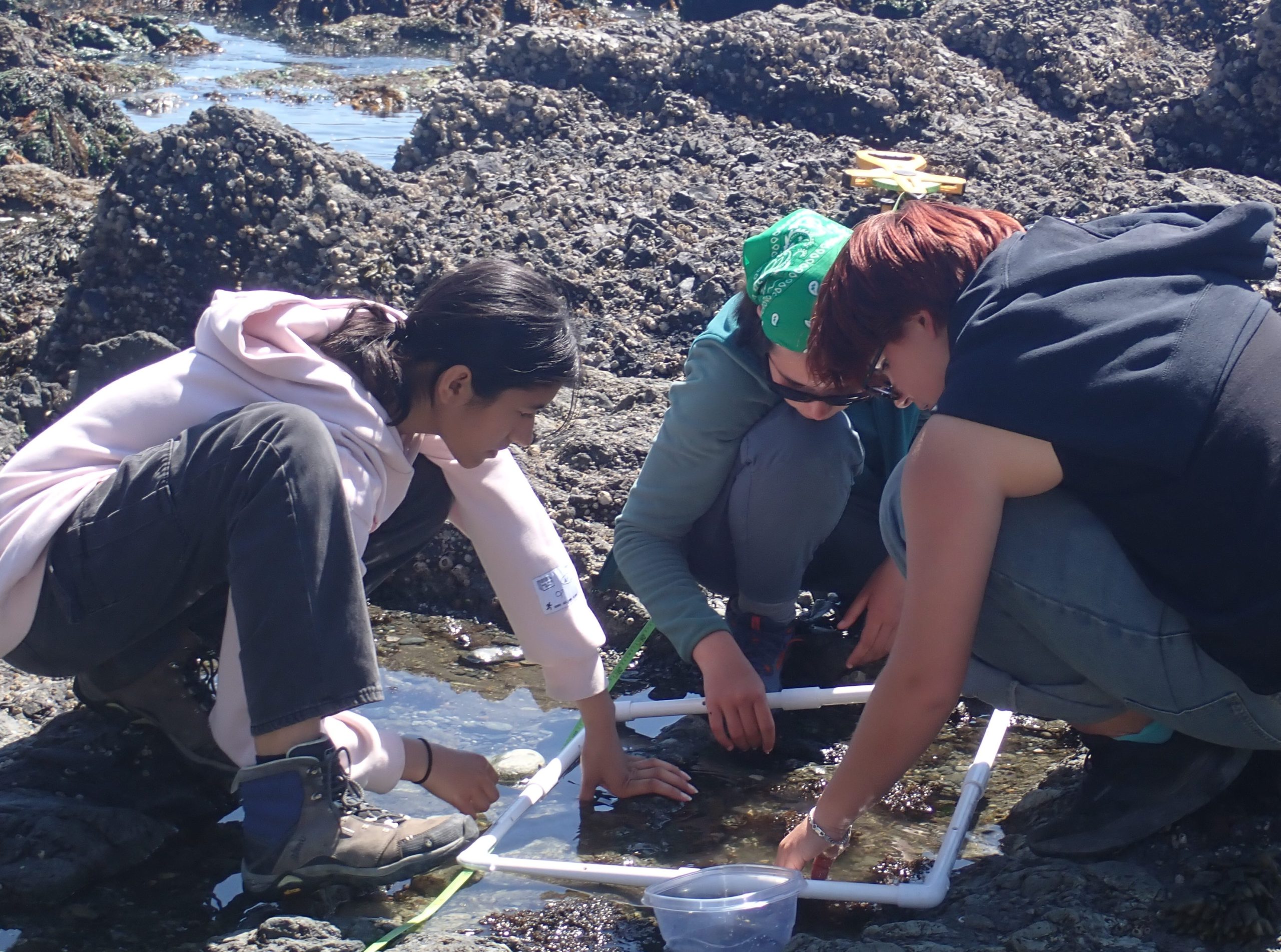
Vidita, Isabelle, and Anisa looking for crabs in a quadrat (Photo by Lars)
We woke up, as usual, to our breakfast buffet set out by the breakfast crew. Everyone ate their various breakfasts and packed our lunches for the day. We rubbed our bleary eyes and got ready to work. Instead of going into the field, we started our day with a couple of hours of dedicated project time done from the comfort of our dorm rooms. People decided on specific research questions and began background research. Some even wrote out their specified methods, getting ready for the field data portion of our day.
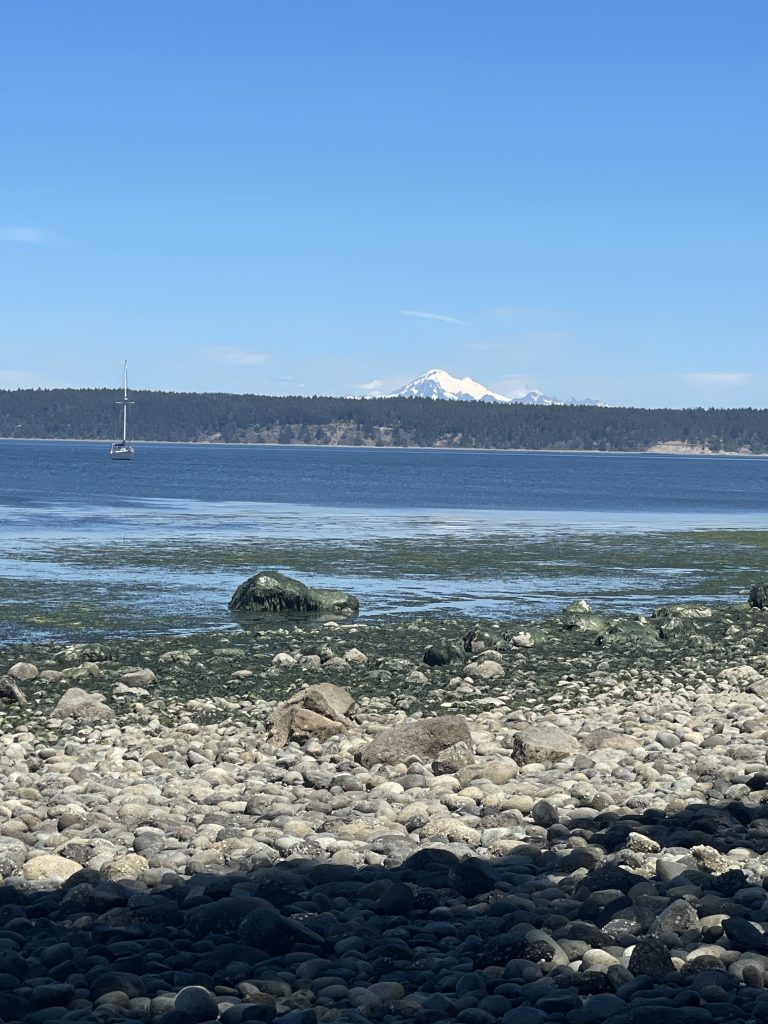
View from 4th of July Beach (photo by Maya)
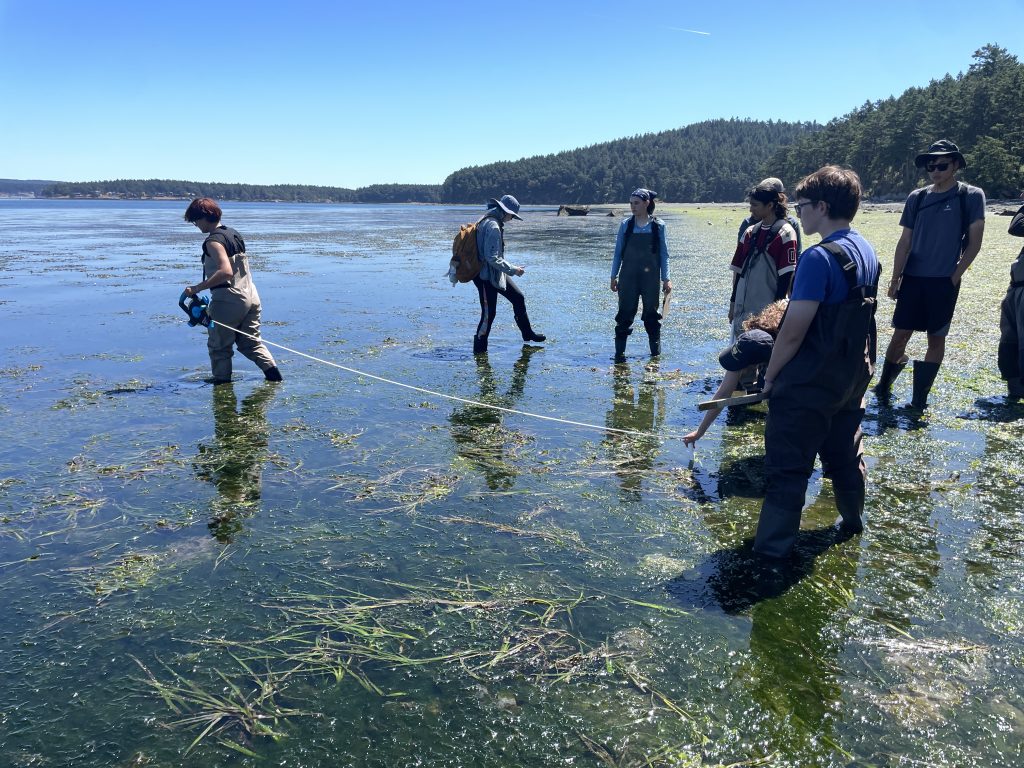
After planning out our projects in the morning, we split up into two topic-based groups. One of these groups went to help Sage with her eelgrass data collection, which is the one I decided to join! We spent about four hours at Fourth of July Beach, collecting statistics about eelgrass populations within 3-by-8 meter plots. These plots (approximately 8 in total) were divided into harvest and observation plots, with the harvesting plots requiring an additional step before completion. We would trample all the plots by crawling through each one on our hands and knees, but the harvesting plots had half of the flowering heads (those with seeds) taken for replanting. Once we were done helping Sage with her data, those of us with eelgrass-related projects got to start our own data collection! At the end of the session, we all (very tiredly) walked back to the van to get to our next activity.
Eelgrass field work (photo by Maya)
Those who chose to spend their time clam digging headed over to Argyle Lagoon with Riley and Adam. We first enjoyed lunch on Jackson’s Beach with the beautiful sunny weather! After relaxing for a bit, we split into groups and dug up clams from first the high intertidal zone then low intertidal zone, all in search for Soft-shelled Clams, Little Neck Clams, Bent-nose Clams and Varnish Clams. After recording the data needed, we returned all but the Varnish Clams (as they are an invasive species), so instead we took them back to the lab for further research.
Varnish Clams (Photo by Harper)
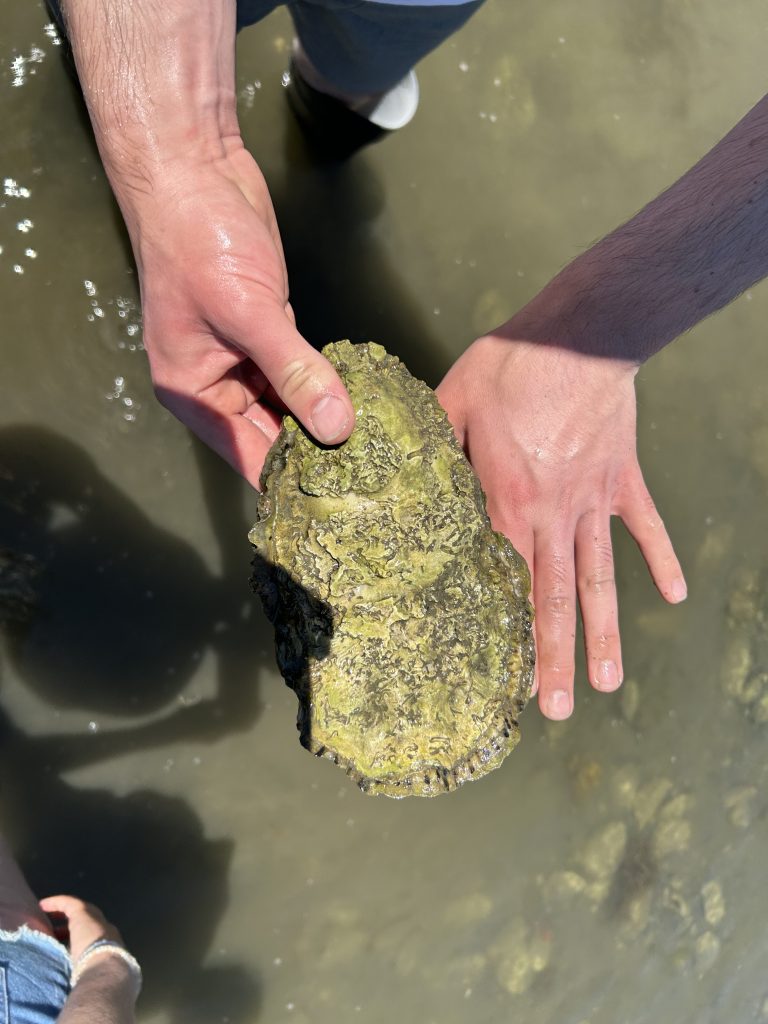
After fun clam digging, we returned the gear to the van to dry and in the meantime searched for sand dollars in the nearby waterway. Along with sand dollars we discovered a very rich ecosystem with HUGE (possibly ten year old) oysters, mussels, chitons and crabs! Upon returning from our clam adventures, Riley and Adam helped us finalize our project plans for the official start of our research tomorrow!
Giant Pacific Oyster compared to Miles’s hand (Photo by Harper)
After we all returned to the dorms to eat dinner, we all settled down and joined a Zoom call with our guest for the evening: Ms. Megan Cook. Megan works as the Director of Education & Outreach at the Ocean Exploration Trust and she is currently serving as the Communications Lead aboard the Exploration Vessel (EV) Nautilus. Megan graduated from Oregon State University (SKO BEAVS!!) in 2009 with a focus in marine biology and chemistry, after which she worked various jobs before graduating from Duke University in 2020 with a master’s degree in Environmental Leadership. Currently, the EV Nautilus is stationed in the Solomon Islands mapping a deep sea region known as “Iron Bottom Sound” which has served as a graveyard for countless World War 2-era vessels. Though sonar has been essential in creating these maps, Megan and her crew also utilize several mechanical drones that allow them to visually survey the seafloor, these being the Uncrewed Service Vehicle (USV) DriX and the Remotely Operated Vehicle (ROV) Hercules. According to Megan, only around 26% of the ocean has been mapped with modern technology while less than 0.001% of the deep sea has ever been seen with human eyes!
Social media links for Nautilus Live Project (Photo by Harper)
After saying goodbye to Megan, we started to prepare for bed, wanting to get sleep for the day ahead in which some of us would begin conducting research for our independent projects…
Saturday, oh Saturday, how I love you so… (hopefully)
We all woke up this morning with bright plans in mind, as today was set to be a chill day. Many of us had stayed up late watching movies and playing cards—some even played games until the wee hours of the morning. So, when a few of us slept through our alarms, it was hardly a surprise. A groggy start eventually gave way to a calm morning, followed by some productive project work and a trip to survey data on pigeon guillemots at the Friday Harbor Dock.
Photo by Orrin
Six of us joined this outing, eager to dive deeper into behavioral science and explore how field scientists collect data. One of our goals was to gather information for our upcoming poster projects. For others, it was a chance to see whether a project about pigeon guillemots was the right fit for them.
Photo by Orrin
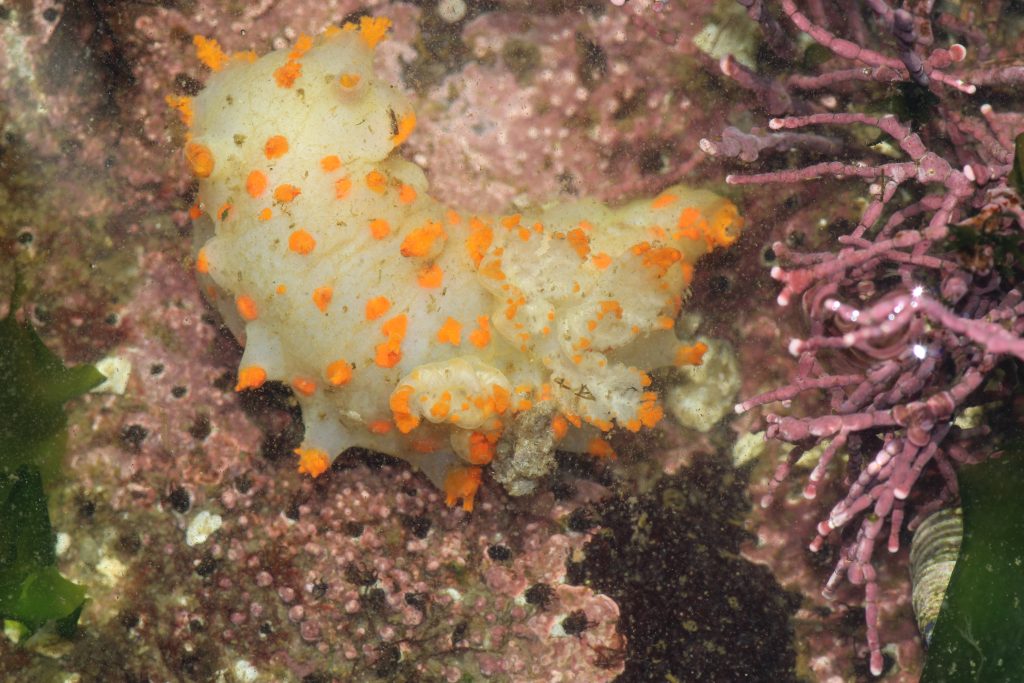
After a couple of hours of research and work, it was time for lunch. We packed into the van and headed to Deadman’s Beach, where we enjoyed our meals with a stunning ocean view. Afterward, we went tidepooling and discovered all sorts of marine wonders—giant nudibranchs, huge chitons, colorful sea stars, countless crabs, and many other breathtaking organisms.
Photo by Orrin
On the way back, the next thing on the schedule was something mysteriously titled “Structured Recreational Time.” This, understandably, raised many questions and even a little apprehension, which were voiced repeatedly to our van driver, Maya. Upon returning, we learned what it really meant. Though some of us expected an afternoon wandering through a sculpture park–which didn’t exactly spark a ton of exitement–we were happily surprised to find out we were going back to Roche Harbor (the same place we visited earlier for kayaking).
There, many of us grabbed ice cream, wandered through the harbor shops, and enjoyed the lively energy of the area—including a very loud live band playing for passing pedestrians.
Photo by Asher
After exploring for about an hour, we returned to the dorms to check in, prep dinner, and enjoy some free time. Soon, we were seated around the dinner table with plates of fried rice, joined by Dr. Anna Shcherbina, an immunologist who is now focused on molecular biology.
After dinner, we dove into a learning session focused on the intersection between marine biology and immunology while discussing how different scientific fields can play very different yet vital roles in various aspects of biology.
With our heads full of new knowledge and inspiration, we split off for nighttime activities—some continued card games, others watched movies (like Maze Runner), and a few people crushed their friends in intense chess matches. Excited for the next day, we eventually wound down and drifted off to sleep.