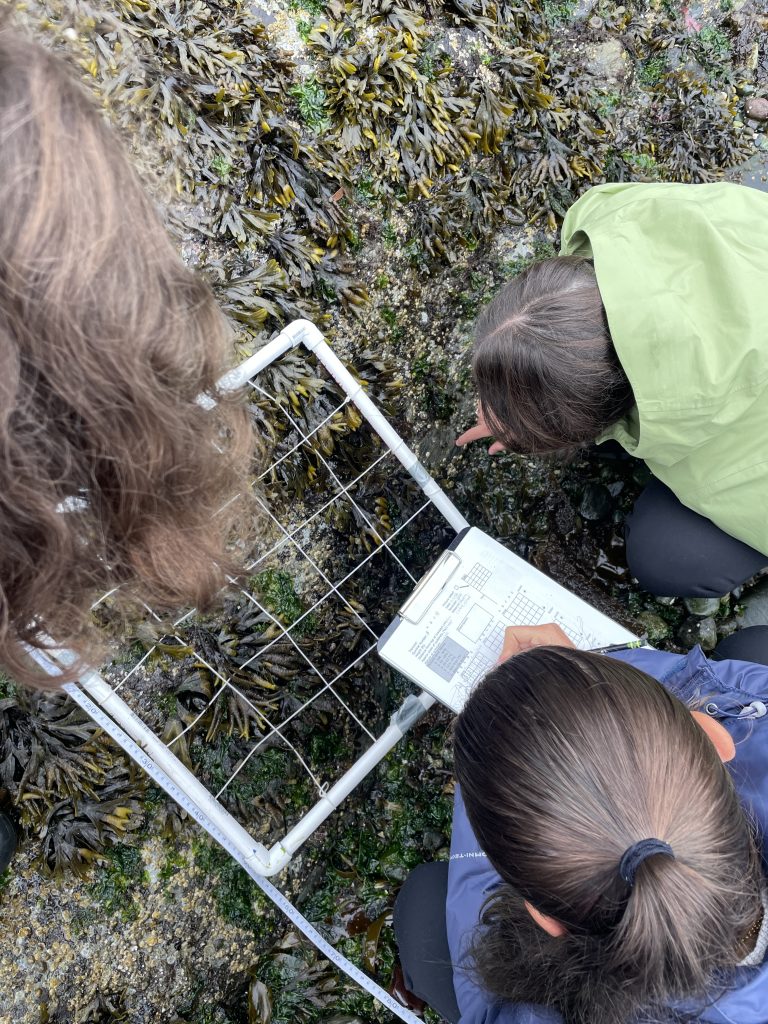
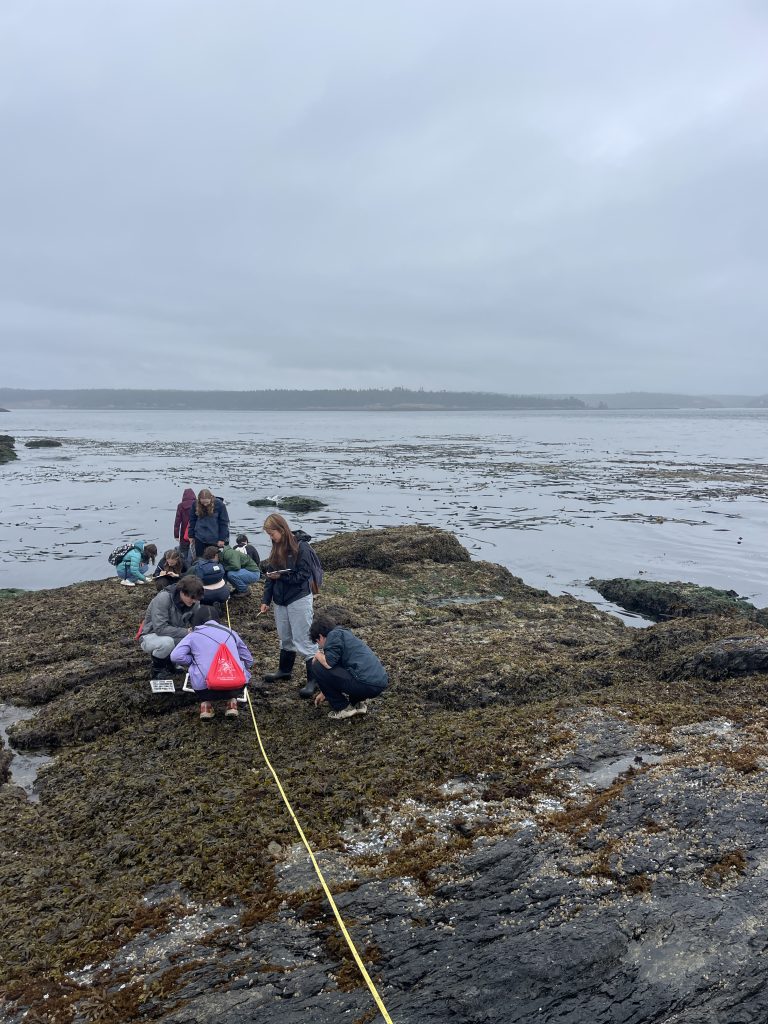
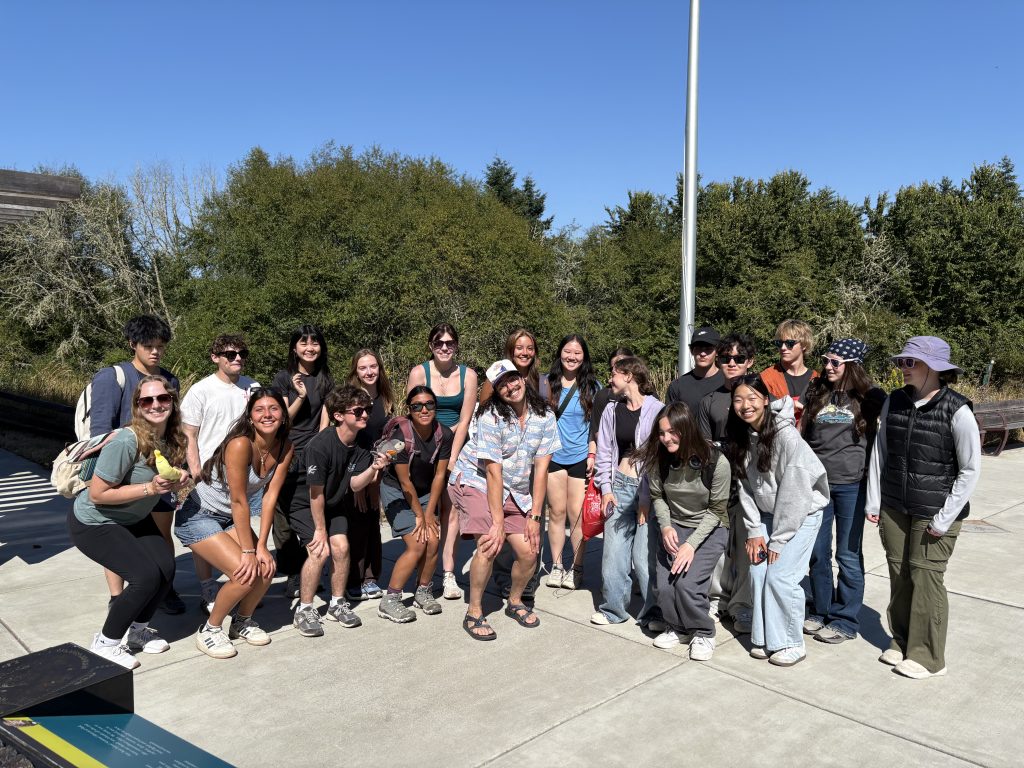
Our day started with a van ride to Cattle Point to conduct algae surveys on the behalf of Dr. Katy Dobkowski. Working in groups of 4, we trekked across beds of seaweeds and clamored over algae covered rocks. Our groups were hard at work cataloging the density of different species of algae. All the data will add to an important data base, and aid Dr. Dobkowski in her research.
Algae population survey; Photo credits: AveryConducting population surveys along a transect line; Photo credits: Avery
We all enjoyed the views and abundance of organisms at Cattle Point.
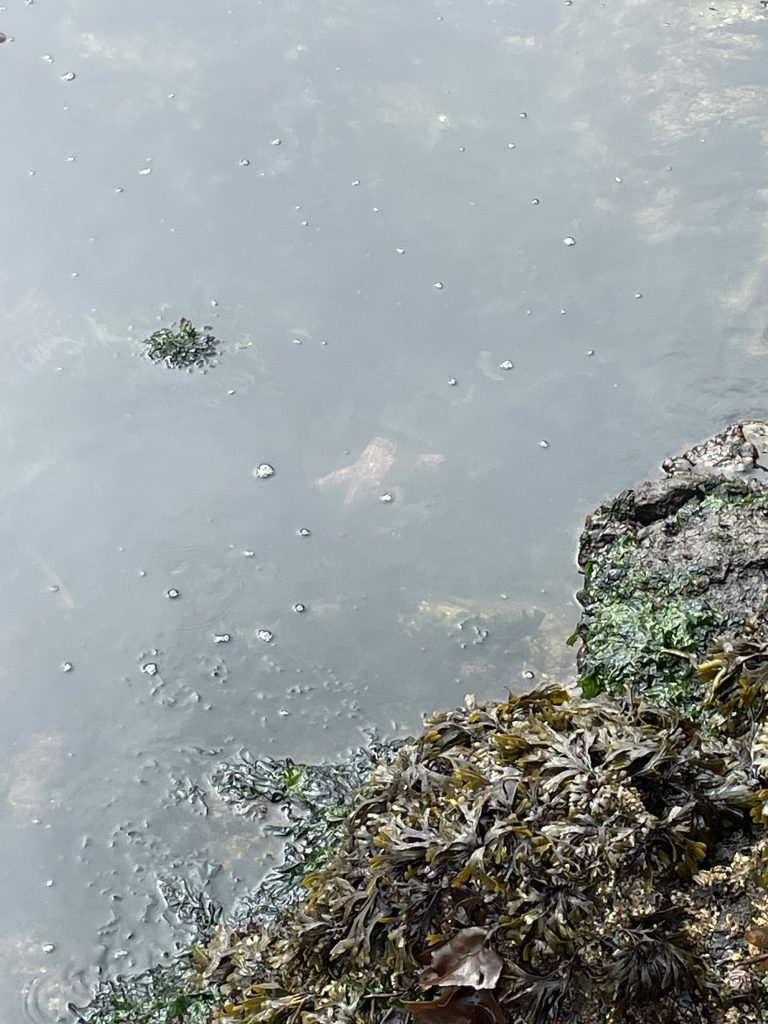
A huge sea star concealed beneath seaweed at Cattle Point; Photo credits: Avery
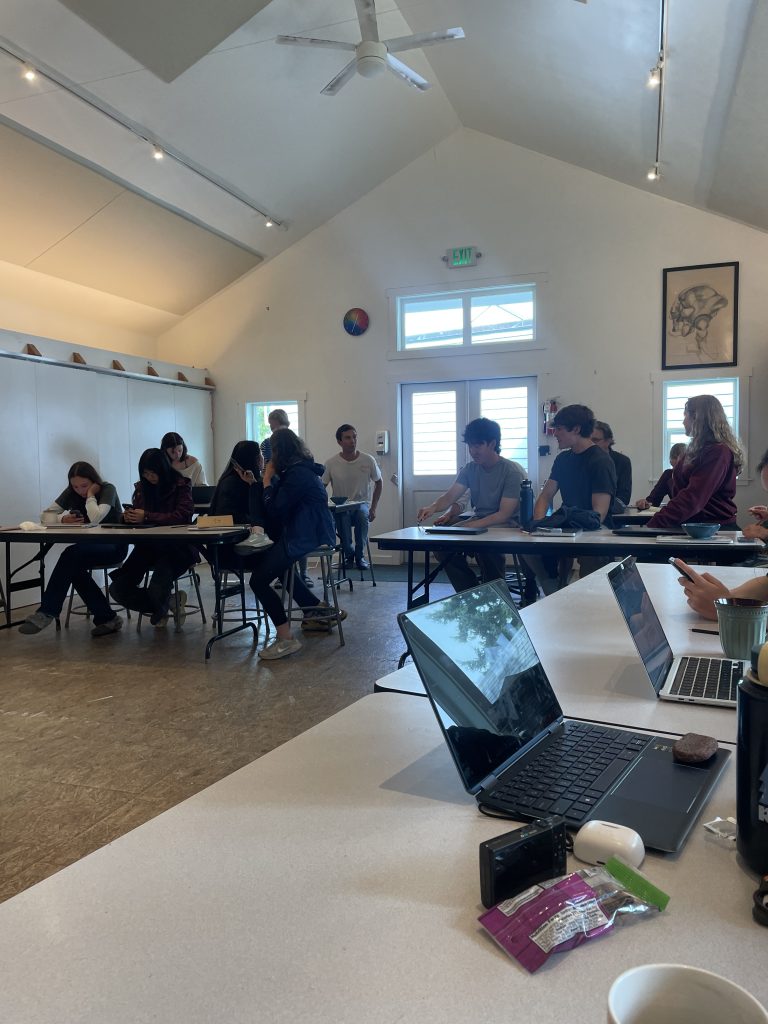
After gathering data on the different species of algae, we headed back to the dorm for our long anticipated debate. We were split into pro and con groups for each of the two topics: Island Marble Butterfly conservation, and the implementation of OPALCO’s pilot tidal energy project. After a stressful ten minutes of last minute preparation, impassioned debaters argued their side. The pro side won for the Island Marble Butterflies, while the con side won for OPALCO’s tidal project.
Teams waiting to debate; Photo credits: Avery
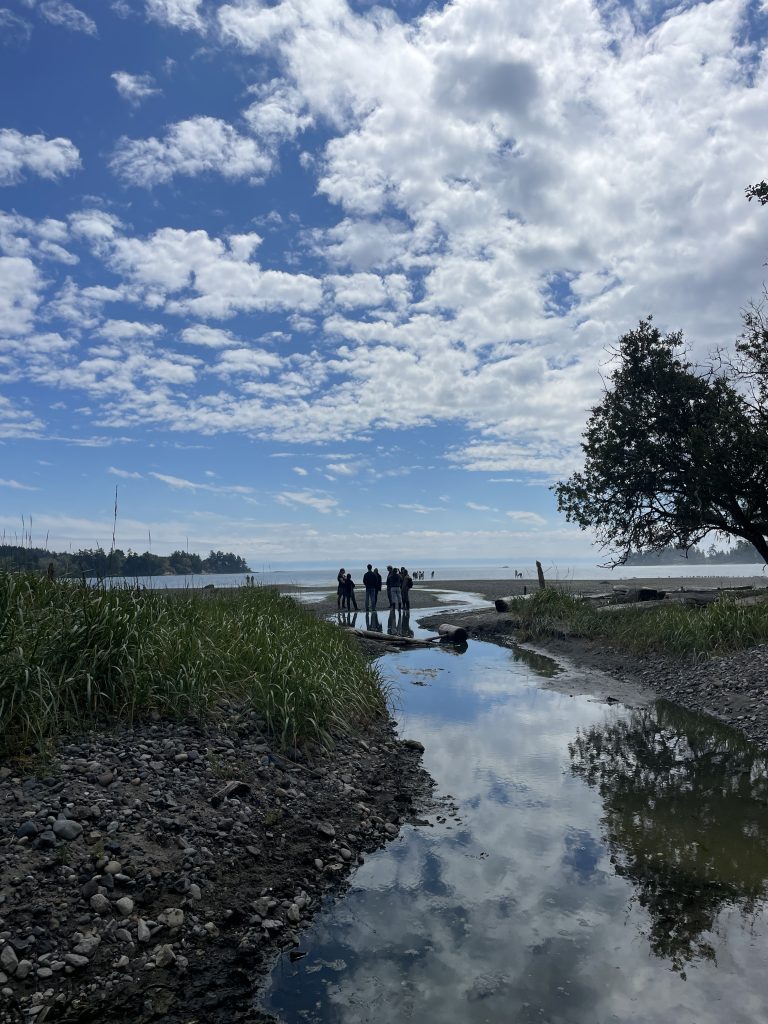
After a quick lunch of leftovers, we hurried back into the vans and drove to False Bay. When we got there, we were introduced to Beth Tate, a Washington Department of Fish and Wildlife employee. At False Bay, we learned about the invasive fish, the Northern Pike, and sustainable ways to preserve and restore salmon spawning locations, as well as the complexities of renewable energy sources.
View of the freshwater creek running into False Bay; Photo credits: Avery
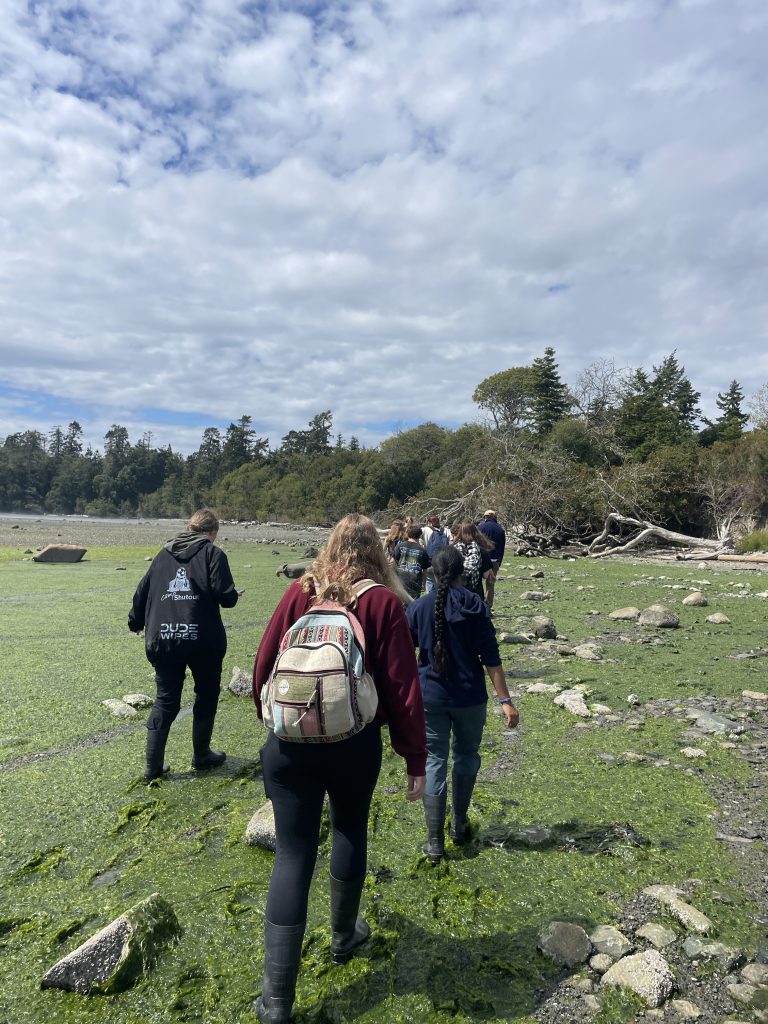
We explored the beach, which was littered with stinky algae, for around an hour, before piling back into the vans and heading back to the dorms for some project work time.
Trudging through the stinky, slimy, slippery algae at False Bay; Photo credits: Avery
Tonight we are having Aisha Rashid, a member of the SeaDoc Society over as our dinner guest, and then heading back out for a final night of karaoke!
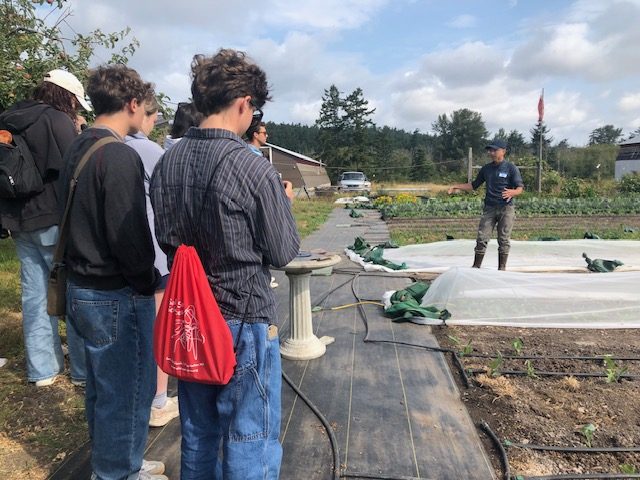
After an early breakfast, we piled into the vans with our lunch boxes packed for our busy day ahead! Our first stop, New Hannah Farm, where the lead farmer Zach Chan gave us a tour, while explaining the sustainable farming practices he uses!
Zach explaining the irrigation system – Photo Credit: Shristi
Zach taught us all about how different it is to work on a small-scale farm compared to the usual farming practices throughout the country that prioritize big yields in a small amount of time. He also showcased some of his impressive projects on the farm, including the upcoming greenhouse-on-wheels he is working on that will be super beneficial in the future!
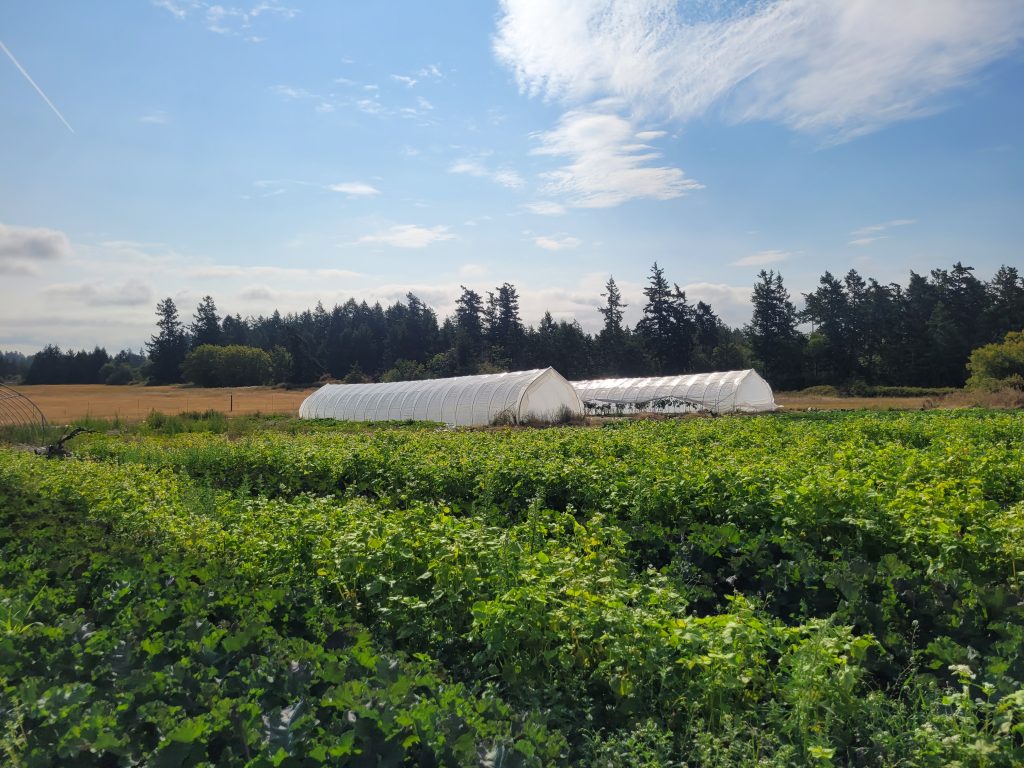
Greenhouses at New Hannah Farms – Photo Credit: Kendall
After the farm, we headed for Lime Kiln Preserve for lunch, where many people purchased hotdogs at the small snack shack, the Blow Hole, and hung out by the tide pools after lunch!
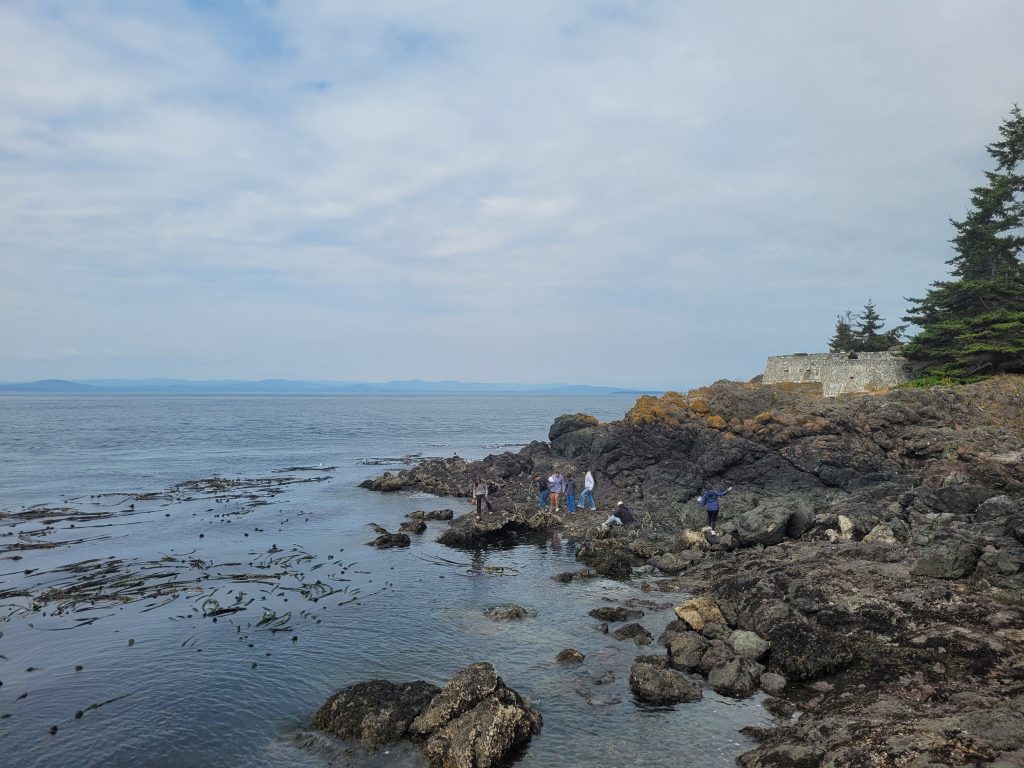
Lime Kiln Tide Poolers! Photo Credit: Kendall
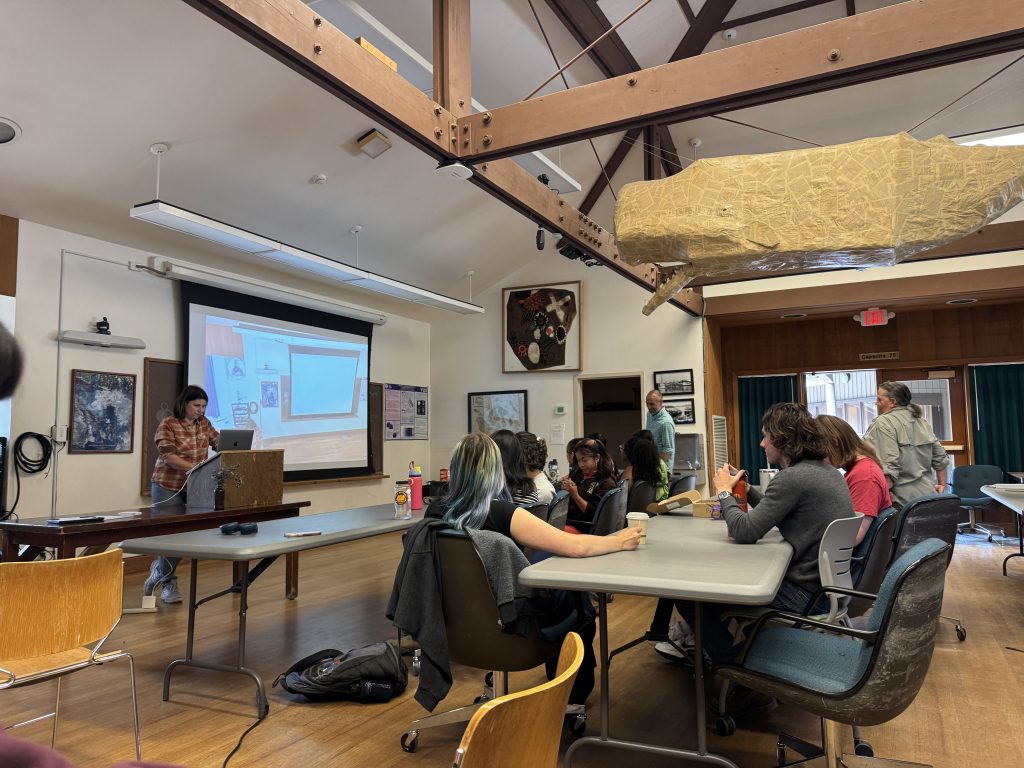
From Lime Kiln we went to the Friday Harbor Labs where we listened to some REU (Research Experience for Undergraduates) presentations. The presentations talked about their research, some of which covered sea urchin movement in relation to patterns and brain functioning, as well as exploring the role of water temperature in the development of sea stars and sea urchins.
REU Presentations – Photo Credit: Kaiya
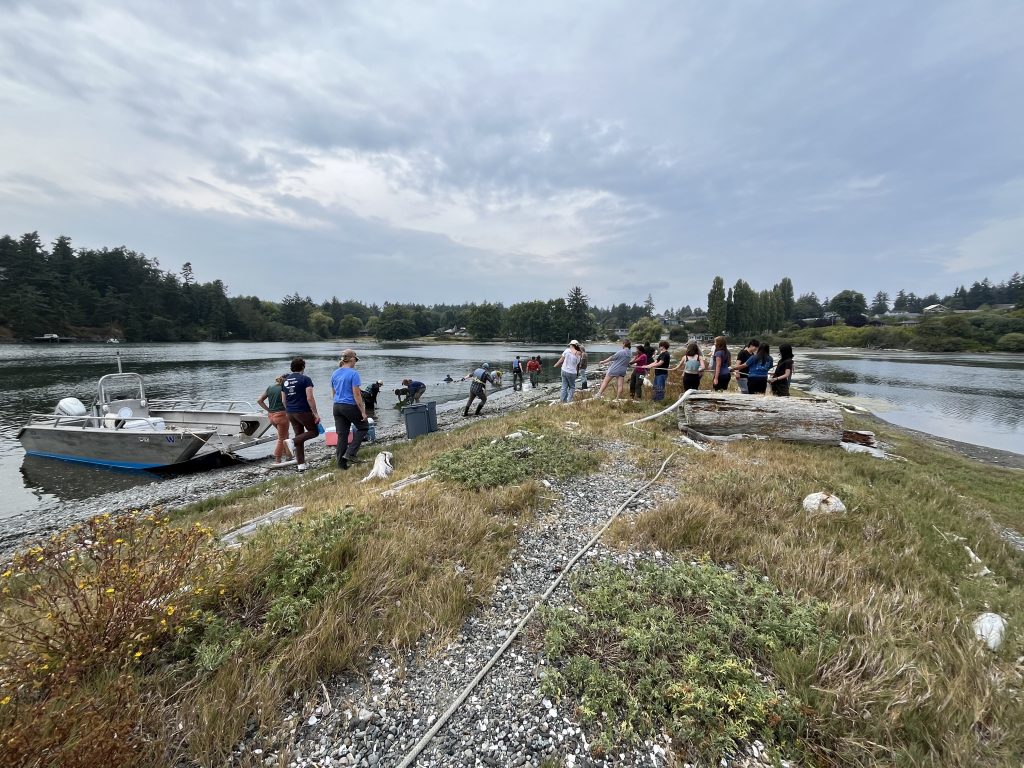
After the presentations we headed to Jacksons beach and performed crab molt surveys lead by Jess and Katherine from the Friends of San Juan. Before we started the surveys we got sidetracked on a mission to held some people from the Friday Harbor Labs pull up a net! It was really deep in the water and their small crew was super grateful for our help. We even shared some popsicles after pulling up the net!
Tug-O-War With a Net – Photo Credit: Dylan
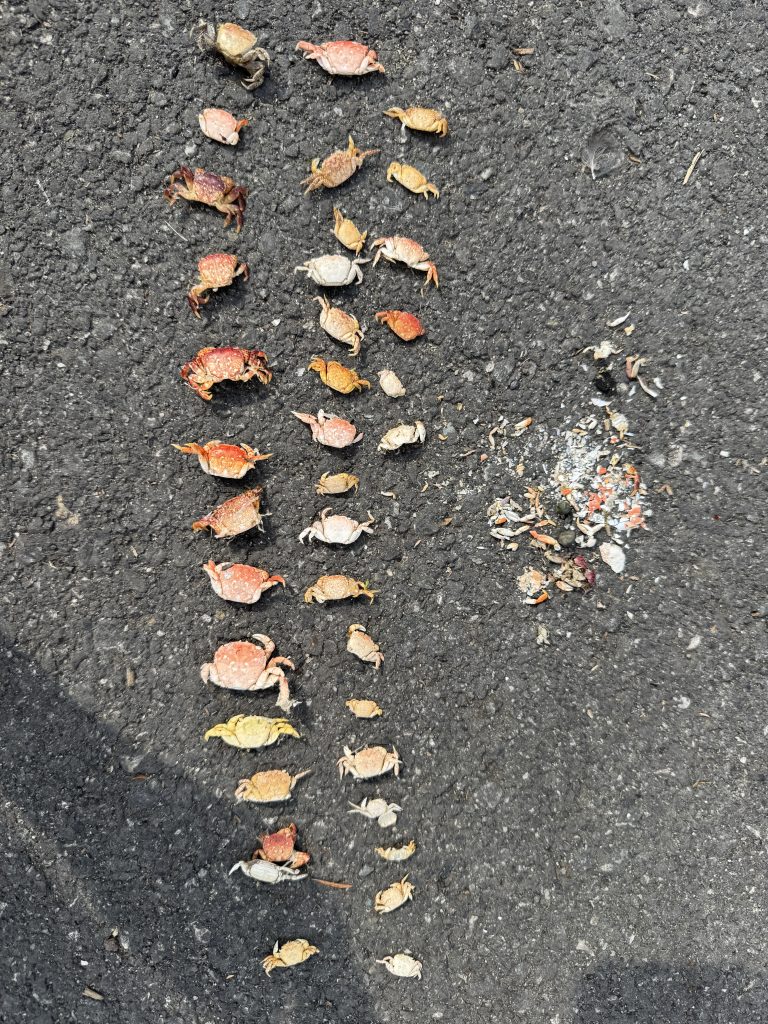
Then we continued on with the crab surveys, recording our findings of any European Green Crabs and Dungeness Crabs. European Green Crabs are invasive in the San Juan Islands, so our goal was to collect any of the crab molts we could find and identify them all. Thankfully, we didn’t find any European Greens!
Line Up of Crab Carapaces – Photo Credit: Kaiya
To end off our day, we’re looking forward to a chill evening without a dinner guest. We are going to relax and enjoy our pizza dinner!
By Addy Brautigam, Kaia Wasserman, Max Lundin and Amber Xu
We started the morning off with the First Annual Salish Sea Debate activity prep! We broke out into 4 groups of 5 students each. We have two topics and each group is either pro or con of one of the topics. We did initial research and created our debate points today in preparation for the debate tomorrow night!
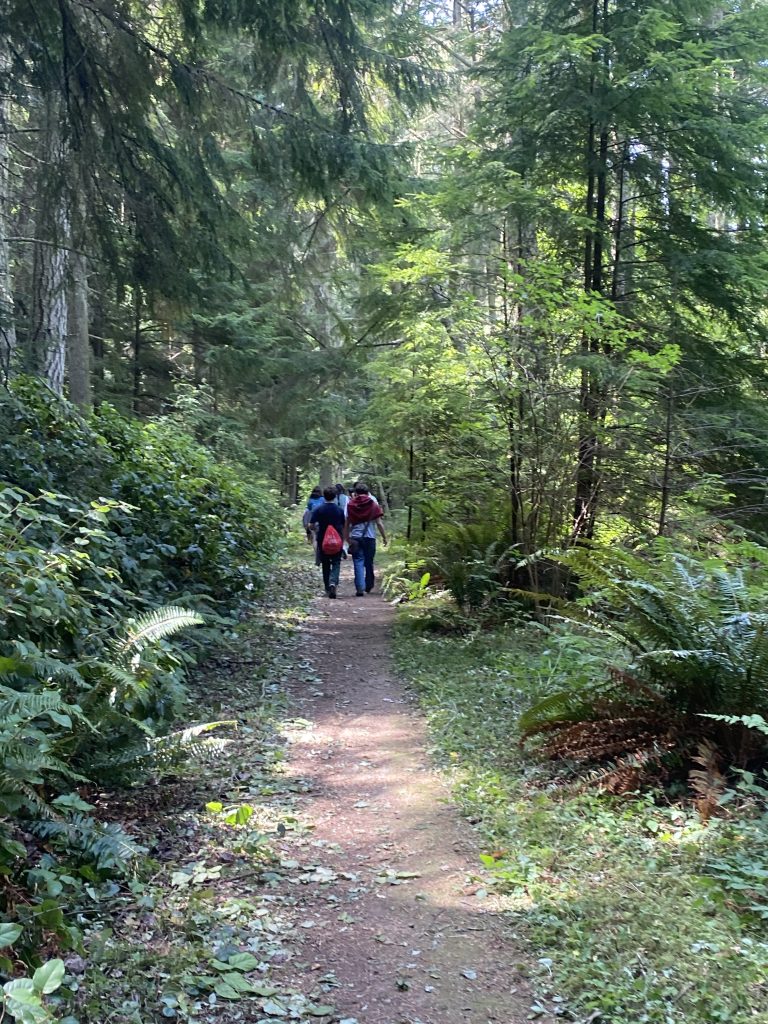
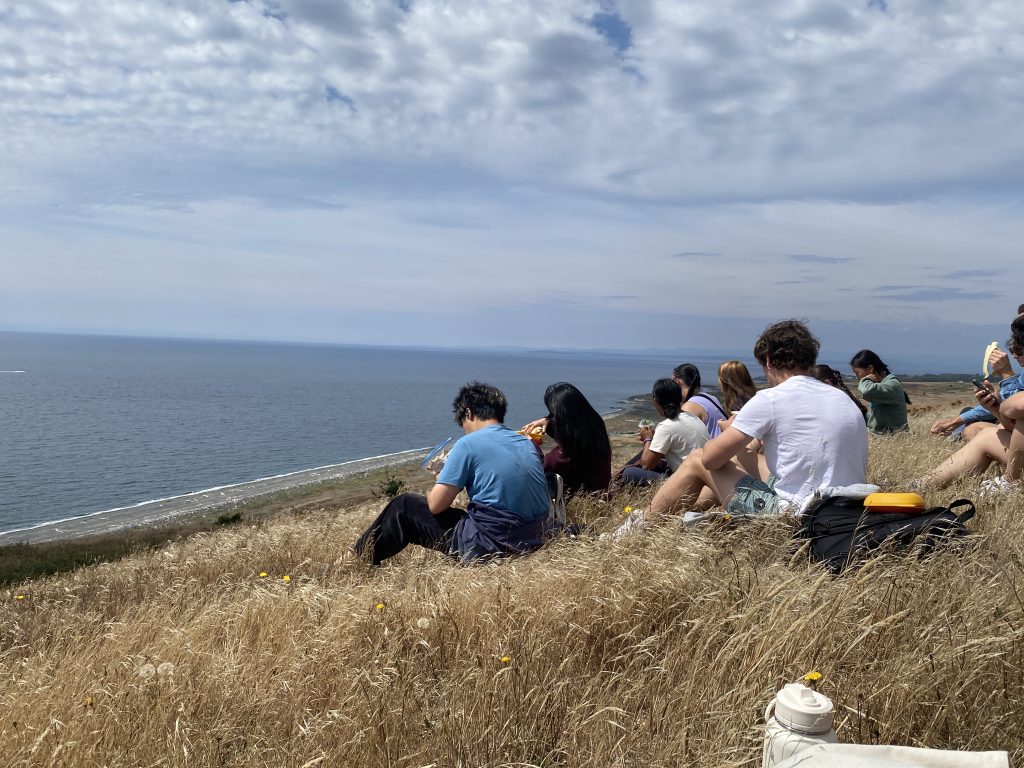
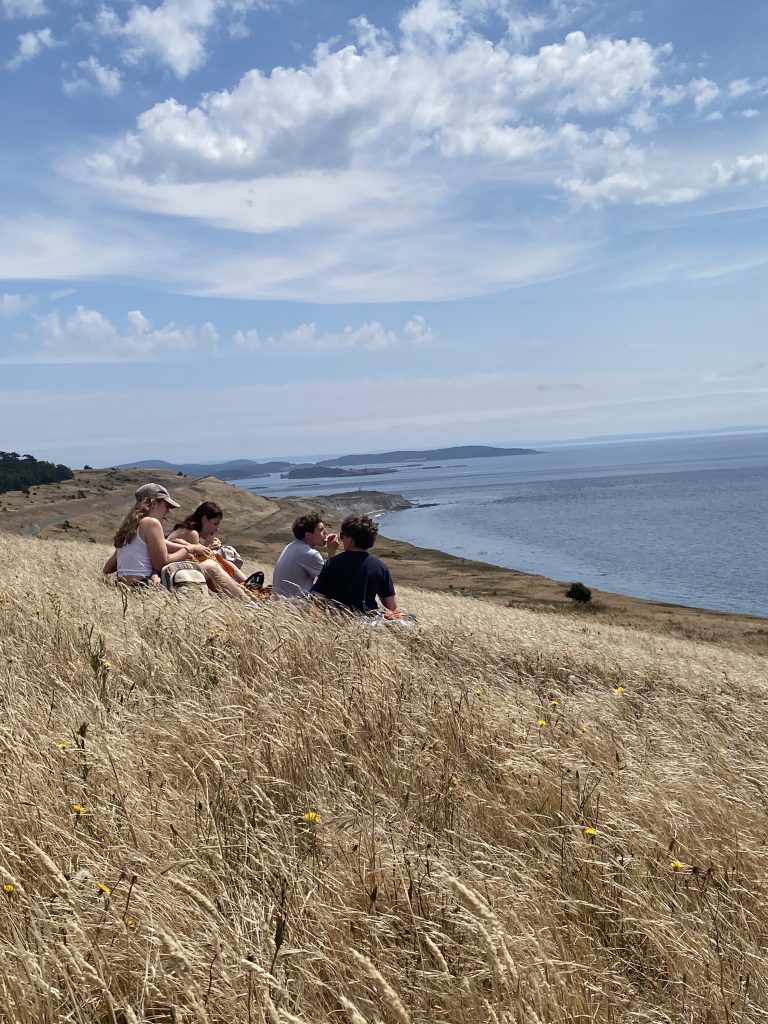
We then packed lunch and took off to Mt. Finlayson. We did the loop trail and ate lunch.
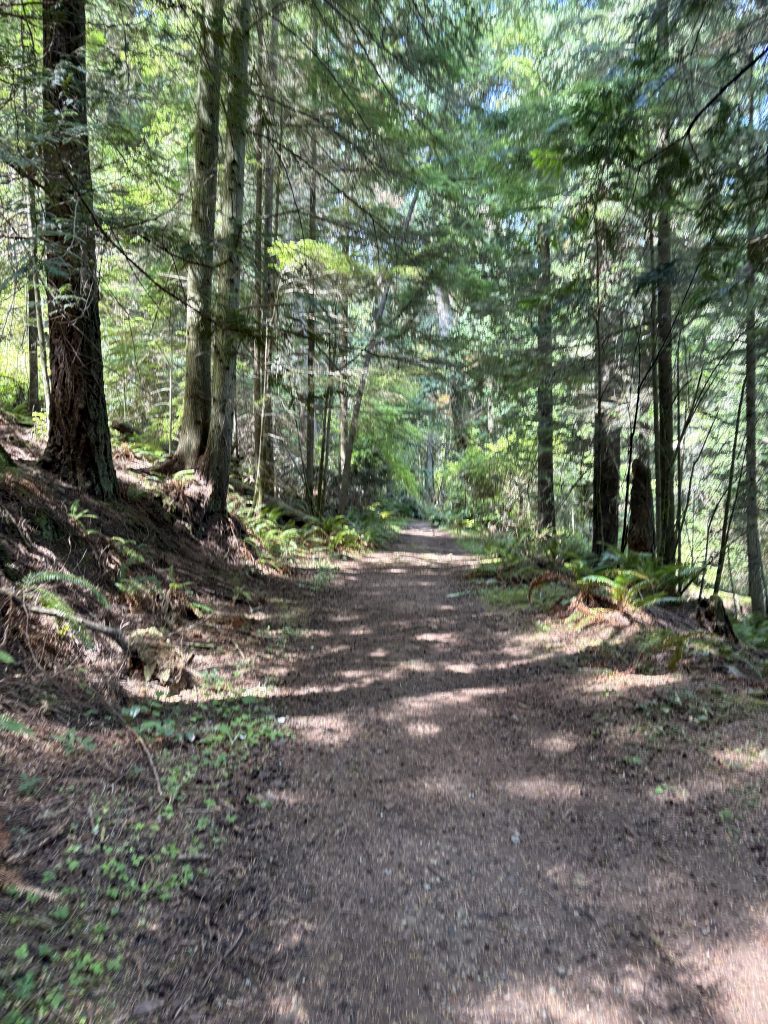
the nature we were surrounded by! Photo credits: Addy Brautiga,
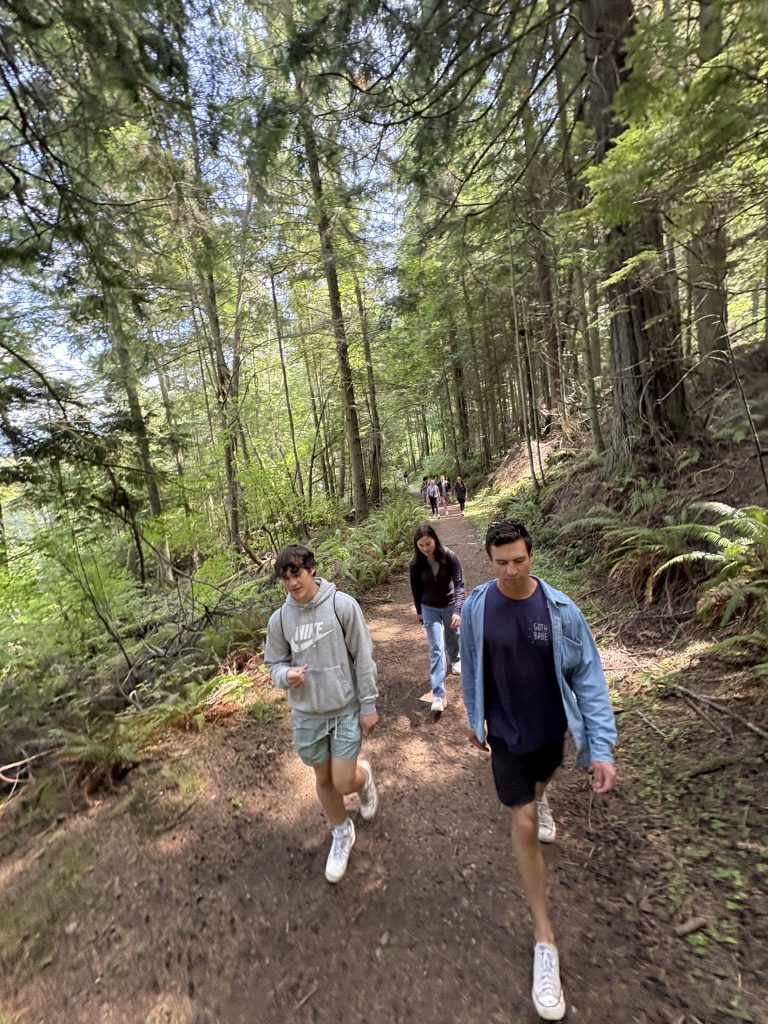
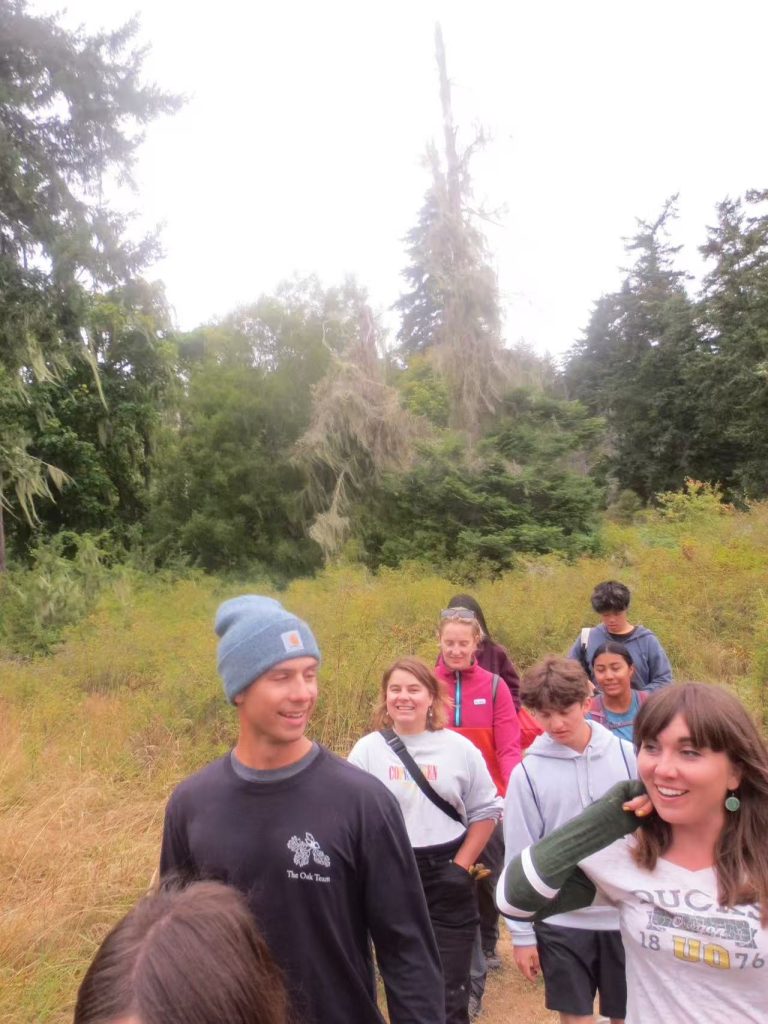
Students and staff trecking along the trail. Photo credits: Addy Brautigam
Fun in the SUN! Photo credits: Kaia Wasserman
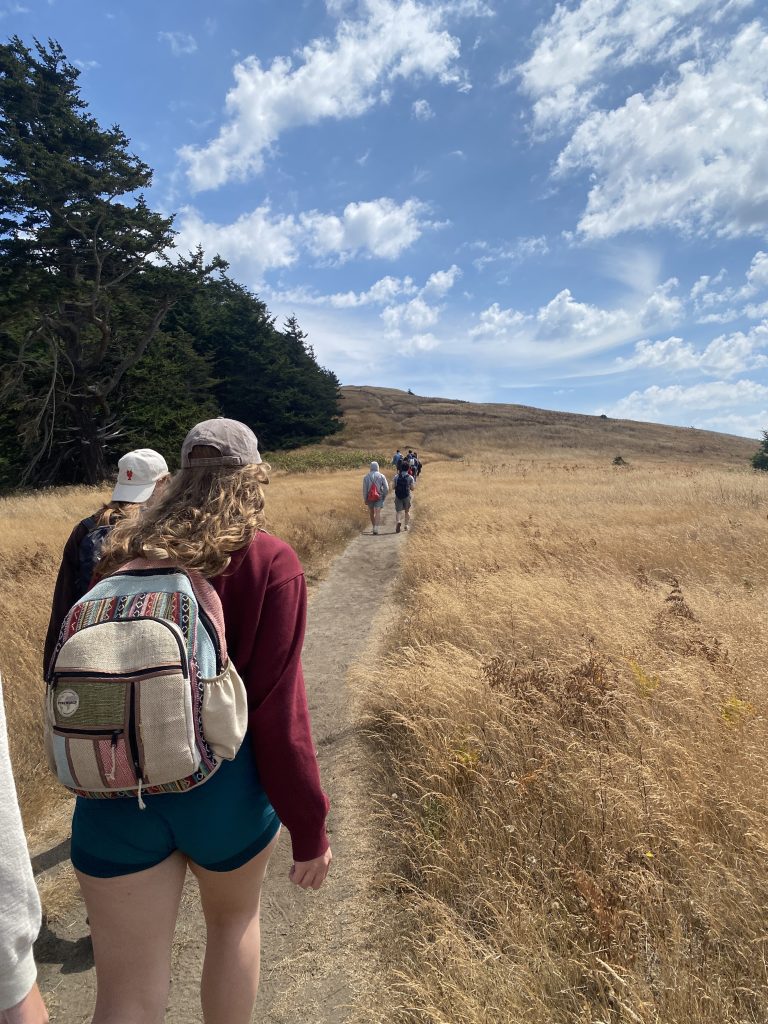
More views of the trail because it was stunning. Photo credits: Kaia Wasserman
Students enjoying lunch and the view. Photo credits: Kaia Wasserman
Not sure what’s better. The socializing or the view!! Photo credits: Kaia Wasserman
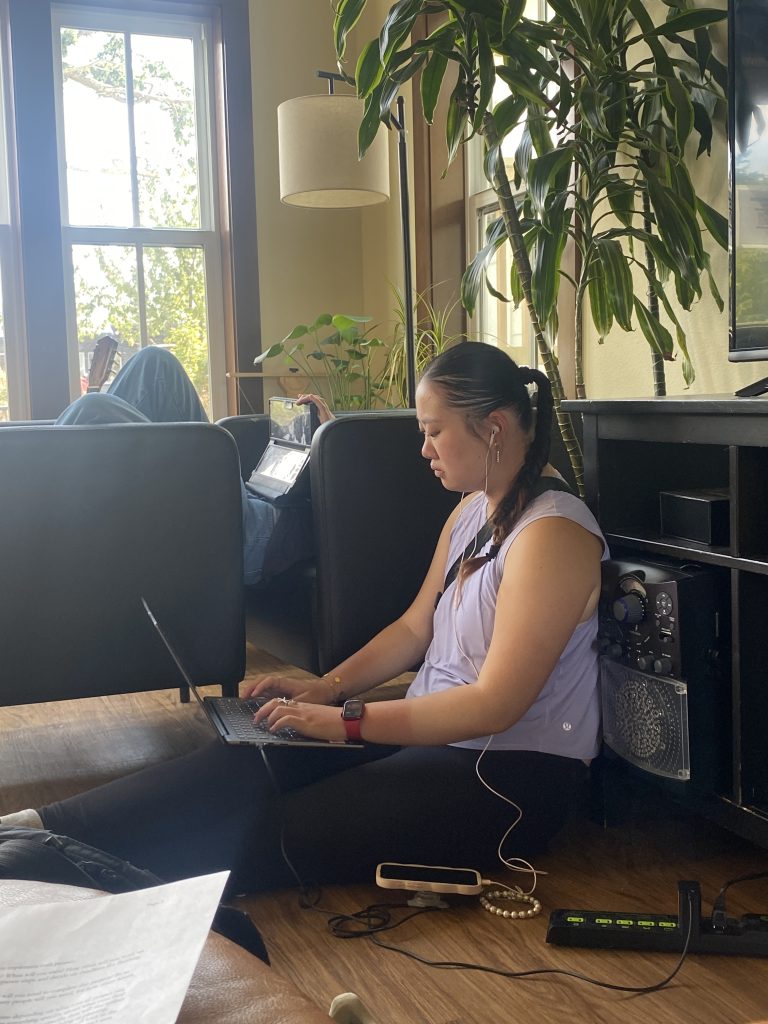
After we returned from our hike, we did some work on our projects!
Sophie locked in! Photo credits: Kaia Wasserman
Students working hard! Photo credits: Addy Brautigam
Keep on the grind!!! Photo credits: Addy Brautigam
Using our resources and mentors! Photo credits: Addy Brautigam
To finish out the day, we have an Eelgrass learning activity with Dr. Olivia Graham, followed by dinner with Dr. Graham and a presentation. She is a marine scientist who is passionate about marine ecosystems, especially eelgrass in the PNW! We are so excited to meet and work with her!!
This morning, we went to the Land Banks‘ Zylstra Preserve and met with Shauna and Julia, members of the San Juan Island Conservation Corps, who helped us to remove the invasive teasels, which are European native weeds that outcompete the native species. They introduced us to the Beaver Dam Analogs (BDAs) that they recently constructed, being the first on San Juan Island. These man-made dams, mimicking beaver dams, function to slow down river flow downstream to the nearby False Bay, in hopes of improving water quality over time.
Photo credits: Bryce.
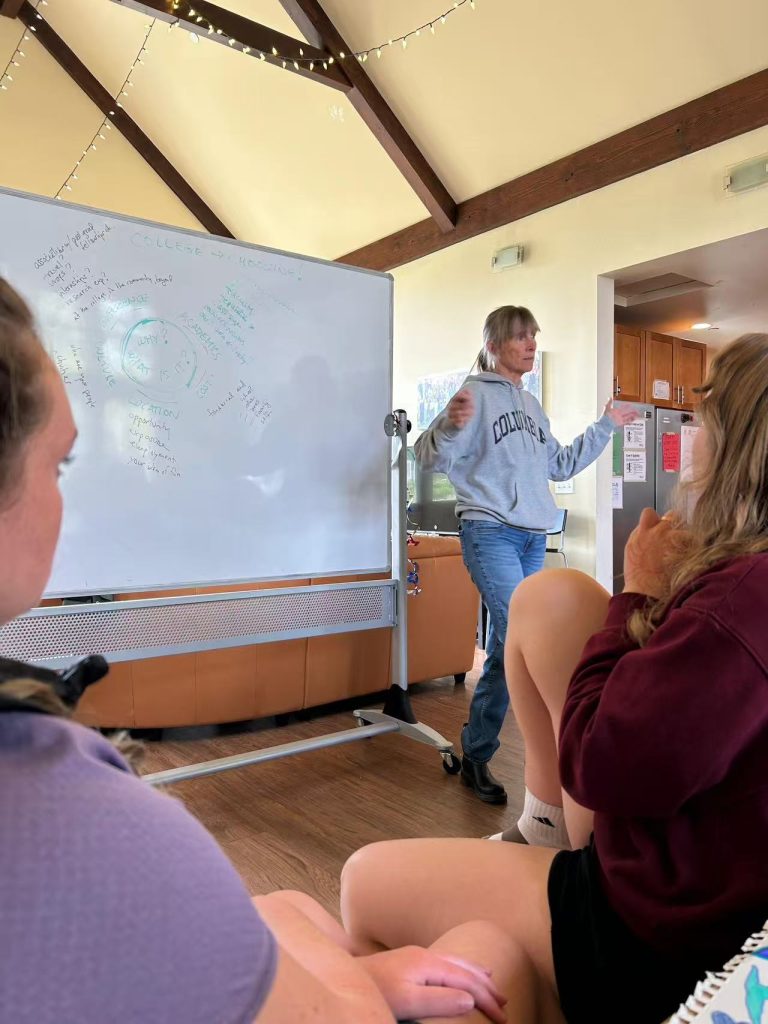
After a quick lunch break, we listened to a presentation from Caroline, utilizing her experience as a college counselor, about colleges and the first steps in the search and exploration for the right college. We talked about the importance of academics, location, culture, experience, reputation, and costs, covering almost any prospective topic.
Photo credits: Sophia
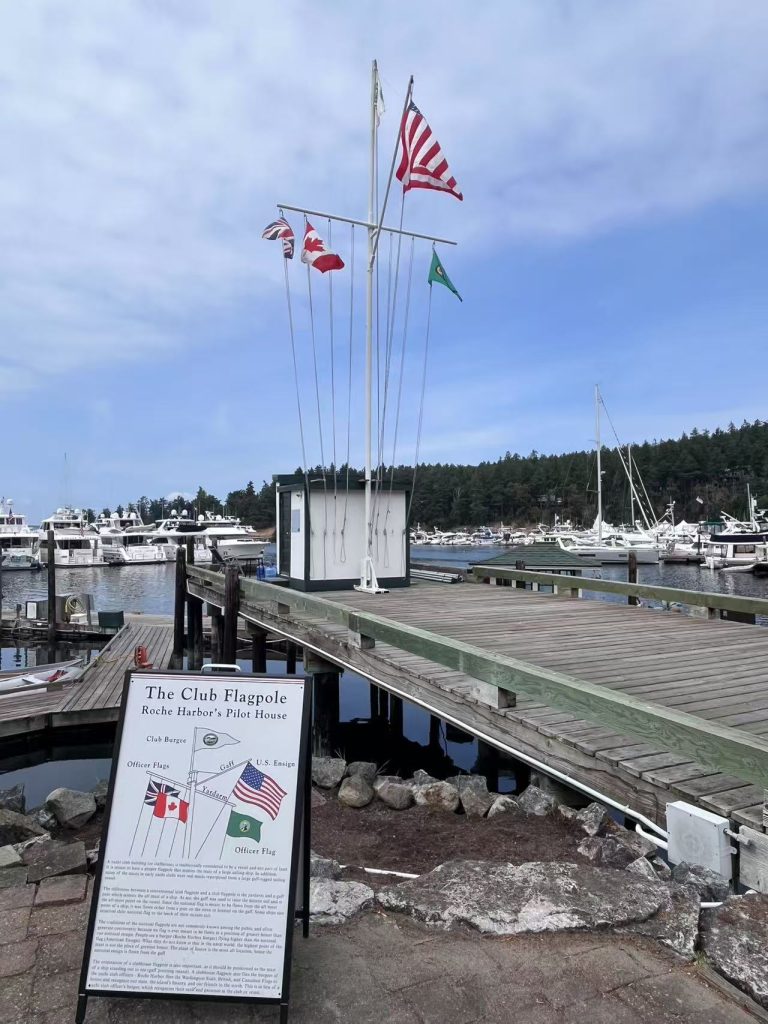
After the presentation, we loaded into the vans and took off for Roche Harbor, today’s use of our recreation time. Here we went to the ice cream shop, where Caroline generously treated all of us to ice cream! With our ice cream in hand, we walked around the resort, through shops, and around the marina. Then, Cara beat everyone in bocce ball, and on the walk back to the vans, we encountered an adorable and huge Pyrenees puppy. We headed back to the dorms for our afternoon jobs, taking a quick ukulele break to sing “Lava” with Cara.
Photo credits: Kelly
As of right now, we are all super excited for our guest of the night, Dr. Sandy Wyllie-Echeverria, to discuss sea and eel grasses. On the menu tonight is leftovers!
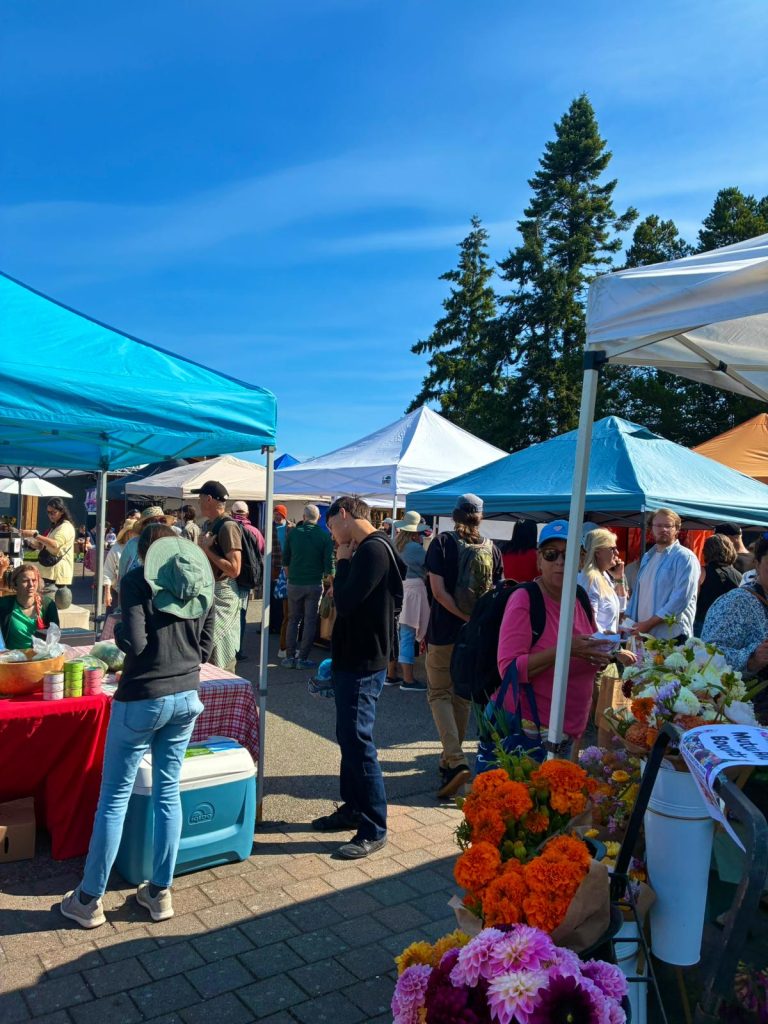
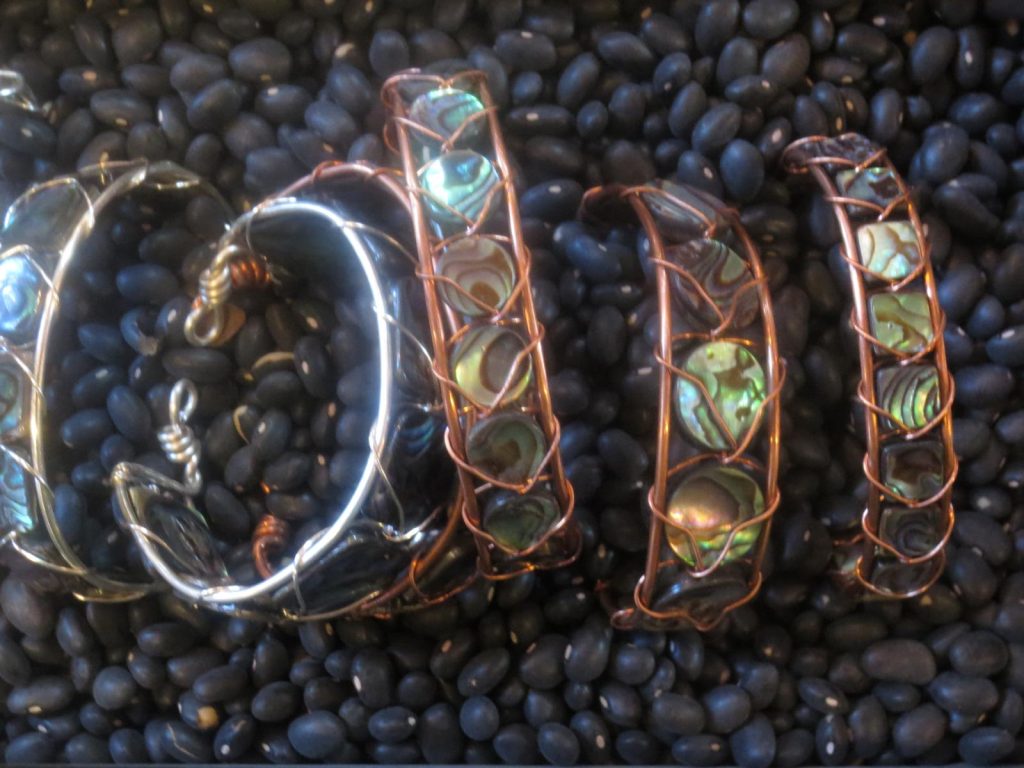
After a long slog of kayaking, students got to enjoy a slow morning and an adventure at the farmers’ market! At approximately ten in the morning, the students went downtown to explore the market scene where many local creators set up booths to sell their goods. Amongst the many items that were displayed, fine jewelry, bakery goods, and even woodworking were offered. The group spent their morning meandering and buying from the market. Music was being played in a small corner of the festival to brighten the atmosphere! Some people went out to the thrift stores and other shops around town before we headed back to the dorms
A crowd of people gathered at the Friday Harbor Farmer’s Market. Photo credit: Sophie Bracelets from a local artist’s stand at the farmer’s market. Photo credit: Bryce
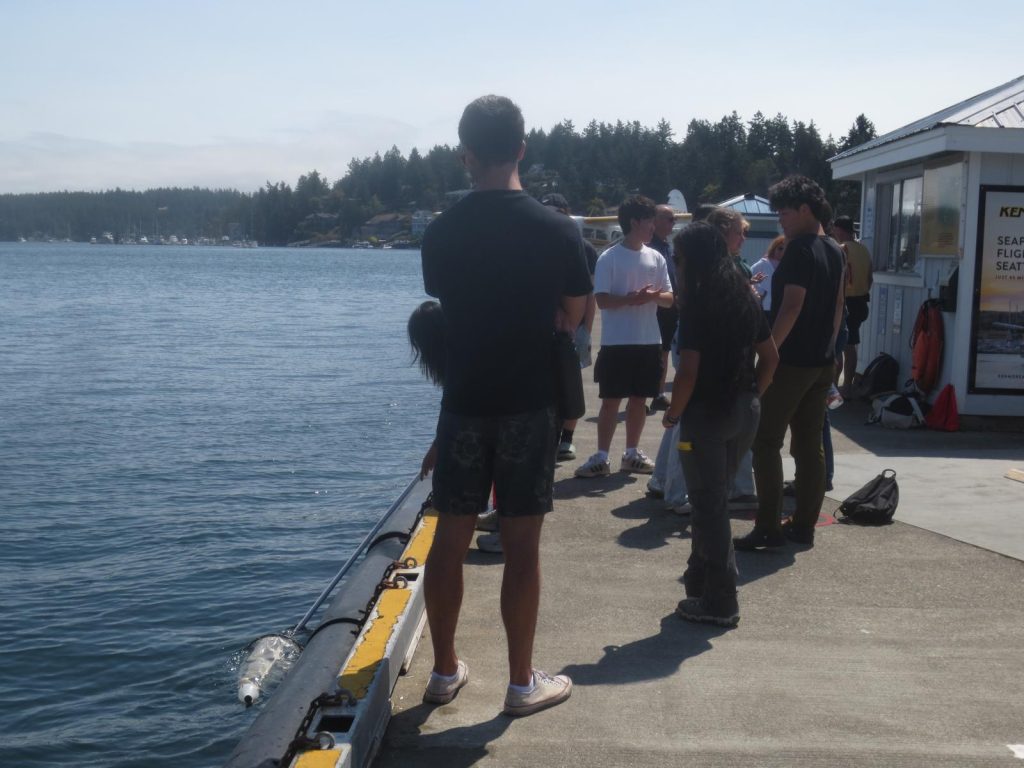
After lunch, the student body went to the docks at the Port of Friday Harbor to collect some water samples for the Plankton lab! Using a specialized net, the group siphoned samples of water into a bucket to take to the lab. In these samples, many different varieties of plankton were gathered; plankton are small marine organisms that are crucial to life beneath the sea.
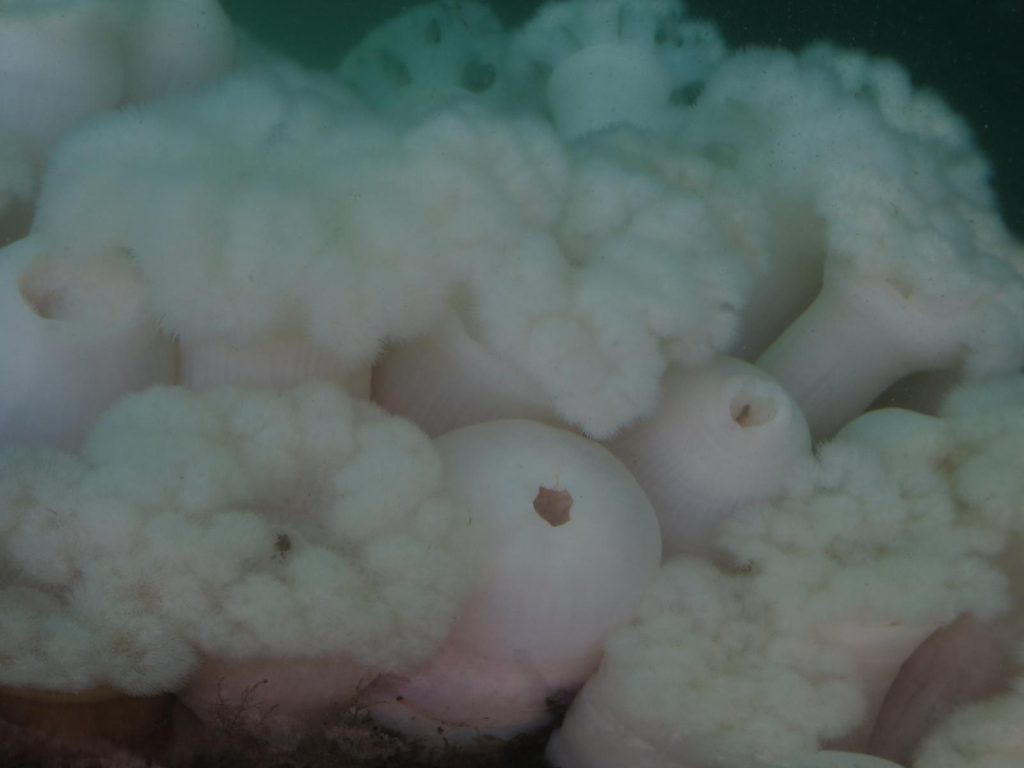
While some student collected samples, others explored the life underneath the docks. There was a great abundance of marine biology to be found. The marine organisms found include large swaths of Metridium and giant plumose anemone (a species of sea anemone). After the samples were collected, the group headed back to the labs at the dorms.
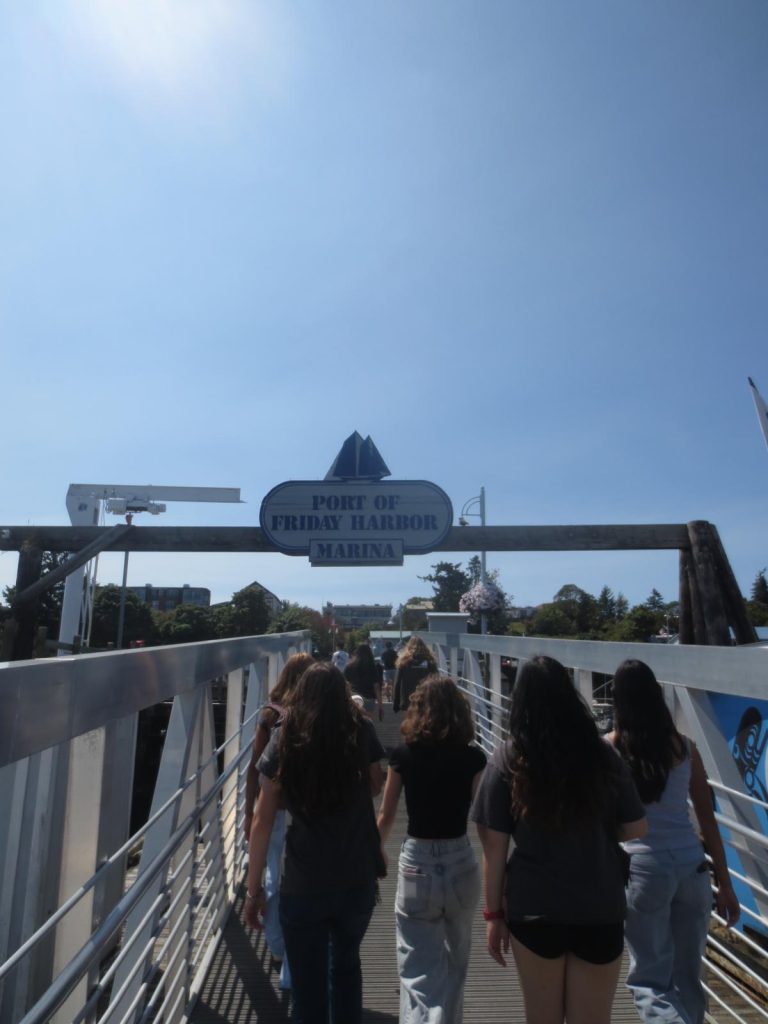
Students gathered to scoop up plankton samples at the docs. Photo credit: Bryce Giant plumose anemone below the docs. Photo credit: Bryce The group walking back from the Port of Friday Harbor Marina. Photo credit: Bryce
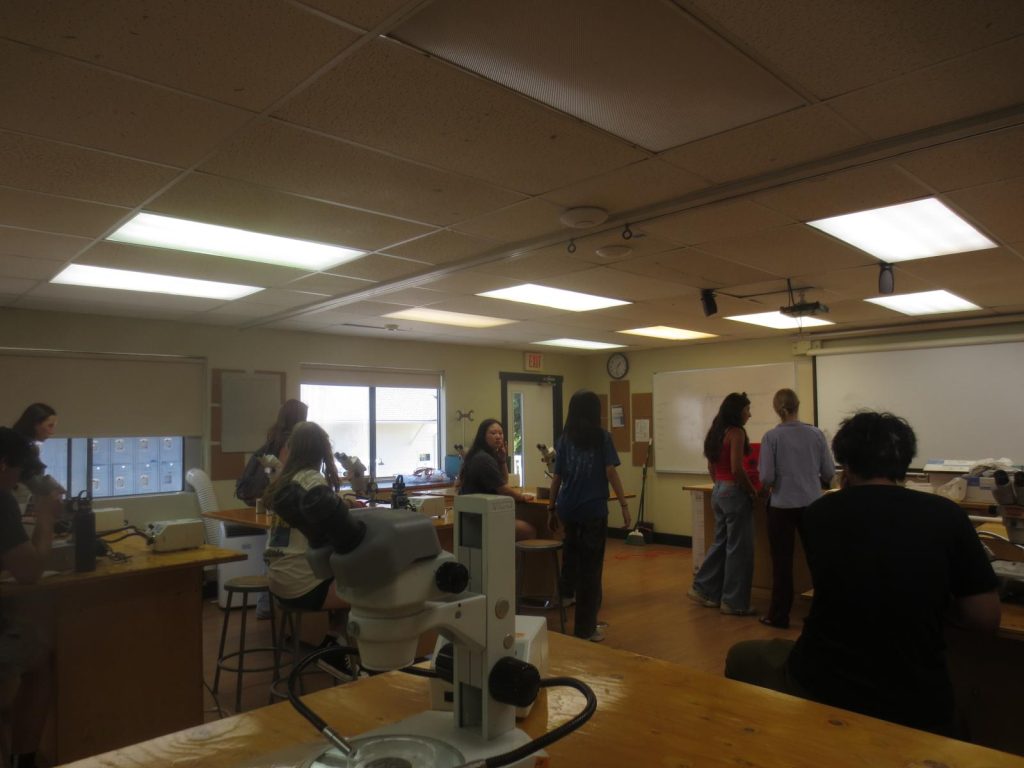
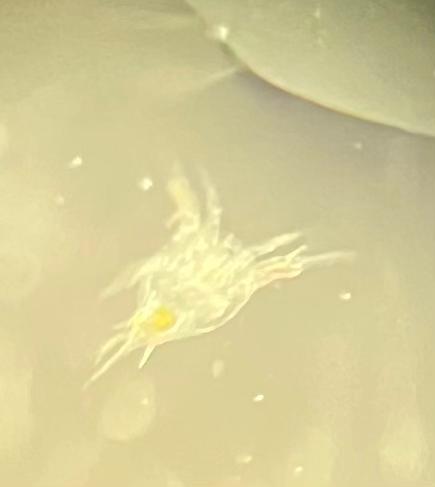
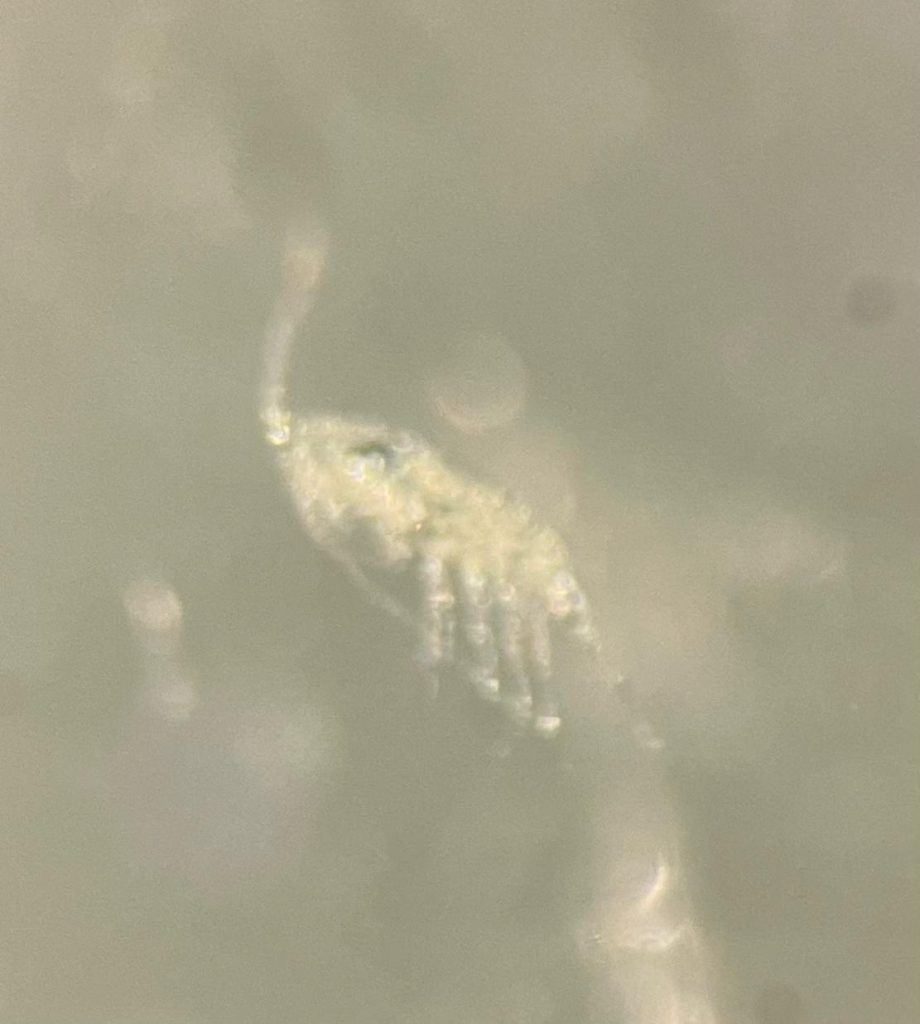
Unusual microorganisms were found in water samples taken by the students at the docks and taken back to the lab; with the help of a microscope, the students were able to see unique types of zooplankton and phytoplankton. Pipets drew the water from the sea which was placed on stages that were then examined underneath the microscopes. Many different species of microorganisms were found using this process as the students took notes and sketched what they saw.
Analyzing the samples of plankton. Photo credit: Bryce Plankton sample under microscope. Photo credit: Montgomery Plankton sample under microscope. Photo credit: Montgomery
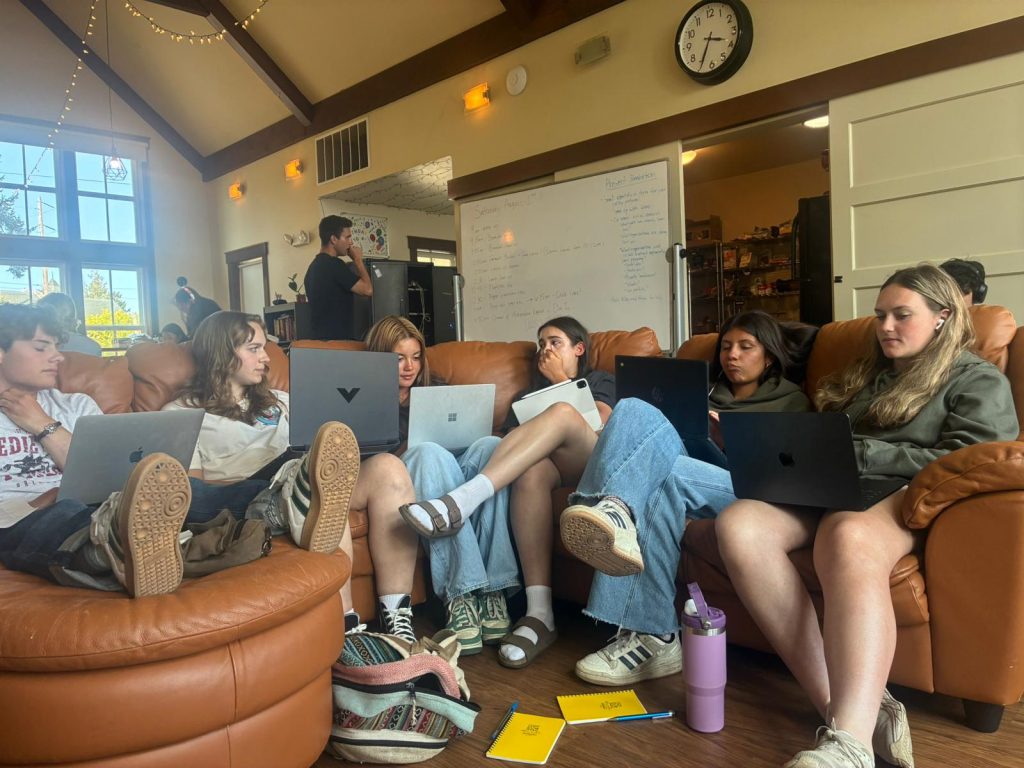
The rest of the day was utilized for brainstorming for the big up-and-coming project. Students are aiming to find solutions to a problem within their own communities. From exploring watersheds to analyzing bacterium types, ideas were being bounced around left and right as the group worked diligently to prepare for this final project.
Students Max, Kaia, Sophia, Kendall, Addy, and Kaiya working on their project brainstorm. Photo credit: Sophie
After working on their tasks, the group enjoyed the company of undergraduates Alexandria Kaplan who studies biology at UCSC and Ellie In who studies marine biology at UW for dinner, which was Mediterranean-style tofu and chicken. They winded down for the day before heading to sleep.
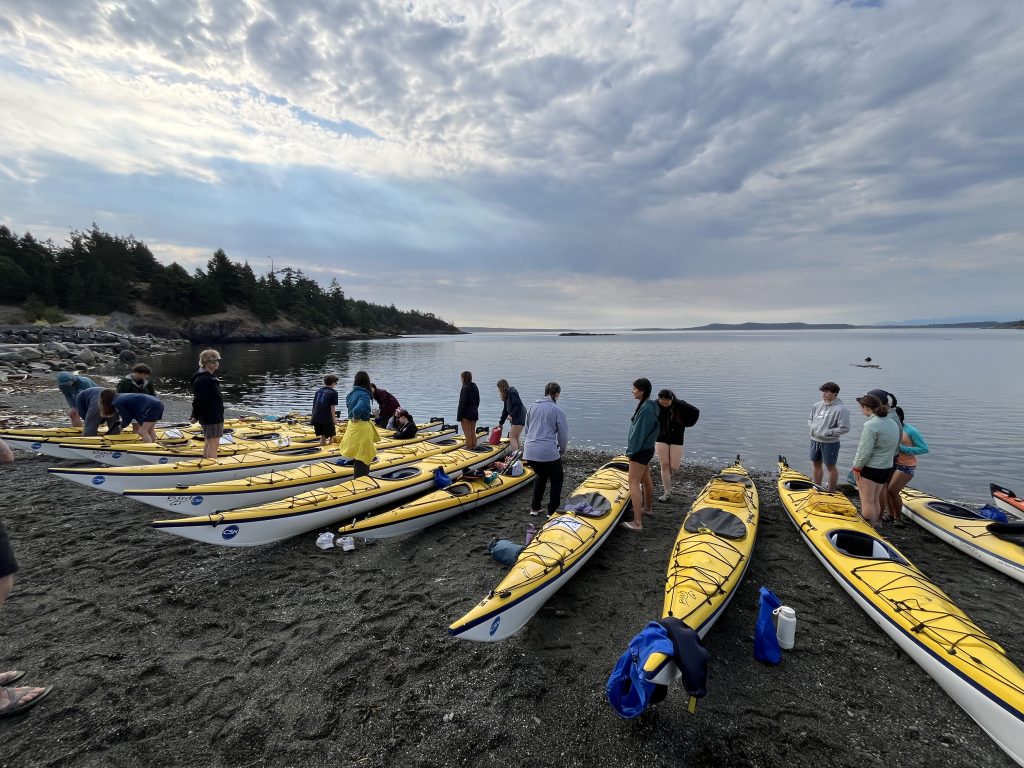
We woke up bright and early Thursday morning to begin the long journey kayaking to Jones Island. We met up with the kayak instructors from Crystal Seas Kayaking at Jackson Beach around 9 a.m.
Everybody getting ready and loading the kayaks for the first time. Photo credits: Aiden
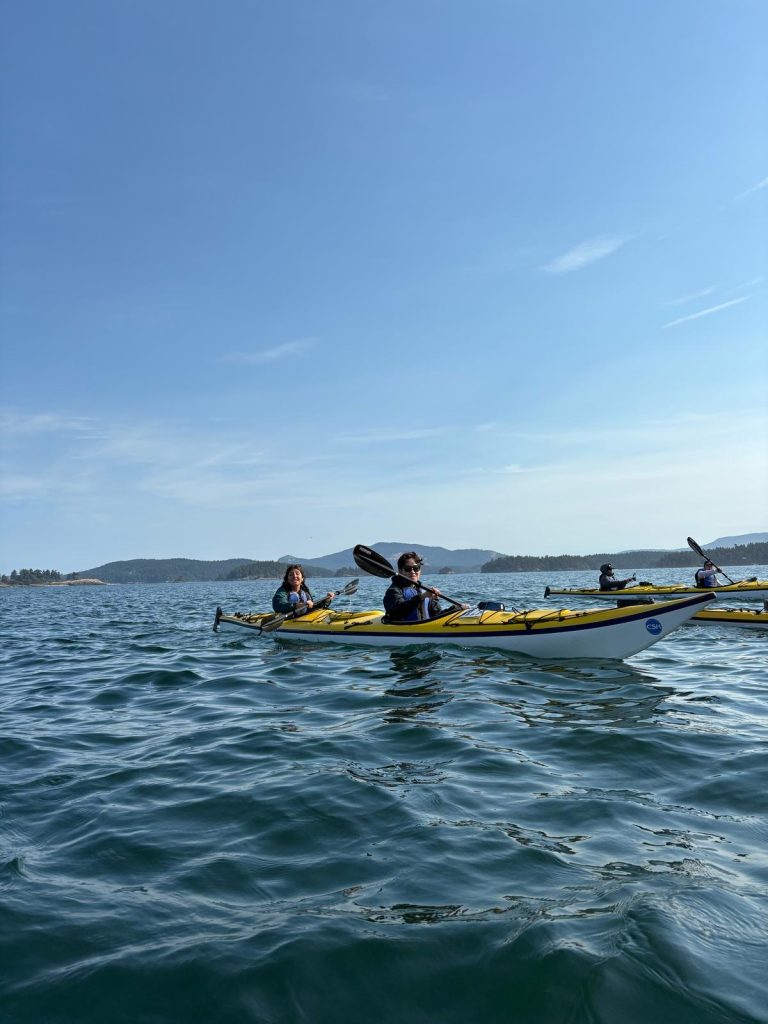
While kayaking up Puget Sound around San Juan Island, we stopped halfway through ro eat lunch at a beautiful scenic beach. From the beach, we could finally see Jones Island.
Sophia and Aiden paddling through the water. Photo credits: Addy
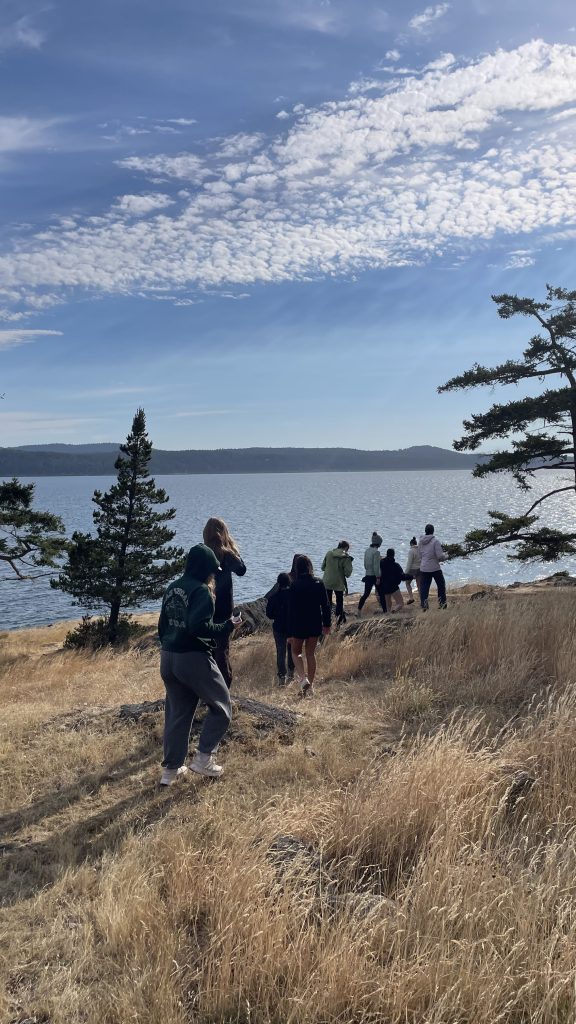
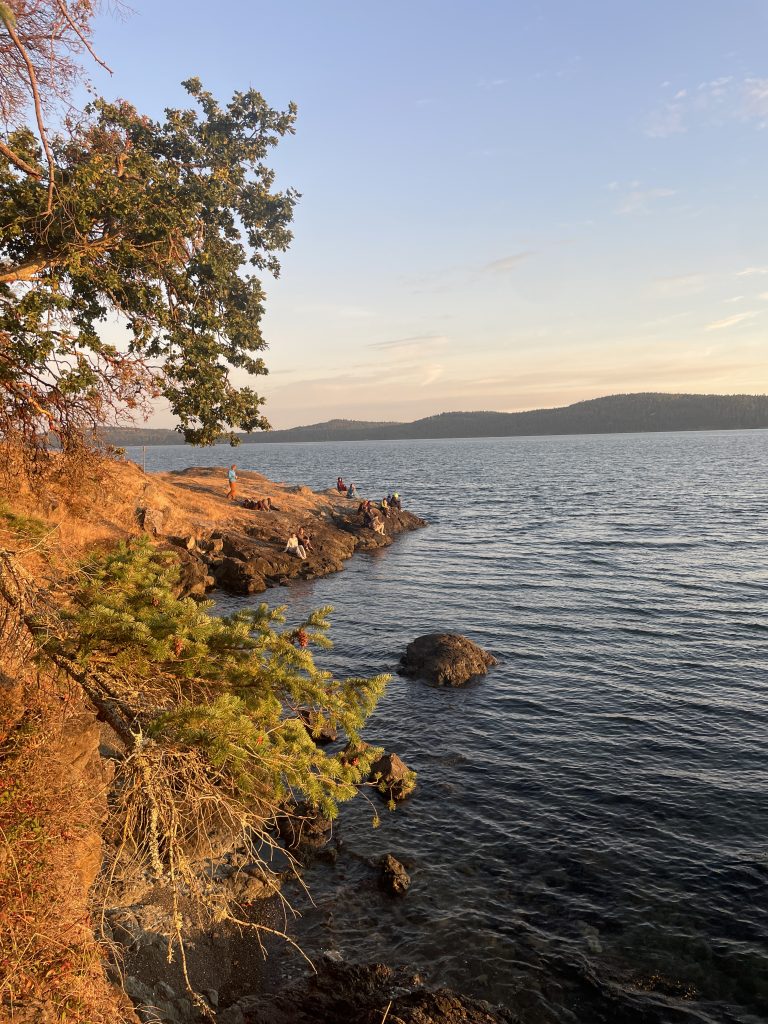
Once we had arrived at Jones Island, we quickly unloaded the boats and set up camp in a large field close to the shore. After getting settled, some of us went on to explore the island, while some of us went down to the beach to collect rocks. Everyone reconvened for dinner, which consisted of amazing tacos cooked by our kayak leads. After dinner the whole group walked to the west side of the island, which was blissfully sheltered from the howling wind, to watch the sunset.
Hiking around the island. Photo credits: BryceSunset view on Jones Island. Photo credits: Avery
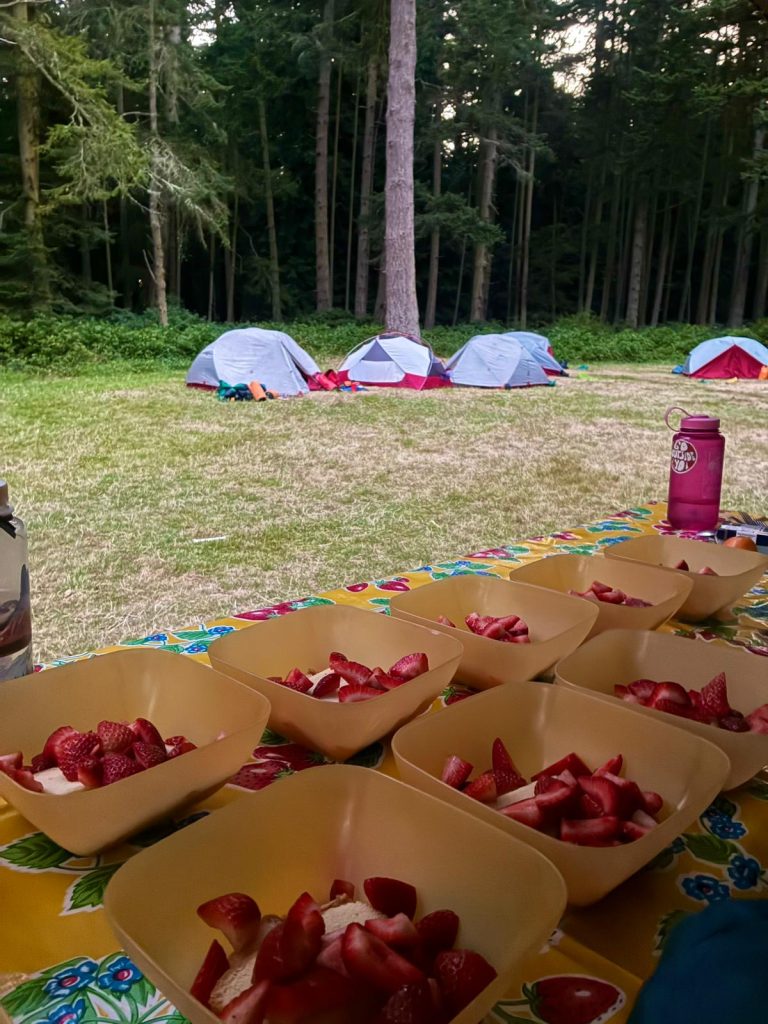
The evening was concluded by delightful strawberry pound cake dessert and some students sleeping outside under the stars, with the deer and the raccoons watching from the shadows.
Strawberry pound cake dessert at the campsite on Jones Island. Photo credits: Sophie
On day two of our kayaking adventure, we were jolted awake to the sounds of alarm clocks, and the blaring sound of Eye of the Tiger playing in the background. The current and wind were supposed to be against us on the journey back, and so we had to stumble out of our sleeping bags to pack up our tents and set up our kayaks at 5:30 in the morning (and of course to grab a cup of tea or coffee, and a delicious breakfast of granola and yogurt). We left Jones Island shortly: packed up, and mostly awake. The music playing from Bryce and Max’s kayak gave us a boost, and despite battling rough currents and strong winds, we arrived at Turn Island around noon. There we ate a delicious lunch of pasta salad and enjoyed the fan-favorite pastime of skipping rocks. As the day heated up, the sun left swathes of sunburns and tans across our noses, scalps, and hands. Several people took advantage of the gathering heat, and swam in the chilly water.
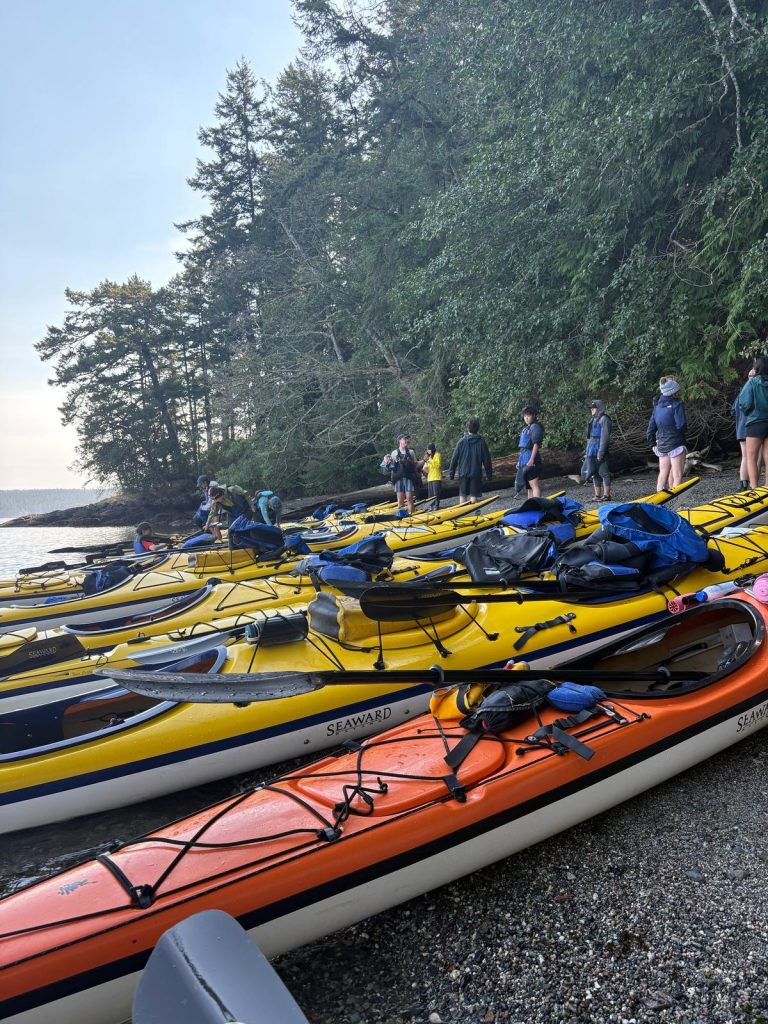
Our kayaks lined up at the shore during a quick break. Photo credits: Addy
The final destination after lunch was a thin strip of rocky shoreline, just a short paddle across the channel from Turn Island. We clamored out of our boats, eager to be back on solid ground and to say goodbye to the spray skirts (thick, skirt-like pieces of waterproof fabric) that kept us dry while kayaking. We carried the kayaks up a short dirt path lined with thickets of blackberries, where they were loaded onto two boat trailers. Although we were all aching for dry clothes, clean bathrooms, and warm showers, we were incredibly grateful for the kayaking journey.
We started our day off early and headed straight to The Whale Museum, a short walk across town! Our exclusive tour was led by Tracie Merrill, the Education Director, who was avid to teach us about the importance of orcas within the Salish Sea. She led us through the different exhibits, making sure to explain the different social groups of orcas in the area, as well as the challenges they all face.
The skeleton of a three-year-old Gray Whale. Photo credits: Dylan
After Tracie’s tour, we were given the opportunity to explore the museum ourselves. Some of us watched the documentary, Sonic Sea, and others enjoyed the interactive displays and coloring pages.
Mika and Kendall’s walrus coloring sheets. Photo credits: Kendall
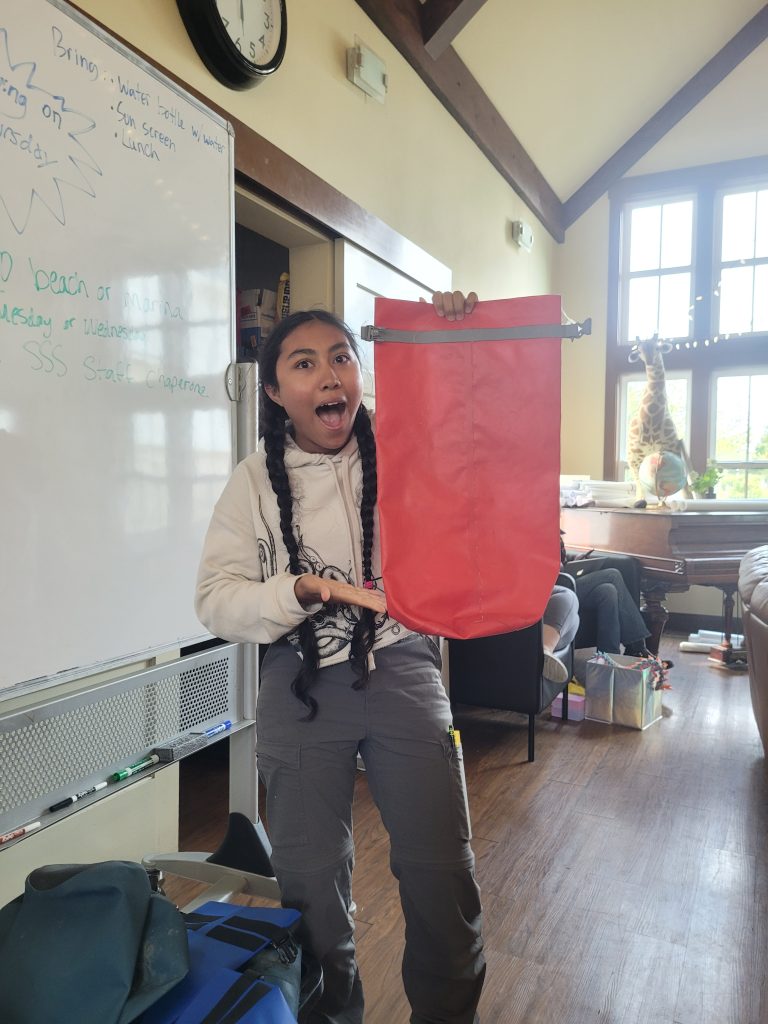
After the fun trip to The Whale Museum, we returned to the dorms to learn about the projects we’ll be working on throughout the course of the program. We discussed it for a bit, then we got a visit from one of our kayaking guides, Lauren, that will be leading us tomorrow to Jones Island. She explained to us what we need to pack and some details about the overnight trip.
Shristi with the 10-liter packing bag. Photo credits: Kendall
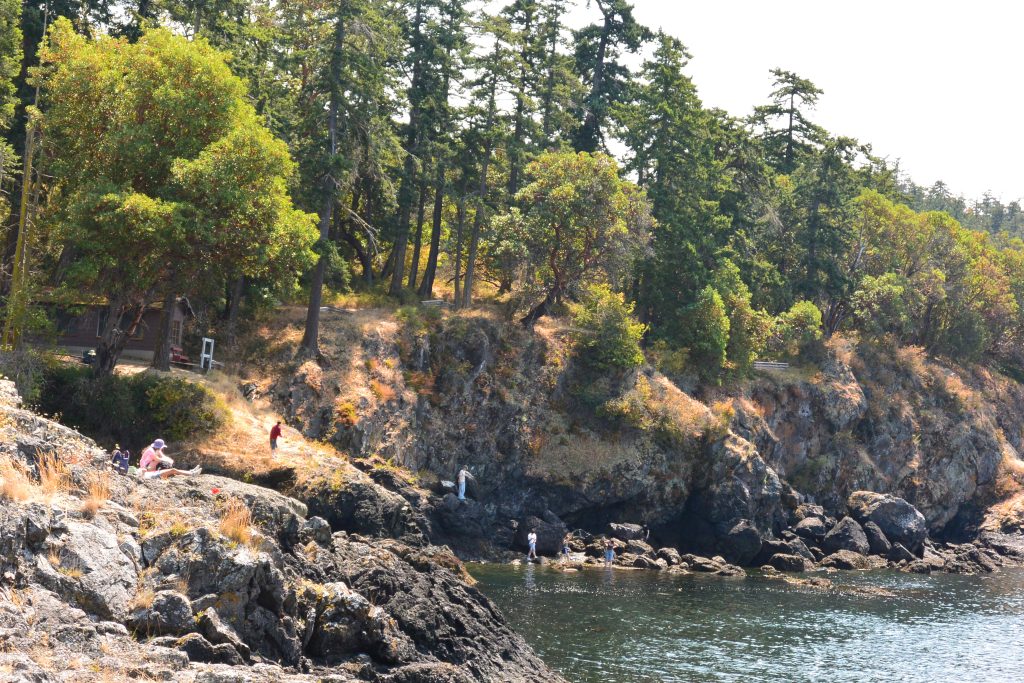
We packed our lunches and went to San Juan State Park on the west side of the island. We enjoyed our lunches with an awesome view of Vancouver Island across the water. Many of us decided to go exploring across the rocks down to the shore.
Students trekking across the shoreline. Photo Credits: Kaiya
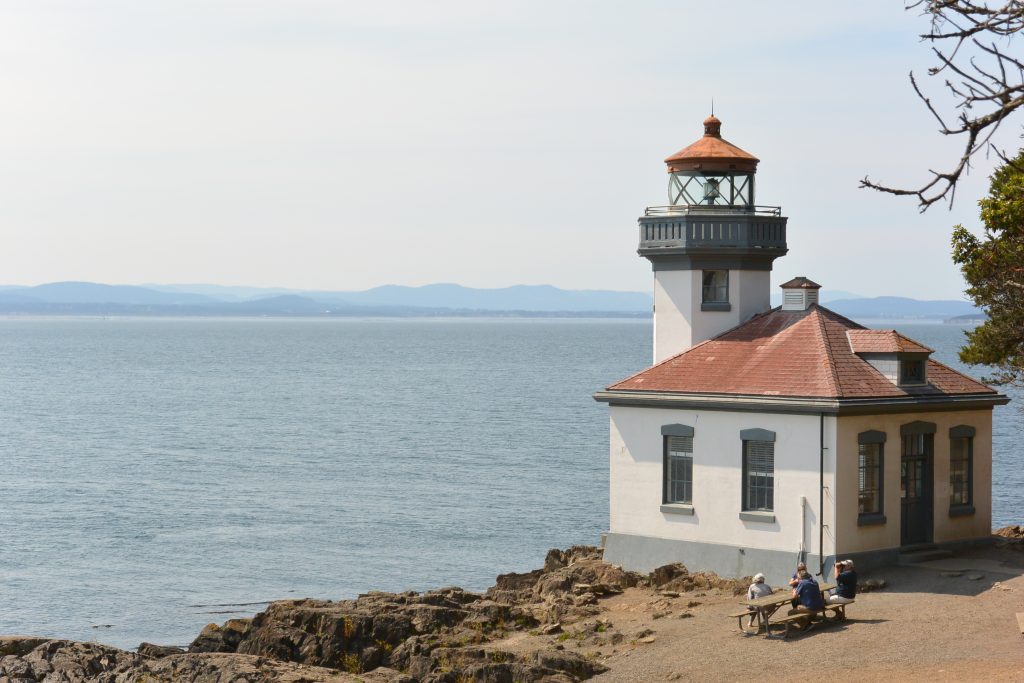
Next, we drove to Lime Kiln Point State Park to meet Errin Corra, the creator of the non-profit, FOLKS-Friends of Lime Kiln Society, as well as Josiah French-Feld, a member of the indigenous Coast Salish peoples. We received a tour of the park, learning about a few different tree species and their connections to the local indigenous culture. We ventured down to a whale-watching lookout, where we were swarmed by wasps! Then we checked out the lighthouse nearby, hearing about the history of the building and their whale tracking system. We were able to go to the top of the lighthouse, and from there we could see the hydrophone cable, allowing the researchers to hear the nearby underwater sounds.
The lighthouse overlooking the Haro Strait. Photo credits: Kaiya
To end off our night, we plan to check out JP’s Restaurant since it’s Karaoke’s night and celebrate Sophie’s birthday!
By: Max Lundin, Addy Brautigam, Kaia Wasserman, Amber Xu
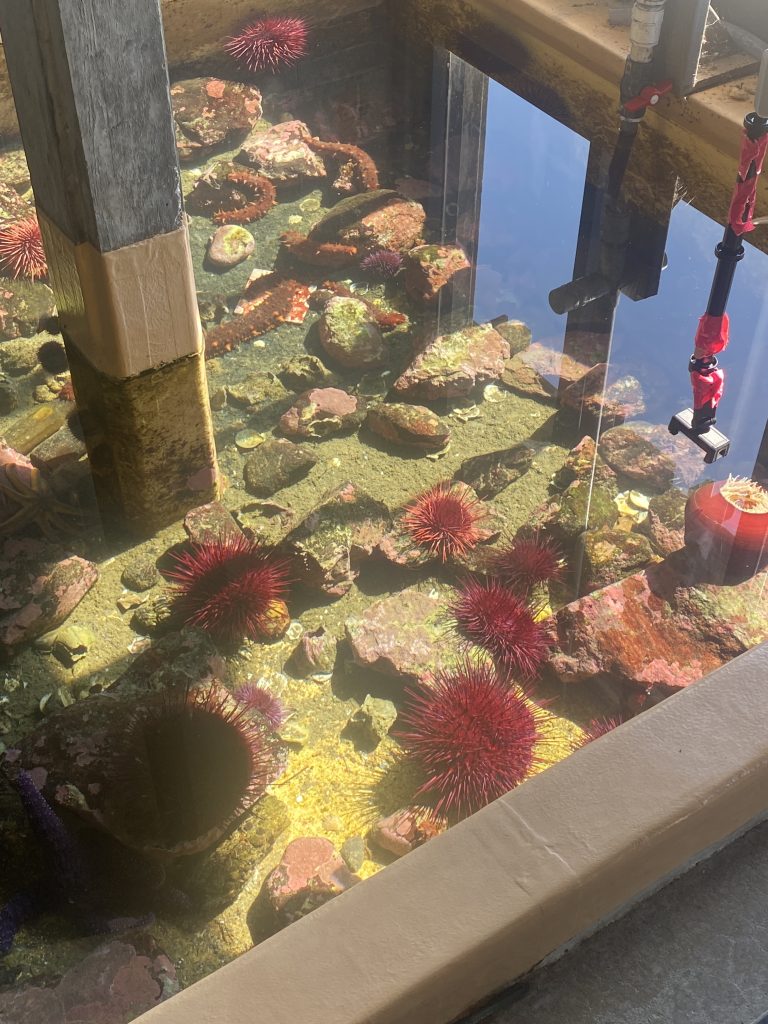
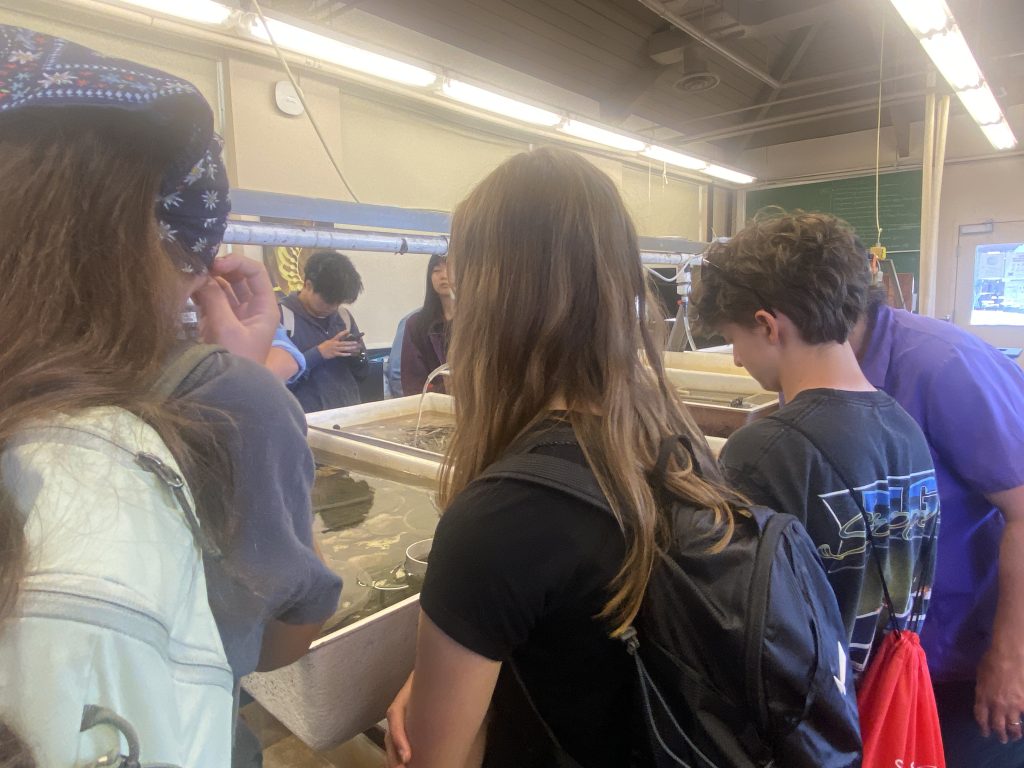
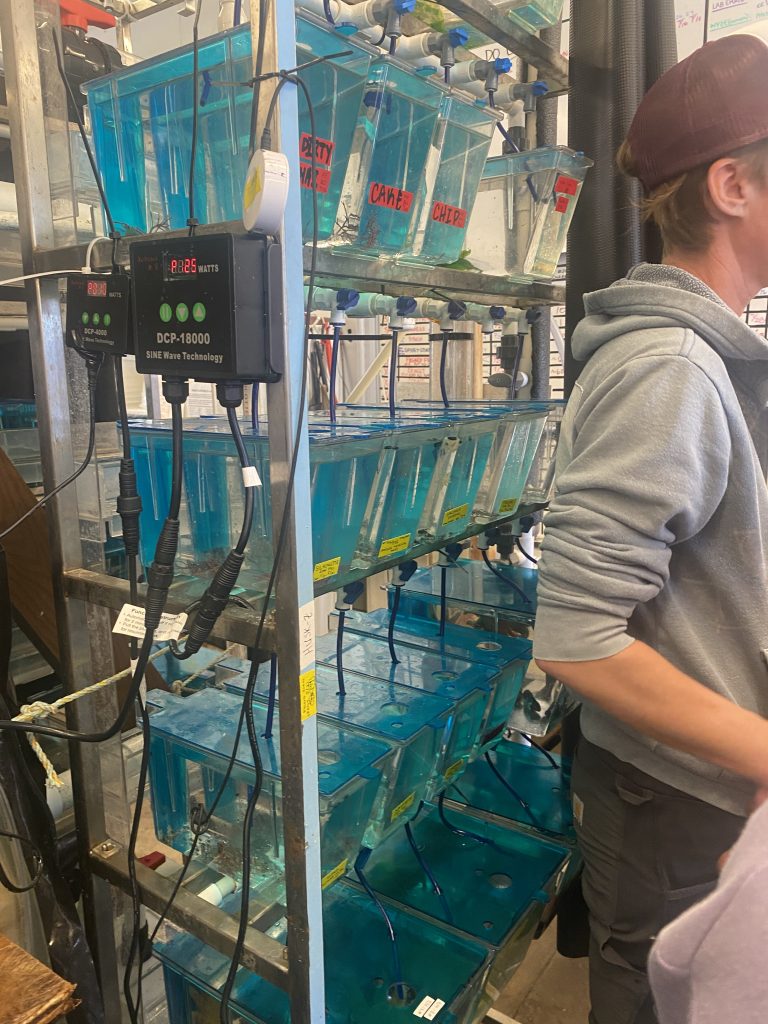
After breakfast and packing lunches, we took off for the day. Our first stop was University of Washington’s Friday Harbor Laboratories. There, we received a stupendous tour from Michelle Herko, researcher and director of Friday Harbor Laboratories. She showed us the campus and research facilities unoccupied by busy scientists, but filled with marine life.
Touch tank (bellow the stairs) at UW Friday Harbor Labs. Photo credits: Kaia Wasserman.Curious students “poking around” in laboratory touch tanks. Photo credits: Kaia Wasserman.
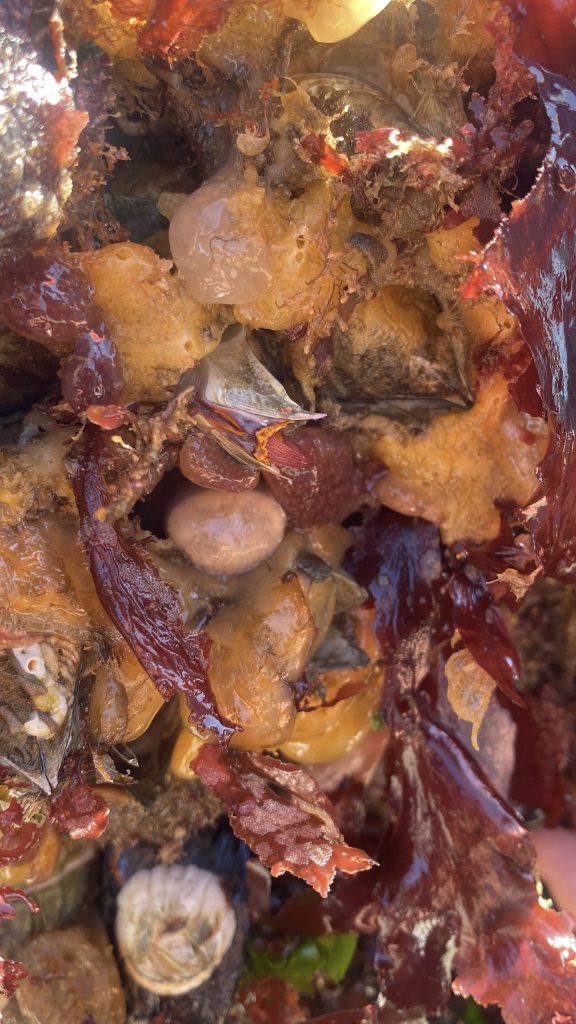
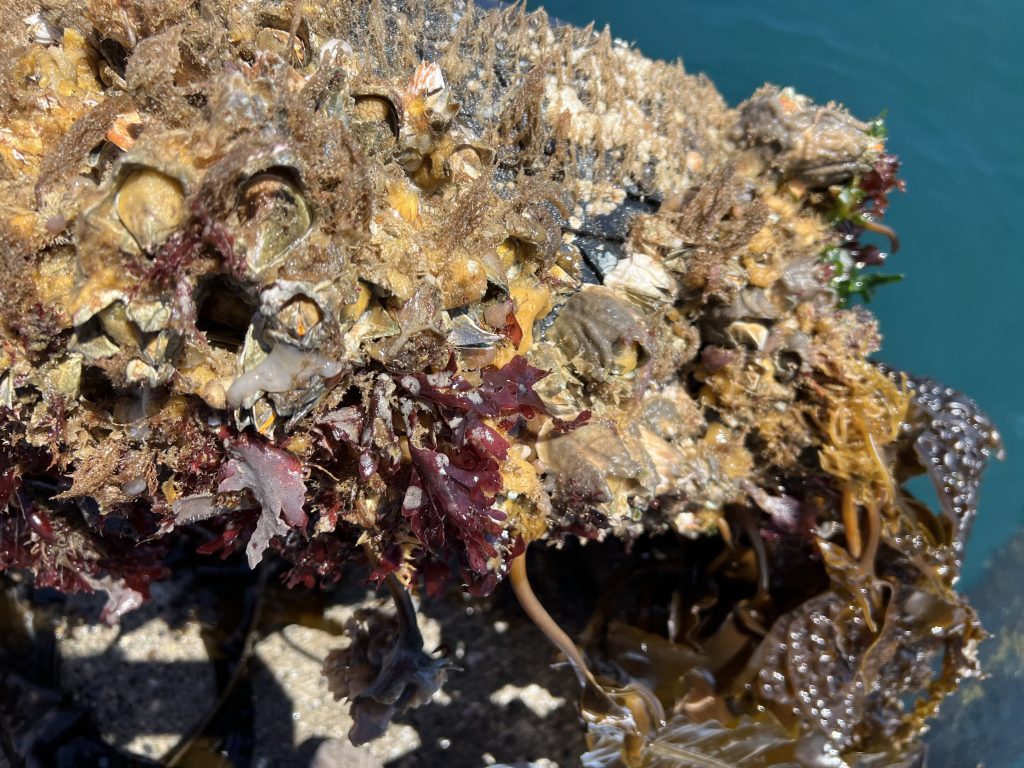
After fueling up on lunch, students were divided into three groups. One group took to the docks to investigate sea life growing upon tires hanging from the docks. This includes but is not limited to shrimp, sea squirts, barnacles of all sorts, crabs, kelp, and sponges. Those who dared took a respectful poke.
A close up of some of the life found latched onto a dock tire. Photo credits: Kaia Wasserman.Active barnacles students were lucky enough to see. Photo credits: Amber Xu.
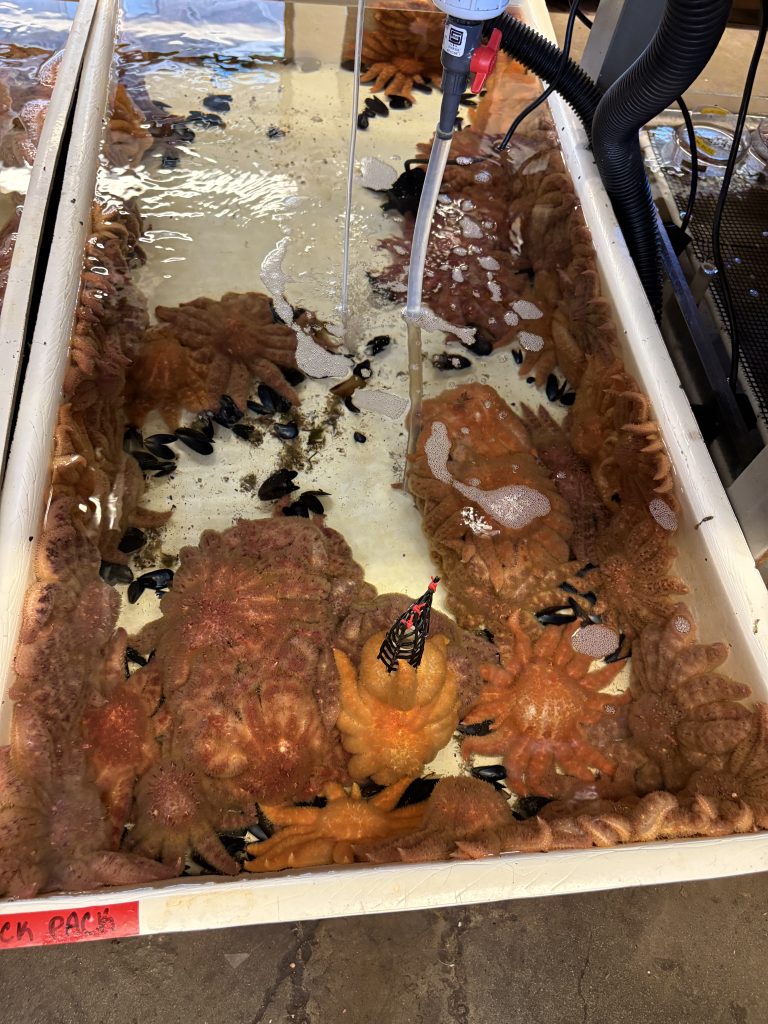
Another group was led to the sea star sanctuary where students learned about the research and restoration of the local sunflower sea stars (Pycnopodia helianthoides). Following a dramatic heatwave in 2014, these vital organisms have been plagued by Sea Star Waisting Disease (SSWD) and researchers have been working to restore the population and unveil the cause since 2019.
Baby sunflower sea stars being raised in tanks in an attempt to restore the damaged population. Photo credits: Kaia Wasserman.Juvenile starfish in their respective tank separated by generation. Photo credits: Max Lundin.
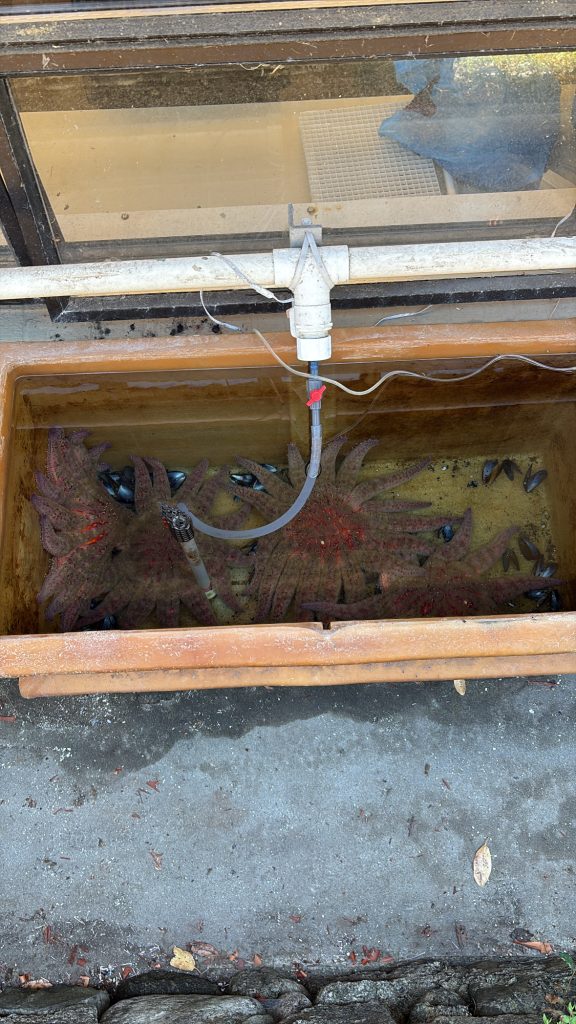
The final group was led outside the lab to view grown, ready to release, and infected sunflower sea stars under quarantine watch. Similarly to inside, each tank was separated by generation. Each generation has a theme for names chosen by research scientists, including different breakfast foods.
Adult sunflower sea stars from the outside tanks. Photo credits: Addy Brautigam.
Once we wrapped up at the labs, we took a hop, skip, and a van ride to the historical site of America Camp National Park. There we received an insightful tour all included with historic background of the area, such as the Pig War that took place. Our guide was none other than the energetic archeologist, cartographer, and Friday Harbor mayoral candidate, Emilio Santiago.
Students posing with Emilio Santiago following an amazing tour! Photo credits: Adam.
To conclude a fantastic day, we returned to Spring Street International School campus where we split off into our job groups and prepared to welcome our guest Tim Dwyer, a marine scientist who currently teaches at Friday Harbor High School and co-teaches at Friday Harbor Laboratories. He also has served as a Communications Officer on the EV Nautilus, the research vessel used by The Ocean Exploration Trust.
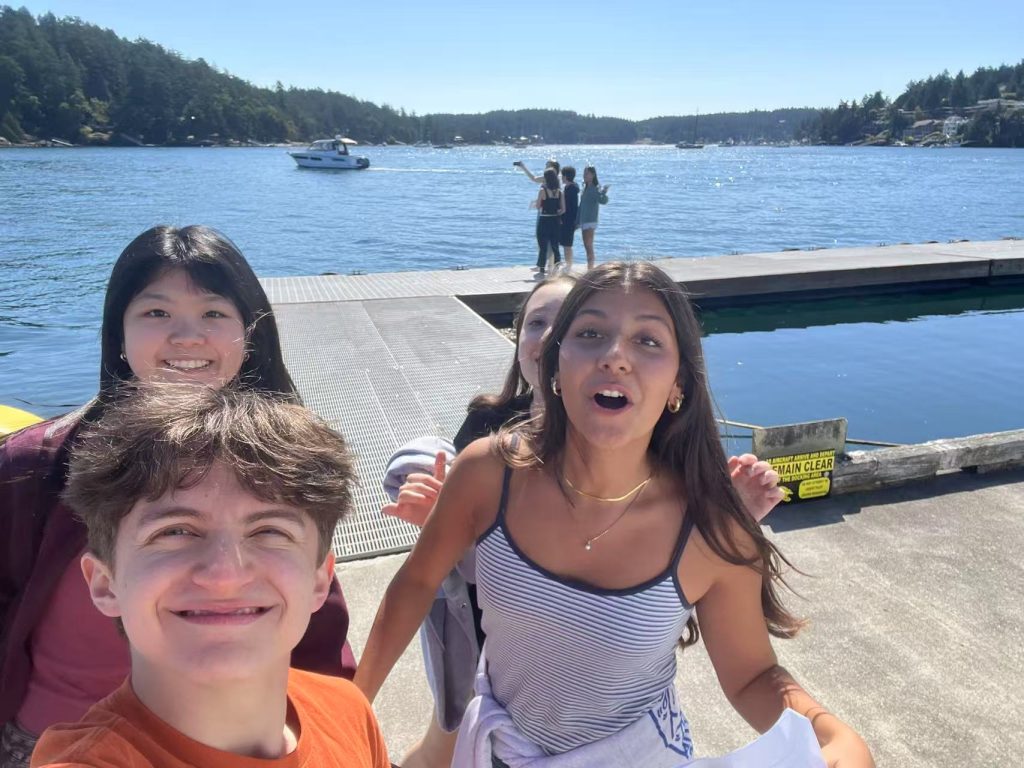
After breakfast and a brief orientation, we set off on a Friday Harbor scavenger hunt and explored the town for around 2 hours. We were tasked with taking group selfies at each subsequent location on our list. Pictured below is an image of Team Smack completing the task of “taking a photo of another group taking their photo.”
Selfie with the other team on the scavenger hunt. Photo credits: Mika
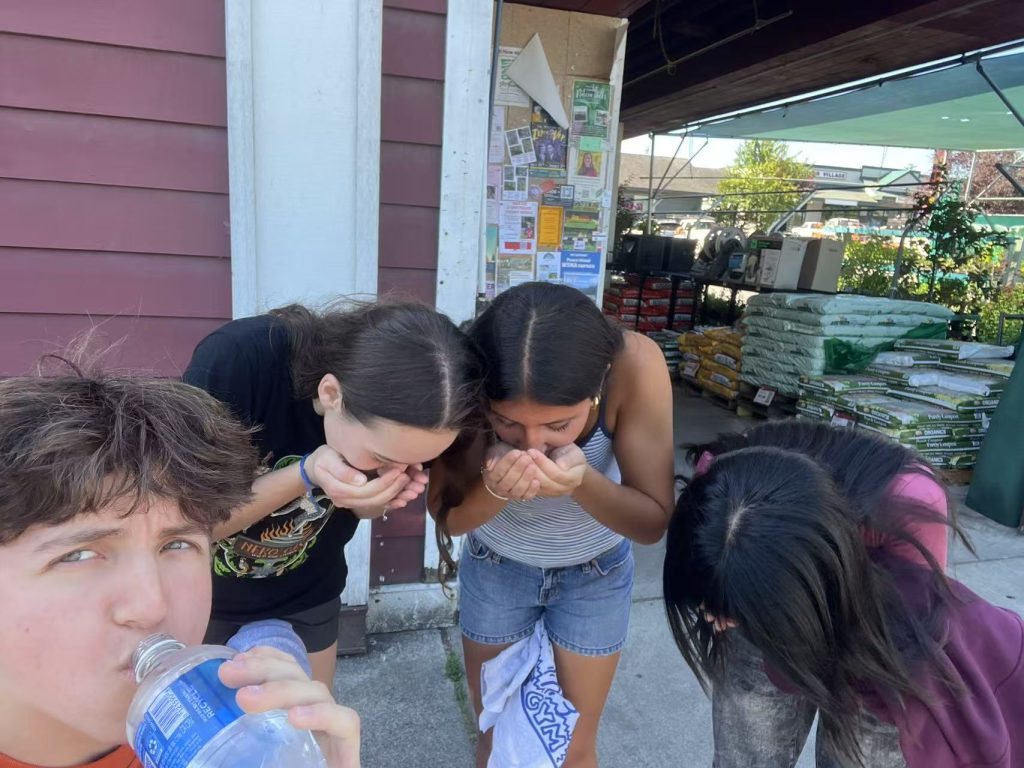
After over an hour of scavenging, teams were challenged with taking a selfie of everyone drinking water. With no water bottles handy, Team Smack made a quick stop at the gas station to pick up a drink and hydrate using their hands in order to complete the task.
Team Smack completing the “drink water” task. Photo credits: Mika
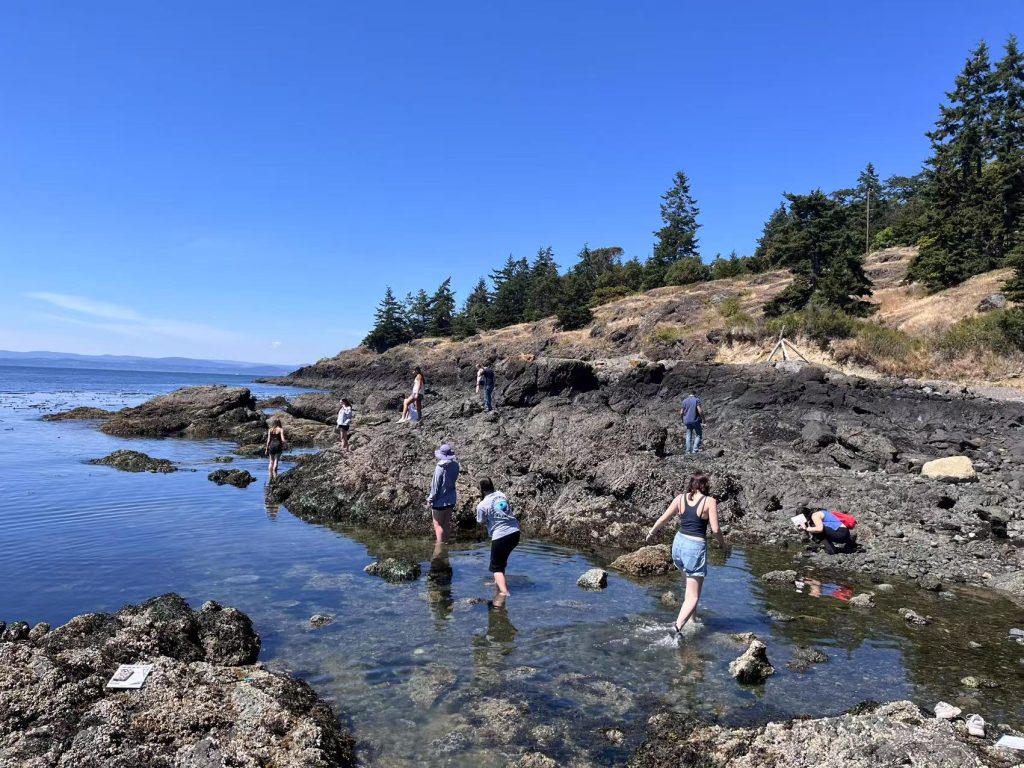
After a quick regrouping back at the Spring Street dorms, everyone packed their field lunch, and we headed out to Deadman’s Bay on the west coast of San Juan Island. Here we sat on the beach and ate our lunch while being viciously swarmed by hungry wasps. Afterwards, we spent the following couple of hours exploring the tidepools in an effort to complete the tidepool bingo.
Students exploring Deadman’s Bay tidepools. Photo credits: Kelly
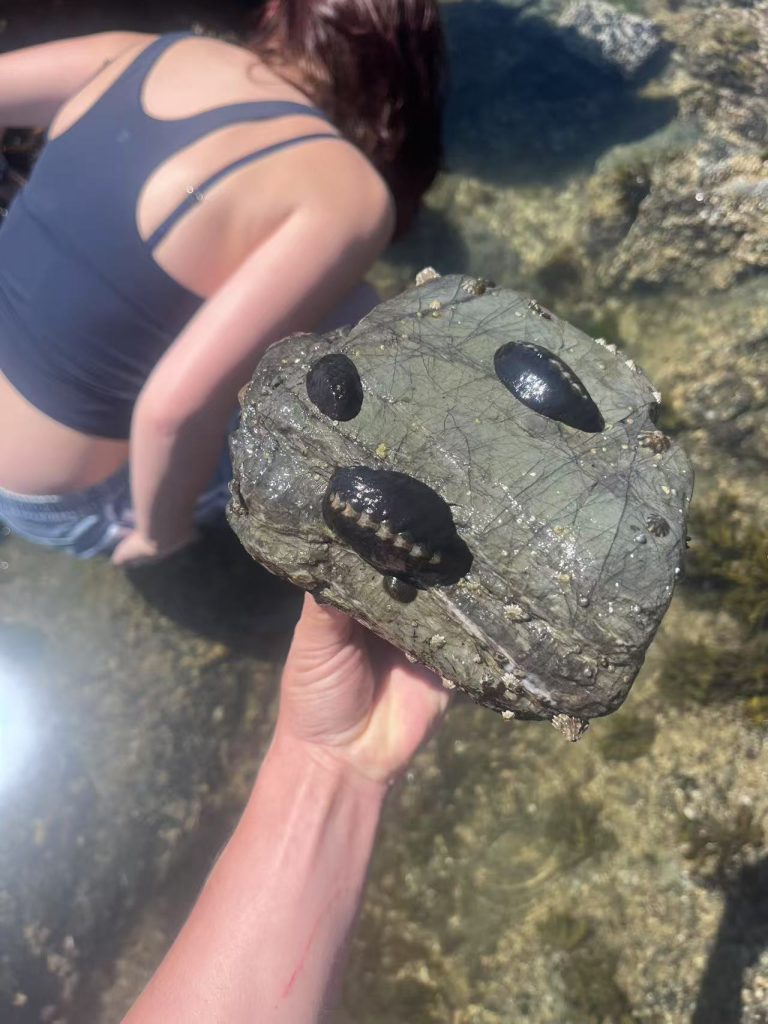
At the tidepools, we came across numerous diverse species, but something that caught our eye were the fossil-like chitons that stuck to the rocks. We later found that chitons are characterized by their eight shells and are members of the phylum Mollusca, a species that has an incredibly muscular foot, allowing them to hold on to various surfaces. Pictured below are three hairy chitons (Pos M. ciliata). These chitons were found after turning over a rock.
Three chitons occupy a rock. Photo credits: Mika
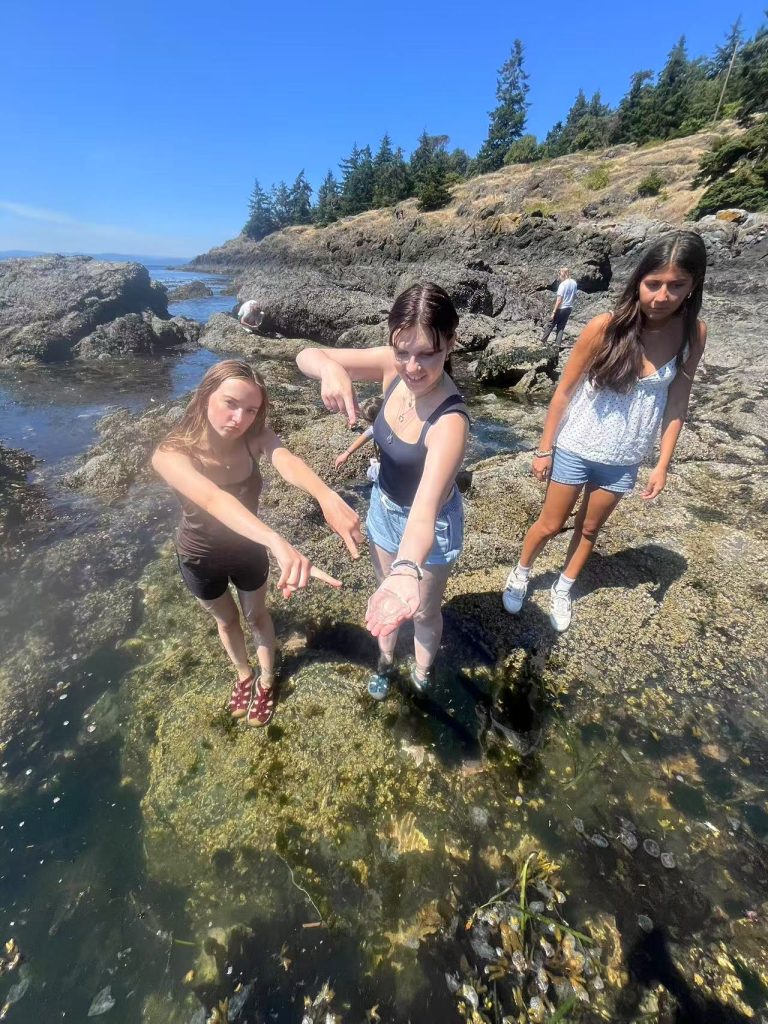
At the tidepools, we found copious amounts of moon jellies (Aurelia sp.). Although many of them seemed lethargic due to the heat, we still managed to find some lively jellies. Pictured below is an image of a particular crystal jelly (Aequorea victoria) that stood out due to its larger comparative size and intriguing radial pattern.
Photo of jellyfish with Elle and Bryce pointing, and Sophia. Photo credits: Mika
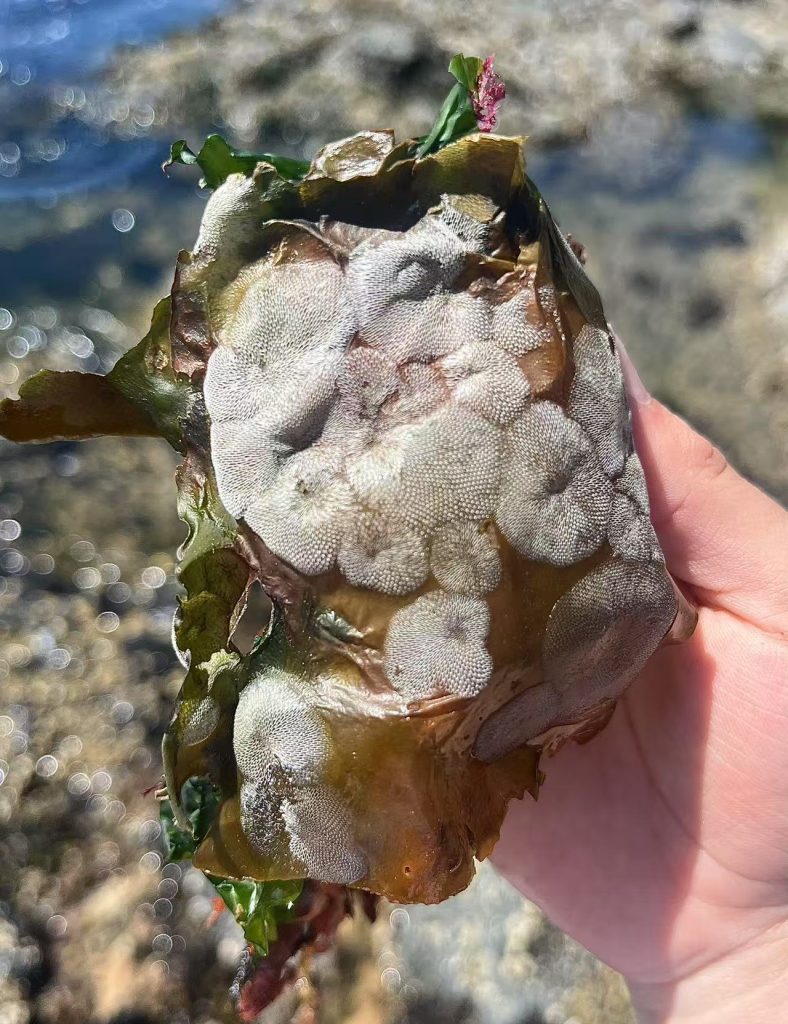
Another intriguing find was a colony of kelp lace bryozoan occupying a piece of kelp. This is a sedentary colonial organism, and each individual organism is an exact clone of the others surrounding it. Finding a colony of lace kelp bryozoan indicates a sign of good water quality due to its sole occupancy of healthy waters.
Lace kelp bryozoan. Photo credits: Mika
After our tidepooling, our science directors, Adam and Maya, led a group lesson in taxonomy and regional phyllum with a reflection on our sightings. We then left Deadman’s Bay and headed back to the Spring Street dorms. Here, Adam gave a presentation on invertebrate phylum. And we broke into our groups to complete our assigned jobs. Now we are super excited and preparing for our dinner with special guest John Michael Racy, who is a member of the University of Washington’s Illimited Lab and is currently working on integrating stingray skeletal designs into mechanical engineering, mentored by Dr. Adam Summers!
Thursday, July 24th, 2025. By: Lars, Miles, and Leah
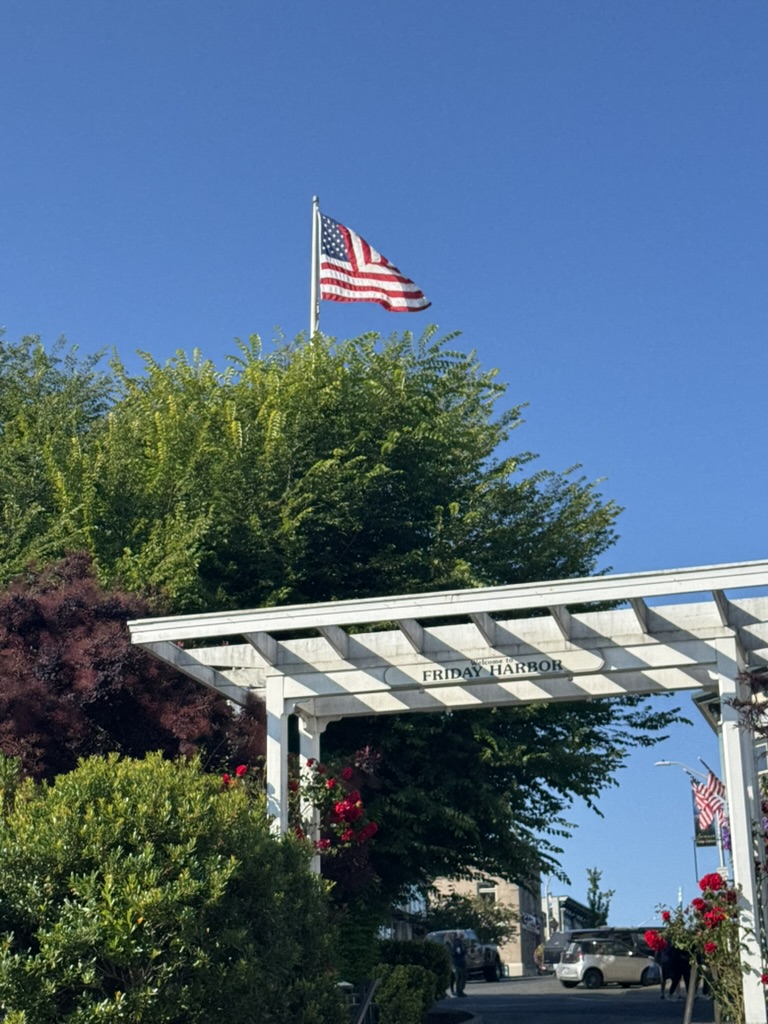
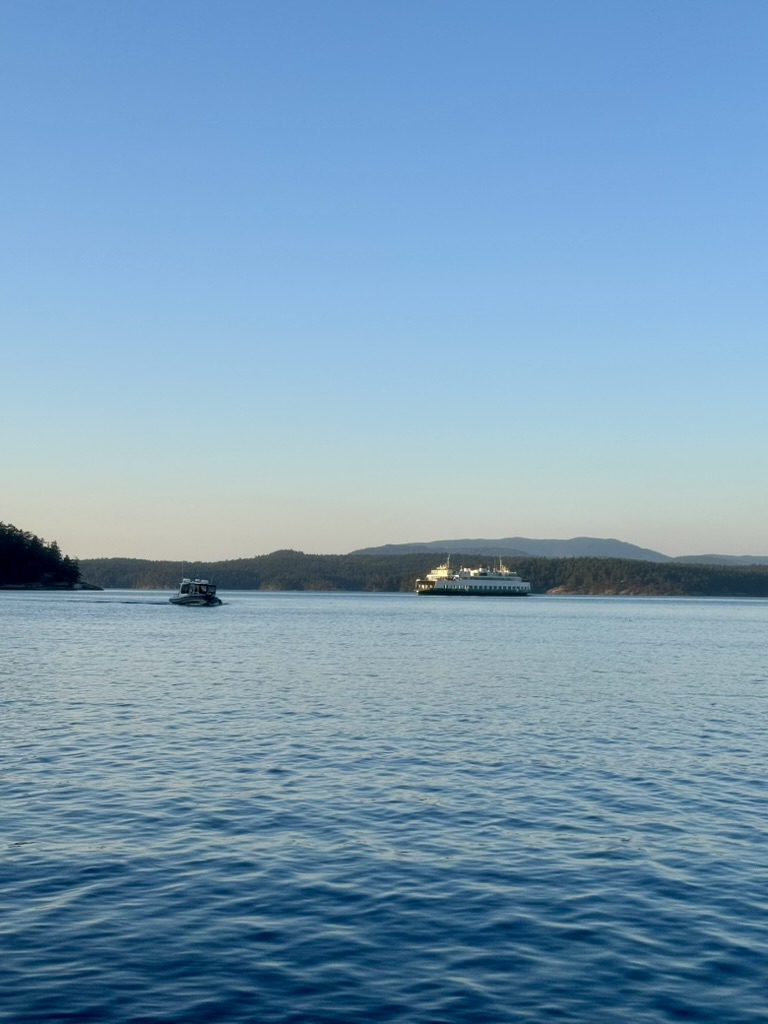
Picture from downtown Friday Harbor (photo by Lars)
I thought a lot about how I wanted to write this post. As we got towards the end of our time with Salish Sea Sciences, chore groups understood what jobs they were doing on the last day. I knew right away- I wanted this final post, this final message from our cohort, to be special. In an effort to maintain the original goal of the blog, as a daily tracker of all of our growth and learning, I will be talking about the day mostly as normal. Please, if you have any inclination to click off the blog now, don’t.
Although some of us were gifted the luxury of waking up peacefully, others had a violent awakening. With an extra hour of beauty sleep under our belts, we each approached the big day excited! Pumped to see our families again, share with the science community all of our findings, and give the 2025 Field Science Cohort one last “hurrah!”.
Our first activity of the day was cleaning! We wanted the dorms and labs to be spotless for the next group of kids to enjoy the space as much as we did. So, in typical fashion, we cleaned to music! Pop songs playing on Ella’s speaker, trumpet noises coming out of Miles’s mouth, and piano notes bouncing off the walls all the way up to the top floor. Similar to science, music is all about communication. We have grown together in that way, playing different songs with each other, dancing to new tunes, being amazed at all of the positive energy each one of us brings to the table.
We also began to pack up some of our belongings during this time. For some, this was done in a neat, organized manner. Separating clean clothes from dirty, neatly folding shirts and shorts, even organizing clothing items into packing cubes! For others, it was more of a shove everything into the bag and see if it fits.
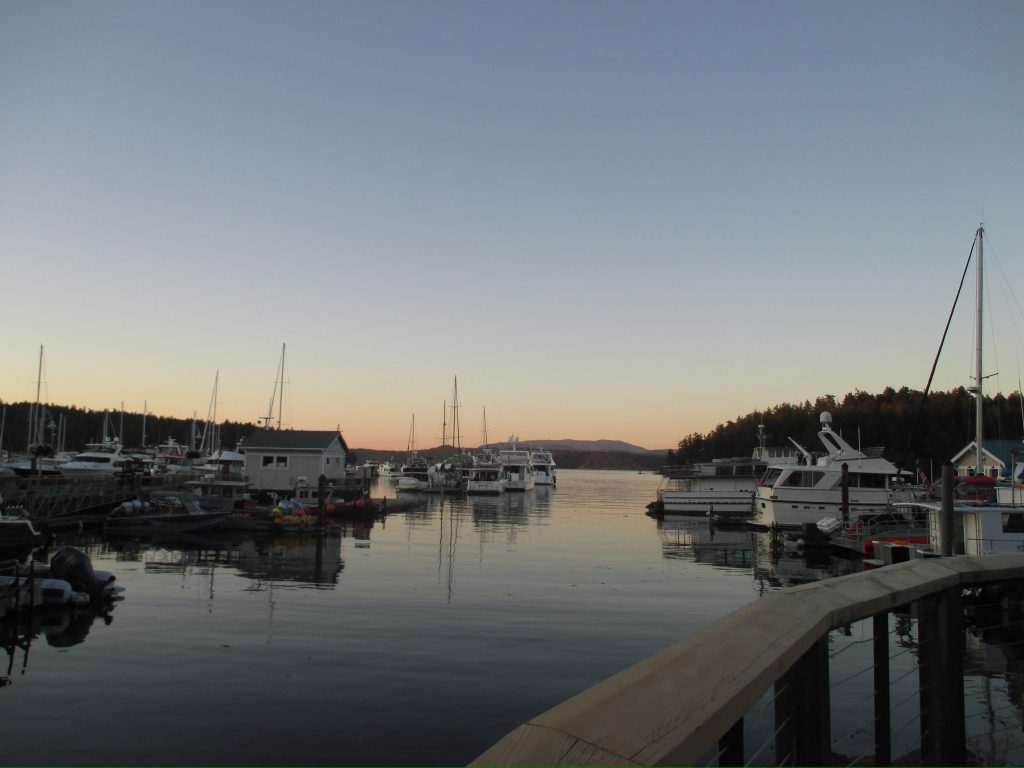
Photo of post-sunset from Friday Harbor Marina (photo by Lars)
Next, we had an hour to write thank you notes to all of the amazing people who inspired us this summer! Whether that’s scientists at the labs, educators on restoration for the San Juan Islands, people who kept the dorms from burning down, or helped us with each step of our projects. There was a broad spectrum of how many cards people wrote, and how well they wrote them. The science team challenged us to write as many as possible! Orrin beat Wyatt over some clear differences in card quality. They both wrote a total of 22 cards!
Our final piece on the agenda before the big project symposium was structured recreational free time! We went to go get ice cream downtown, many of us enjoying a variety of flavors on a waffle cone. We took our time to enjoy the moment, each other’s presence, and our ice cream, before heading back to the dorms to get symposium ready!
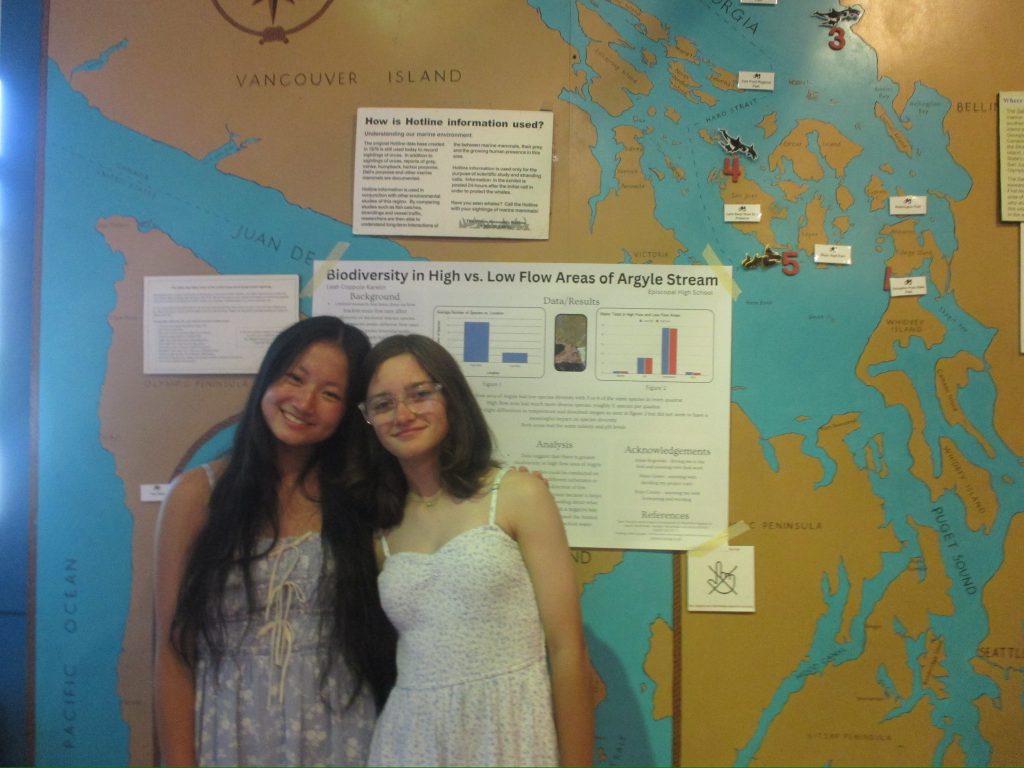
Annika and Leah symposium ready! (photo by Hitomi)
For the first time ever, the project symposium was being held at a very special place. Whale Museum Research Director Jessica Farrer (who had had dinner with us earlier) invited the idea that our program share our posters to the scientific community, our parents, and the public at The Whale Museum! This is such a huge step towards furthering our understanding of youth science communication, and I was honestly stoked we could make it happen! At 5 pm it started. Quickly the room filled up with mentors, families reunited, and friends from all around came together. It didn’t feel like a room full of strangers, it felt like a room full of knowledge, and appreciation, and science.
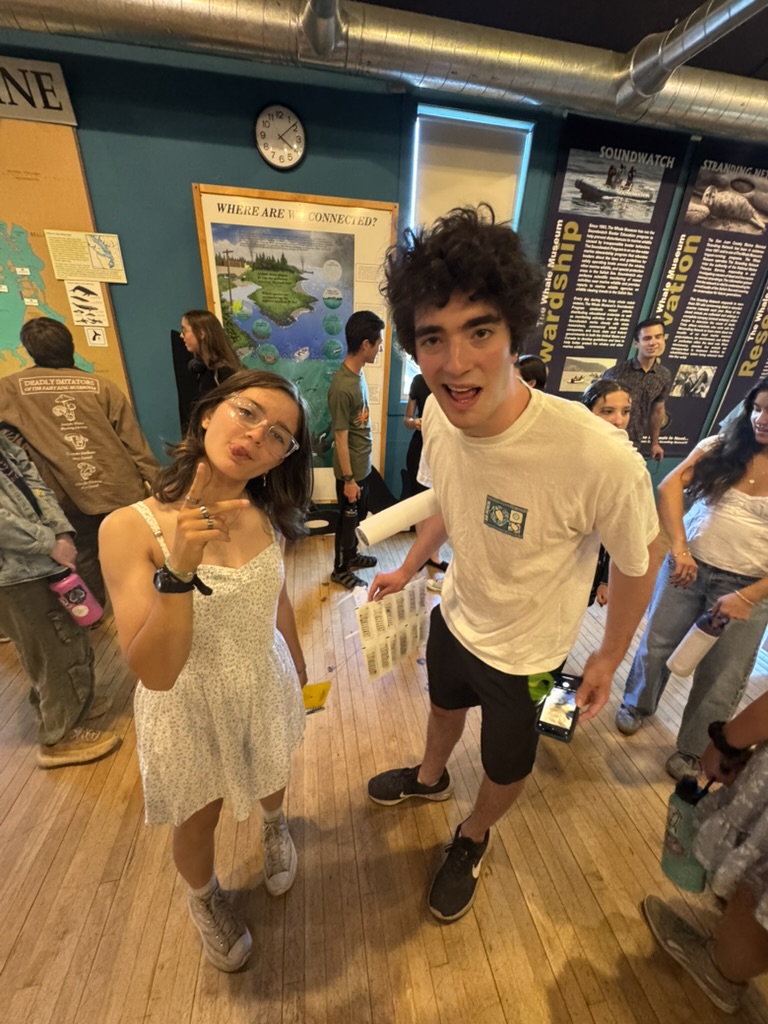
Leah and Miles at symposium (photo by Lars)
It is a beautiful thing when you realize that although you’re practically shouting to make sure the person you’re talking to can hear you, you have to shout because there is so much going on! So much of the information being shared was newly learned through our own hard work! To see so many brilliant minds in one room discussing their passions was simply astounding. You can’t recreate it; it’s a one-time thing. We all came to Salish Sea Sciences for different reasons. Maybe some of us really wanted to learn about one marine organism, or maybe some of us were looking for something fun to do over the summer. No matter what the circumstance was that brought us here – we all arrived on June 29th. Bags in hand, maybe a little nervous of what was to come in the next month–Completely a different person than who we each were in that room. Experiences build us as people. They change who comes forward when you present yourself at a time and place. Obviously Salish Sea Sciences built us up to be better scientists. But it also built us up to be better roommates, better town citizens, better conversation listeners, better note takers, and better friends. All of this hard work got all 19 of us in that room with an amazing poster right behind us. That is special, that is unique, and it deserves to be cherished.
Our throats sore, and legs a little wobbly we returned to the vans for our final ride back to the dorms. Met with warm burgers, bags of potato chips, and yummy fruit we chatted with symposium participants, and reflected on the event with friends and family.
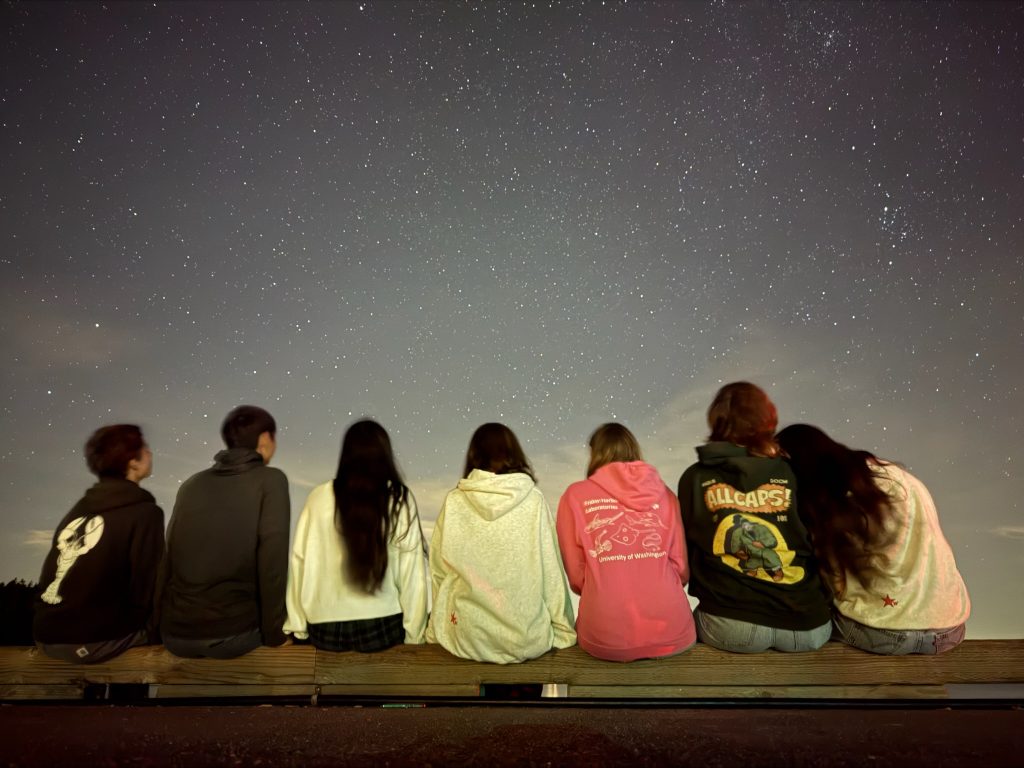
The night ended with bowling and stargazing together. All of the 2025 Field Sciences cohort relaxed for the final time together. Pointing our constellations, cheering each other on when we knocked out all the pins. Cherishing our final hours together.
Stargazing (Photo by Orrin)
The next morning, the majority of us departed at 7 am in a van with bags in hands. Tearful goodbyes were had, long hugs, and plans of reunions in the air. What we did this summer was once in a lifetime. You can only be in Friday Harbor in July of 2025 with the same 19 amazing people once. It was a rare summer, no matter where we end up, we had this summer together and we’ll all remember it. Nothing can replace it, no one can redo it. It’s like finding the perfect beach to watch an amazing sunset on. It’s a moment where everything was timed up right with the people and the place. It is so perfect, and then it ends. And you get back in your car, and think “wow what a great sunset,” you go home and tell your family about this great sunset, maybe you even took lots of sunset pictures! Every so often you bring up that sunset again and it’s just warm fuzzy feeling takes hold of you. and your back in the sunset, or watching the constellations, or seeing orcas from Deadman’s Bay.
Sunset at marina (photo by Hitomi)
Thank you for the summer of our lives Field Science Cohort of 2025. Thank you to Maya, Adam, and Riley for your science and advice support. Thank you to Cassandra and Cara for being the most welcoming dorm family. Thank you to Tom and Caroline for running the whole program, keeping dinners yummy, and everything in tip top shape. And thank you again- to the science nerds. “A dream you dream alone is only a dream. A dream you dream together is reality.”