Day 10: Labs and Larvae

By: Naomi, Ashley, and Jesse

On our own

When we started our journey two weeks ago, we were just a group of six teenagers excited to learn, and we had no idea what was in store for us. Throughout the past seven labs, we have learned about different topics and practiced skills that we will carry with us throughout our science careers. Today we took on Lab 8.

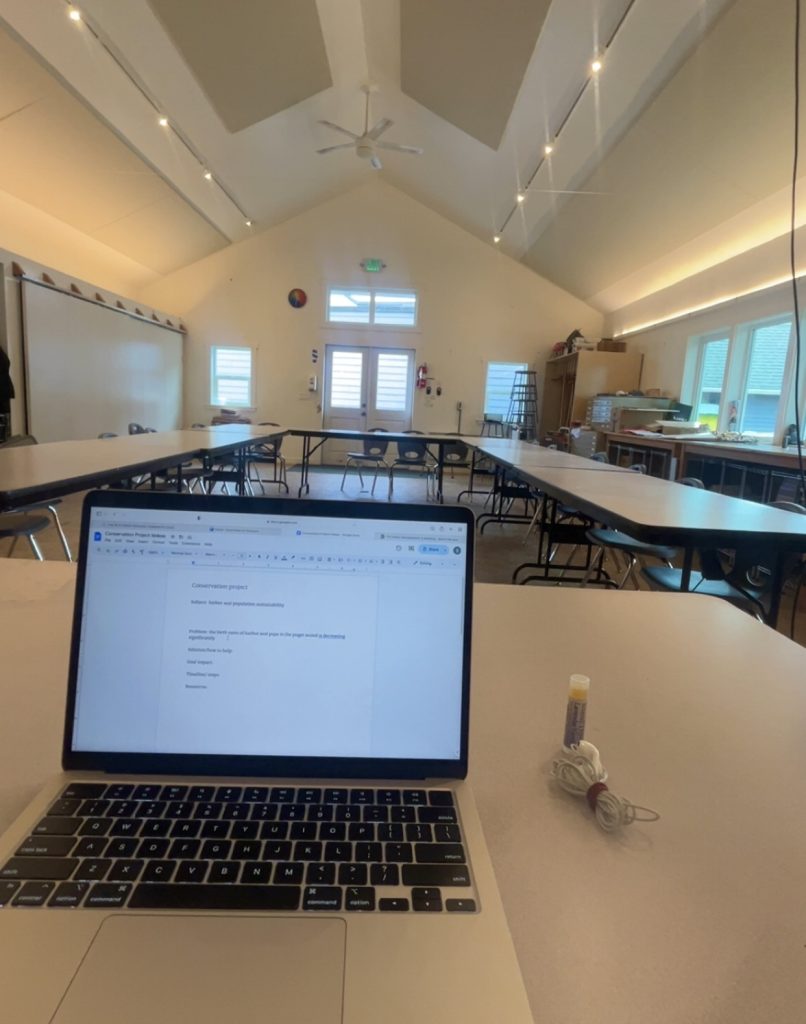
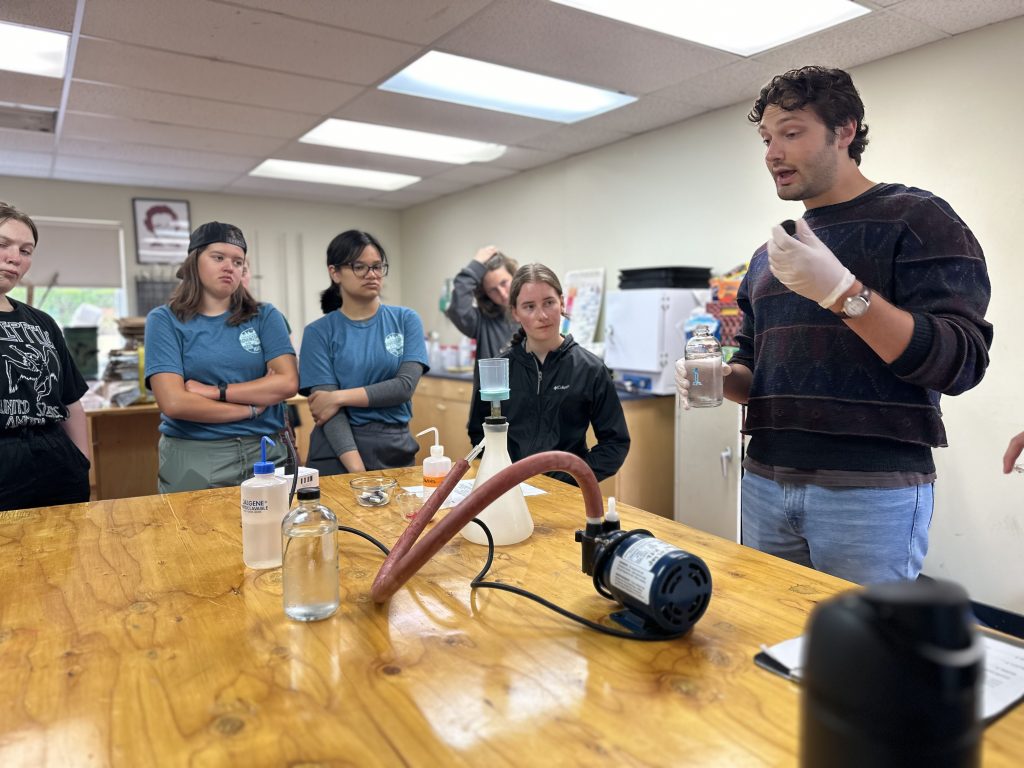
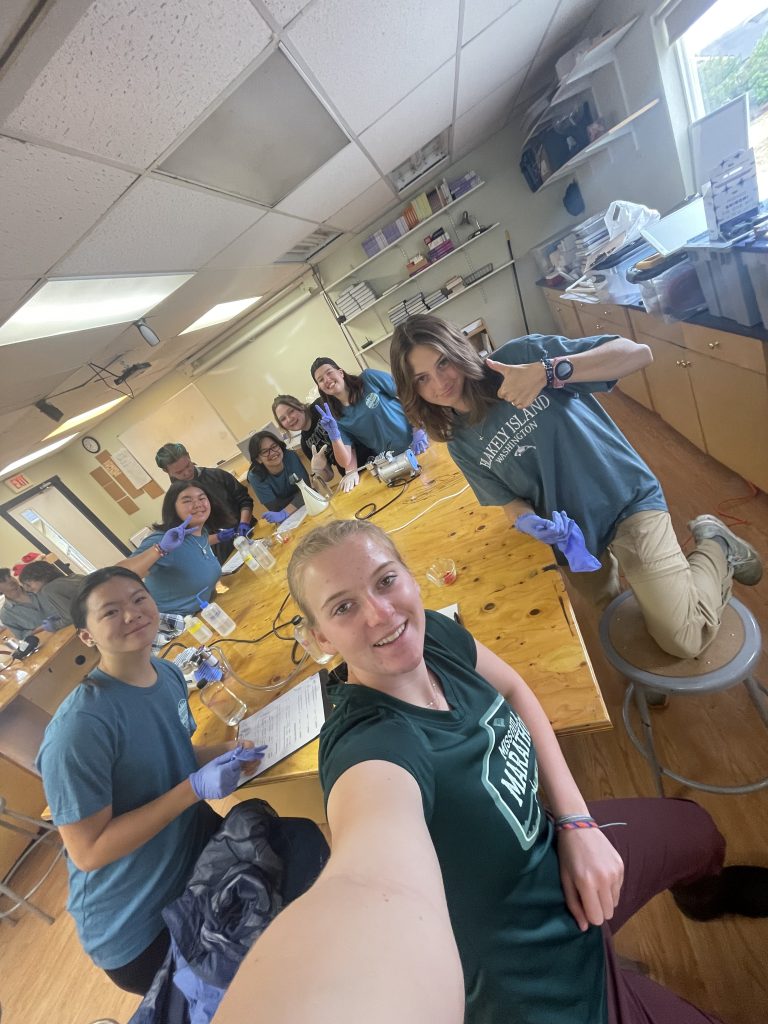
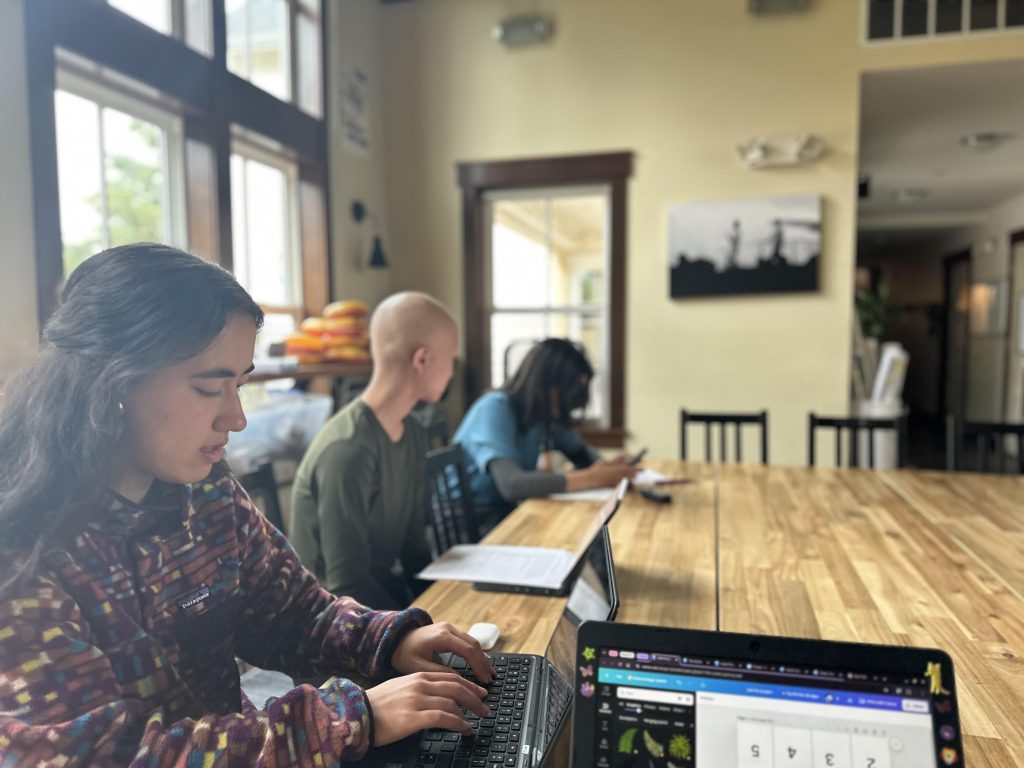
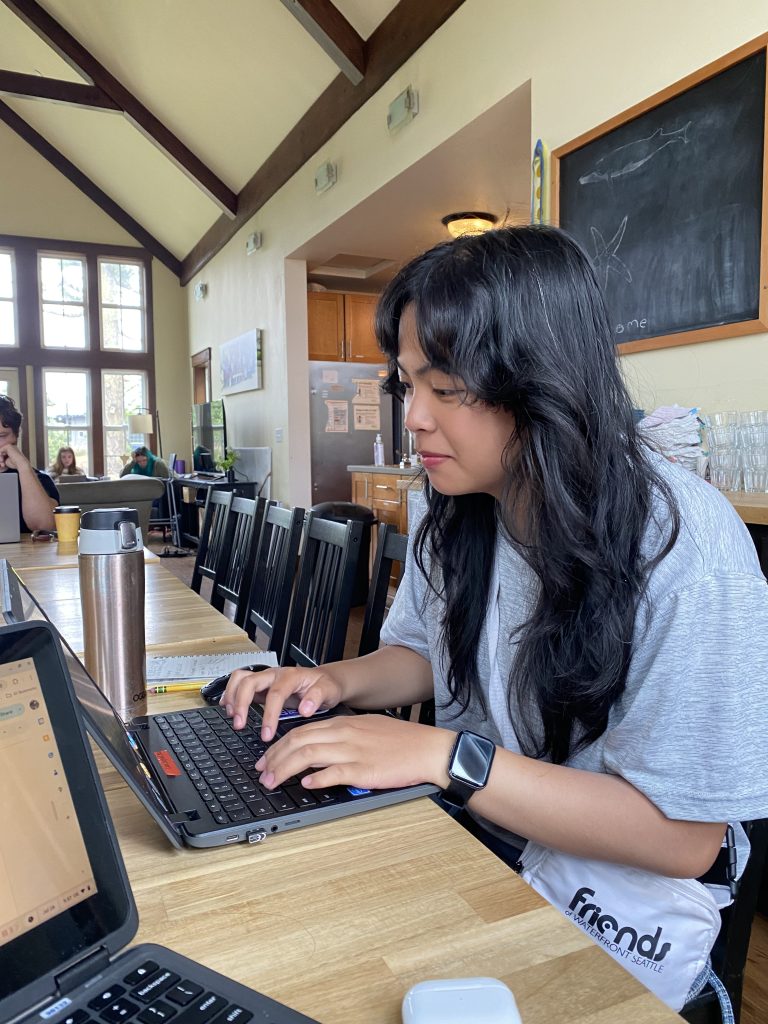
Lab 8, our final lab of the week, was different from labs we’ve conducted before. Derek and Kay’s lab guidance has prepared us for today’s challenge. It was time to create and conduct our own data collection labs. Our only help, a google doc template, and partners! From ice melting to grass biodiversity, our class studiously and efficiently conducted our individual experiments over the next few hours.


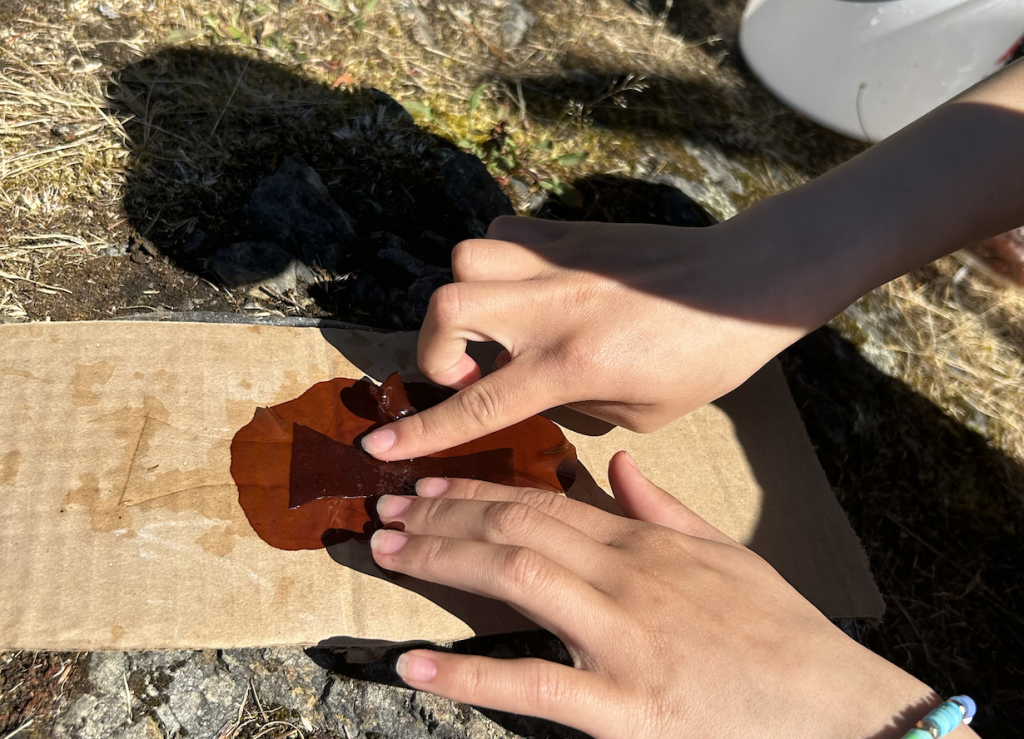
Ashley and Jesse’s results for Lab 8. The pair measured the difference between the time it took for the ice to melt in Diamond Bar, CA compared to Seattle WA.

Bea!

After 3 ½ hours of data collection, lab conducting, and lunch, we were greeted by Bea Grauman-Boss, our guest lecturer for today. Bea researches marine biology, cancer treatments, and more. When Bea went to Cambridge University, her professor told her to try everything. From MIT research to sand dollar larvae cloning, Bea has done it all!

Bea started off by introducing us to the rabbit overpopulation on San Juan Island and the impact they have on the Yellow Marble Butterflies (Euchloe hyantis).

While you might think that marine biology and pancreatic cancer have nothing in common, Bea – and now us – would beg to differ. Bea’s research in sand dollar larvae growth development and cloning placed her on her current path, developing cancer treatment. While she never thought of ending up doing this, Bea is so happy to be in her current position.


Bea’s presentation on her studies of pancreatic cancer

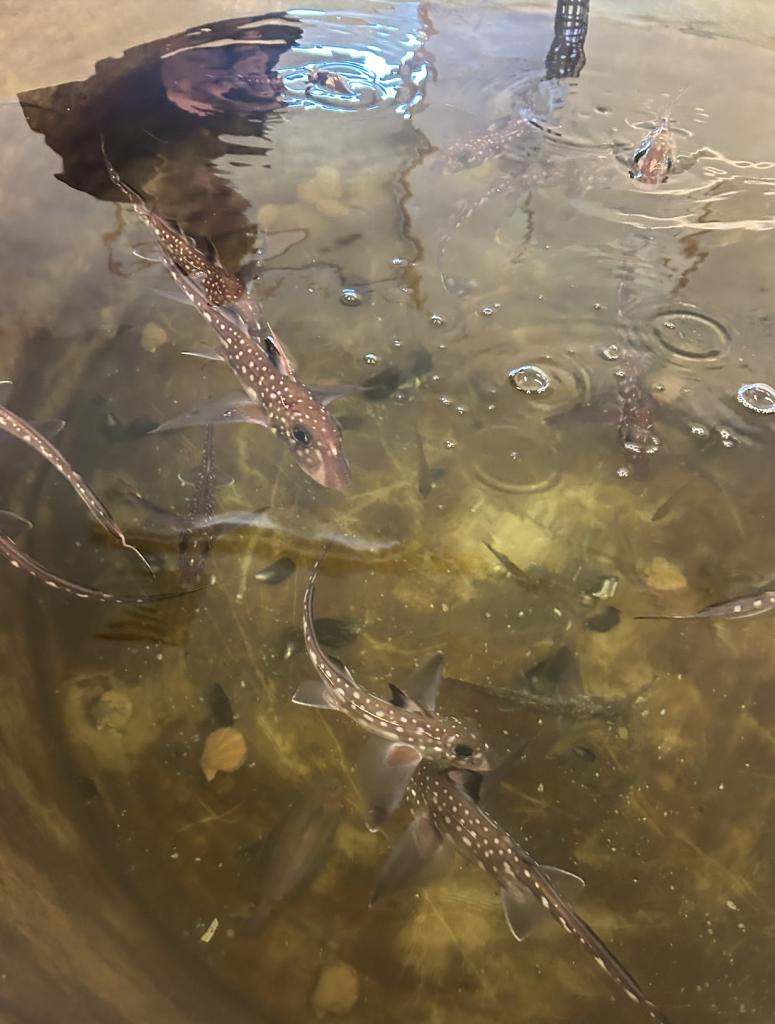
Bea discussed the difference in growth rates for sand dollar larvae caused by predatorial presence and food amounts.

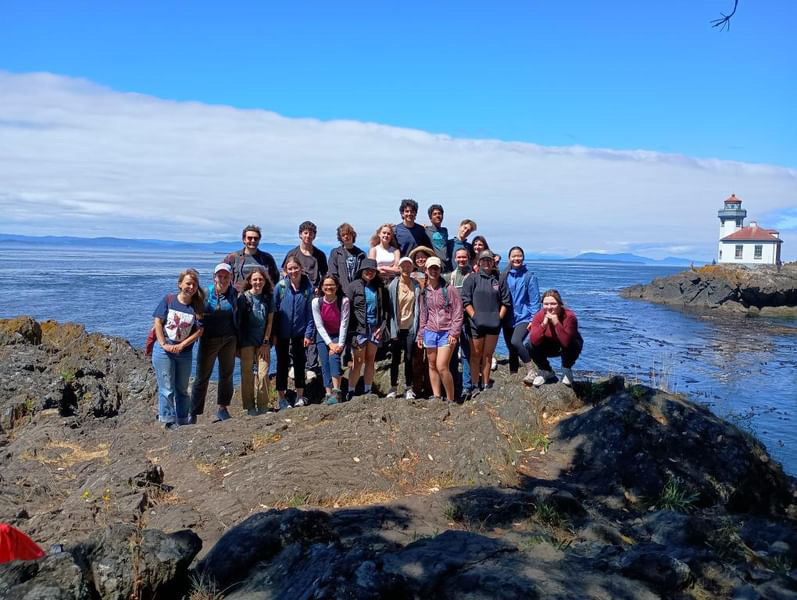
The end of week two!

To conclude the day we all took 5 minutes to discuss and expand our own ideas for potential projects. Each of us came up with excellent research questions and plans for pilot testing this weekend. Our discussion helped us through our ideas and ways we could find data around our neighborhoods. 

At the end of the week, we reflected on how quickly week 2 flew by (even when compared to week 1)! Although there are definitely restraints to working online, we have made the most of this situation and can’t wait to begin our projects.

Day 9: Where Do You Come From?

By Anders, Colette, and Julia

Where do you come from? 

For most of us, this question probably isn’t all that hard to answer. You might respond, “I’m from Seattle” or maybe “I have some Scandinavian heritage”.

However, when asked to think back even further, things start to get a little complicated. 

When posed with this idea, our minds began to race. Did we come from outer space? How closely related am I to a nudibranch? Where do I even start?

It’s easy to get overwhelmed when tracing back to our prehistoric ancestors. Fortunately for us, we had some help to get us through this subject; none other than Dr. Billie Swalla, an expert in marine genomics. 

Dr. Swalla taught us about her lifelong career studying ascidian embryos. Besides their beautiful features as adults, ascidians stand out due to their interesting larval characteristics. At the time of Dr. Swalla’s first introduction to the species, it seemed as though this creature could hold the key to discovering the common ancestor between vertebrates and invertebrates.

Below is an ascidian. And below that is also an ascidian (otherwise known as a Sea Squirt).

Dr. Swalla taught us about her lifelong career studying ascidian embryos. Besides their beautiful features as adults, ascidians stand out due to their interesting larval characteristics. At the time of Dr. Swalla’s first introduction to the species, it seemed as though this creature could hold the key to discovering the common ancestor between vertebrates and invertebrates.

Each organism begins its life as a larva, with its larval appearance bearing almost no resemblance to its adult form. As a larva, the ascidian spends no more than 12 hours in the water column, all the while searching for a place on the seafloor to metamorphosize. 

Dr. Swalla has spent years behind microscopes, constantly working to unearth new knowledge about these animals. Through her experience, she’s explored the body plan of ascidians, using her studies to build a better understanding of how complex body structures (like those of vertebrates) have evolved.

We are so fortunate to have spoken with Dr. Swalla today! From her words, we learned not only about our closest invertebrate relatives (ascidians) but also of the great importance of following one’s passion. Always remember, if you come across an ascidian in the ocean, just know they’re practically family! 

Transect Time!

Excited to keep active in the afternoon, we all trekked to local parks and green spaces to collect some environmental data. While we’re sure we’d prefer to be at Friday Harbor Labs working by the Salish Sea, it’s still great practice to test our transect skills around our own homes. Each one of us ventured into the great outdoors and rolled out 30 meters of measuring tape; using our quadrats to record the substrate every 5 meters. There is no doubt in our minds that passerbys thought we were crazy. We recorded everything from concrete to animal waste. 

While at times it’s a bummer to be so far apart, our geographical distance certainly comes with its benefits. Each location produced distinct data sets: while some of us dealt with tarantulas and snakes, others enjoyed relaxing parks and the comfort of sidewalks. It made for a very interesting afternoon. No matter where you are, there is always something new to discover. There are so many ways to connect with your surroundings and appreciate the natural world around you.

Get out and explore! 


Day 8: Seaweed and Statistics!

By Naomi, Ashley, and Jesse

We all know about the current pandemic facing the human race today. But what we don’t know about are the pandemics that are evolving below the surface. 

Morgan Eisenlord from the Friday Harbor Labs enlightened us on one of the many major diseases facing our marine creatures today. The eelgrass wasting disease, not dissimilar to the sunflower sea star wasting disease, eats away at eelgrass plants throughout the Salish Seas.

Morgan discussed the labs she conducted to determine if increased water temperature is an eelgrass wasting disease trigger. She showed us pictures of infected and healthy eelgrass and demonstrated how, using Image J, we could find the area of a disease lesion.


This is unaffected seagrass that is happily thriving. 🙂

Earlier that morning, we, the Bottlenose Dolphins, introduced Dr. Dobkowski, a phycologist and visiting assistant professor at Bates College. The seaweed expert described the various research systems that she uses in order to conduct different macroalgal labs. One of these techniques involved using a combination of transects and quadrats in order to measure kelp abundance in different intertidal terrains. Her research demonstrated that there is less kelp diversity in the wave-exposed cobble zone due to environmental pressures such as solar and tidal.

Before she said goodbye, she discussed her lab feeding research on kelp crabs. Her main goal was to determine the crabs’ feeding preferences. Dr. Dobkowski conducted an experiment measuring the amount of three types of kelp eaten by the crabs in the lab. From this experiment and many others, she was able to deduce that a kelp crab diet consists of bull kelp, sea snails, and sargassum.


This is a kelp bed like the one from Dr. Dobkowski’s studies.

After listening to Dr. Dobkowski’s presentation, we moved on to finishing Kay’s presentation from yesterday. Kay finally showed us the results of her butterflyfish research! She explained how she used linear regression, T-tests, and ANOVA to demonstrate butterflyfish behavior. By comparing the two reef sites where she conducted her research she found that aggression was less common in the degraded reef compared to the healthy reef.

After a long day of lectures and lesions, we received a quick blogging lesson from Caroline to wrap up the day. She showed us ways that we could liven our future blogs. Let’s see if you can notice any of the changes!
Day 7: Empowered

By Anders, Colette, and Julia

**Broadcasting from Team Mako…

Today was packed, but fortunately started off a little slower than yesterday, leaving us with some much needed time to get going.

After our daily knot, it was time to sit down and learn about Kay’s past research. Using some Google Slides templates, we began the process of creating a field guide for our home environments. Next up, we learned all about “do it yourself”, or DIY, data collection methods from Kay as she showed us what her research experience has taught her. She provided examples that showed us how to make cheap, DIY alternatives to expensive scientific tools. Fortunately for our wallets, marine science is very accessible. Oftentimes, expensive equipment can be replaced by common – sense creations. 

After lunch, we had the awesome opportunity to meet Liz Smith, a scientist and filmmaker with experience in many different fields. Having studied and worked in the field of scientific communication, Liz taught us all about her work as both an independent contractor and NASA employee. We were also extremely grateful to be selected as one of the very few groups to view Liz’s newest film, YOUTH v. GOV. With confidentiality in mind, let’s just say… Wow! If we were to sum up the film in one word, it would be Empowering.

After we had all taken the time to view the documentary, we wrote about our thoughts in a short survey. This was a nice way to debrief what we learned and to provide critical feedback for the production and editing teams. It’s crazy to know that our feedback is helping to create what we hope will be the next big documentary!

We reconnected on zoom to discuss our feelings about the film with Producer Liz Smith. Both team Mako and team Bottlenose Dolphins voiced the inspiration we felt and agreed that we all had an overwhelming urge to make our voices heard. Every voice counts, and if anything is going to make a difference in this critical time, it’s the youth. Whether it’s by protesting, signing petitions, or creating posters: all efforts are critical during this global fight for climate justice. 

Day 6: Necropsy and Nomenclature

By Naomi, Ashley, and Jesse

**Broadcasting from Team Bottlenose Dolphins…

First thing Monday morning we logged in to the Zoom call and were greeted with a view of the Salish seas from the dock where the necropsy of an adult harbor seal and two pups would be taking place. Not long after 9:00, Dr. Joe Gaydos and his team began the pre-examination of the adult harbor seal. One of the few signs of death was the blood coming from a small laceration in the seal’s head. The team was also able to notice a larger bump around the lower part of the seal, meaning it was likely pregnant or had a tumor. They tapped on the belly, and the jiggly consistency led them to believe that the seal was either pregnant or had lots of internal bleeding. It turned out to be the latter. As they made the first incision across the top of its back and measured the seal’s blubber layer, blood started to pour out of the carcass. From the moment the seal was opened, Dr. Gaydos immediately began making guesses as to how the seal died. It could have been hypovolemia as there was internal bleeding throughout its body (even in the chest cavity), trauma such as the seal hitting its head (possibly causing the internal bleeding), infections in organs such as the uterus, or other underlying causes such as disease. Throughout the necropsy, Dr. Gaydos cut off samples of different organs of the seal and placed them in a jar filled with formalin in order to preserve them for further testing. Even though they are in the same jar, they will all look unique under the microscope. Dr. Gaydos placed certain organs in plastic bags for bacteria testing, and he even took teeth samples in order to determine the age of the seal. Scientists at another lab would cut open the tooth and count the number of rings on it to tell the age, not dissimilar to how one would tell the age of a tree. Dr. Gaydos went on to show us signs of the seal twisting and turning before it died. This was clear to see because of the way the intestines and other organs were all mixed up and in the wrong place. We were also able to see other vital organs such as the eyes and brain throughout the necropsy. Although we were not actually on-site, Derek and Kay informed us of the funky smell coming from the seal, that was strong even when spectating from afar.

When Dr. Gaydos was finished with the adult, he and his team went on to dissect two seal pups. Both stranded, one was found seizing (possibly due to trauma of glucose imbalances). The other pup was found with a swollen nose due to a mink bite. The team made the decision to euthanize the pup with the mink bite when it was first found in order to put it out of its misery. Using a similar chemical to the ones used to put down pets, they euthanized the pup in order to match nature (natural selection). To ensure that the chemicals from the euthanization would not leak into the ocean, Dr. Gaydos and the other experts decided to perform the necropsy within a plastic bag.

Halfway through dissecting the second pup, Derek’s phone ran out of battery, and the video resultantly stopped streaming. Due to this technical issue, we had to head out to lunch instead of watching the rest of the necropsy. After coming back from lunch, we reflected on the necropsy; some of us hadn’t seen a dissection of a seal before but we were glad to have this opportunity. We then discussed the different ways Dr. Gaydos examined the seal and how he had observed the trauma the seals had gone through.

Our next task was learning the knot of the day – the double fisherman knot. Some of us had trouble figuring it out, but we will continue to practice it along with the other knots we have previously learned. 

Later in the day, we learned about Carl Linnaeus and his work in taxonomy throughout his life. After learning about him, we (the Bottlenose Dolphins) created a Kahoot game about Carl Linnaeus for the Makos, Derek, and Kay. After the fun round of Kahoot, we finished the PowerPoint Kay was presenting and learned how to identify different species of animals. After the presentation, we set off to collect data on 10 different species of animals, bugs, or plants we could find in our own environment. We then inputted our data and compared it to what others had found. Our final activity of the way was analyzing the data we collected from last Friday. Thanks to Derek’s help inputting data into an nMDS chart, we were able to compare our data and find the differences.
We wrapped up the day by sharing our joys and challenges with the rest of the group; although we had a few challenges throughout the day like Derek’s phone dying, it didn’t stop us from having a fun time!


Seal before dissection

Seal after incision

Dr. Gaydos examining intestines

Seal Skull (with eyes)

Day 5: An Ecological End to Week 1!

By Anders and Julia (Colette was busy but with us in spirit!)

**Broadcasting from Team Mako…

Wow, the week really flew by!

We think the soaked up knowledge from the past few days finally got to everyone because we were all a little exhausted today. Undeterred, we kicked things off with the knot of the day: the sheet bend. 
After we felt our morning drowsiness had been washed away, we were quick to jump into fieldwork and data collection. Today’s task had us photographing our household utensils once more in order to practice using quadrats in our future experiments!

Today’s excellent speaker was Morgan Eisenlord, an expert in the field of marine ecology and infectious disease currently studying at Cornell University to earn her Ph.D. She has dedicated much of her research career to studying the plague of Sea Star Wasting Syndrome that tainted the waters of the Salish Sea in 2013. Morgan told us all about her experiments with Sunflower Sea Stars (Pycnopodia helianthoides). Once common across the seafloor of the West Coast, their numbers saw a significant decrease as Wasting tore through their population.

Although marine diseases are always naturally present in our oceans, Morgan explained how human-introduced environmental stressors often lead to worsen these issues and increase their prevalence. With her previous knowledge, experience, and awesome willingness to answer all our questions, we learned so much from her and are grateful for the time we got to spend with her today.
Our second field activity today involved further practicing our counting and observational skills. We were tasked with using transects to collect data around our homes. After rolling out 10 meters of line, we made qualitative recordings every 10 centimeters.  The activity certainly required close attention, as if you weren’t careful, one mistake could render the entire data set incorrect.
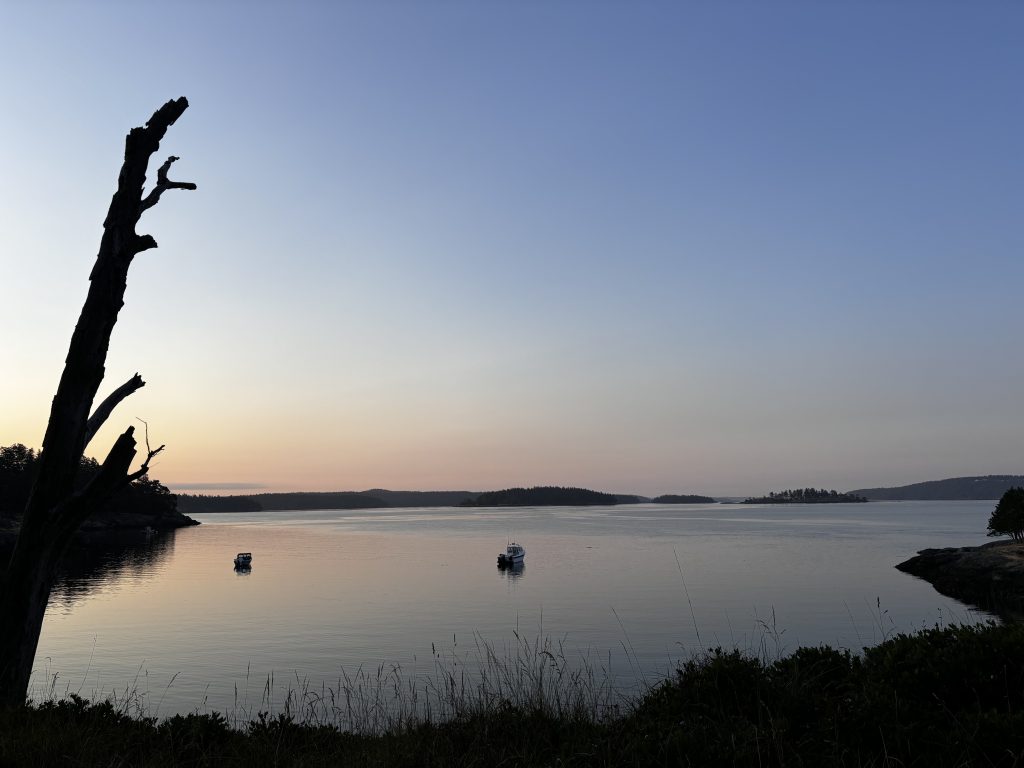
While we have yet to dive fully into personal projects, our afternoon had us all brainstorming topics to explore in the coming weeks. 

It really is hard to believe that the first week is already over! We have learned so much from the Salish team as well as all the incredible guests. We’re sure we speak on behalf of both teams when we say that we are beyond excited for what next week has in store!

Day 4: Pema and Podcasts

By Naomi, Ashley, and Jesse

**Broadcasting from Team Bottlenose Dolphins…

To start off the day, we dove right into discussing last night’s coral epigenetics lecture. During the lecture, Dr. Sarah lemur mostly discussed coral bleaching and how corals can be acclimated to mild heat stress early on in order to withstand greater heat stress later in their lives.  Our discussion of methylation and morphology evolved into a discussion of Earth’s history in which we tried to understand the many intricacies that lie within this planet. For example, we covered many different aspects of speciation and the function that evolution plays when regarding this state. By the end of the talk, we had come up with more questions including the thought “We know where the ocean’s water comes from, but where did the salt come from?” 

Our guest speaker of the day was Pema Kitaeff. Pema has been working on a
Sunflower Sea Stars (Pycnopodia helianthoides) restoration project and she introduced us to her many sea stars along with their prey – mussels and urchins. Clooney, one of the sea stars, was handed a mussel which was gone from our sight within a minute. Pema informed us that underneath the sea star, Clooney’s tube feet were applying pressure to the mussel’s shell in order to create a crack. Once the crack was formed, Clooney would insert his stomach into the mussel shell in order to devour the animal inside! In another tank, many of the sea stars were positioned awkwardly on the wall. Using her extensive knowledge and expertise in the field, Pema was able to deduce that the water flow within the tank was too low and was inducing the stars’ stress. But after turning up the water flow, the sea stars repositioned back to normal. The purpose of the restoration project is to spawn more Sunflower Sea Stars (Pycnopodia helianthoides) in order to learn how we can better raise juvenile sea stars. The end goal is to release the sea stars back out into the wild to help repopulate the natural population.

After examining the sea stars, we moved on to developing a new project for the Salish Seas Sciences: podcasts! Naomi and Anders researched what platforms to use, we decided on Anchor; Ashley and Colette brainstormed ideas on what to talk about in the podcast, and Jesse and Julia found example podcasts about marine science for inspiration. After discussing in individual breakout rooms, we rejoined to combine our research and to plan out the podcast. Once this was settled, we headed for lunch.

We returned energized with full stomachs, prepared for Kay’s presentation on the behaviors of 3 different species of butterflyfish. With this information in mind, we headed out to our own ecosystems to observe how organisms behaved in their own environments. Some of us discovered the particular behaviors of insects such as bees and ants, while others examined larger creatures like squirrels and lizards. We then discussed and observed each other’s collected data. To finish off our day we shared our joys and challenges. Today definitely was an exciting day of exploration, and we are looking forward to tomorrow’s visit with phycologist Dr. Katie Dobkowski!

Devouring a mussel.
Feeding Santino the sea urchin.
Look at the tube feet!
Pema and the
Sunflower Sea Stars (Pycnopodia helianthoides).

Day 3: From Bioacoustics to Broadcasting

By Anders, Colette, and Julia

**Broadcasting from Team Mako…

Boy was today jam-packed!

Right off the bat, we jumped into the world of bioacoustics. The wonderful Jason Wood and Jesse Turner helped to ease us into this complicated subject. Given his extensive background in acoustic ecology with a Ph.D. from the University of California, Davis, Dr. Wood had tons to teach us! In previous years he taught an undergraduate class on this subject at Friday Harbor Labs!

While sound and its significance to ecology and conservation might go unheard, its importance shouldn’t be ignored. Dr. Wood highlighted the extensive array of sounds found within the Salish Sea; both natural and anthropogenic(human-made). He demonstrated the great effect that our noisy world has below the waves. With marine mammals around the world so dependent on communication, the noise pollution emitted from our ocean activities can seriously disable our aquatic neighbors. Those of us that have ever attended a loud concert are likely familiar with the phenomenon of reduced hearing after the event. However, while the consequences for us humans are usually negligible after a day or so, Cetaceans face serious damage. Sounds can become so loud that they suffer from minute to acute hearing loss which inhibits their ability to feed and communicate with others.

Dr. Wood and his colleagues have stood up to the noise and organized a slow zone for ships traveling through the Haro Strait—the strait between the San Juan Islands and the greater Victoria area. An incredible 80% of ships have accepted these terms! Dr. Wood’s message was intriguing and introduced us to a field of science that was, for many of us, previously foreign!

With personal projects inbound in the coming weeks, Jesse helped us to navigate Audacity, (a powerful program for audio recording and analysis)! Jesse is currently an engineer for the Coastal Acoustic Buoy Project (CAB) and got his bachelor’s degree from the University of Washington for oceanography. Using his experience, he guided us through his own work over the past few years, showcasing the incredible data he’s captured about the Salish Sea’s many marine mammals.

Particularly interesting is what Jesse has learned about sperm whales solely from their vocalizations. His models allow him to find the estimated length, orientation, and behavior of an individual, all from a single noise!

Eventually, we took to the field and recorded our own audio right from our home ecosystems. We later listened back to our whistles, lawnmowers, and even one boisterous parrot. Using the methods Jesse taught us, we worked with Audacity to mathematically map out our rooms using the sounds we recorded!

Audacity helped us to visualize and analyze our recordings!

Additionally, we had the privilege of watching the premiere of the new PBS documentary yesterday entitled A Decade After Deepwater, about the Deepwater Horizon oil spill. As a team, we were tasked with recording a podcast summarizing this 30-minute film in 3-5 minutes. While the process of writing a script and making it fit the time took about 45 minutes, both Team Mako and Team Bottlenose Dolphins managed to create educational podcasts that really highlight the most important aspects of this horrific disaster.

It’s crazy how much we’ve accomplished and learned over just three days! We’re beyond excited for the coming weeks!

Day 2: Knots and Nudibranchs

By Naomi, Ashley, and Jesse

**Broadcasting from Team Bottlenose Dolphins…

Our second day started off with our very first daily knot – the Bowline Knot. A few of us had trouble in the beginning but were pros by the end of the day and were even able to master the Dragon Knot! Today we experienced our first data collection assignment and collected data based on the number of objects we had in each room, otherwise known as a habitat, of our house. Later in the day, after Derek’s Prezi on Shipwreck Ecology, he showed us how to enter the data we recorded, which is similar to his transect data, into an nMDS chart. After returning from the data hunt, we were virtually transported to Dr. James Murray’s nudibranch lab. Instead of a lecture, Dr. Murray demonstrated how he conducts neuroscience experiments with the Tritonia Diomedea; later, he exhibited the anatomy of this orange sea slug and showed us how they searched for their prey, the sea pen.  Fresh off our lunch break, we were ready to finish viewing the photos taken by the Bottlenose Dolphins from yesterday’s scavenger hunt. The discussion led to a full-on debate on whether a collection of photos should be accepted for points based on science or spirit. The results would decide the fate of the Bottlenose dolphins. While we waited with bated breath to see who would be the scavenger hunt champion, we prepared to view a special screening of A Decade after Deepwater with Liz Smith! We watched the episode and reconvened to discuss our joys and challenges of the day and to find out who the winner of the scavenger hunt was. Spoiler alert, we won! In the end, we were really starting to get the hang of being a part of a hands-on virtual program.

Our Household nMDS chart.

Day 1: Salish Goes Online!

By Anders, Colette, and Julia

**Broadcasting from Team Mako…

The first day and we’ve hit the ground running! After some brief introductions, we dove straight into a virtual scavenger hunt; collecting a series of random pictures that did more than just earn our team points but introduced our homes, families, and furry friends to each other. The competitive spirit was on! After tallying up team Mako’s incredible score, which hopefully knocked the other team out of the water, we braced for the long lecture ahead of us. Expecting it to be very tiring, we were pleasantly surprised by the awesome information provided by the inspiring Sasha Seroy! Not only did she teach us about her morphological research on Bryozoans (a colonizing invertebrate) and Lacuna Vincta, (a small snail species), she also taught us about how to make our scientific work more universally accessible: through cartoons! Although none of our artwork matched the quality of her work in “Interviews With Invertebrates” (https://interviewswithinvertebrates.com/ or @IWIcomics on Instagram or Twitter) we had a great time and learned a ton! 

Much of what we learned today was centered around the theme of Scientific Communication. We practiced how to simplify our jargon and discovered how to effectively approach varying audiences with critical concepts. We can not wait to continue this journey with these incredible people who share similar passions to us. Despite our geographical distance, we sure are starting to feel like a team!