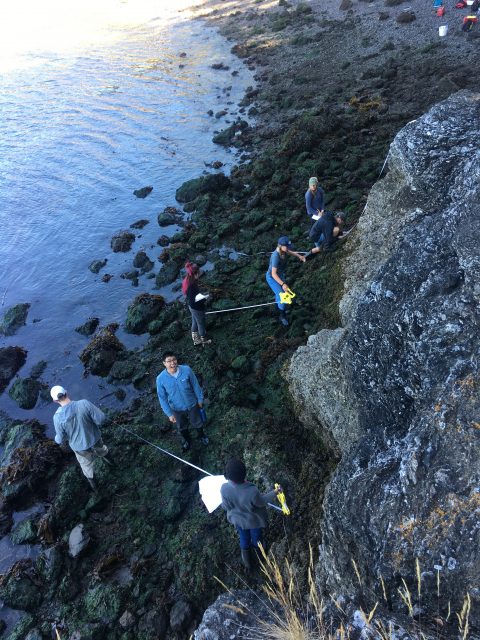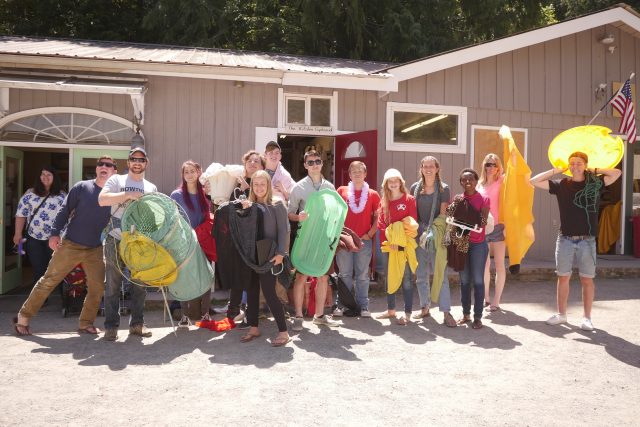
Loading into the van, one by one, we stomped around with our mud boots on as we headed out for a day of field work and observation at the UW Friday Harbor Labs. We began our day with Dr. Rebecca Guenther, from whom we had learned all about algae about a week and a half ago. Dr. Guenther is the manager at the FHL (Friday Harbor Laboratories) Ocean Acidification and Environmental Lab.
We had the privilege to test the alteration in tidepool temperature, salinity, and pH amongst tidepools at different elevations in the intertidal zone that all held different abundances of plants, animals, and rocks. All 10 of us chose a tidepool from which we recorded the salinity and temperature and also took a water sample.

With water samples in hand, we walked over to Dr. Guenther’s overwhelmingly elaborate Ocean Acidification Lab to tour the lab and learn all about what kind of experiments that are run in the lab by students and faculty.
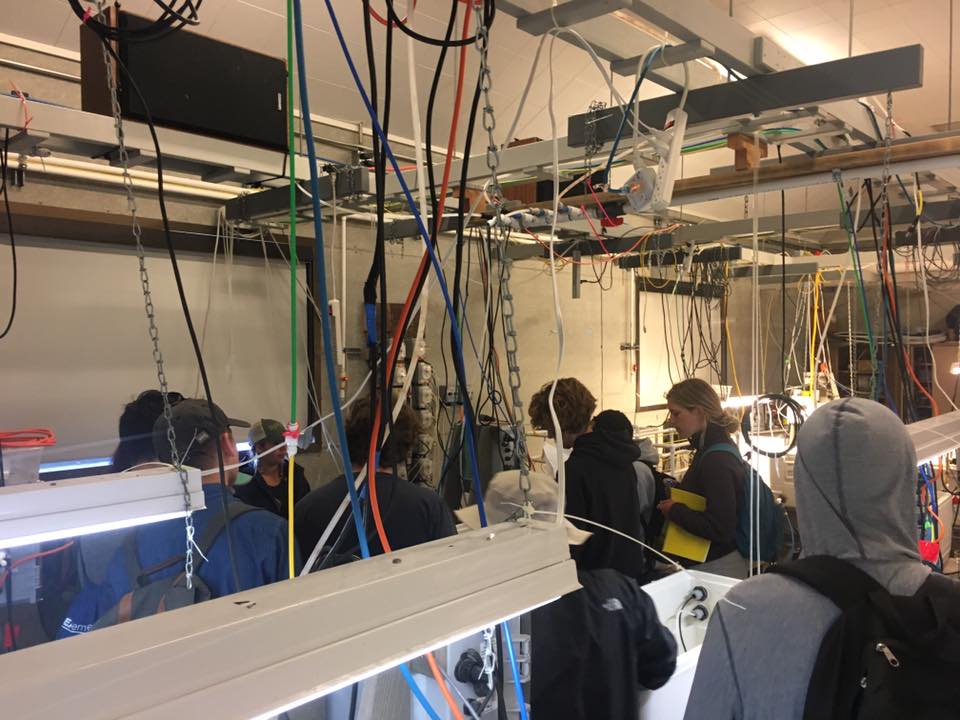
The lab was full of different types of water tanks, coolers, and valuable chemical equipment- some reaching a value of over $80,000! With some of the equipment, we tested the pH, also known as the acidity or alkalinity of a substance. We repeated the collection and recording of data two more times to gather more data that we could later analyze.
Sand dollars. Have you ever seen something that looks like a rock but actually is a living organism? That is how sand dollars look like, and we were all surprised at how life on this planet is broad and diverse. We had our sand dollar spawning experience with Beatrice Grauman-Boss, a recent high school graduate who has worked at the FH Labs for two years on several experiments, including her own.

Beatrice is on the left.
Beatrice is currently researching whether sand dollar larvae will feed on kelp detritus. We got to inject potassium chloride into the sand dollars to stress them enough to spawn. Then, we got to see with our own eyes the eggs and sperm of different sand dollars.

Later, we used a microscope to see the eggs clearly. What we saw under the microscope was astonishing.

We saw larvae start to form, and we left the room feeling like real geniuses and scientists. We created baby sand dollars and now we are rich. After we finished researching sand dollars we went to check on our invertebrates that we keep in the tanks at the labs.

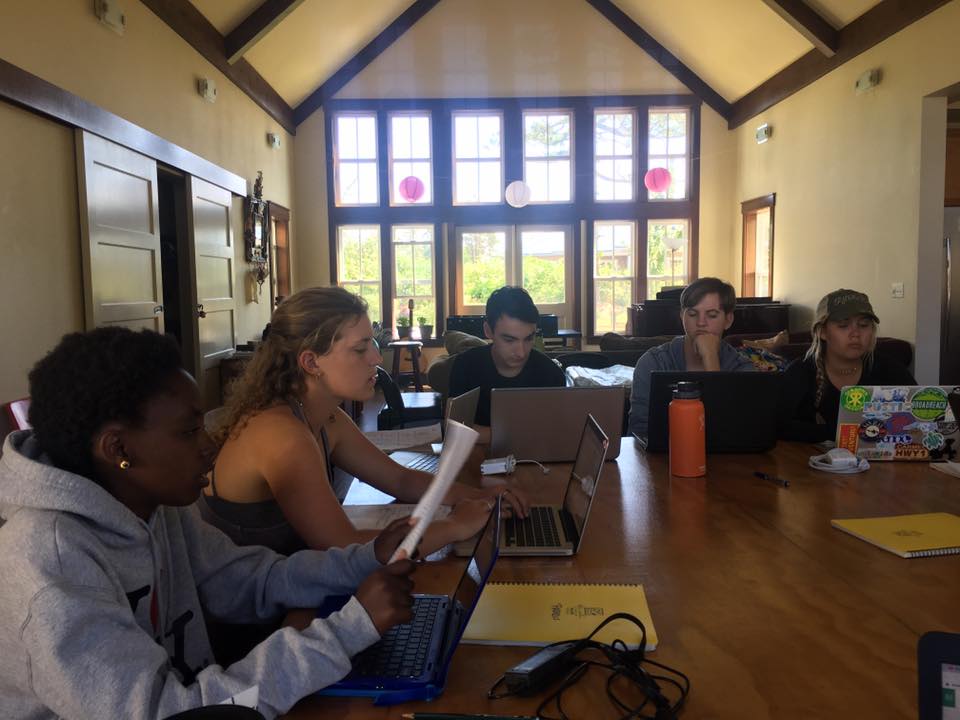
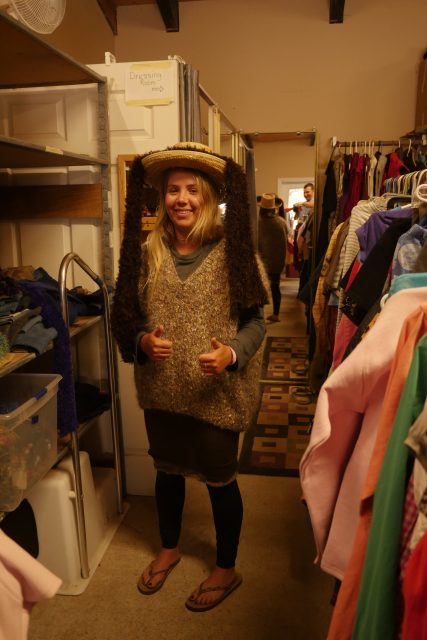
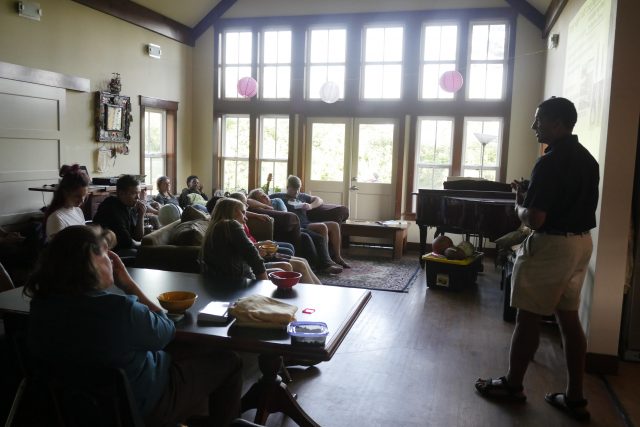
When we returned to the dorm, we input our pH data collected earlier that day. This meant getting out our laptops and working on the excel spreadsheet. We input the data we had collected fairly quickly. After that we had free/exploration time. Some chose to get some rest but others chose to work on their costumes for the Invertebrate Ball that will be taking place tomorrow. At around 6:30 our guests showed up—it was Dr. Jim Murray and his family. Dr. Murray is an expert in neuroethology and is a professor at California State University East Bay. Once we finished up dinner, Dr. Murray gave a presentation on the sea slug Tritonia diomedea.
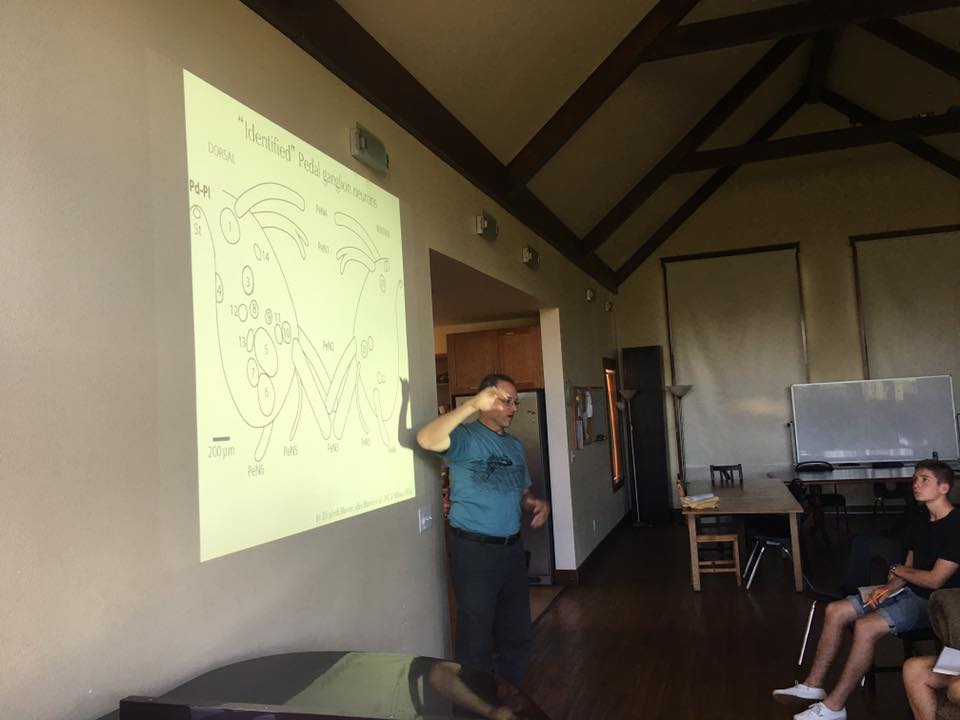
We will visit Dr. Murray’s lab tomorrow!