Slimy Slugs and Slippery Snails

By: Ben, Sonja, and Parker

Did you know that slugs can posses both male and female sex characteristics at the same time?

We learned this today, when we woke up at a painfully early, 4:30 A.M. to hunt for snails with Dr. Erika Iyengar. We helped her document the number of invasive slugs, compared to native banana slugs in the Friday Harbor Lab area. There were many more invasive slugs than banana slugs in the area, which is not a good sign for the native population.
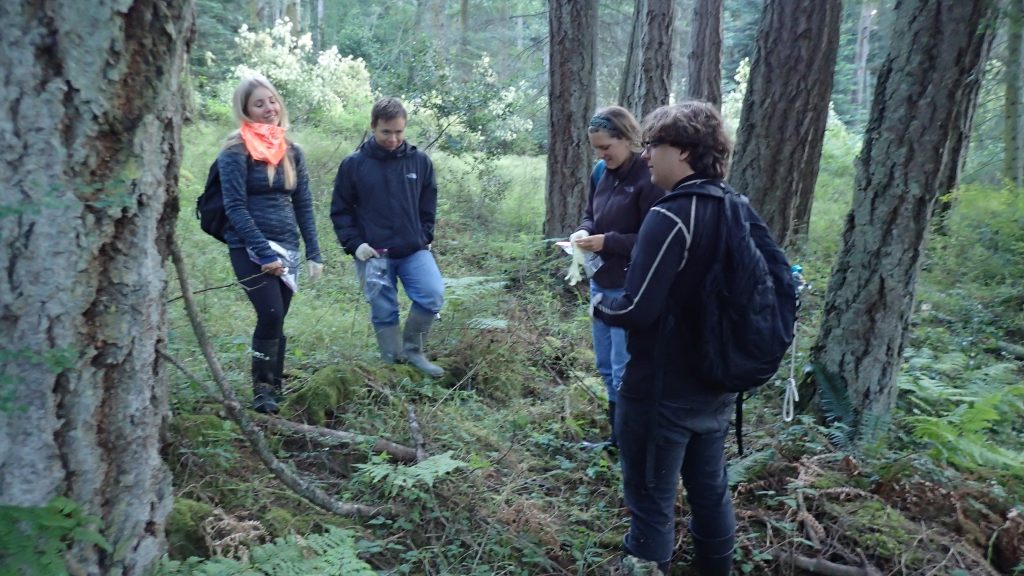
Looking for slugs
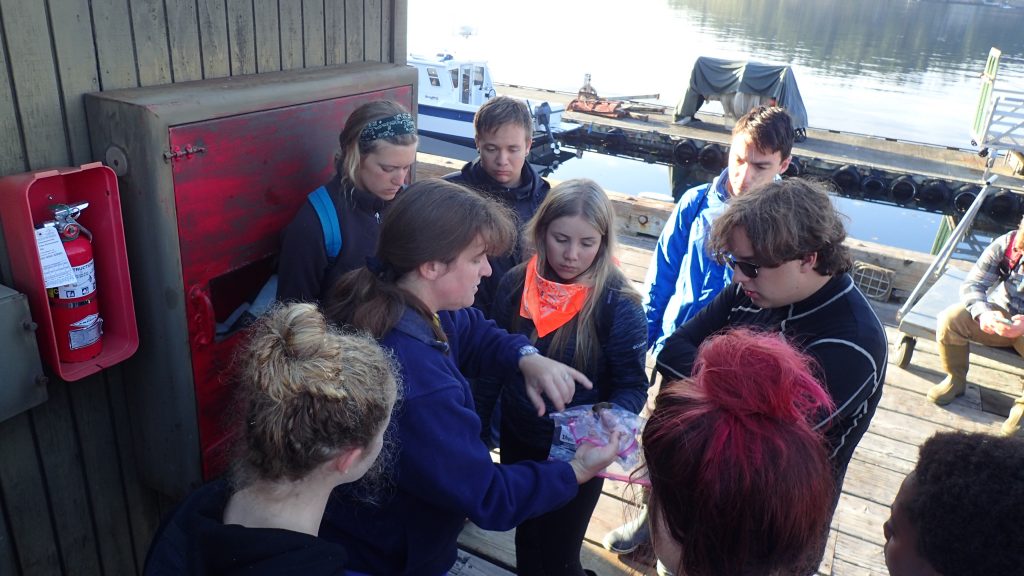
Dr. Erika Iyengar showing us slugs

After a quick breakfast back at the dorm, we went back out into the field, this time to Cattle Point. Here, we collected two species of whelks for a later experiment. Tim D. also gave us a fascinating lecture on the geology of the surrounding area.
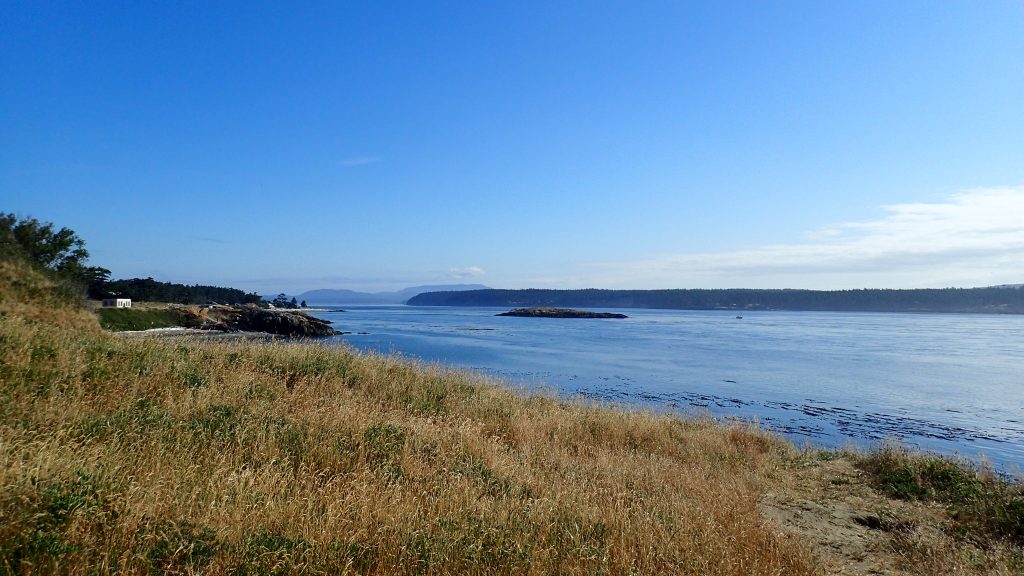
Cattle Point

Since we got up so early, we had a very relaxing afternoon. Some people took naps, while others watched a movie and went to get frozen yogurt.

For dinner, we had Hilary Hayford, an intertidal ecologist from the University of Washington, and Jen Olson, the stranding network coordinator of the Marine Mammal Stranding Network, as guests. Both of them gave presentations on their respective research and work.
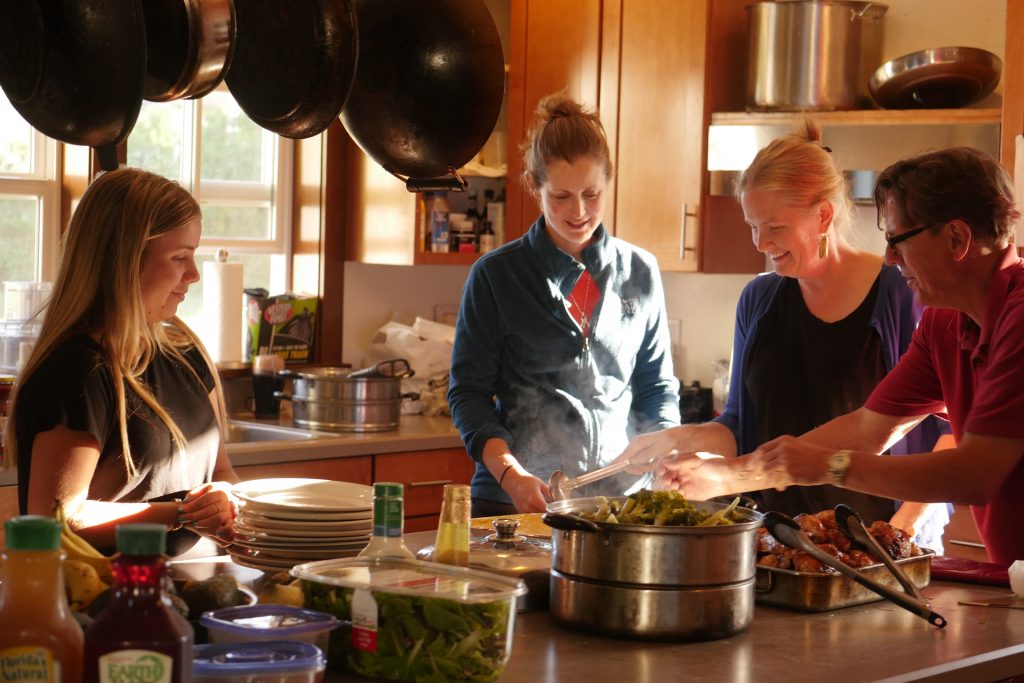
Dinner with our guests

Tomorrow, we are looking forward to observing a marine necropsy of harbor seal pups with Jen Olson.
Forest Yielding the Best Fruits

By Gabi, Paradis, Chloe, and Daniel

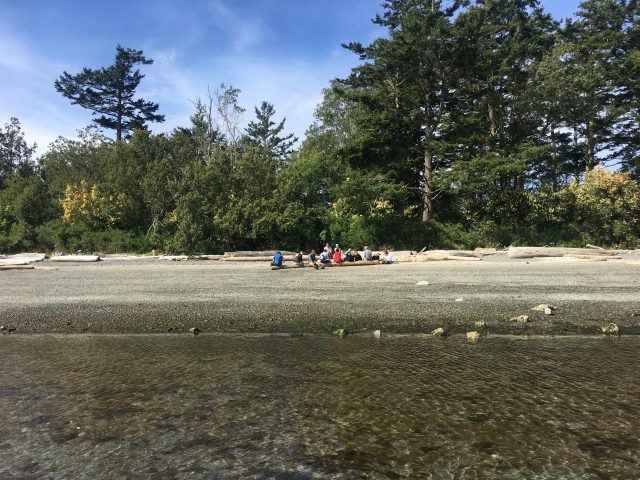
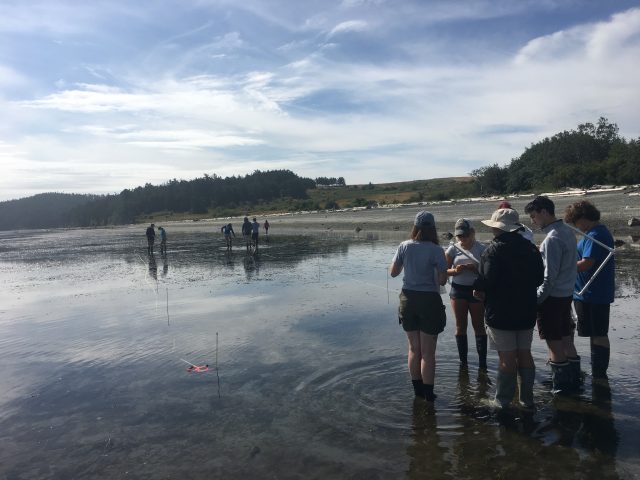
Another day of finding ourselves in the forest of science began with the Eelgrass Wasting Disease survey. With Morgan Eisenlord, a Cornell University marine ecologist studying infectious diseases, biodiversity and trophic ecology at the Friday Harbor Labs. We went to 4th of July beach to get some samples of eelgrass, with which we would later scan to examine for the prevalence and severity of a pathogen causing a wasting disease in the leaves of the plant. At first we were worried about putting our hands in the stinky, gross water and worried about our feet getting soaked since the tide was really high when we arrived at the beach. But little did we know that being exposed to weird, rare experiences would make us feel like real scientists who are ready to step up and walk through the challenges of everyday science life. It was a fun moment of knowing that science doesn’t come only with glory, but also with hard work, commitment, perseverance and collaboration. After collecting our samples we headed back to the dorm to grab lunch and get ready for an afternoon of analyzing our samples.

With full stomachs, we headed to the lab. Morgan and her team (Miranda and Clio) welcomed us in the lab with many plastic sheets and scrapers to make pressings of our data in order to scan it. It took us a while, but by the time we were done our numerous amount of eel grass data was more than encouraging. Looking at our data we were able to pin point how much area on a plant was infected as well as how many plants on average were affected. With the application of J image we were also able to observe the amount of already dead chloroplasts among our data. Having this much information at our fingertips made for a much more involved understanding of Morgan’s work with infections diseases as well as what she would be presenting that evening at our dorm.

After we finished up with the eelgrass we have some exploration time, so some people went into town while others tried to catch up on some sleep.When it was time for dinner with our guests Morgan, Miranda and Clio. Morgan gave a presentation on eelgrass wasting. That was our day.