Tuesday, July 15. By: Mira, Vidita, Asher, and Noam
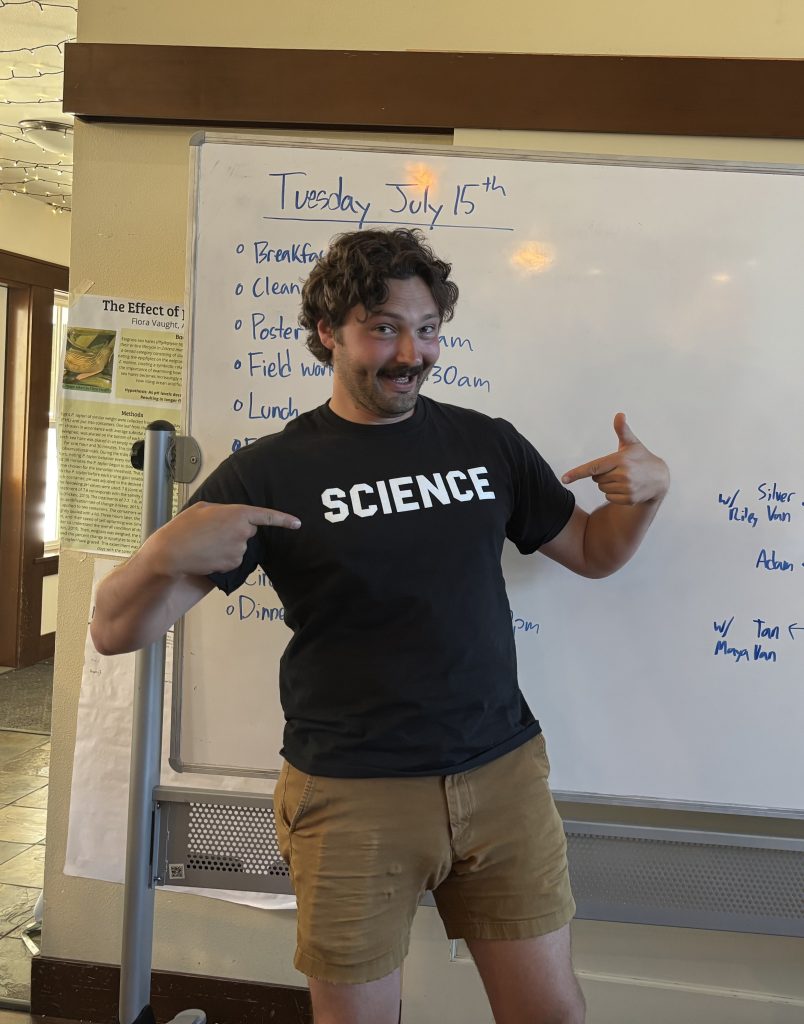
The morning began–and remained–particularily sunny, setting the mood for a bright day of learning and field work. It was a smooth transition from breakfast into a workshop on the ideal scientific poster. After a session of analyzing student posters and a sporadic seminar of student discussion, the group came up with a list of do’s and dont’s–which we plan to keep in mind for the poster presentation in 9 days.
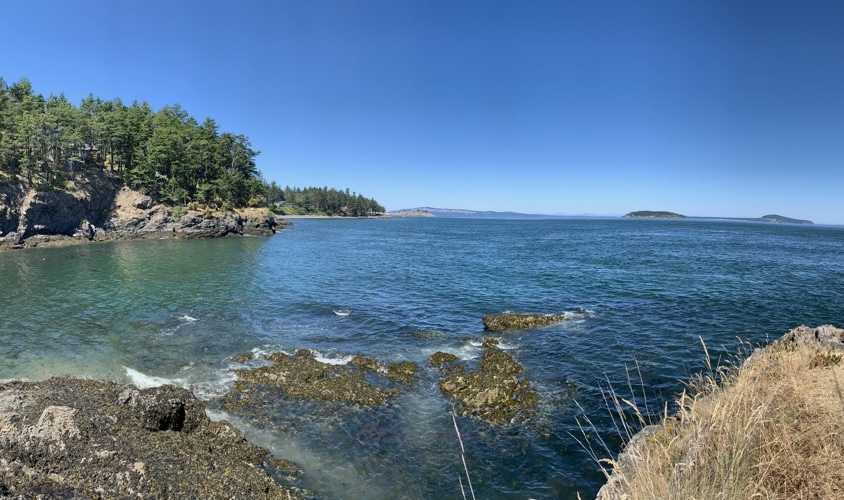
After lunch and a bit of project worktime, the cohort split into several groups to head out to different points on San Juan Island in order to collect data for their research projects. One group of four arrived to Reuben Tarte, a rocky beach with large amounts of seaweed covering the rocks, hills surrounding the water, and a bald eagle perched on an evergreen tree overhead. Two students set out a transect and collected crabs to determine the sex ratio among the population. Another student collected zooplankton from the water and measured the pH to determine pH’s effect on zooplankton. The last student randomly set down quadrats and measured the pH and biodiversity to determine their correlation to each other. Once each exhausted student finished collecting data it was a peaceful ride with Riley back to the dorms.
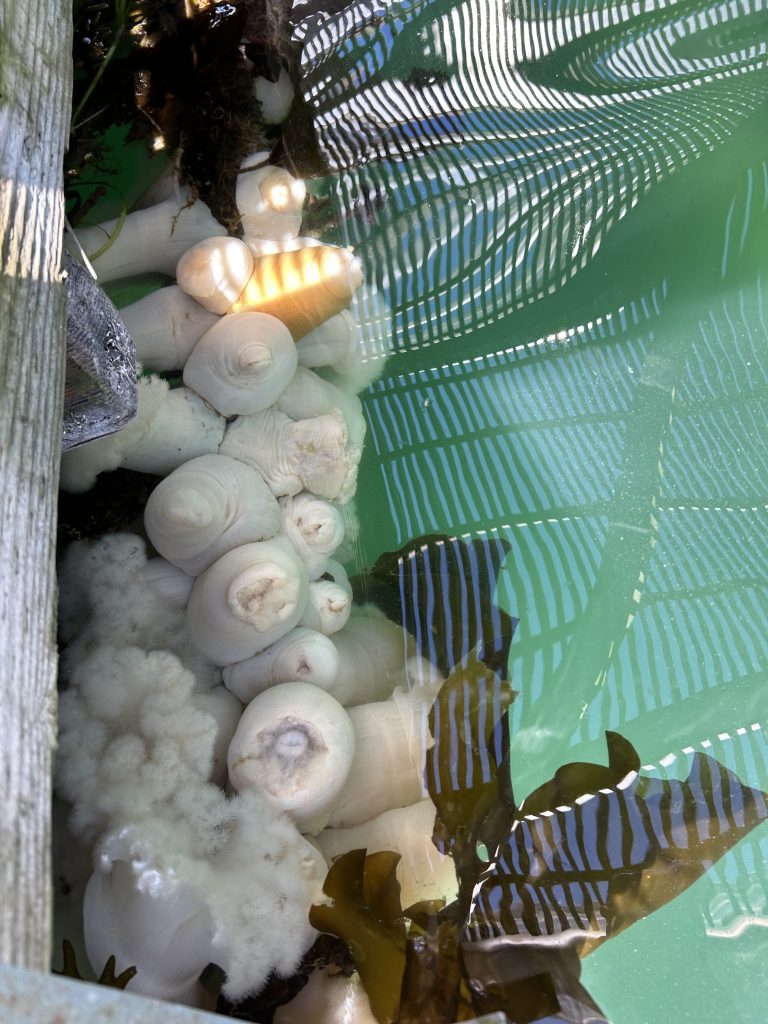
A different group headed down to the Friday Harbor Marina and some nearby beaches. Many projects began to take shape, from examining biodiversity in high vs. low tide areas to sculpin species surveys. One student did a plankton tow for a project on the relationship between plankton present and dissolved oxygen levels in the water, while another student collected water samples to observe how fecal coliform affects fouling communities. Another student was working on a project on how removing algae affects the fowling communities around it. Two students worked with Dr. Amy Cook on observing how Pigeon Guillemot behavior is affected by boat traffic. Eventually, several students headed back to the lab where many fascinating projects were occurring, such as examining species of intertidal flies and seeing how noise pollution affects shore crabs’ ability to right themselves after being flipped over.
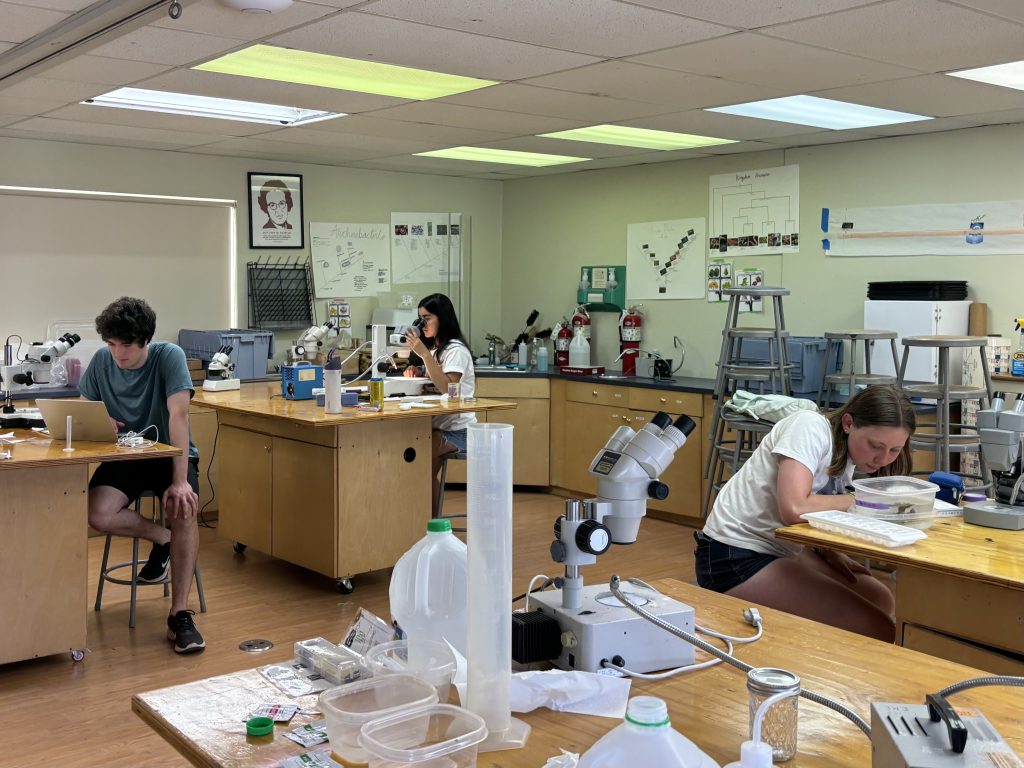
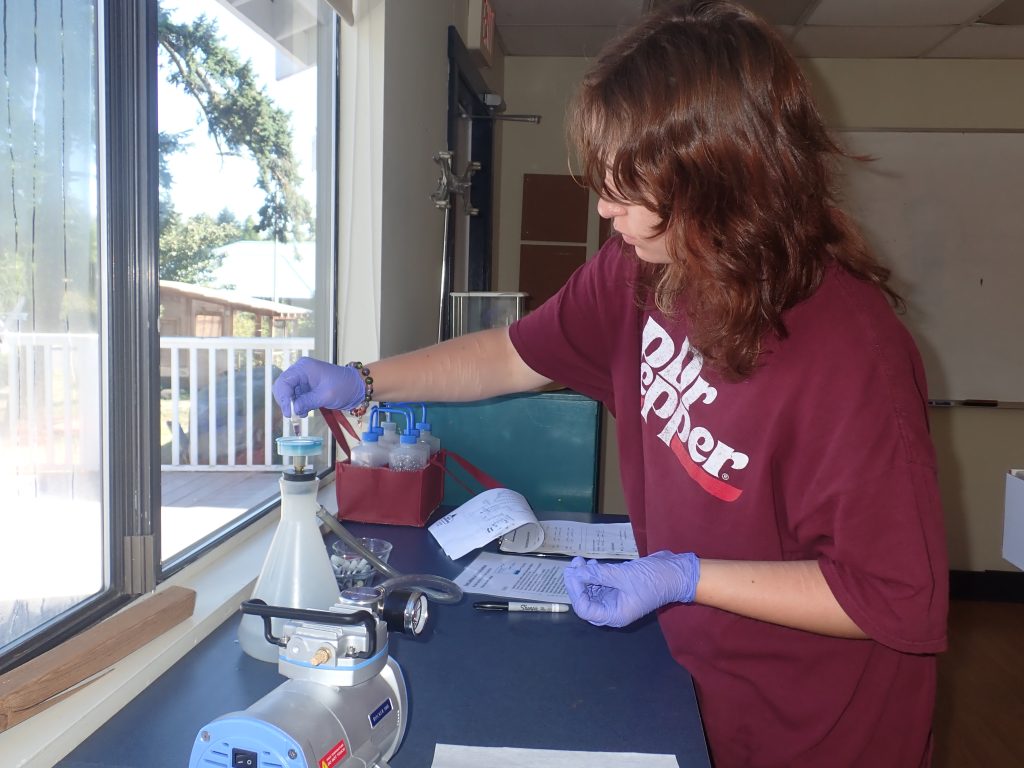
The last group headed down to 4th of July Beach to collect data on eelgrass, a type of marine plant that only grows in soft sediment. They were joined by an additional student who hasn’t received his necessary data from the Whale Museum yet, and was working as a research assistant. One student was working on measuring how the density of eelgrass relates to the distance to the shore. Another student was looking at how harvesting impacts eelgrass, from plots set by San Juan Conservation District. One other student looked at how the amount of flowering heads in an area affects the amount of seeds that appear in a seed core in the same area. Another student was looking into how a variety of climate related conditions relates to the presence and severity of Eelgrass Wasting Disease, while a last student researched how trampling and harvesting eelgrass affects the amount of eelgrass wasting disease. After an exhausting day, that thankfully was more successful than the day before, that group packed up and drove with Maya back to the dorms
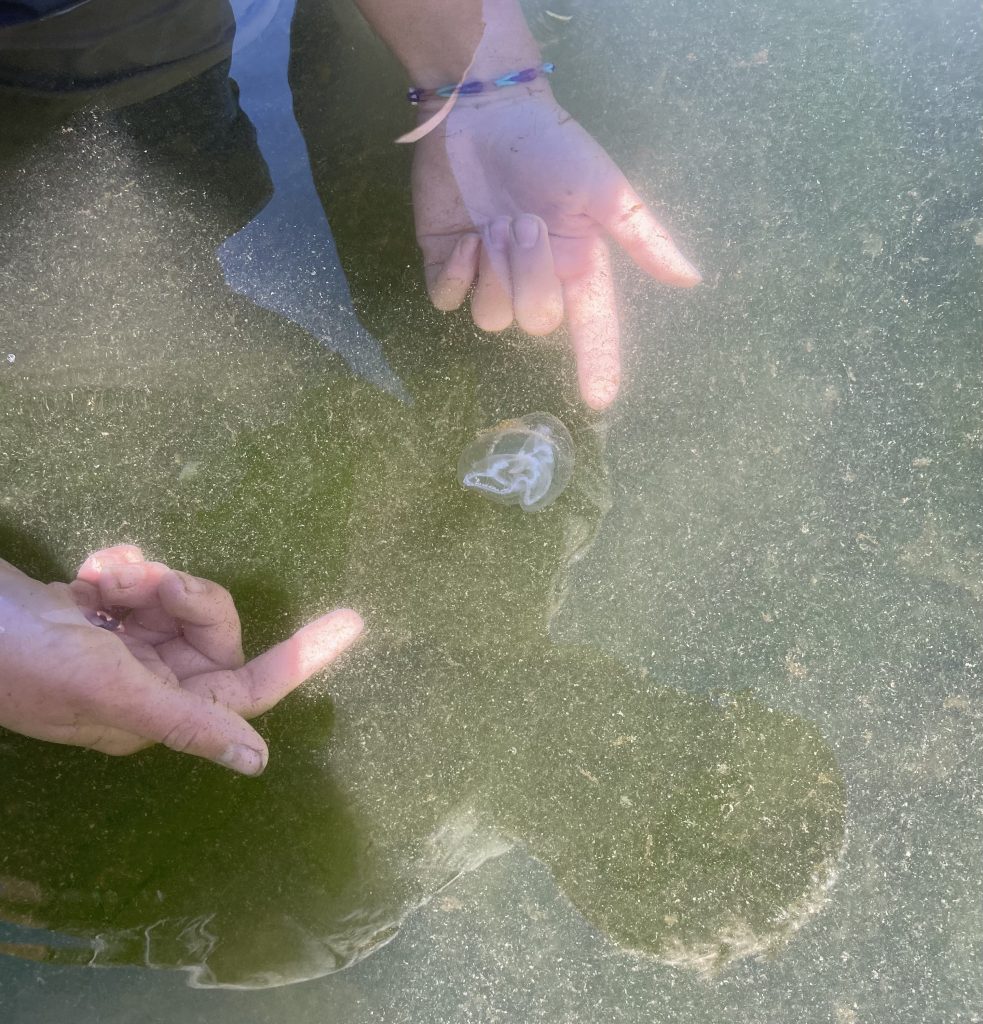
At dinner, which was baked potatoes, we were joined by Dr Emily Kane, as well as two of her students, who were with us to talk about sculpin fins and how they remain anchored even through strong tides. After the talk, we then had several hours of free time, to read, watch something, play games, and relax until bedtime.