Salish Sea Sciences trip to The University of Washington’s Friday Harbor Labs (FHL). Wednesday, July 2nd, 2025. By: Lars, Miles, and Leah
We were graced with a half half hour later start for breakfast – but! We also had to pack our lunches whilst making our breakfast to prepare for a full day on the University of Washington’s Friday Harbor Lab (FHL) campus. The drive over to the labs was breathtaking, each window we looked out of had the shore right in front of us. Everyone was definitely antsy to get out and meet the scientists awaiting our arrival.
First, we met Michelle Herko, the program director of the FHL Science Outreach Program. She was very excited to tell us all about the history of the campus, and the work done at the lab on green florescent proteins. While showing us around the physyology labs, she explained how the bioluminescent reaction became widely used marker for studying gene expression and protein localization in living cells. https://pubmed.ncbi.nlm.nih.gov/31342754/#:~:text=Abstract,transgenic%20animals%20in%20biomedical%20research One aspect of the labs I found the most fascinating was its flow through water system. The system rapidly circulates water in and out, allowing scientists to observe the creatures in a natural aquatic environment. This is one of the many great features of these labs that attract world renowned scientists!
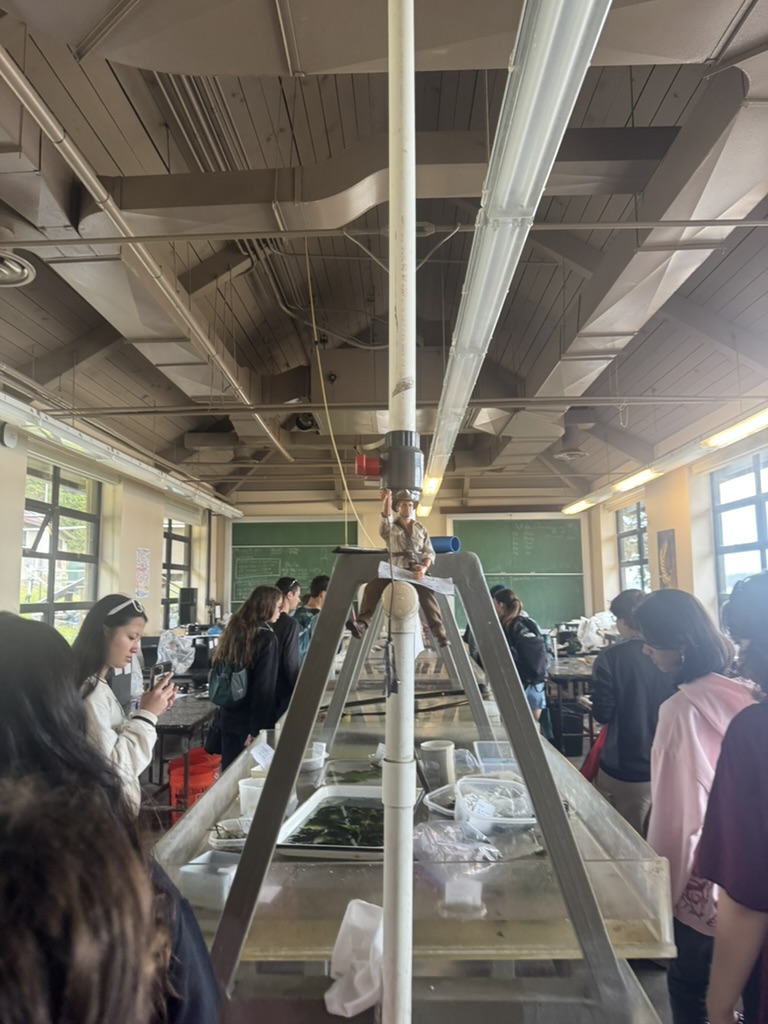
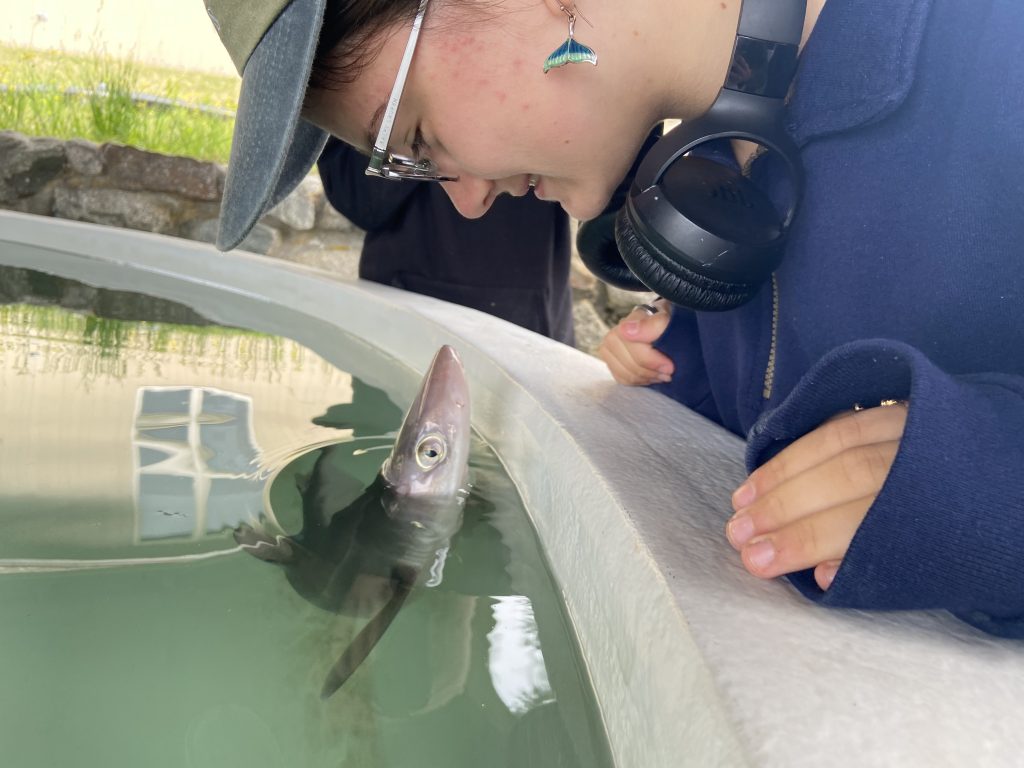
Our tour continued, as Michelle offered us the opportunity to look at some awesome high powered microscopes. We could only have about 6 students at a time through those labs, so we split up. Those who were first to see the microscopes also discovered another cool project happening in the room next store. A scientist excitedly popped in, interrupting Michelle with the opportunity to see her spawning sea cucumbers! Of course we took her up on the rare opportunity, especially sense the sea cucumber spawning is not a simple process. Their study included injecting peptides to stimulate spawning, very neat! While the others waited, the stumbled upon a tank of dog fish! A sneak peak for a future tour! They were very friendly, and our young scientists quickly chose names corresponding with their spot patterns. As the groups switched off, some groups began opening their lunch boxes and digging in!
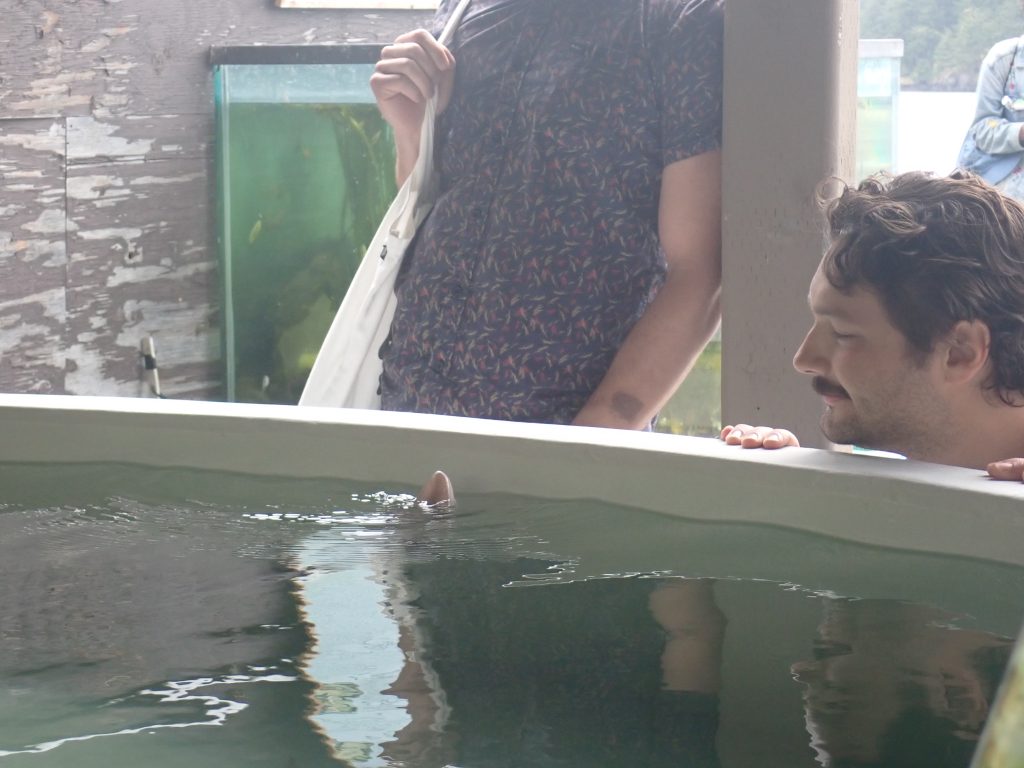
After a decently satisfying lunch, our tours prevailed. We met Cassandra Donatelli, an assistant professor at UW’s School of Engineering and Technology. Donatellii got her doctorate in 2019 in biology from Tufts University in Medford, Massachusetts. Again, our group split up. Half of us continued with Dr. Donatelli, who, along with several other undergraduate researchers, guided us through the lab and introduced their individual projects. A highlight for many students was listening to an undergrad from The University of Massachusetts Amherst explain his project. He used CT scans to study the animals physical structures through their skeleton. Another researcher was 3D printing different crushing structures to study when fish bones may buckle and how to avoid that. Each of these researchers were surrounded by a supportive team from the University getting personalized feedback on each decision. The majority of these researchers were also from universities outside of the Seattle or Friday Harbor areas. Continuing the trend, a group of mostly undergraduate researchers studying aerodynamics showed us around their lab to better understand how to incorporate the swimming habits of Dog Fish into engineering. This tour also included a portion of the tour returning to our beloved dog fish in the pool, where we learned the researchers had also given them name based on their spot patterns! Clearly scientists think alike!
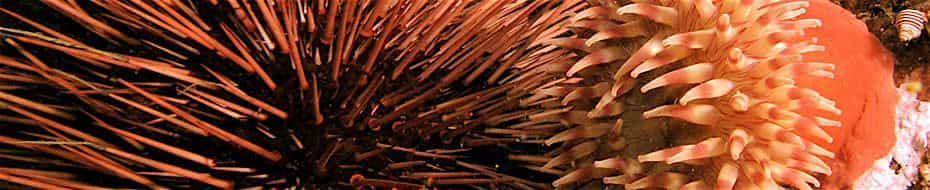
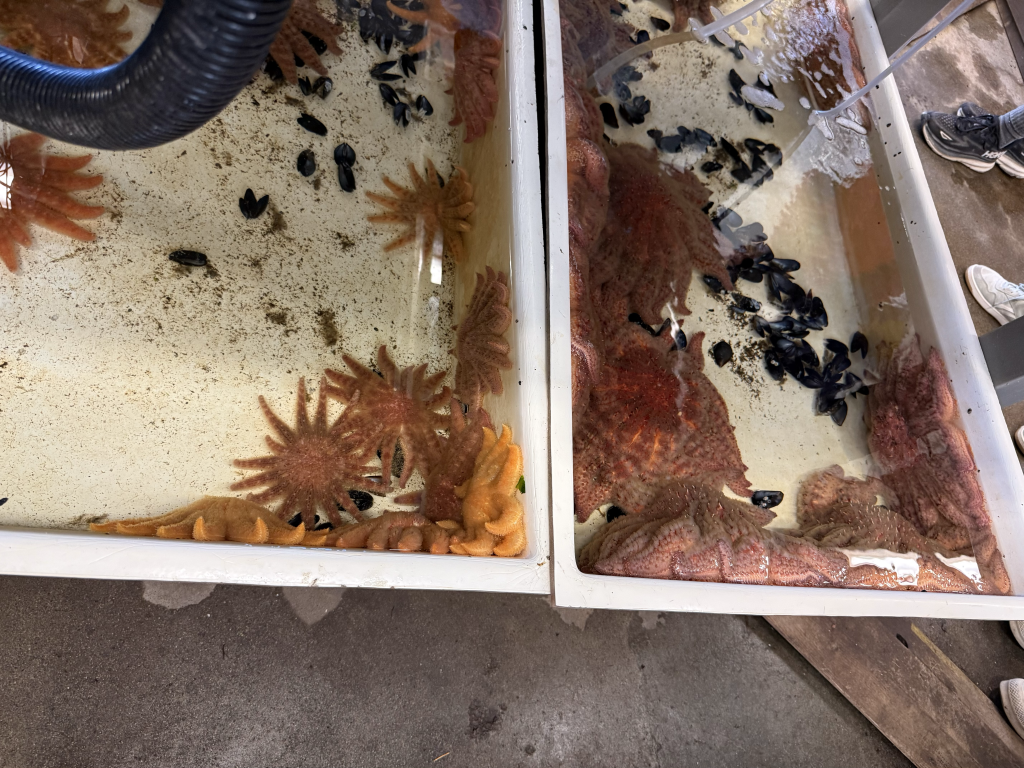
At this point in the day, attention spans were getting smaller, legs were beginning to hurt, and eyes were getting heavy. Yet we prevailed into our final set of tours! Our last introduction of the day was to the lovely Becca Guenther (who wrote this amazing newsletter on her ocean acidification lab, which we also toured!) She is currently the lab manager for FHL’s Sea Star center. (but may also be or have previously held the role as the lab manager for the ocean acidification lab?) The Sea Star lab was very visually satisfying! Many little oysters, clams, sea urchin and sea stars sat in tanks of varying size and length! Their biggest Sea Star was 7 years old, and a whopping 60 pounds! Becca detailed the danger she puts her and the organism in when she attempts to move him during routine tank cleanings. When he began to understood that he was being moved from his comfy spot, he would latch his suction feet on even stronger to the sides. This lab was established during the rise of Sea Star Wasting Disease, which has nearly wiped out any wild population of the Pacific Sunflower Stars. The researchers’ dedication to supporting these species—through feeding, tank maintenance, and ongoing study—is truly inspiring and deserves to be shared with a wider audience. If your interested in learning more, we recommended reading this fascinating article by Jason Hodin. https://depts.washington.edu/fhl/tidebites/Vol93/index.html
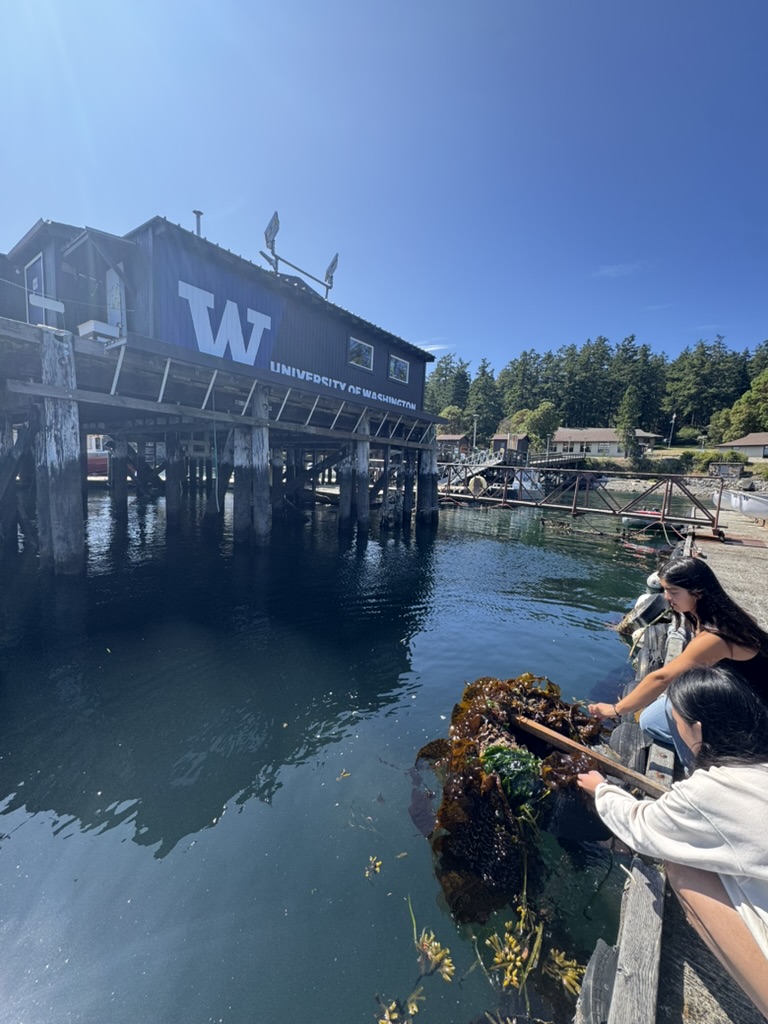
The final rotation of the day trip involved searching for a variety of marine phyla by pulling up the tires hanging off the side of the boat dock. The first group’s favorite find was a nudibranch, while the second group discovered a crab. It was fascinating to see the wide range of life—sponges, kelp, algae, and more—thriving on these tires, originally placed as buffers for the boats. I also noticed how much clearer the water was around this dock compared to the murkier water downtown, likely due to less boat traffic and runoff. This difference in water quality may very well explain the greater diversity of marine life we observed. Overall, it was a memorable way to end the day—full of discovery and a deeper appreciation for the subtle factors that shape marine ecosystems.
We left the labs ten times more tired than when we arrived. After a well-earned and satisfying dinner, we decided to skip the evening lecture in favor of some much-needed rest and preparation for the day ahead. Most of us spent the evening unwinding—watching TV, playing games with friends, or relaxing at the beach. The downtime was just what we needed to recharge and return even more excited for another science-filled day tomorrow!