Salish Sea Sciences Blog, Saturday, July 19th, 2025. By: Lars, Leah, and Miles
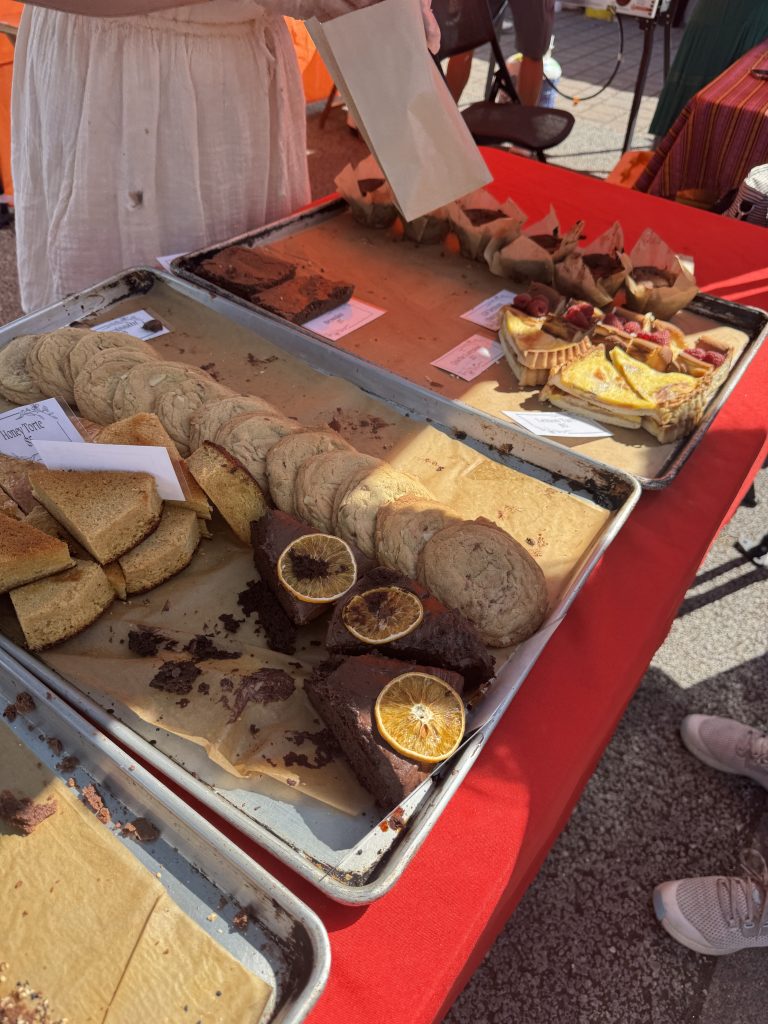
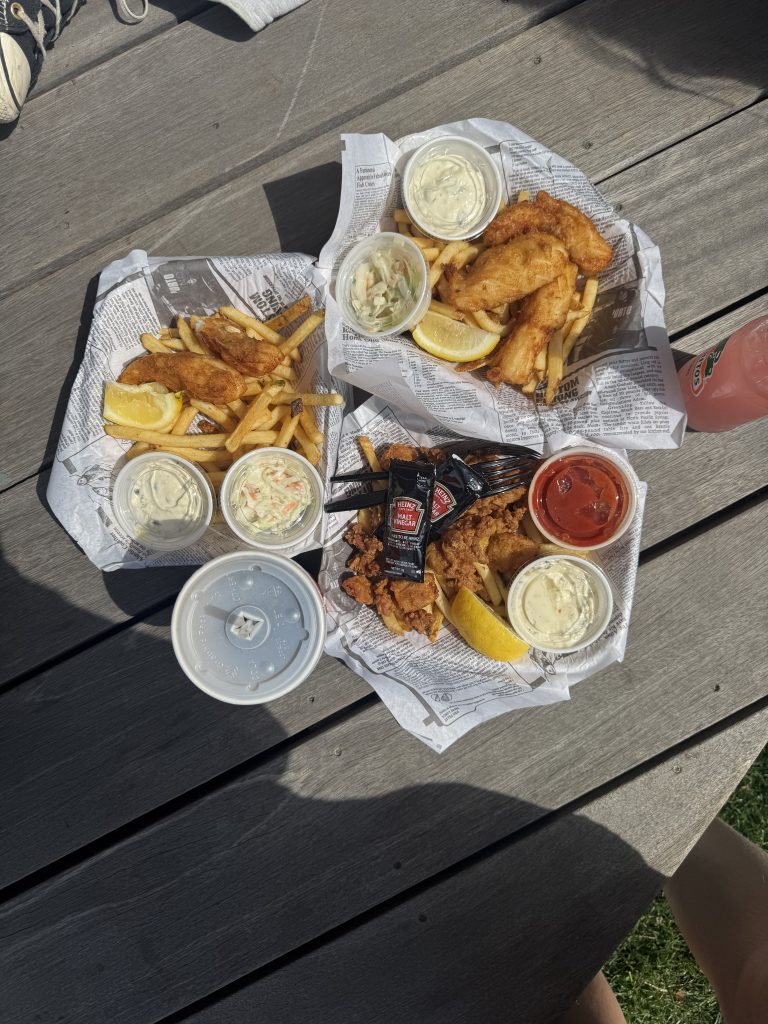
Welcome back to another day in the life of a Salish Sea Science student! Your hosts, Miles, Leah, and Lars are going to take you through the final Saturday with the Field Science cohort. After a super late night night lighting at the dock, with an inspiring appearance by a local Harbor Seal, everyone got at least an extra hour of sleep. At 10 am, we all sprinted towards Brickworks, excited to frolic in the town as Caroline locked the doors to the dorm behind us. Our science directors gave us the second gift of the day – an opportunity to hit up the Friday Harbor Farmers Market with a bit of cash in our pockets! Miles packed his lunch beforehand to save some money, Leah had a bagel when the dorms were unlocked after, and Lars tried some yummy local fish and chips with a side of calamari! Sooo yummy!
At 12:30, the crew, full and content with any purchases made, headed back to the dorms to cool off and get ready for a conversation about college with Caroline. She helped us better understand what aspects of a college decision may be important to consider, some less obvious to us than others! She also strongly encouraged us to further look into liberal arts colleges. She stressed understanding whether you prefer a degree focused on getting you job ready right after college, or well rounded life learning, and possibly a further degree from a professional or graduate school.
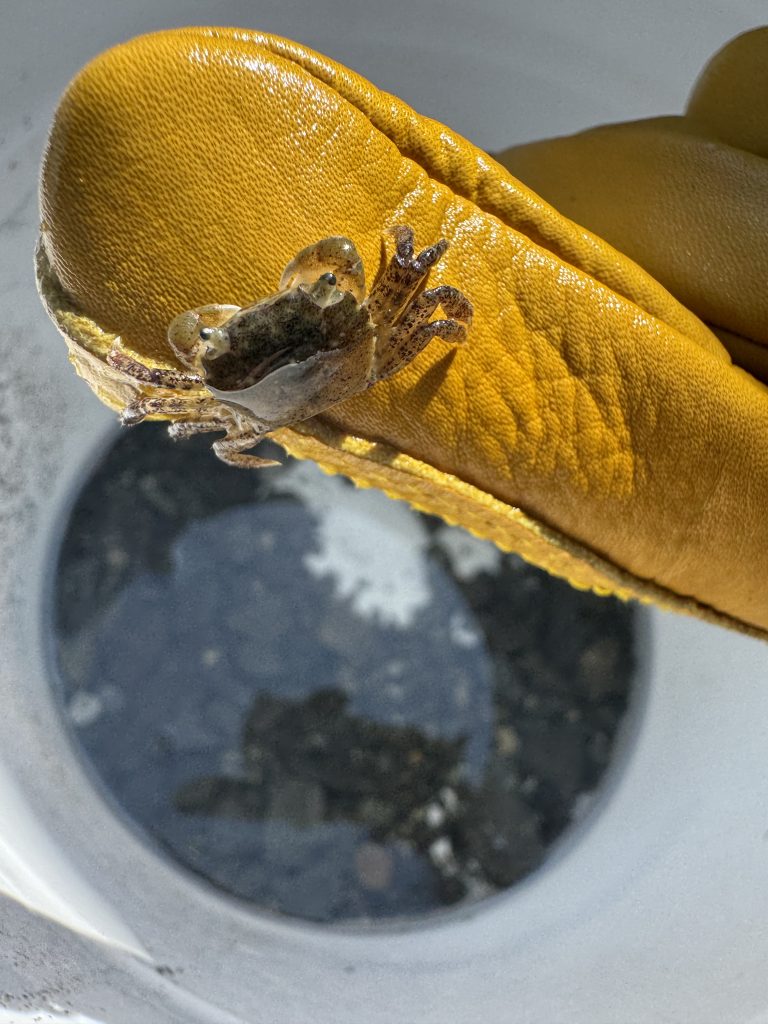
2 to 4pm was our project work time! Miles found a new species of seaweed fly only identified in Canada before! Leah polished her data collections and progressed steadily on her poster. Lars studied crabs righting response times with the boat noise treatment.
Finally, to wrap up our day, we are welcoming Shauna Barrows from The Land Bank for a mac and cheese dinner! Shauna, raised amid California’s droughts and wildfires, followed her passion for water, wild places, and poetic inquiry to the Pacific Northwest—earning degrees in Environmental Education and English, working in conservation, and ultimately returning to the San Juan Islands with deep gratitude and love for nature.
Shauna Barrows defines restoration as fixing the relationship between people and land. People who are connected to the land—and therefore to the nature around them—develop a deeper sense of care and responsibility for its protection. She began by sharing her own story, reminding us that it’s okay (and often necessary) to change paths—she herself started out in computer science before finding her passion in environmental work. Shauna now works with the San Juan County Land Bank, one of only two land banks in the U.S., funded entirely by a 1% tax on property sales in Washington. She described her role in reducing wildfire risk on the island through controlled burns, and how restoration isn’t just ecological—it’s deeply cultural. She encouraged us to question the Western idea of nature as something separate from humans, and instead consider how Indigenous communities have long maintained reciprocal relationships with the land through traditional knowledge and practices—many of which were disrupted or erased by colonization. We also explored the complex politics that often accompany restoration efforts.
One example Shauna shared that brought these ideas to life was the story of camas flowers, a striking purple bloom native to the Pacific Northwest. Coast Salish peoples once cultivated extensive camas prairies, using controlled burning and seasonal harvesting to manage the landscape and sustain this vital food source. These were not untouched wild spaces—they were shaped by generations of stewardship. What truly surprised us was learning that camas prefer disturbed soil and actually rely on being harvested by hand in order to pollinate and reproduce. Without that human relationship, camas populations can decline. Today, Shauna and her team are working to reintroduce camas as part of larger efforts to restore not only ecosystems, but cultural memory and interdependence. Her story helped us see that restoration isn’t about returning land to a “natural” state, but about remembering and reactivating the connections between people and place.
As the sun sets on another incredible day with the Salish Sea Sciences cohort, we’re left with a deeper appreciation for the land, the sea, and the dynamic relationships between people and nature. From the joy of local flavors at the Farmers Market to eye-opening conversations about college choices and career paths, today was packed with learning and connection. Shauna Barrows’ visit reminded us that restoration begins with relationship—an idea that resonated deeply as we reflected on our own paths and roles in environmental stewardship. Whether it’s discovering a new fly species or questioning societal narratives around land, our journey as young scientists continues to evolve with each experience. Here’s to waking up early and staying curious.