A Day In False Bay

By Jaimie, Sara, Arielle, Jake—

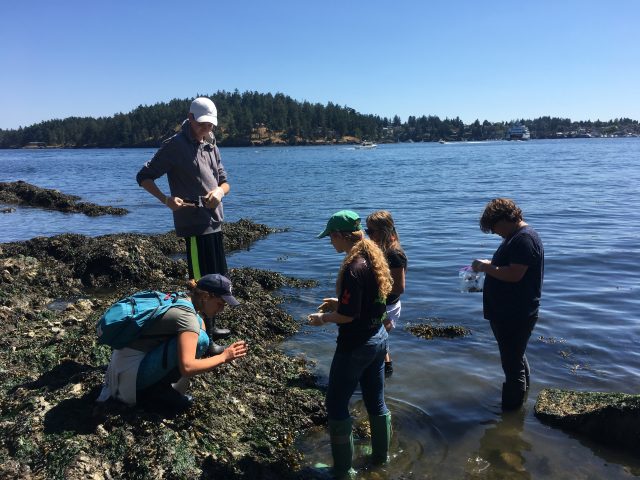
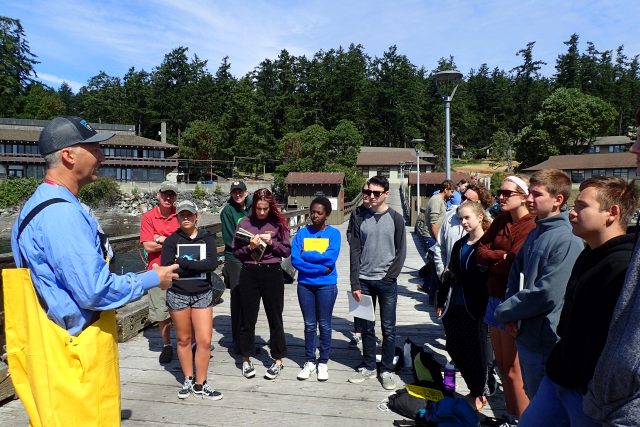
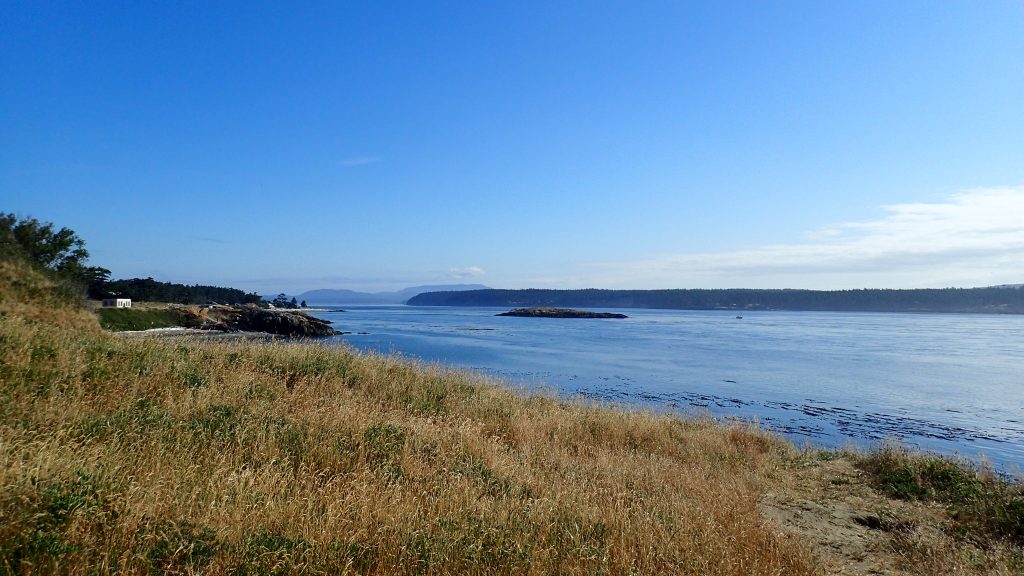
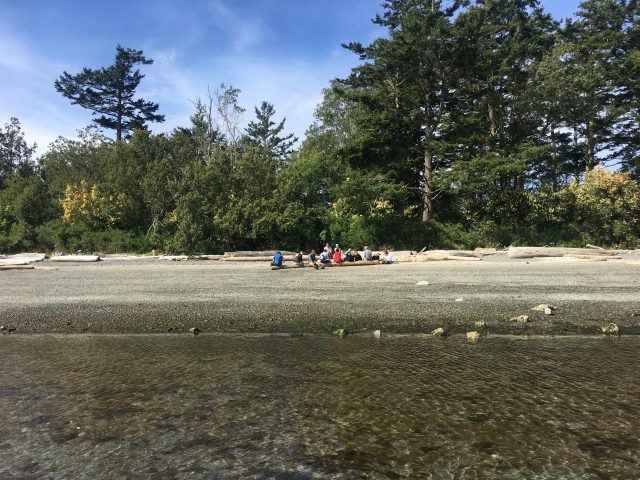
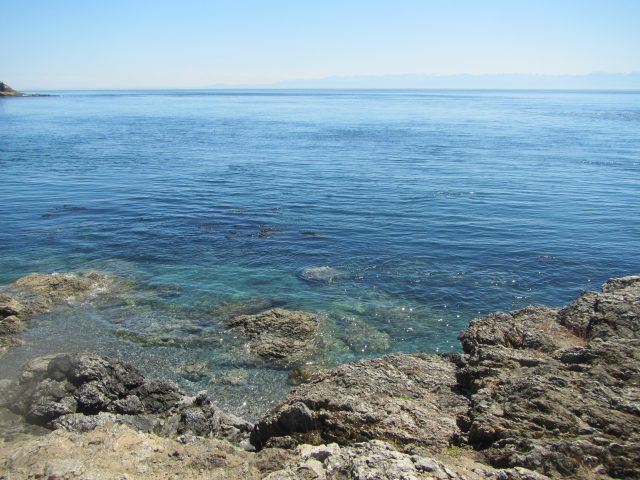
Today has been a long but exciting day. We woke up at 6 this morning and promptly headed over to False Bay. False Bay has its name because when the tide is high, it looks like a nice place to anchor a boat. However when the tide goes out, the entire place is drained.

P1020611

Photos by Tom Grauman

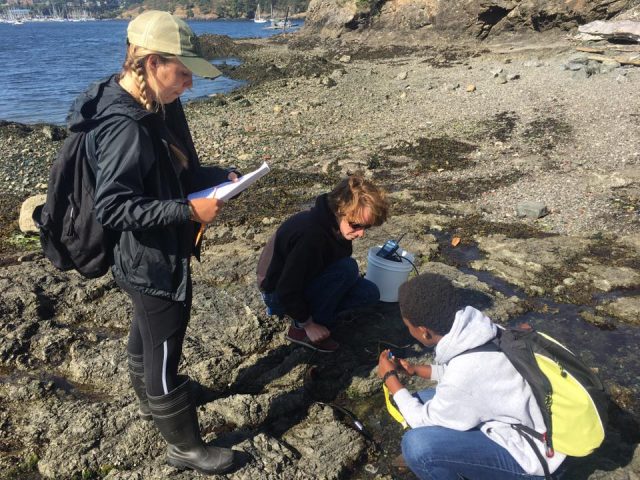
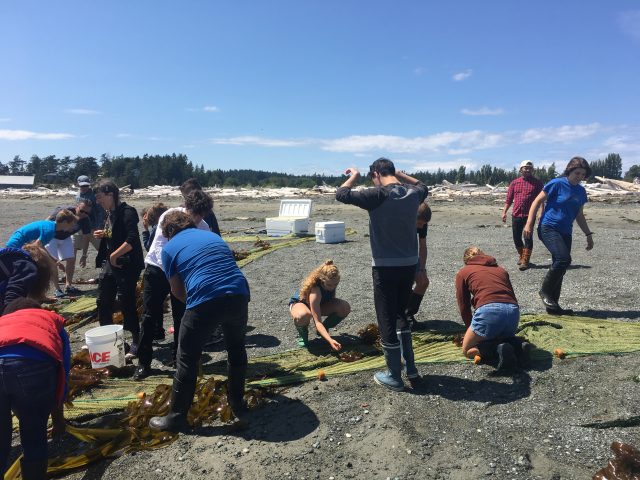
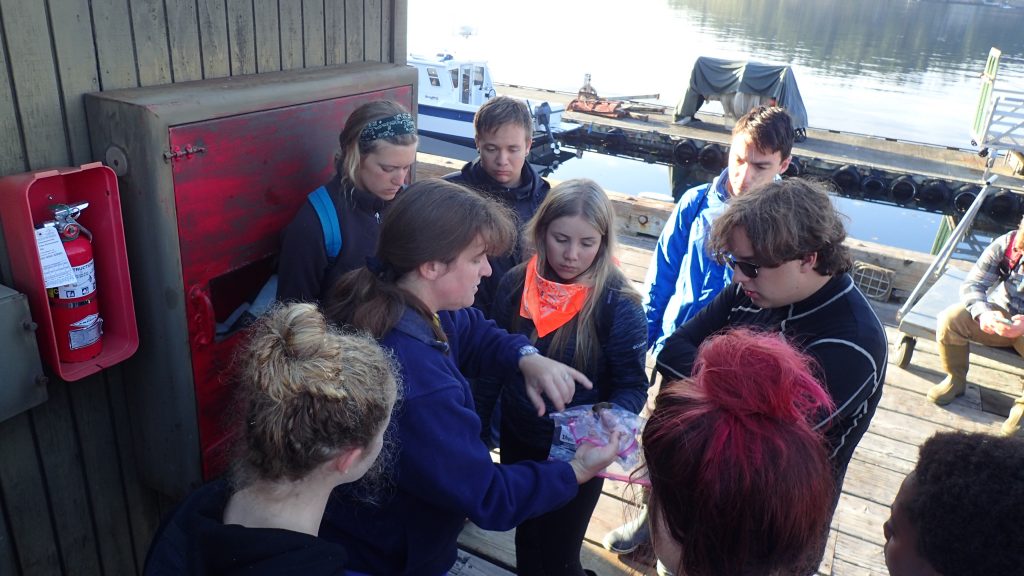
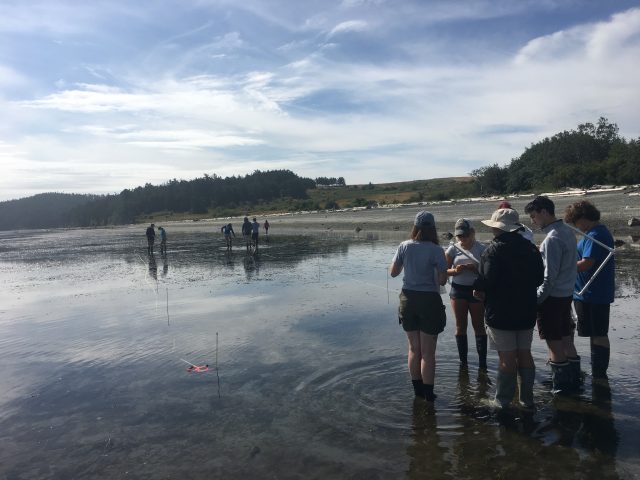
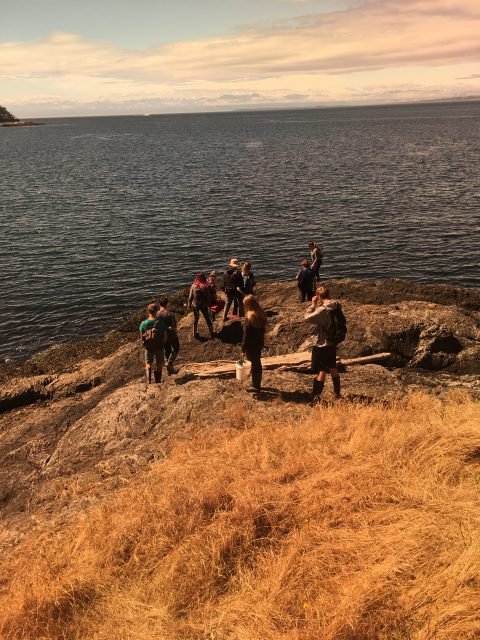
At False Bay we studied the population of Lug Worms (Aberinicola) by haphazardly placing quadrats and then counting the holes inside. We did this 100 times, then dug up 25 randomly chosen holes to get roughly the percentage of the holes that are actually occupied.

P1020640P1020702

After that, we went further up the bay with Vik Iyengar and collected earwigs from under logs before returning to the dorms.

P1020757

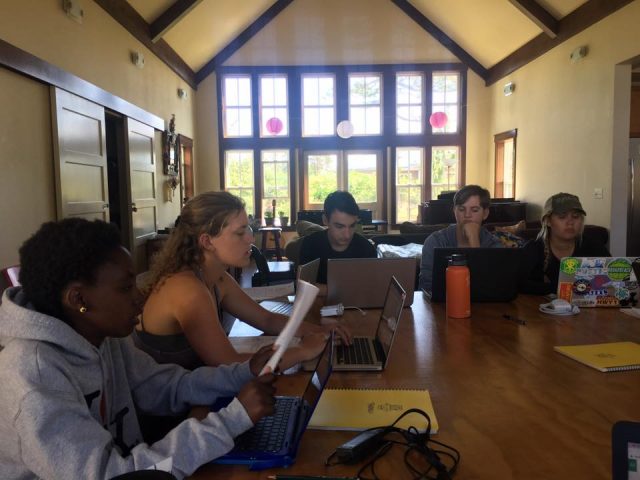
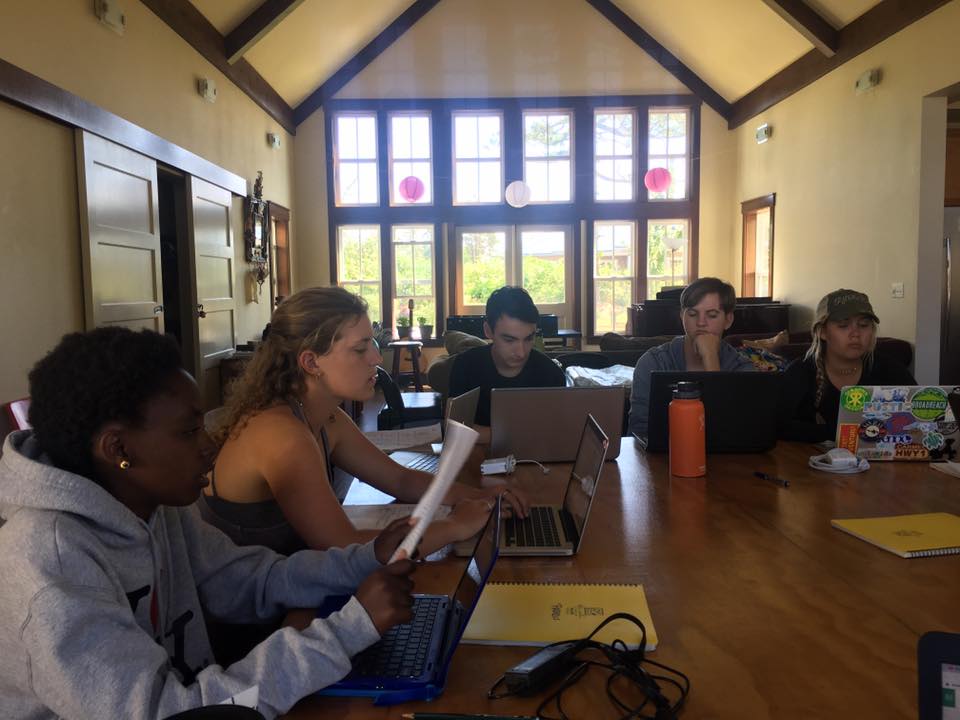
Once back, we went to the science room and wrote down the procedure for measuring the Lug Worm population and collecting earwigs.

P1020803

After lunch we headed to the labs and practiced doing scientific drawings of the marine life we collected yesterday. We spent about an hour there before returning back to the dorms and sorting the earwigs by sex and size.

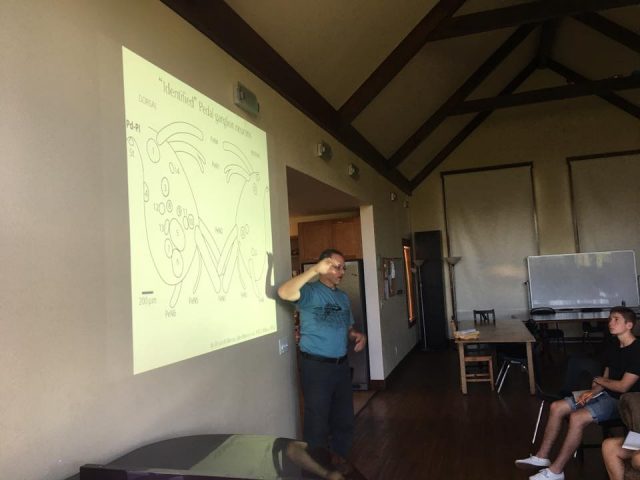
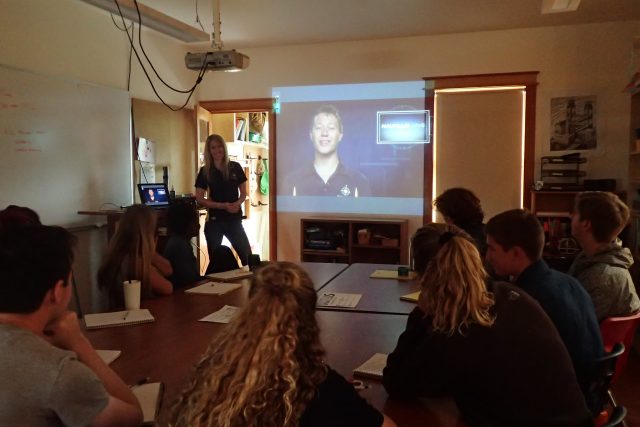
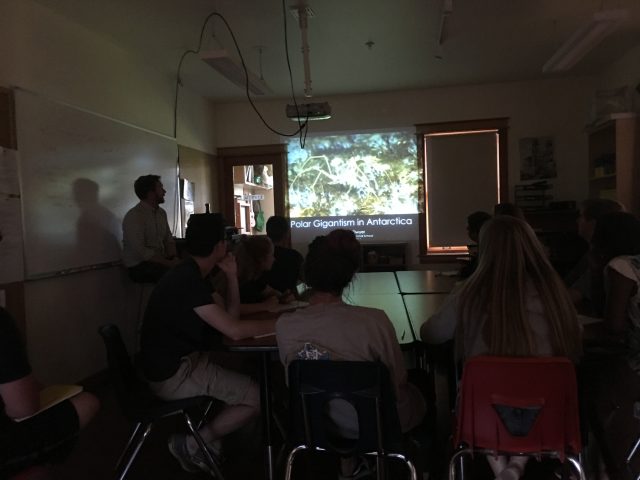
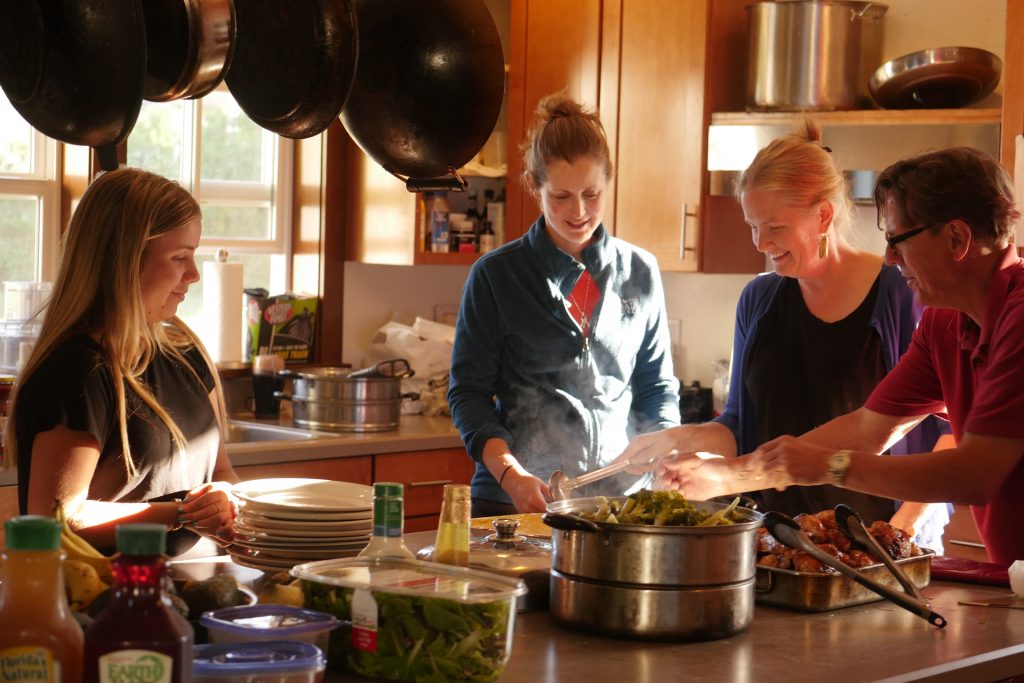
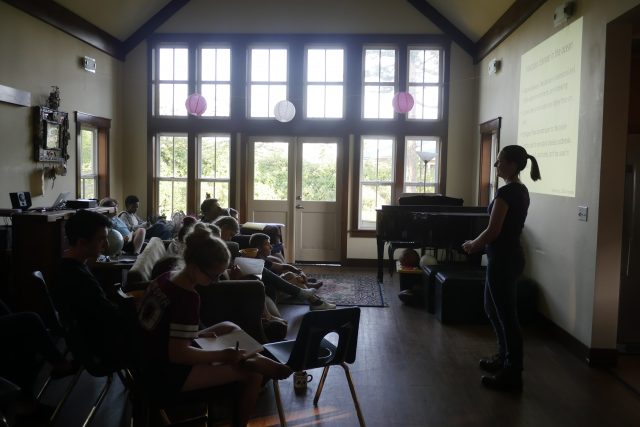
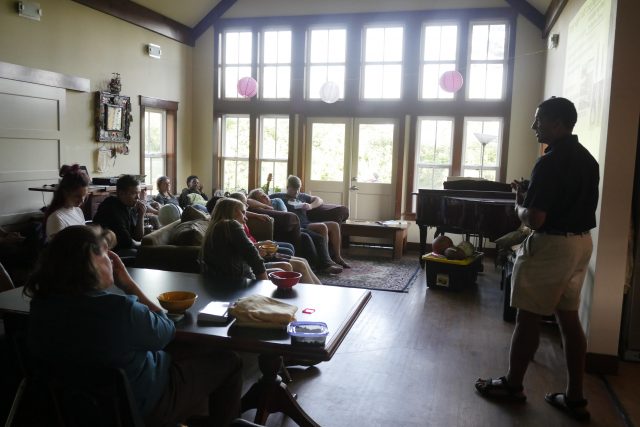
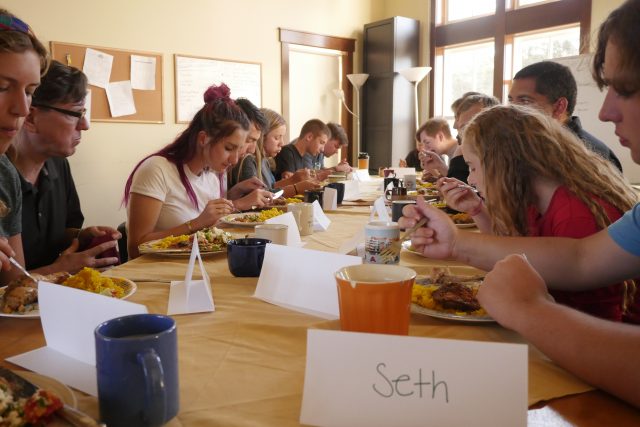
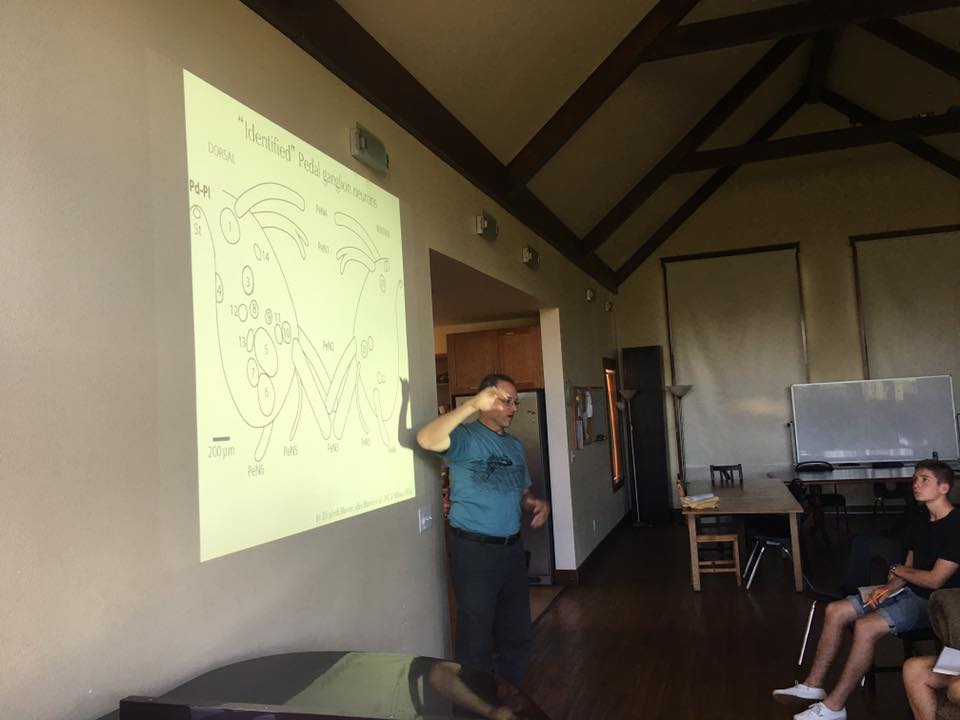
Next, we had some exploration time before welcoming our guest for dinner, Will King. Mr. King is a graduate student studying marine ecology. His study focuses on barnacles, and tomorrow we will be joining him in the field. After dinner, Mr. King gave a presentation explaining the effects of climate change on marine ecology, specifically how barnacles will react. Now we have about an hour before we will go to bed, waking up bright and early to work in the field tomorrow with Mr. King.

What a Trawl

By Indeya, Lana, and Quinn—

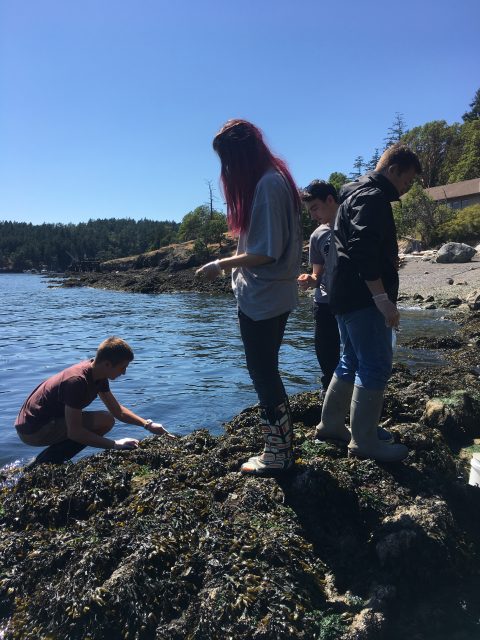
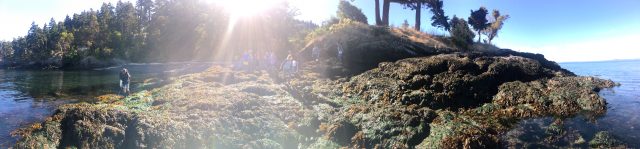
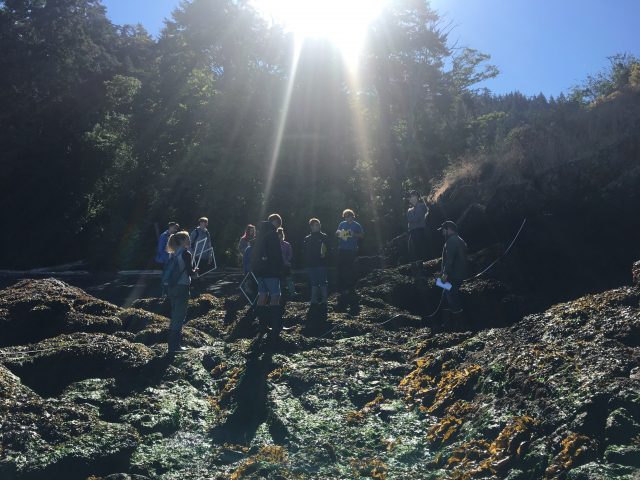
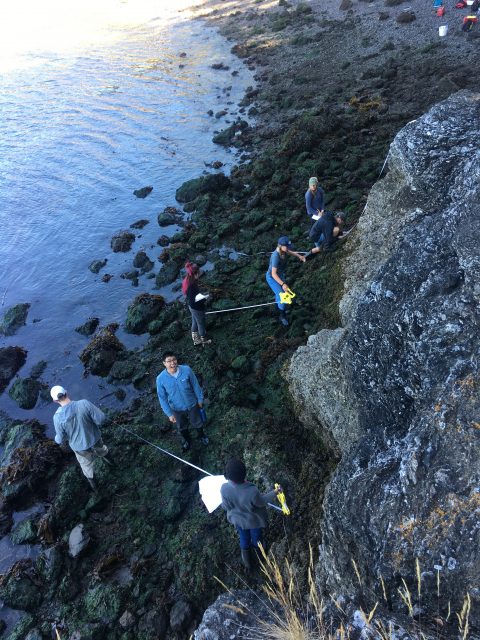
Today, we awoke at five thirty AM and hopped in the van to the SJI County Park. The reason for this early rising was so that we could reach the beach at low tide. This enabled us to create transect lines from high to low tide. In total, we had it stretched 15 meters, ending at the waters edge. We then put our .5 meter by .5 meter quadrats down, starting at each meter and focused on the right side, to record the counted (some estimated) numbers of mobile animals, and percentages of attached animals and algae. A few of the mobile animals our field crew found were limpets, chitons, whelks, periwinkles, hermit crabs, etc. Some attached algae we found were green turf, red turf, green sheet, red sheet, hedophyllum, fucus, etc. And finally, a couple attached animals we found were barnacles, mussels, and other encrusting species. After finishing these transects, we split our transect line into three areas: low, medium, and high. We then used a caliper to measure and record at least 25 specimens in each section.

OLYMPUS DIGITAL CAMERA

Photo by Tim Dwyer

Once we got back and had a quick snack, we headed to the science lab to go over the mistakes that sometimes go into data collection, and we all went over each others’ data and corrected any mistakes or writing that was unclear. We then wrote clear procedures of our morning transect and our slug transects from yesterday.

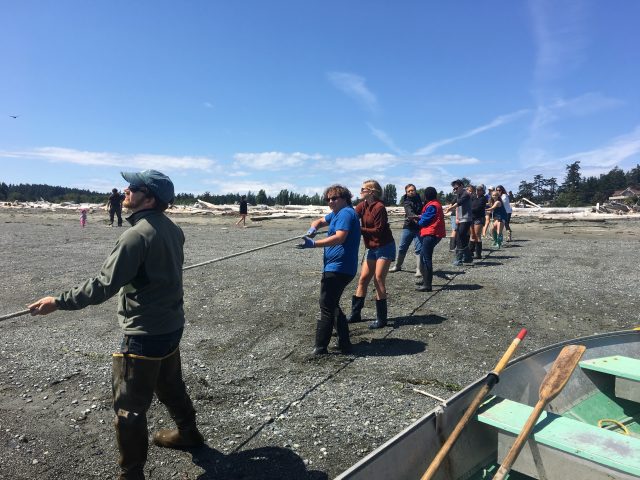
For lunch we enjoyed a mix of sandwiches and fruit/vegetables. After this well deserved meal, we again hopped in the van and made our way to the Friday Harbor Labs to take a ride in the Centennial. We used the Centennial to do a trawling and collect invertebrates (and some vertebrates) so that we could hold them in a tank and study them.

Photos by Seth Grant

P6010883

We came across some bottom fish and got to look at them for awhile before putting them back in the water. I think this has been the most exciting day for the group thus far. Lots of crabs and fish and scallops came up in the trawl, and we all got to touch and see. It was truly an experience. We actually did two trawls and so we got to go through all the different species twice!!
P6020136

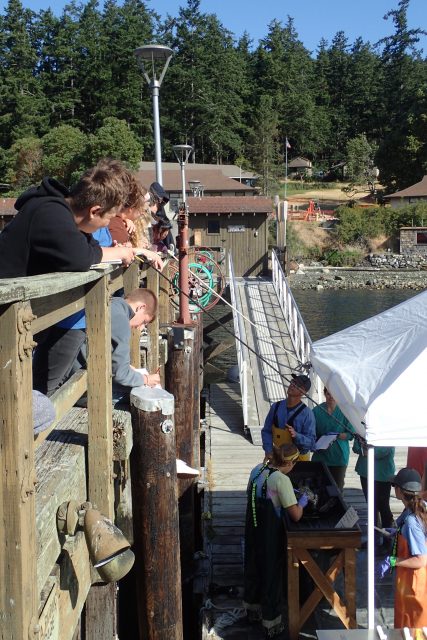
Once back on the docks, Tim and Derek gave a diving demonstration and actually took a camera down with them so we could see. We had a walkie talkie kind of system and got to ask them to look at specific things or pick up some specimens we liked. A couple of us got sunburns during all this. We won’t forget sunscreen again.

P6030159

Photo by Tim Dwyer

For dinner, an option between veggie or meat spaghetti and some bomb bread. But the day wasn’t over yet, we next went to an Antarctic photography presentation presented to us by Alasdair Turner called Antarctica: Ross Island and the Future of the McMurdo Sound Region sponsored by the San Juan Island Museum of Art. He showed us beautiful pictures and talked about the real Antarctica, like we would have never seen or heard otherwise. It wasn’t just all about beauty though, he also brought up why the ice was melting, global warming, ocean acidification, food chains, illegal fishing, and more. He was both serious and funny, and we’ve learned quite a lot. Until Tomorrow!!

4:45am Rise and Shine

By Jamie, Sara, Jake, and Arielle—

June 29th, 2016

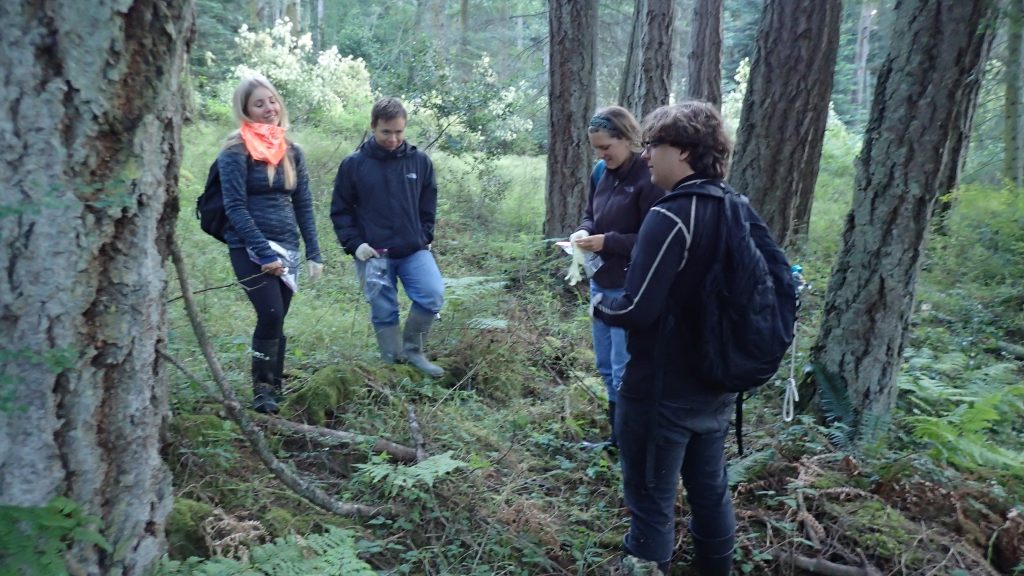
This morning, we had an early morning with a wake-up call at 4:45 am. We ate a quick breakfast and left the dorm at 5:15 sharp. We drove to the Friday Harbor Labs’ terrestrial reserve to survey slugs with Dr. Erika Iyengar.

P5990303

Photos by Seth Grant

We found two types of slugs: the invasive European slug and the native banana slug.

P5990628 P5990556

We surveyed 3 different areas until the sun was up. Slugs live in dark and damp places, so the only time that we can see them is before sunrise.

P6000003

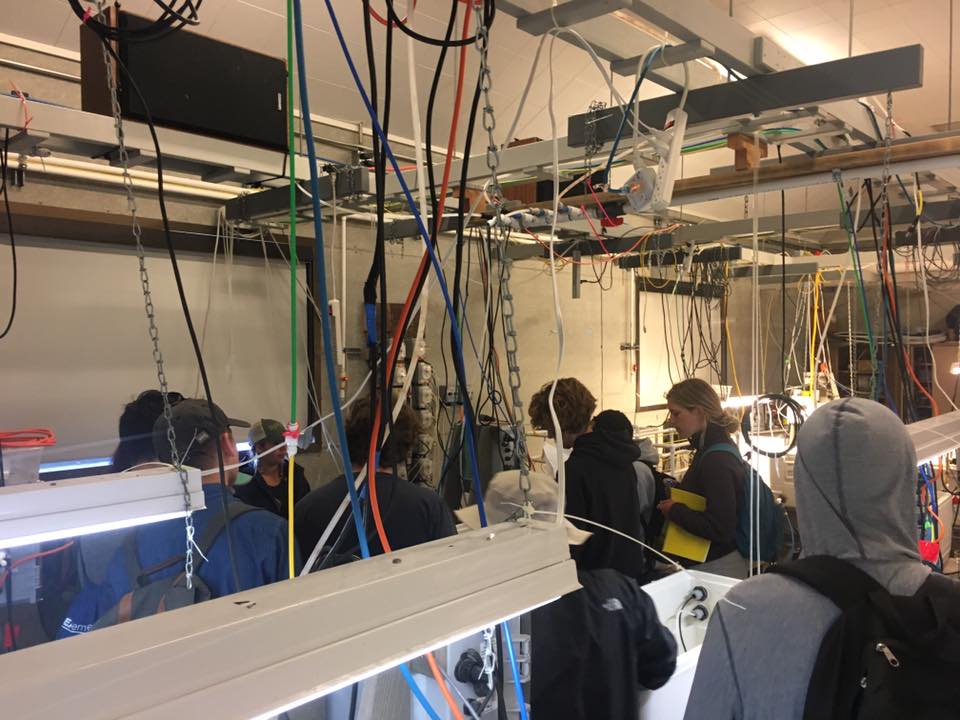
After, we went back to the Friday Harbor Labs. We took a tour of the labs and learned about its history.

P6000915

After the tour, we came back to the dorm for a well-deserved reflection time. Some of us napped and read books, while others played some badminton and volleyball. After reflection time we all joined together for some lunch.

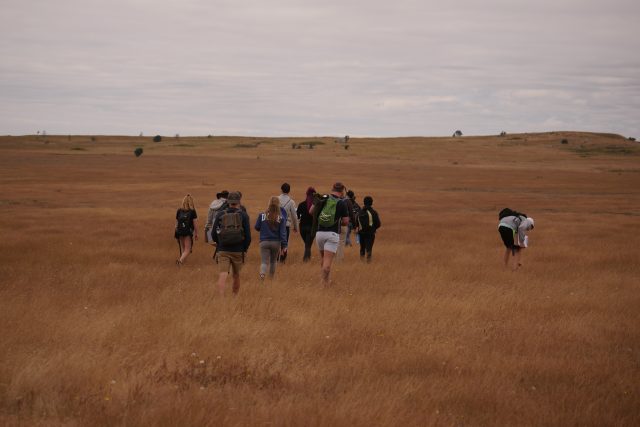
After Lunch, we hopped in the van and drove to Mt. Young. We were joined by Sharon Massey who taught us the basics of scientific illustration. On the top of Mt. Young, after the somewhat exhausting hike, we took inspiration from the amazing scenery and began drawing. Hiking back down the mountain was a whole different story. Having taken a different route, we encountered a smelly snake and at the end of the hike we discussed different patterns in the mountain’s vegetation.

Back at the dorms, we had some exploration time, which gave us time to clean up and explore the property some more. Soon it was dinner time and we were joined by Derek Smith, a PhD candidate.

P6010339

He specializes in marine ecology, most especially the ecology of shipwrecks. He shared with us some extraordinary pictures and stories. After Derek left, we played some card games and then it was time for bed. We had a delightful but tiring day. We hope you enjoyed reading about our day!

Dinner with Professors Vik and Erika Iyengar: Slugs! Earwigs!

By Caroline Grauman-Boss—

Tuesday, June 28th, Dr. Vik Iyengar of Villanova University and Dr. Erika Iyengar of Muhlenberg College joined us for dinner and an after-dinner presentation of their research. The next day, the Salish Sea Sciences team rose early to be in the field with Erika at 5:00am to participate in slug surveys with her. Students identified different slug populations and learned about their habitats, habits, and the effects of invasive species. Students will have the chance to study maritime earwigs with Vik at False Bay on Friday, July 1st.

P1020738

Dr. Vik Iyengar at False Bay with Salish Sea Sciences: Photo by Tom Grauman

To get a sense of the kind of research the Iyengars do and why they do it, please take a look at the following links:

Both professors have a deep history pursuing research at the UW Friday Harbor Laboratories. We are fortunate to have them here this summer and that they are making the time to share their knowledge with us.

The Whale Museum

By Caroline Grauman-Boss—

On the morning of Tuesday, June 28th the Salish Sea Sciences team received an introduction to one of Salish Sea’s great cetaceans, the orca whale. Science Director, Tim Dwyer, familiarized students with some of the vocabulary that distinguishes whale populations, most especially the fact that among mammals, whales are “cetacea” and that orca are odonticetes, or “toothed whales,” a subgroup of the dolphin family. There are three distinct whale populations in the Salish Sea at the southern end of Vancouver Island: Southern Residents, Transients, and Off-Shores.

Fun fact 1: people can tell which whales are breeding with which whales by tracking whale poop. How do they do that? Tucker the Labrador Retriever has a nose for it!

Fun fact 2: How do people know that the off-shore population eats shark? Shark skin grinds down their teeth!

Between 10:00am and 12:00pm, students gained deeper knowledge about Salish Sea whales and other mammals from Whale Museum program staff and exhibits. To learn more about Whale Museum programs, click on the following webpages:

The Whale Hotline

Marine Mammal Stranding Network

Soundwatch Boater Education Program

SeaSound Remote Sensing Network

Marine Naturalist Training

Salish Sea Association of Marine Naturalists

Education Programs

School’s In Session

By Indeya, Lana, and Quinn

This morning, after an early breakfast, we made sure we were prepared for our longboat expedition starting Sunday. Afterwards we walked to the Whale Museum. The director there presented enriching information on the Orca inhabitants in the Salish Sea.

P5980771

Photo by Seth Grant

She mostly focused on the Southern Residents and their characteristics but also went over the other types of Orcas in the area such as Transients, Northern residents, and Offshores. While taking notes, we learned of their hunting techniques, language/tone of voice, prey, size, and environmental issues. We then toured the facilities, seeing various skeletons, fetuses, and brains.

P5980575

Photo by Seth Grant

After that we broke for lunch, again having DIY island sandwiches. I personally put chips on mine, it adds a whole new level to the sandwich taste and texture. We then adjourned to the Science lab, where Dr. Rebecca Guenther introduced us to the wonders of algae. Each table had at least one live aquatic autotroph. Dr. Guenther taught us the differences between algae and how to find out which specific algae you have using the Dichotomous Key. We tried out a simplified version of the key to find out the names of the algae on our tables. After working and being focused we finally got to play, and use the algae to create designs and dry them. Tomorrow we will check up on our Dried algae to see the state it’s in.

IMG_8455

Photo by Tim Dwyer

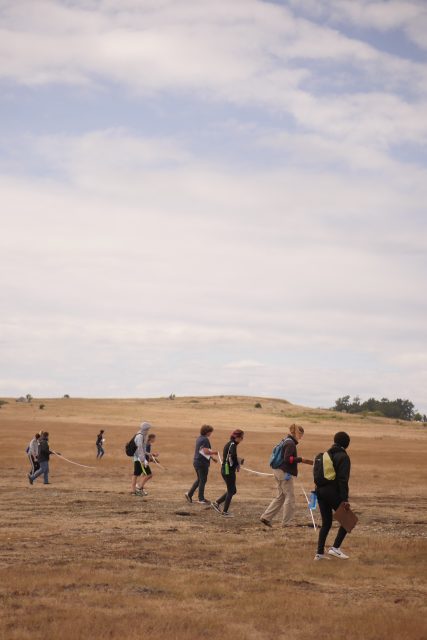
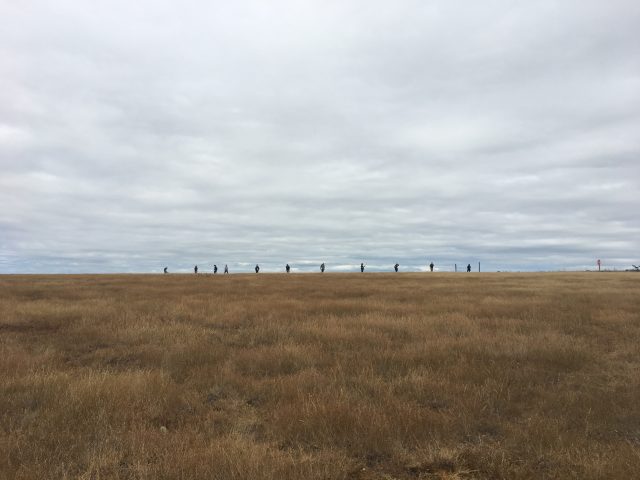
While on break, our Instructor, Tim, put together a simulation to teach us how to survey organisms. Our organisms in this case were actually rocks and although we could have counted them all, we used transect tapes, quadrants, and our meter ropes to find a population estimate. We hope you enjoyed learning about our day! Until Tomorrow!!

IMG_8465

Photo by Tim Dwyer

Day Juan

By Jack, Peder, and Lynn

Today was a magical experience; we woke up too early for those of us from far away, and we had breakfast as a group. We chatted and shared stories from each of our corners of the world. After breakfast we talked about who we were and who we were not. We also discussed some less serious questions like our favorite foods. As a team, we drew closer by each silly anecdote.

P5970315

Photos by Seth Grant

Next we dived into the past and explored with Tom the amazing world of photography. While dodging cars, we recreated photos of the past. We had lunch; DIY island sandwiches.

IMG_8438

Photo by Tim DwyerP5970225

Following lunch, we were introduced to the science lab and its method of choice. We learned about the scientific method and put our skills to the test.

P5970516

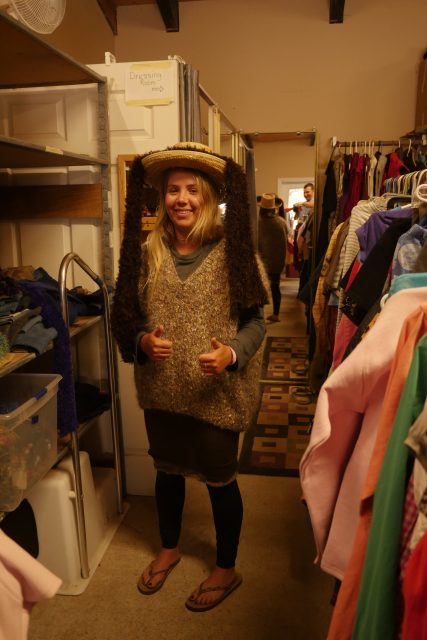
Next we had designated ‘exploration time’ where a small group of us headed down to the ice cream shop. Out of 72 flavors it was impossible to choose just one. They did decide however to represent Friday harbor with some stunning hats. We arrived back to pizza. After some time, we headed out to go for our kayak expedition.

P5970832 P5980307

On our kayaks, we raced through the water. Some of us even dare to pick up a harmless Moon Jelly, and some of us did not. Arms aching, we all stopped our furious paddling to finally see the beautiful sunset. After a long pause and quiet tears of enjoyment, we arrived at our home for the month.

P5970210

Day 21: Saying Goodbye

It wasn’t easy to say goodbye.

We rose to a day that beckoned us to explore a new estuary, rocky intertidal or row together once again (okay, sail!). The day before, some had said that they wished the program would have lasted four weeks not just three. Others pointed out how much more they were ready to learn. Everyone agreed with the person who said that the group had bonded like a family, noting that by the end of the longboat trip they were rowing completely in synch.

From a programmer’s perspective, this could not have been a better moment.

After a filling university cafeteria breakfast, we met with regionally-based family members at 9:00am. The group of program participants demonstrated some of their games and unique greetings to the group of family. A few stories were shared, and one-by-one it was time to go. There would be two more good-byes: at the airport, and upon our return to Friday Harbor. That last departure was sweet; the kids shined up the school van like it was never shined before! Thank you Matt, Will, and Eric!

Thank you everyone for making this inaugural year of the Spring Street International School Summer Marine Science Program a tremendous success. We’re already planning next year!


Day 20: University of Washington Main Campus and Seattle

By Tim:

The group rose bright-and-early to say goodbye to Tom and Toffee the Dog, then boarded the van for the ferry ride and 1.5 hour drive to the University of Washington’s flagship campus in Seattle.

DSC_0242 DSC_0006

Straight out of the van, we were treated to a tour of the collection of preserved fish maintained by the Burke Museum in cooperation with the School of Aquatic and Fishery Sciences. Participants stood rapt as collection Curator Katherine Maslenikov explained the value of the 8 million specimen collection to research in taxonomy and population biology and then brought us in to see the collection. She showed off small sharks, a sunfish and even a deep sea angler fish!

DSC_0254 DSC_0265 DSC_0264

After a picnic lunch at SAFS, we sat down with School of Marine and Environmental Affairs graduate student Raz Barnea for a discussion on “Wicked Problems.” Raz explained that wicked problems are ones without simple answers; problems that require attention from stake holders, scientists, resource managers, lawyers, legislators and others in order to be solved. The group talked about some of the wicked problems facing the region and the globe and then discussed marine-related careers outside of science.

DSC_0280

DSC_0282

Following our meeting, we all checked in to Haggett Hall (our dormitory for the evening) and got a taste of college life. The swipe cards that gave access to the dorm elevator were quite popular with participants, as were the desserts in the dining hall.

DSC_0284 DSC_0291 DSC_0286

With dinner behind us, we loaded into the vans to visit Pike Place Market and the Seattle waterfront. To cap off the evening, Caroline surprised everyone by treating us all to a ride on the new ferris wheel!

DSC_0012 DSC_0029 DSC_0037 DSC_0066 DSC_0079

Back at the dorm, everyone settled in to the lounge for one last evening together and, exhausted, drifted off to bed one by one.

Day 19: Packing Up, Wrapping Up, Final Barbecue and Nightlighting

By Tim:

Susan started off our final full day on San Juan Island with a breakfast of blueberry and chocolate chip pancakes, sausages and fruit! Fueled by this high-energy meal, we spent the morning packing our bags and cleaning out rooms to prepare for our guests arriving later in the day.

DSC_0176 DSC_0180 DSC_0179

After we all passed the “white glove” test, the group convened with Tom to finalize project image choices and order, and then to give the script a final read-through before recording voice-overs.

DSC_0187

To show our appreciation for all of the numerous scientists, teachers and parents whose assistance and guidance were essential to the program, we hosted a barbecue of steak, shish-kabob and dungeness crab early in the evening. Although though the intermittent rains drove us inside, everyone enjoyed recapping the past three weeks with people they’d met along the way. Becca Guenther even brought us the algae pressings we’d prepared with her during our first week! We concluded the evening by showing off a rough cut of our final documentary entitled “Tide Pools of San Juan Island.”

DSC_0183 DSC_0182 DSC_0193 DSC_0186

After our guests departed, we loaded into the van for one last trip over to the Friday Harbor Laboratories to experience the time-honored Labs tradition of night lighting. Our coastal oceans are filled with light-sensing zooplankton and other animals; hanging a waterproof light over the side of the dock slowly attracts them to the surface and illuminates other organisms that happen to be nearby. All were delighted when Labs residents Stephanie Crofts, Orissa Moulton and their colleague Connie Sullivan met us on the docks (at 10:30 pm) to share some insights into the creatures emerging from the darkness.

DSC_0197 DSC_0218 DSC_0237