We had a WHALE of a time!

We woke up to a surprisingly unsurprising morning of rain. Although it was gloomy outside, we were brave enough to walk all the way to the Whale Museum, a staggering 15 minute walk. At the museum Tracie gave us a 30 minute presentation on the different pods of whales that you can see in the San Juans at different times of the year. After the presentation, we explored the upstairs exhibits, which included dressing up in whale costumes.

We then walked all the way back in the rain to prepare our picnic lunch and headed off to Friday Harbor Labs. There we met Lauren and Beatrice who let us observe them spawn sand dollars, as a part of their research in the molecular mechanisms involved in cloning.  For most of us it was a new experience to be in a lab and look through the high-tech microscopes. We even got to see cell division!

George von Dassow et. al , 2009

After labs and lunch, we hiked to a vista with a breathtaking view. With further inspection we noticed many boats in the water before us and realized that they were chasing the orcas. We got our binoculars out and were able to see the orcas for ourselves, which we deduced were transient because of the terrified seal, not wanting to enter the water.

After this, we went to a different part of the labs to learn about scientific illustration from Sharon Massey, in which we drew some of the invertebrates that we caught earlier this week. We enjoyed this relaxing break from the rain as we all discovered our artistic talent.

We returned to a revitalizing dinner of burgers with Dr. Hilary Hayford, who we researched with earlier on intertidal snails and barnacles. We enjoyed learning the context for the research we did with her previously.

Fucus MUCUS!

Maya should not be a meteorologist.

Today’s early West Coast morning started as many others do: with a thick layer of gray clouds covering the sky. Though some of us- Maya, we’re looking at you- were optimistic during these early hours, insisting that the clouds would burn off to reveal golden sunlight, those positive but sorry souls could not have been more incorrect. Our trip to Cattle Point involved not sun but instead blustery wind and less than ideal temperatures. Despite Rugby Tim’s  constant reminders to “DRINK MORE WATER” and Professor Dobkowski’s insistent “100% NOT rain” weather forecasting, we were cold. Really cold. But what were we even doing out at Cattle Point, anyway?

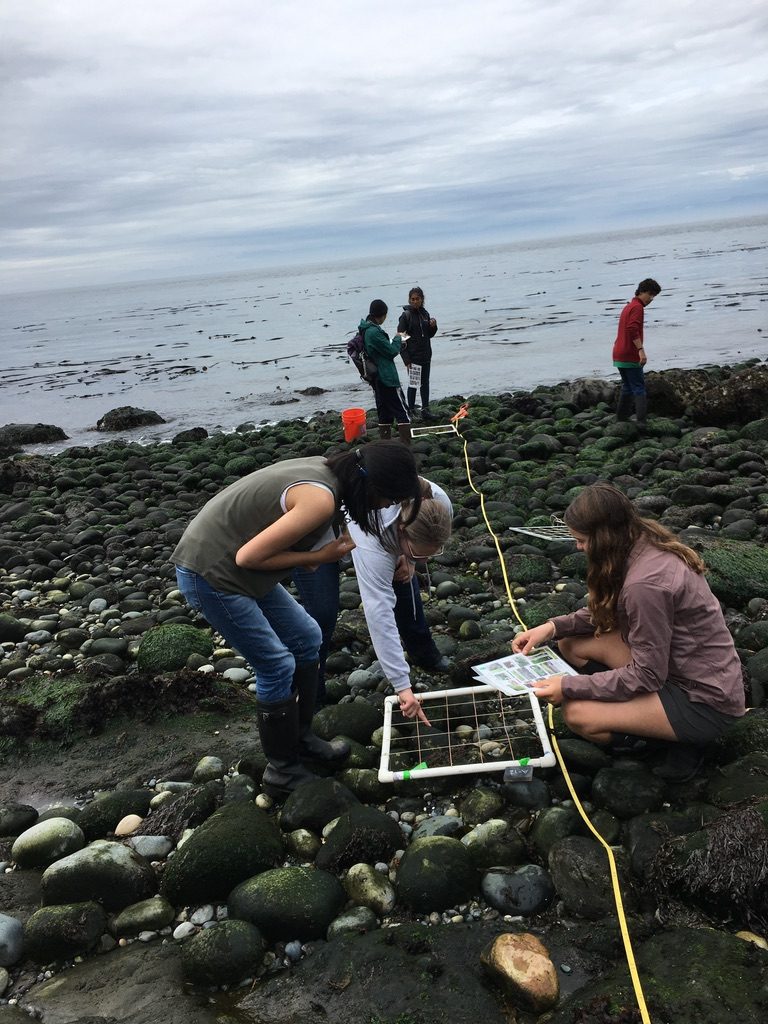
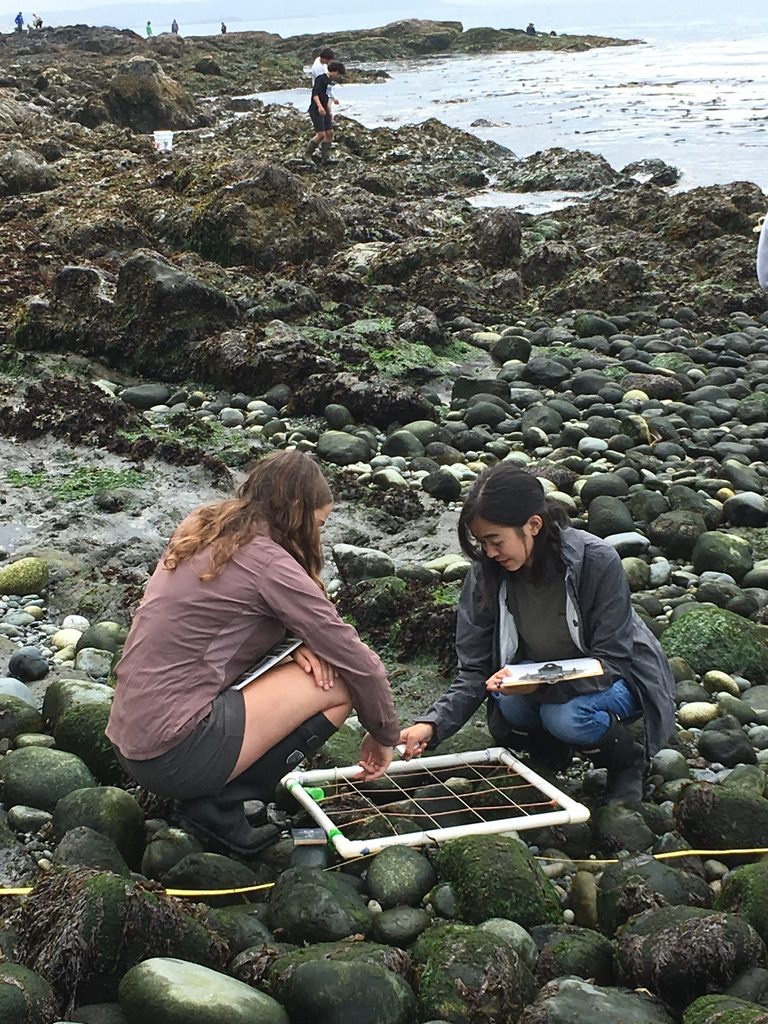
Last night, we were introduced to Professor Katie Dobkowski (by the way, congratulations on your new job at Bates, professor!) who gave us a first look at the study we would be participating in the following day. As mentioned in a previous blog, the study was started in the early 70s, basically making us official researchers in a project nearly three times our age! As far as tools of the trade go, quadrats (square arrangements of PVC pipes laced with string grids) and transect tapes (long mater tapes) were our essentials during this field study. Locations A, B, C, and D, located all along cattle point and encompassing many different substrates (surfaces where organisms can grow), were where we unrolled our transects and dove headfirst into algae data recording.

Scientist Ela and Kenneth hard at work collecting data with the help of a quadrat.

The weather and temperatures were rougher than Timmy’s puns, and the Fucus mucus made us severely question our foot-eye coordination, but we scientists are well known for our balance of fun and elbow grease. Several of us took breaks by playing with one genus of algae, Halosaccion, that squirts a thin stream of water when squeezed. Others found enormous rock crabs that were extremely interesting, as they were missing claws and legs, which gave us a look into the rough lifestyle of intertidal creatures.


Fucus Mucus

(https://depositphotos.com/21066093/stock-photo-fucus-vesiculosus.html)

After a quick lunch, Megan Cook came over to our dorm to teach us about scientific communication and how to connect with an audience. She taught us to write brilliant, emotional, and grammatically correct sentences like this: “First we woke up, the breakfast was awesome, I love cereal, the research was excellent, I love peanut butter and jelly sandwiches, that was my lunch, it was amazing”, et cetera. In all truth, her lesson was incredibly useful, and taught us a lot about writing compelling narratives. Afterwards, we journeyed to the mythical Friday Harbor Labs to assist Sasha Seroy in an experiment with Lacuna, or small intertidal snails, focusing on their teeth and food sources. Some of us got extremely lucky and observed some of these snails begin their feeding process by sticking their toothy radulas into kelp leaves.

Tonight we were lucky to have Beatrice Grauman-Boss and Lauren Lubeck as dinner guests. They are both undergraduates who are currently working on a project at the Friday Harbor Labs. Lauren and Beatrice taught us about sand dollar larvae cloning, which is epic! They taught us with an impassioned energy about budding, showed us pictures of the buds they had cultivated in their lab, and explained to us the process of cloning as a defense mechanism. It was truly inspiring. We can’t wait to hear more tomorrow when we visit them at the Friday Harbor Labs .

False Bay Field Trip!

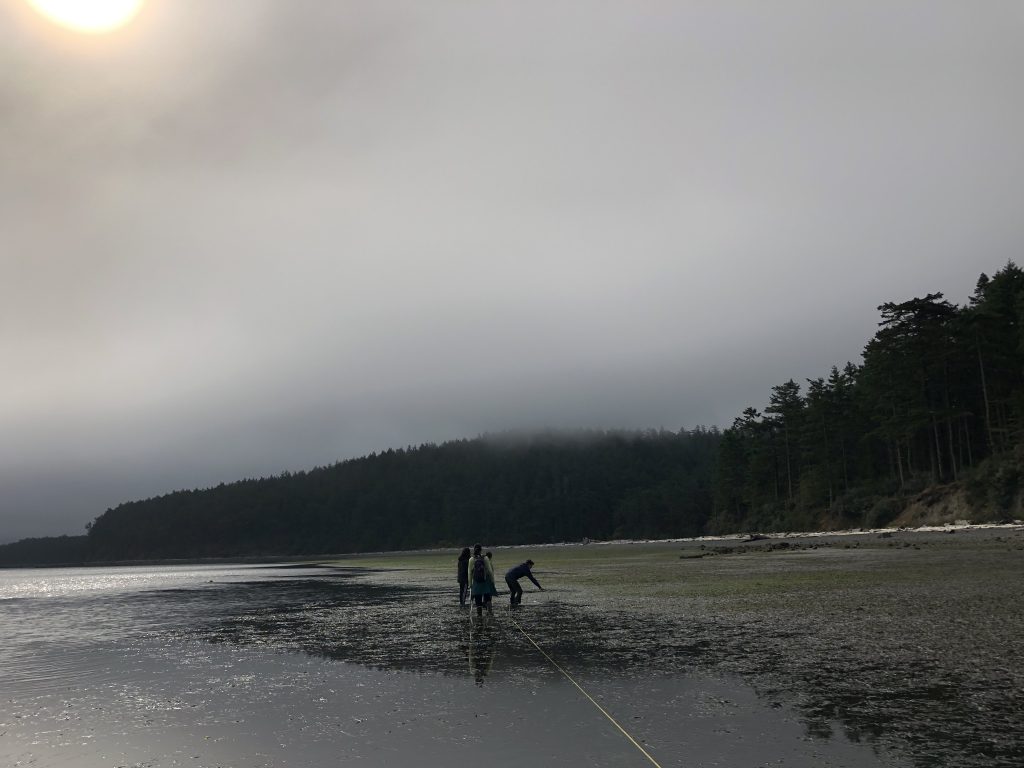
After a good night’s sleep and some delicious breakfast, we headed down to False Bay for some field work. We got to learn about the importance of lugworms in their ecosystem. They aerate the sand to provide oxygen for other organisms in the same substrate. We also learned about different data collection techniques, such as using the quadrats (squares made of PVC pipes) to select the area that we want to study. We were divided into different groups. Some groups counted the number of burrows per quadrat, some groups collected sand samples, and other groups dug up burrows to check how many burrows had lugworms in them.

This is us learning about lugworms.

We also dug up a ghost shrimp!

After False Bay, we returned to the Spring Street International School laboratory to input our data into spreadsheets. We also learned about quality assurance/control, which is essential for accurate results.

Then we went on a brief excursion to the Friday Harbor Labs to identify the animals we dredged up when we went on the Centennial.

Identifying the mollusks and arthropods

Kaylee with cnidarians

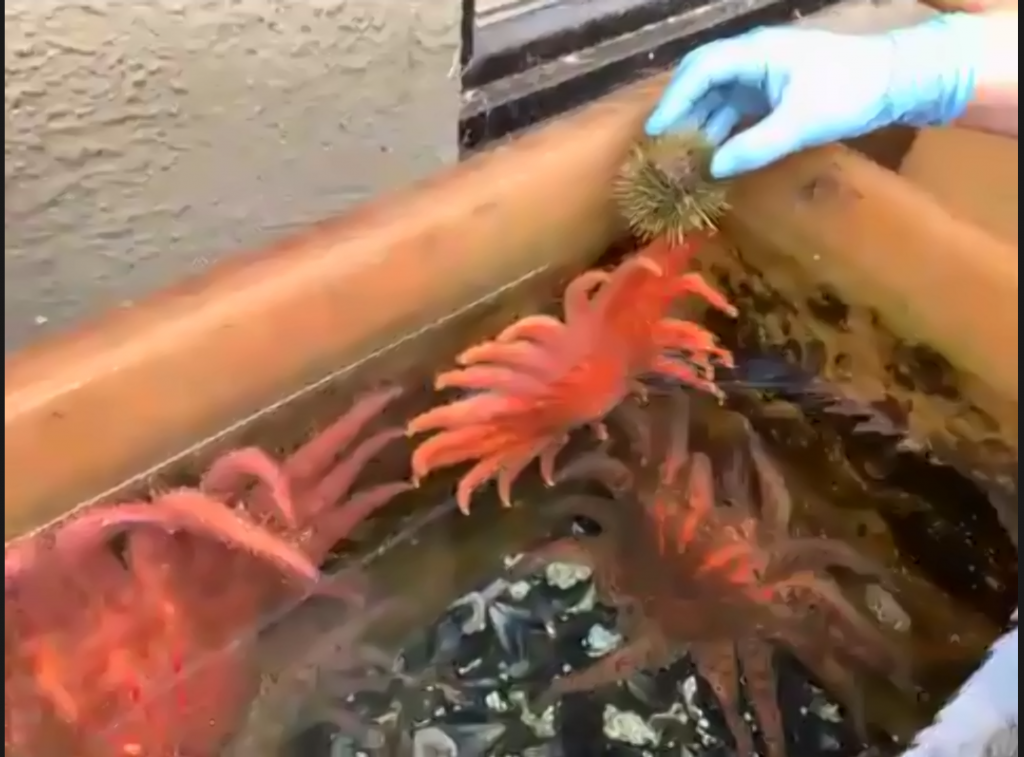
Observing the injured Sea Urchin

Finally, we welcomed Professor Katie Dobkowski for dinner. She teaches Marine Biology at the University of Washington and specializes in bull kelp. In her presentation, she explained the process of the 40-year-old algae survey we will be conducting tomorrow. We’re very grateful for the opportunity to learn from Professor Dobkowski and can’t wait to work with her tomorrow!

-Magdalena, Clarissa, Eric, and Sabrina

Happy Birthday Michael

Good day, ladies and gentlemen!

What did we do today? Well, it was a dark and stormy night…. No. It was morning. Against our will, we were awakened at the way too early time of 6:30 am. We dragged our feet down to the breakfast, a meal of heavenly taste. Cereal. Toast with a multitude of condiments, including butter and jam. Then we set off for the day, to Deadman’s Bay, where we met with Dr. Hilary Hayford. Dr. Hayford is a UW biologist who is interested in intertidal ecology at Friday Harbor. We got to participate in a pilot study that looked at changes in snail feeding behaviours due to temperature changes and environmental stressors. We also spotted a river otter in the tide pools! After some fieldwork and a long-awaited lunch, we joined Dr. Rebecca Guenther, a phycologist (studier of algae), who taught us about algae life cycles, species identification, and even helped us press our own seaweed art! After the interesting lectures, we had an amazing dinner with Jennifer Olson. Jennifer works at the Whale Museum’s Stranding Network Program, where she coordinates rescues and research for marine mammals stranded on the shores. After dinner, we sang Happy Birthday to Evelyn’s dad Michael. All in all, it was a great and educational day.

Slimy Sea Stars and Sailing on the Centennial

After the first night in the dorms, we got up and enjoyed a breakfast of cereal and oatmeal. We then started the day off by going over the guidelines, expectations, and schedule for the program.

We took a walk across campus which woke us up, and we also got to see the Spring Street International School ground and the incredible laboratory. Back at Hope House (where our dorms are located), we went over the behavioral guidelines for the next few weeks, but quickly got back to the fun after we were assigned to go on a photo safari!

We were given a packet of old photos of the island and were given the task of finding the current location and taking the same photos decades after they were initially taken. This gave us a chance to tour the town and see the sights for ourselves.


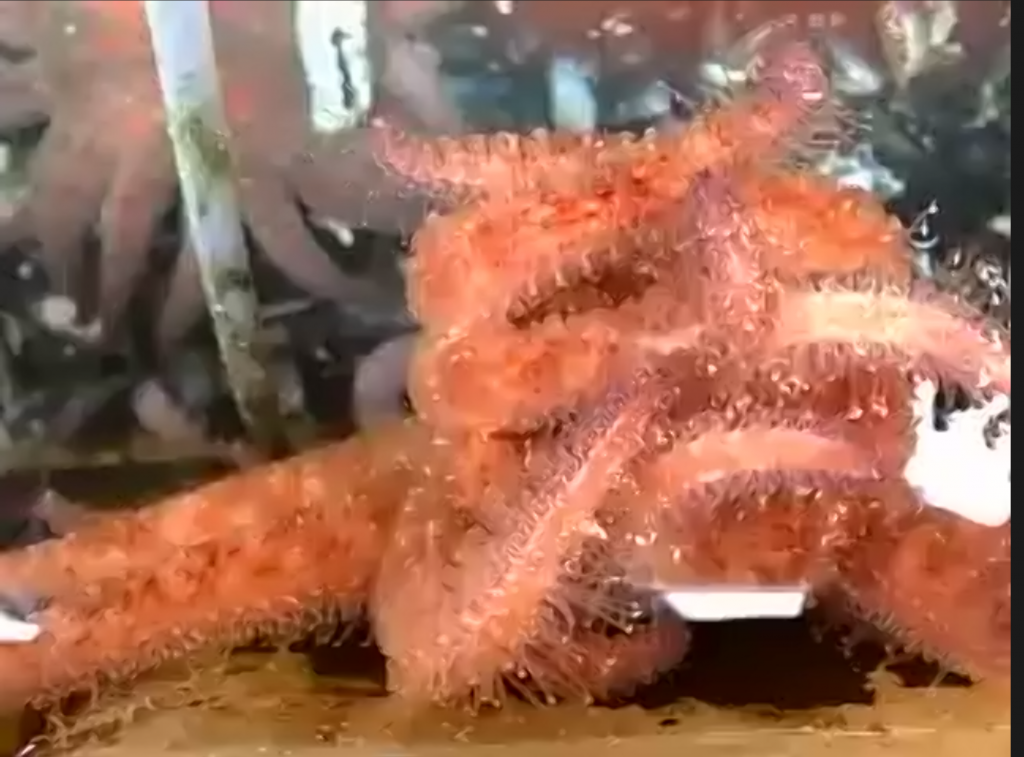
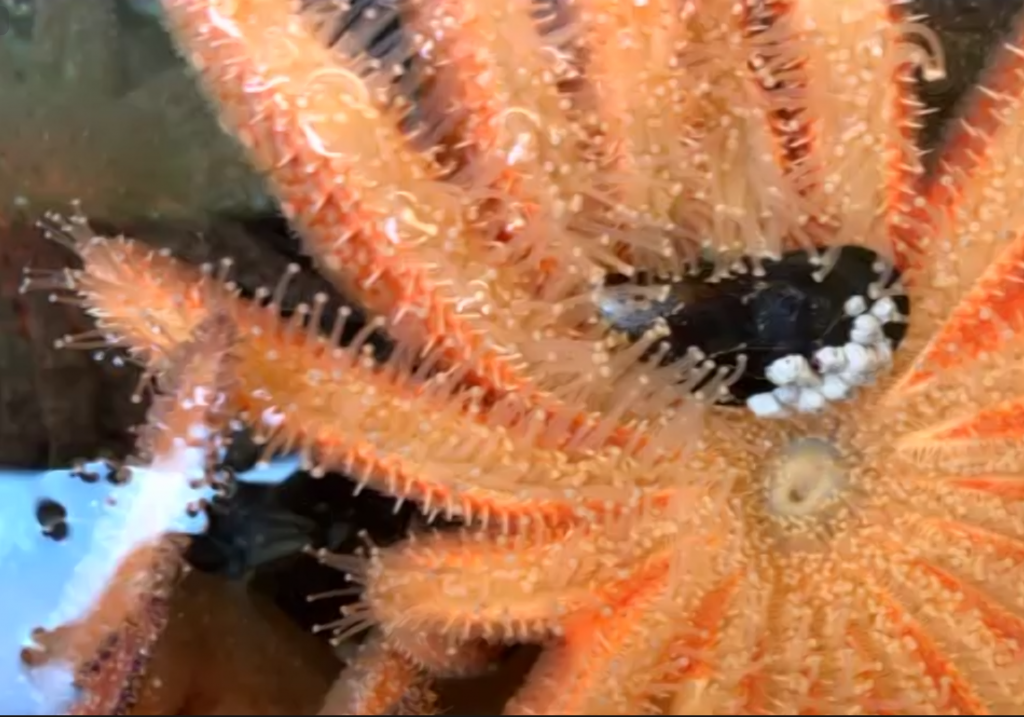
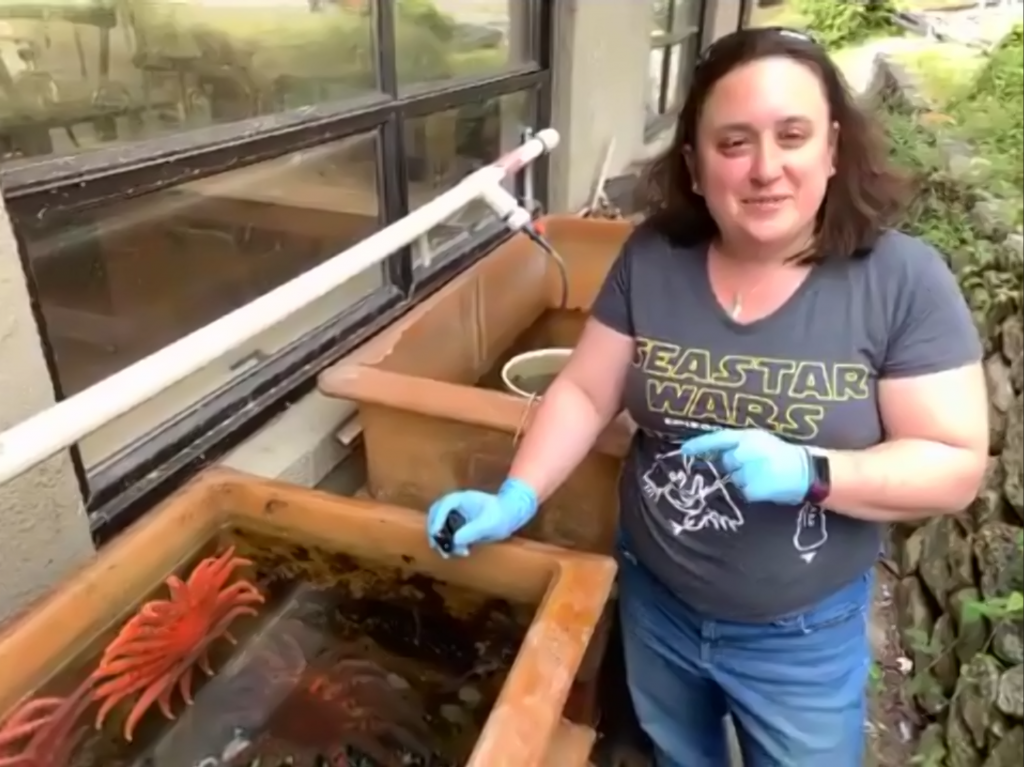
We returned with an empty stomach and were excited to see that sandwiches and apples were on the menu for lunch. We then drove to the Friday Harbor Lab. The most exciting part of our day was boarding the Friday Harbor Lab’s boat, the Centennial, and collecting marine life through dredging. We had many interesting finds, from sea sponges to sea cucumbers, we even got to see a slimy sea star!

Afterward, we got a tour of the Friday Harbor Lab and learned a little bit about the history. We then headed back for a bit of exploration time where some of us relaxed while others prepped for dinner and began introducing the guest.


Our guest, Dr, Rebecca Guenther, arrived for a delicious pasta dinner. After dinner, she captured our attention with a presentation on ocean acidification and its effects on algae, which is what she specializes in.

We were all tired out from a long first day and relaxed a little bit before going to bed, excited for the next day!

Salish Sea Sciences Summer 2018—Welcome!

Sunday June 24, 2018, Salish Sea Sciences summer cohort of 2018 comes together!

What an amazing team of students—from the greater Salish Sea/Puget Sound and from Arizona, California, New York, and abroad! By tomorrow—students will be posting blog posts of their own—sharing the exploits of the day.

For now—a few photos of students boarding the University of Washington’s Friday Harbor Laboratories R/V Centennial along with graduate students doing research at the Labs from California, Washington, and Sweden…

Do check out the Facebook posts of the day!

Last Day

By: Ben, Sonja, Chloe

SPOILER ALERT: today was the last full day.

On the last full day, we were woken up early so that we could finish our posters. After we finished them, Megan Cook talked to us about how to present our posters. She helped us all relax and gave us some tips to make our presentations better.

Then we went into cleaning mode. We spent the next 3 hours packing and cleaning up.

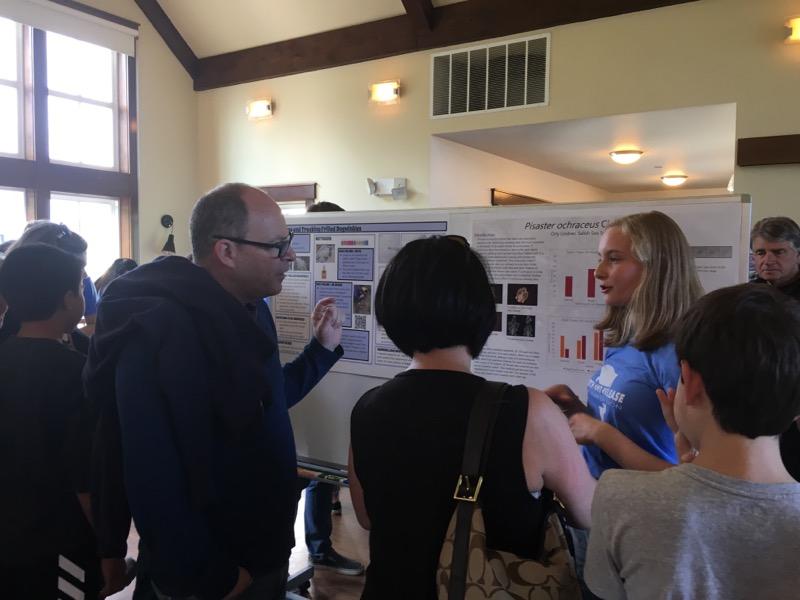
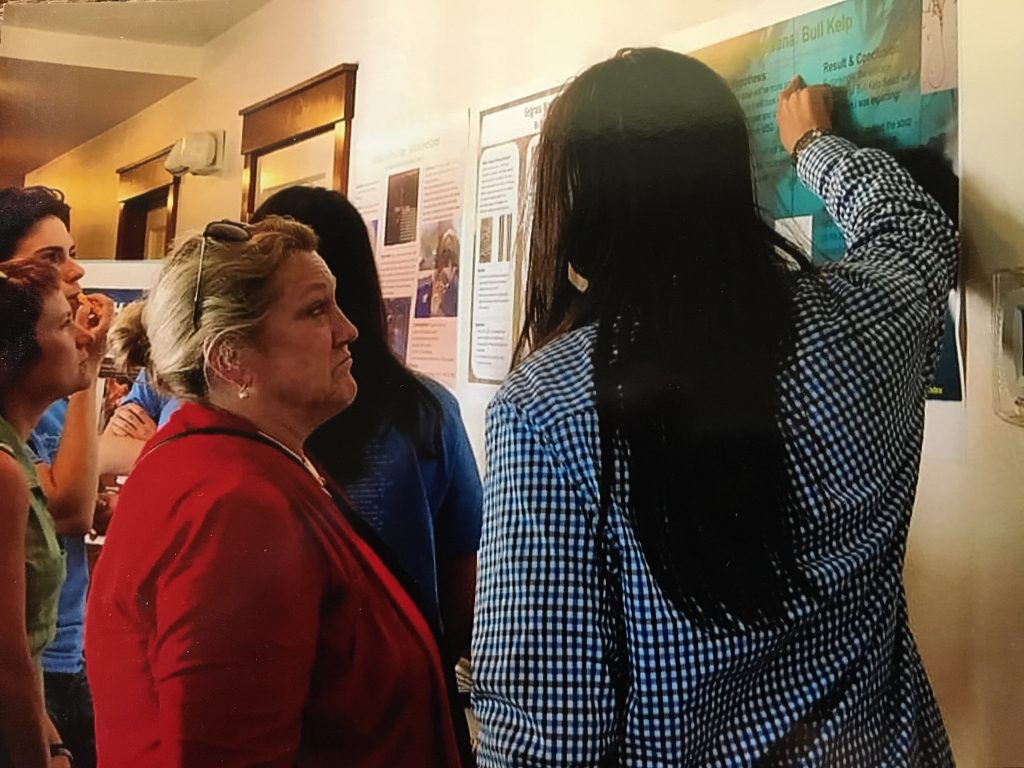
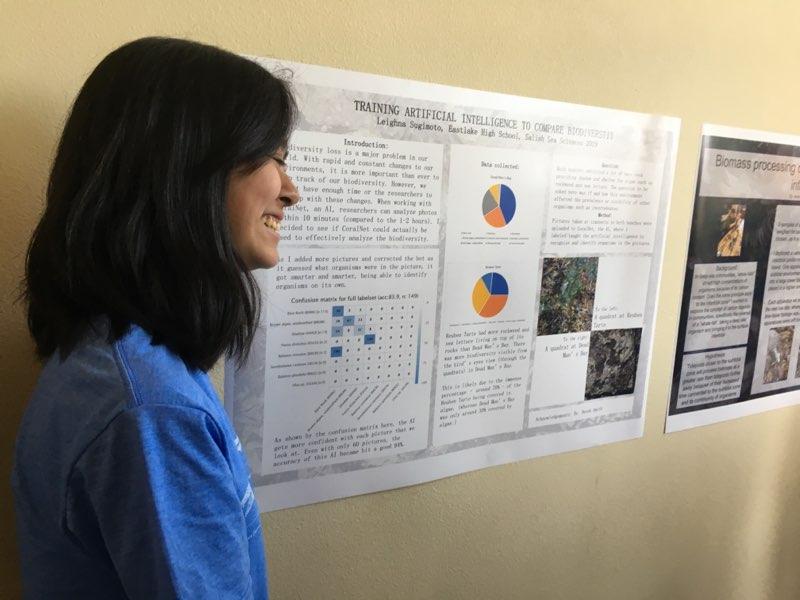
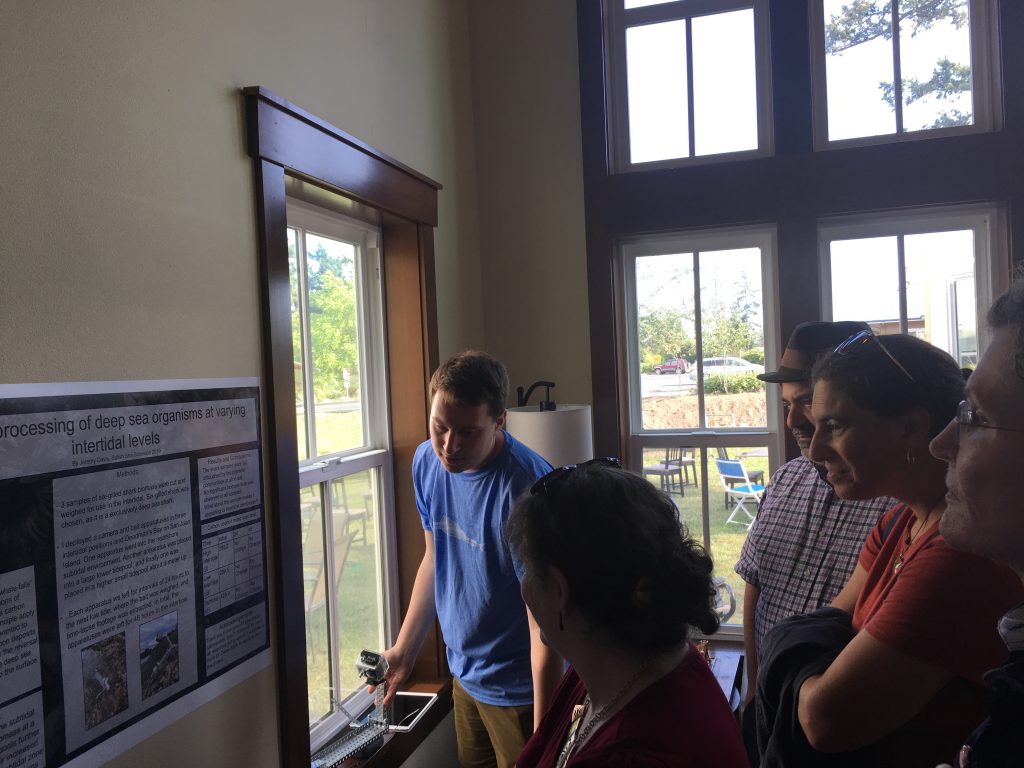
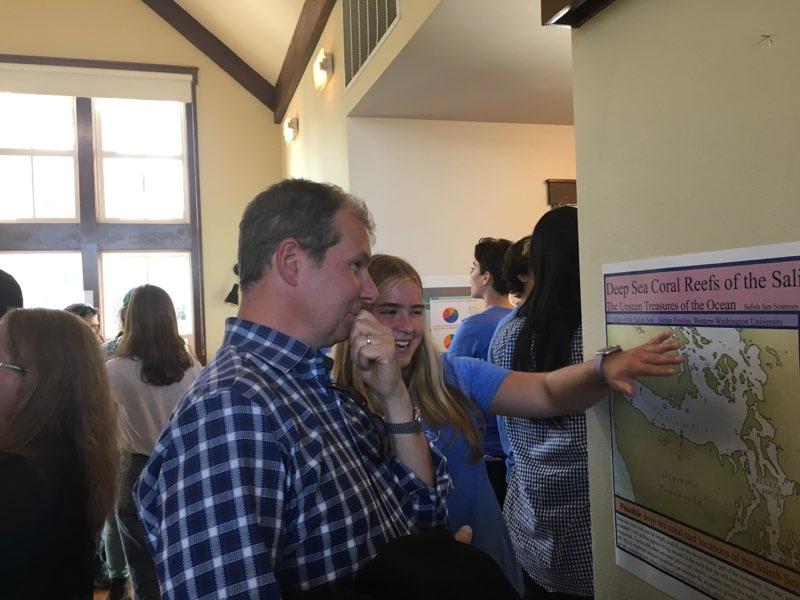
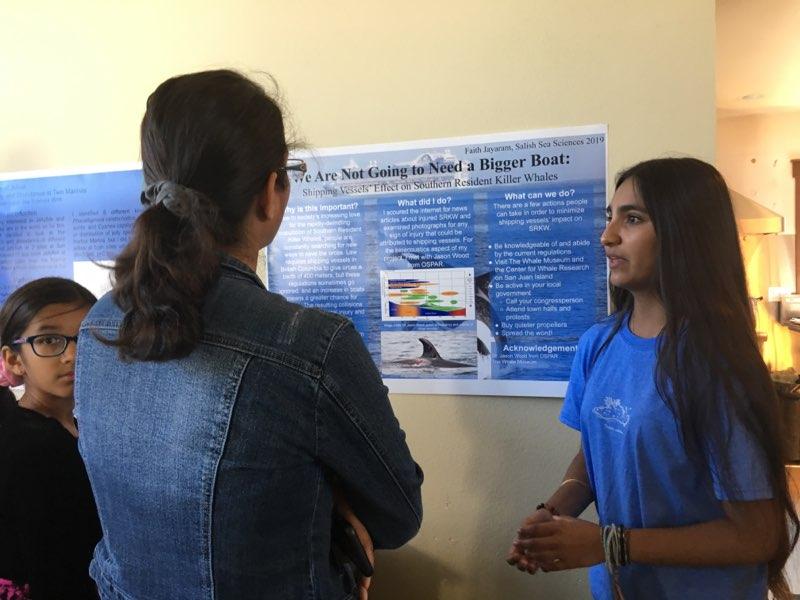
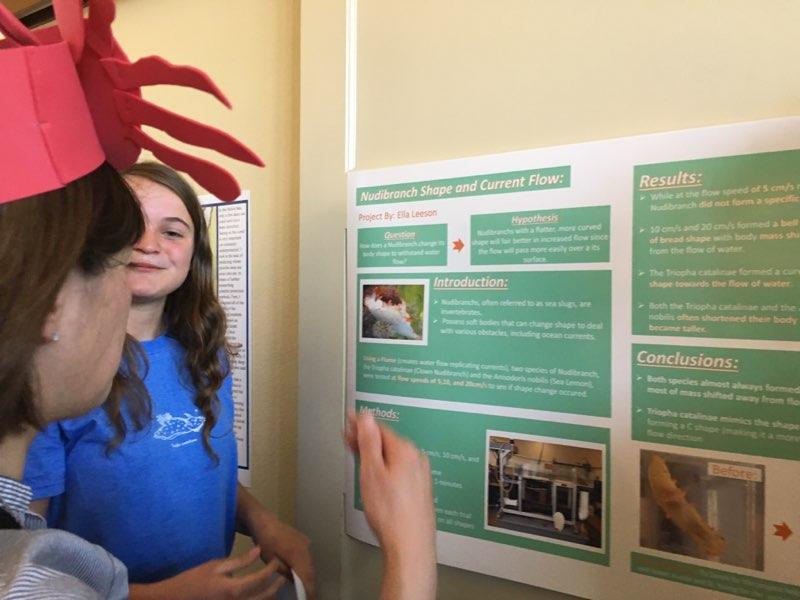
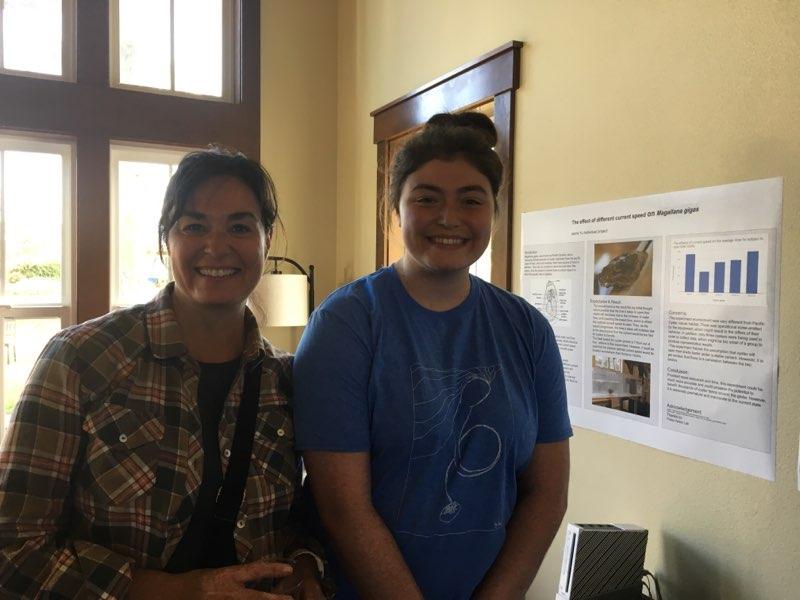
Finally it was time to set up our posters. We all raced to claim the best spots to hang up our projects. Before our guests arrived, many of us decided to do some power posing to get us ready for the evening ahead. Then, the doors opened, people flooded in and they began to examine our work. Many family members  and scientists that we previously worked with showed up to listen to our presentations.

After the presentations, everyone feasted on a delicious meal of hamburgers and hot dogs. Some guests and students later played badminton and volleyball before everyone had to leave.

Roche Harbor

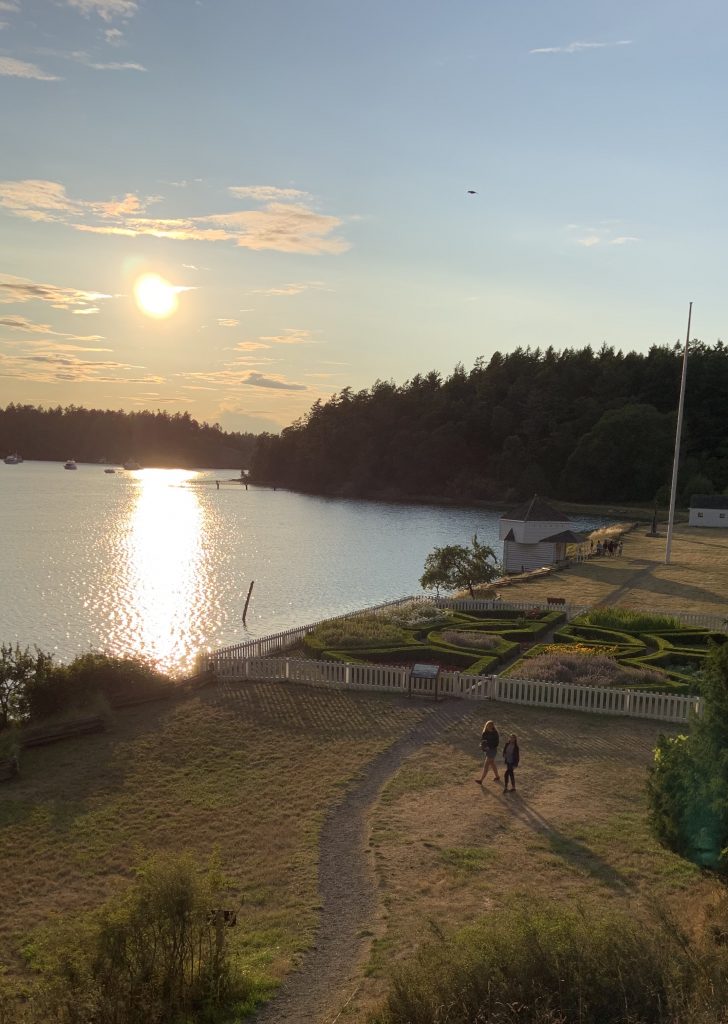
The students then traveled to Roche Harbor where we saw the changing of the colors and got ice cream for one last time!

In conclusion there isn’t enough words to sum up this amazing experience. Tomorrow morning we leave for the ferry to which we will leave not empty handed but full of many memories that will last a lifetime.

Intertidal Mammal

By: Aaron, Peter, Rosie—

The majority of our day was devoted to working on our projects which meant our brains were going at full racing speed. Aaron noted, “You could see smoke coming out of our heads.”

Students working hard for SCIENCE!

Once we made some progress crunching numbers and writing up our methodology, we headed over to the Friday Harbor Labs to observe a scientific dive with our friend and marine life expert, Tim Dwyer, where we were able to watch the dive on a screen up on the dock and he was able to communicate with us what he was seeing. It was like we were having the underwater experience but still staying dry and warm.

On the way back to the dorm we saw a deer grazing along a beach at the FH Labs. We couldn’t tell if it was our fried brains hallucinating or not but that moment was declared our first intertidal mammal sighting!

After our exciting excursion, we all sat down and had a fun dinner with Dr. Matt Kolmann in which we talked over our chili bowls about funky fish and shark myths. Then shortly after dinner he gave his presentation on the unknown purpose of serrated Piranha keels, giving some theories supported by different skeletal scans of Piranhas. It was interesting to make observations and guess what the keel could possibly be used for and be able to go through the scientific process with him. Our scientific curiosity was flying today.

Tim B Giving Life Advice

By: Ben, Sonja, and Parker

Did you know that store bought mac and cheese can contain a small amount of BPA in it? Luckily, according to Dr. Jack Bell, you would have to consume many boxes a day to feel any effects.

Dr. Jack Bell

Creating mussel extract

Early in the morning, Dr. Bell came to the Spring Street International School lab to help us create samples to run in the High Performance Liquid Chromatography (HPLC) machine at the Friday Harbor Labs. We were testing for BPA levels in mussels, who are known to be early warning organisms since they are filter feeders. To make the sample, we crushed mussel tissue and a variety of chemicals using a pestal and mortar. We then put the sample into a centrifuge and then pressed it through a filter. Later, at the labs we ran the samples through the HPLC machine which did not reveal any traces of BPA in the mussel tissue.

HPLC Machine

In the afternoon, Will King taught us how to use certain statistical tests for our final projects. We learned about T-tests, linear regressions, and Chi squared tests.

Stats with Will King

For dinner, the guest of honor was our own Tim Brogdon. He gave us a valuable and relevant presentation about life skills that can set us apart when looking for a job.

Can your mac n cheese hurt you?

By: Gabi, Paradis, Daniel, and Chloe

“Tadalatadala” the alarm rang, making sure to wake us all up. It was as if it was angry at us for sleeping and wanted to take revenge. Yes, it fully succeeded and got us uttering our “ummmmmhhh, I want to go back to bed. Why does morning have to come.” But science answered our question, in order to be successful we have to work and never be lazy.  We have to give our efforts if harbor seals and snails are willing to give their lives for our learning. We had an amazing breakfast and then prepared ourselves to work on our projects.

9:00 am: the spirit and the mood changes. The crazy and fun actions that paint the walls of the dorm change to focused and serious scientific faces as we were trying to analyze our data. It was astonishing to see how something we had collected could be used to test our own hypotheses. It was like building a house from scratch and we were all excited to see how our own constructions would turn out. Some people say that it’s better to see a finished house, but we say that it is fun and cool to see a house under construction—we learn better and it helps us figure out the direction we want to take going forward. We know that it might be hard and will require a lot of thinking and efforts, but we are ready for it and we aren’t scared at all. There is no science noble prize that isn’t worth $100.000, so our eyes are wide open and we want to get our noble prizes on Thursday whatever it  takes. Our own noble prizes are knowing that we made it.

After a morning of working on our projects, we went to Friday Harbor Labs where we met Dr. Katie Dobkowski, a recent PhD from the University of Washington.  She is an expert on the plants of the Pacific Northwest to say the least, and she shared some of her wisdom with us.  She started by teaching us some important skills and terms about plant biodiversity, including terms like richness vs. evenness.  After our botanist briefing, we started down the FHL fire trail which leads into a portion of the UW biological preserve.

With guidebooks in hand, we identified every plant species our eyes could see; we were all clearly intrigued by the huge plant variety that we had overlooked this whole time.  After developing a list of 30+ plant species, we did some biodiversity / density samples using quadrats along the fire road trail to try and find out a little more about the prevalence of the plants in the San Juan Island forest.  Upon returning to the dorms after our enlightening walk under the beautiful trees of the Pacific Northwest, we collectively input our data into a spreadsheet to record all the information we had observed.

To wrap up our day, we had Dr. Jack Bell, an analytical chemist at the FH Labs join us for dinner.  Throughout the evening, he shared tons of new facts all about chemistry, a subject that wasn’t too familiar to us, especially in the environmental and marine science fields. We all enjoyed hearing about some of his research projects and interests, from the “so-called” harmful chemicals in our mac n cheese to the presence of BPA in mussels along the Washington coast.