Day 16: Posters, Projects, and Plankton

Tuesday, July 15. By: Mira, Vidita, Asher, and Noam
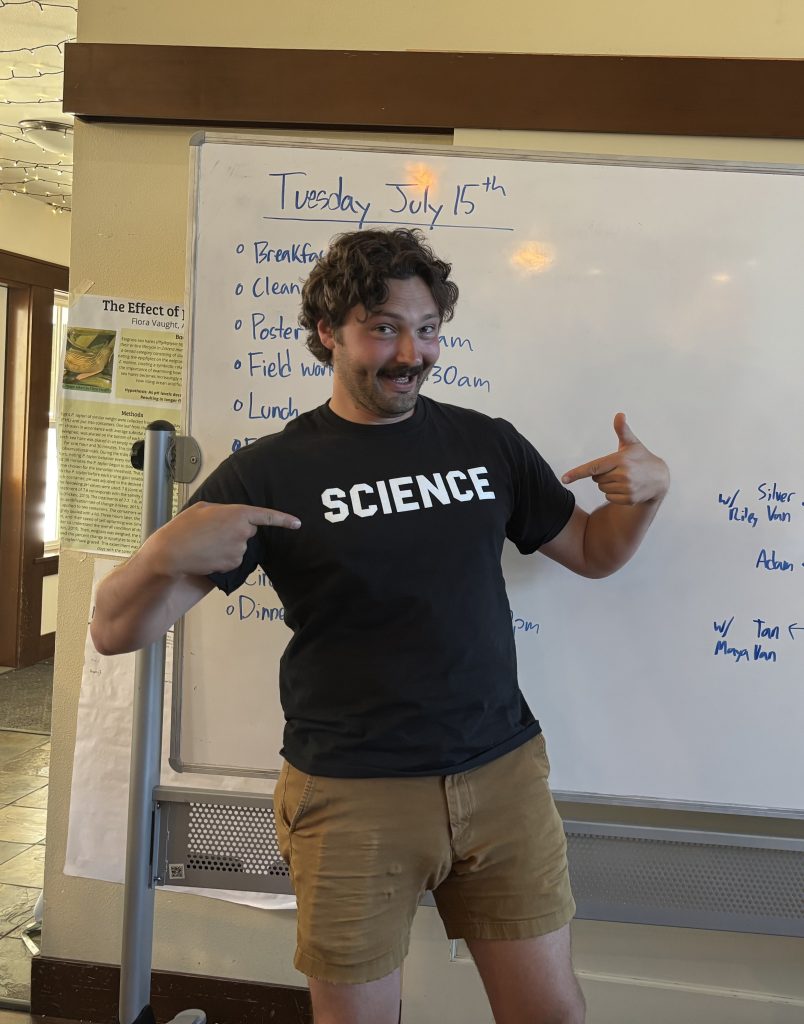
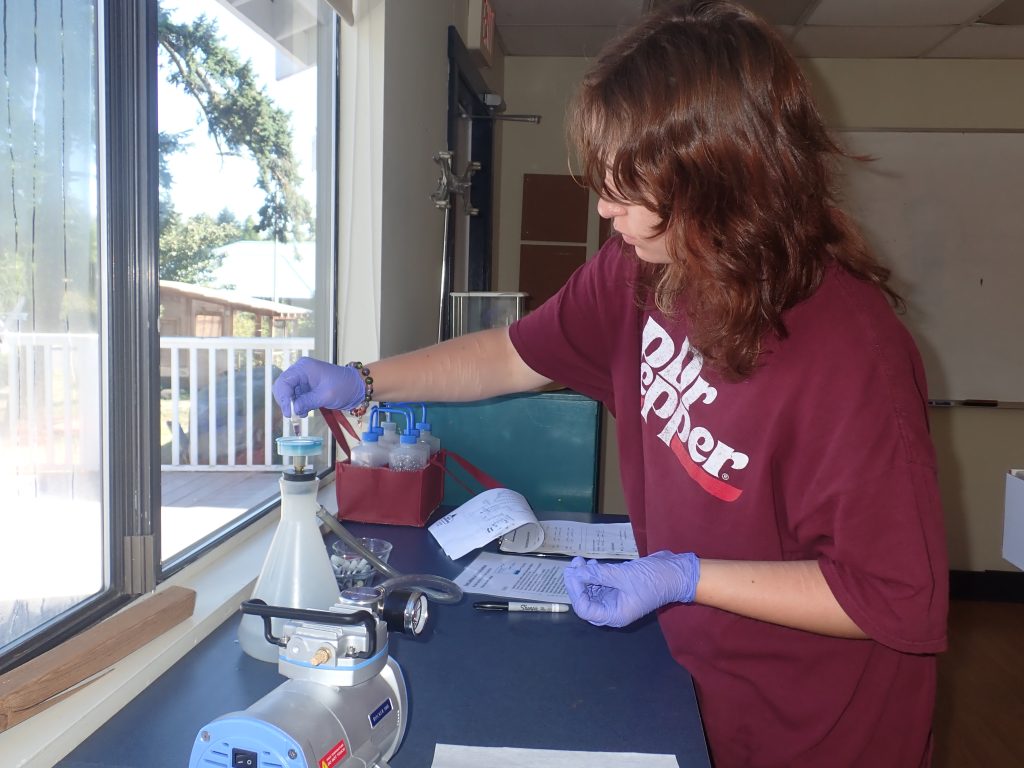
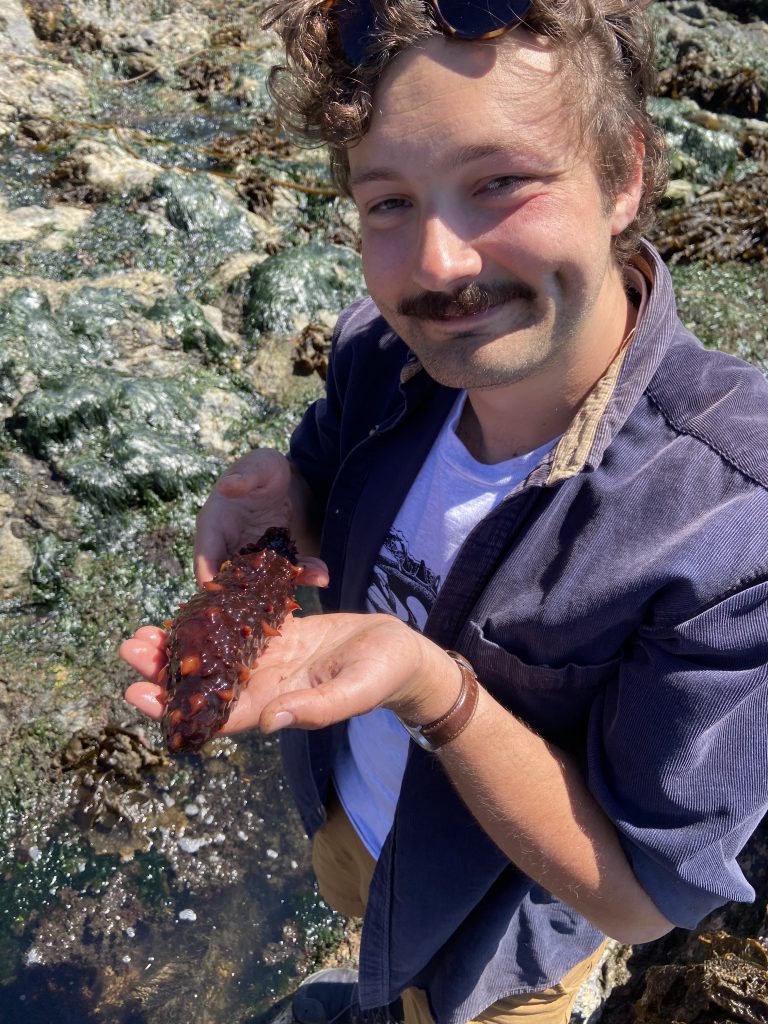
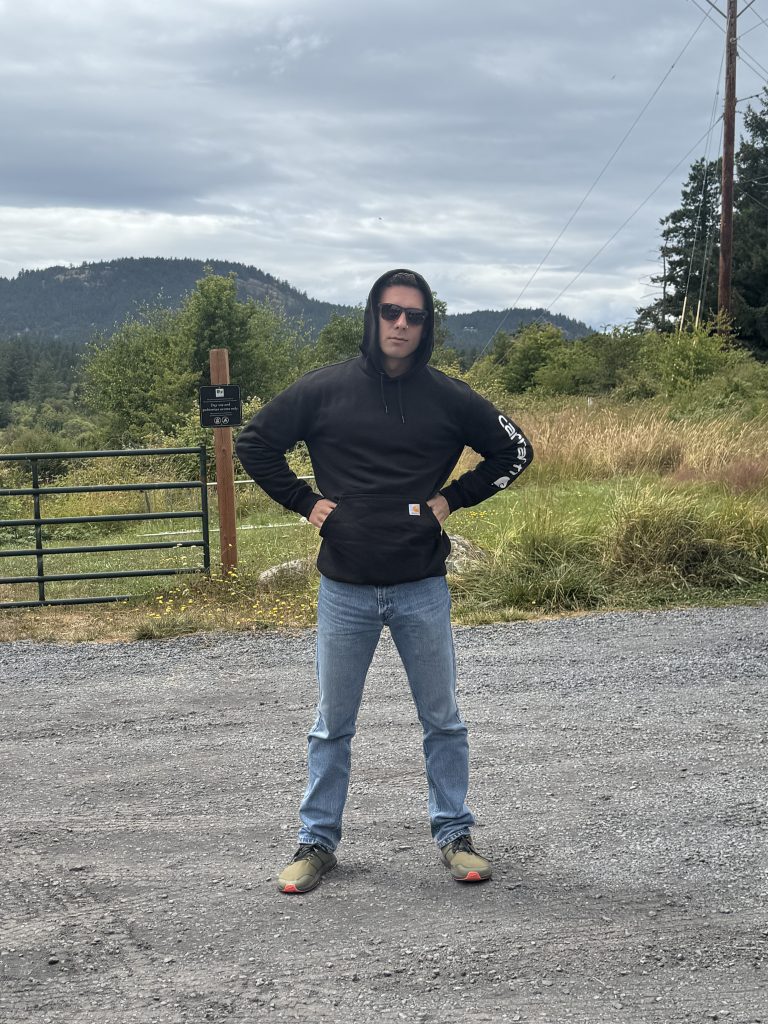
Adam wearing an amazing shirt (photo by Mira)

The morning began–and remained–particularily sunny, setting the mood for a bright day of learning and field work. It was a smooth transition from breakfast into a workshop on the ideal scientific poster. After a session of analyzing student posters and a sporadic seminar of student discussion, the group came up with a list of do’s and dont’s–which we plan to keep in mind for the poster presentation in 9 days.   
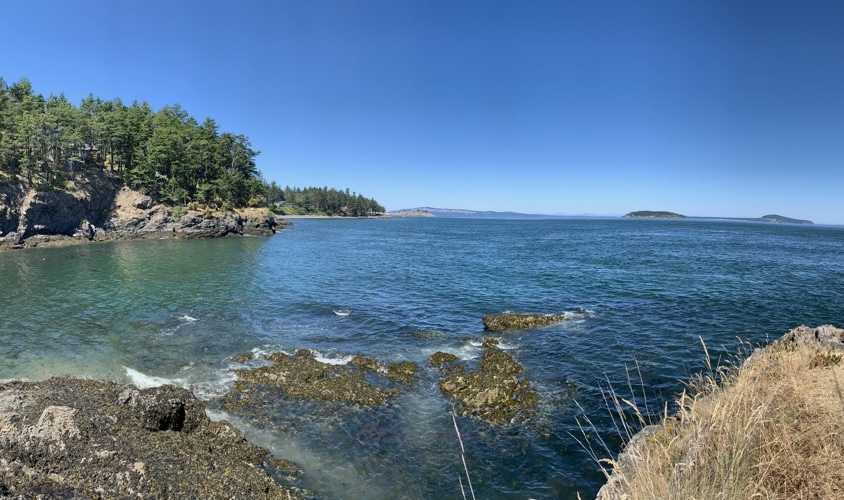
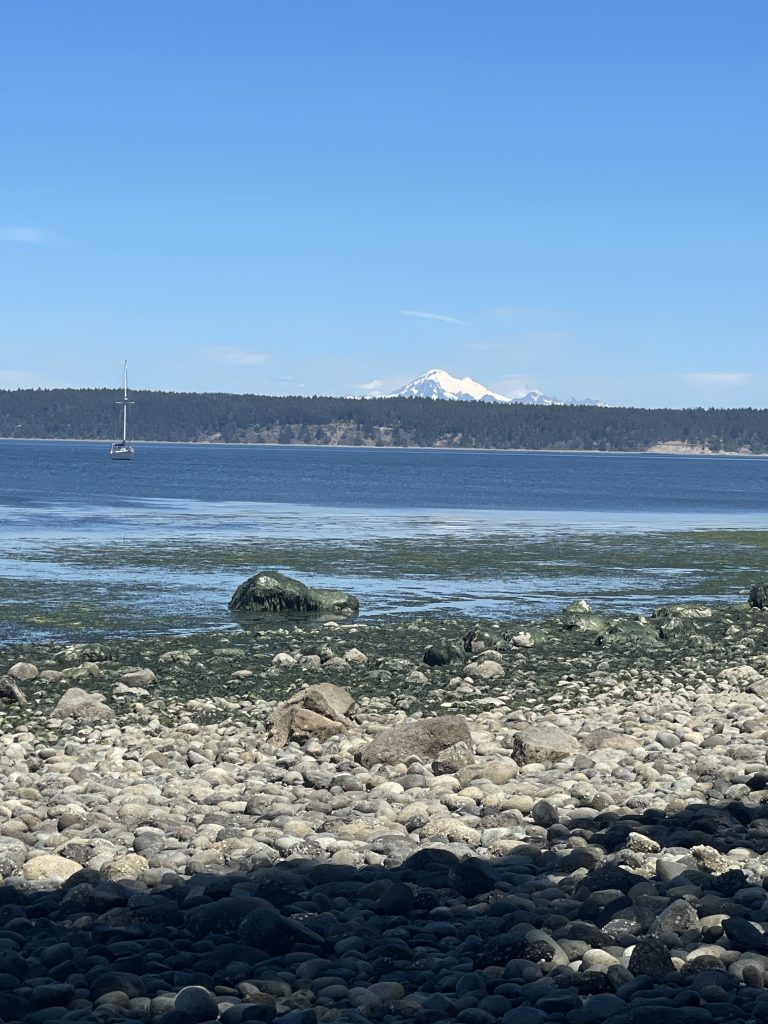
Reuben Tarte (photo by Noam)

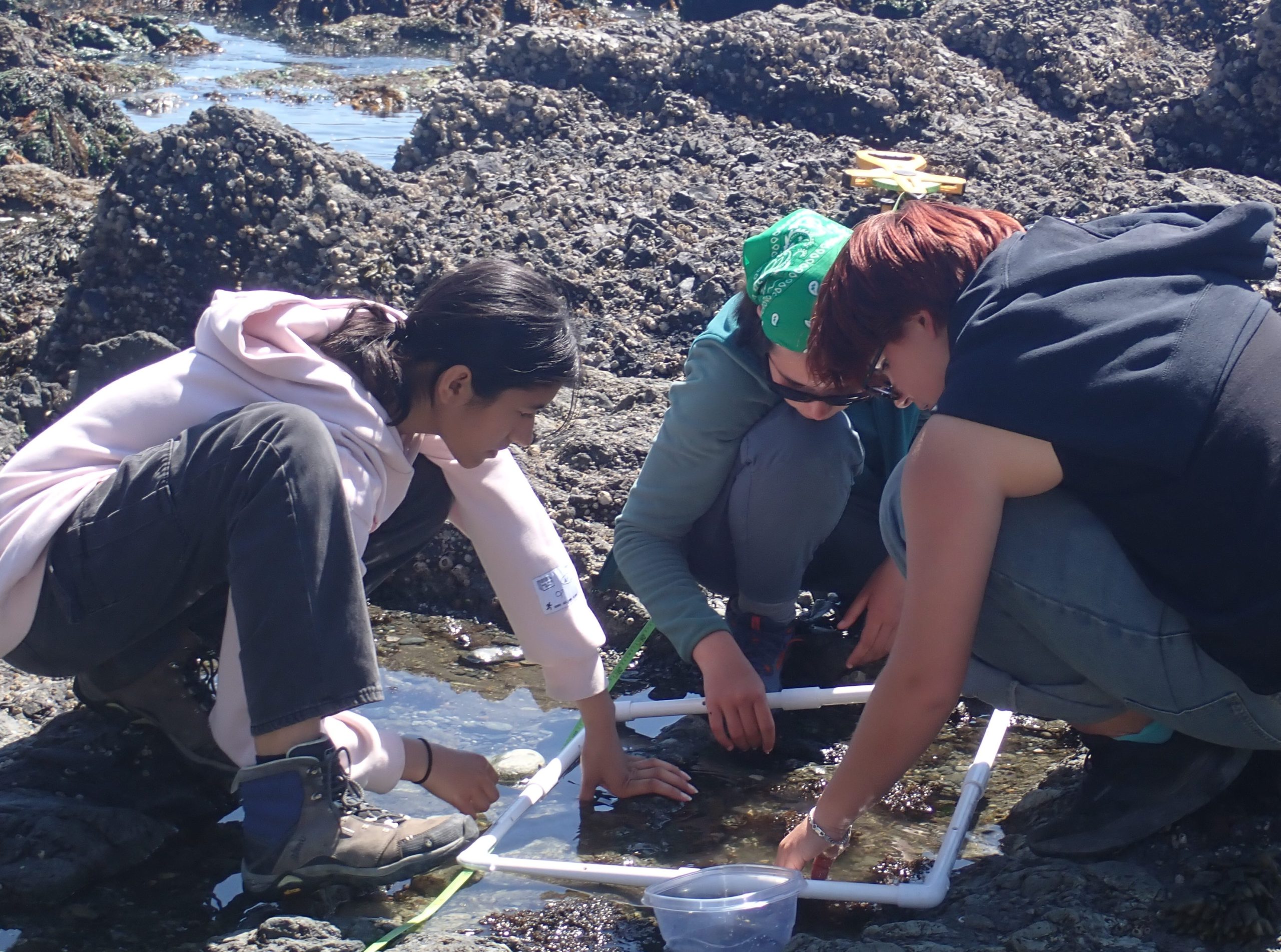
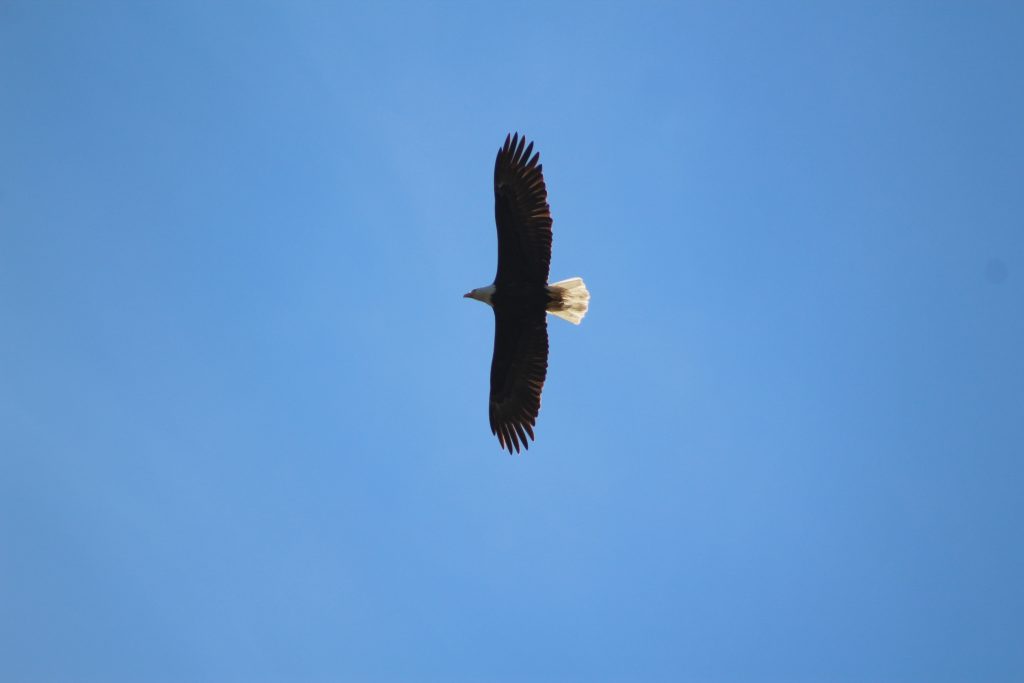
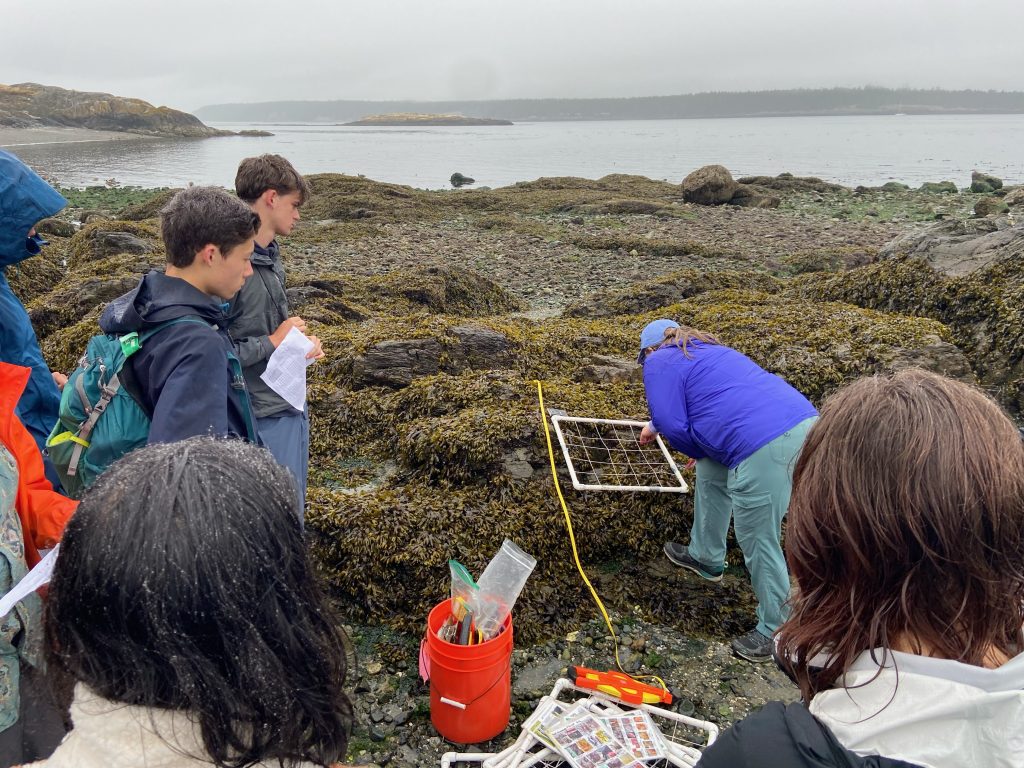
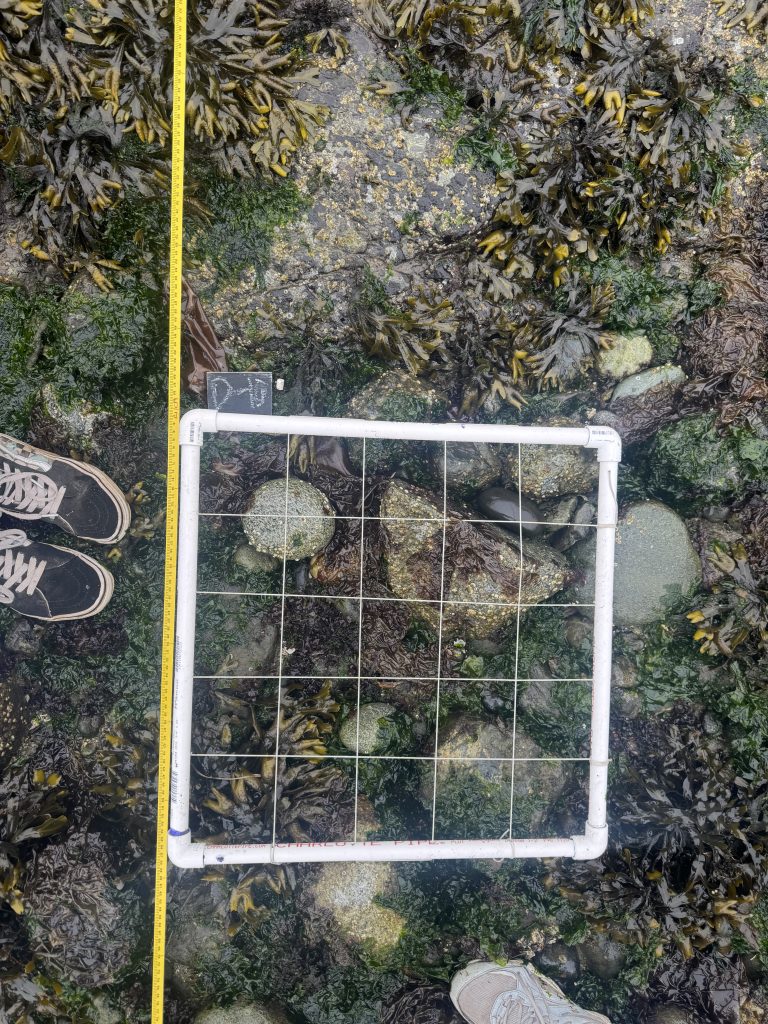
After lunch and a bit of project worktime, the cohort split into several groups to head out to different points on San Juan Island in order to collect data for their research projects. One group of four arrived to Reuben Tarte, a rocky beach with large amounts of seaweed covering the rocks, hills surrounding the water, and a bald eagle perched on an evergreen tree overhead. Two students set out a transect and collected crabs to determine the sex ratio among the population. Another student collected zooplankton from the water and measured the pH to determine pH’s effect on zooplankton. The last student randomly set down quadrats and measured the pH and biodiversity to determine their correlation to each other. Once each exhausted student finished collecting data it was a peaceful ride with Riley back to the dorms. 
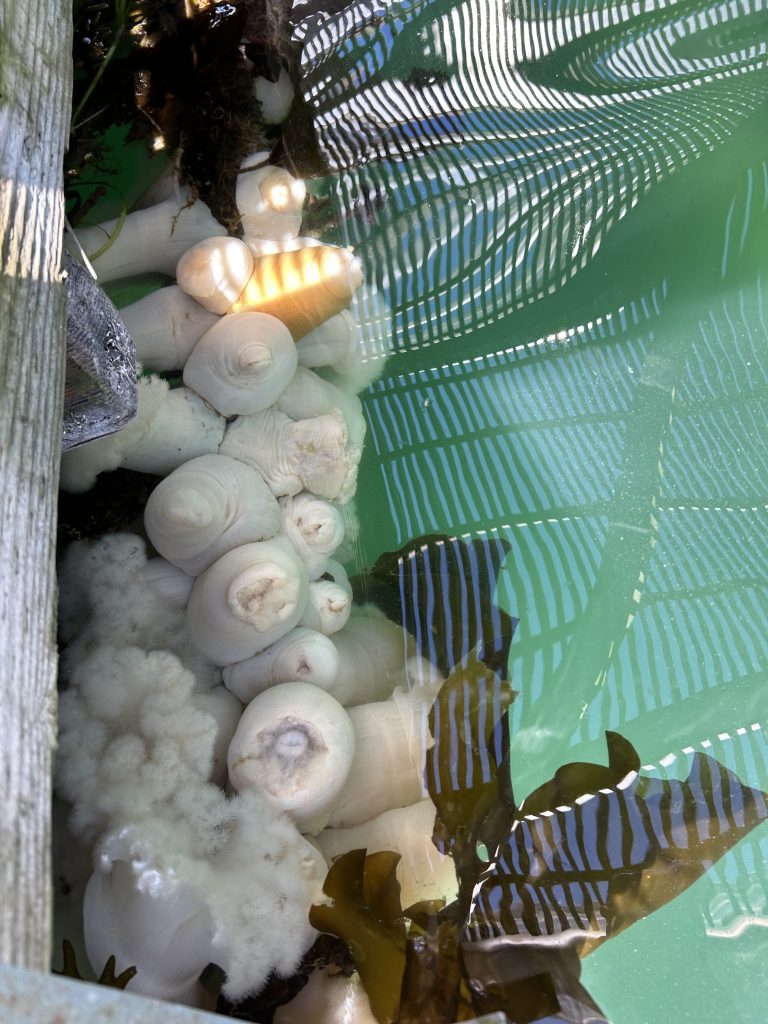
Giant plumose anemones at the Friday Harbor Marina (photo by Harper)

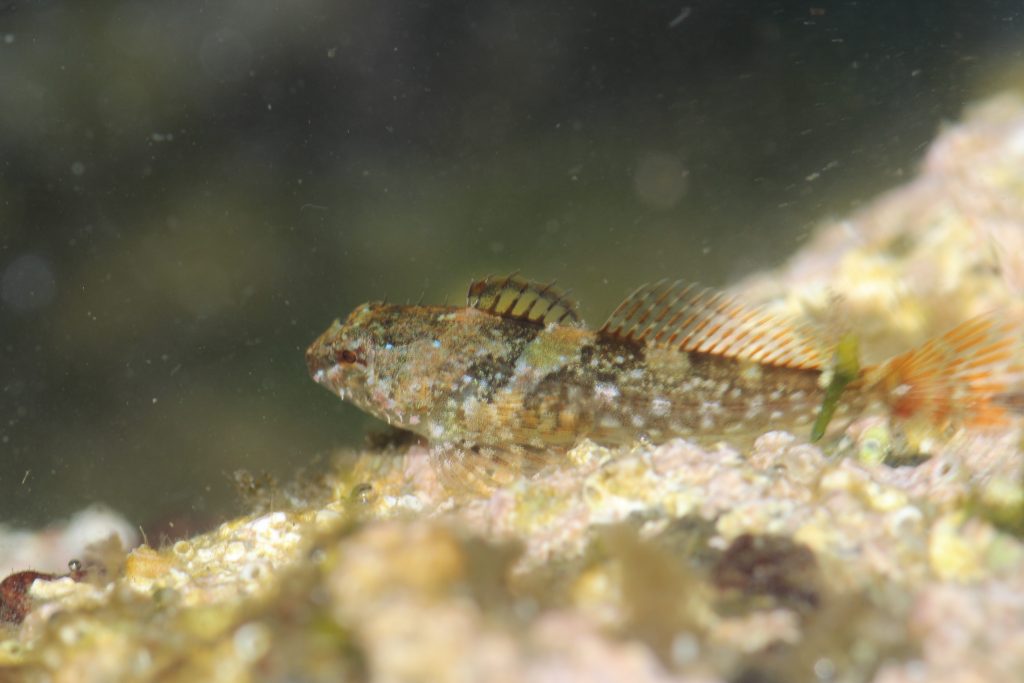
A different group headed down to the Friday Harbor Marina and some nearby beaches. Many projects began to take shape, from examining biodiversity in high vs. low tide areas to sculpin species surveys. One student did a plankton tow for a project on the relationship between plankton present and dissolved oxygen levels in the water, while another student collected water samples to observe how fecal coliform affects fouling communities. Another student was working on a project on how removing algae affects the fowling communities around it. Two students worked with Dr. Amy Cook on observing how Pigeon Guillemot behavior is affected by boat traffic. Eventually, several students headed back to the lab where many fascinating projects were occurring, such as examining species of intertidal flies and seeing how noise pollution affects shore crabs’ ability to right themselves after being flipped over.  
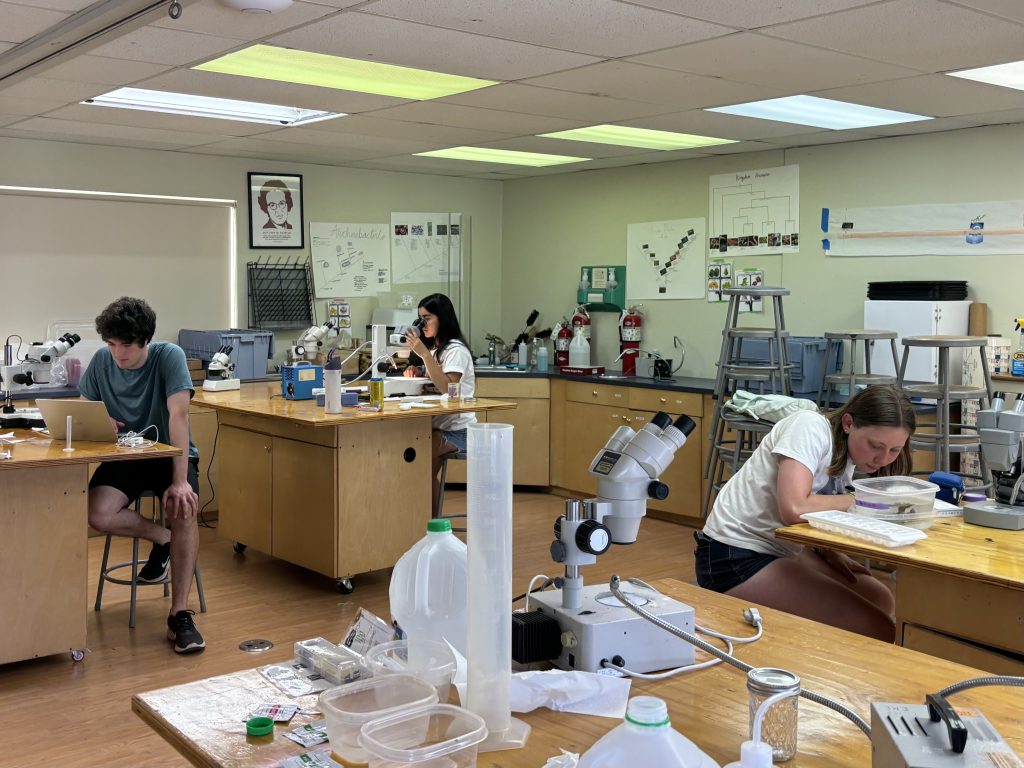
Miles, Hitomi, and Lars working in the lab (photo by Mira)
Mira extracting fecal coliform from water samples (photo by Lars)

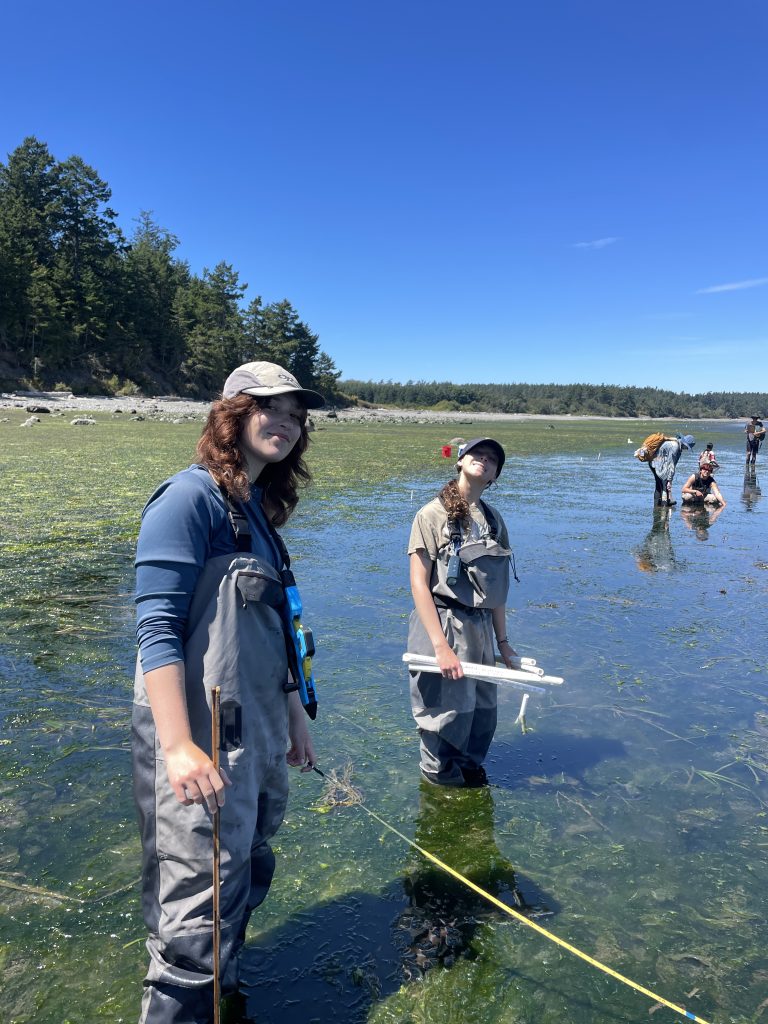
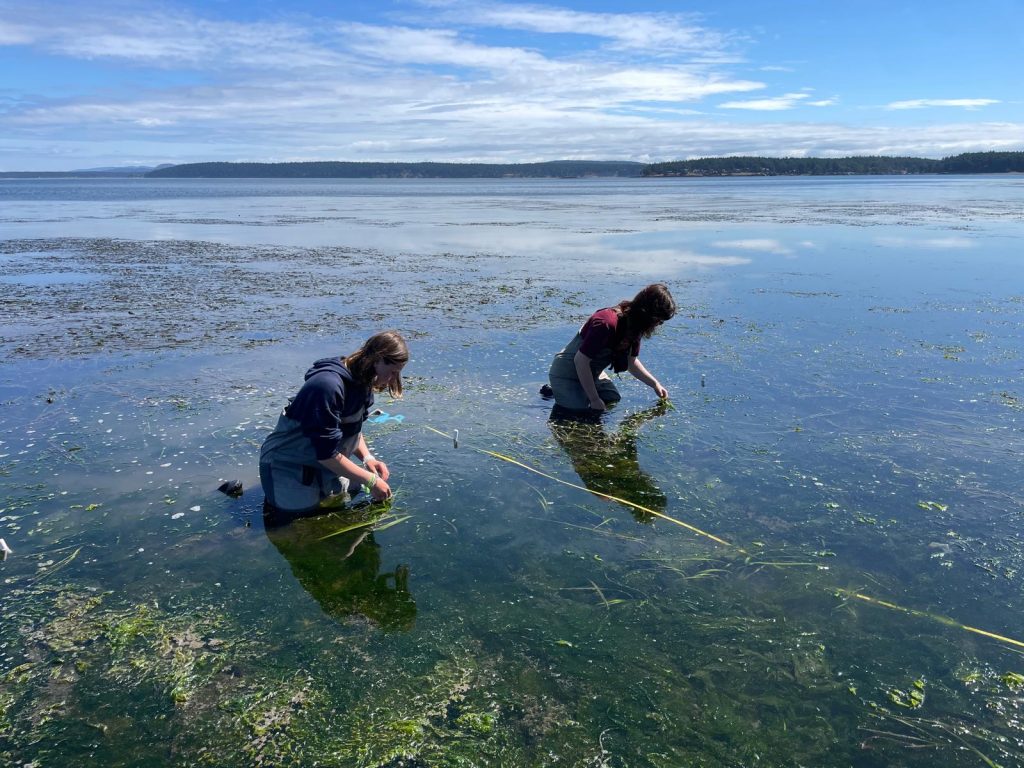
The last group headed down to 4th of July Beach to collect data on eelgrass, a type of marine plant that only grows in soft sediment. They were joined by an additional student who hasn’t received his necessary data from the Whale Museum yet, and was working as a research assistant. One student was working on measuring how the density of eelgrass relates to the distance to the shore. Another student was looking at how harvesting impacts eelgrass, from plots set by San Juan Conservation District. One other student looked at how the amount of flowering heads in an area affects the amount of seeds that appear in a seed core in the same area. Another student was looking into how a variety of climate related conditions relates to the presence and severity of Eelgrass Wasting Disease, while a last student researched how trampling and harvesting eelgrass affects the amount of eelgrass wasting disease. After an exhausting day, that thankfully was more successful than the day before, that group packed up and drove with Maya back to the dorms
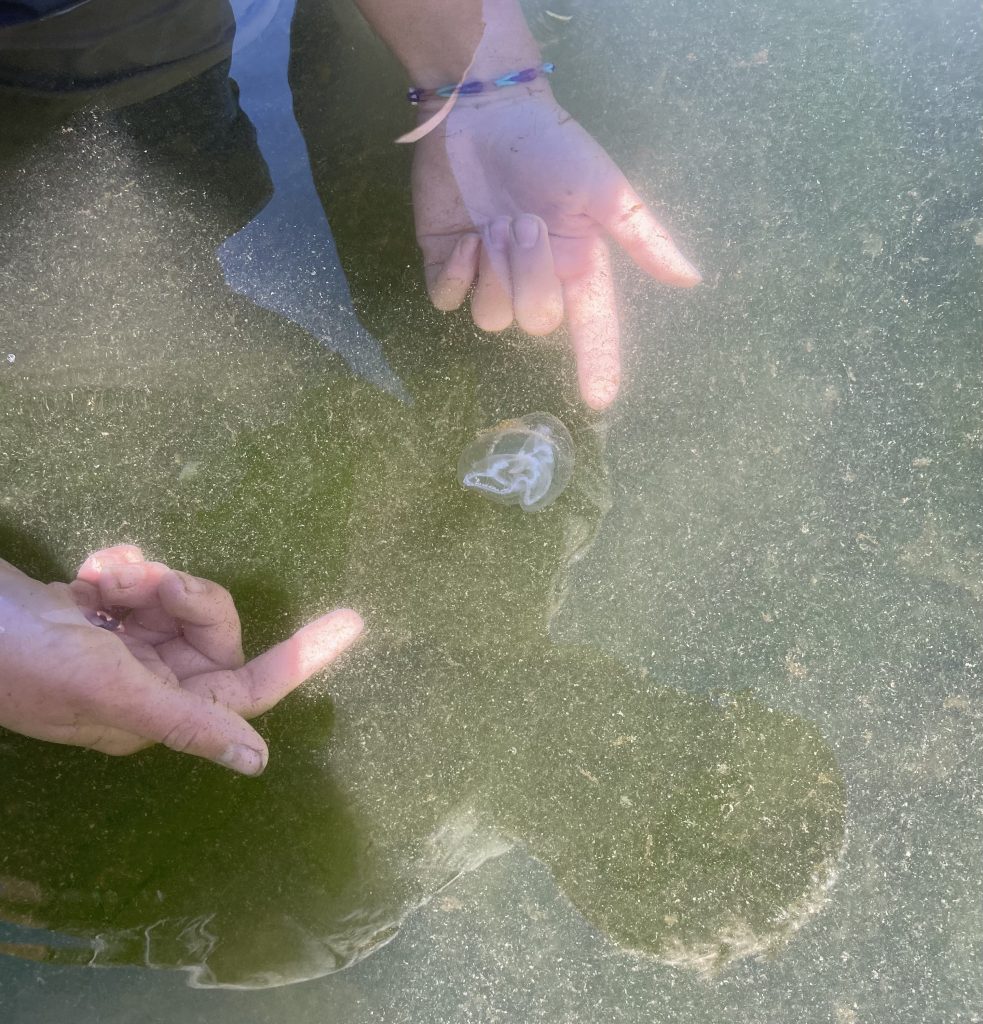
Observing a cross jellyfish at 4th of July Beach (photo by Violet)

At dinner, which was baked potatoes, we were joined by Dr Emily Kane, as well as two of her students, who were with us to talk about sculpin fins and how they remain anchored even through strong tides. After the talk, we then had several hours of free time, to read, watch something, play games, and relax until bedtime.
Day 15: Orca Extravaganza…for Some

Monday, July 14th. By: Lars, Leah, and Miles

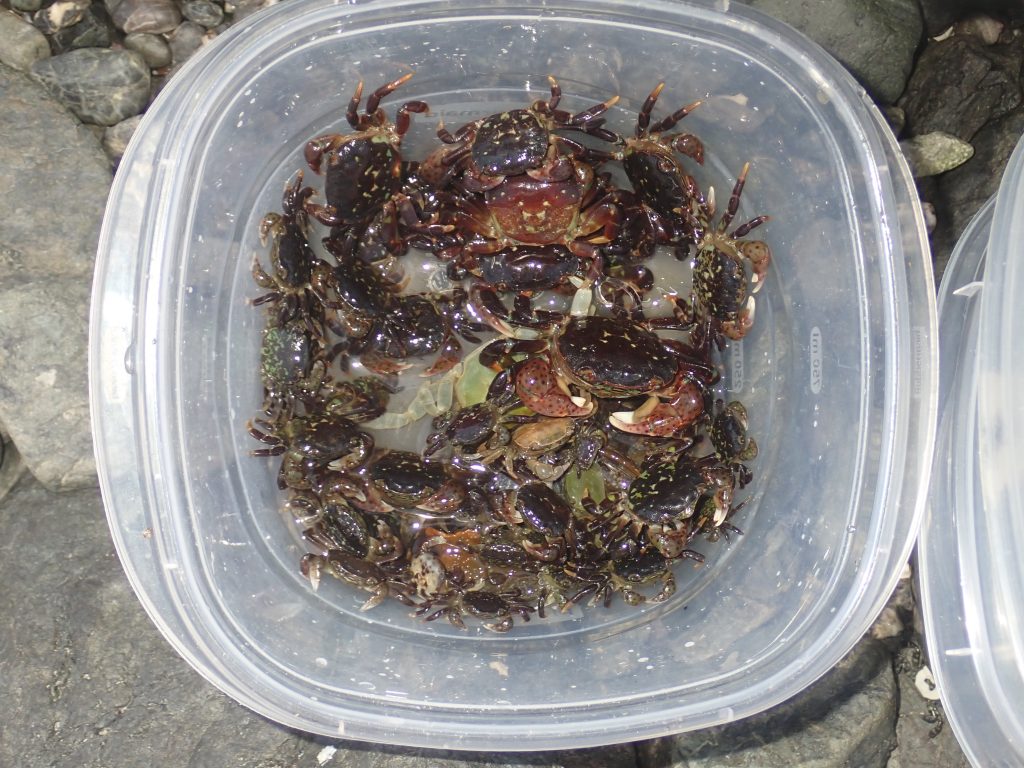
A collection of purple and hairy shore crabs for Anissa’s Research Project (Photo by Lars)

We woke up this morning so excited for a day full of data collection. Today was the first day for most people to collect data for their research projects. But before anyone could get to their destinations, spent an hour and a half doing a deep clean of the dorms, the kitchen, the bathrooms, the floors, the carpets. Basically everything. Cassandra was super proud of the effort we all put into to keep our spaces clean and tidy. It felt satisfying to make our dorm parent proud.

After a serious clean, we each gathered equipment for our data collection: quadrats, transects, calipers, notebooks and pencils, turbidimeters, fly paper, meter sticks, buckets, and hammers. We had a relaxing lunch of leftover fried rice, fruit, and sandwiches. Then we kicked off expiditions! For these past two weeks, we had been working on research, and chores in teams, together. Today marked the first time we were responsible for our own project work to be completed for the sake of our own. The three groups set out; the gold van took people to 4th of July Beach and Cattle Point. The silver van took people to Deadman’s Cove. A third group walked to Friday Harbor Marina and Argyle (a biological preserve next to Jackson’s Beach). 

The gold van set out first to Cattle Point, where it dropped off some people before heading to 4th of July Beach. Data collection at Cattle Point focused on plankton and seaweed diversity.

At 4th of July Beach, we revisited our eelgrass plots to collect data on different aspects of the meadow—pH, amount of Labyrinthula zostera, etc.—and how it compared to our past data.

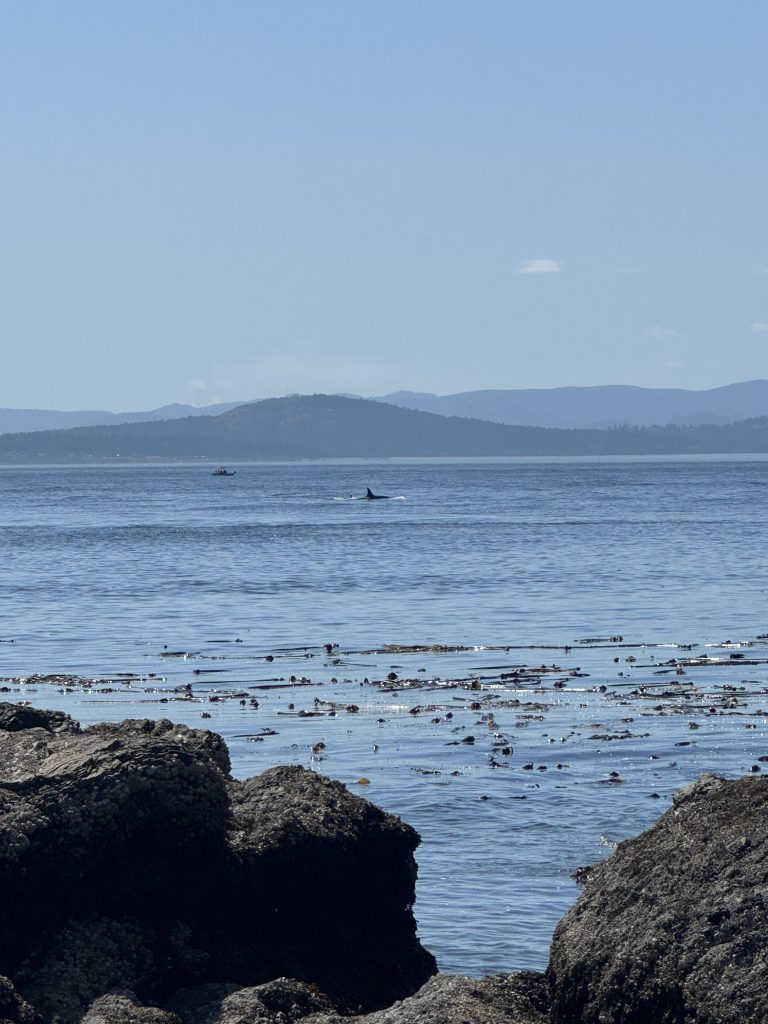
At Deadman’s, we collected data on the correlation of pH to marine invertebrate diversity, studies on sex ratios of crabs, and the diversity of flies in the intertidal. Towards the end of our data collection, we were visited by a beautiful pod of orcas. Over the course of 20 minutes, we witnessed at least 20 orcas including many females, a mother with her calf, and a massive male with a dorsal fin at least 5 feet tall.

When we got back to the dorms, there was a fair amount of jealousy and anger from many over missing orcas. Despite some of us having the opportunity to celebrate World Orca Day in more fortunate ways, we all reflected on the impact these beautiful creatures have on the world and cultures around us. They have played a critical role in countless lives for centuries and will continue to do so. The calf we spotted is the next generation of hope for the species many cherish dearly.

Theres a chance we may have seen the J pod of the salmon eating Southern Resident Killer Whales. If your interested in learning more about how you can make an impact on our endangered Southern Resident Orcas, we recommend looking into this thought provoking website by NOAA: https://noaa.maps.arcgis.com/apps/Cascade/index.html?appid=3405e6637bf74e998d4ebe992c54f613

Mother Orca and her calf (photo by Lars)

While we were watching orcas, the group at 4th of July Beach was busy rummaging through turbid water, trying to count eelgrass stems and dealing with the frustration of every pH detector failing due to corroded batteries. When challenges hit, we adapt quickly—getting smarter and working harder to push through.

Meanwhile, at Friday Harbor Marina, others were monitoring pigeon guillemots and observing their reactions to heavy boat traffic. By mid-afternoon, we regrouped with our equipment and, of course, shared the story of our incredible orca sighting—once again met with plenty of jealousy.

We then started writing this blog and are expecting a delicious dinner of pasta with a choice of pesto or tomato sauce, a side of chicken or veggie burger, salad, steamed broccoli, and a dessert of watermelon, grapes, and raspberries. After dinner, we will share out about how our data collection went and what our research question is. And there will undoubtedly be more outrage over our orca sighting.

We have 9 more days for us all to see the magic that Orcas bring to when you spot them off shore!

Vidita, Isabelle, and Anisa looking for crabs in a quadrat (Photo by Lars)

Day 14: Kickass Eelgrass!

By: Eden, Trevor, Hitomi, and Harper

Eelgrass field work (photo by Maya)

We woke up, as usual, to our breakfast buffet set out by the breakfast crew. Everyone ate their various breakfasts and packed our lunches for the day. We rubbed our bleary eyes and got ready to work. Instead of going into the field, we started our day with a couple of hours of dedicated project time done from the comfort of our dorm rooms. People decided on specific research questions and began background research. Some even wrote out their specified methods, getting ready for the field data portion of our day. 

View from 4th of July Beach (photo by Maya)

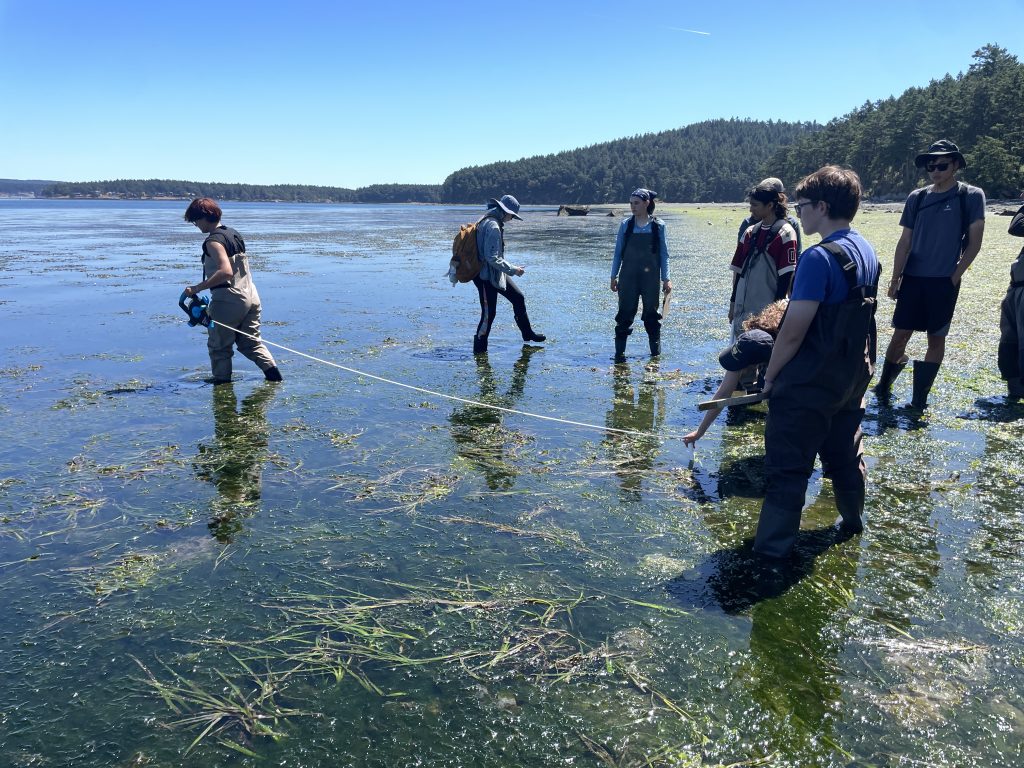
After planning out our projects in the morning, we split up into two topic-based groups. One of these groups went to help Sage with her eelgrass data collection, which is the one I decided to join! We spent about four hours at Fourth of July Beach, collecting statistics about eelgrass populations within 3-by-8 meter plots. These plots (approximately 8 in total) were divided into harvest and observation plots, with the harvesting plots requiring an additional step before completion. We would trample all the plots by crawling through each one on our hands and knees, but the harvesting plots had half of the flowering heads (those with seeds) taken for replanting. Once we were done helping Sage with her data, those of us with eelgrass-related projects got to start our own data collection! At the end of the session, we all (very tiredly) walked back to the van to get to our next activity.

Eelgrass field work (photo by Maya)

Those who chose to spend their time clam digging headed over to Argyle Lagoon with Riley and Adam. We first enjoyed lunch on Jackson’s Beach with the beautiful sunny weather! After relaxing for a bit, we split into groups and dug up clams from first the high intertidal zone then low intertidal zone, all in search for Soft-shelled Clams, Little Neck Clams, Bent-nose Clams and Varnish Clams. After recording the data needed, we returned all but the Varnish Clams (as they are an invasive species), so instead we took them back to the lab for further research.

Varnish Clams (Photo by Harper)

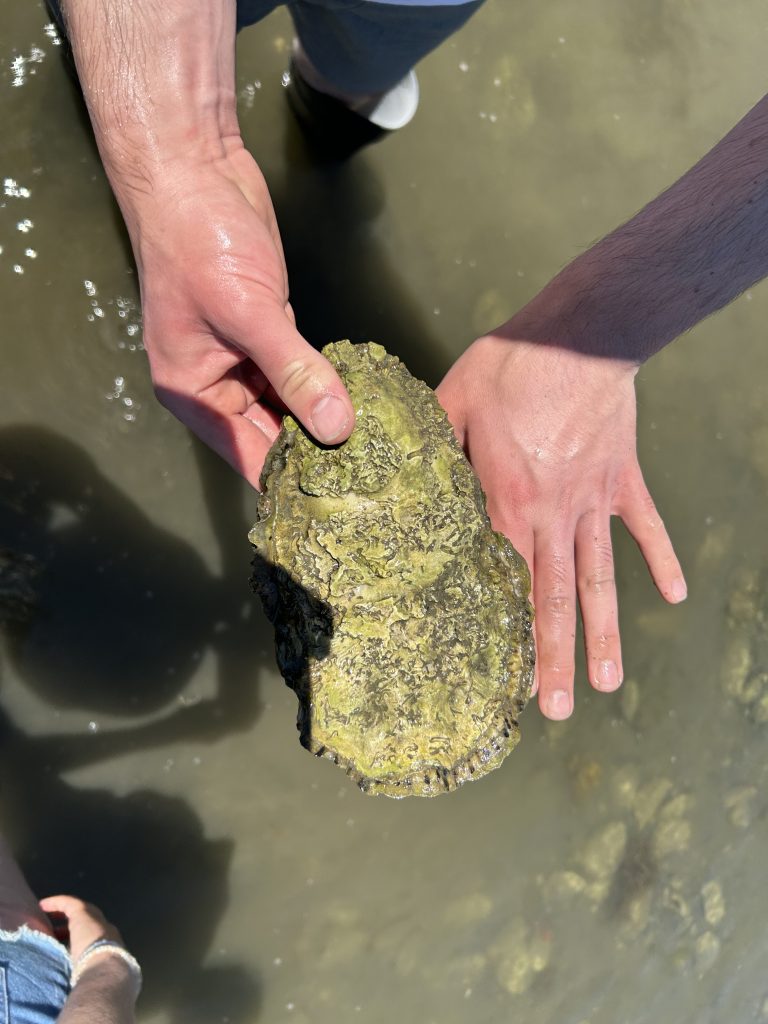
After fun clam digging, we returned the gear to the van to dry and in the meantime searched for sand dollars in the nearby waterway. Along with sand dollars we discovered a very rich ecosystem with HUGE (possibly ten year old) oysters, mussels, chitons and crabs! Upon returning from our clam adventures, Riley and Adam helped us finalize our project plans for the official start of our research tomorrow!

Giant Pacific Oyster compared to Miles’s hand (Photo by Harper)

After we all returned to the dorms to eat dinner, we all settled down and joined a Zoom call with our guest for the evening: Ms. Megan Cook. Megan works as the Director of Education & Outreach at the Ocean Exploration Trust and she is currently serving as the Communications Lead aboard the Exploration Vessel (EV) Nautilus. Megan graduated from Oregon State University (SKO BEAVS!!) in 2009 with a focus in marine biology and chemistry, after which she worked various jobs before graduating from Duke University in 2020 with a master’s degree in Environmental Leadership. Currently, the EV Nautilus is stationed in the Solomon Islands mapping a deep sea region known as “Iron Bottom Sound” which has served as a graveyard for countless World War 2-era vessels. Though sonar has been essential in creating these maps, Megan and her crew also utilize several mechanical drones that allow them to visually survey the seafloor, these being the Uncrewed Service Vehicle (USV) DriX and the Remotely Operated Vehicle (ROV) Hercules. According to Megan, only around 26% of the ocean has been mapped with modern technology while less than 0.001% of the deep sea has ever been seen with human eyes!

Social media links for Nautilus Live Project (Photo by Harper)

After saying goodbye to Megan, we started to prepare for bed, wanting to get sleep for the day ahead in which some of us would begin conducting research for our independent projects…

Day 13: Structured Recreational Time?

By Anisa Singh, Orrin, Isabelle, and Violet

Saturday, oh Saturday, how I love you so… (hopefully)

We all woke up this morning with bright plans in mind, as today was set to be a chill day. Many of us had stayed up late watching movies and playing cards—some even played games until the wee hours of the morning. So, when a few of us slept through our alarms, it was hardly a surprise. A groggy start eventually gave way to a calm morning, followed by some productive project work and a trip to survey data on pigeon guillemots at the Friday Harbor Dock.

Photo by Orrin

Six of us joined this outing, eager to dive deeper into behavioral science and explore how field scientists collect data. One of our goals was to gather information for our upcoming poster projects. For others, it was a chance to see whether a project about pigeon guillemots was the right fit for them.

Photo by Orrin

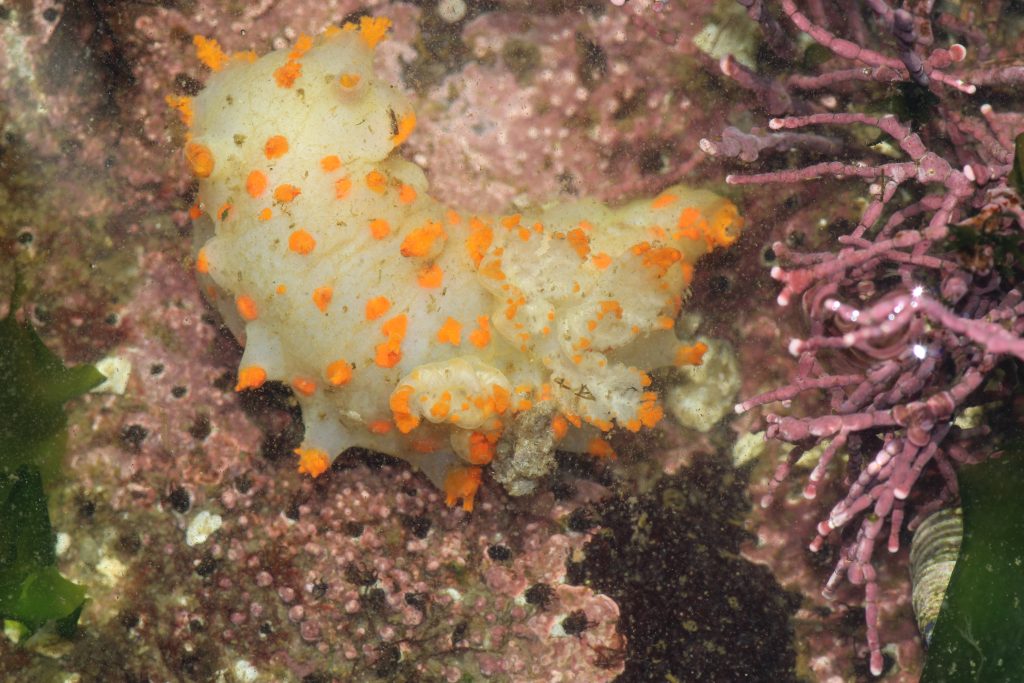
After a couple of hours of research and work, it was time for lunch. We packed into the van and headed to Deadman’s Beach, where we enjoyed our meals with a stunning ocean view. Afterward, we went tidepooling and discovered all sorts of marine wonders—giant nudibranchs, huge chitons, colorful sea stars, countless crabs, and many other breathtaking organisms.

Photo by Orrin

On the way back, the next thing on the schedule was something mysteriously titled “Structured Recreational Time.” This, understandably, raised many questions and even a little apprehension, which were voiced repeatedly to our van driver, Maya. Upon returning, we learned what it really meant. Though some of us expected an afternoon wandering through a sculpture park–which didn’t exactly spark a ton of exitement–we were happily surprised to find out we were going back to Roche Harbor (the same place we visited earlier for kayaking).

There, many of us grabbed ice cream, wandered through the harbor shops, and enjoyed the lively energy of the area—including a very loud live band playing for passing pedestrians.

Photo by Asher

After exploring for about an hour, we returned to the dorms to check in, prep dinner, and enjoy some free time. Soon, we were seated around the dinner table with plates of fried rice, joined by Dr. Anna Shcherbina, an immunologist who is now focused on molecular biology.
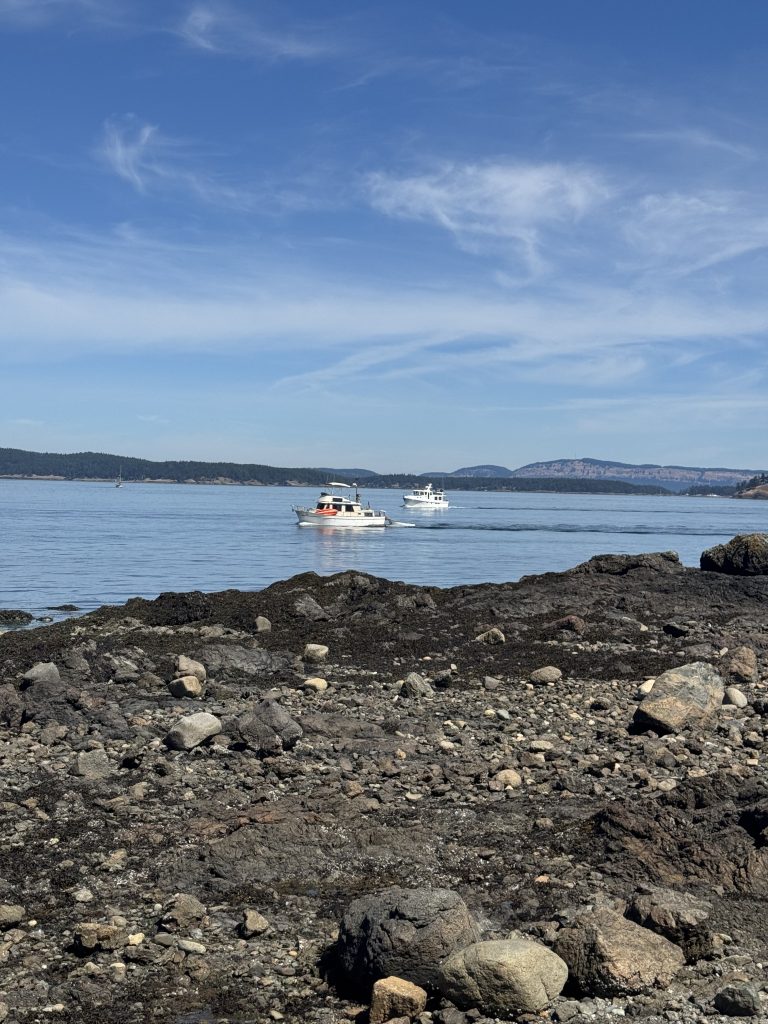
After dinner, we dove into a learning session focused on the intersection between marine biology and immunology while discussing how different scientific fields can play very different yet vital roles in various aspects of biology.

With our heads full of new knowledge and inspiration, we split off for nighttime activities—some continued card games, others watched movies (like Maze Runner), and a few people crushed their friends in intense chess matches. Excited for the next day, we eventually wound down and drifted off to sleep.

Day 12: Sealgrass

Thursday, July 10th, 2025; by Asher, Mira, Noam, and Vidita 

Lars and Mira trampling eelgrass (Photo from Maya)


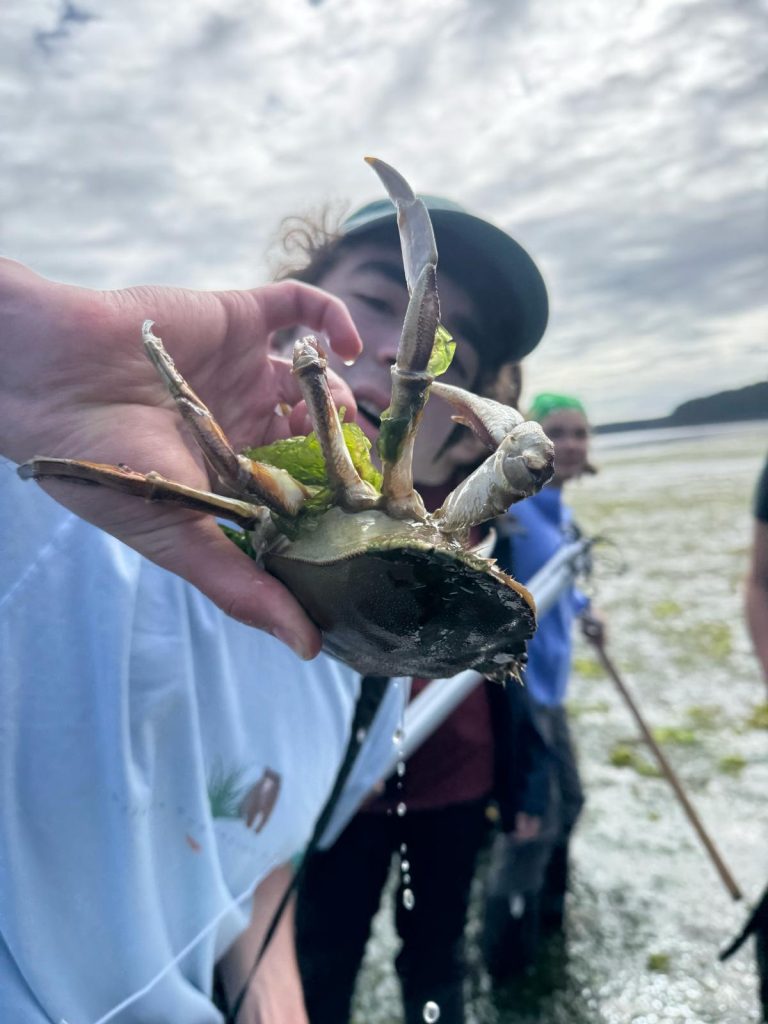
Today we were thankfully back to waking up at our regular time. We had breakfast at 8:00 and headed out a bit after 9:00, returning to 4th of July Beach to do an eelgrass survey! We were helping the San Juan Conservation District, as their eelgrass conservation crew is only two  people (Mitch McCloskey and Sage, who we had over for dinner last week), making it difficult for them to get work done quickly. While there, we made note of the population of flowering heads and did several treatments to determine the effect of harvesting. We also saw many megafauna, including a giant dungeness crab, many shore crabs, and several species of bird.
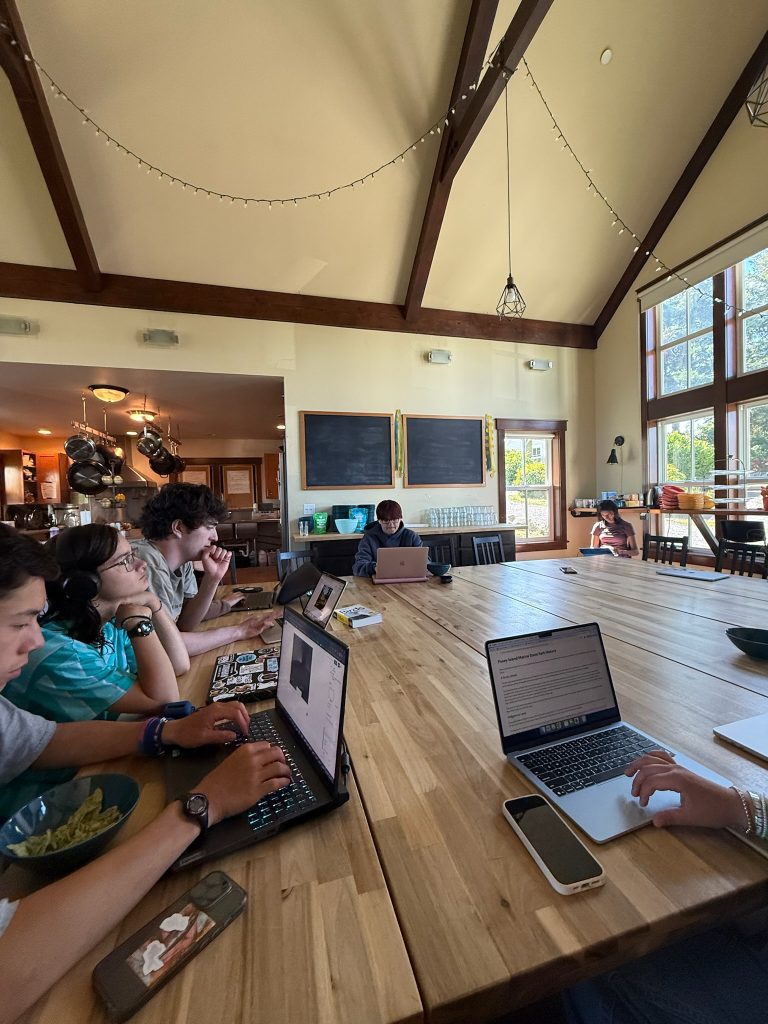
Miles holding a Dungeness crab (Photo from Orrin)

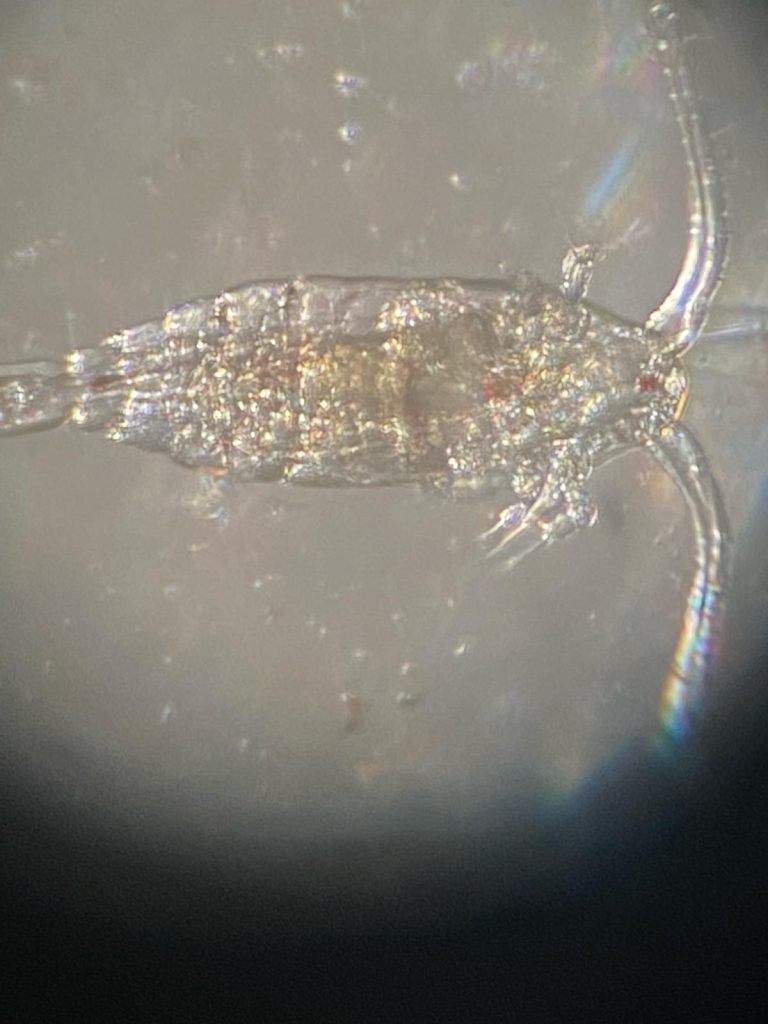
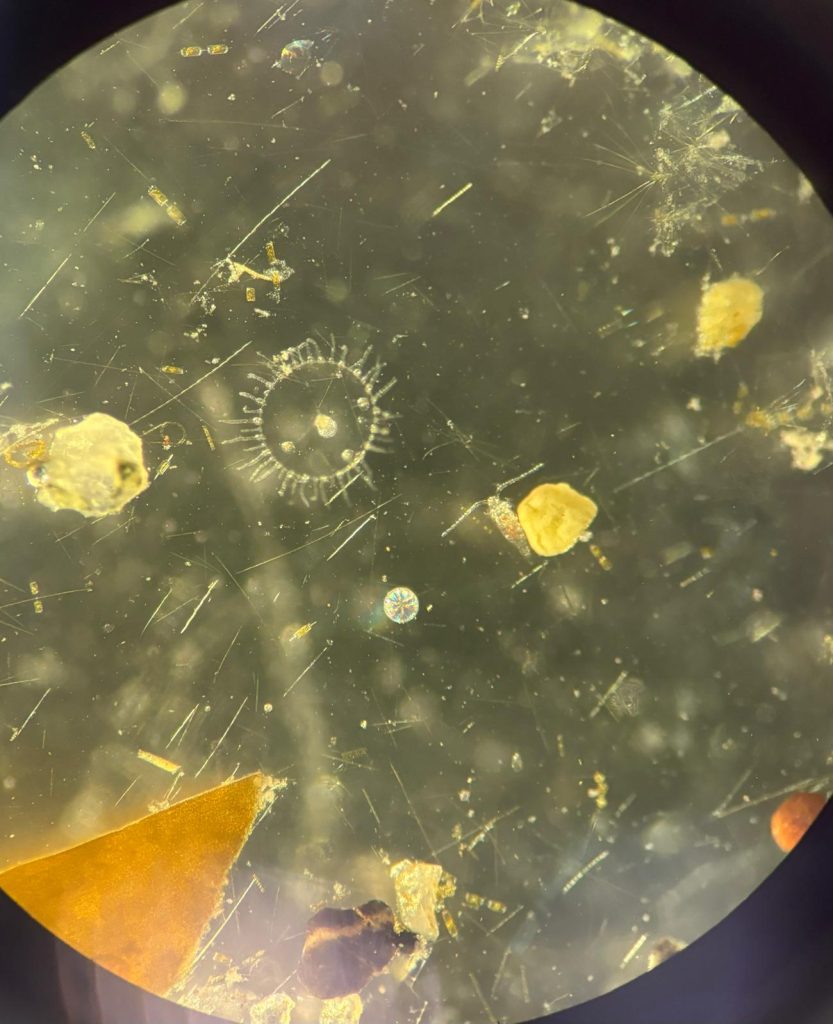
We returned to the dorms for lunch after a brief detour to look for orcas that we tragically did not see, then headed out again to pull in plankton down at the marina and examine it under our microscopes. We found many types of zooplankton and phytoplankton, including baby jellyfish and some krill. Although the lab was rather hot, it was worth it to observe these fascinating organisms.

A copepod in the genus Euchaetidae (Photo from Miles)
A zoomed out microscope, showing many different types of plankton (Photo from Mira)

After free time and dinner prep, we had dinner with Jess Farrar, the research director at the Friday Harbor Whale Museum. She gave us an interesting lecture about her journey into the marine science world and pinniped facts. Some highlights include smiling at cute baby seals, learning about opportunities to contribute to The Whale Museum exhibits, and the entire room gasping at the story of “Hoover the harbor seal” who imitated his owner’s thick New England accent. We ended the presentation with a round of applause and several more questions.

Day 11: Salish Sea Sciences Gets Tangled in Seaweed Science!

Wednesday, July 9th, 2025. By: Lars, Miles, and Leah

Dr. Katie Dobkowski explaining how to properly conduct the seaweed surveys (photo by Miles)

Our day started out at an ungodly hour .. 7 am! We had to get up and out the door by 8 am to catch the low tides to for our surveys. We were also charmed by the piercing winds on the coast, a kind drizzle from the sky by mother nature, and the overall dewy weather. Despite all odds against us, many of our spirits remained lifted!

Seaweed quadrad (photo by Lars)

We started our surveying with a warm up led by Dr. Katie Dobkowski and her undergraduate research assistant Gabby. They asked us to walk arms length apart, in an even line down the beach for 1 minute. Searching intensely for crab molts. The goal was to understand weather any of the crabs living in this area were part of the invasive green crab species. We did a total of 3 of these walks, finding many crab molts varying in size along the way – none were green crabs! Currently, European Green Crabs are considered one of the most invasive species in the marine environment. Efforts from university researchers, and state researchers are coming together to prevent the spread of this species into the beautiful marine ecosystem surrounding the San Juan Islands. “Green crab could potentially damage Alaska’s multi-billion dollar fisheries industries, especially for salmon, crab, and mariculture operations.” (NOAA Alaska Regional Office, 2023)
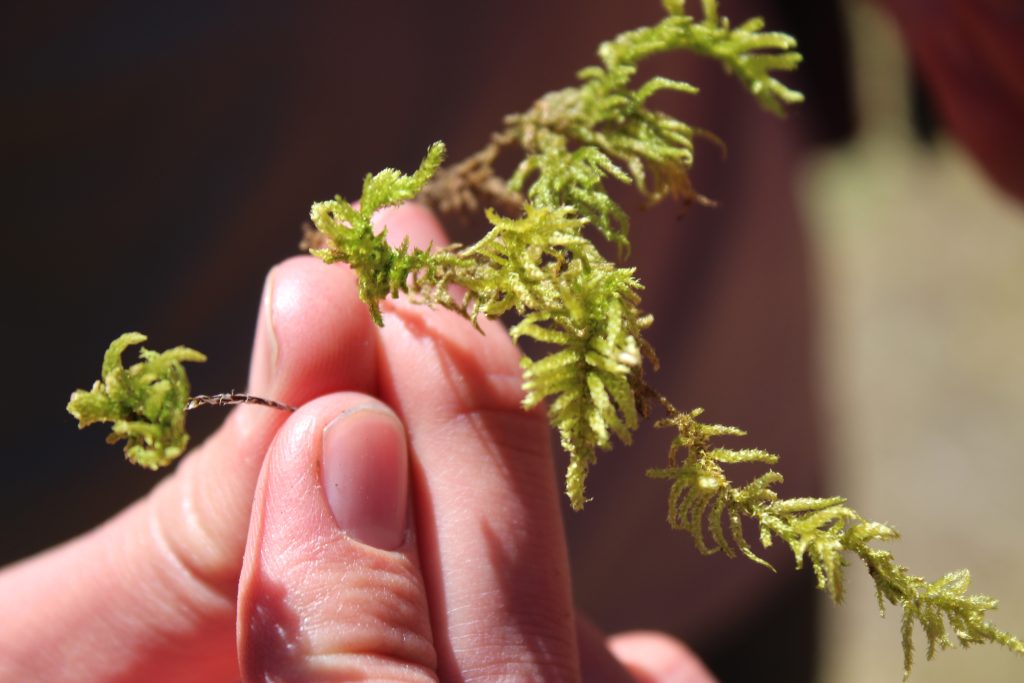
Continuing on with our deep dive scientific studying, we moved onto instruction and participation in a continuous survey Dr. Dobkowski keeps up on seaweed species on Cattle Point. We scaled down the dangerous-ly slippery rocks COVERED in seaweeds of red, green, and brown. Our quadrads were used to identify the various species within them. Our groups identified lots of rock weed, rusty rock, and Turkish towel. We layed out our measuring tape from the sector identifier at the top of the rock, and laid a quadrad down at each even meter on the line. Based on speed, some groups did many quadrads while some only completed one. On our survey sheets, we would make note of many things, most notably how much of the identified species of seaweed was identified within each section of the quadrad. Some sections were identified with having a 5 level, or 50 to 100% seaweed within the section. Others were identified with 1 or 0, 5% to 0%. Feeling pretty accomplished, we spent some time reflecting on our work with Dr. Dobkowski spotted many foxes and retreated to our warmer vans.

Driving to Lunch at Jackson Beach (Photo by Miles)

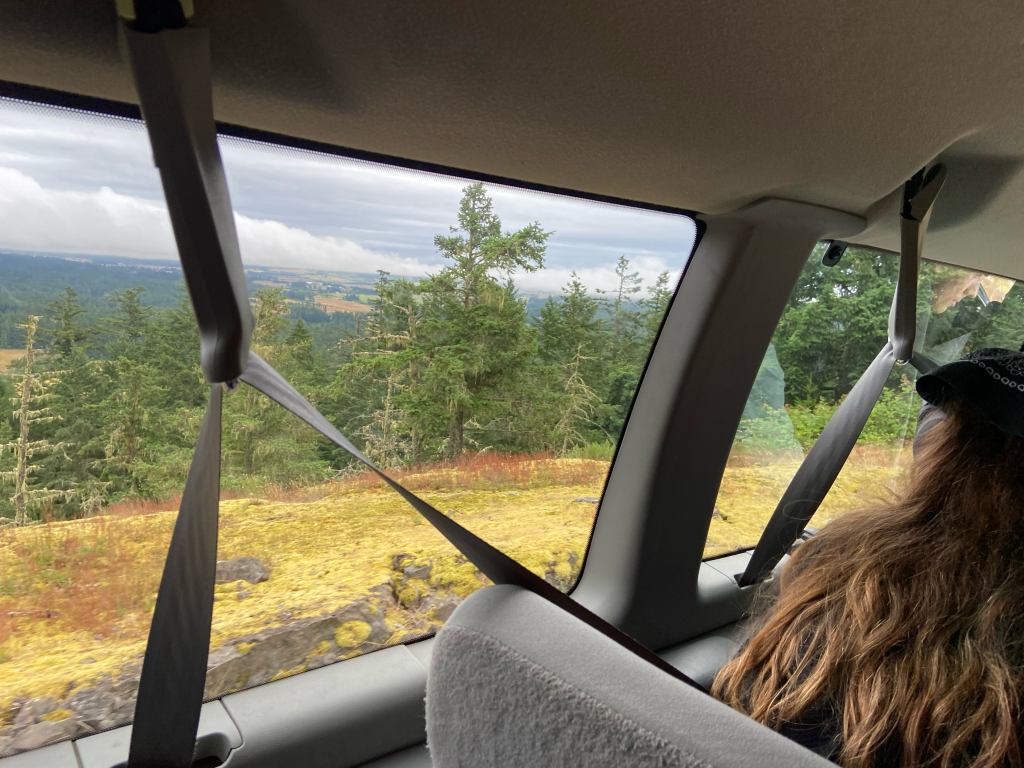
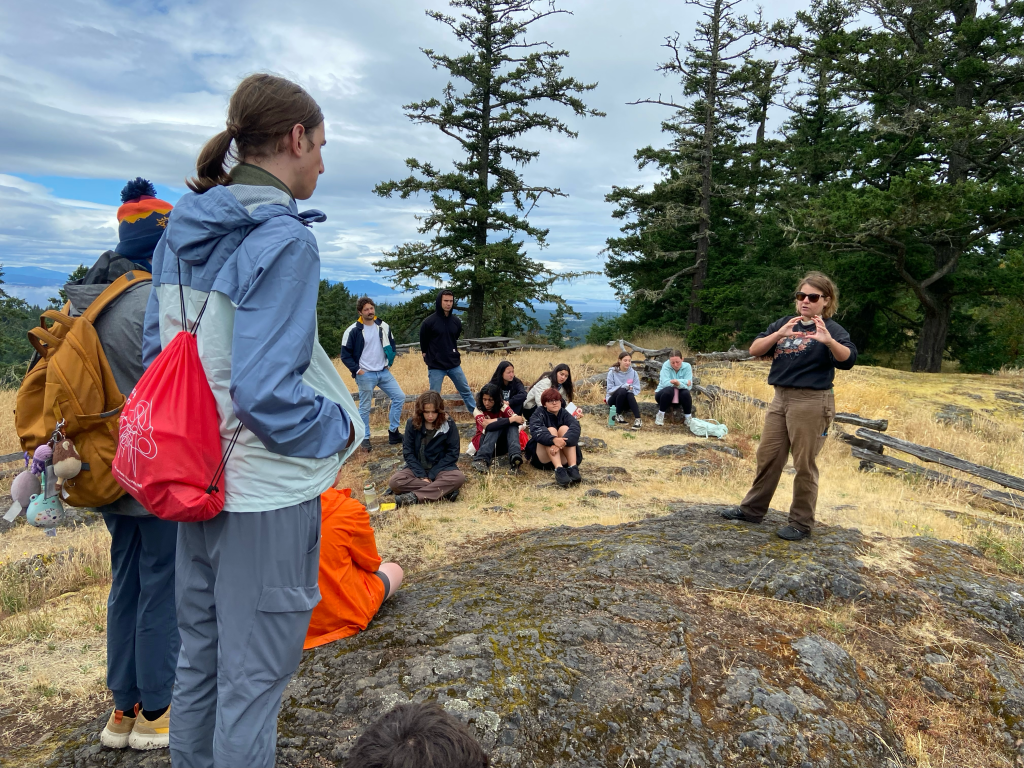
We stopped at the lovely Jackson Beach to get a quick bite and rest our bodies and minds before returning out to the field. While at Jackson Beach, we met more scientists from the Washington Department of Fish and Wildlife attempting to trap our enemies, the European Green Crab. Next, we slid on over to Mt. Grant, and met up with the wonderful Shauna Barrows from the San Juan County Land Bank. She shared some thought provoking insights on the local water sheds on the island and the role they play in marine organism health, specifically salmonids. The County Land Bank is putting in a lot of effort into conserving the watershed, but the large amount of local agriculture causes degradation on the streams and creeks. They have began problem solving ways to keep the water quality up, without the full support of the land owners. I had no idea that there was a time when salmon spawned in the San Juan Islands watersheds every fall, and its sad to know that they no longer do that due to our impacts.

Shauna Burrows teaching on Mt. Grant

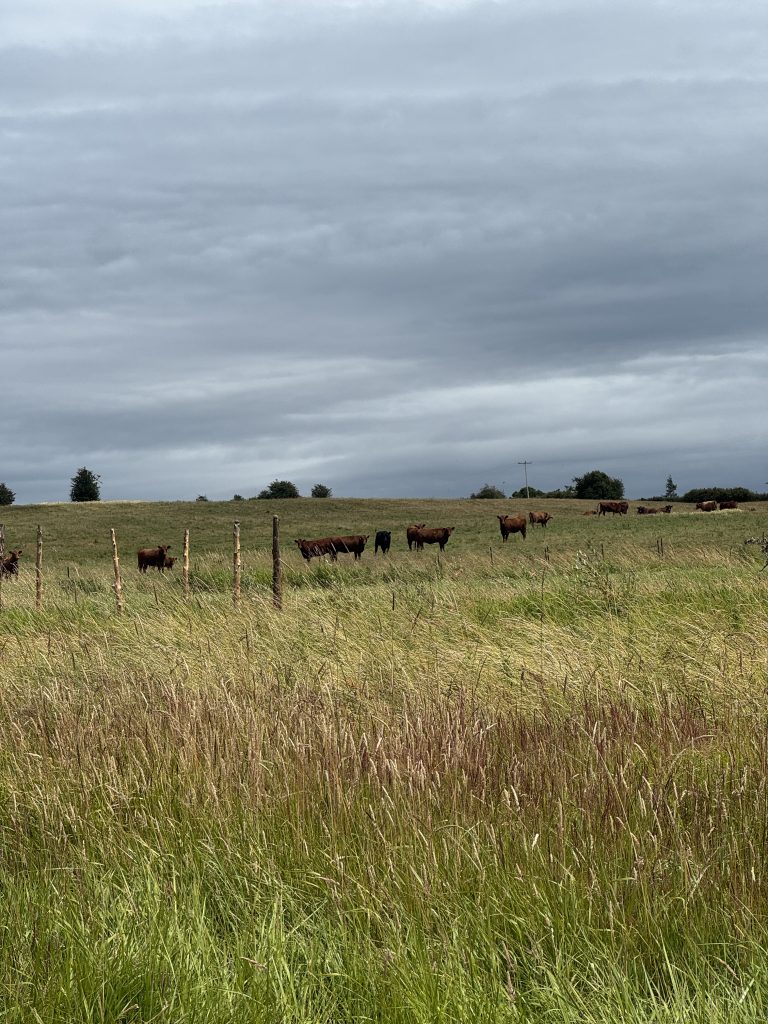
We concluded our journey at Zystera Lake, and discussed the history and cultural significance of that specific man-made lake. The lake is currently having a lot of problems with toxic algea blooms due to an abundance of nutrients in the water. As a solution, the County Land Bank is attempting to built these “beaver damns” in order to better slow down and filter the water coming from the creek to the lake. They are currently only working on this at a small scale, but hope to expand in the near future. Finally, Shauna drove home the point that conservationist like herself have to continuously think of ways to conserve the depleting nature around them without attempting to control the locals, because at the end of the day us, and her have no control over how the publics actions influence the environment if we don’t make an attempt to repair it, and educate.

Cows at Zystera Lake (photo by Lars)

We returned to the dorms briefly for a quick bite, and maybe an outfit change and heading out one final time! This time we were catching one of the weekly seminars hosted by UW at the Friday Harbor Labs. This talk by Shirel Kahane-Rapport on filter feeding in mobuilds (manta rays). She dove right into the fascinating topic of how she used models in person and on a computer to simulate the lobes in a mobulids filter and how changes may impact a mobulids ability to feed. The talk was super physics, data, and graphs heavy but the majority of our students seemed to stick onto her train of thought super well. In fact, I would say our body of students asked her more questions at the end than the other researchers at the lab! My favorite feature of her talk was her opening of background information on mobulids, how they feed. She made it possible for those outside of her area of study to understand her work without any background experience. Although that seems like it should be obvious, it is not always a given in the scientific community! If your interested in learning more about ricochet separation and the science behind how manta rays feed, we recommend skimming through this paper! https://pmc.ncbi.nlm.nih.gov/articles/PMC6157963/#:~:text=Our%20results%20indicate%20that%20manta,flow%20rates%2C%20and%20resists%20clogging.

Riley suited up at Zystera Lake (photo by Lars)

Finally, we relaxed after a long, eventful day! Food on our plates, minds full of new knowledge, we begin to reset for another adventurous day ahead!

Day 10: When in doubt, worm it out!

By: Hitomi, Eden, Trevor and Harper

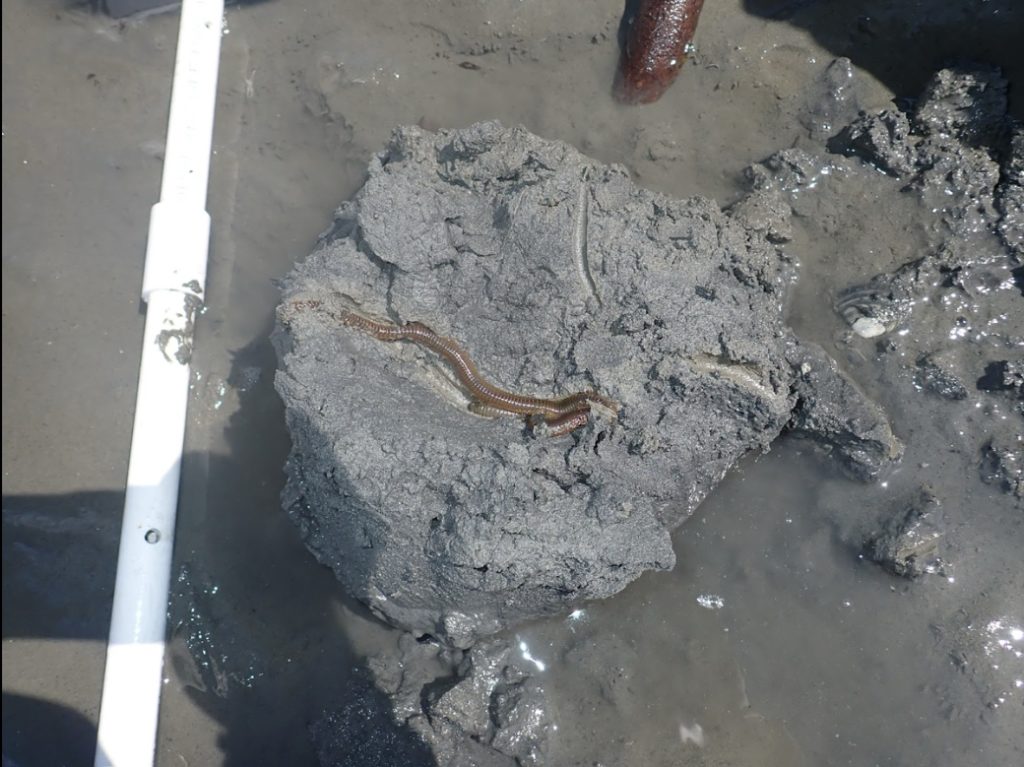
Blood worm at False Bay (photo by Lars)

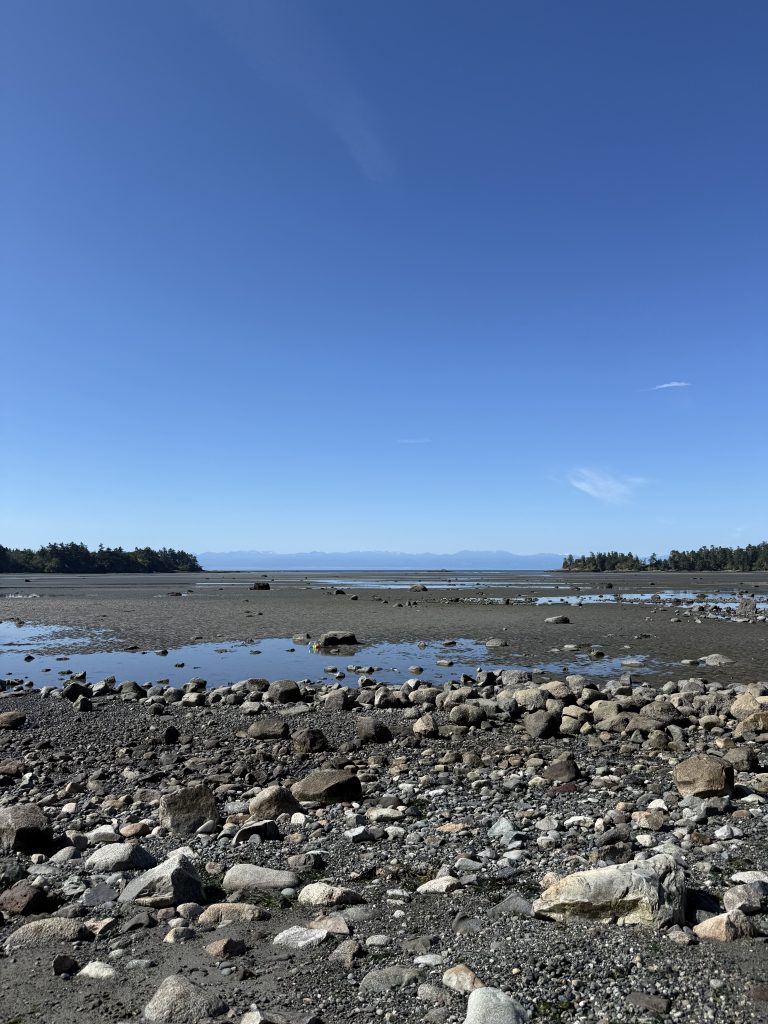
We woke up to a new day back at the dorms ready to restart our research explorations. After breakfast, we ventured out to False Bay. The bay is an open area with small pools of water surrounded by large breaks of muddy land. False Bay is a perfect place for annelids (segmented worms) to hide, as well as a fun spot for shrimp, clams, and crabs to live.

False Bay (photo by Hitomi)

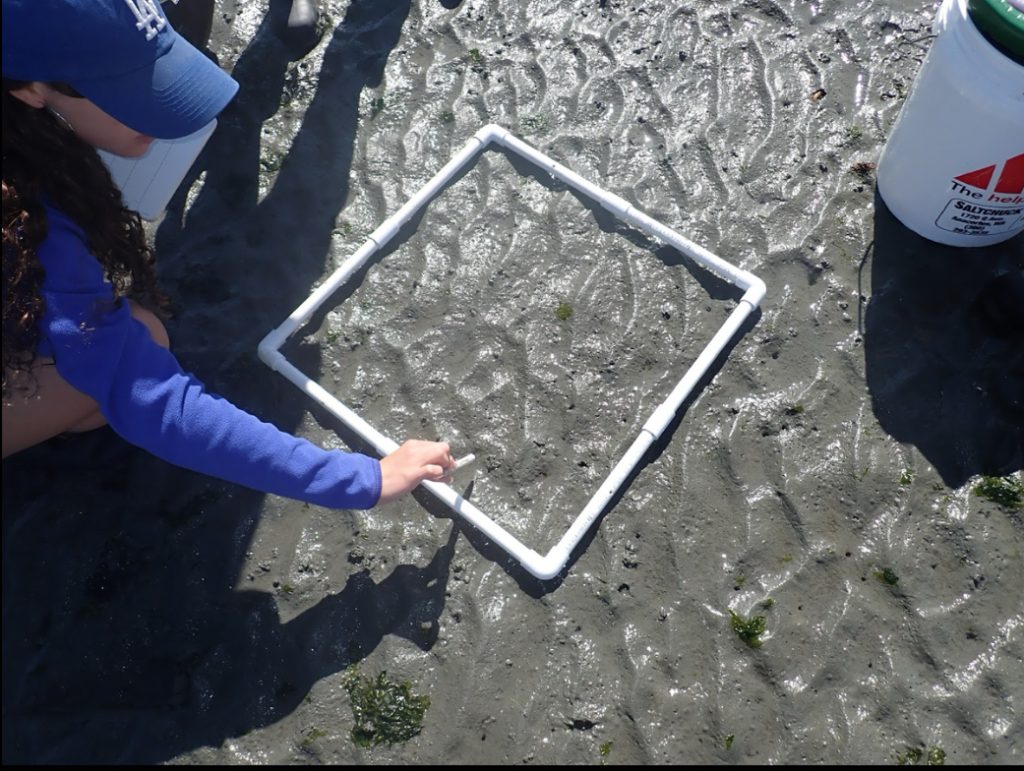
Our group went to this muddy haven to learn how to take lugworm surveys. We split up into groups of three or four and we each recorded different data sets around the beach. Five of the six groups recorded the number of fecal castings left by lugworms while the sixth group dug up the castings to see if any burrows were inhabited.

Quadrat used for Lugworms exploration (photo by Lars)

The groups found many different types of worms, as well as some ghost shrimp, crabs, natural clay, and clams.

Ghost Shrimp found at False Bay (photo by Hitomi)

After about two hours of data collection, we were exhausted and ready for our lunch break.

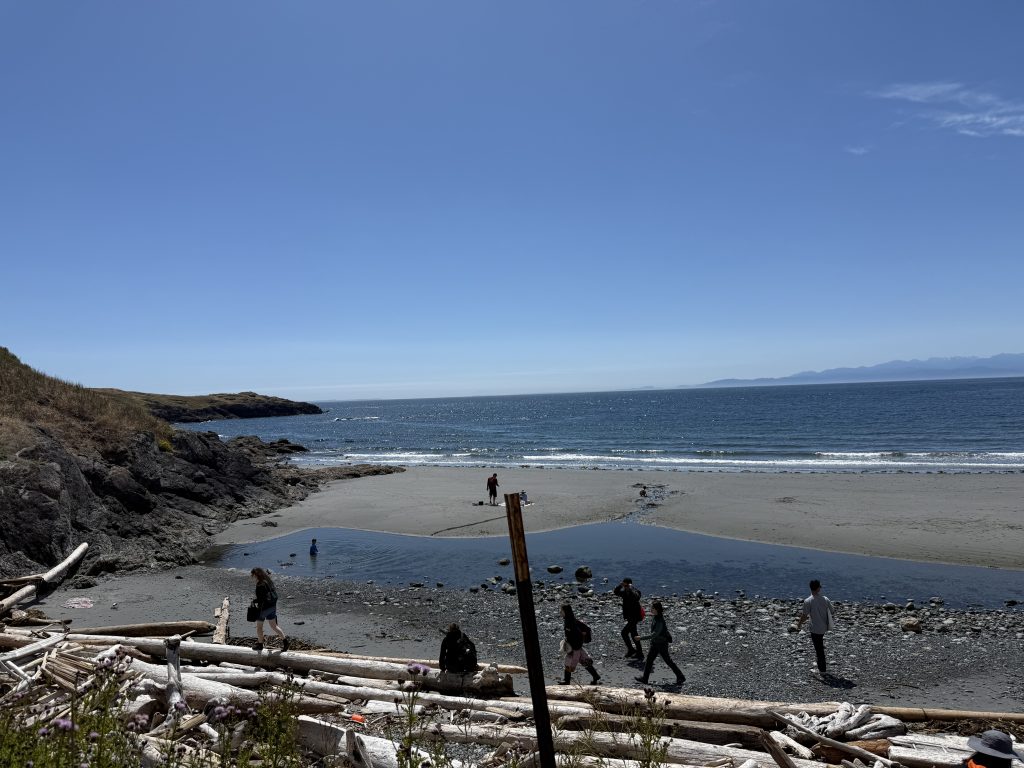
Eagle Cove (photo by Hitomi)

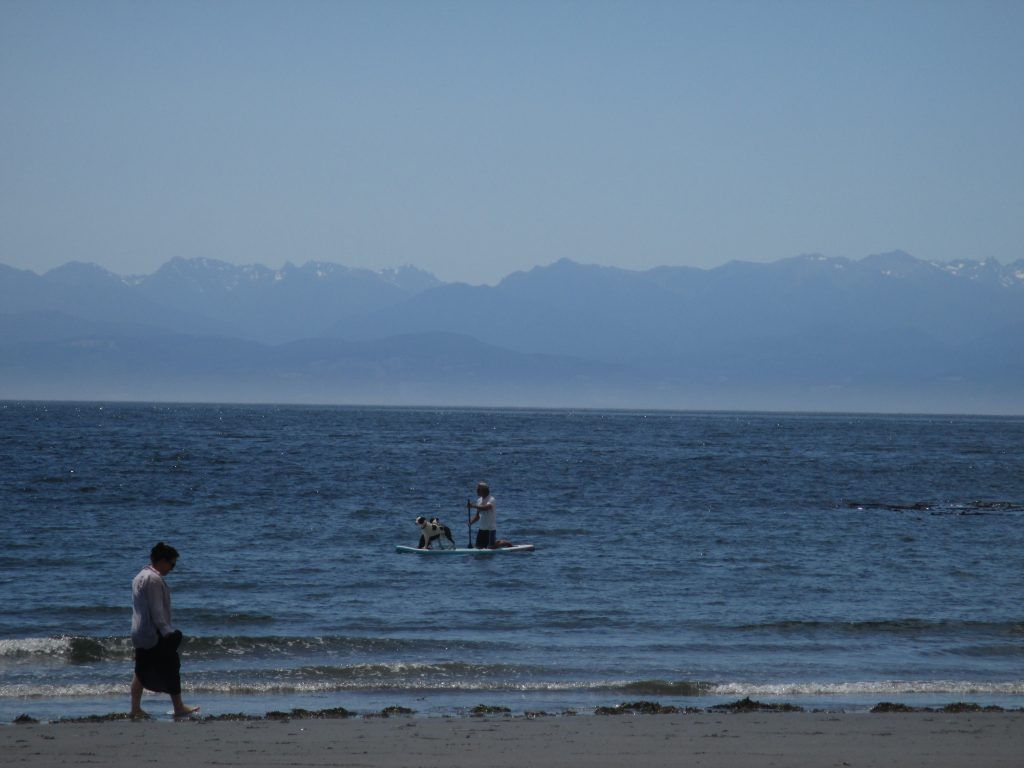
To regroup after exploring the wonders of False Bay, we enjoyed our sandwiches which we prepared earlier that morning. Eagle Cove was the most crowded beach we have yet to discover. The beautiful weather called for many picnics at the beach and paddle boarding dogs! During time spent at the beach, some enjoyed sightseeing & people watching, while others helped themselves to exploring the rocky coastal environment.

Dogs enjoying a nice paddle board ride! (Photo by Hitomi)
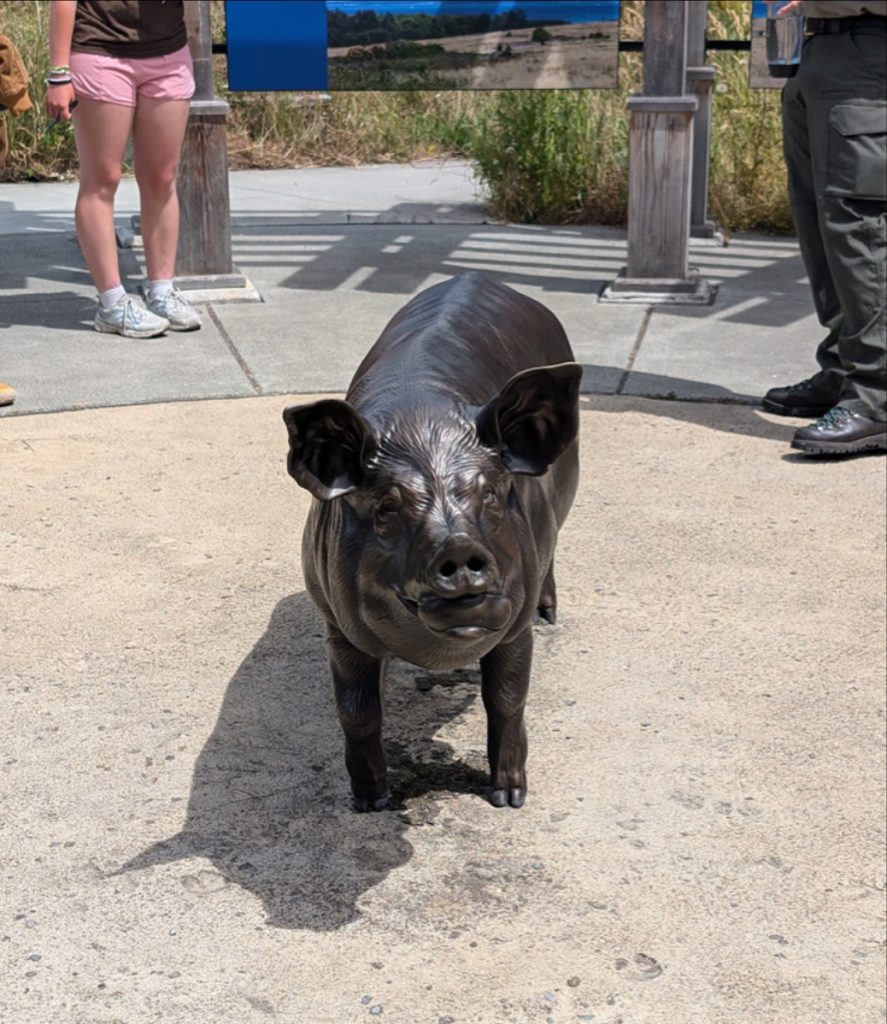
Pig War pig (photo by Trevor)

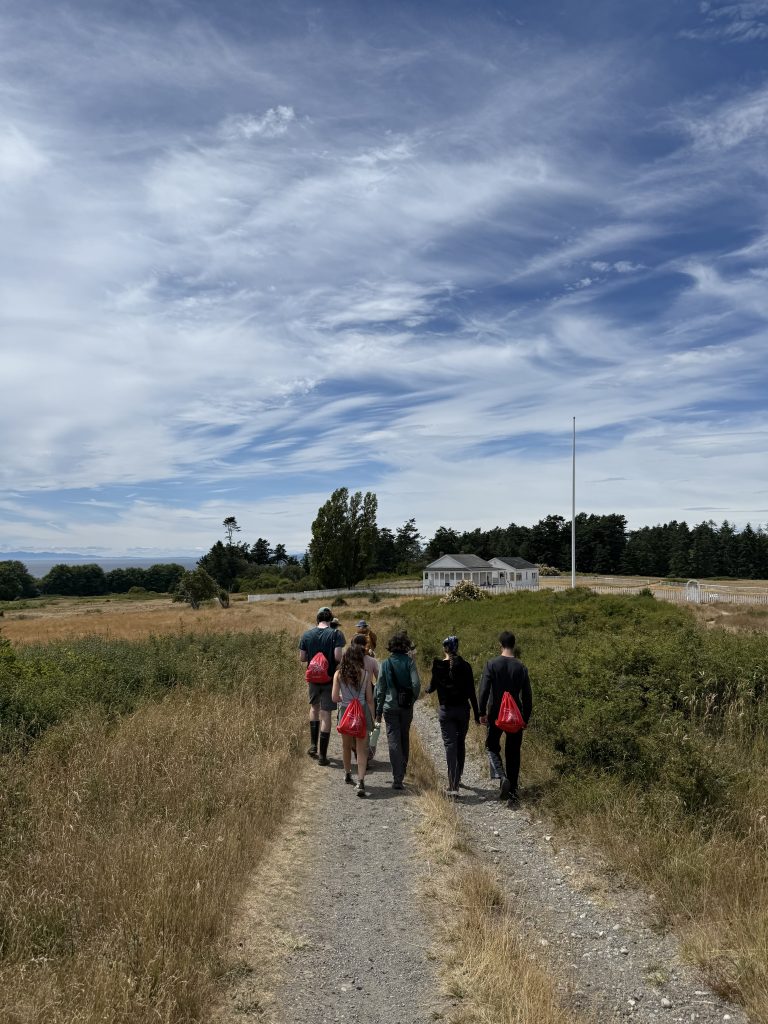
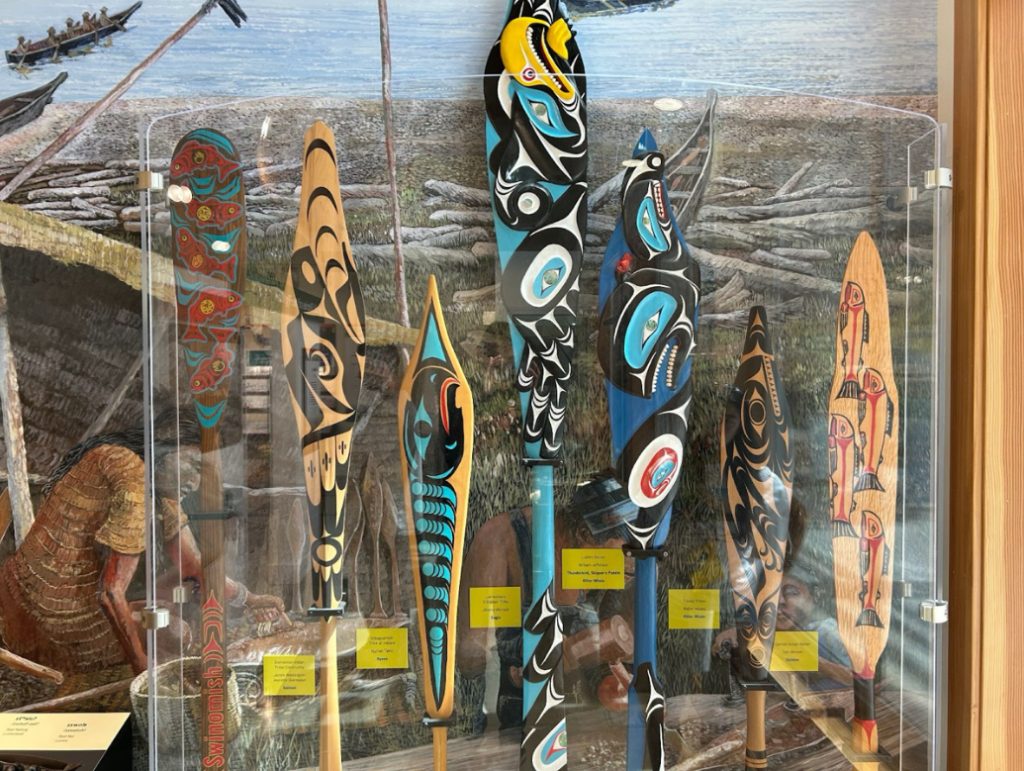
After our exciting lunch at Eagle Cove, we drove down the road to the American Camp Visitor Center at the San Juan Island National Historical Park where we met our tour guide, Emilio Santiago. Emilio works as a Cultural Resources Program Specialist for the National Park Service & he has been operating as the park’s resident archaeologist since 2018. In addition to being an engaging presenter of the park’s history, Emilio is currently campaigning for the position of Friday Harbor’s town mayor (We wish him luck!). During our tour, Emilio regaled us with a brief history of the 1859 “Pig War” which saw the American and British militaries nearly coming to blows over which of the two powers “owned” the San Juan Islands. We were shown around the foundations of the camp as well as the few remaining buildings that had been restored over the years. After this, we returned to the visitor center where we got to examine several artifacts from the various Coast Salish indigenous tribes who lived near the park prior to colonialist occupation (these being the Samish, S’Klallam, Lummi, and Lushootseed nations, among others). After saying goodbye to Emilio, we drove back to the dorms to start our next activity: brainstorming for our independent research projects.

Tour at American Camp with Emilio (photo by Hitomi)
Oars hung representing various Coast Salish Indigenous Tribes (photo by Harper)

We returned earlier than normal to the dorms today to start brainstorming our projects! These first steps are very exciting as we began to develop our current interests & ideas into project questions. Maya, Riley and Adam helped some develop their interests into possible projects. Within the next week we will be given more support and resources to solidify our topics as we move further into the first steps of our projects!

To end the day, we were joined for dinner by Dr. Billie Swalla, a professor of biology at the University of Washington. She was the first female director of the Friday Harbor Laboratories, among many other accolades, and we were thrilled to have her visit. Whilst we were eating spanakopita and yellow rice, we talked about cellular division and ctenophores. Similarly, after dinner, she gave a talk about genealogy and her journey as a marine biologist, which I found very in-depth and invigorating. Right before bed, we had a few hours of downtime, allowing us to take a break and prepare for another busy day tomorrow!

Day 9: A Restful Return

Salish Sea Sciences returns to Friday Harbor.

By: Lars, Eden, and Hitomi

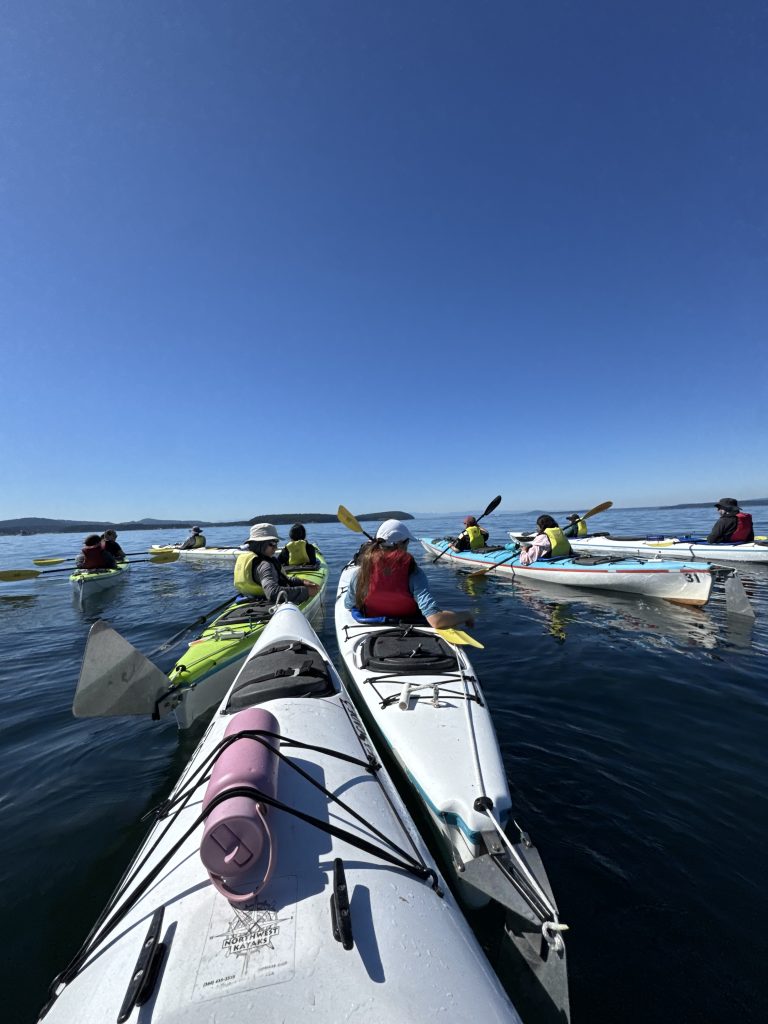
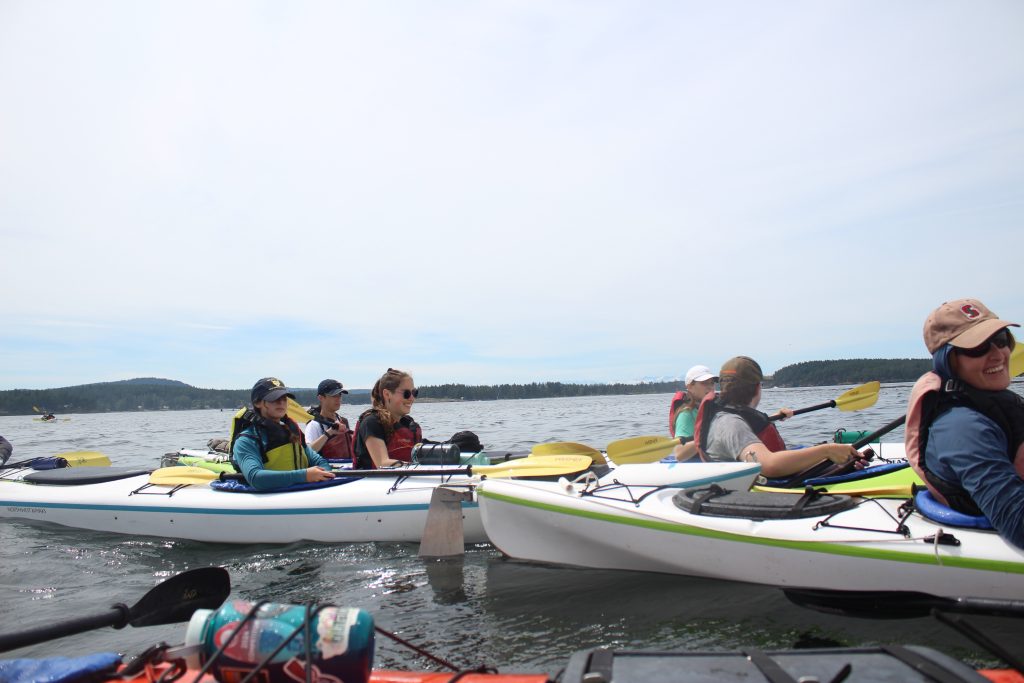
Salish Sea Sciences kayaking in the sea between Stuart Island and Roche Harbor. (Photo by Lars Hill)

Starting early in the morning we packed up our kayaks and left Stuart Island and voyaged back to Friday Harbor! We had a pretty smooth trek with 4 knots of wind behind us.

Arrival at Posey Island. (Photo by Annika)

Tyler and Zoe were super helpful! They made us amazing pulled pork sandwiches for lunch! They cleverly included apples in the coleslaw – super yummy!

Photo from Posey Island. (Photo credits to Lars)

While waiting for our sandwiches to be prepared by our guides, we explored the whole island. “Posey Island, at 1.1 acres, was never transferred out of the federal public domain into private ownership.” (Washington State Parks, n.d) If your interested in reading more on the history of this island, look into this great source! https://parks.wa.gov/about/news-center/field-guide-blog/posey-island-marine-state-park-history

Writing blogs! (Photo credit to Hitomi)

Post arrival to the dorms, we swiftly gathered our belongings and fought for shower and laundry spots. Caroline called everyone down to regroup, to catch up on chores, reflect on our kitchen habits, and catch up on blog posts! We are looking forward to a restful evening full of yummy dinner, ice cream, and hangouts. See y’all tomorrow for an exciting visit from an impressive guest!!

Day 8: A Beacon of Pristine Wilderness

The Salish Sea Sciences’ hike to Turn Point Light House on Stuart Island, Sunday, July 6th, 2025. By: Asher, and Miles

On our second day on Stuart Island, we woke bright and early, (mostly) ready to go on a three mile hike to Turn Point Lighthouse! After breakfast, we prepared for the hike, and headed out.

Ghost plants on the hike (Photo from Orrin)
Two mosses: an acrocarp (moss that goes up, not out), left, versus a pleurocarp (moss that goes out, not up) (Photo from Orrin)

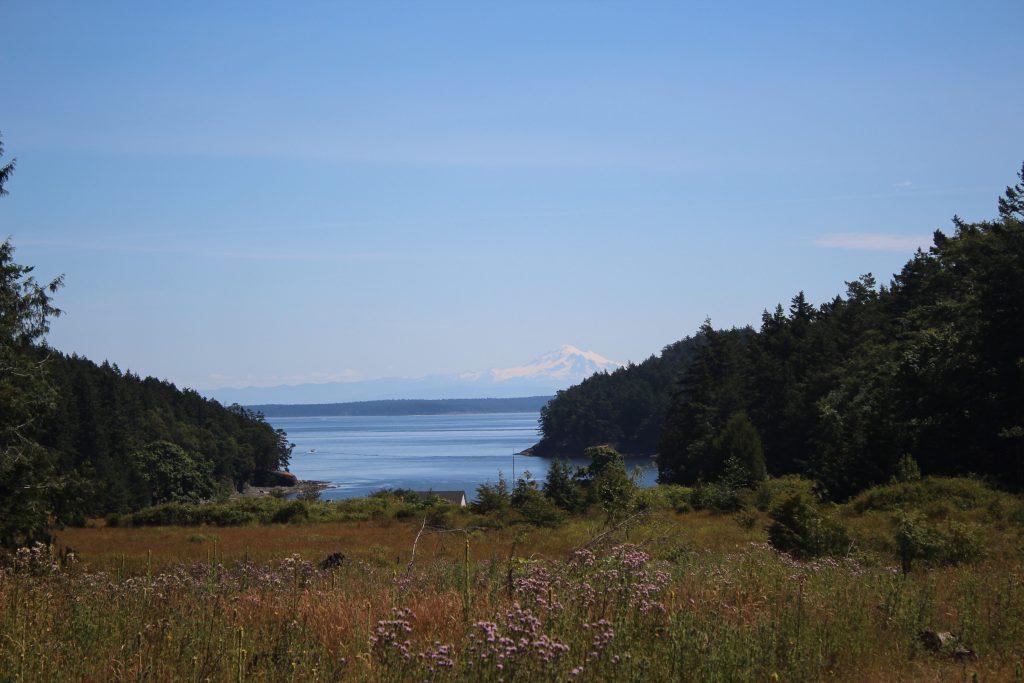
We stopped, shortly after setting out, to look around the old Stuart Island Schoolhouse and the historical museum there. We learned all about the former residents of Stuart Island and facts about the current living conditions on the islands. After that, we continued on the trail where we found a great view of Mount Baker, an impressive sight.

The view of Mount Baker (Photo from Orrin)

Once at Turn Point, we had a delicious lunch of pita sandwiches and looked at the view for a while—some of us were lucky enough to see a harbor seal playing in the bull kelp. After lunch, we took a small guided tour of the lighthouse keeper’s quarters. We hung around for a while longer, looking at tide pools, birds, plants, kelp, and the like. 

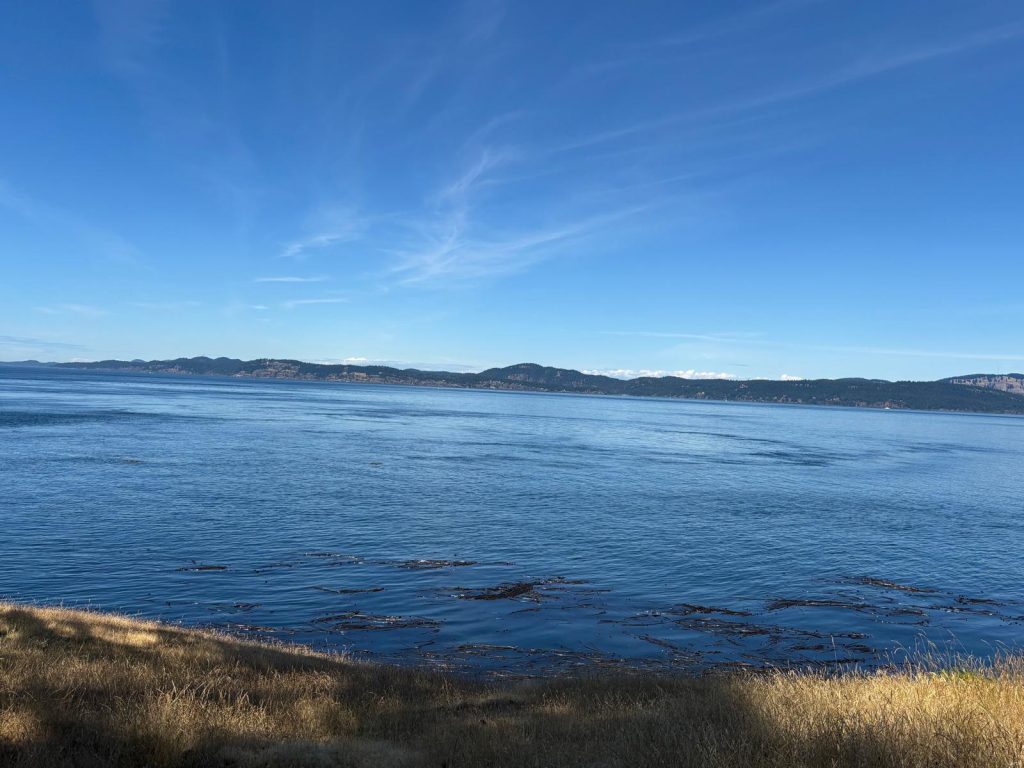
The view from Turn Point Lighthouse (Photo from Mira)
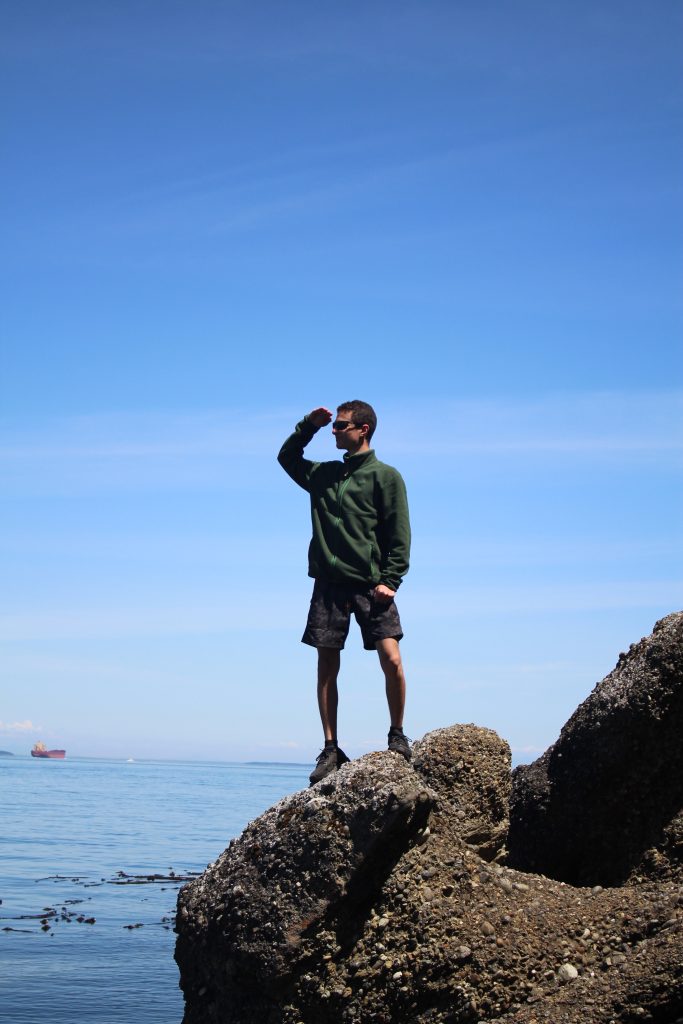
Noam on a rock, majestically (Photo by Orrin)

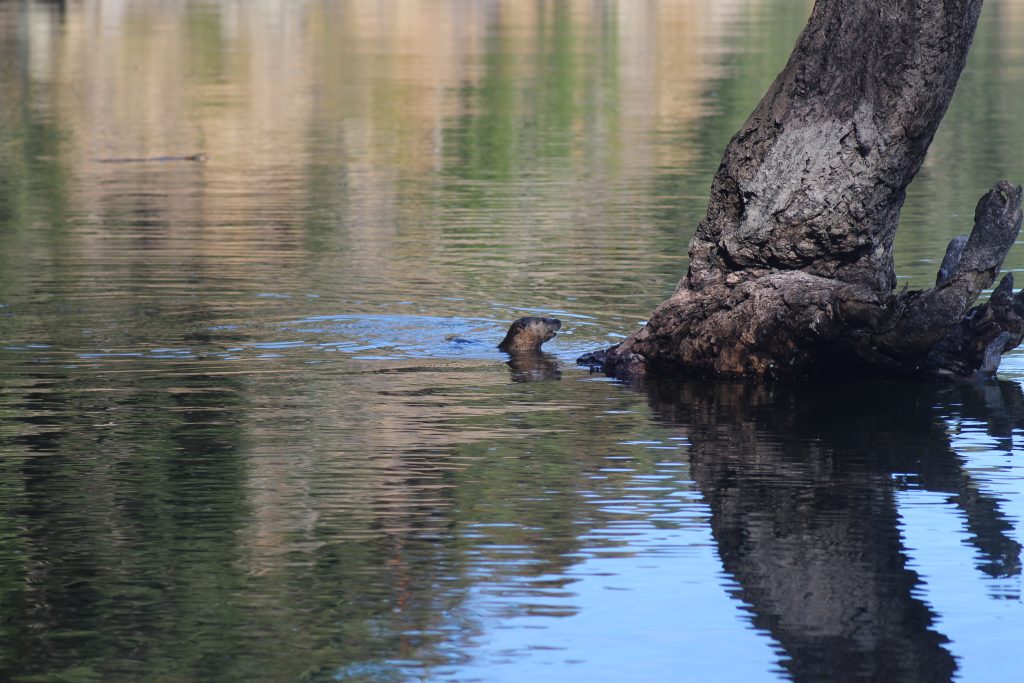
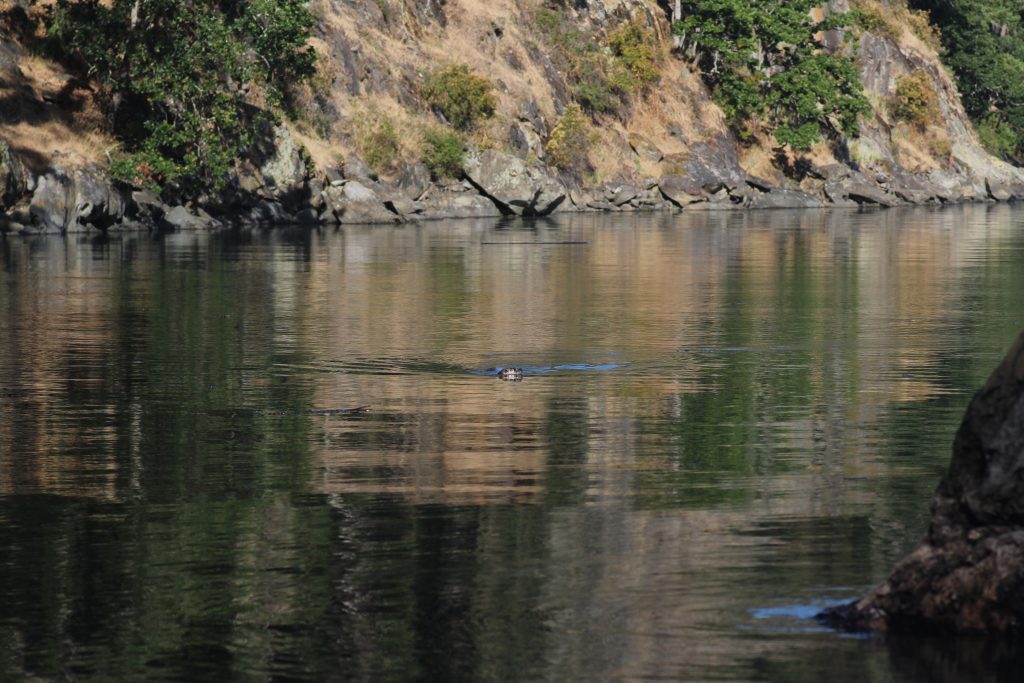
We then hiked back to the campsite and got several hours to relax before one of our science directors, Maya, gave an interesting talk about kelp. The talk, though, was interrupted by a river otter swimming by, which we took delight in watching. We then got some more time to rest and socialize, before a delicious dinner (pasta, both pesto and red sauce).

Damn charismatic megafauna, distracting everyone from the algae (an otter examining a log) (Photo from Orrin)
The otter swimming away in Reed Harbor, Stuart Island (Photo from Orrin)

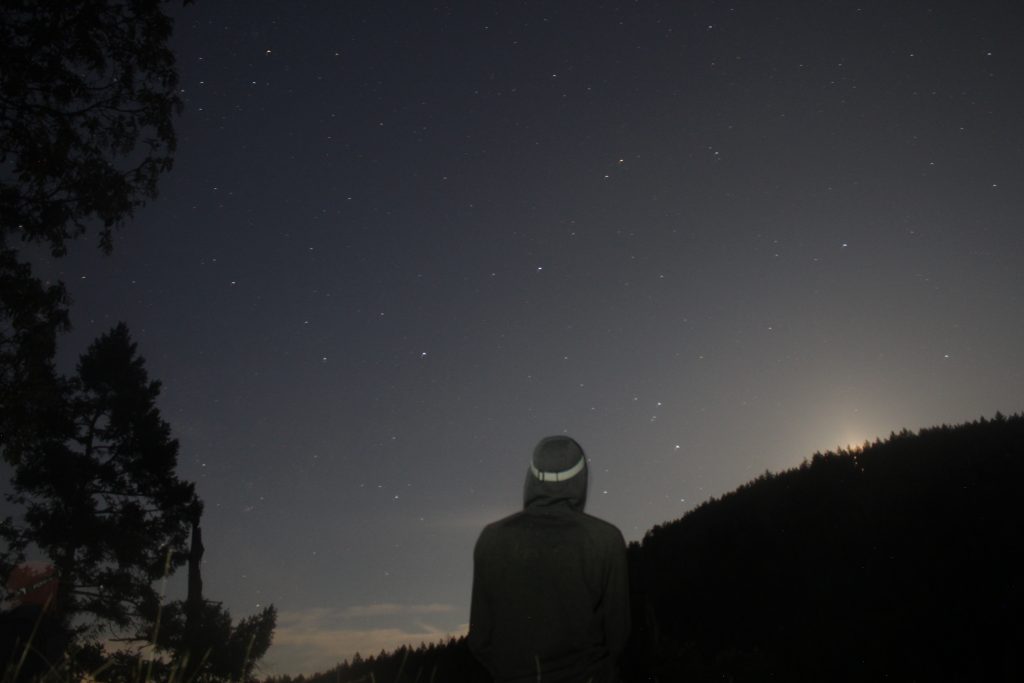
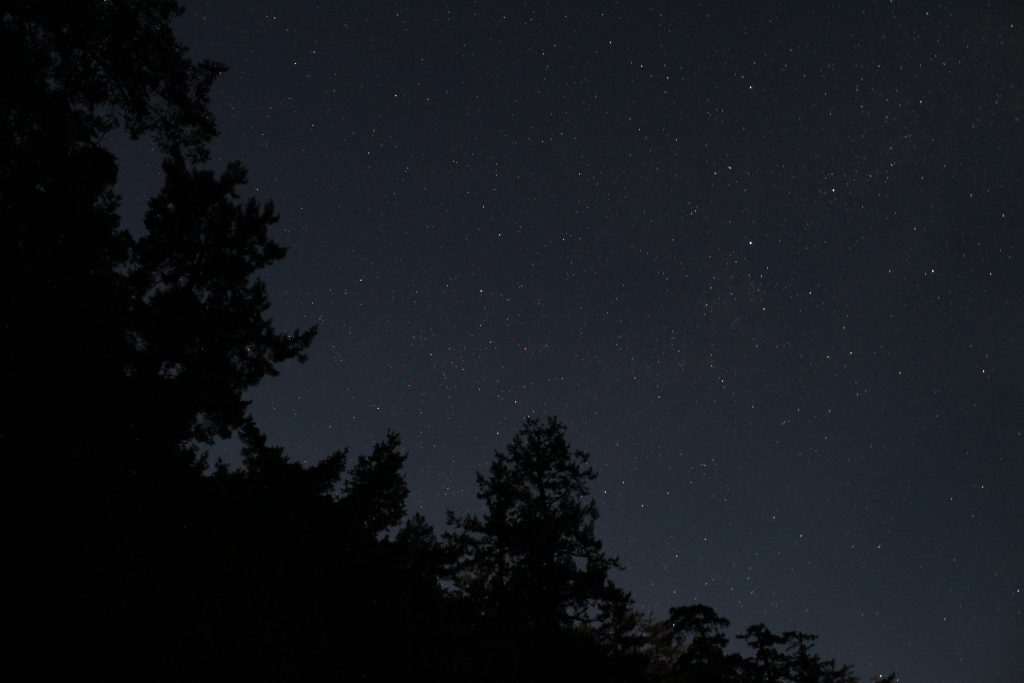
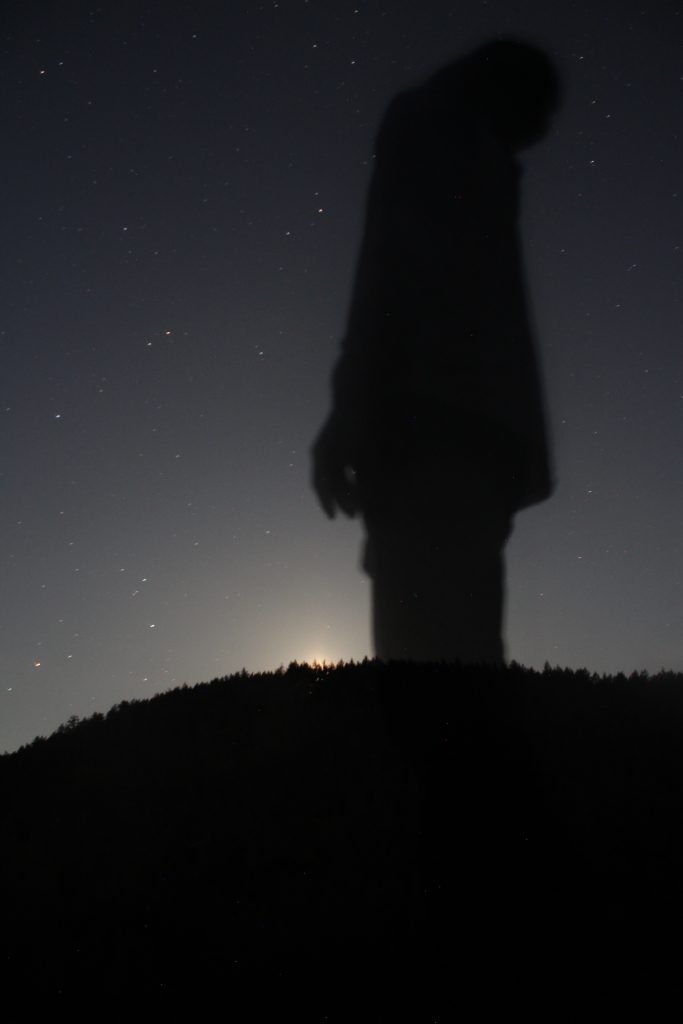
After dinner, many of us stayed up late to stargaze, despite having to get up at 7 am the next morning. The stars were beautiful and a lovely way to close out a trip.

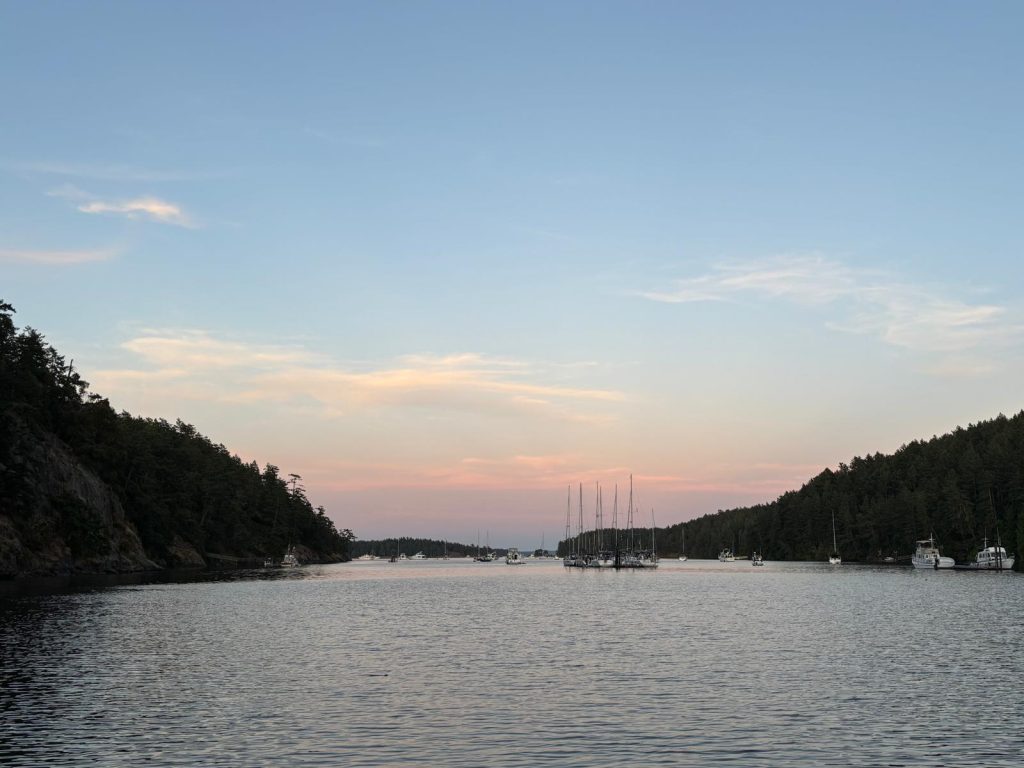
Sunset from Stuart Island (Photo from Mira)
The stars (+ Trevor) (Photo from Orrin)
The stars behind Douglas firs (Photo from Orrin)

Day 7: Voyage to Stuart Island

By Anisa Singh, Isabelle van Thiel, Orrin Spiess, Violet Marshall.

The day began like any other, but everyone knew it was going to be different. Our dry bags were filled with clothes, toiletries and anything else we would need to keep ourselves occupied for the next three days. Instead of our usual trips to the Friday Harbor Labs or one of the island’s assorted beaches, we piled our stuff into the van and headed to Roche Harbor. Located on the north side of the island, Roche Harbor was the starting place for our biggest adventure yet. 

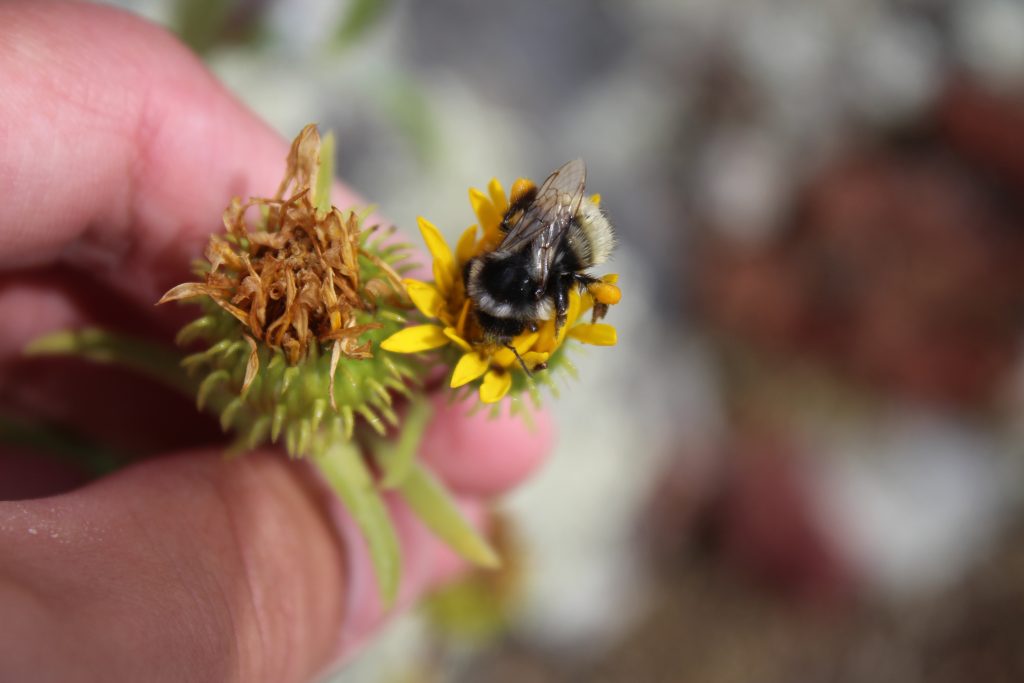
One of many bees we encountered on our Gossip Island lunch break

After a rushed morning, we were all ready to get on the water and out of the heat on the dock. Getting into the kayaks and learning how to paddle properly from our wonderful guides, we then took off; it would be a 10 miles trip in total, lasting about 3 hours. The first stop would be on Gossip Island, a small rocky outcropping about 8 miles away from our starting point. We were tired, wet, and salty, however the rest after about 2 hours of work as well as the boost of energy from Thai chicken wraps led us on to finish the second leg of the journey after about 45 more minutes of paddling.

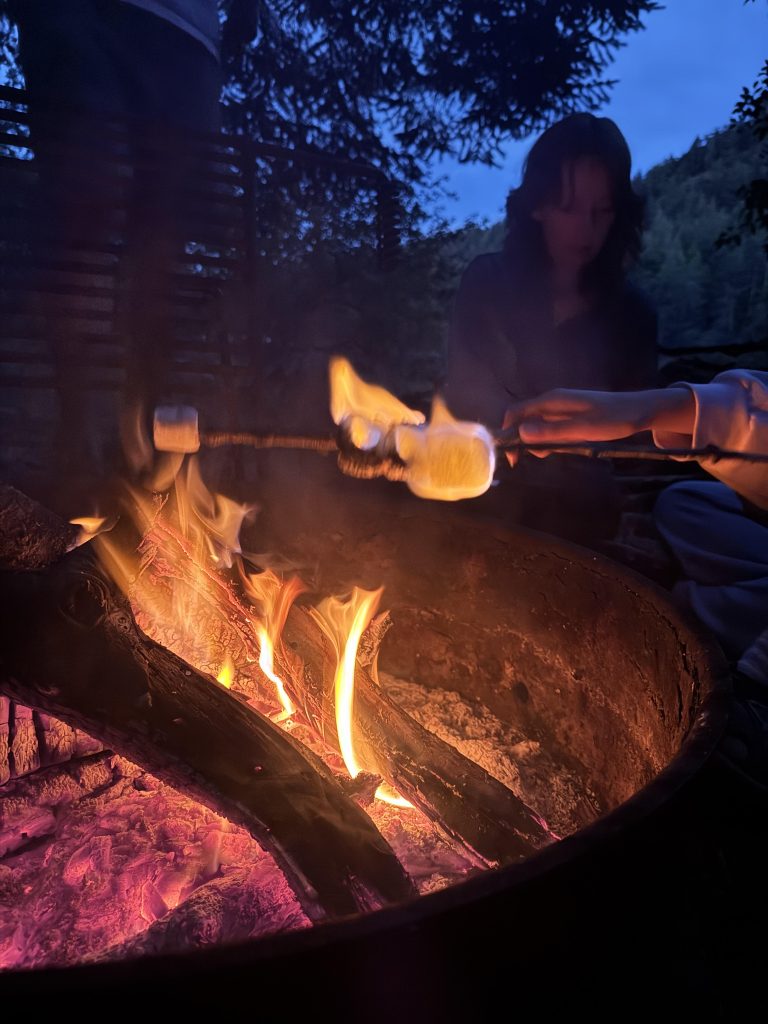
S’mores after dinner at our Stuart Island Campsite

At last, we arrived at our home for the next two days: Staurt Island. We were pulled onto the beach, some of us began unpacking all the kayaks while others chatted, snacked, or went to test out the pit toilet (which smelled as you would expect it to). Soon, we had figured out our rooming pairs and began the arduous process of unpacking and setting up our tents. Some were experts and got them up in 2 seconds flat while others might have taken a bit longer…

Stargazing on one of Stuart Island’s many bluffs

After exploring the island a bit, we sat down to dinner and made some amazing snores for dessert. We then prepared for tomorrow, both physically and mentally.